Understanding Your
Students
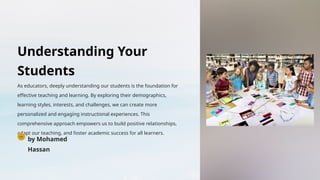
As educators, deeply understanding our students is the foundation for
effective teaching and learning. By exploring their demographics,
learning styles, interests, and challenges, we can create more
personalized and engaging instructional experiences. This
comprehensive approach empowers us to build positive relationships,
adapt our teaching, and foster academic success for all learners.
MH
by Mohamed
Hassan
Importance of Knowing
Your Learners
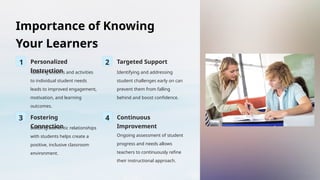
1 Personalized
Instruction
Tailoring lessons and activities
to individual student needs
leads to improved engagement,
motivation, and learning
outcomes.
2 Targeted Support
Identifying and addressing
student challenges early on can
prevent them from falling
behind and boost confidence.
3 Fostering
Connection
Building authentic relationships
with students helps create a
positive, inclusive classroom
environment.
4 Continuous
Improvement
Ongoing assessment of student
progress and needs allows
teachers to continuously refine
their instructional approach.
Demographic
Considerations
Age and Grade Level
Understanding the cognitive, social,
and emotional development of
students at different ages is crucial
for designing appropriate lessons and
activities.
Cultural
Background
Recognizing and respecting the
diverse cultural experiences and
perspectives of students can promote
inclusivity and mutual understanding
in the classroom.
Language
Proficiency
Identifying the language proficiency
levels of English Language Learners
allows teachers to provide targeted
language support and differentiate
instruction accordingly.
Learning Styles and
Preferences
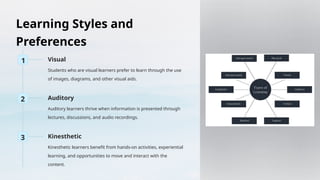
1 Visual
Students who are visual learners prefer to learn through the use
of images, diagrams, and other visual aids.
2 Auditory
Auditory learners thrive when information is presented through
lectures, discussions, and audio recordings.
3 Kinesthetic
Kinesthetic learners benefit from hands-on activities, experiential
learning, and opportunities to move and interact with the
content.
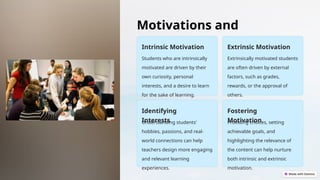
Motivations and
Interests
Intrinsic Motivation
Students who are intrinsically
motivated are driven by their
own curiosity, personal
interests, and a desire to learn
for the sake of learning.
Extrinsic Motivation
Extrinsically motivated students
are often driven by external
factors, such as grades,
rewards, or the approval of
others.
Identifying
Interests
Understanding students'
hobbies, passions, and real-
world connections can help
teachers design more engaging
and relevant learning
experiences.
Fostering
Motivation
Providing choices, setting
achievable goals, and
highlighting the relevance of
the content can help nurture
both intrinsic and extrinsic
motivation.
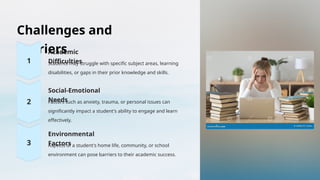
Challenges and
Barriers
Academic
Difficulties
Students may struggle with specific subject areas, learning
disabilities, or gaps in their prior knowledge and skills.
Social-Emotional
Needs
Factors such as anxiety, trauma, or personal issues can
significantly impact a student's ability to engage and learn
effectively.
Environmental
Factors
Aspects of a student's home life, community, or school
environment can pose barriers to their academic success.
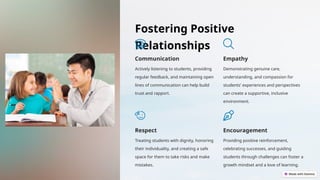
Fostering Positive
Relationships
Communication
Actively listening to students, providing
regular feedback, and maintaining open
lines of communication can help build
trust and rapport.
Empathy
Demonstrating genuine care,
understanding, and compassion for
students' experiences and perspectives
can create a supportive, inclusive
environment.
Respect
Treating students with dignity, honoring
their individuality, and creating a safe
space for them to take risks and make
mistakes.
Encouragement
Providing positive reinforcement,
celebrating successes, and guiding
students through challenges can foster a
growth mindset and a love of learning.
Adapting Instruction to Meet Student
Needs
Flexible Grouping
Grouping students based on their
readiness levels, learning profiles, or
interests can allow for more targeted
instruction and support.
Varied Instructional
Strategies
Incorporating a range of teaching
methods, such as direct instruction,
collaborative learning, and project-
based activities, can cater to diverse
learning styles.
Scaffolding and
Support
Providing appropriate levels of
guidance, modeling, and additional
support can help students
successfully navigate challenging
content and tasks.
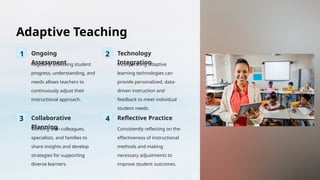
Adaptive Teaching
1 Ongoing
Assessment
Regularly assessing student
progress, understanding, and
needs allows teachers to
continuously adjust their
instructional approach.
2 Technology
Integration
Incorporating adaptive
learning technologies can
provide personalized, data-
driven instruction and
feedback to meet individual
student needs.
3 Collaborative
Planning
Working with colleagues,
specialists, and families to
share insights and develop
strategies for supporting
diverse learners.
4 Reflective Practice
Consistently reflecting on the
effectiveness of instructional
methods and making
necessary adjustments to
improve student outcomes.
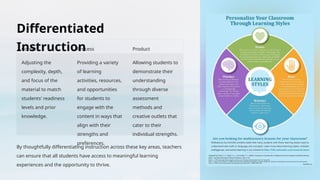
Differentiated
Instruction
Content Process Product
Adjusting the
complexity, depth,
and focus of the
material to match
students' readiness
levels and prior
knowledge.
Providing a variety
of learning
activities, resources,
and opportunities
for students to
engage with the
content in ways that
align with their
strengths and
preferences.
Allowing students to
demonstrate their
understanding
through diverse
assessment
methods and
creative outlets that
cater to their
individual strengths.
By thoughtfully differentiating instruction across these key areas, teachers
can ensure that all students have access to meaningful learning
experiences and the opportunity to thrive.

Understanding your students. Their intelligence etc.

  • 1.
    Understanding Your Students As educators,deeply understanding our students is the foundation for effective teaching and learning. By exploring their demographics, learning styles, interests, and challenges, we can create more personalized and engaging instructional experiences. This comprehensive approach empowers us to build positive relationships, adapt our teaching, and foster academic success for all learners. MH by Mohamed Hassan
  • 2.
    Importance of Knowing YourLearners 1 Personalized Instruction Tailoring lessons and activities to individual student needs leads to improved engagement, motivation, and learning outcomes. 2 Targeted Support Identifying and addressing student challenges early on can prevent them from falling behind and boost confidence. 3 Fostering Connection Building authentic relationships with students helps create a positive, inclusive classroom environment. 4 Continuous Improvement Ongoing assessment of student progress and needs allows teachers to continuously refine their instructional approach.
  • 3.
    Demographic Considerations Age and GradeLevel Understanding the cognitive, social, and emotional development of students at different ages is crucial for designing appropriate lessons and activities. Cultural Background Recognizing and respecting the diverse cultural experiences and perspectives of students can promote inclusivity and mutual understanding in the classroom. Language Proficiency Identifying the language proficiency levels of English Language Learners allows teachers to provide targeted language support and differentiate instruction accordingly.
  • 4.
    Learning Styles and Preferences 1Visual Students who are visual learners prefer to learn through the use of images, diagrams, and other visual aids. 2 Auditory Auditory learners thrive when information is presented through lectures, discussions, and audio recordings. 3 Kinesthetic Kinesthetic learners benefit from hands-on activities, experiential learning, and opportunities to move and interact with the content.
  • 5.
    Motivations and Interests Intrinsic Motivation Studentswho are intrinsically motivated are driven by their own curiosity, personal interests, and a desire to learn for the sake of learning. Extrinsic Motivation Extrinsically motivated students are often driven by external factors, such as grades, rewards, or the approval of others. Identifying Interests Understanding students' hobbies, passions, and real- world connections can help teachers design more engaging and relevant learning experiences. Fostering Motivation Providing choices, setting achievable goals, and highlighting the relevance of the content can help nurture both intrinsic and extrinsic motivation.
  • 6.
    Challenges and Barriers Academic Difficulties Students maystruggle with specific subject areas, learning disabilities, or gaps in their prior knowledge and skills. Social-Emotional Needs Factors such as anxiety, trauma, or personal issues can significantly impact a student's ability to engage and learn effectively. Environmental Factors Aspects of a student's home life, community, or school environment can pose barriers to their academic success.
  • 7.
    Fostering Positive Relationships Communication Actively listeningto students, providing regular feedback, and maintaining open lines of communication can help build trust and rapport. Empathy Demonstrating genuine care, understanding, and compassion for students' experiences and perspectives can create a supportive, inclusive environment. Respect Treating students with dignity, honoring their individuality, and creating a safe space for them to take risks and make mistakes. Encouragement Providing positive reinforcement, celebrating successes, and guiding students through challenges can foster a growth mindset and a love of learning.
  • 8.
    Adapting Instruction toMeet Student Needs Flexible Grouping Grouping students based on their readiness levels, learning profiles, or interests can allow for more targeted instruction and support. Varied Instructional Strategies Incorporating a range of teaching methods, such as direct instruction, collaborative learning, and project- based activities, can cater to diverse learning styles. Scaffolding and Support Providing appropriate levels of guidance, modeling, and additional support can help students successfully navigate challenging content and tasks.
  • 9.
    Adaptive Teaching 1 Ongoing Assessment Regularlyassessing student progress, understanding, and needs allows teachers to continuously adjust their instructional approach. 2 Technology Integration Incorporating adaptive learning technologies can provide personalized, data- driven instruction and feedback to meet individual student needs. 3 Collaborative Planning Working with colleagues, specialists, and families to share insights and develop strategies for supporting diverse learners. 4 Reflective Practice Consistently reflecting on the effectiveness of instructional methods and making necessary adjustments to improve student outcomes.
  • 10.
    Differentiated Instruction Content Process Product Adjustingthe complexity, depth, and focus of the material to match students' readiness levels and prior knowledge. Providing a variety of learning activities, resources, and opportunities for students to engage with the content in ways that align with their strengths and preferences. Allowing students to demonstrate their understanding through diverse assessment methods and creative outlets that cater to their individual strengths. By thoughtfully differentiating instruction across these key areas, teachers can ensure that all students have access to meaningful learning experiences and the opportunity to thrive.