BAI SAGUIRA A. MALIK
CE-Faculty
baisaguira@gmail.com
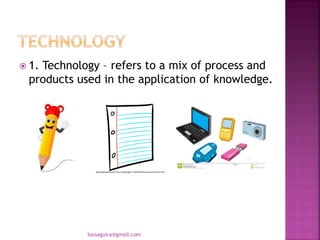
 1. Technology – refers to a mix of process and
products used in the application of knowledge.
baisaguira@gmail.com
 2. Information and Communication
Technology Literacy or ICT Literacy
- Use of digital technology, communication
tools and/or networks to access, manage,
integrate, evaluate, create and communicate
information in order to function in a
knowledge society (Guro 21, 2011).
baisaguira@gmail.com
 3. Educational technology – refers to the use
of technology in teaching and learning . It
includes both non-digital and digital.
baisaguira@gmail.com
4. Digital literacy is the ability
to find, evaluate, utilize, share
and create contents using
information technologies and
Internet. It is also the ability to
use information and
communication, requiring both
cognitive and technical skills
baisaguira@gmail.com
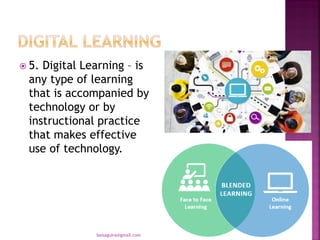
 5. Digital Learning – is
any type of learning
that is accompanied by
technology or by
instructional practice
that makes effective
use of technology.
baisaguira@gmail.com
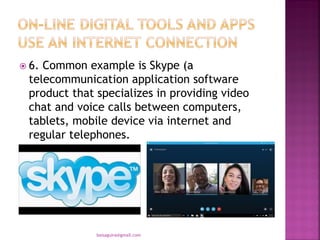
 6. Common example is Skype (a
telecommunication application software
product that specializes in providing video
chat and voice calls between computers,
tablets, mobile device via internet and
regular telephones.
baisaguira@gmail.com
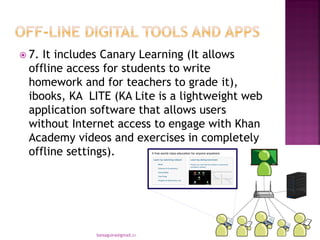
 7. It includes Canary Learning (It allows
offline access for students to write
homework and for teachers to grade it),
ibooks, KA LITE (KA Lite is a lightweight web
application software that allows users
without Internet access to engage with Khan
Academy videos and exercises in completely
offline settings).
baisaguira@gmail.com
 8. Instructional technology is the theory and
practice of design, development, utilization,
management, and evaluation of the
processes and resources for learning.
baisaguira@gmail.com
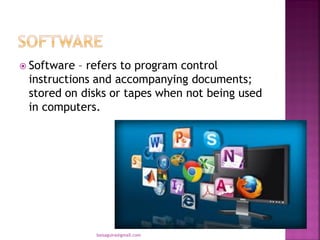
 Software – refers to program control
instructions and accompanying documents;
stored on disks or tapes when not being used
in computers.
baisaguira@gmail.com
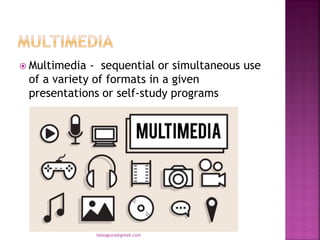
 Multimedia - sequential or simultaneous use
of a variety of formats in a given
presentations or self-study programs
baisaguira@gmail.com
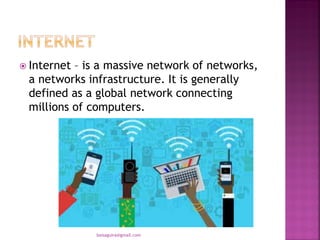
 Internet – is a massive network of networks,
a networks infrastructure. It is generally
defined as a global network connecting
millions of computers.
baisaguira@gmail.com
 World wide web a also called as web is a
graphical environment on computer networks
that allows you to access, view and maintain
documentations that can include text, data,
sound and videos of the internet.
baisaguira@gmail.com
 Web access - is the ability of learners to
access the internet at any point during the
lesson in order to take advantage of the
array of available education resources
baisaguira@gmail.com
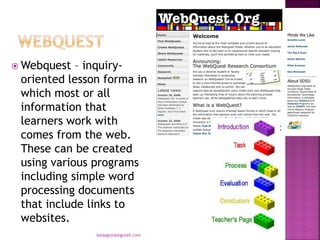
 Webquest – inquiry-
oriented lesson forma in
which most or all
information that
learners work with
comes from the web.
These can be created
using various programs
including simple word
processing documents
that include links to
websites.
baisaguira@gmail.com
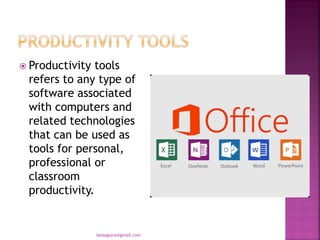
 Productivity tools
refers to any type of
software associated
with computers and
related technologies
that can be used as
tools for personal,
professional or
classroom
productivity.
baisaguira@gmail.com
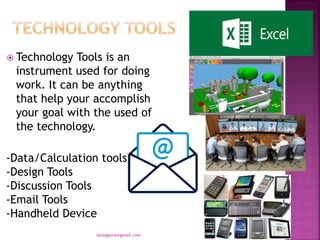
 Technology Tools is an
instrument used for doing
work. It can be anything
that help your accomplish
your goal with the used of
the technology.
baisaguira@gmail.com
-Data/Calculation tools
-Design Tools
-Discussion Tools
-Email Tools
-Handheld Device
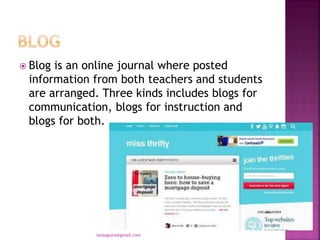
 Blog is an online journal where posted
information from both teachers and students
are arranged. Three kinds includes blogs for
communication, blogs for instruction and
blogs for both.
baisaguira@gmail.com
 Wiki, an editable website
usually with limited
access, allows students to
collaboratively create and
post written works or
digital files, such as digital
photos or videos. Example
is wikipedia
baisaguira@gmail.com
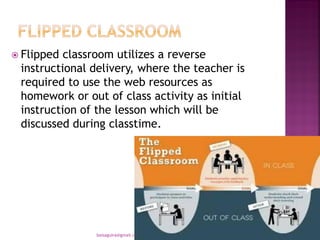
 Flipped classroom utilizes a reverse
instructional delivery, where the teacher is
required to use the web resources as
homework or out of class activity as initial
instruction of the lesson which will be
discussed during classtime.
baisaguira@gmail.com
 Podcast is a video or
audio multi-media clip
about a single topic
typically in the format
of the radio talk show.
Two basic functions are
to retrieve information
and to disseminate
information.
baisaguira@gmail.com
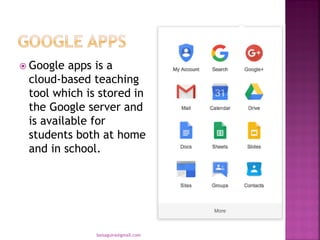
 Google apps is a
cloud-based teaching
tool which is stored in
the Google server and
is available for
students both at home
and in school.
baisaguira@gmail.com
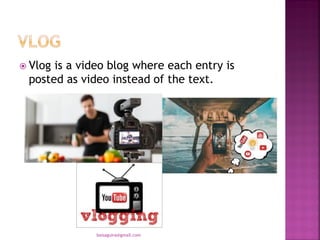
 Vlog is a video blog where each entry is
posted as video instead of the text.
baisaguira@gmail.com
 Facebook is a popular
social networking site
used by students and
adults worldwide to
present information on
themselves and to the
world.
baisaguira@gmail.com
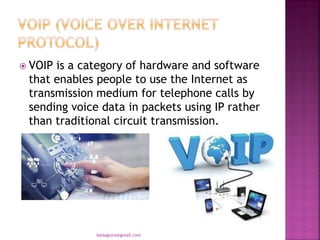
 VOIP is a category of hardware and software
that enables people to use the Internet as
transmission medium for telephone calls by
sending voice data in packets using IP rather
than traditional circuit transmission.
baisaguira@gmail.com
 Bilbao, et al. (2019). Technology for teaching
and learning 1. Quezon City, PH: Lorimar
Publishing Inc.
 Lucido, P. & Corpuz, B. (2012). Educational
technology 2. Quezon City. PH: Lorimar
Publishing Co.
baisaguira@gmail.com

Understanding the Basic Concept in ICT

  • 1.
    BAI SAGUIRA A.MALIK CE-Faculty baisaguira@gmail.com
  • 2.
  • 3.
  • 4.
     1. Technology– refers to a mix of process and products used in the application of knowledge. baisaguira@gmail.com
  • 5.
     2. Informationand Communication Technology Literacy or ICT Literacy - Use of digital technology, communication tools and/or networks to access, manage, integrate, evaluate, create and communicate information in order to function in a knowledge society (Guro 21, 2011). baisaguira@gmail.com
  • 6.
     3. Educationaltechnology – refers to the use of technology in teaching and learning . It includes both non-digital and digital. baisaguira@gmail.com
  • 7.
    4. Digital literacyis the ability to find, evaluate, utilize, share and create contents using information technologies and Internet. It is also the ability to use information and communication, requiring both cognitive and technical skills baisaguira@gmail.com
  • 8.
     5. DigitalLearning – is any type of learning that is accompanied by technology or by instructional practice that makes effective use of technology. baisaguira@gmail.com
  • 9.
     6. Commonexample is Skype (a telecommunication application software product that specializes in providing video chat and voice calls between computers, tablets, mobile device via internet and regular telephones. baisaguira@gmail.com
  • 10.
     7. Itincludes Canary Learning (It allows offline access for students to write homework and for teachers to grade it), ibooks, KA LITE (KA Lite is a lightweight web application software that allows users without Internet access to engage with Khan Academy videos and exercises in completely offline settings). baisaguira@gmail.com
  • 11.
     8. Instructionaltechnology is the theory and practice of design, development, utilization, management, and evaluation of the processes and resources for learning. baisaguira@gmail.com
  • 12.
     Software –refers to program control instructions and accompanying documents; stored on disks or tapes when not being used in computers. baisaguira@gmail.com
  • 13.
     Multimedia -sequential or simultaneous use of a variety of formats in a given presentations or self-study programs baisaguira@gmail.com
  • 14.
     Internet –is a massive network of networks, a networks infrastructure. It is generally defined as a global network connecting millions of computers. baisaguira@gmail.com
  • 15.
     World wideweb a also called as web is a graphical environment on computer networks that allows you to access, view and maintain documentations that can include text, data, sound and videos of the internet. baisaguira@gmail.com
  • 16.
     Web access- is the ability of learners to access the internet at any point during the lesson in order to take advantage of the array of available education resources baisaguira@gmail.com
  • 17.
     Webquest –inquiry- oriented lesson forma in which most or all information that learners work with comes from the web. These can be created using various programs including simple word processing documents that include links to websites. baisaguira@gmail.com
  • 18.
     Productivity tools refersto any type of software associated with computers and related technologies that can be used as tools for personal, professional or classroom productivity. baisaguira@gmail.com
  • 19.
     Technology Toolsis an instrument used for doing work. It can be anything that help your accomplish your goal with the used of the technology. baisaguira@gmail.com -Data/Calculation tools -Design Tools -Discussion Tools -Email Tools -Handheld Device
  • 20.
     Blog isan online journal where posted information from both teachers and students are arranged. Three kinds includes blogs for communication, blogs for instruction and blogs for both. baisaguira@gmail.com
  • 21.
     Wiki, aneditable website usually with limited access, allows students to collaboratively create and post written works or digital files, such as digital photos or videos. Example is wikipedia baisaguira@gmail.com
  • 22.
     Flipped classroomutilizes a reverse instructional delivery, where the teacher is required to use the web resources as homework or out of class activity as initial instruction of the lesson which will be discussed during classtime. baisaguira@gmail.com
  • 23.
     Podcast isa video or audio multi-media clip about a single topic typically in the format of the radio talk show. Two basic functions are to retrieve information and to disseminate information. baisaguira@gmail.com
  • 24.
     Google appsis a cloud-based teaching tool which is stored in the Google server and is available for students both at home and in school. baisaguira@gmail.com
  • 25.
     Vlog isa video blog where each entry is posted as video instead of the text. baisaguira@gmail.com
  • 26.
     Facebook isa popular social networking site used by students and adults worldwide to present information on themselves and to the world. baisaguira@gmail.com
  • 27.
     VOIP isa category of hardware and software that enables people to use the Internet as transmission medium for telephone calls by sending voice data in packets using IP rather than traditional circuit transmission. baisaguira@gmail.com
  • 28.
     Bilbao, etal. (2019). Technology for teaching and learning 1. Quezon City, PH: Lorimar Publishing Inc.  Lucido, P. & Corpuz, B. (2012). Educational technology 2. Quezon City. PH: Lorimar Publishing Co. baisaguira@gmail.com
  • 29.