Untitled SectionDefault SectionUnused Section Space 4Unused Section Space 1Unused Section Space 3Unused Section Space 2Unused Section Space 5Unused Section Space 6Unused Section Space 7
Symptoms of stress. AnxietyUnderstanding stress.
Aim and objectives Aim;To identify the effects of stress and anxiety on sporting performance. Objectives;Identify the sympathetic and parasympathetic nervous system. Describe anxiety and how it can affect sporting performance. Explain the affects on sporting performance.
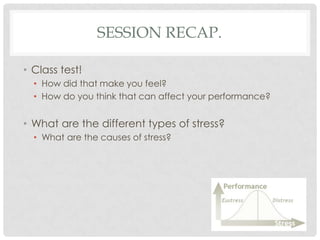
Session Recap.Class test!How did that make you feel?How do you think that can affect your performance?What are the different types of stress?What are the causes of stress?
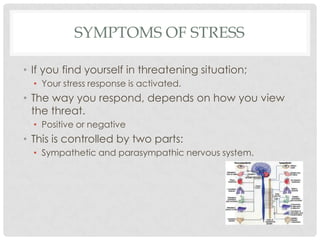
Symptoms of stressIf you find yourself in threatening situation;Your stress response is activated. The way you respond, depends on how you view the threat. Positive or negative This is controlled by two parts:Sympathetic and parasympathic nervous system.
Sympathetic Responsible for the ‘fight or flight’ response. It give the energy needed to confront or run away. In order to do this the body reduces the following physiological responses: (have a look for them) – (Phone, iPod, iPad)Blood diverted to working muscles. Increased heart rate. Increased heat production Increased adrenaline production. Increased muscle tensionA dry month.
Parasympathetic Once the stress has passed, this system begins to work.This system helps the body relax. What responses do you think the body will produce. Makes the muscles relax,Slows metabolism,Increases digestion rate,Decreases body temperature,Decreases heart rate,Constricts the pupils,Decreases the breathing rate.
AnxietyThis is a negative emotional. This occurs if the performer views a stressor as a negative and starts to worry. For example;A fear of not playing well and letting the team down. A fear of injury A fear of running out of time. There are two types of anxiety – trait and state anxiety.
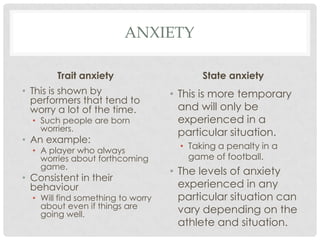
anxietyTrait anxietyThis is shown by performers that tend to worry a lot of the time. Such people are born worriers. An example:A player who always worries about forthcoming game. Consistent in their behaviourWill find something to worry about even if things are going well. State anxietyThis is more temporary and will only be experienced in a particular situation. Taking a penalty in a game of football.The levels of anxiety experienced in any particular situation can vary depending on the athlete and situation.
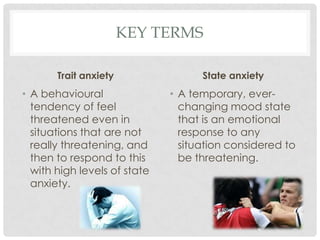
Key termsTrait anxietyA behavioural tendency of feel threatened even in situations that are not really threatening, and then to respond to this with high levels of state anxiety. State anxietyA temporary, ever-changing mood state that is an emotional response to any situation considered to be threatening.
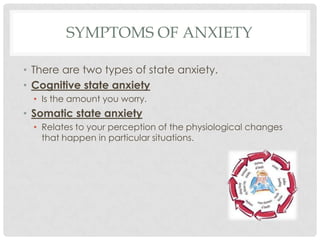
Symptoms of anxietyThere are two types of state anxiety.Cognitive state anxietyIs the amount you worry. Somatic state anxietyRelates to your perception of the physiological changes that happen in particular situations.
AnxietyCognitive state anxietyNegative thoughts.Nervousness and worry experienced in certain situations.Symptoms;Concentration problems, Fear and bad decision making. When concentration levels drop, performance level drop. Once performance drops, levels of anxiety start to increase. Thus more mistakes in performance.The athlete is then in a negative cycle which harms performance.
anxietySomatic state anxietyRefers to the changes in physiological activation.Such as:Increases in heart rate,Sweating,Increased body heat,Complete muscle tension. If the athlete see these as a negative then their performance will start to drop.However, we know that these can also be a positive to performance. The athlete that ‘froze’ on the starting block.
Effects of anxietyAnxiety is seen as a negative mental state that is a negative aspect of stress. When concentration is needed such as golf putting, darts or snooker. Anxiety can lead to lower performance levels. (Concentration, attention levels &Co-ordination faults.)However;Some symptoms of anxiety can also be beneficial for sports performance. Increased blood flow,Increased breathing rate and respiratory rate. It is the perception of the athlete that will make these symptoms negative.
Negative mental stateConstantly worrying about winning, may lead to the athlete putting to much pressure on their own performance. This can result in an increased nervousness, apprehension or worry.  Therefore resulting in thinking about failing.Once the athlete starts to think about this, you will become focused on it. Thus, increasing the likelihood of it happening.

Understanding stress session

  • 1.
    Untitled SectionDefault SectionUnusedSection Space 4Unused Section Space 1Unused Section Space 3Unused Section Space 2Unused Section Space 5Unused Section Space 6Unused Section Space 7
  • 2.
    Symptoms of stress.AnxietyUnderstanding stress.
  • 3.
    Aim and objectivesAim;To identify the effects of stress and anxiety on sporting performance. Objectives;Identify the sympathetic and parasympathetic nervous system. Describe anxiety and how it can affect sporting performance. Explain the affects on sporting performance.
  • 4.
    Session Recap.Class test!Howdid that make you feel?How do you think that can affect your performance?What are the different types of stress?What are the causes of stress?
  • 5.
    Symptoms of stressIfyou find yourself in threatening situation;Your stress response is activated. The way you respond, depends on how you view the threat. Positive or negative This is controlled by two parts:Sympathetic and parasympathic nervous system.
  • 6.
    Sympathetic Responsible forthe ‘fight or flight’ response. It give the energy needed to confront or run away. In order to do this the body reduces the following physiological responses: (have a look for them) – (Phone, iPod, iPad)Blood diverted to working muscles. Increased heart rate. Increased heat production Increased adrenaline production. Increased muscle tensionA dry month.
  • 7.
    Parasympathetic Once thestress has passed, this system begins to work.This system helps the body relax. What responses do you think the body will produce. Makes the muscles relax,Slows metabolism,Increases digestion rate,Decreases body temperature,Decreases heart rate,Constricts the pupils,Decreases the breathing rate.
  • 8.
    AnxietyThis is anegative emotional. This occurs if the performer views a stressor as a negative and starts to worry. For example;A fear of not playing well and letting the team down. A fear of injury A fear of running out of time. There are two types of anxiety – trait and state anxiety.
  • 9.
    anxietyTrait anxietyThis isshown by performers that tend to worry a lot of the time. Such people are born worriers. An example:A player who always worries about forthcoming game. Consistent in their behaviourWill find something to worry about even if things are going well. State anxietyThis is more temporary and will only be experienced in a particular situation. Taking a penalty in a game of football.The levels of anxiety experienced in any particular situation can vary depending on the athlete and situation.
  • 10.
    Key termsTrait anxietyAbehavioural tendency of feel threatened even in situations that are not really threatening, and then to respond to this with high levels of state anxiety. State anxietyA temporary, ever-changing mood state that is an emotional response to any situation considered to be threatening.
  • 11.
    Symptoms of anxietyThereare two types of state anxiety.Cognitive state anxietyIs the amount you worry. Somatic state anxietyRelates to your perception of the physiological changes that happen in particular situations.
  • 12.
    AnxietyCognitive state anxietyNegativethoughts.Nervousness and worry experienced in certain situations.Symptoms;Concentration problems, Fear and bad decision making. When concentration levels drop, performance level drop. Once performance drops, levels of anxiety start to increase. Thus more mistakes in performance.The athlete is then in a negative cycle which harms performance.
  • 13.
    anxietySomatic state anxietyRefersto the changes in physiological activation.Such as:Increases in heart rate,Sweating,Increased body heat,Complete muscle tension. If the athlete see these as a negative then their performance will start to drop.However, we know that these can also be a positive to performance. The athlete that ‘froze’ on the starting block.
  • 14.
    Effects of anxietyAnxietyis seen as a negative mental state that is a negative aspect of stress. When concentration is needed such as golf putting, darts or snooker. Anxiety can lead to lower performance levels. (Concentration, attention levels &Co-ordination faults.)However;Some symptoms of anxiety can also be beneficial for sports performance. Increased blood flow,Increased breathing rate and respiratory rate. It is the perception of the athlete that will make these symptoms negative.
  • 15.
    Negative mental stateConstantlyworrying about winning, may lead to the athlete putting to much pressure on their own performance. This can result in an increased nervousness, apprehension or worry. Therefore resulting in thinking about failing.Once the athlete starts to think about this, you will become focused on it. Thus, increasing the likelihood of it happening.