Rochell R. McWhorter, PhD
rmcwhorter@uttyler.edu
The University of Texas at Tyler, USA
Elisabeth E. Bennett, PhD
el.bennett@neu.edu
Northeastern University, USA
Technology Development:
Learning from Project Failures
2 Questions:
1. Share an experience with a
technology failure – one that did not
produce the desired outcome. What
happened?
2. What do you think HRD’s role should
be in technology projects?
Technology Development is…
“the integration of technology
with HRD objectives and
processes to improve learning
capacity and performance”
(Bennett & McWhorter, 2014, p. 18)
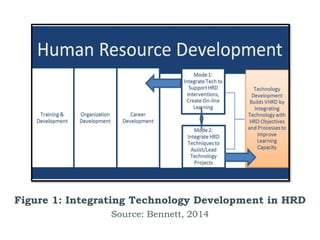
Figure 1: Integrating Technology Development in HRD
Source: Bennett, 2014
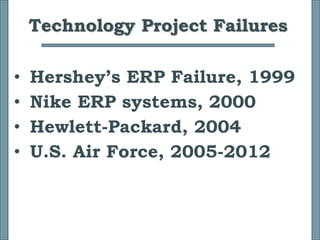
Technology Project Failures
• Hershey’s ERP Failure, 1999
• Nike ERP systems, 2000
• Hewlett-Packard, 2004
• U.S. Air Force, 2005-2012
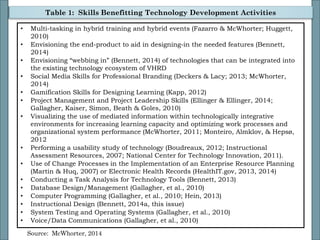
Table 1: Skills Benefitting Technology Development Activities
Source: McWhorter, 2014
• Multi-tasking in hybrid training and hybrid events (Fazarro & McWhorter; Huggett,
2010)
• Envisioning the end-product to aid in designing-in the needed features (Bennett,
2014)
• Envisioning “webbing in” (Bennett, 2014) of technologies that can be integrated into
the existing technology ecosystem of VHRD
• Social Media Skills for Professional Branding (Deckers & Lacy; 2013; McWhorter,
2014)
• Gamification Skills for Designing Learning (Kapp, 2012)
• Project Management and Project Leadership Skills (Ellinger & Ellinger, 2014;
Gallagher, Kaiser, Simon, Beath & Goles, 2010)
• Visualizing the use of mediated information within technologically integrative
environments for increasing learning capacity and optimizing work processes and
organizational system performance (McWhorter, 2011; Monteiro, Almklov, & Hepsø,
2012
• Performing a usability study of technology (Boudreaux, 2012; Instructional
Assessment Resources, 2007; National Center for Technology Innovation, 2011).
• Use of Change Processes in the Implementation of an Enterprise Resource Planning
(Martin & Huq, 2007) or Electronic Health Records (HealthIT.gov, 2013, 2014)
• Conducting a Task Analysis for Technology Tools (Bennett, 2013)
• Database Design/Management (Gallagher, et al., 2010)
• Computer Programming (Gallagher, et al., 2010; Hein, 2013)
• Instructional Design (Bennett, 2014a, this issue)
• System Testing and Operating Systems (Gallagher, et al., 2010)
• Voice/Data Communications (Gallagher, et al., 2010)
Thank You!

Technology Development: Learning from Project Failures

  • 1.
    Rochell R. McWhorter,PhD rmcwhorter@uttyler.edu The University of Texas at Tyler, USA Elisabeth E. Bennett, PhD el.bennett@neu.edu Northeastern University, USA Technology Development: Learning from Project Failures
  • 2.
    2 Questions: 1. Sharean experience with a technology failure – one that did not produce the desired outcome. What happened? 2. What do you think HRD’s role should be in technology projects?
  • 3.
    Technology Development is… “theintegration of technology with HRD objectives and processes to improve learning capacity and performance” (Bennett & McWhorter, 2014, p. 18)
  • 4.
    Figure 1: IntegratingTechnology Development in HRD Source: Bennett, 2014
  • 5.
    Technology Project Failures •Hershey’s ERP Failure, 1999 • Nike ERP systems, 2000 • Hewlett-Packard, 2004 • U.S. Air Force, 2005-2012
  • 6.
    Table 1: SkillsBenefitting Technology Development Activities Source: McWhorter, 2014 • Multi-tasking in hybrid training and hybrid events (Fazarro & McWhorter; Huggett, 2010) • Envisioning the end-product to aid in designing-in the needed features (Bennett, 2014) • Envisioning “webbing in” (Bennett, 2014) of technologies that can be integrated into the existing technology ecosystem of VHRD • Social Media Skills for Professional Branding (Deckers & Lacy; 2013; McWhorter, 2014) • Gamification Skills for Designing Learning (Kapp, 2012) • Project Management and Project Leadership Skills (Ellinger & Ellinger, 2014; Gallagher, Kaiser, Simon, Beath & Goles, 2010) • Visualizing the use of mediated information within technologically integrative environments for increasing learning capacity and optimizing work processes and organizational system performance (McWhorter, 2011; Monteiro, Almklov, & Hepsø, 2012 • Performing a usability study of technology (Boudreaux, 2012; Instructional Assessment Resources, 2007; National Center for Technology Innovation, 2011). • Use of Change Processes in the Implementation of an Enterprise Resource Planning (Martin & Huq, 2007) or Electronic Health Records (HealthIT.gov, 2013, 2014) • Conducting a Task Analysis for Technology Tools (Bennett, 2013) • Database Design/Management (Gallagher, et al., 2010) • Computer Programming (Gallagher, et al., 2010; Hein, 2013) • Instructional Design (Bennett, 2014a, this issue) • System Testing and Operating Systems (Gallagher, et al., 2010) • Voice/Data Communications (Gallagher, et al., 2010)
  • 7.