UBIQUITOUS COMPUTING
Research course Advanced topics in IT
1.0V
prepared by: Eng. Mohammed Ali A. Hadi
Sana’a University
February , 2018
What is Ubicomp ?
ď‚´ Ubiquitous Computing is a post-desktop model of human-computer
interaction in which information processing has been thoroughly
integrated into everyday objects and activities. Computing is
embedded everywhere in the environment (Computing & processing is
embedded into everyday devices).
ď‚´ Information access and communication is possible virtually everywhere
ď‚´ Devices can be connected and networked
ď‚´ It is also called Pervasive Computing.
History:
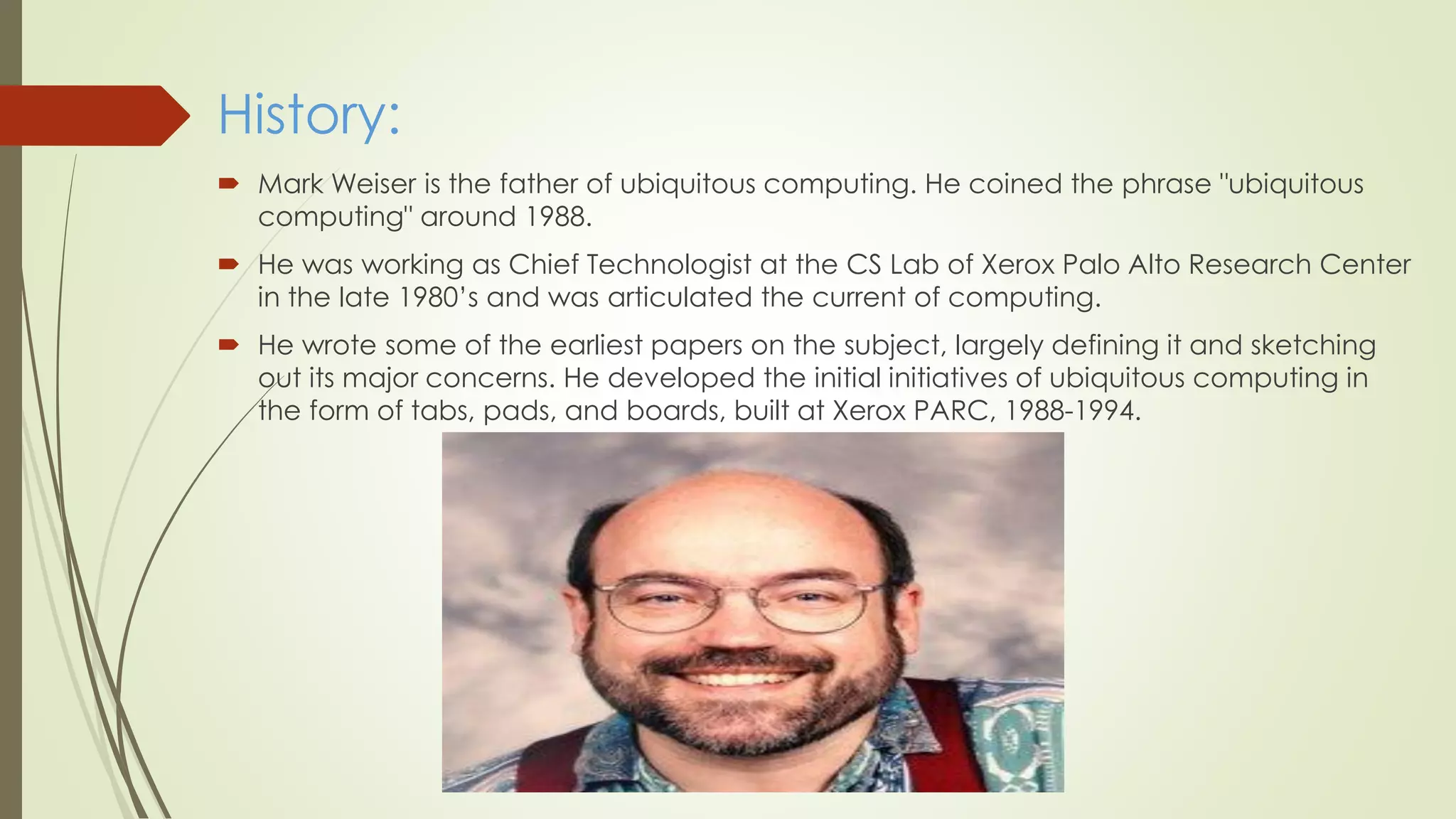
ď‚´ Mark Weiser is the father of ubiquitous computing. He coined the phrase "ubiquitous
computing" around 1988.
ď‚´ He was working as Chief Technologist at the CS Lab of Xerox Palo Alto Research Center
in the late 1980’s and was articulated the current of computing.
ď‚´ He wrote some of the earliest papers on the subject, largely defining it and sketching
out its major concerns. He developed the initial initiatives of ubiquitous computing in
the form of tabs, pads, and boards, built at Xerox PARC, 1988-1994.
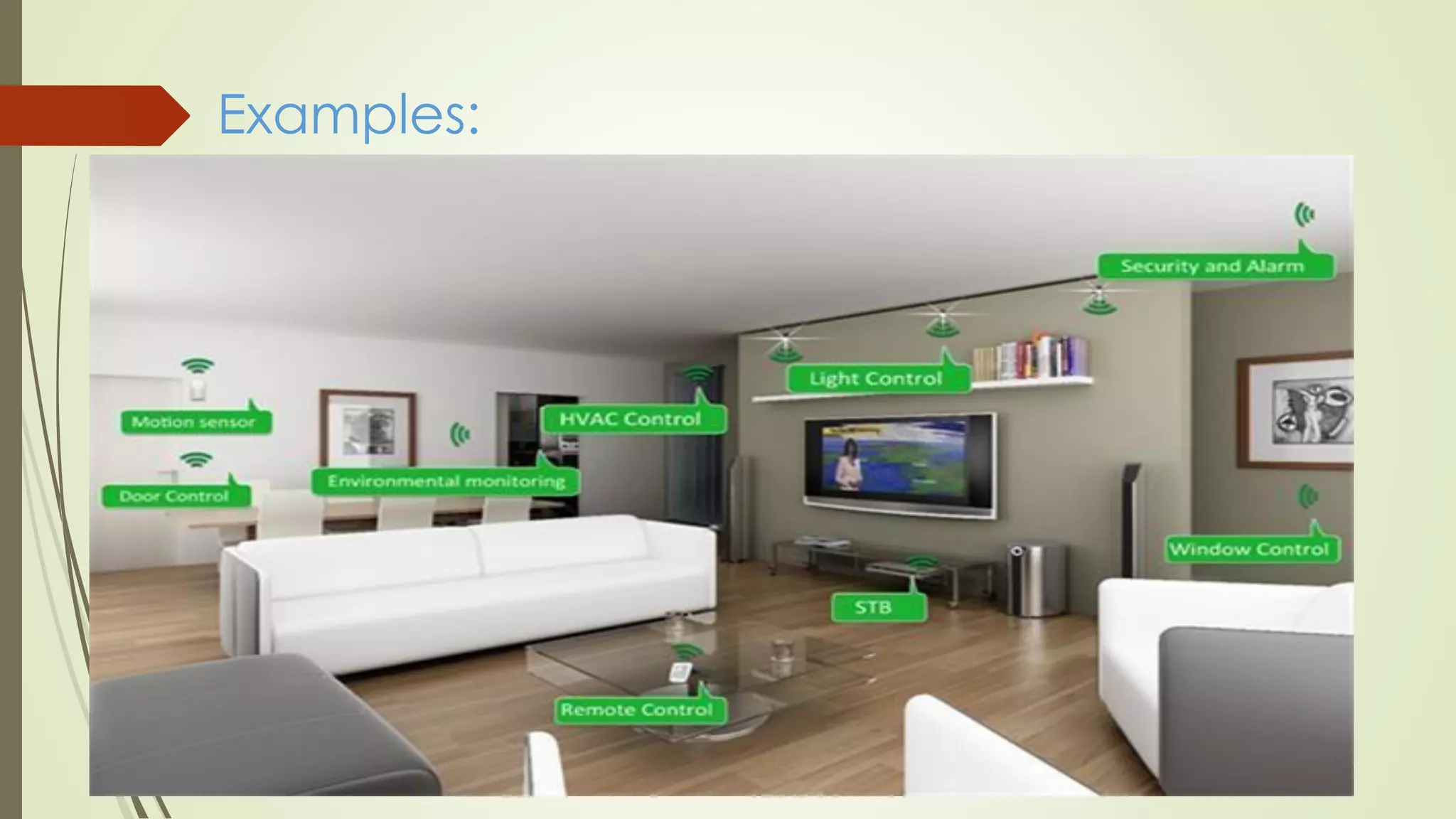
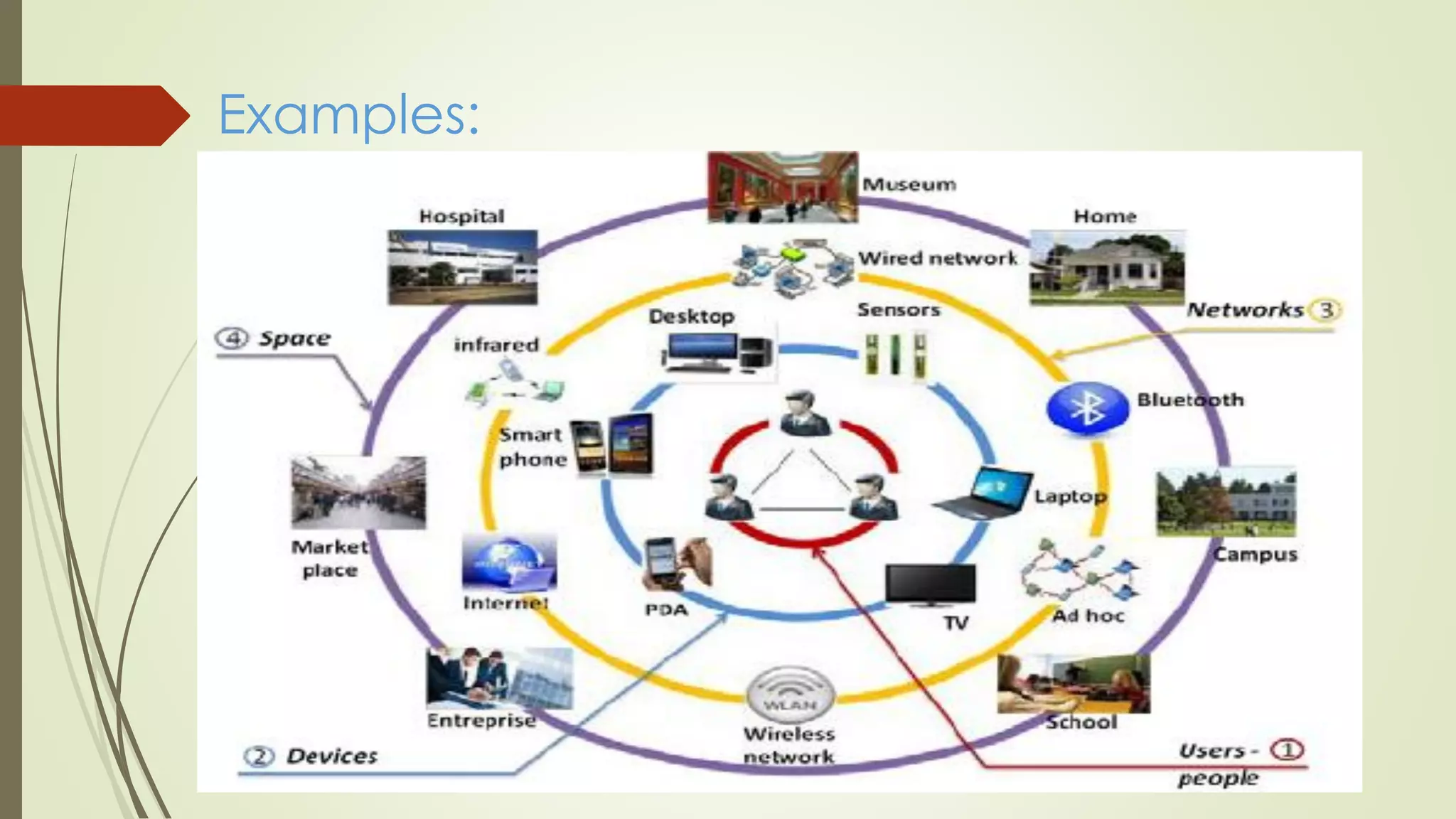
Examples:
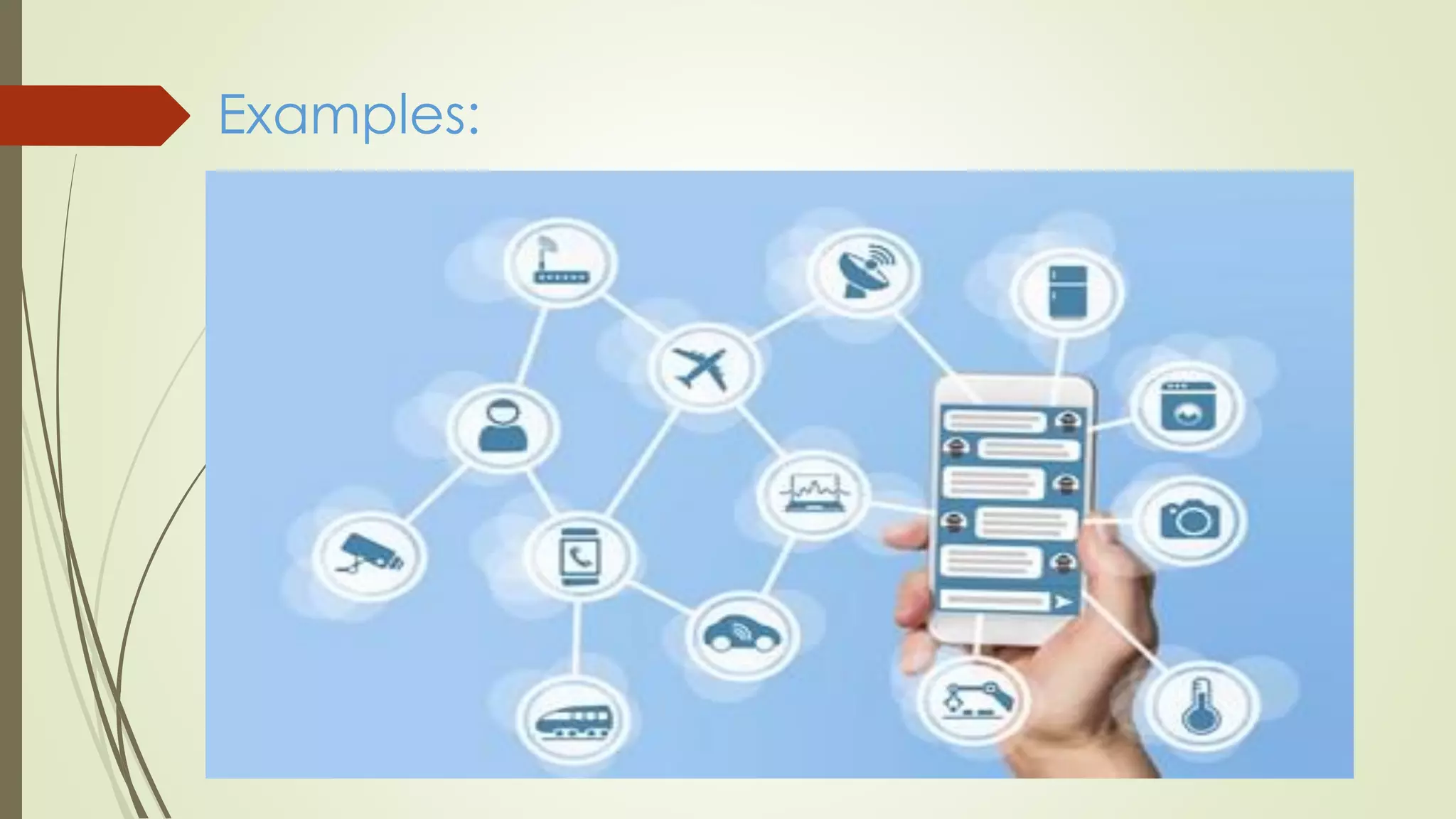
Examples:
Examples:
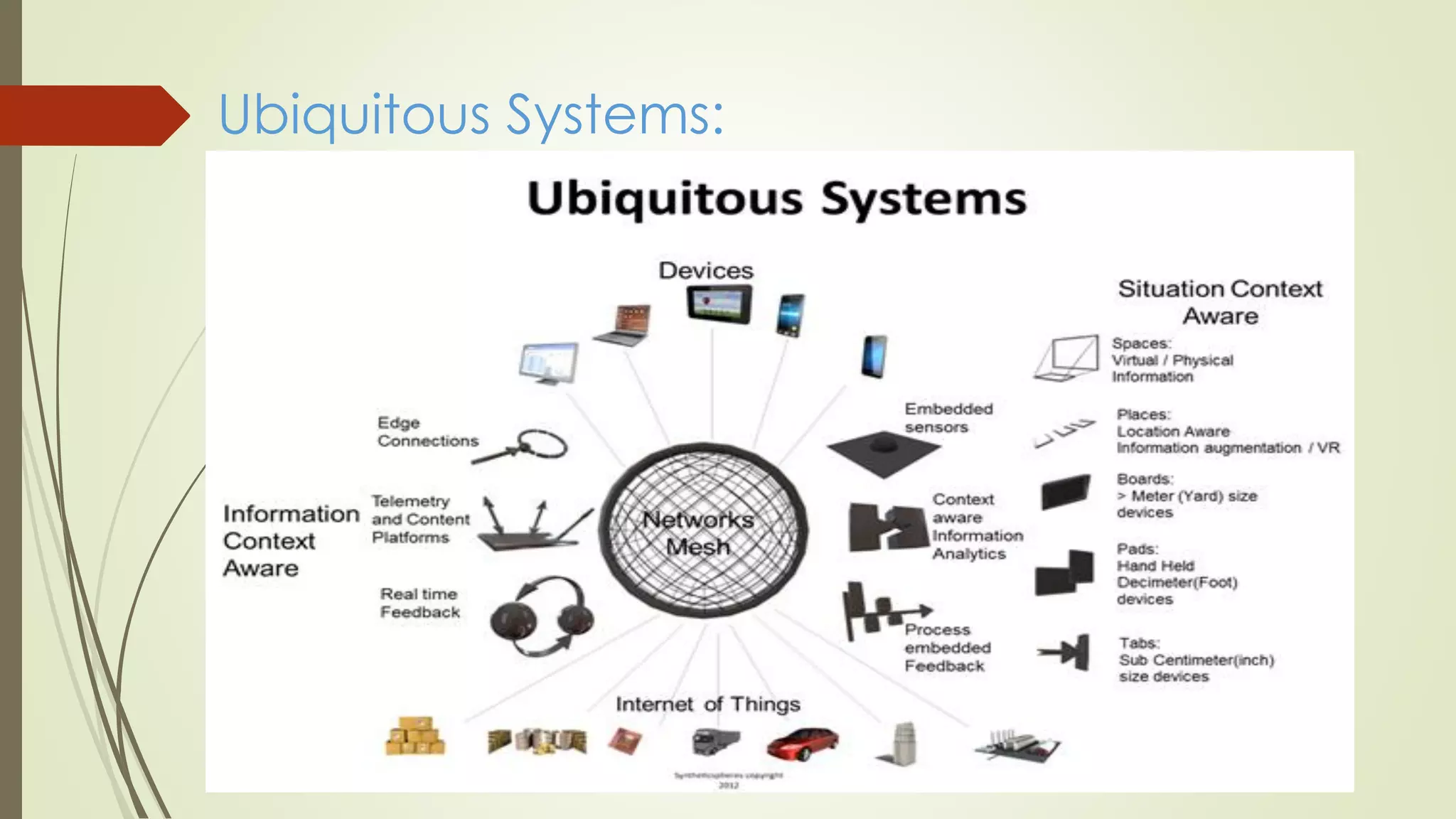
Ubiquitous Systems:
ď‚´How to achieve ubiquity?
• Make computing mobile and connected
• Instrument the person
• Instrument the physical environment
ď‚´ What makes Ubicomp?
• Processing
• Cheaper, faster, smaller, more energy efficient
• Storage
• Big, fast, small in size (Hardware)
• Networking
• Global, local, ad-hoc, low- power, high bandwidth, low latencies
• Sensors
• Types, speed, accuracy, price and robustness
• Displays
• Projection, flexible materials, low power
• Actuators
ď‚´ Challenges to Ubicomp
• Defining the appropriate physical interaction experience
• Discovering general application features
• Understanding interaction in Ubicomp
• Evaluation challenges for Ubicomp
ď‚´ Application themes for Ubicomp
• Context-aware computing
Sensed phenomena facilitate easier interaction
• Automated capture and access
Live experiences stored for future access
• Toward continuous interaction
Everyday activities have no clear begin-end conditions
ď‚´ Summary
• With advanced technology, computing has become an intervention in all
activities and will change life, by putting sensors in the environment
around us became more effective interaction. Now the devices can know
what the user wants through his movements and analyze his activity
Through the mobile can determine the person's behavior
And other smart things such as smart TV, refrigerator, air conditioners
and etc.
ď‚´ References:
• Article “What is Ubiquitous Computing Technology? Easy Introduction and Complete
Guide” Fahad Nalain M.
https://steemit.com/technology/@faad/what-is-ubiquitous-computing-technology-easy-
introduction-and-complete-guide
• Journal “Ubiquitous Computing: A Brief Review of Impacts and Issues”
• Wikipedia.org
• Google.com

Ubiquitous computing 1.0

  • 1.
    UBIQUITOUS COMPUTING Research courseAdvanced topics in IT 1.0V prepared by: Eng. Mohammed Ali A. Hadi Sana’a University February , 2018
  • 2.
    What is Ubicomp? ď‚´ Ubiquitous Computing is a post-desktop model of human-computer interaction in which information processing has been thoroughly integrated into everyday objects and activities. Computing is embedded everywhere in the environment (Computing & processing is embedded into everyday devices). ď‚´ Information access and communication is possible virtually everywhere ď‚´ Devices can be connected and networked ď‚´ It is also called Pervasive Computing.
  • 3.
    History:  Mark Weiseris the father of ubiquitous computing. He coined the phrase "ubiquitous computing" around 1988.  He was working as Chief Technologist at the CS Lab of Xerox Palo Alto Research Center in the late 1980’s and was articulated the current of computing.  He wrote some of the earliest papers on the subject, largely defining it and sketching out its major concerns. He developed the initial initiatives of ubiquitous computing in the form of tabs, pads, and boards, built at Xerox PARC, 1988-1994.
  • 4.
  • 5.
  • 6.
  • 7.
  • 8.
    How to achieveubiquity? • Make computing mobile and connected • Instrument the person • Instrument the physical environment
  • 9.
     What makesUbicomp? • Processing • Cheaper, faster, smaller, more energy efficient • Storage • Big, fast, small in size (Hardware) • Networking • Global, local, ad-hoc, low- power, high bandwidth, low latencies • Sensors • Types, speed, accuracy, price and robustness • Displays • Projection, flexible materials, low power • Actuators
  • 10.
     Challenges toUbicomp • Defining the appropriate physical interaction experience • Discovering general application features • Understanding interaction in Ubicomp • Evaluation challenges for Ubicomp
  • 11.
     Application themesfor Ubicomp • Context-aware computing Sensed phenomena facilitate easier interaction • Automated capture and access Live experiences stored for future access • Toward continuous interaction Everyday activities have no clear begin-end conditions
  • 12.
     Summary • Withadvanced technology, computing has become an intervention in all activities and will change life, by putting sensors in the environment around us became more effective interaction. Now the devices can know what the user wants through his movements and analyze his activity Through the mobile can determine the person's behavior And other smart things such as smart TV, refrigerator, air conditioners and etc.
  • 13.
     References: • Article“What is Ubiquitous Computing Technology? Easy Introduction and Complete Guide” Fahad Nalain M. https://steemit.com/technology/@faad/what-is-ubiquitous-computing-technology-easy- introduction-and-complete-guide • Journal “Ubiquitous Computing: A Brief Review of Impacts and Issues” • Wikipedia.org • Google.com