



1.Evaluation of Rapid Diagnostic
Tests for Typhoid Fever” J clin
microbial. 2004; 42:1885–89
EMAN ABD ELRAOUF AHMED
INTRODUCTION
Typhoid fever usually is caused by Salmonellae typhi bacteria.
Typhoid fever is contracted by the ingestion of contaminated food or water.
Diagnosis of typhoid fever is made when the Salmonella bacteria is detected with a stool culture.
Typhoid fever is treated with antibiotics.
Typhoid fever symptoms are poor appetite, headaches, generalized aches and pains, fever, and
lethargy.
Approximately 3%-5% of patients become carriers of the bacteria after the acute illness.
Typhoid contamination
Typhoid fever is contracted by the ingestion of the bacteria in
contaminated food or water.
Patients with acute illness can contaminate the surrounding water
supply through stool, which contains a high concentration of the
bacteria.
Contamination of the water supply can, in turn, taint the food
supply. About 3%-5% of patients become carriers of the bacteria
after the acute illness.
These patients can become long-term carriers of the bacteria. The
bacteria multiplies in the gallbladder, bile ducts, or liver and passes
into the bowel.
The bacteria can survive for weeks in water or dried sewage. These
chronic carriers may have no symptoms .
diagnosis
Blood test
Bone marrow test
Stool culture test
Widal Test
Antigenic structure for Salmonella
Two sets of antigens
Detection by serotyping
1 Somatic or 0 Antigens contain long chain
polysaccharides ( LPS ) comprises of heat
stable polysaccharide commonly.
2 Flagellar or H Antigens are strongly immunogenic and induces antibody
formation rapidly and in high titers following infection or immunization. The
flagellar antigen is of a dual nature, occurring in one of the two phases.
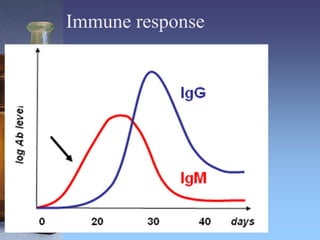
Immune response
statistics
In untreated patients mortality can
be up to 20 %
Salmonella enterica causes
approximately 16 million cases of
typhoid fever worldwide, killing
around 500,000 per year.
abstract
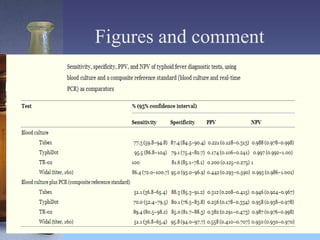
Samples were collected from 530 outpatients with axillary temperatures
of ≥37.5°C, and analysis was conducted on all malaria-negative samples
(n = 500). A composite reference standard of blood culture and PCR
was used, by which 47 participants (9.4%) were considered typhoid
fever positive. The sensitivity and specificity of the Tubex (51.1% and
88.3%, respectively) and TyphiDot (70.0% and 80.1%, respectively)
tests were not high enough to warrant their ongoing use in this setting;
however, the sensitivity and specificity for the TR-02 prototype were
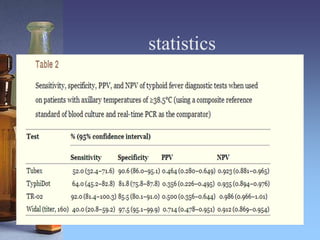
promising (89.4% and 85.0%, respectively). An axillary temperature of
≥38.5°C correlated with typhoid fever (P = 0.014). With an appropriate
diagnostic test, conducting typhoid fever diagnosis only on patients with
high-grade fever could dramatically decrease the costs associated with
diagnosis while having no detrimental impact on the ability to
accurately diagnose the illness.
Hypothesis and aim of the work
Use a suitable diagnostic tool
Methods (experimental design)
1-Participant recruitment and specimen
collection. Patient recruitment took place
at the Goroka General Hospital outpatient
center and the Lopi Urban Clinic in
Goroka, Eastern Highlands
Province, Papua New Guinea. Febrile
patients (axillary temperature, ≥37.5°C)
who reported having fever for at least 2
days were invited to participate in the
continue
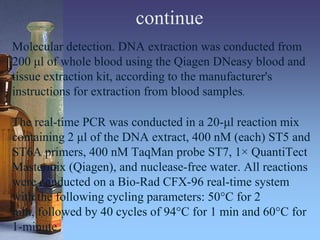
Molecular detection. DNA extraction was conducted from
200 μl of whole blood using the Qiagen DNeasy blood and
tissue extraction kit, according to the manufacturer's
instructions for extraction from blood samples.
The real-time PCR was conducted in a 20-μl reaction mix
containing 2 μl of the DNA extract, 400 nM (each) ST5 and
ST6A primers, 400 nM TaqMan probe ST7, 1× QuantiTect
Mastermix (Qiagen), and nuclease-free water. All reactions
were conducted on a Bio-Rad CFX-96 real-time system
with the following cycling parameters: 50°C for 2
min, followed by 40 cycles of 94°C for 1 min and 60°C for
1-minute
. Negative and positive controls were included
in each run. A positive result was defined as
a sample having a cycle threshold (CT)
between 16 and 40 using an autocalculated
single-threshold baseline using the Bio-Rad
CFX Manager software version 2.0.
The specificity of this real-time PCR assay
has been previously described, and it was
found to be specific for S. Typhi.
Figures and comment
statistics
Discussion and conclusions
demonstrates the value of using the molecular detection of S. Typhi
in blood when evaluating rapid diagnostic tests. Despite bone
marrow culture being the gold standard of typhoid diagnosis, blood
culture is universally used as the reference standard when evaluating
typhoid diagnostic tests. We have demonstrated a 2.1-fold increase
in typhoid fever diagnosis when blood culture and real-time PCR
detection were used, relative to blood culture alone.
The correlation between typhoid fever and high-grade
fever (axillary temperature of ≥38.5°C) may have
important implications for typhoid fever diagnosis.
References:
http://www.ncbi.nlm.nih.gov/pmc/arti
/3491554cles/PMC
THANK you

Typhoid

  • 1.
    1.Evaluation of RapidDiagnostic Tests for Typhoid Fever” J clin microbial. 2004; 42:1885–89 EMAN ABD ELRAOUF AHMED
  • 2.
    INTRODUCTION Typhoid fever usuallyis caused by Salmonellae typhi bacteria. Typhoid fever is contracted by the ingestion of contaminated food or water. Diagnosis of typhoid fever is made when the Salmonella bacteria is detected with a stool culture. Typhoid fever is treated with antibiotics. Typhoid fever symptoms are poor appetite, headaches, generalized aches and pains, fever, and lethargy. Approximately 3%-5% of patients become carriers of the bacteria after the acute illness.
  • 3.
    Typhoid contamination Typhoid feveris contracted by the ingestion of the bacteria in contaminated food or water. Patients with acute illness can contaminate the surrounding water supply through stool, which contains a high concentration of the bacteria. Contamination of the water supply can, in turn, taint the food supply. About 3%-5% of patients become carriers of the bacteria after the acute illness. These patients can become long-term carriers of the bacteria. The bacteria multiplies in the gallbladder, bile ducts, or liver and passes into the bowel. The bacteria can survive for weeks in water or dried sewage. These chronic carriers may have no symptoms .
  • 4.
    diagnosis Blood test Bone marrowtest Stool culture test Widal Test
  • 5.
    Antigenic structure forSalmonella Two sets of antigens Detection by serotyping 1 Somatic or 0 Antigens contain long chain polysaccharides ( LPS ) comprises of heat stable polysaccharide commonly. 2 Flagellar or H Antigens are strongly immunogenic and induces antibody formation rapidly and in high titers following infection or immunization. The flagellar antigen is of a dual nature, occurring in one of the two phases.
  • 6.
  • 7.
    statistics In untreated patientsmortality can be up to 20 % Salmonella enterica causes approximately 16 million cases of typhoid fever worldwide, killing around 500,000 per year.
  • 8.
    abstract Samples were collectedfrom 530 outpatients with axillary temperatures of ≥37.5°C, and analysis was conducted on all malaria-negative samples (n = 500). A composite reference standard of blood culture and PCR was used, by which 47 participants (9.4%) were considered typhoid fever positive. The sensitivity and specificity of the Tubex (51.1% and 88.3%, respectively) and TyphiDot (70.0% and 80.1%, respectively) tests were not high enough to warrant their ongoing use in this setting; however, the sensitivity and specificity for the TR-02 prototype were promising (89.4% and 85.0%, respectively). An axillary temperature of ≥38.5°C correlated with typhoid fever (P = 0.014). With an appropriate diagnostic test, conducting typhoid fever diagnosis only on patients with high-grade fever could dramatically decrease the costs associated with diagnosis while having no detrimental impact on the ability to accurately diagnose the illness.
  • 9.
    Hypothesis and aimof the work Use a suitable diagnostic tool
  • 10.
    Methods (experimental design) 1-Participantrecruitment and specimen collection. Patient recruitment took place at the Goroka General Hospital outpatient center and the Lopi Urban Clinic in Goroka, Eastern Highlands Province, Papua New Guinea. Febrile patients (axillary temperature, ≥37.5°C) who reported having fever for at least 2 days were invited to participate in the
  • 11.
    continue Molecular detection. DNAextraction was conducted from 200 μl of whole blood using the Qiagen DNeasy blood and tissue extraction kit, according to the manufacturer's instructions for extraction from blood samples. The real-time PCR was conducted in a 20-μl reaction mix containing 2 μl of the DNA extract, 400 nM (each) ST5 and ST6A primers, 400 nM TaqMan probe ST7, 1× QuantiTect Mastermix (Qiagen), and nuclease-free water. All reactions were conducted on a Bio-Rad CFX-96 real-time system with the following cycling parameters: 50°C for 2 min, followed by 40 cycles of 94°C for 1 min and 60°C for 1-minute
  • 12.
    . Negative andpositive controls were included in each run. A positive result was defined as a sample having a cycle threshold (CT) between 16 and 40 using an autocalculated single-threshold baseline using the Bio-Rad CFX Manager software version 2.0. The specificity of this real-time PCR assay has been previously described, and it was found to be specific for S. Typhi.
  • 13.
  • 14.
  • 15.
    Discussion and conclusions demonstratesthe value of using the molecular detection of S. Typhi in blood when evaluating rapid diagnostic tests. Despite bone marrow culture being the gold standard of typhoid diagnosis, blood culture is universally used as the reference standard when evaluating typhoid diagnostic tests. We have demonstrated a 2.1-fold increase in typhoid fever diagnosis when blood culture and real-time PCR detection were used, relative to blood culture alone. The correlation between typhoid fever and high-grade fever (axillary temperature of ≥38.5°C) may have important implications for typhoid fever diagnosis.
  • 16.
  • 17.