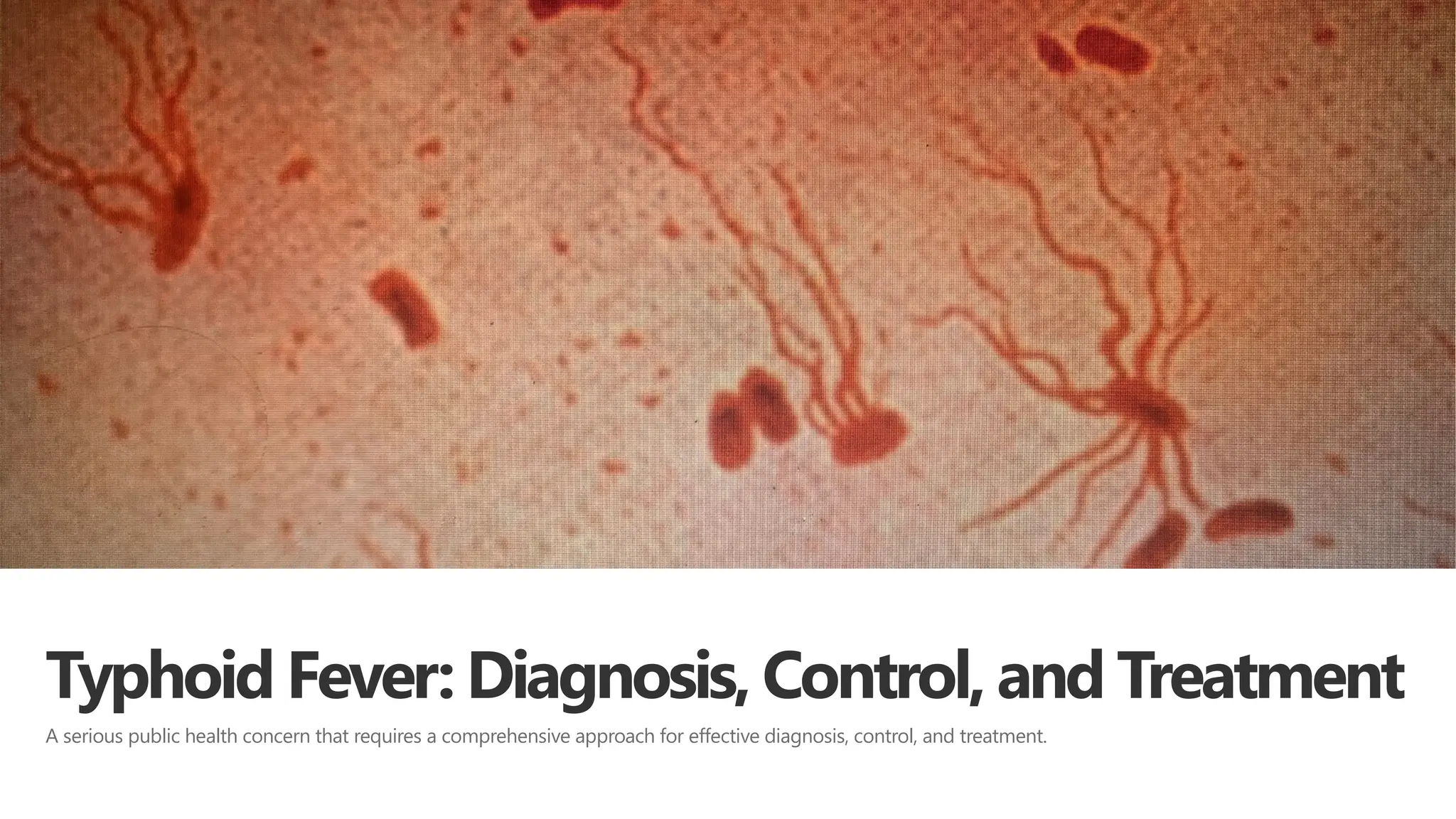
Typhoid Fever: Diagnosis,Control, and Treatment
A serious public health concern that requires a comprehensive approach for effective diagnosis, control, and treatment.
2.
Typhoid Fever –Diagnosis,
Control & Treatment
Typhoid fever is a serious public health concern in Pakistan, with
significant morbidity and mortality if not properly diagnosed and
managed. This presentation aims to provide 4th year MBBS students
with a comprehensive overview of the diagnosis, control, and
treatment of this disease.
3.
Diagnosis
Blood Culture
Blood cultureis the gold standard for diagnosis of
typhoid fever.
Widal Test
Widal test has limited reliability for diagnosis due to
low sensitivity and specificity.
PCR/Rapid Tests
PCR and rapid diagnostic tests are available in some
centers for typhoid fever diagnosis.
Clinical Features
Typhoid fever is characterized by prolonged fever,
abdominal pain, rose spots, and hepatosplenomegaly.
4.
Control/Prevention
• Safe waterand sanitation
Ensuring access to clean drinking water and proper
sewage disposal to prevent the spread of typhoid
through contaminated sources.
• Hand hygiene
Promoting frequent and thorough handwashing with
soap and water to reduce the transmission of the
typhoid bacteria.
• Vaccination
Administering the Vi polysaccharide and Ty21a oral
vaccines to provide immunity against typhoid fever.
• Public health education campaigns
Raising awareness about typhoid prevention, early
detection, and the importance of seeking medical
care among the general population.
5.
Treatment
Antibiotics
First-line antibiotics fortyphoid fever
include azithromycin and ceftriaxone.
Alternatives like fluoroquinolones can also
be used, but resistance concerns need to be
considered.
Supportive Care
In addition to antibiotics, supportive care is
crucial, including fluids, nutrition, and
antipyretics to manage fever and other
symptoms.
Hospitalization
Severe cases of typhoid fever, especially
those with complications like intestinal
perforation or gastrointestinal bleeding,
may require hospitalization for close
monitoring and management.
6.
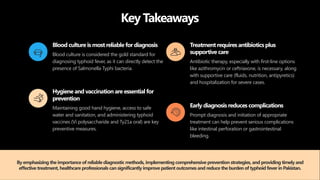
Key Takeaways
Blood cultureis mostreliable for diagnosis
Blood culture is considered the gold standard for
diagnosing typhoid fever, as it can directly detect the
presence of Salmonella Typhi bacteria.
Hygiene and vaccination are essential for
prevention
Maintaining good hand hygiene, access to safe
water and sanitation, and administering typhoid
vaccines (Vi polysaccharide and Ty21a oral) are key
preventive measures.
Treatmentrequires antibiotics plus
supportive care
Antibiotic therapy, especially with first-line options
like azithromycin or ceftriaxone, is necessary, along
with supportive care (fluids, nutrition, antipyretics)
and hospitalization for severe cases.
Early diagnosis reduces complications
Prompt diagnosis and initiation of appropriate
treatment can help prevent serious complications
like intestinal perforation or gastrointestinal
bleeding.
By emphasizing the importance of reliable diagnostic methods, implementing comprehensive prevention strategies, and providing timely and
effective treatment, healthcare professionals can significantly improve patientoutcomes and reduce the burden of typhoid fever in Pakistan.