Self-Care Case Studies
Eman Youssif
Presentation Agenda
Understanding Self-Care & Its Importance
Case Study 1: Preventing Healthcare Burnout
Case Study 2: Student Stress Management
Case Study 3: Living with Chronic Illness
Case Study 4: Resilience & Post-Traumatic
Growth
Integrating Self-Care into Daily Life
Key Takeaways & Call to Action
Understanding Self-Care
• Self-care is any intentional action taken to preserve or improve one's own physical,
mental, and emotional health.
• It is crucial for stress reduction, burnout prevention, and enhancing overall quality of
life.
• Self-care is not selfish, but a necessary practice for sustained well-being and the capacity
to care for others.
• Encompasses various dimensions: physical, emotional, mental, social, and spiritual.
Case Study 1: Healthcare Burnout Prevention
• Scenario: Sarah, an ER nurse facing high-stress shifts and emotional fatigue.
• Challenges: Long hours, traumatic events, compassion fatigue, risk of burnout.
• Self-Care Strategies Implemented:
• Scheduled short meditation breaks and mindfulness exercises during downtime.
• Prioritized consistent 7-8 hours of sleep, even after demanding shifts.
• Engaged in regular social activities outside work, like a book club and hiking.
• Outcome: Reduced anxiety, improved sleep quality, sustained empathy, and renewed
sense of purpose at work.
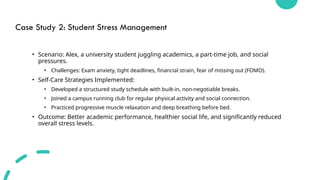
Case Study 2: Student Stress Management
• Scenario: Alex, a university student juggling academics, a part-time job, and social
pressures.
• Challenges: Exam anxiety, tight deadlines, financial strain, fear of missing out (FOMO).
• Self-Care Strategies Implemented:
• Developed a structured study schedule with built-in, non-negotiable breaks.
• Joined a campus running club for regular physical activity and social connection.
• Practiced progressive muscle relaxation and deep breathing before bed.
• Outcome: Better academic performance, healthier social life, and significantly reduced
overall stress levels.
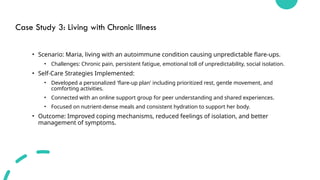
Case Study 3: Living with Chronic Illness
• Scenario: Maria, living with an autoimmune condition causing unpredictable flare-ups.
• Challenges: Chronic pain, persistent fatigue, emotional toll of unpredictability, social isolation.
• Self-Care Strategies Implemented:
• Developed a personalized 'flare-up plan' including prioritized rest, gentle movement, and
comforting activities.
• Connected with an online support group for peer understanding and shared experiences.
• Focused on nutrient-dense meals and consistent hydration to support her body.
• Outcome: Improved coping mechanisms, reduced feelings of isolation, and better
management of symptoms.
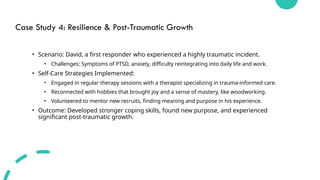
Case Study 4: Resilience & Post-Traumatic Growth
• Scenario: David, a first responder who experienced a highly traumatic incident.
• Challenges: Symptoms of PTSD, anxiety, difficulty reintegrating into daily life and work.
• Self-Care Strategies Implemented:
• Engaged in regular therapy sessions with a therapist specializing in trauma-informed care.
• Reconnected with hobbies that brought joy and a sense of mastery, like woodworking.
• Volunteered to mentor new recruits, finding meaning and purpose in his experience.
• Outcome: Developed stronger coping skills, found new purpose, and experienced
significant post-traumatic growth.
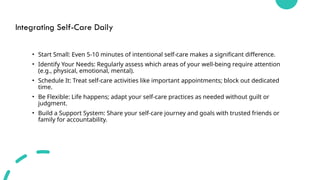
Integrating Self-Care Daily
• Start Small: Even 5-10 minutes of intentional self-care makes a significant difference.
• Identify Your Needs: Regularly assess which areas of your well-being require attention
(e.g., physical, emotional, mental).
• Schedule It: Treat self-care activities like important appointments; block out dedicated
time.
• Be Flexible: Life happens; adapt your self-care practices as needed without guilt or
judgment.
• Build a Support System: Share your self-care journey and goals with trusted friends or
family for accountability.
Key Takeaways & Your Journey
• Self-care is highly personal; what works for one person may not work for another.
• Consistency is key, even with small, seemingly insignificant steps.
• It's an ongoing process of discovery and adaptation, not a one-time fix.
• Call to Action: Identify one new self-care practice you can implement or strengthen this
week.
• Consider sharing your commitment with a friend or colleague for added accountability.
Thank You & Questions

Self-Care Case Studies cases and recommended solutions.pptx

  • 1.
  • 2.
    Presentation Agenda Understanding Self-Care& Its Importance Case Study 1: Preventing Healthcare Burnout Case Study 2: Student Stress Management Case Study 3: Living with Chronic Illness Case Study 4: Resilience & Post-Traumatic Growth Integrating Self-Care into Daily Life Key Takeaways & Call to Action
  • 3.
    Understanding Self-Care • Self-careis any intentional action taken to preserve or improve one's own physical, mental, and emotional health. • It is crucial for stress reduction, burnout prevention, and enhancing overall quality of life. • Self-care is not selfish, but a necessary practice for sustained well-being and the capacity to care for others. • Encompasses various dimensions: physical, emotional, mental, social, and spiritual.
  • 4.
    Case Study 1:Healthcare Burnout Prevention • Scenario: Sarah, an ER nurse facing high-stress shifts and emotional fatigue. • Challenges: Long hours, traumatic events, compassion fatigue, risk of burnout. • Self-Care Strategies Implemented: • Scheduled short meditation breaks and mindfulness exercises during downtime. • Prioritized consistent 7-8 hours of sleep, even after demanding shifts. • Engaged in regular social activities outside work, like a book club and hiking. • Outcome: Reduced anxiety, improved sleep quality, sustained empathy, and renewed sense of purpose at work.
  • 5.
    Case Study 2:Student Stress Management • Scenario: Alex, a university student juggling academics, a part-time job, and social pressures. • Challenges: Exam anxiety, tight deadlines, financial strain, fear of missing out (FOMO). • Self-Care Strategies Implemented: • Developed a structured study schedule with built-in, non-negotiable breaks. • Joined a campus running club for regular physical activity and social connection. • Practiced progressive muscle relaxation and deep breathing before bed. • Outcome: Better academic performance, healthier social life, and significantly reduced overall stress levels.
  • 6.
    Case Study 3:Living with Chronic Illness • Scenario: Maria, living with an autoimmune condition causing unpredictable flare-ups. • Challenges: Chronic pain, persistent fatigue, emotional toll of unpredictability, social isolation. • Self-Care Strategies Implemented: • Developed a personalized 'flare-up plan' including prioritized rest, gentle movement, and comforting activities. • Connected with an online support group for peer understanding and shared experiences. • Focused on nutrient-dense meals and consistent hydration to support her body. • Outcome: Improved coping mechanisms, reduced feelings of isolation, and better management of symptoms.
  • 7.
    Case Study 4:Resilience & Post-Traumatic Growth • Scenario: David, a first responder who experienced a highly traumatic incident. • Challenges: Symptoms of PTSD, anxiety, difficulty reintegrating into daily life and work. • Self-Care Strategies Implemented: • Engaged in regular therapy sessions with a therapist specializing in trauma-informed care. • Reconnected with hobbies that brought joy and a sense of mastery, like woodworking. • Volunteered to mentor new recruits, finding meaning and purpose in his experience. • Outcome: Developed stronger coping skills, found new purpose, and experienced significant post-traumatic growth.
  • 8.
    Integrating Self-Care Daily •Start Small: Even 5-10 minutes of intentional self-care makes a significant difference. • Identify Your Needs: Regularly assess which areas of your well-being require attention (e.g., physical, emotional, mental). • Schedule It: Treat self-care activities like important appointments; block out dedicated time. • Be Flexible: Life happens; adapt your self-care practices as needed without guilt or judgment. • Build a Support System: Share your self-care journey and goals with trusted friends or family for accountability.
  • 9.
    Key Takeaways &Your Journey • Self-care is highly personal; what works for one person may not work for another. • Consistency is key, even with small, seemingly insignificant steps. • It's an ongoing process of discovery and adaptation, not a one-time fix. • Call to Action: Identify one new self-care practice you can implement or strengthen this week. • Consider sharing your commitment with a friend or colleague for added accountability.
  • 10.
    Thank You &Questions