Textual Typology:
Expository,
Argumentative, and
Narrative Texts
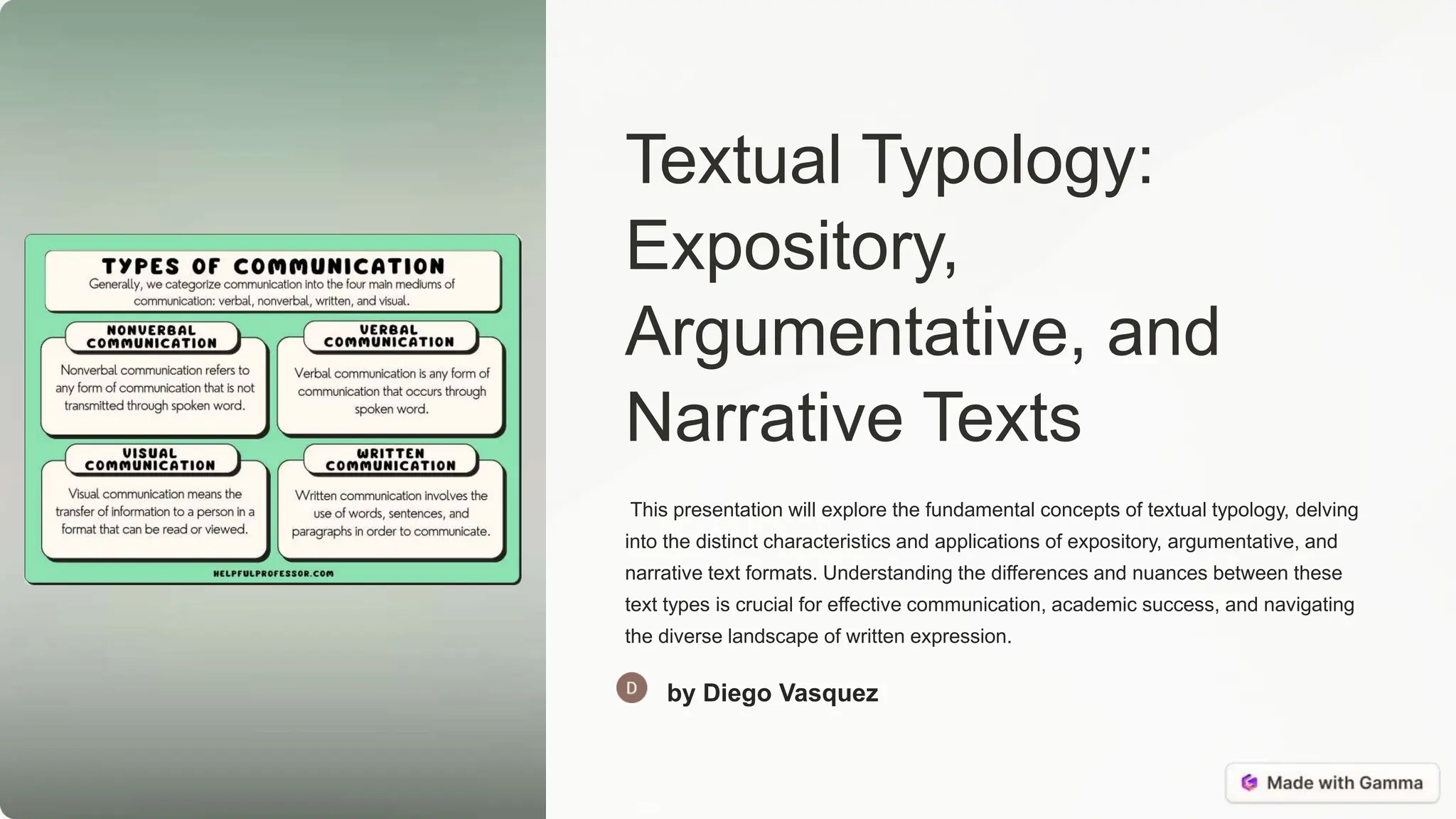
This presentation will explore the fundamental concepts of textual typology, delving
into the distinct characteristics and applications of expository, argumentative, and
narrative text formats. Understanding the differences and nuances between these
text types is crucial for effective communication, academic success, and navigating
the diverse landscape of written expression.
by Diego Vasquez
Textual Typology
What is Textual Typology?
Textual typology refers to the
classification of written texts
based on their purpose, structure,
and linguistic features.
Recognizing the different types of
texts and their unique
characteristics is essential for
comprehending the complexities
of communication and developing
strong writing skills.
Why is it Important?
Mastering textual typology allows
you to better understand the
intent and structure of various
written materials, from academic
essays to creative narratives.
This knowledge empowers you to
engage with texts more
effectively, whether you are
reading, analyzing, or producing
your own written works.
Key Text Types
The primary textual types are
expository, argumentative, and
narrative. Each serves a distinct
purpose and follows a unique
organizational pattern, offering a
rich tapestry of written
communication.
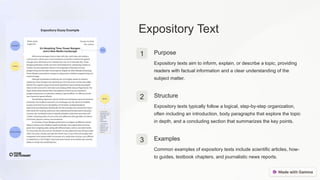
Expository Text
1 Purpose
Expository texts aim to inform, explain, or describe a topic, providing
readers with factual information and a clear understanding of the
subject matter.
2 Structure
Expository texts typically follow a logical, step-by-step organization,
often including an introduction, body paragraphs that explore the topic
in depth, and a concluding section that summarizes the key points.
3 Examples
Common examples of expository texts include scientific articles, how-
to guides, textbook chapters, and journalistic news reports.
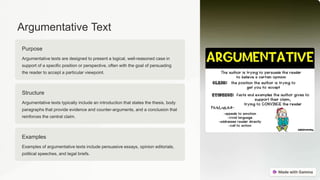
Argumentative Text
Purpose
Argumentative texts are designed to present a logical, well-reasoned case in
support of a specific position or perspective, often with the goal of persuading
the reader to accept a particular viewpoint.
Structure
Argumentative texts typically include an introduction that states the thesis, body
paragraphs that provide evidence and counter-arguments, and a conclusion that
reinforces the central claim.
Examples
Examples of argumentative texts include persuasive essays, opinion editorials,
political speeches, and legal briefs.
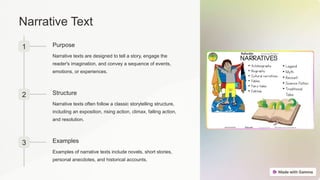
Narrative Text
1 Purpose
Narrative texts are designed to tell a story, engage the
reader's imagination, and convey a sequence of events,
emotions, or experiences.
2 Structure
Narrative texts often follow a classic storytelling structure,
including an exposition, rising action, climax, falling action,
and resolution.
3 Examples
Examples of narrative texts include novels, short stories,
personal anecdotes, and historical accounts.
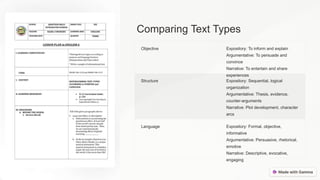
Comparing Text Types
Objective Expository: To inform and explain
Argumentative: To persuade and
convince
Narrative: To entertain and share
experiences
Structure Expository: Sequential, logical
organization
Argumentative: Thesis, evidence,
counter-arguments
Narrative: Plot development, character
arcs
Language Expository: Formal, objective,
informative
Argumentative: Persuasive, rhetorical,
emotive
Narrative: Descriptive, evocative,
engaging
Applying Text Types
Academic
Expository and argumentative texts are widely used in academic settings, such as research papers,
essays, and dissertations.
Journalism
Expository and narrative texts are common in journalism, with news articles, feature stories, and
opinion pieces.
Creative Writing
Narrative texts are the foundation of creative writing, including novels, short stories, and memoirs.
Business
Practice Time!
Identify the Text Type
Analyze the provided text samples and determine the
appropriate textual type (expository, argumentative, or
narrative).
Explain Your Reasoning
Explain the specific features and characteristics that led you to
identify the text type, demonstrating your understanding of
textual typology.
Apply Your Knowledge
Apply your newfound knowledge of textual typology to your own
writing, ensuring you select the appropriate text type to
effectively convey your message.

Textual-Typology-Expository-Argumentative-and-Narrative-Texts.pptx

  • 1.
    Textual Typology: Expository, Argumentative, and NarrativeTexts This presentation will explore the fundamental concepts of textual typology, delving into the distinct characteristics and applications of expository, argumentative, and narrative text formats. Understanding the differences and nuances between these text types is crucial for effective communication, academic success, and navigating the diverse landscape of written expression. by Diego Vasquez
  • 2.
    Textual Typology What isTextual Typology? Textual typology refers to the classification of written texts based on their purpose, structure, and linguistic features. Recognizing the different types of texts and their unique characteristics is essential for comprehending the complexities of communication and developing strong writing skills. Why is it Important? Mastering textual typology allows you to better understand the intent and structure of various written materials, from academic essays to creative narratives. This knowledge empowers you to engage with texts more effectively, whether you are reading, analyzing, or producing your own written works. Key Text Types The primary textual types are expository, argumentative, and narrative. Each serves a distinct purpose and follows a unique organizational pattern, offering a rich tapestry of written communication.
  • 3.
    Expository Text 1 Purpose Expositorytexts aim to inform, explain, or describe a topic, providing readers with factual information and a clear understanding of the subject matter. 2 Structure Expository texts typically follow a logical, step-by-step organization, often including an introduction, body paragraphs that explore the topic in depth, and a concluding section that summarizes the key points. 3 Examples Common examples of expository texts include scientific articles, how- to guides, textbook chapters, and journalistic news reports.
  • 4.
    Argumentative Text Purpose Argumentative textsare designed to present a logical, well-reasoned case in support of a specific position or perspective, often with the goal of persuading the reader to accept a particular viewpoint. Structure Argumentative texts typically include an introduction that states the thesis, body paragraphs that provide evidence and counter-arguments, and a conclusion that reinforces the central claim. Examples Examples of argumentative texts include persuasive essays, opinion editorials, political speeches, and legal briefs.
  • 5.
    Narrative Text 1 Purpose Narrativetexts are designed to tell a story, engage the reader's imagination, and convey a sequence of events, emotions, or experiences. 2 Structure Narrative texts often follow a classic storytelling structure, including an exposition, rising action, climax, falling action, and resolution. 3 Examples Examples of narrative texts include novels, short stories, personal anecdotes, and historical accounts.
  • 6.
    Comparing Text Types ObjectiveExpository: To inform and explain Argumentative: To persuade and convince Narrative: To entertain and share experiences Structure Expository: Sequential, logical organization Argumentative: Thesis, evidence, counter-arguments Narrative: Plot development, character arcs Language Expository: Formal, objective, informative Argumentative: Persuasive, rhetorical, emotive Narrative: Descriptive, evocative, engaging
  • 7.
    Applying Text Types Academic Expositoryand argumentative texts are widely used in academic settings, such as research papers, essays, and dissertations. Journalism Expository and narrative texts are common in journalism, with news articles, feature stories, and opinion pieces. Creative Writing Narrative texts are the foundation of creative writing, including novels, short stories, and memoirs. Business
  • 8.
    Practice Time! Identify theText Type Analyze the provided text samples and determine the appropriate textual type (expository, argumentative, or narrative). Explain Your Reasoning Explain the specific features and characteristics that led you to identify the text type, demonstrating your understanding of textual typology. Apply Your Knowledge Apply your newfound knowledge of textual typology to your own writing, ensuring you select the appropriate text type to effectively convey your message.