TECHNO MAIN SALT LAKE
COLLEGE CODE - 130
SUBJECT CODE : CE(PC)601
SUBJECT : Construction Engineering & Management
TOPIC : Types of foundations and construction methods
DEPERTMENT : CIVIL ENGINEERING
YEAR : 3rd
YEAR
SEMESTER : 6th
 GROUP MEMBER
NAME ROLL NUMBER REGISTRATION NUMBER
NILESH SAHA 13001323024 231300120994
RIMI DASH 1300132305 231300120995
SAYAK JANA 13001323027 231300120997
SHAURYA PRAMANICK 13001323028 231300120998
SUBHRO SEKHAR NATH 13001323029 231300120999
Types of Foundations & Construction Metod
• This presentation covers various types of
foundations used in construction, focusing on
shallow and deep foundations, and their
applications.
Introduction
Shallow foundations are typically used when the load of a
structure can be supported by soil at a relatively shallow depth.
They are usually suitable for lighter buildings and include types
such as spread footings, mat foundations, and slab-on-grade.
Their advantages include simplicity in construction, cost-
effectiveness, and successful load distribution across a large area.
Shallow
Foundations
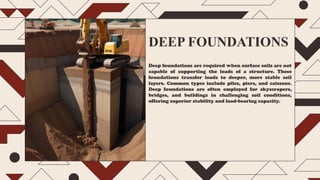
DEEP FOUNDATIONS
Deep foundations are required when surface soils are not
capable of supporting the loads of a structure. These
foundations transfer loads to deeper, more stable soil
layers. Common types include piles, piers, and caissons.
Deep foundations are often employed for skyscrapers,
bridges, and buildings in challenging soil conditions,
offering superior stability and load-bearing capacity.
Specialized
Foundations
Specialized foundations cater to unique structural needs
and specific conditions where conventional foundations
fall short. They encompass types such as underpinning,
seismic bases, and foundations for wind turbines, each
tailored to different soil, environmental, and load
scenarios. These foundations significantly improve safety
and performance, especially in demanding settings
vulnerable to earthquakes or varied terrain.
Traditional construction methods often include masonry, timber
framing, and reinforced concrete techniques that have been used
for centuries. These methods emphasize craftsmanship and local
materials. They are well-understood, often cost-effective, and
provide robust structures. However, they may be less adaptable to
modern needs and technologies, which can limit construction
efficiency and speed in comparison to newer methods.
Traditional
Methods
Modern Techniques
Modern construction techniques incorporate advanced
technology and methodologies such as precast
concrete, modular construction, and Building
Information Modeling (BIM). These methods enhance
efficiency, reduce waste, and improve safety. They also
allow for faster building processes and integrated
project delivery, contributing to sustainable practices
and often leading to cost savings over time.
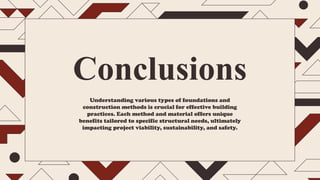
Innovative Materials
Innovative construction materials include
sustainable options like recycled materials, green
concrete, and advanced composites. These materials
aim to reduce the environmental impact of
construction while maintaining durability and
strength. They allow for new design possibilities and
enhance energy efficiency, responding to the
growing demand for sustainable building practices.
Innovations such as 3D printing materials and smart
materials are also reshaping industry standards.
Understanding various types of foundations and
construction methods is crucial for effective building
practices. Each method and material offers unique
benefits tailored to specific structural needs, ultimately
impacting project viability, sustainability, and safety.
Conclusions
Thank you!

Types of Foundations & foundation . pptx

  • 1.
    TECHNO MAIN SALTLAKE COLLEGE CODE - 130 SUBJECT CODE : CE(PC)601 SUBJECT : Construction Engineering & Management TOPIC : Types of foundations and construction methods DEPERTMENT : CIVIL ENGINEERING YEAR : 3rd YEAR SEMESTER : 6th  GROUP MEMBER NAME ROLL NUMBER REGISTRATION NUMBER NILESH SAHA 13001323024 231300120994 RIMI DASH 1300132305 231300120995 SAYAK JANA 13001323027 231300120997 SHAURYA PRAMANICK 13001323028 231300120998 SUBHRO SEKHAR NATH 13001323029 231300120999
  • 2.
    Types of Foundations& Construction Metod
  • 3.
    • This presentationcovers various types of foundations used in construction, focusing on shallow and deep foundations, and their applications. Introduction
  • 4.
    Shallow foundations aretypically used when the load of a structure can be supported by soil at a relatively shallow depth. They are usually suitable for lighter buildings and include types such as spread footings, mat foundations, and slab-on-grade. Their advantages include simplicity in construction, cost- effectiveness, and successful load distribution across a large area. Shallow Foundations
  • 5.
    DEEP FOUNDATIONS Deep foundationsare required when surface soils are not capable of supporting the loads of a structure. These foundations transfer loads to deeper, more stable soil layers. Common types include piles, piers, and caissons. Deep foundations are often employed for skyscrapers, bridges, and buildings in challenging soil conditions, offering superior stability and load-bearing capacity.
  • 6.
    Specialized Foundations Specialized foundations caterto unique structural needs and specific conditions where conventional foundations fall short. They encompass types such as underpinning, seismic bases, and foundations for wind turbines, each tailored to different soil, environmental, and load scenarios. These foundations significantly improve safety and performance, especially in demanding settings vulnerable to earthquakes or varied terrain.
  • 7.
    Traditional construction methodsoften include masonry, timber framing, and reinforced concrete techniques that have been used for centuries. These methods emphasize craftsmanship and local materials. They are well-understood, often cost-effective, and provide robust structures. However, they may be less adaptable to modern needs and technologies, which can limit construction efficiency and speed in comparison to newer methods. Traditional Methods
  • 8.
    Modern Techniques Modern constructiontechniques incorporate advanced technology and methodologies such as precast concrete, modular construction, and Building Information Modeling (BIM). These methods enhance efficiency, reduce waste, and improve safety. They also allow for faster building processes and integrated project delivery, contributing to sustainable practices and often leading to cost savings over time.
  • 9.
    Innovative Materials Innovative constructionmaterials include sustainable options like recycled materials, green concrete, and advanced composites. These materials aim to reduce the environmental impact of construction while maintaining durability and strength. They allow for new design possibilities and enhance energy efficiency, responding to the growing demand for sustainable building practices. Innovations such as 3D printing materials and smart materials are also reshaping industry standards.
  • 10.
    Understanding various typesof foundations and construction methods is crucial for effective building practices. Each method and material offers unique benefits tailored to specific structural needs, ultimately impacting project viability, sustainability, and safety. Conclusions
  • 11.