Introduction to Structural Engineering
Principles, Applications, and
Innovations
Shreehari Kulkarni
Introduction to Structural Engineering
Structural engineering is a specialty within civil
engineering that focuses on designing and
analyzing structures to ensure they can
support and resist loads safely.
Ensures that buildings and infrastructure can
withstand various forces, providing safety and
stability.
Key Principles of Structural Engineering
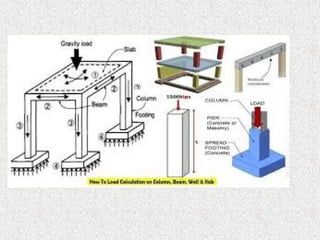
- Load Distribution: How loads (forces) are spread
across different structural components.
- Dead Loads: Weight of the structure itself.
- Live Loads: Variable weights like occupants and
furniture.
- Strength: Materials must be strong enough to
handle loads.
- Stability: Structures must maintain equilibrium
under loads.
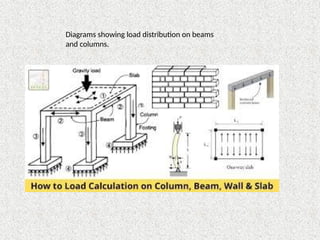
Diagrams showing load distribution on beams
and columns.
Types of Loads
- Dead Loads: Constant loads from the weight of
the structure and permanent fixtures.
- Live Loads: Temporary or movable loads such as
people, vehicles, or furniture.
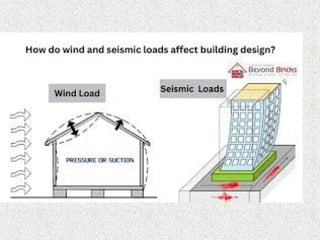
- Wind Loads: Forces applied by wind, crucial for
tall buildings and bridges.
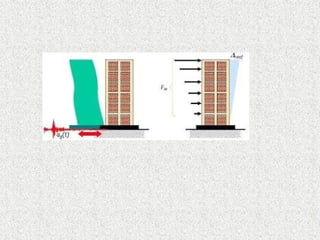
- Seismic Loads: Forces from earthquakes that can
cause ground shaking.
Common Structural Systems
- Beams and Columns: Fundamental
components; beams support horizontal loads,
columns support vertical loads.
- Frames: A network of beams and columns
forming a rigid structure.
- Trusses: Triangular units used to span large
distances with minimal material.
Structural Analysis Methods
- Static Analysis: Evaluates how a structure
behaves under static loads that do not change
with time.
- Dynamic Analysis: Assesses structures under
dynamic loads that vary over time (e.g.,
vibrations, seismic activity).
Static Analysis:
• Nature of Loads:
– Considers loads that are applied slowly and
remain constant over time (e.g., dead loads, live
loads).
– Assumes that the structure is in a state of static
equilibrium, meaning the sum of all forces and
moments is zero.
Dynamic Analysis:
• Nature of Loads:
– Considers loads that vary with time, such as wind
loads, seismic loads, or impact forces.
– Accounts for the inertia and damping effects of
the structure.
Materials in Structural Engineering
- Concrete: Strong in compression, used in
foundations and large structures.
-Steel: High tensile strength, used in frameworks
and reinforcements.
- Wood: Traditional material, used in residential
construction, renewable and versatile.
- Composite Materials: Combining materials (e.g.,
reinforced concrete, fiber-reinforced polymers)
to enhance performance.
Design Considerations
- Safety: Structures must be designed to handle all
expected loads without failing.
- Cost: Balancing material costs with performance and
safety requirements.
-Aesthetics: The visual appearance of the structure,
ensuring it meets design goals.
- Sustainability: Using eco-friendly materials and
practices to reduce environmental impact.
- Visuals: Examples of aesthetically pleasing structures,
cost analysis charts, and sustainable design features.
Top innovations in structural engineering
• Modular Engineering. We are moving away
from the days when building a home or
commercial building required lots of
manpower and traditional methodologies. ...
• Advanced Safety Technologies. ...
• Drone Technologies. ...
• Digital Simulation Technologies. ...
• 3D Printing.
THANK YOU

Presentation on Structural Engineering ( Civil)

  • 1.
    Introduction to StructuralEngineering Principles, Applications, and Innovations Shreehari Kulkarni
  • 3.
    Introduction to StructuralEngineering Structural engineering is a specialty within civil engineering that focuses on designing and analyzing structures to ensure they can support and resist loads safely. Ensures that buildings and infrastructure can withstand various forces, providing safety and stability.
  • 5.
    Key Principles ofStructural Engineering - Load Distribution: How loads (forces) are spread across different structural components. - Dead Loads: Weight of the structure itself. - Live Loads: Variable weights like occupants and furniture. - Strength: Materials must be strong enough to handle loads. - Stability: Structures must maintain equilibrium under loads.
  • 6.
    Diagrams showing loaddistribution on beams and columns.
  • 7.
    Types of Loads -Dead Loads: Constant loads from the weight of the structure and permanent fixtures. - Live Loads: Temporary or movable loads such as people, vehicles, or furniture. - Wind Loads: Forces applied by wind, crucial for tall buildings and bridges. - Seismic Loads: Forces from earthquakes that can cause ground shaking.
  • 10.
    Common Structural Systems -Beams and Columns: Fundamental components; beams support horizontal loads, columns support vertical loads. - Frames: A network of beams and columns forming a rigid structure. - Trusses: Triangular units used to span large distances with minimal material.
  • 12.
    Structural Analysis Methods -Static Analysis: Evaluates how a structure behaves under static loads that do not change with time. - Dynamic Analysis: Assesses structures under dynamic loads that vary over time (e.g., vibrations, seismic activity).
  • 13.
    Static Analysis: • Natureof Loads: – Considers loads that are applied slowly and remain constant over time (e.g., dead loads, live loads). – Assumes that the structure is in a state of static equilibrium, meaning the sum of all forces and moments is zero.
  • 14.
    Dynamic Analysis: • Natureof Loads: – Considers loads that vary with time, such as wind loads, seismic loads, or impact forces. – Accounts for the inertia and damping effects of the structure.
  • 15.
    Materials in StructuralEngineering - Concrete: Strong in compression, used in foundations and large structures. -Steel: High tensile strength, used in frameworks and reinforcements. - Wood: Traditional material, used in residential construction, renewable and versatile. - Composite Materials: Combining materials (e.g., reinforced concrete, fiber-reinforced polymers) to enhance performance.
  • 17.
    Design Considerations - Safety:Structures must be designed to handle all expected loads without failing. - Cost: Balancing material costs with performance and safety requirements. -Aesthetics: The visual appearance of the structure, ensuring it meets design goals. - Sustainability: Using eco-friendly materials and practices to reduce environmental impact. - Visuals: Examples of aesthetically pleasing structures, cost analysis charts, and sustainable design features.

  • 19.
    Top innovations instructural engineering • Modular Engineering. We are moving away from the days when building a home or commercial building required lots of manpower and traditional methodologies. ... • Advanced Safety Technologies. ... • Drone Technologies. ... • Digital Simulation Technologies. ... • 3D Printing.
  • 20.