Download to read offline



The document describes 6 types of documentaries as defined by theorist Bill Nichols: 1) Poetic Documentary which presents a personal topic in an artistic style through editing and camerawork. 2) Observational Documentary where the filmmaker is a neutral observer of subjects and events as they unfold without influencing them. 3) Reflexive Documentary acknowledges the constructive nature of documentaries and how they present a reconstruction rather than objective truth. 4) Expository Documentary allows direct access to the audience through voiceover or titles to provide context. 5) Participatory Documentary alters the events presented through the filmmaker's presence. 6) Performative Documentary acknowledges
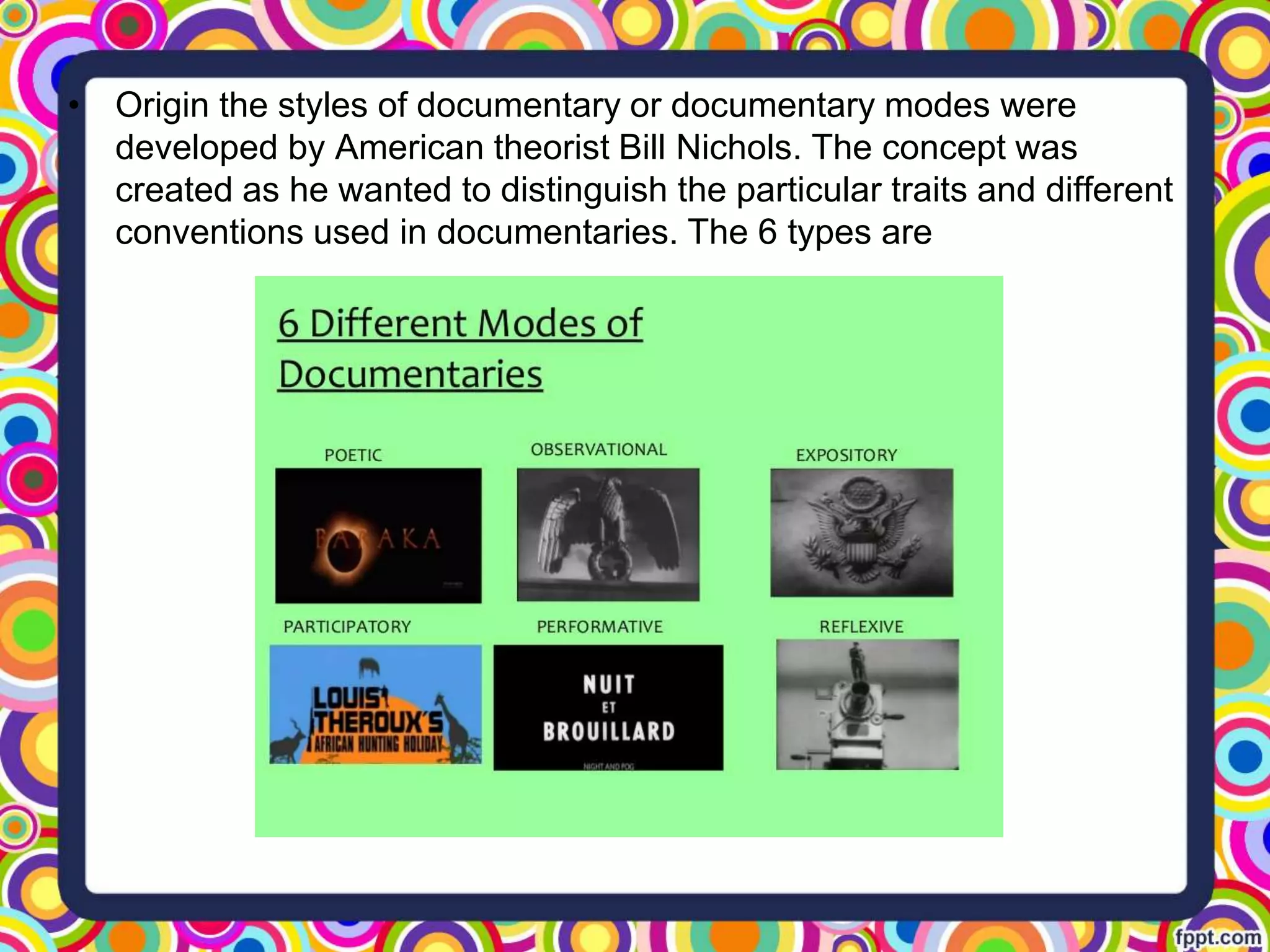
Introduction to documentary types developed by Bill Nichols, outlining six distinct styles.
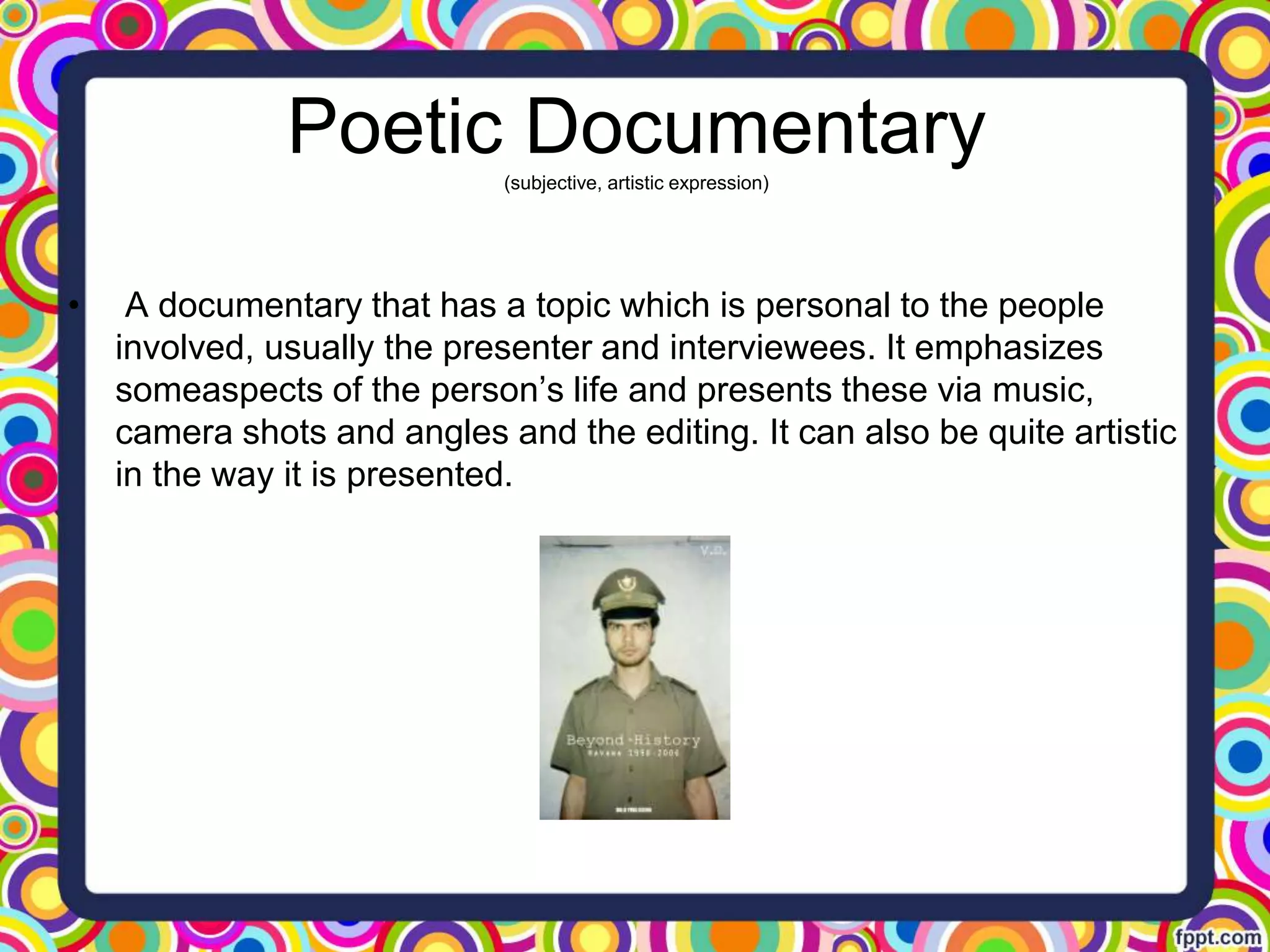
Personal, artistic expression focusing on individual experiences conveyed through music and visuals.
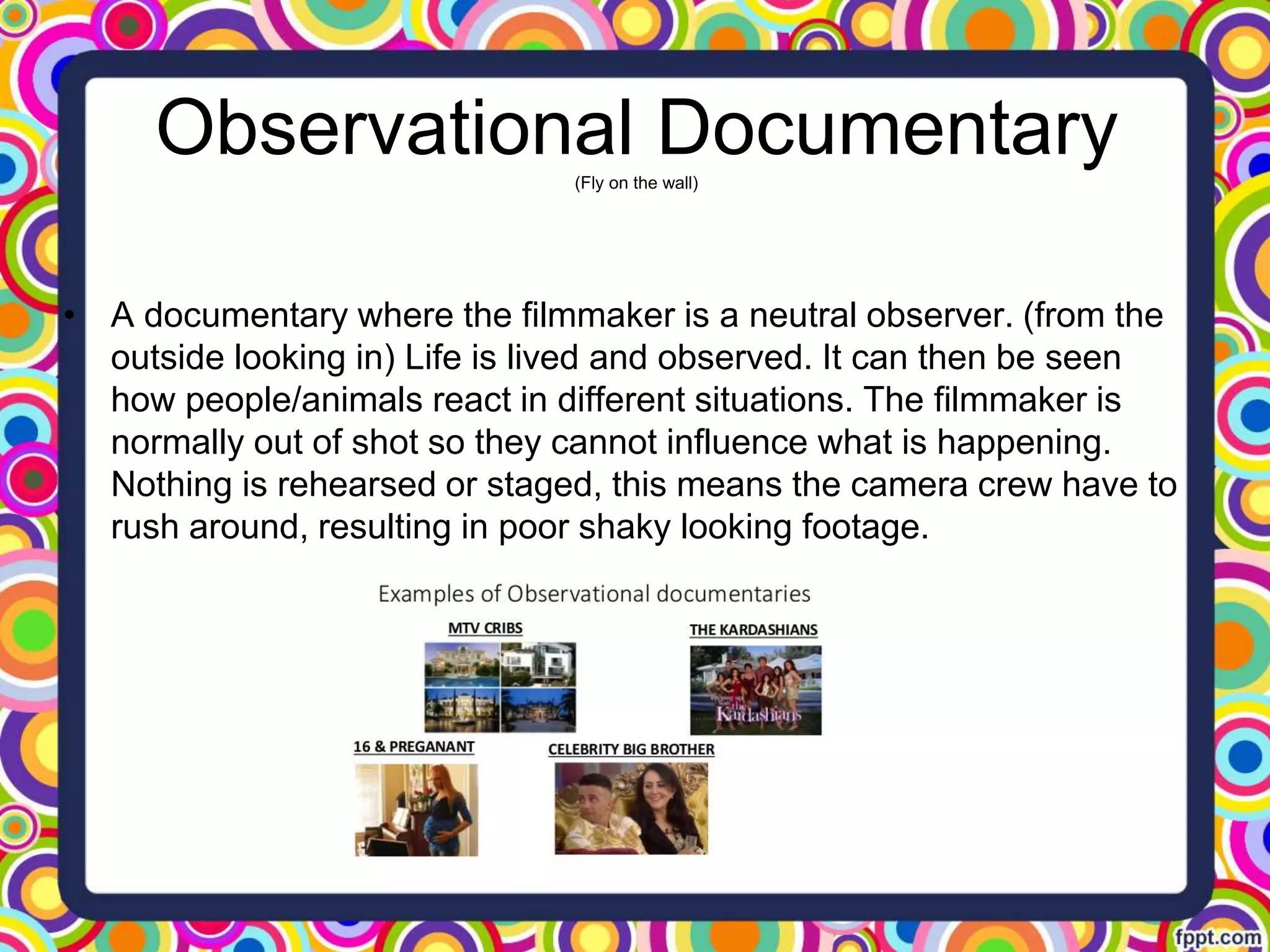
Neutral observation style capturing real life without interference, showcasing authentic reactions.
Engages audience in realism and representation, highlighting the documentary's constructed nature.
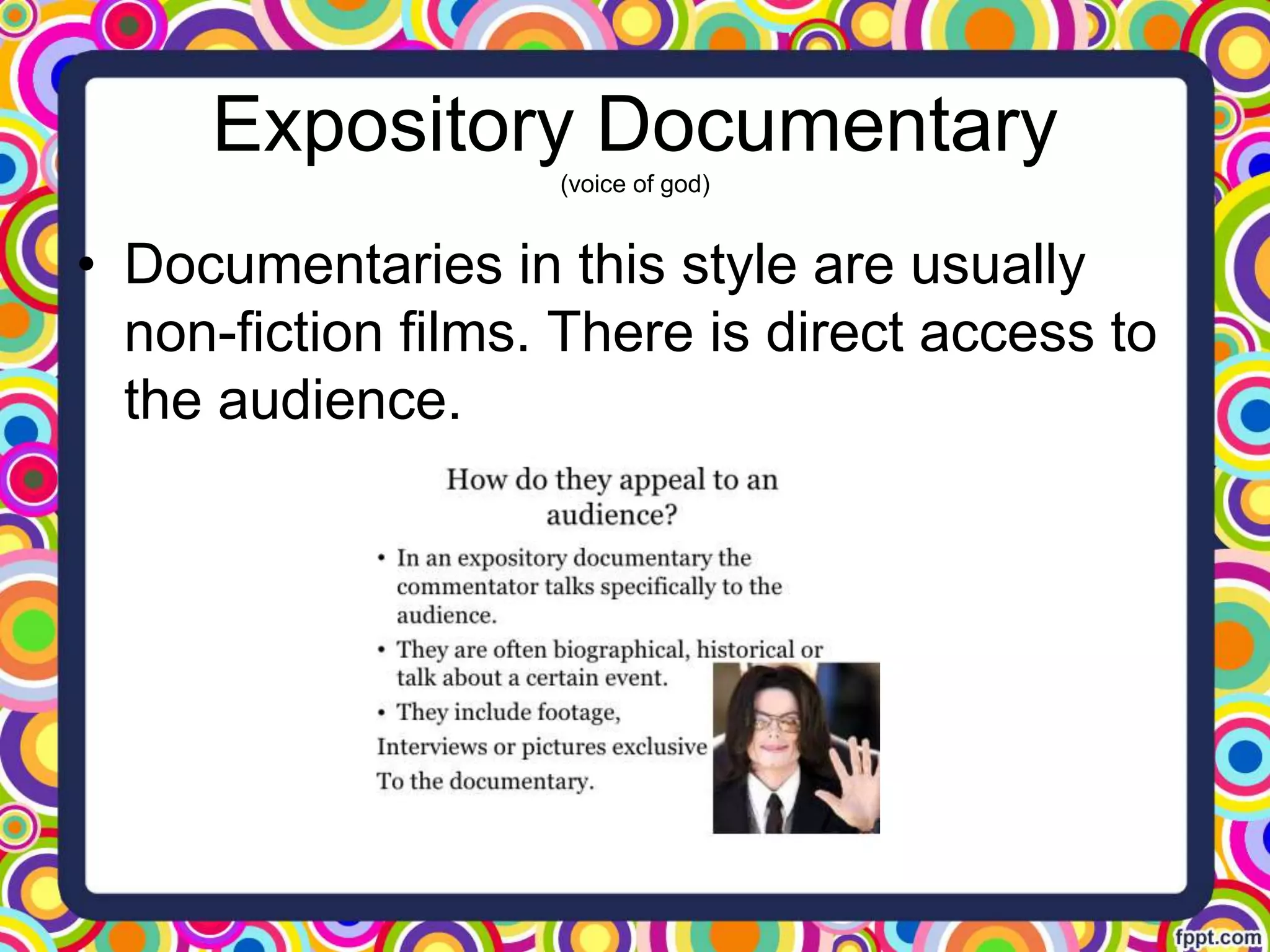
Non-fiction films that present information directly to the audience, often employing a 'voice of god' approach.
Influenced by the filmmaker's presence, altering events and situations during the documentary process.
Emphasizes emotional and subjective dimensions, often autobiographical, context-dependent meanings.


