TYPE OF BIOREACTORS
WHAT IS BIOREACTOR
A bioreactor is a device or system that
provides a controlled environment for the
cultivation of living cells, microorganisms, or
biological processes. It facilitates the growth,
metabolism, and production of desired
products by maintaining optimal conditions
such as temperature, pH, nutrient supply, and
oxygen levels.
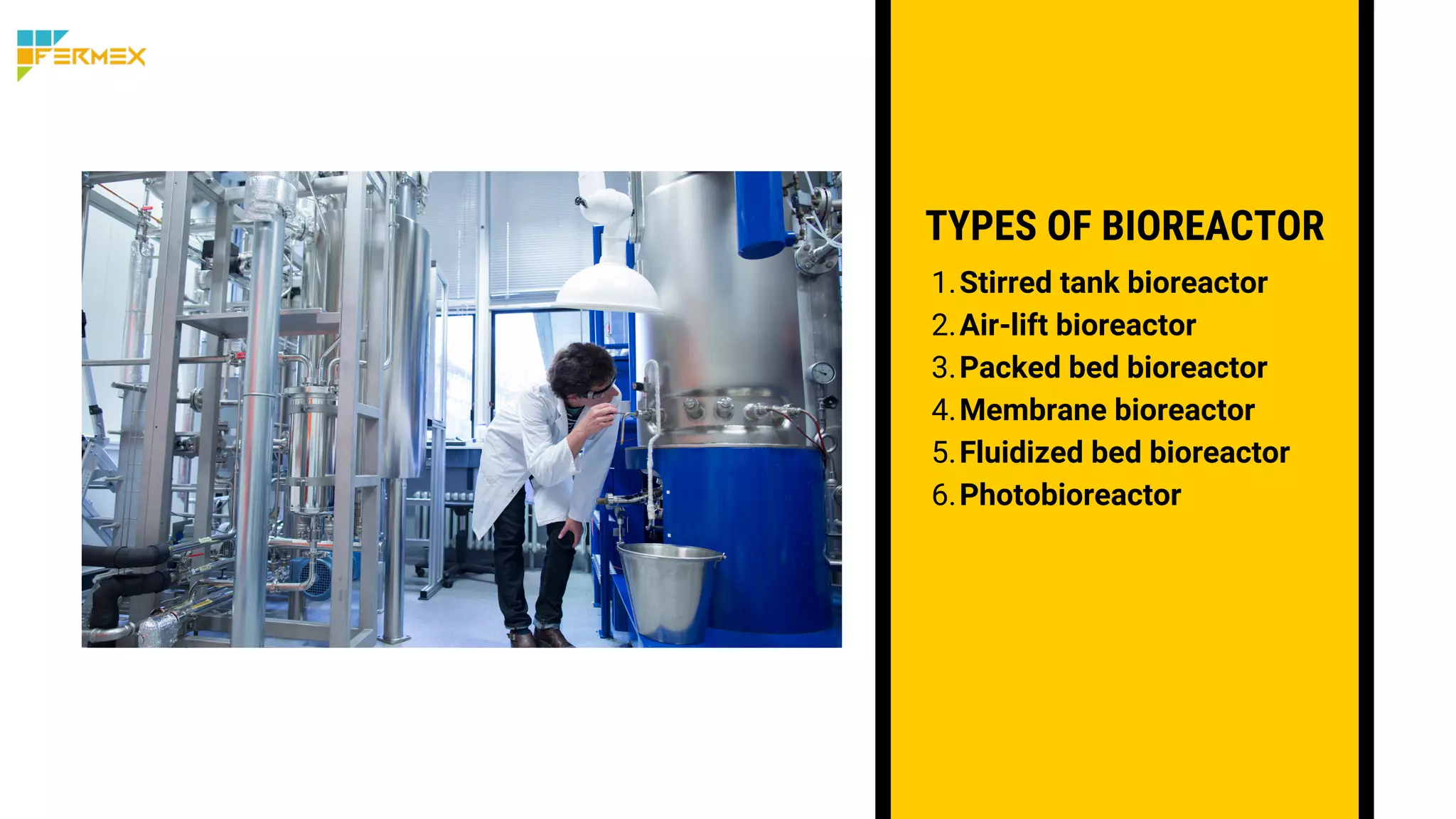
TYPES OF BIOREACTOR
Stirred tank bioreactor
Air-lift bioreactor
Packed bed bioreactor
Membrane bioreactor
Fluidized bed bioreactor
Photobioreactor
1.
2.
3.
4.
5.
6.
STIRRED TANK BIOREACTOR
Agitation system (impeller or stirrer)
Sparger for oxygenation
Temperature control
pH control
Definition: A common and versatile bioreactor design
featuring an agitator to ensure proper mixing and
oxygen transfer.
Key features:
Applications: Microbial fermentation, cell culture,
enzyme production.
AIR-LIFT BIOREACTOR
Gas inlet for sparging
Draft tube for gas-liquid separation and circulation
Reduced shear stress on cells
Definition: A bioreactor that relies on gas sparging to
create circulation and mixing.
Key features:
Applications: Animal cell culture, plant cell culture,
microbial fermentation.
PACKED BED BIOREACTOR
Porous support material for cell or enzyme
attachment
Perfusion or continuous flow operation
Enhanced mass transfer and stability
Definition: A bioreactor containing a packed bed of
solid support material for immobilized cells or
enzymes.
Key features:
Applications: Enzyme production, wastewater
treatment, bioconversion processes.
MEMBRANE BIOREACTOR
Membrane for filtration and retention of cells or
particles
Improved product separation and concentration
Reduced risk of contamination
Definition: A bioreactor that incorporates a
semipermeable membrane for separation and
retention of biomass or products.
Key features:
Applications: Bioprocessing, biodegradation, water
treatment.
FLUIDIZED BED BIOREACTOR
Fluidization of solid particles for enhanced mixing
and mass transfer
High surface area-to-volume ratio
Uniform distribution of nutrients and gases
Definition: A bioreactor where solid particles are
suspended and fluidized by an upward flow of liquid or
gas.
Key features:
Applications: Biocatalysis, enzyme immobilization,
waste treatment.
PHOTOBIOREACTOR
Transparent or translucent vessel for light
penetration
Light sources or natural sunlight
Efficient conversion of light energy into biomass
Definition: A bioreactor that utilizes light as an energy
source for photosynthetic organisms
Key features:
Applications: Algae cultivation, photosynthetic
microbial production, biofuel production
THANK YOU
+91 81818-18529
# 149, JLPL Industrial Area, Sector-82,
Mohali-140308,
Punjab, INDIA
fermex.sales2@gmail.com,
info@fermex.in
www.fermex.in

Types of bioreactors

  • 1.
  • 2.
    WHAT IS BIOREACTOR Abioreactor is a device or system that provides a controlled environment for the cultivation of living cells, microorganisms, or biological processes. It facilitates the growth, metabolism, and production of desired products by maintaining optimal conditions such as temperature, pH, nutrient supply, and oxygen levels.
  • 3.
    TYPES OF BIOREACTOR Stirredtank bioreactor Air-lift bioreactor Packed bed bioreactor Membrane bioreactor Fluidized bed bioreactor Photobioreactor 1. 2. 3. 4. 5. 6.
  • 4.
    STIRRED TANK BIOREACTOR Agitationsystem (impeller or stirrer) Sparger for oxygenation Temperature control pH control Definition: A common and versatile bioreactor design featuring an agitator to ensure proper mixing and oxygen transfer. Key features: Applications: Microbial fermentation, cell culture, enzyme production.
  • 5.
    AIR-LIFT BIOREACTOR Gas inletfor sparging Draft tube for gas-liquid separation and circulation Reduced shear stress on cells Definition: A bioreactor that relies on gas sparging to create circulation and mixing. Key features: Applications: Animal cell culture, plant cell culture, microbial fermentation.
  • 6.
    PACKED BED BIOREACTOR Poroussupport material for cell or enzyme attachment Perfusion or continuous flow operation Enhanced mass transfer and stability Definition: A bioreactor containing a packed bed of solid support material for immobilized cells or enzymes. Key features: Applications: Enzyme production, wastewater treatment, bioconversion processes.
  • 7.
    MEMBRANE BIOREACTOR Membrane forfiltration and retention of cells or particles Improved product separation and concentration Reduced risk of contamination Definition: A bioreactor that incorporates a semipermeable membrane for separation and retention of biomass or products. Key features: Applications: Bioprocessing, biodegradation, water treatment.
  • 8.
    FLUIDIZED BED BIOREACTOR Fluidizationof solid particles for enhanced mixing and mass transfer High surface area-to-volume ratio Uniform distribution of nutrients and gases Definition: A bioreactor where solid particles are suspended and fluidized by an upward flow of liquid or gas. Key features: Applications: Biocatalysis, enzyme immobilization, waste treatment.
  • 9.
    PHOTOBIOREACTOR Transparent or translucentvessel for light penetration Light sources or natural sunlight Efficient conversion of light energy into biomass Definition: A bioreactor that utilizes light as an energy source for photosynthetic organisms Key features: Applications: Algae cultivation, photosynthetic microbial production, biofuel production
  • 10.
    THANK YOU +91 81818-18529 #149, JLPL Industrial Area, Sector-82, Mohali-140308, Punjab, INDIA fermex.sales2@gmail.com, info@fermex.in www.fermex.in