


INNOVATIVE LEARNING
ENVIRONMENTS: A LONG-TERM
OECD PROJECT

DAVID ISTANCE
Centre for Educational Research and
Innovation (CERI), OECD

November 2013
THE ILE PROJECT

2
Why learning? Why innovation?
• Knowledge central to our economies and
societies - therefore, learning also central
• The difficulties of changing education
systems invites a fresh focus on learning
itself
• So much learning takes place outside
classrooms
• Innovation needed as the learning bar
continues to be raised - promoting deep
learning, 21st century competences,
foundations for lifelong learning
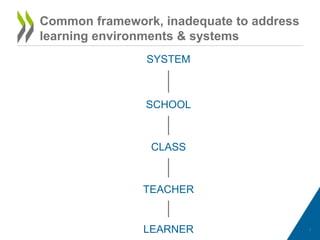
Common framework, inadequate to address
learning environments & systems
SYSTEM

SCHOOL

CLASS

TEACHER

LEARNER

4
ILE understanding of ‘learning environment’
• Based in the organisation and terminology of
learning (not starting with institutions, schools,
classrooms and subjects).
• A holistic eco-system that includes the activity
and outcomes of the learning.
• Context and time essential to understanding
learning – interaction take time as does learning
itself.
• ‘Environments’ assume mix – of learning
approaches, experiences, and settings – not
fragmented “treatments”.
5
Building ILE from fundamentals
1.Understanding the lessons of “Learning
Research”
(The Nature of Learning: Using research to Inspire
Practice, 2010)

2. Conceptualising environments & compiling
inspiring “Innovative Cases”
(Innovative Learning Environments, 2013)

3. Growing and sustaining innovative learning “Implementation and Change”
(Learning Leadership, 2013 (in press) Final Reports,
2014)

6
THE NATURE OF LEARNING

7
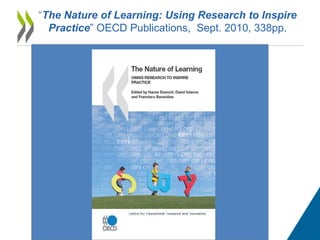
“The Nature of Learning: Using Research to Inspire
Practice” OECD Publications, Sept. 2010, 338pp.
The Learning Principles – environments
should:
• Make learning central, encourage engagement, and be where
learners come to understand themselves as learners
• Ensure that learning is social and often collaborative
• Be highly attuned to learners’ motivations and the importance of
emotions
• Be acutely sensitive to individual differences including in prior
knowledge
• Be demanding for each learner but without excessive overload
• Use assessments consistent with its aims, with strong emphasis on
formative feedback
• Promote horizontal connectedness across activities and subjects, inand out-of-school

Moreover, all should be present not one or two.
9
THE ILE FRAMEWORK

10
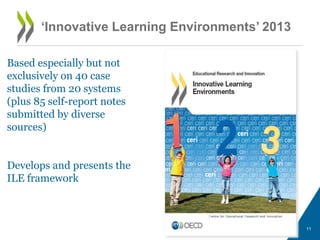
‘Innovative Learning Environments’ 2013
Based especially but not
exclusively on 40 case
studies from 20 systems
(plus 85 self-report notes
submitted by diverse
sources)
Develops and presents the
ILE framework

11
21st century learning environments should:

• Integrate and apply the ILE learning
principles
• Innovate the “pedagogical core”
• Engage the “Design/Redesign”
formative cycle
• Extend capacity through partnerships.
12
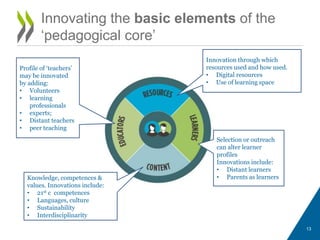
Innovating the basic elements of the
‘pedagogical core’
Profile of ‘teachers’
may be innovated
by adding:
• Volunteers
• learning
professionals
• experts;
• Distant teachers
• peer teaching

Knowledge, competences &
values. Innovations include:
• 21st c competences
• Languages, culture
• Sustainability
• Interdisciplinarity

Innovation through which
resources used and how used.
• Digital resources
• Use of learning space

Selection or outreach
can alter learner
profiles
Innovations include:
• Distant learners
• Parents as learners

13
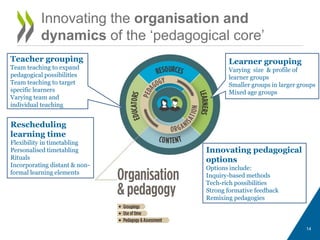
Innovating the organisation and
dynamics of the ‘pedagogical core’
Teacher grouping
Team teaching to expand
pedagogical possibilities
Team teaching to target
specific learners
Varying team and
individual teaching

Learner grouping
Varying size & profile of
learner groups
Smaller groups in larger groups
Mixed age groups

Rescheduling
learning time
Flexibility in timetabling
Personalised timetabling
Rituals
Incorporating distant & nonformal learning elements

Innovating pedagogical
options
Options include:
Inquiry-based methods
Tech-rich possibilities
Strong formative feedback
Remixing pedagogies

14
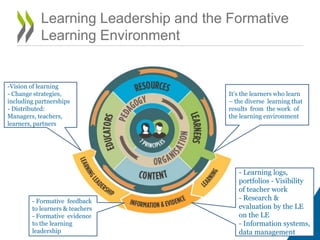
Learning Leadership and the Formative
Learning Environment

-Vision of learning
- Change strategies,
including partnerships
- Distributed:
Managers, teachers,
learners, partners

- Formative feedback
to learners & teachers
- Formative evidence
to the learning
leadership

It’s the learners who learn
– the diverse learning that
results from the work of
the learning environment

- Learning logs,
portfolios - Visibility
of teacher work
- Research &
evaluation by the LE
on the LE
- Information systems,
15
data management
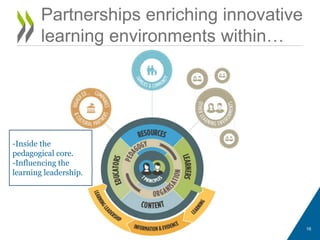
Partnerships enriching innovative
learning environments within…

-Inside the
pedagogical core.
-Influencing the
learning leadership.

16
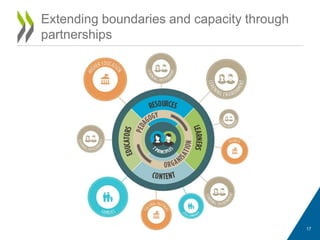
Extending boundaries and capacity through
partnerships

17
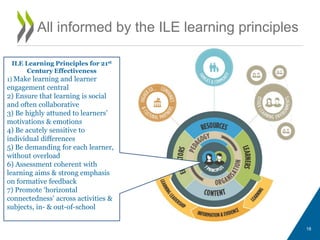
All informed by the ILE learning principles
ILE Learning Principles for 21st
Century Effectiveness
1) Make learning and learner

engagement central
2) Ensure that learning is social
and often collaborative
3) Be highly attuned to learners’
motivations & emotions
4) Be acutely sensitive to
individual differences
5) Be demanding for each learner,
without overload
6) Assessment coherent with
learning aims & strong emphasis
on formative feedback
7) Promote ‘horizontal
connectedness’ across activities &
subjects, in- & out-of-school
18
THANK YOU!
david.istance@oecd.org
www.oecd.org/edu/ceri/innovativelearningenvironments.htm

19

Tues innovative learning environments 2pm_bb1

  • 1.
    INNOVATIVE LEARNING ENVIRONMENTS: ALONG-TERM OECD PROJECT DAVID ISTANCE Centre for Educational Research and Innovation (CERI), OECD November 2013
  • 2.
  • 3.
    Why learning? Whyinnovation? • Knowledge central to our economies and societies - therefore, learning also central • The difficulties of changing education systems invites a fresh focus on learning itself • So much learning takes place outside classrooms • Innovation needed as the learning bar continues to be raised - promoting deep learning, 21st century competences, foundations for lifelong learning
  • 4.
    Common framework, inadequateto address learning environments & systems SYSTEM SCHOOL CLASS TEACHER LEARNER 4
  • 5.
    ILE understanding of‘learning environment’ • Based in the organisation and terminology of learning (not starting with institutions, schools, classrooms and subjects). • A holistic eco-system that includes the activity and outcomes of the learning. • Context and time essential to understanding learning – interaction take time as does learning itself. • ‘Environments’ assume mix – of learning approaches, experiences, and settings – not fragmented “treatments”. 5
  • 6.
    Building ILE fromfundamentals 1.Understanding the lessons of “Learning Research” (The Nature of Learning: Using research to Inspire Practice, 2010) 2. Conceptualising environments & compiling inspiring “Innovative Cases” (Innovative Learning Environments, 2013) 3. Growing and sustaining innovative learning “Implementation and Change” (Learning Leadership, 2013 (in press) Final Reports, 2014) 6
  • 7.
    THE NATURE OFLEARNING 7
  • 8.
    “The Nature ofLearning: Using Research to Inspire Practice” OECD Publications, Sept. 2010, 338pp.
  • 9.
    The Learning Principles– environments should: • Make learning central, encourage engagement, and be where learners come to understand themselves as learners • Ensure that learning is social and often collaborative • Be highly attuned to learners’ motivations and the importance of emotions • Be acutely sensitive to individual differences including in prior knowledge • Be demanding for each learner but without excessive overload • Use assessments consistent with its aims, with strong emphasis on formative feedback • Promote horizontal connectedness across activities and subjects, inand out-of-school Moreover, all should be present not one or two. 9
  • 10.
  • 11.
    ‘Innovative Learning Environments’2013 Based especially but not exclusively on 40 case studies from 20 systems (plus 85 self-report notes submitted by diverse sources) Develops and presents the ILE framework 11
  • 12.
    21st century learningenvironments should: • Integrate and apply the ILE learning principles • Innovate the “pedagogical core” • Engage the “Design/Redesign” formative cycle • Extend capacity through partnerships. 12
  • 13.
    Innovating the basicelements of the ‘pedagogical core’ Profile of ‘teachers’ may be innovated by adding: • Volunteers • learning professionals • experts; • Distant teachers • peer teaching Knowledge, competences & values. Innovations include: • 21st c competences • Languages, culture • Sustainability • Interdisciplinarity Innovation through which resources used and how used. • Digital resources • Use of learning space Selection or outreach can alter learner profiles Innovations include: • Distant learners • Parents as learners 13
  • 14.
    Innovating the organisationand dynamics of the ‘pedagogical core’ Teacher grouping Team teaching to expand pedagogical possibilities Team teaching to target specific learners Varying team and individual teaching Learner grouping Varying size & profile of learner groups Smaller groups in larger groups Mixed age groups Rescheduling learning time Flexibility in timetabling Personalised timetabling Rituals Incorporating distant & nonformal learning elements Innovating pedagogical options Options include: Inquiry-based methods Tech-rich possibilities Strong formative feedback Remixing pedagogies 14
  • 15.
    Learning Leadership andthe Formative Learning Environment -Vision of learning - Change strategies, including partnerships - Distributed: Managers, teachers, learners, partners - Formative feedback to learners & teachers - Formative evidence to the learning leadership It’s the learners who learn – the diverse learning that results from the work of the learning environment - Learning logs, portfolios - Visibility of teacher work - Research & evaluation by the LE on the LE - Information systems, 15 data management
  • 16.
    Partnerships enriching innovative learningenvironments within… -Inside the pedagogical core. -Influencing the learning leadership. 16
  • 17.
    Extending boundaries andcapacity through partnerships 17
  • 18.
    All informed bythe ILE learning principles ILE Learning Principles for 21st Century Effectiveness 1) Make learning and learner engagement central 2) Ensure that learning is social and often collaborative 3) Be highly attuned to learners’ motivations & emotions 4) Be acutely sensitive to individual differences 5) Be demanding for each learner, without overload 6) Assessment coherent with learning aims & strong emphasis on formative feedback 7) Promote ‘horizontal connectedness’ across activities & subjects, in- & out-of-school 18
  • 19.