


FRANCOIS L. DETERA, MM.
Ed.D. E.L.M. Student
TRIADIC MODEL OF
SUPERVISION
OVERVIEW:
A. Supervision Defined
B. Foundations ofTriadic Supervision
C. TheoreticalAssumptions of theTMS
D. The Model ofTriadic Supervision
1. Transactional Conceptions
2. Transformational Conceptions
3. Critical Conceptions
E. TMSApplied and Challenges
F. Synthesis
“teacher leadership”
Teachers need to see themselves as leaders
or having the potential and responsibility
for LEADERSHIP.
1. Teachers provide a powerful and
insightful voice regarding decisions about
school change.
2. They have capacity and power to
participate in change efforts that
traditionally either have been tacitly
assumed by them or deliberately defined
by others.
ORIGINS:
1.Psychotherapeutic approaches
2.SocialTheory
3.Developmental theories
4.SystemsTheory
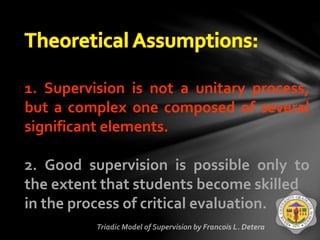
1. Supervision is not a unitary process,
but a complex one composed of several
significant elements.
2. Good supervision is possible only to
the extent that students become skilled
in the process of critical evaluation.
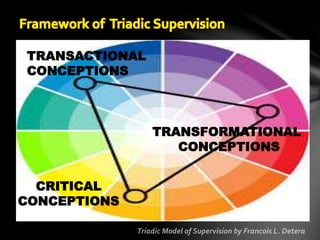
TRANSACTIONAL
CONCEPTIONS
TRANSFORMATIONAL
CONCEPTIONS
CRITICAL
CONCEPTIONS
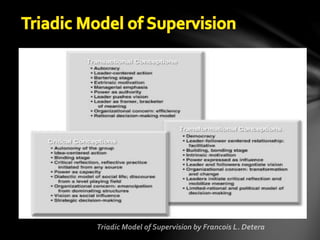
This idea of leadership describes social
action as leader-centered, dominated by
rational models of decision-making and
regulated by concerns of efficiency with
regard to organizational maintenance.
(Burns, 1978)
Transactional leaders are
“benevolent dictators”
Transactional leaders attempt
to define and frame the reality of
others to maintain organizational
harmony through heroic and
charismatic efforts.
This represents leaders who shape,
alter, and elevate the motives and goals of
the institutional members. (Leithwood,
1992)
The goals of transformational
leadership is to develop and maintain a
collaborative school culture that fosters
staff development.
Transformational Leadership
fostered a community where members
had the opportunity to negotiate
change.
This idea of shared leadership
redistributed power and authority to the
teachers who took on the role of leaders.
The process of emancipation for all
members of the organization. This idea-
centered conceptualization of leadership
does not establish power relationships
Critical leadership measures power by
the capacity of all members involved in the
interaction.
Critical Leadership is a consensual
task, a sharing of ideas and a sharing of
responsibilities where a “leader” is a leader
for the moment only, where the leadership
exerted must be validated by the consent of
followers, and where leadership lies in the
struggles of a community to find meaning
for itself.
Politics, School Improvement, and
Social Justice: ATriadic Model of
Teacher Supervision
By P.Taylor Webb, Maureen Neumann
and Laura C. Jones
The TMS may be used to
identify, analyze and practice acts
of leadership.
A Model for UsingTriadic Supervision
in Counselor Preparation
Programs
By Gerard Lawson, Serge F. Hein
and Hildy Getz
The TMS approach to supervised
counseling is a tutorial and mentoring
relationship between a supervisor and
two counseling students that involves
all three members simultaneously.
A Leader’s Guide to theTriadic Model
of Supervision: Pupil, Personnel and
Services:Training of Professionals
to Anticipate the Challenges
of the Future
By Spice, Charles G., Jr.
The TMS represents an attempt to
create a means of supervision which
will help counseling practicum students
develop a more positive attitude
toward supervision.
THANKYOU!

Triadic Model of Supervision

  • 1.
    FRANCOIS L. DETERA,MM. Ed.D. E.L.M. Student TRIADIC MODEL OF SUPERVISION
  • 2.
    OVERVIEW: A. Supervision Defined B.Foundations ofTriadic Supervision C. TheoreticalAssumptions of theTMS D. The Model ofTriadic Supervision 1. Transactional Conceptions 2. Transformational Conceptions 3. Critical Conceptions E. TMSApplied and Challenges F. Synthesis
  • 3.
    “teacher leadership” Teachers needto see themselves as leaders or having the potential and responsibility for LEADERSHIP.
  • 4.
    1. Teachers providea powerful and insightful voice regarding decisions about school change. 2. They have capacity and power to participate in change efforts that traditionally either have been tacitly assumed by them or deliberately defined by others.
  • 5.
  • 6.
    1. Supervision isnot a unitary process, but a complex one composed of several significant elements. 2. Good supervision is possible only to the extent that students become skilled in the process of critical evaluation.
  • 7.
  • 9.
    This idea ofleadership describes social action as leader-centered, dominated by rational models of decision-making and regulated by concerns of efficiency with regard to organizational maintenance. (Burns, 1978) Transactional leaders are “benevolent dictators”
  • 10.
    Transactional leaders attempt todefine and frame the reality of others to maintain organizational harmony through heroic and charismatic efforts.
  • 11.
    This represents leaderswho shape, alter, and elevate the motives and goals of the institutional members. (Leithwood, 1992) The goals of transformational leadership is to develop and maintain a collaborative school culture that fosters staff development.
  • 12.
    Transformational Leadership fostered acommunity where members had the opportunity to negotiate change. This idea of shared leadership redistributed power and authority to the teachers who took on the role of leaders.
  • 13.
    The process ofemancipation for all members of the organization. This idea- centered conceptualization of leadership does not establish power relationships Critical leadership measures power by the capacity of all members involved in the interaction.
  • 14.
    Critical Leadership isa consensual task, a sharing of ideas and a sharing of responsibilities where a “leader” is a leader for the moment only, where the leadership exerted must be validated by the consent of followers, and where leadership lies in the struggles of a community to find meaning for itself.
  • 15.
    Politics, School Improvement,and Social Justice: ATriadic Model of Teacher Supervision By P.Taylor Webb, Maureen Neumann and Laura C. Jones
  • 16.
    The TMS maybe used to identify, analyze and practice acts of leadership.
  • 17.
    A Model forUsingTriadic Supervision in Counselor Preparation Programs By Gerard Lawson, Serge F. Hein and Hildy Getz
  • 18.
    The TMS approachto supervised counseling is a tutorial and mentoring relationship between a supervisor and two counseling students that involves all three members simultaneously.
  • 19.
    A Leader’s Guideto theTriadic Model of Supervision: Pupil, Personnel and Services:Training of Professionals to Anticipate the Challenges of the Future By Spice, Charles G., Jr.
  • 20.
    The TMS representsan attempt to create a means of supervision which will help counseling practicum students develop a more positive attitude toward supervision.
  • 21.