.
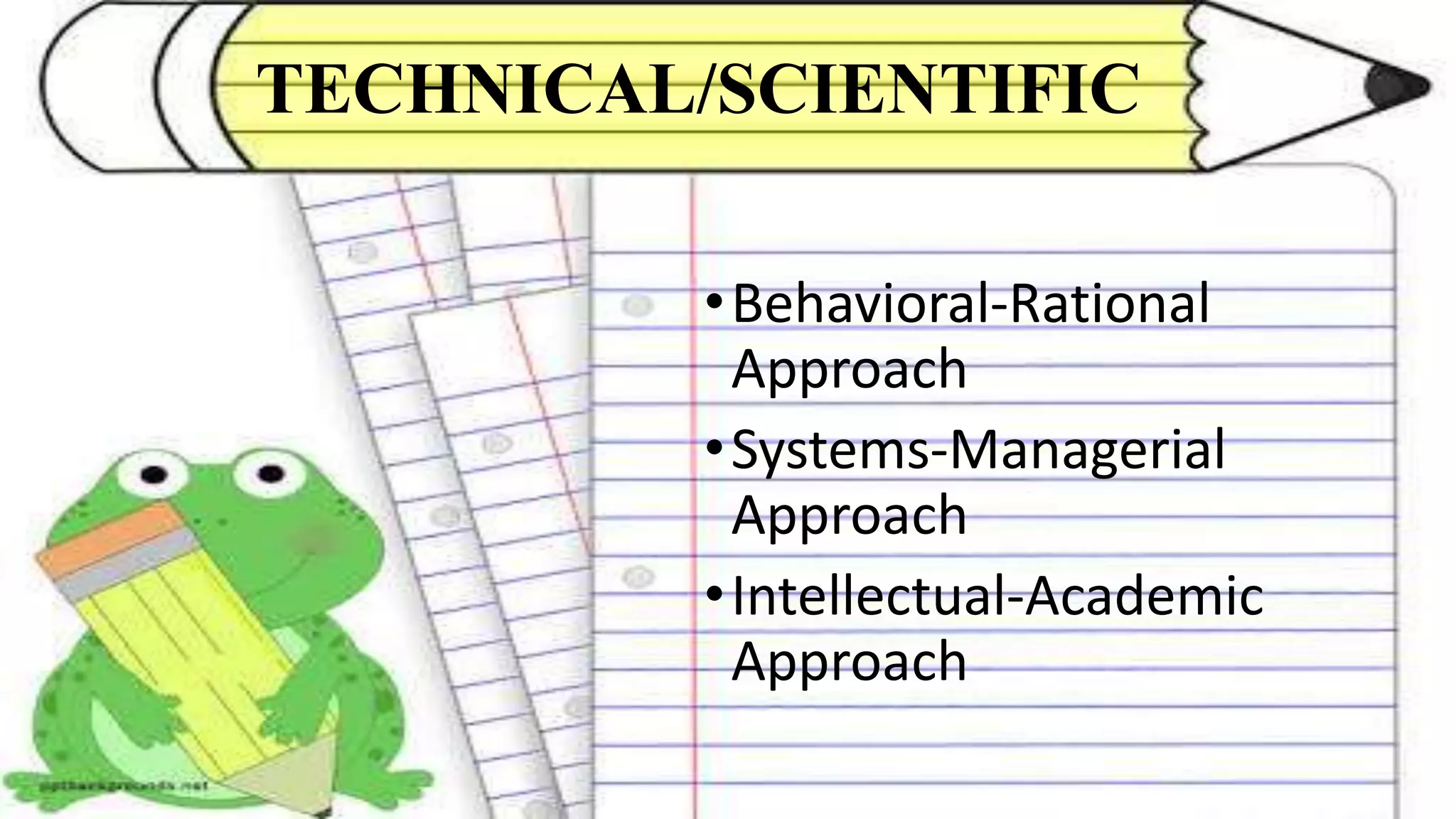
TECHNICAL/SCIENTIFIC
•Behavioral-Rational
Approach
•Systems-Managerial
Approach
•Intellectual-Academic
Approach
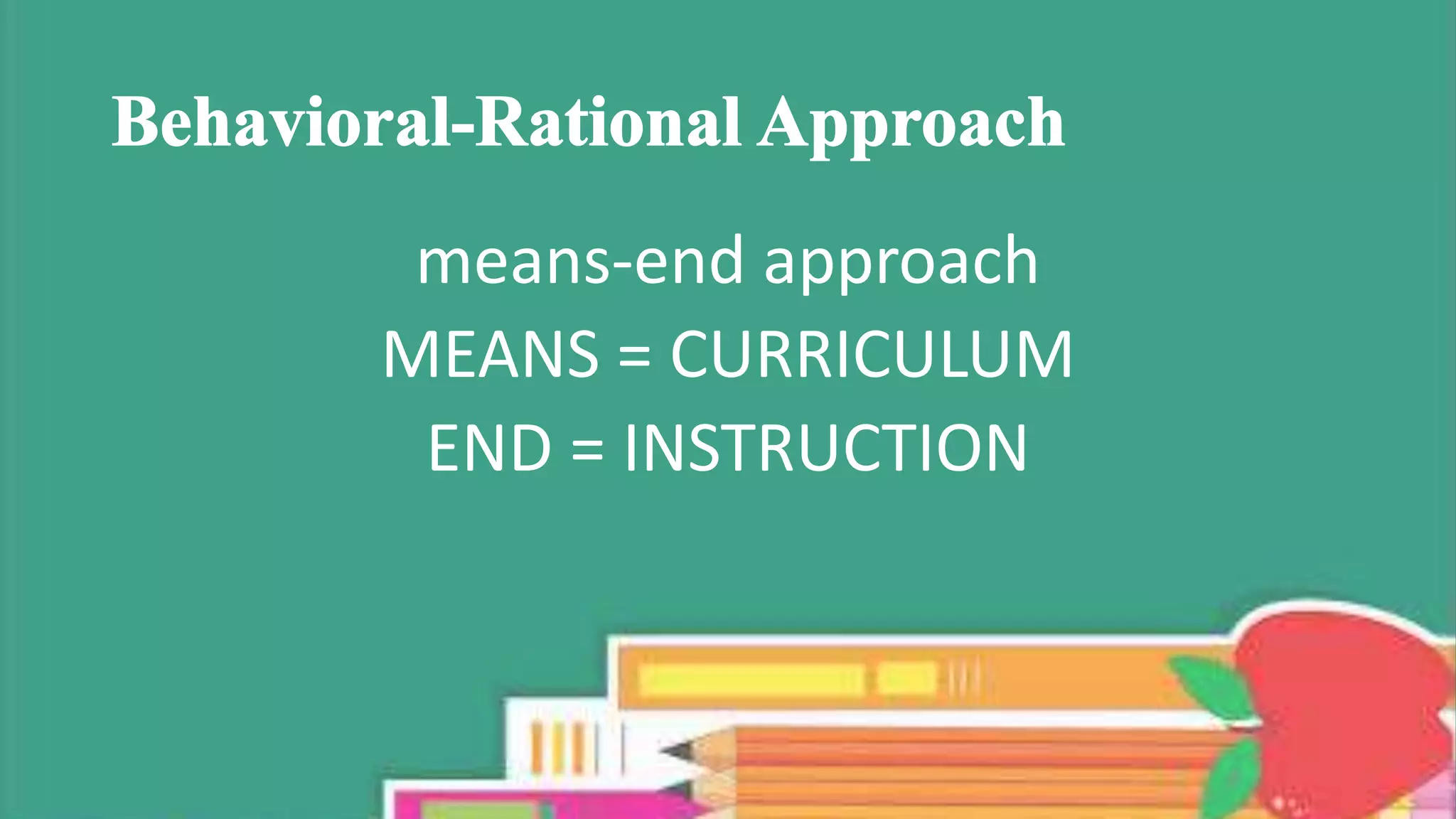
means-end approach
MEANS = CURRICULUM
END = INSTRUCTION
•This means-end view focuses on the
need for behavioural objectives to serve
as guides to instruction and to
determine whether its desired ends are
realized.
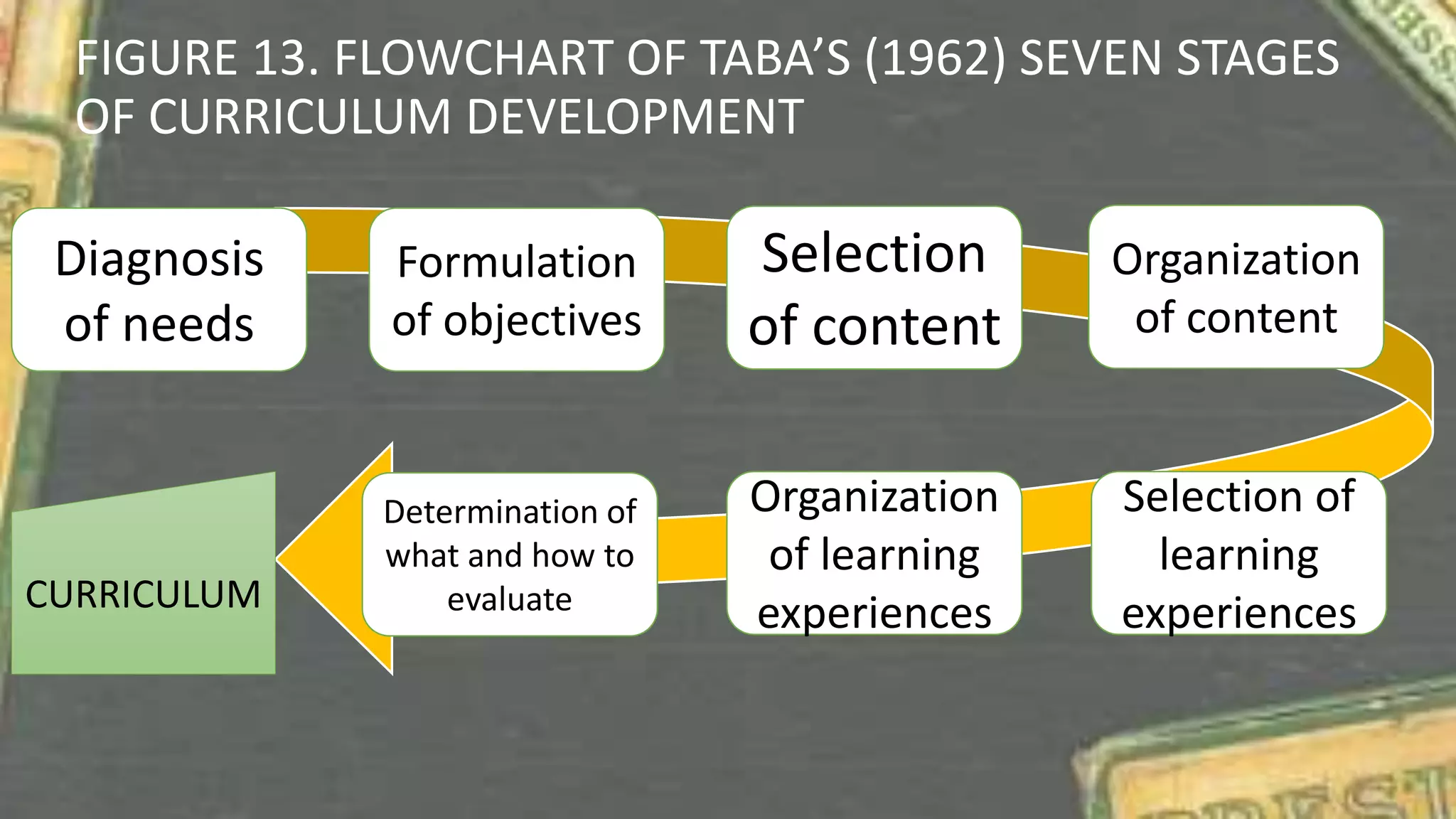
FIGURE 13. FLOWCHART OF TABA’S (1962) SEVEN STAGES
OF CURRICULUM DEVELOPMENT
Diagnosis
of needs
Determination of
what and how to
evaluate
Organization
of learning
experiences
Selection of
learning
experiences
Organization
of content
Selection
of content
Formulation
of objectives
CURRICULUM
Taba: “Perhaps the first important
consideration in achieving a wider range of
objectives is the fact that the learning
experiences and not the content as such, are
the means for achieving all objectives
besides those of knowledge and
understanding.”
•Ornstein and Hunkins consider curriculum
experiences as the instructional component
of curriculum which indicates the
interaction between teacher, learner and
instructional materials for the purpose of
achieving the goals of the school.
•Learning does not takes place in a vacuum;
it takes place through experiencing content
oftentimes mediated by social processes.
There will always be variations in the
knowledge and understanding of objects,
people and events as well as their
relationships even when reading the same
book.
Curriculum approaches (Part 1)

Curriculum approaches (Part 1)

  • 2.
  • 5.
  • 7.
    means-end approach MEANS =CURRICULUM END = INSTRUCTION
  • 8.
    •This means-end viewfocuses on the need for behavioural objectives to serve as guides to instruction and to determine whether its desired ends are realized.
  • 9.
    FIGURE 13. FLOWCHARTOF TABA’S (1962) SEVEN STAGES OF CURRICULUM DEVELOPMENT Diagnosis of needs Determination of what and how to evaluate Organization of learning experiences Selection of learning experiences Organization of content Selection of content Formulation of objectives CURRICULUM
  • 10.
    Taba: “Perhaps thefirst important consideration in achieving a wider range of objectives is the fact that the learning experiences and not the content as such, are the means for achieving all objectives besides those of knowledge and understanding.”
  • 11.
    •Ornstein and Hunkinsconsider curriculum experiences as the instructional component of curriculum which indicates the interaction between teacher, learner and instructional materials for the purpose of achieving the goals of the school.
  • 12.
    •Learning does nottakes place in a vacuum; it takes place through experiencing content oftentimes mediated by social processes. There will always be variations in the knowledge and understanding of objects, people and events as well as their relationships even when reading the same book.

Editor's Notes

  • #9 Behavioral objectives to serve as guide to instruction