Bilal Arshed
FA-2017-BSIT-088
Aqsa Khalid
FA-2017-BSIT-081
Amir Numan
FA-2017-BSIT-102
• Reactive System
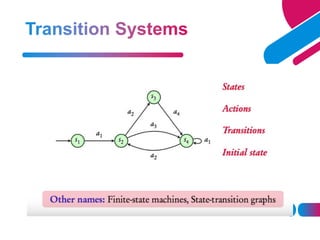
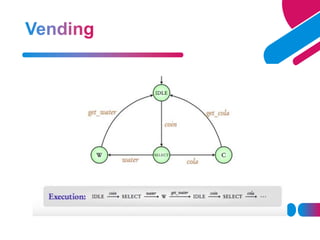
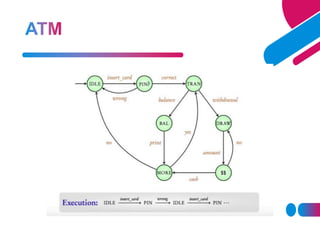
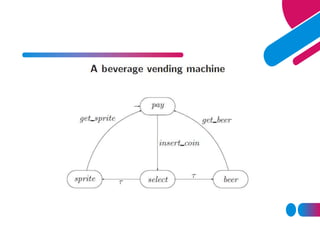
• The intuition is that a transition system consists of a set of possible states for the system
and a set of transitions - or state changes - which the system can effect.
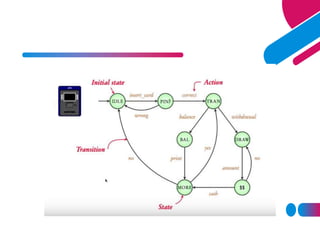
• When a state change is the result of an external event or of an action made by the system,
then that transition is labeled with that event or action.
• Particular states or transitions in a transition system can be distinguished.
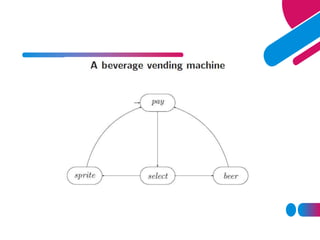
• model to describe the behavior of systems
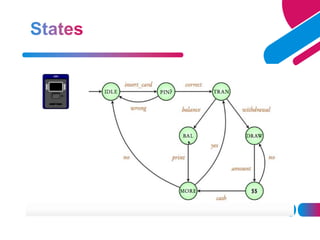
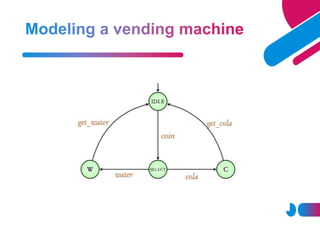
• digraphs where nodes represent states, and edges model transitions
• state:
• the current color of a traffic light
• the current values of all program variables + the program counter
• the value of register and output
• transition: (“state change”)
• a switch from one color to another
• the execution of a program statement
• the change of the registers and output bits for a new input
• A transition systems is a tuple 𝒜 =< 𝑆, 𝑆0, 𝑇, 𝛼, 𝛽 >where
• S is a finite or infinite set of states,
• 𝑆0 is initial location
• T is a finite or infinite set of transitions,
• 𝛼 and 𝛽 are two mapping from T to S which take each transition t in T to the two states 𝛼(𝑡) and 𝛽(𝑡),
respectively the source and the target of the transition t.
• A transition t with some source s and target s’is written t : s→s’.
• Several transitions can have the same source and target.
• A transition system is finite if S and T are finite.
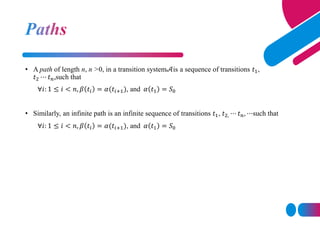
• A path of length n, n >0, in a transition system𝒜is a sequence of transitions 𝑡1,
𝑡2 ⋯ 𝑡 𝑛,such that
∀𝑖: 1 ≤ 𝑖 < 𝑛, 𝛽 𝑡𝑖 = 𝛼(𝑡𝑖+1), and 𝛼 𝑡1 = 𝑆0
• Similarly, an infinite path is an infinite sequence of transitions 𝑡1, 𝑡2, ⋯ 𝑡 𝑛, ⋯such that
∀𝑖: 1 ≤ 𝑖 < 𝑛, 𝛽 𝑡𝑖 = 𝛼(𝑡𝑖+1), and 𝛼 𝑡1 = 𝑆0
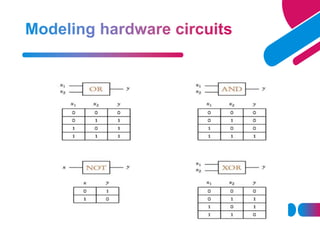
• Some basics of hardware Circuit/Gate
• OR
• AND
• NOT
• XOR
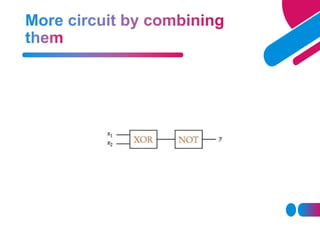
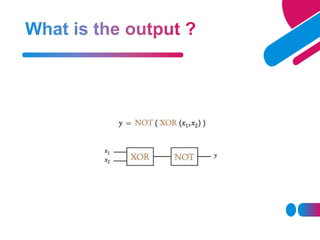
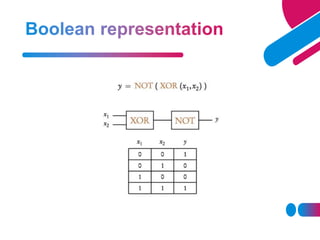
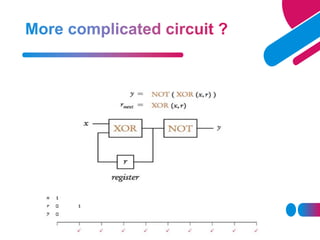
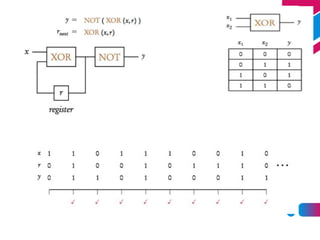
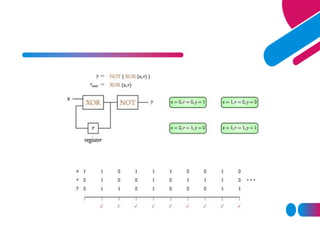
What are the function of Circuit ?
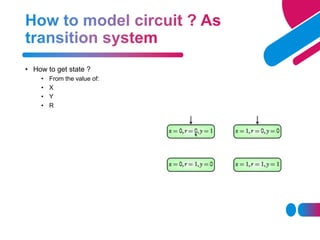
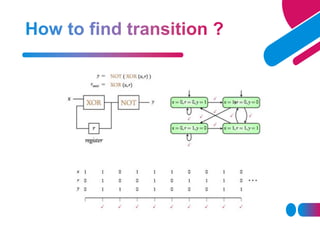
• How to get state ?
• From the value of:
• X
• Y
• R
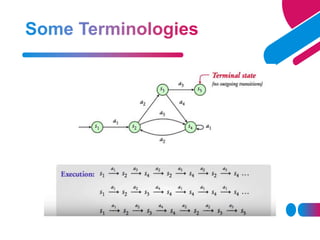
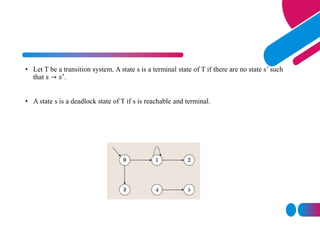
• Let T be a transition system. A state s is a terminal state of T if there are no state s’ such
that s → 𝑠′
.
• A state s is a deadlock state of T if s is reachable and terminal.
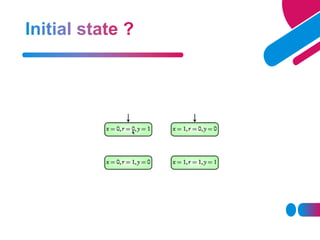
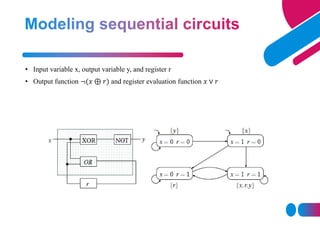
• Input variable x, output variable y, and register r
• Output function ¬(𝑥 ⊕ 𝑟) and register evaluation function 𝑥 ∨ 𝑟
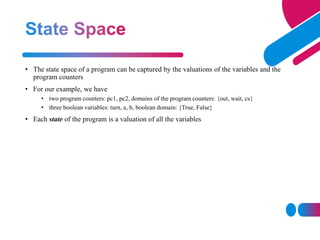
• The state space of a program can be captured by the valuations of the variables and the
program counters
• For our example, we have
• two program counters: pc1, pc2, domains of the program counters: {out, wait, cs}
• three boolean variables: turn, a, b, boolean domain: {True, False}
• Each state of the program is a valuation of all the variables
Summary
Questions?

Transition System

  • 1.
  • 2.
    • Reactive System •The intuition is that a transition system consists of a set of possible states for the system and a set of transitions - or state changes - which the system can effect. • When a state change is the result of an external event or of an action made by the system, then that transition is labeled with that event or action. • Particular states or transitions in a transition system can be distinguished.
  • 3.
    • model todescribe the behavior of systems • digraphs where nodes represent states, and edges model transitions • state: • the current color of a traffic light • the current values of all program variables + the program counter • the value of register and output • transition: (“state change”) • a switch from one color to another • the execution of a program statement • the change of the registers and output bits for a new input
  • 5.
    • A transitionsystems is a tuple 𝒜 =< 𝑆, 𝑆0, 𝑇, 𝛼, 𝛽 >where • S is a finite or infinite set of states, • 𝑆0 is initial location • T is a finite or infinite set of transitions, • 𝛼 and 𝛽 are two mapping from T to S which take each transition t in T to the two states 𝛼(𝑡) and 𝛽(𝑡), respectively the source and the target of the transition t. • A transition t with some source s and target s’is written t : s→s’. • Several transitions can have the same source and target. • A transition system is finite if S and T are finite.
  • 14.
    • A pathof length n, n >0, in a transition system𝒜is a sequence of transitions 𝑡1, 𝑡2 ⋯ 𝑡 𝑛,such that ∀𝑖: 1 ≤ 𝑖 < 𝑛, 𝛽 𝑡𝑖 = 𝛼(𝑡𝑖+1), and 𝛼 𝑡1 = 𝑆0 • Similarly, an infinite path is an infinite sequence of transitions 𝑡1, 𝑡2, ⋯ 𝑡 𝑛, ⋯such that ∀𝑖: 1 ≤ 𝑖 < 𝑛, 𝛽 𝑡𝑖 = 𝛼(𝑡𝑖+1), and 𝛼 𝑡1 = 𝑆0
  • 15.
    • Some basicsof hardware Circuit/Gate • OR • AND • NOT • XOR What are the function of Circuit ?
  • 23.
    • How toget state ? • From the value of: • X • Y • R
  • 27.
    • Let Tbe a transition system. A state s is a terminal state of T if there are no state s’ such that s → 𝑠′ . • A state s is a deadlock state of T if s is reachable and terminal.
  • 29.
    • Input variablex, output variable y, and register r • Output function ¬(𝑥 ⊕ 𝑟) and register evaluation function 𝑥 ∨ 𝑟
  • 30.
    • The statespace of a program can be captured by the valuations of the variables and the program counters • For our example, we have • two program counters: pc1, pc2, domains of the program counters: {out, wait, cs} • three boolean variables: turn, a, b, boolean domain: {True, False} • Each state of the program is a valuation of all the variables
  • 31.
  • 32.

Editor's Notes

  • #27 What is the value of R ? 0 What is the value of x ?