Creative Biogene
Transient transfection protocol
Email: info@creative-biogene.com
Website: http://www.creative-biogene.com
Background
Mammalian cells have the function of protein folding and post-translational modification, and their
proteins have natural activity. There are two ways to produce proteins through mammalian cells:
transient transfection and stable transfection. The main characteristic of transient transfection is rapid
expression in the short term, and enough to satisfy Mini-preparation of protein.
Transient transfection means that the constructed plasmids are introduced into mammalian cells in
some ways, but the foreign genes of the plasmid are not integrated into the genome of the
mammalian cell. With the growth and division of cells, foreign genes will are gradually all lost. So
plasmids can exist for 3-4 days in cells. Transient transfection has been widely used for rapid
expression protein with high activity in the short term.
01
CONTENT
Cell Recovery
Transfection
Cell count
02
04
03 Expression Detection
Part 1
Cell Recovery
cell recovery is the process of thawing and
re-culture cells which are stored at liquid
nitrogen or -80℃. The key of cell recovery is
fast which is avoided
to prevent the cell damages during
thawing.
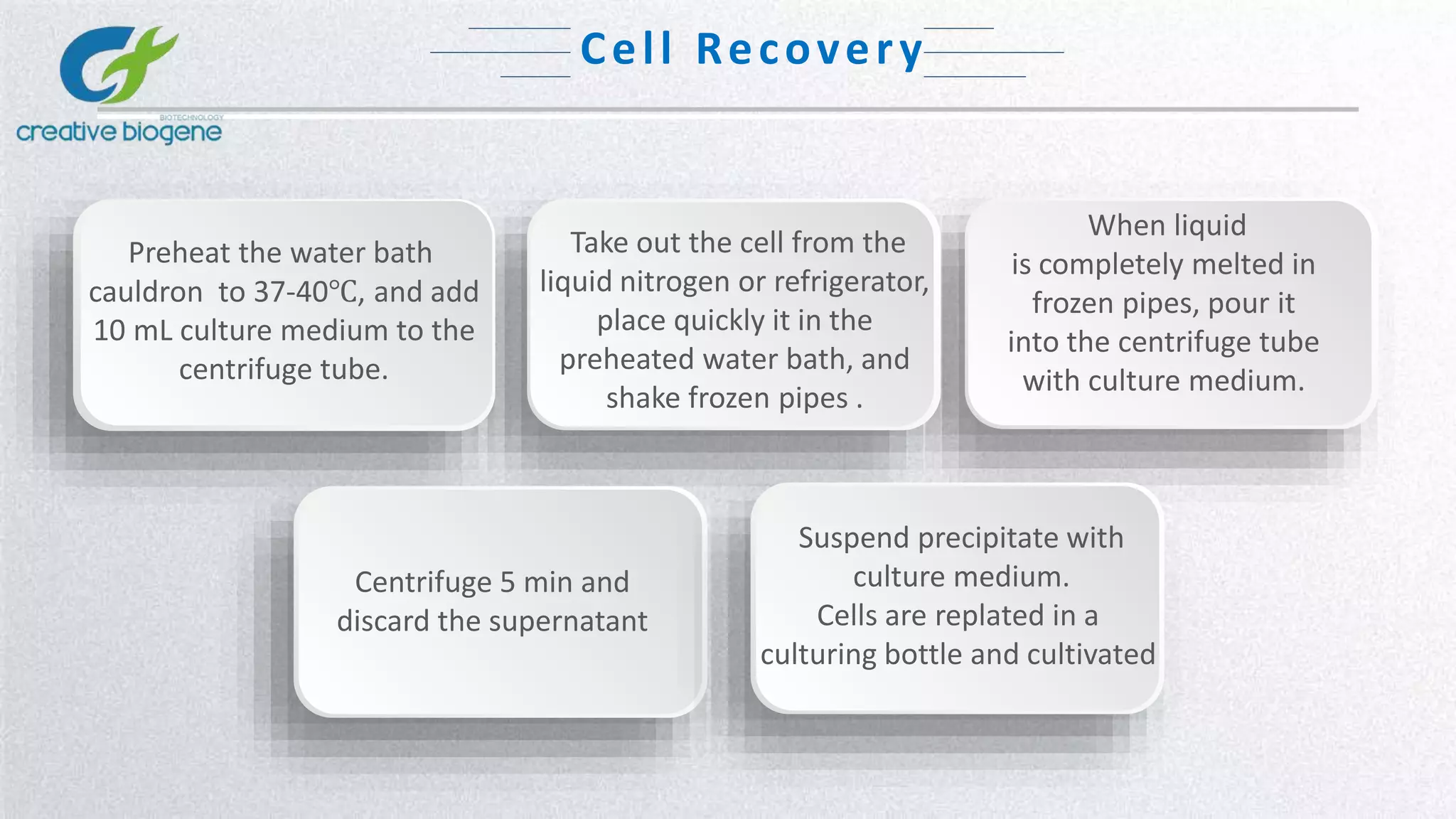
Cell Recovery
When liquid
is completely melted in
frozen pipes, pour it
into the centrifuge tube
with culture medium.
Take out the cell from the
liquid nitrogen or refrigerator,
place quickly it in the
preheated water bath, and
shake frozen pipes .
Preheat the water bath
cauldron to 37-40℃, and add
10 mL culture medium to the
centrifuge tube.
Centrifuge 5 min and
discard the supernatant
Suspend precipitate with
culture medium.
Cells are replated in a
culturing bottle and cultivated
Part 2 Transfection
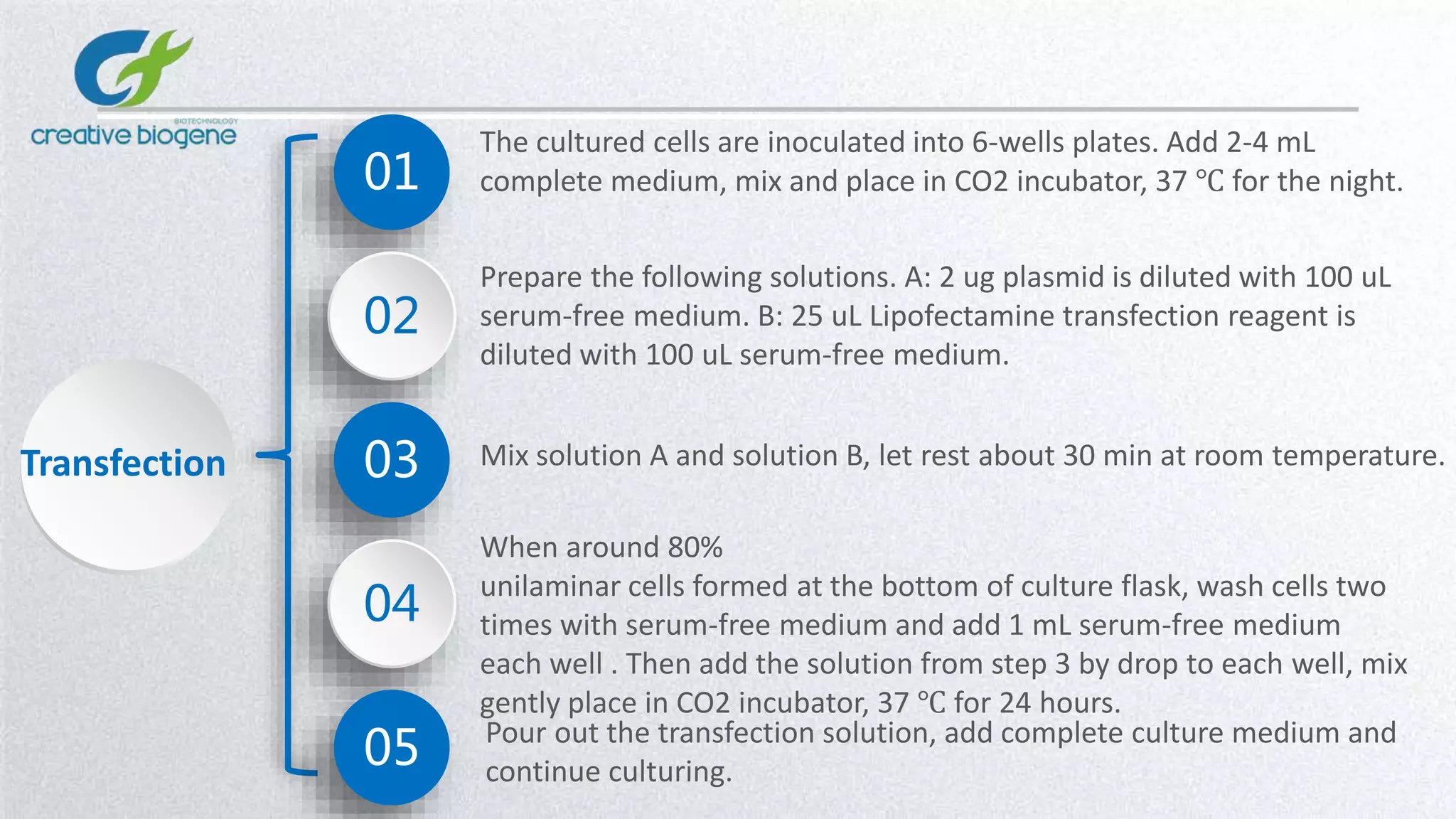
01
02
03
The cultured cells are inoculated into 6-wells plates. Add 2-4 mL
complete medium, mix and place in CO2 incubator, 37 ℃ for the night.
Prepare the following solutions. A: 2 ug plasmid is diluted with 100 uL
serum-free medium. B: 25 uL Lipofectamine transfection reagent is
diluted with 100 uL serum-free medium.
Mix solution A and solution B, let rest about 30 min at room temperature.Transfection
04
05
When around 80%
unilaminar cells formed at the bottom of culture flask, wash cells two
times with serum-free medium and add 1 mL serum-free medium
each well . Then add the solution from step 3 by drop to each well, mix
gently place in CO2 incubator, 37 ℃ for 24 hours.
Pour out the transfection solution, add complete culture medium and
continue culturing.
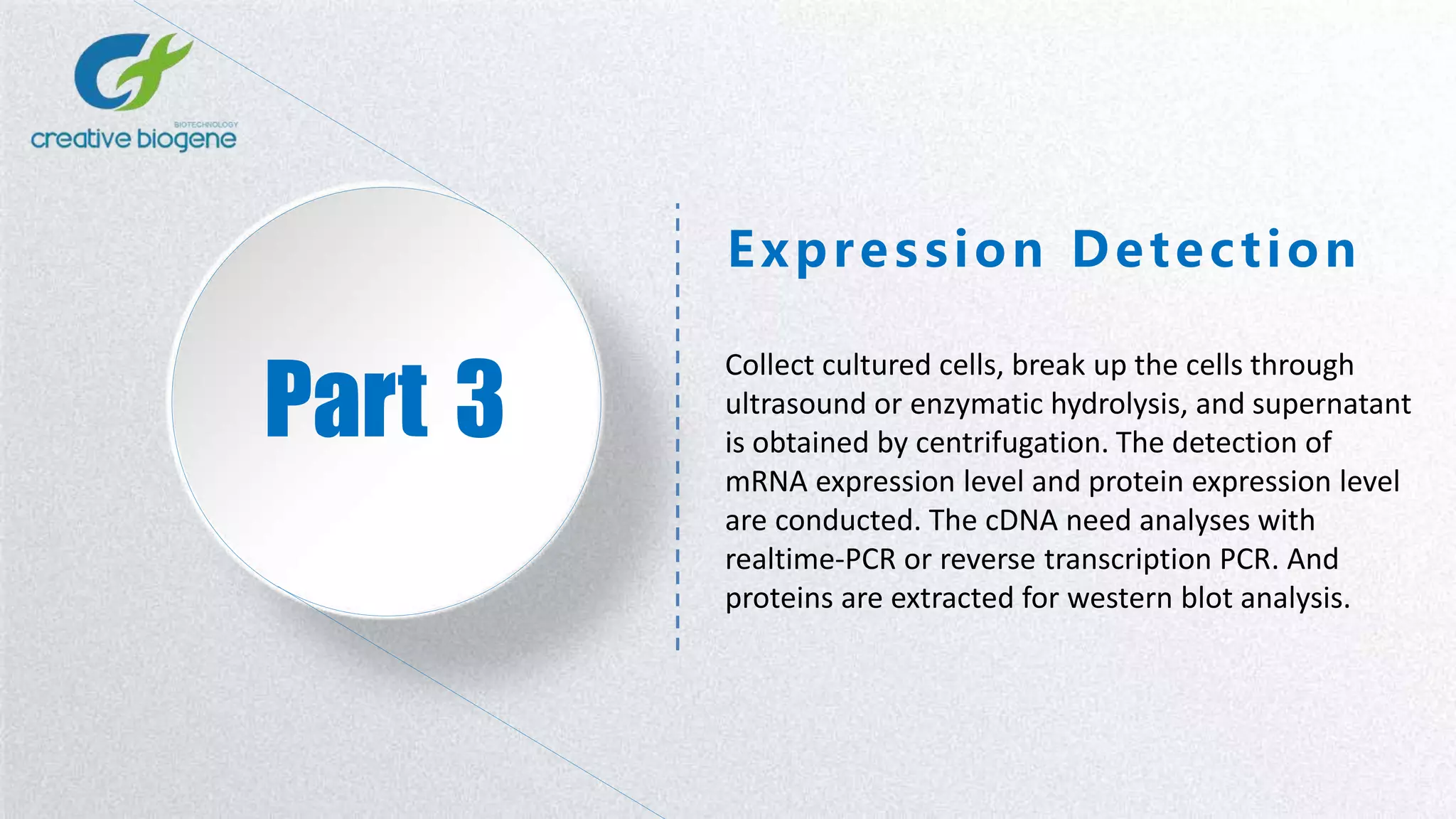
Part 3
Expression Detection
Collect cultured cells, break up the cells through
ultrasound or enzymatic hydrolysis, and supernatant
is obtained by centrifugation. The detection of
mRNA expression level and protein expression level
are conducted. The cDNA need analyses with
realtime-PCR or reverse transcription PCR. And
proteins are extracted for western blot analysis.
Part 4
Cell Count
The principle of cell count is to obtain the
total concentration of cells by determining
the number of cells per unit volume. It is
widely used in cell culture and testing
cell growth curve. We can use blood count
to count cell numbers.
2
Cell Count
1
Wash and dry the cover slip of blood count, digest cells
and prepare the unicell suspension. Then, dilute cell
suspension at certain multiples.
Cover the blood count with cover slip, slowly inject 10
uL cell suspension onto the blood count with transfer
liquid gun. Next, observe cell under a microscope,
count cell numbers.
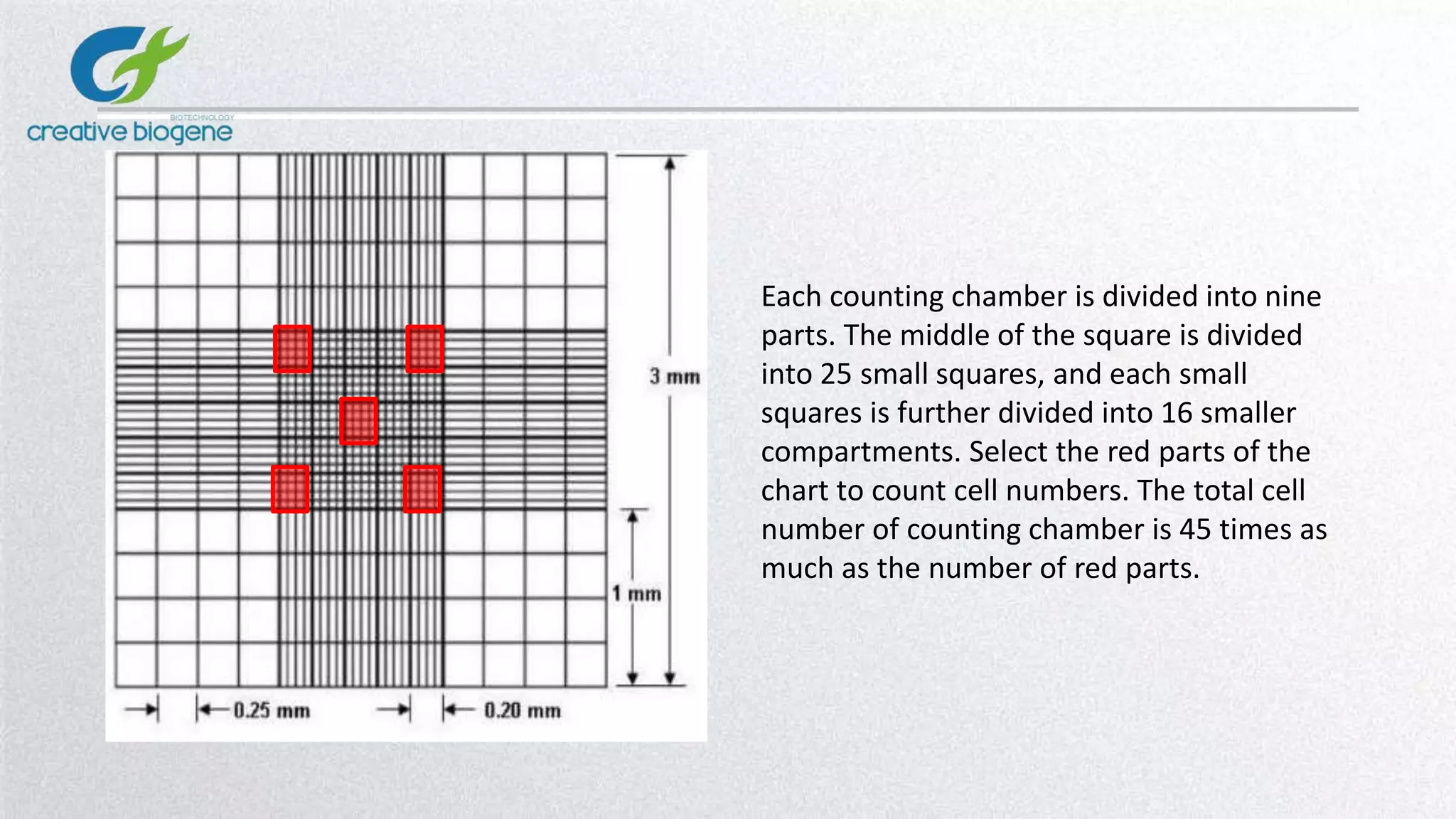
Each counting chamber is divided into nine
parts. The middle of the square is divided
into 25 small squares, and each small
squares is further divided into 16 smaller
compartments. Select the red parts of the
chart to count cell numbers. The total cell
number of counting chamber is 45 times as
much as the number of red parts.
About US
Creative Biogene holds a leadership position in the global market and is
committed to improving the human condition through biotechnology. We offer
transfection reagents which are ideal for delivering all types of nucleic acids
including: DNA, siRNA, miRNA, mRNA, viral RNA and oligonucleotides to
eukaryotic cells. Creative Biogene transfection reagents offer you the ability to
consistently transfect a broad range of cell types with high efficiency and
exceptional ease of use.
THANKS!

Transient transfection protocol

  • 1.
    Creative Biogene Transient transfectionprotocol Email: info@creative-biogene.com Website: http://www.creative-biogene.com
  • 2.
    Background Mammalian cells havethe function of protein folding and post-translational modification, and their proteins have natural activity. There are two ways to produce proteins through mammalian cells: transient transfection and stable transfection. The main characteristic of transient transfection is rapid expression in the short term, and enough to satisfy Mini-preparation of protein. Transient transfection means that the constructed plasmids are introduced into mammalian cells in some ways, but the foreign genes of the plasmid are not integrated into the genome of the mammalian cell. With the growth and division of cells, foreign genes will are gradually all lost. So plasmids can exist for 3-4 days in cells. Transient transfection has been widely used for rapid expression protein with high activity in the short term.
  • 3.
  • 4.
    Part 1 Cell Recovery cellrecovery is the process of thawing and re-culture cells which are stored at liquid nitrogen or -80℃. The key of cell recovery is fast which is avoided to prevent the cell damages during thawing.
  • 5.
    Cell Recovery When liquid iscompletely melted in frozen pipes, pour it into the centrifuge tube with culture medium. Take out the cell from the liquid nitrogen or refrigerator, place quickly it in the preheated water bath, and shake frozen pipes . Preheat the water bath cauldron to 37-40℃, and add 10 mL culture medium to the centrifuge tube. Centrifuge 5 min and discard the supernatant Suspend precipitate with culture medium. Cells are replated in a culturing bottle and cultivated
  • 6.
  • 7.
    01 02 03 The cultured cellsare inoculated into 6-wells plates. Add 2-4 mL complete medium, mix and place in CO2 incubator, 37 ℃ for the night. Prepare the following solutions. A: 2 ug plasmid is diluted with 100 uL serum-free medium. B: 25 uL Lipofectamine transfection reagent is diluted with 100 uL serum-free medium. Mix solution A and solution B, let rest about 30 min at room temperature.Transfection 04 05 When around 80% unilaminar cells formed at the bottom of culture flask, wash cells two times with serum-free medium and add 1 mL serum-free medium each well . Then add the solution from step 3 by drop to each well, mix gently place in CO2 incubator, 37 ℃ for 24 hours. Pour out the transfection solution, add complete culture medium and continue culturing.
  • 8.
    Part 3 Expression Detection Collectcultured cells, break up the cells through ultrasound or enzymatic hydrolysis, and supernatant is obtained by centrifugation. The detection of mRNA expression level and protein expression level are conducted. The cDNA need analyses with realtime-PCR or reverse transcription PCR. And proteins are extracted for western blot analysis.
  • 9.
    Part 4 Cell Count Theprinciple of cell count is to obtain the total concentration of cells by determining the number of cells per unit volume. It is widely used in cell culture and testing cell growth curve. We can use blood count to count cell numbers.
  • 10.
    2 Cell Count 1 Wash anddry the cover slip of blood count, digest cells and prepare the unicell suspension. Then, dilute cell suspension at certain multiples. Cover the blood count with cover slip, slowly inject 10 uL cell suspension onto the blood count with transfer liquid gun. Next, observe cell under a microscope, count cell numbers.
  • 11.
    Each counting chamberis divided into nine parts. The middle of the square is divided into 25 small squares, and each small squares is further divided into 16 smaller compartments. Select the red parts of the chart to count cell numbers. The total cell number of counting chamber is 45 times as much as the number of red parts.
  • 12.
    About US Creative Biogeneholds a leadership position in the global market and is committed to improving the human condition through biotechnology. We offer transfection reagents which are ideal for delivering all types of nucleic acids including: DNA, siRNA, miRNA, mRNA, viral RNA and oligonucleotides to eukaryotic cells. Creative Biogene transfection reagents offer you the ability to consistently transfect a broad range of cell types with high efficiency and exceptional ease of use. THANKS!