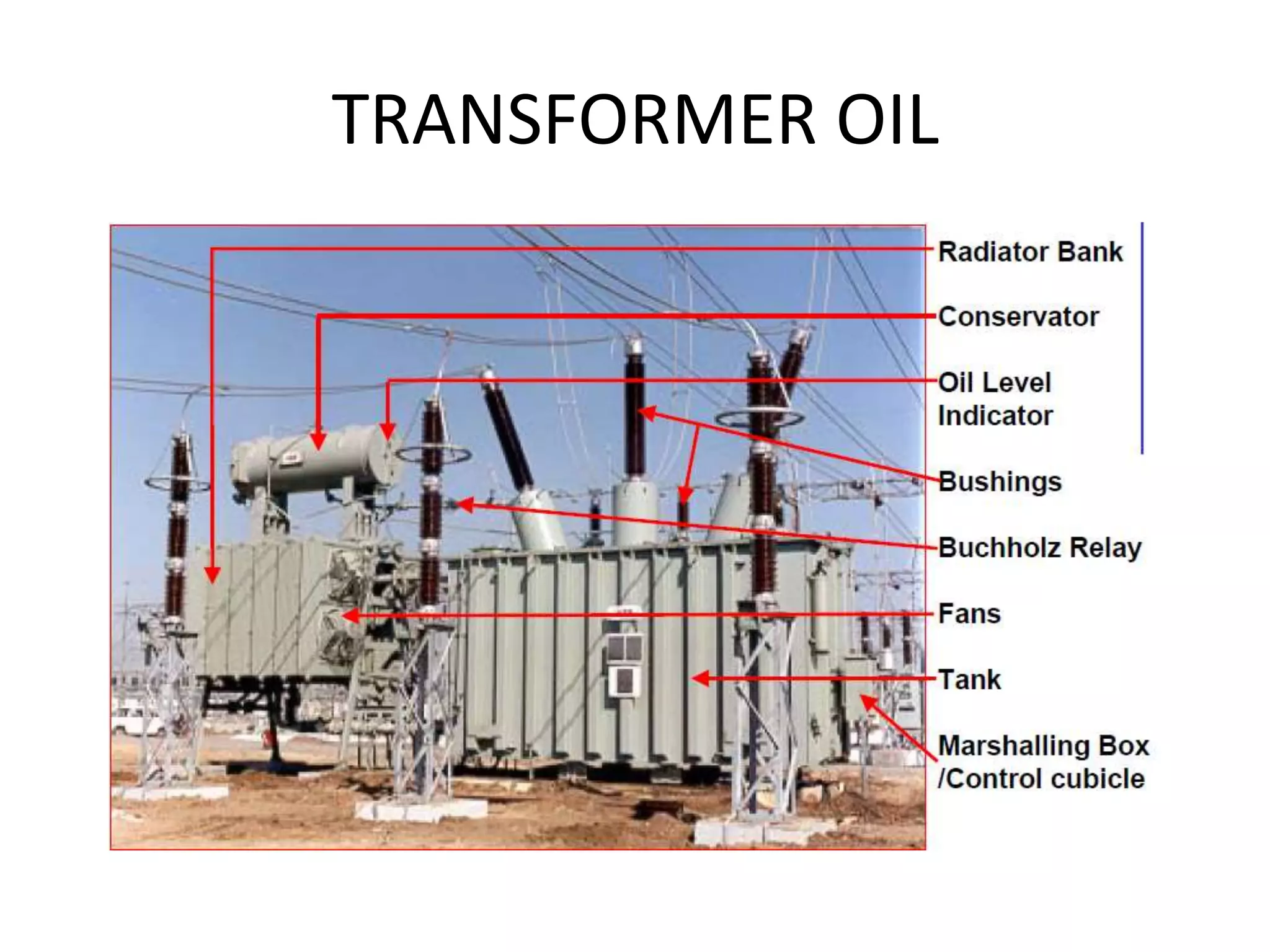
Electrical Sub-Station
Transformer Oil
INTRODUCTION
•Insulating oil in an electrical power transformer is commonly k/a transformer
oil.
•It is normally obtained by fractional distillation and subsequent treatment of
crude petroleum.
Transformer oil serves the following purposes
 It is the liquid insulation in electrical power transformer
 It dissipates heat of the transformer i.e. acts as coolant.
 It helps to preserve the core and winding as these are fully immersed
inside oil
 It prevents direct contact of atmospheric oxygen with cellulose made
paper insulation of windings, which is susceptible to oxidation
TRANSFORMER OIL
DIELECTRIC STRENGTH
• The voltage at which the oil breaks down when subjected to an ac electric
field with a continuously increasing voltage contained in specified
apparatus.
• Break down voltage is measured by observing at what voltage, sparking
starts between two electrodes immerged in the oil, separated by specific
gap.
• Low value of BDV indicates presence of moisture content and conducting
substances in the oil.
•Drums used for transport and storage should
be kept under cover.
•Drums should be clearly marked to indicate
whether they are for clean or for dirty oil and
should be reserved for the type indicated.
•When oil is stored in drums, these should be
placed in such a position that there is a head of
oil on the stopper or plug to prevent the entry
of water during storage.
•When oil is stored in drums which have been
bent or otherwise damaged in transit or
storage, and the transfer of oil from such
containers to electrical equipment should
normally be through a suitable treatment plant.
HANDLING AND STORAGE OF OIL
BDV Kit
BDV TEST
• BDV is important and popular test of transformer oil, as it is primary
indication of health of oil and it can be easily carried out at site.
• Dry and clean oil gives BDV results, better than the oil with moisture
content and other conducting impurities.
• Minimum breakdown voltage of transformer oil or dielectric strength
of transformer oil at
• which this oil can safely be used in transformer, is considered as 30 KV.
•In s/s with fixed oil-handling equipment
the pipe work from the clean oil tanks to
the electrical apparatus should be kept
clean and free from moisture.
•Where portable oil handling equipment is
used, flexible pipe work and hand pumps
should be carefully inspected to ensure
that they are free from dirt and water, and
should be flushed with clean oil before
use.
•Hoses used for clean oil and dirty oil
should be clearly marked and provided
with plugs for sealing the ends when not
in use.
OIL TOP-UP
Chemical parameter
1. Acidity
2. Sludge content.
3. Water content
Physical Parameters
1. Inter Facial Tension
2. Flash point
3. Pour Point
4. Viscosity
THANK YOU

Transformer Oil Testing.pptx

  • 1.
  • 2.
    INTRODUCTION •Insulating oil inan electrical power transformer is commonly k/a transformer oil. •It is normally obtained by fractional distillation and subsequent treatment of crude petroleum. Transformer oil serves the following purposes  It is the liquid insulation in electrical power transformer  It dissipates heat of the transformer i.e. acts as coolant.  It helps to preserve the core and winding as these are fully immersed inside oil  It prevents direct contact of atmospheric oxygen with cellulose made paper insulation of windings, which is susceptible to oxidation
  • 3.
  • 4.
    DIELECTRIC STRENGTH • Thevoltage at which the oil breaks down when subjected to an ac electric field with a continuously increasing voltage contained in specified apparatus. • Break down voltage is measured by observing at what voltage, sparking starts between two electrodes immerged in the oil, separated by specific gap. • Low value of BDV indicates presence of moisture content and conducting substances in the oil.
  • 5.
    •Drums used fortransport and storage should be kept under cover. •Drums should be clearly marked to indicate whether they are for clean or for dirty oil and should be reserved for the type indicated. •When oil is stored in drums, these should be placed in such a position that there is a head of oil on the stopper or plug to prevent the entry of water during storage. •When oil is stored in drums which have been bent or otherwise damaged in transit or storage, and the transfer of oil from such containers to electrical equipment should normally be through a suitable treatment plant. HANDLING AND STORAGE OF OIL
  • 6.
  • 7.
    BDV TEST • BDVis important and popular test of transformer oil, as it is primary indication of health of oil and it can be easily carried out at site. • Dry and clean oil gives BDV results, better than the oil with moisture content and other conducting impurities. • Minimum breakdown voltage of transformer oil or dielectric strength of transformer oil at • which this oil can safely be used in transformer, is considered as 30 KV.
  • 8.
    •In s/s withfixed oil-handling equipment the pipe work from the clean oil tanks to the electrical apparatus should be kept clean and free from moisture. •Where portable oil handling equipment is used, flexible pipe work and hand pumps should be carefully inspected to ensure that they are free from dirt and water, and should be flushed with clean oil before use. •Hoses used for clean oil and dirty oil should be clearly marked and provided with plugs for sealing the ends when not in use. OIL TOP-UP
  • 9.
    Chemical parameter 1. Acidity 2.Sludge content. 3. Water content Physical Parameters 1. Inter Facial Tension 2. Flash point 3. Pour Point 4. Viscosity
  • 10.