Transducers
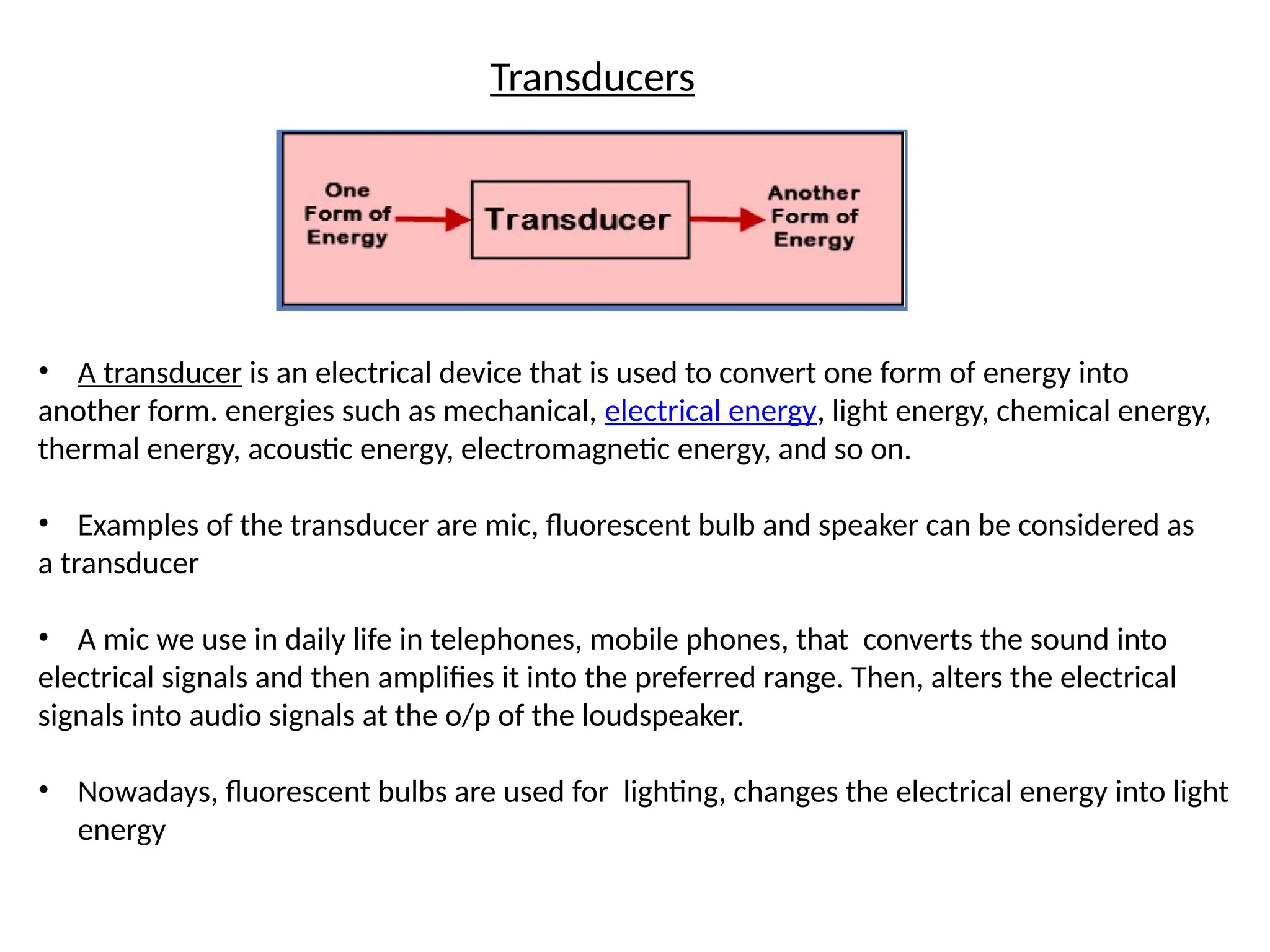
• A transducer is an electrical device that is used to convert one form of energy into
another form. energies such as mechanical, electrical energy, light energy, chemical energy,
thermal energy, acoustic energy, electromagnetic energy, and so on.
• Examples of the transducer are mic, fluorescent bulb and speaker can be considered as
a transducer
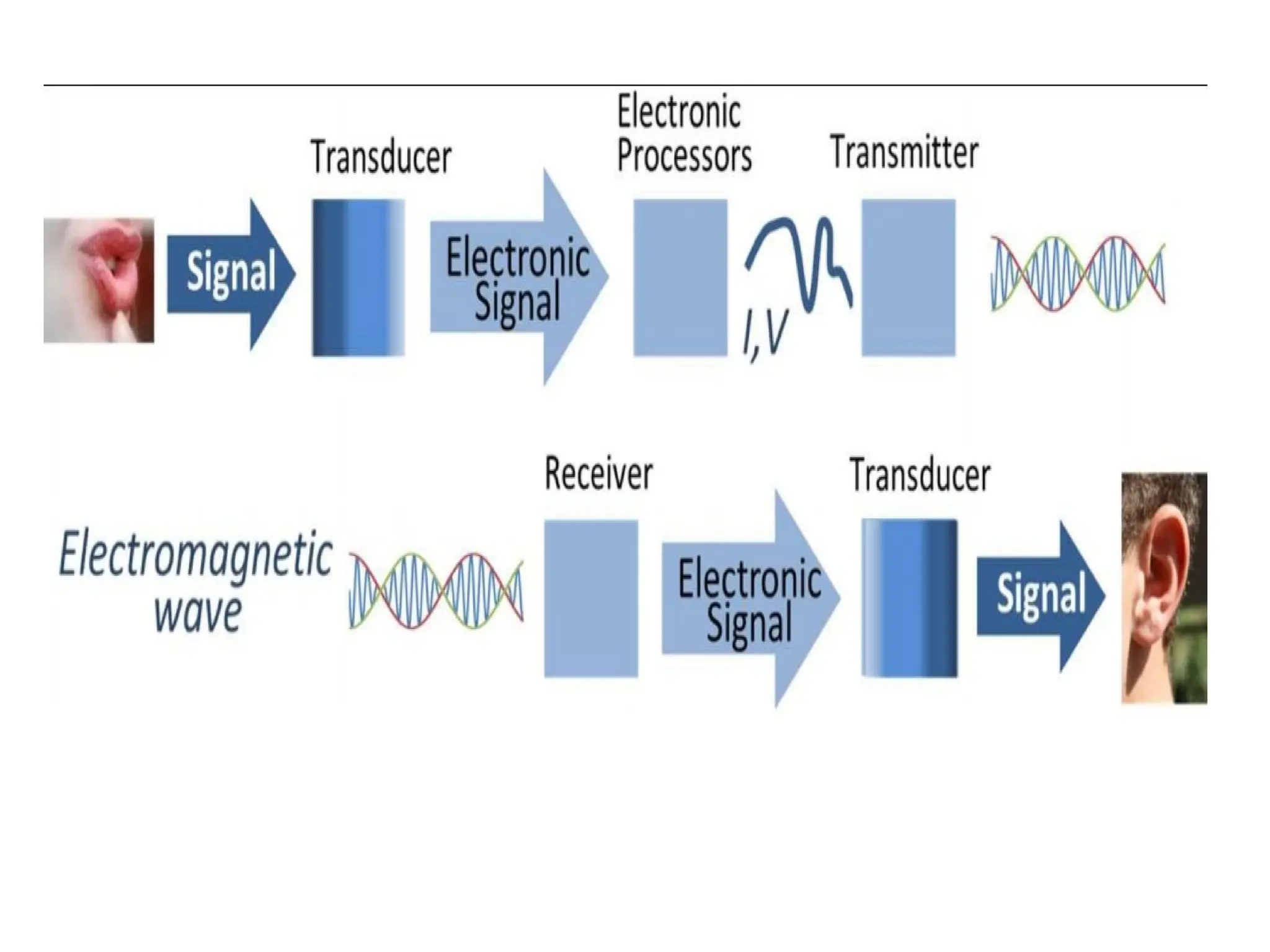
• A mic we use in daily life in telephones, mobile phones, that converts the sound into
electrical signals and then amplifies it into the preferred range. Then, alters the electrical
signals into audio signals at the o/p of the loudspeaker.
• Nowadays, fluorescent bulbs are used for lighting, changes the electrical energy into light
energy
Electrical transducers can be broadly classified into two major categories
 Active
 Passive
Active transducers: Active transducer doesn’t require any power source for their
operations. These transducers work on the principle of energy conversion. They generate an
electrical signal that is proportional to the i/p.
Example: from pressure to charge or temperature to electrical potential.
• Piezo electric sensors / piezoelectric accelerometers. (for generation of charge
corresponding to pressure) 
• Photovoltaic cells ( for generation of voltage in response to illumination)
• Thermocouples
Passive Transducer: requires an external power source for their operation. They generate an
o/p in the form of capacitance, resistance. Then that has to be converted to an equivalent
voltage or current signal.
Example: passive transducer is a photocell
• Strain gauges (for resistance change in response to pressure)
• Thermistors ( for resistance change corresponding to temperature variations)
Passive Transducers
Strain Gauges
The strain guage is an example of a passive transducer that uses the
variation in electrical resistance in wires to sense the strain
produced by a force on the wires.
If a metal is stretched or compressed, its resistance changes on
account of the fact that both length and diameter of conductor
changes. Also there is change in resistivity of the conductor when
subjected to strain, a property called the piezo-resistive effect.
 When a gauge is subjected to a positive stress, its length increases
while its area of cross section decreases, so the resistance of the
gauge increases with positive strain.
• Temperature is one of the most widely measured and controlled variable in
industry, as a lot of produces during manufacturing requires controlled
temperature at various stages of processing.
• Temperature transducer is an electrical device that is used to convert the
temperature of a device into another quantity like electrical energy or pressure
or mechanical energy, then the quantity will be sent to the control device for
controlling the temperature of the device.
• Temperature transducer is used to measure the temperature of the air such
that to control the temperature of several control systems like air-conditioning,
heating, ventilation, and so on.
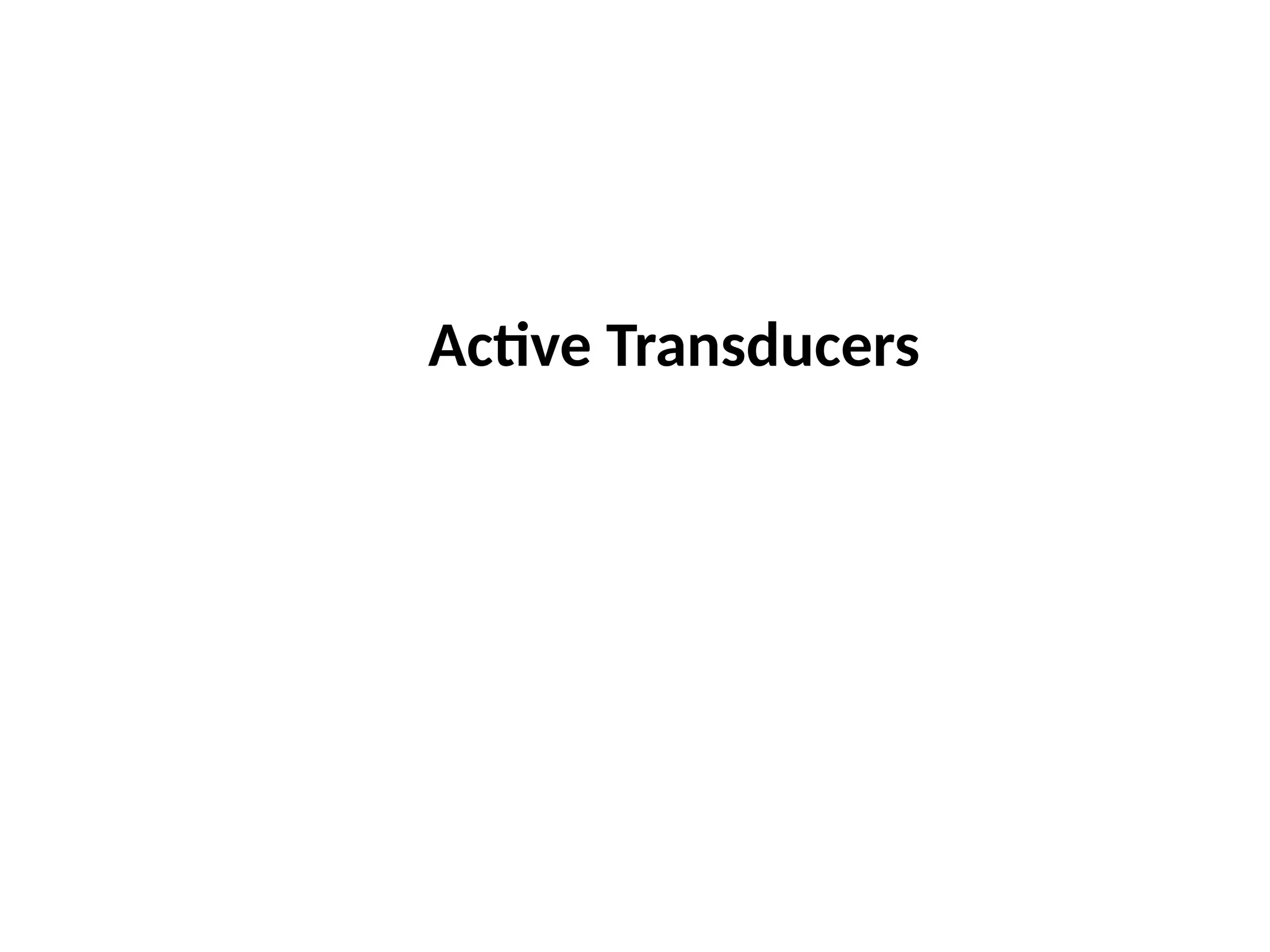
• Most of the temperature transducers are of Thermistors and Thermocouples
Resistance Temperature Detectors (RTD) .
Temperature Transducers
Active Transducers
Acceleration Transducer
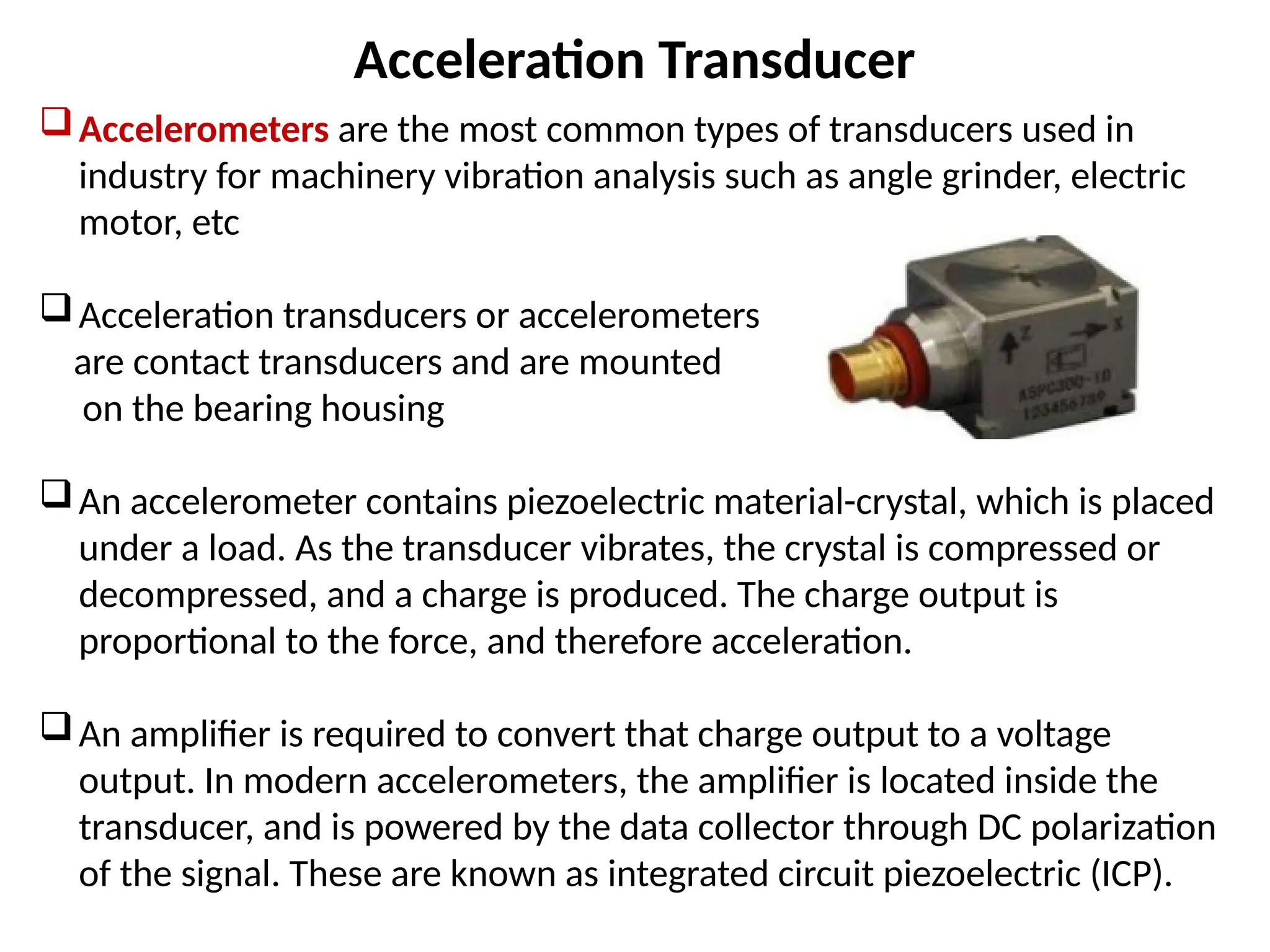
Accelerometers are the most common types of transducers used in
industry for machinery vibration analysis such as angle grinder, electric
motor, etc
Acceleration transducers or accelerometers
are contact transducers and are mounted
on the bearing housing
An accelerometer contains piezoelectric material-crystal, which is placed
under a load. As the transducer vibrates, the crystal is compressed or
decompressed, and a charge is produced. The charge output is
proportional to the force, and therefore acceleration.
An amplifier is required to convert that charge output to a voltage
output. In modern accelerometers, the amplifier is located inside the
transducer, and is powered by the data collector through DC polarization
of the signal. These are known as integrated circuit piezoelectric (ICP).
Light Transducer
 Light transducers are used in those places where it is required to activate, for example,
an artificial light source or when daylight intensity decreases and a source of light is
necessary.
 Light transducers capture light intensity and convert it into an electrical signal. They use
a light beam and convert it into a usable electric signal
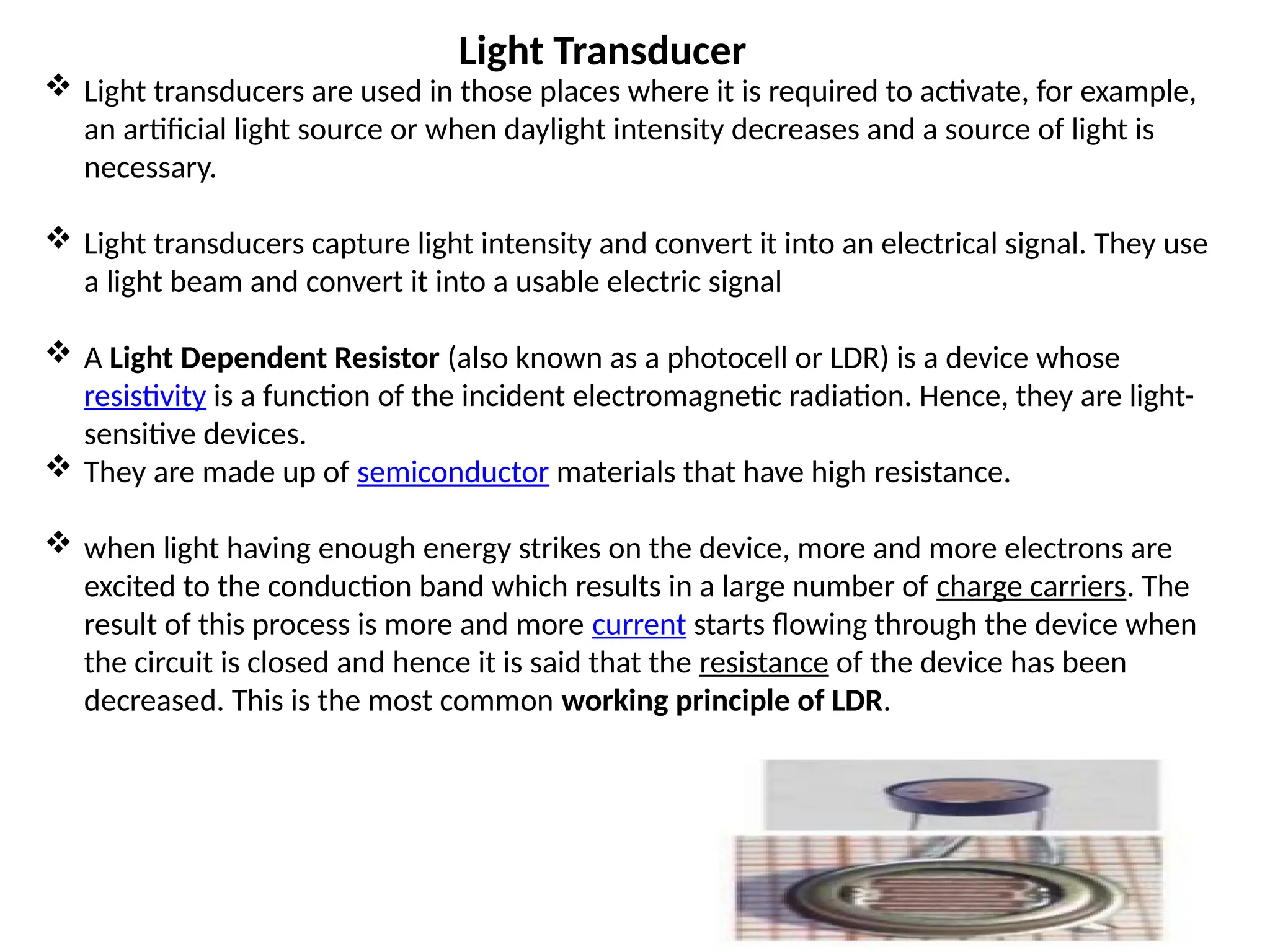
 A Light Dependent Resistor (also known as a photocell or LDR) is a device whose
resistivity is a function of the incident electromagnetic radiation. Hence, they are light-
sensitive devices.
 They are made up of semiconductor materials that have high resistance.
 when light having enough energy strikes on the device, more and more electrons are
excited to the conduction band which results in a large number of charge carriers. The
result of this process is more and more current starts flowing through the device when
the circuit is closed and hence it is said that the resistance of the device has been
decreased. This is the most common working principle of LDR.
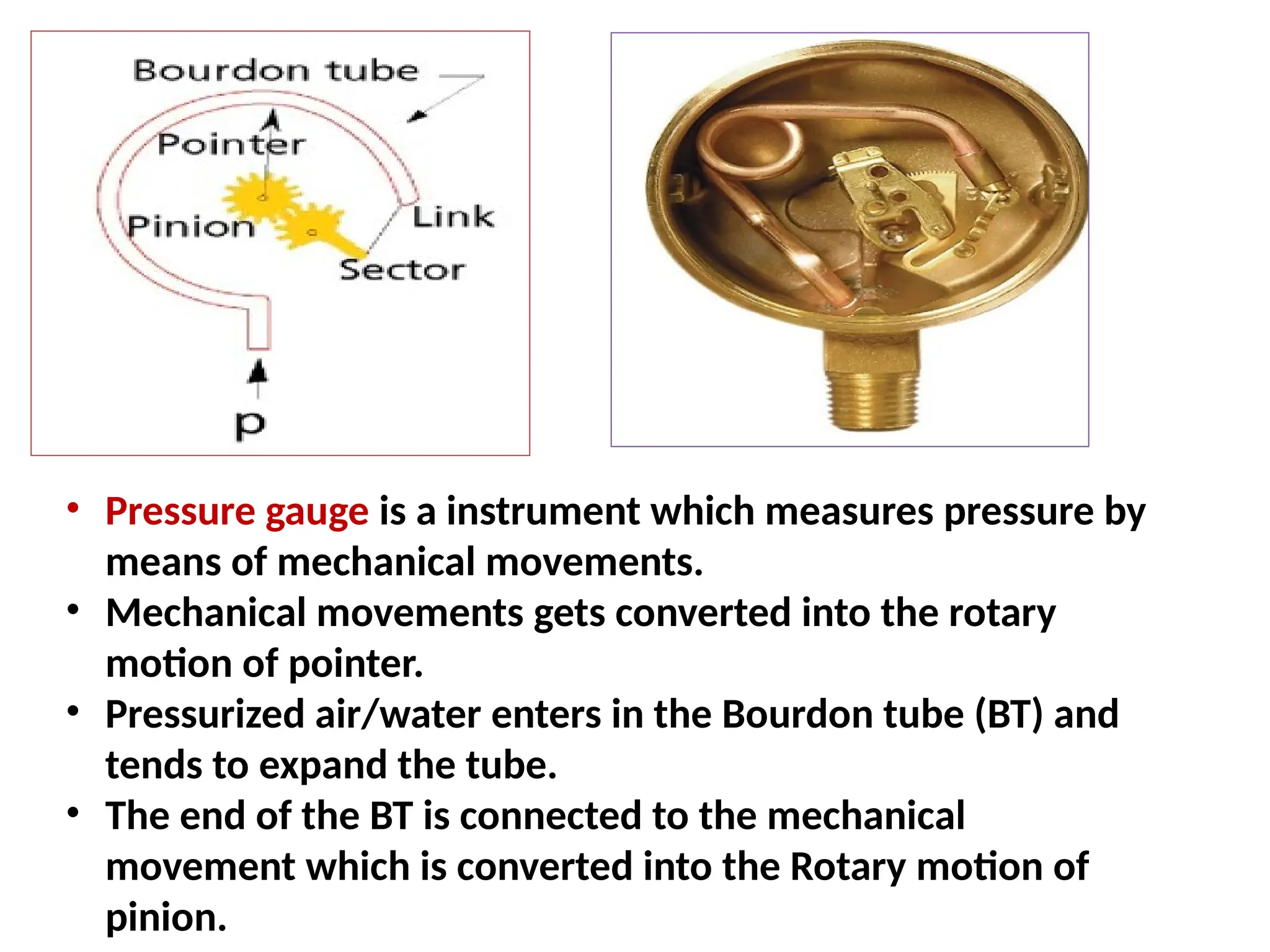
• Pressure gauge is a instrument which measures pressure by
means of mechanical movements.
• Mechanical movements gets converted into the rotary
motion of pointer.
• Pressurized air/water enters in the Bourdon tube (BT) and
tends to expand the tube.
• The end of the BT is connected to the mechanical
movement which is converted into the Rotary motion of
pinion.
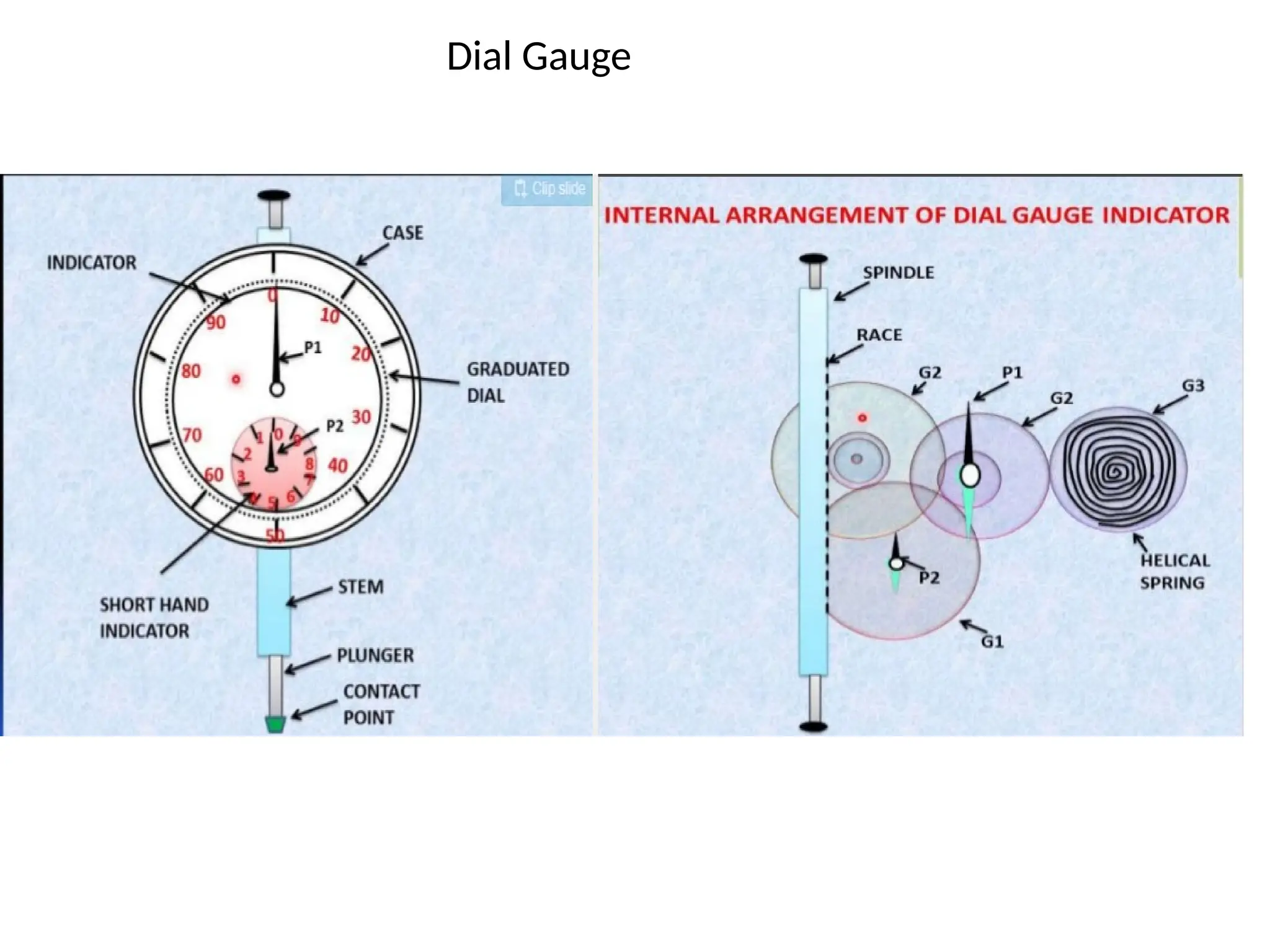
Dial Gauge
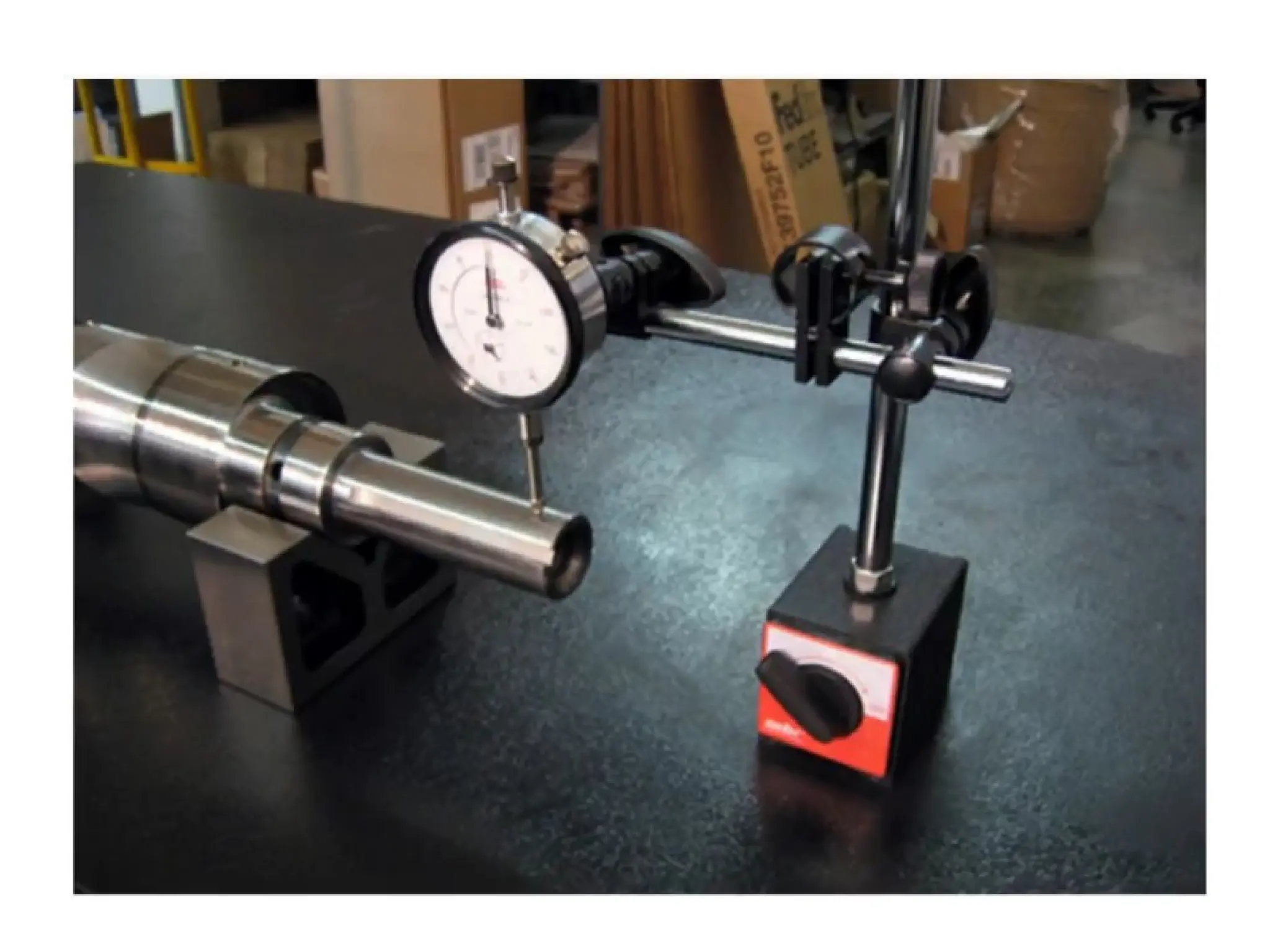
APPLICATIONS OF DIAL GAUGE:
• Comparing two heights or distances.
• Errors in geometrical form such as roundness, run out
and taper.
• Measurement of deformation such as in tension and
compression.
• To determine positional errors of surfaces such as
parallelism and alignment.
• To alignment of job in lathe centers.

Transducer basics for first year students

  • 1.
    Transducers • A transduceris an electrical device that is used to convert one form of energy into another form. energies such as mechanical, electrical energy, light energy, chemical energy, thermal energy, acoustic energy, electromagnetic energy, and so on. • Examples of the transducer are mic, fluorescent bulb and speaker can be considered as a transducer • A mic we use in daily life in telephones, mobile phones, that converts the sound into electrical signals and then amplifies it into the preferred range. Then, alters the electrical signals into audio signals at the o/p of the loudspeaker. • Nowadays, fluorescent bulbs are used for lighting, changes the electrical energy into light energy
  • 3.
    Electrical transducers canbe broadly classified into two major categories  Active  Passive Active transducers: Active transducer doesn’t require any power source for their operations. These transducers work on the principle of energy conversion. They generate an electrical signal that is proportional to the i/p. Example: from pressure to charge or temperature to electrical potential. • Piezo electric sensors / piezoelectric accelerometers. (for generation of charge corresponding to pressure)  • Photovoltaic cells ( for generation of voltage in response to illumination) • Thermocouples Passive Transducer: requires an external power source for their operation. They generate an o/p in the form of capacitance, resistance. Then that has to be converted to an equivalent voltage or current signal. Example: passive transducer is a photocell • Strain gauges (for resistance change in response to pressure) • Thermistors ( for resistance change corresponding to temperature variations)
  • 4.
  • 5.
    Strain Gauges The strainguage is an example of a passive transducer that uses the variation in electrical resistance in wires to sense the strain produced by a force on the wires. If a metal is stretched or compressed, its resistance changes on account of the fact that both length and diameter of conductor changes. Also there is change in resistivity of the conductor when subjected to strain, a property called the piezo-resistive effect.  When a gauge is subjected to a positive stress, its length increases while its area of cross section decreases, so the resistance of the gauge increases with positive strain.
  • 6.
    • Temperature isone of the most widely measured and controlled variable in industry, as a lot of produces during manufacturing requires controlled temperature at various stages of processing. • Temperature transducer is an electrical device that is used to convert the temperature of a device into another quantity like electrical energy or pressure or mechanical energy, then the quantity will be sent to the control device for controlling the temperature of the device. • Temperature transducer is used to measure the temperature of the air such that to control the temperature of several control systems like air-conditioning, heating, ventilation, and so on. • Most of the temperature transducers are of Thermistors and Thermocouples Resistance Temperature Detectors (RTD) . Temperature Transducers
  • 7.
  • 8.
    Acceleration Transducer Accelerometers arethe most common types of transducers used in industry for machinery vibration analysis such as angle grinder, electric motor, etc Acceleration transducers or accelerometers are contact transducers and are mounted on the bearing housing An accelerometer contains piezoelectric material-crystal, which is placed under a load. As the transducer vibrates, the crystal is compressed or decompressed, and a charge is produced. The charge output is proportional to the force, and therefore acceleration. An amplifier is required to convert that charge output to a voltage output. In modern accelerometers, the amplifier is located inside the transducer, and is powered by the data collector through DC polarization of the signal. These are known as integrated circuit piezoelectric (ICP).
  • 9.
    Light Transducer  Lighttransducers are used in those places where it is required to activate, for example, an artificial light source or when daylight intensity decreases and a source of light is necessary.  Light transducers capture light intensity and convert it into an electrical signal. They use a light beam and convert it into a usable electric signal  A Light Dependent Resistor (also known as a photocell or LDR) is a device whose resistivity is a function of the incident electromagnetic radiation. Hence, they are light- sensitive devices.  They are made up of semiconductor materials that have high resistance.  when light having enough energy strikes on the device, more and more electrons are excited to the conduction band which results in a large number of charge carriers. The result of this process is more and more current starts flowing through the device when the circuit is closed and hence it is said that the resistance of the device has been decreased. This is the most common working principle of LDR.
  • 10.
    • Pressure gaugeis a instrument which measures pressure by means of mechanical movements. • Mechanical movements gets converted into the rotary motion of pointer. • Pressurized air/water enters in the Bourdon tube (BT) and tends to expand the tube. • The end of the BT is connected to the mechanical movement which is converted into the Rotary motion of pinion.
  • 11.
  • 13.
    APPLICATIONS OF DIALGAUGE: • Comparing two heights or distances. • Errors in geometrical form such as roundness, run out and taper. • Measurement of deformation such as in tension and compression. • To determine positional errors of surfaces such as parallelism and alignment. • To alignment of job in lathe centers.