Towards Distributed Citizen Participation: Lessons from WikiLeaks and the Queensland FloodsAssoc. Prof. Axel BrunsQueensland University of Technology, Brisbane, Australiaa.bruns@qut.edu.au – http://snurb.info/ –@snurb_dot_info
e-Democracy?Active participation of citizens in the public discussion and deliberation of matters of public concern and policythe organisation of communal activities and initiatives to address such matters through the use of online mediaDepends on the sustained presence of a substantial community of users
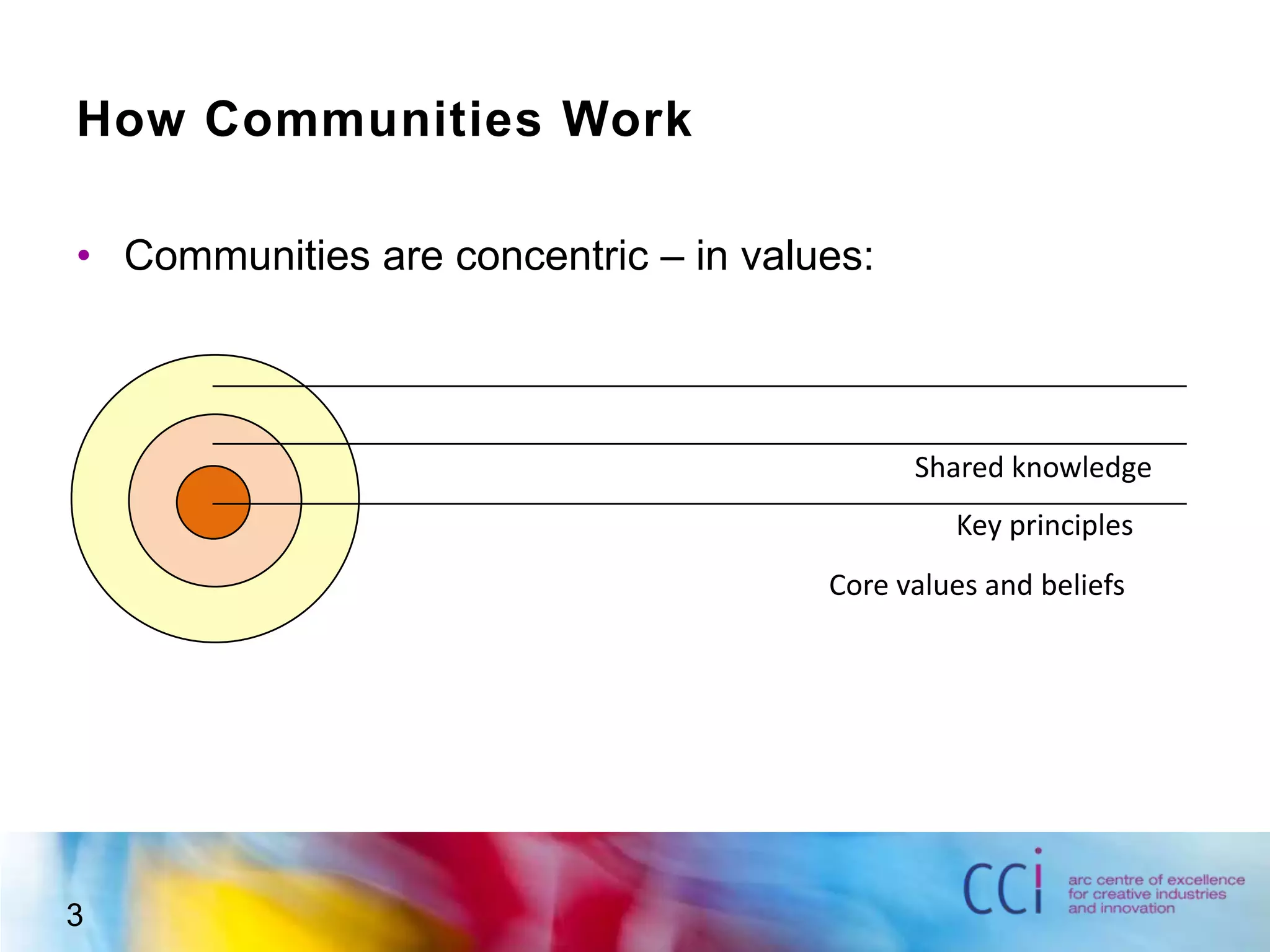
How Communities WorkCommunities are concentric – in values:	Shared knowledge	Key principles	Core values and beliefs	3
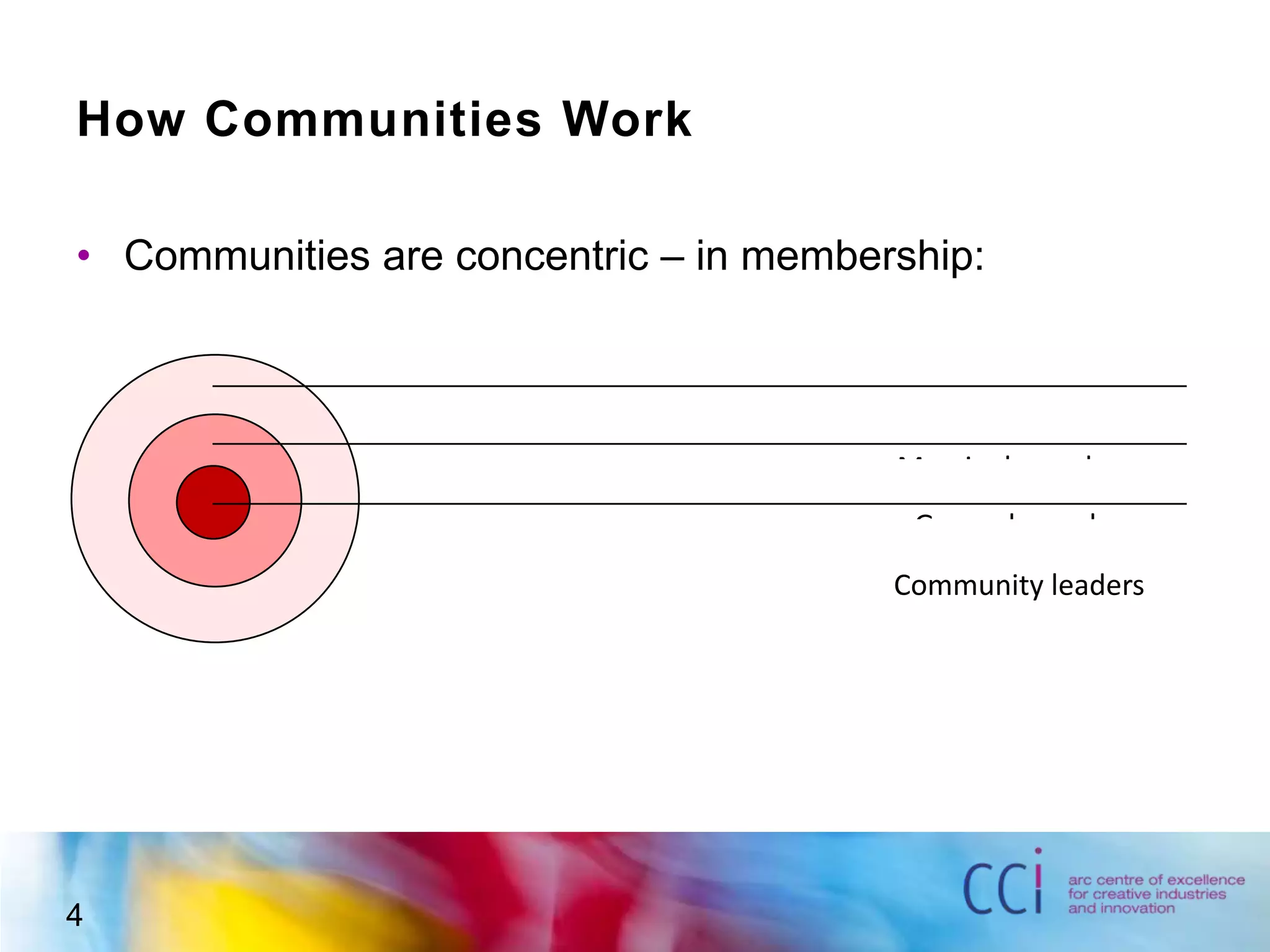
How Communities WorkCommunities are concentric – in membership:	Marginal members		General members		Community leaders	4
Strong e-Democracy Communities?What models?g2cc2cg4c2c?Civic Commons, Civic Commons 2.0?‘Roll your own’ vs. pre-existing platforms and communitiesColeman & Blumler (2009):a space of intersecting networks, pulled together through the agency of a democratically connecting institution
e-Democracy during Acute EventsOnline responses to acute events:Bypassing administrative hurdlesFasttracking community development and structurationSelf-organisation around shared concernsRapid prototyping, testing of tools and platformse-Democracy?Can we learn from this? Can we tap into it?What principles of citizen participation can we observe?
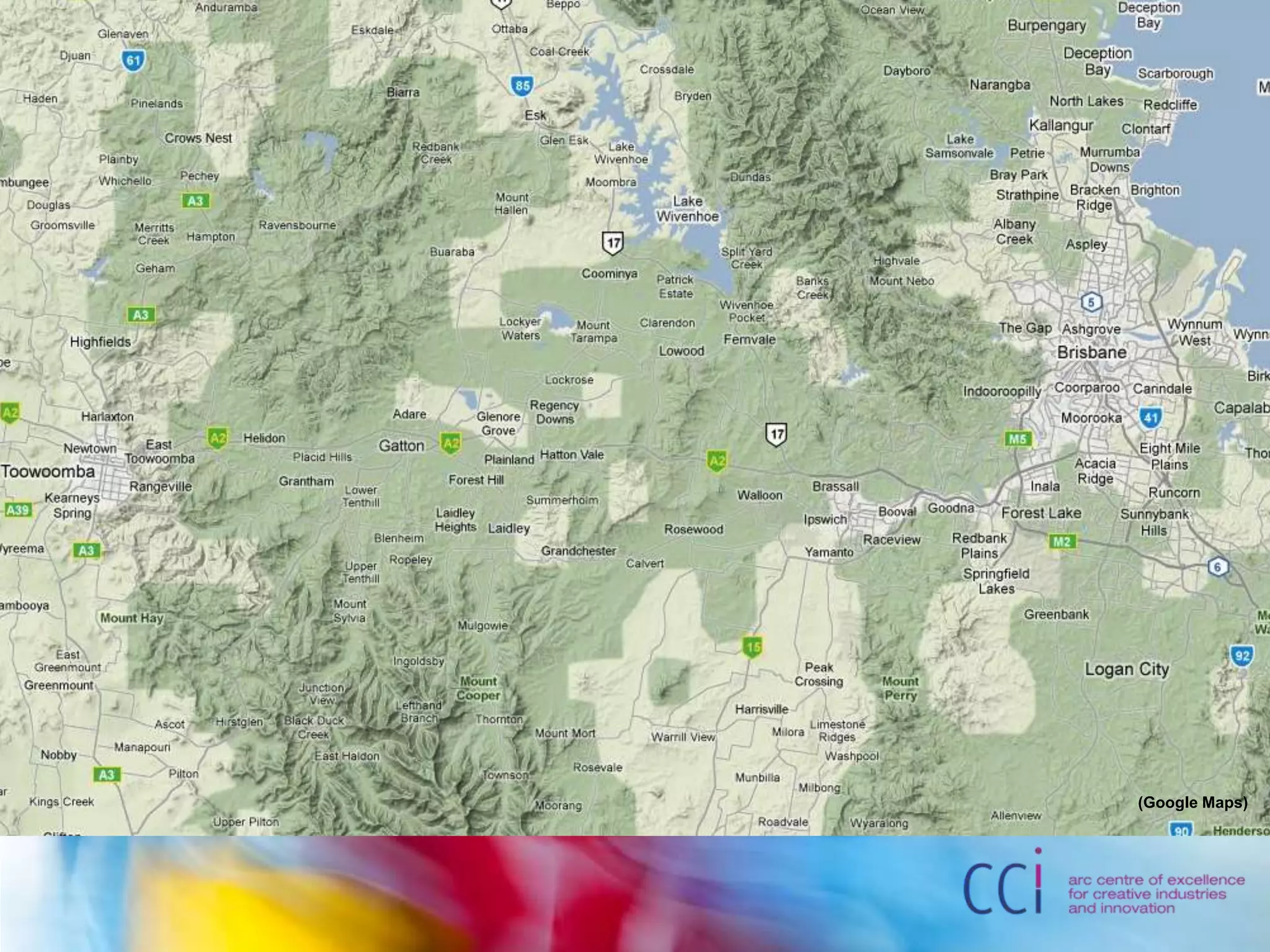
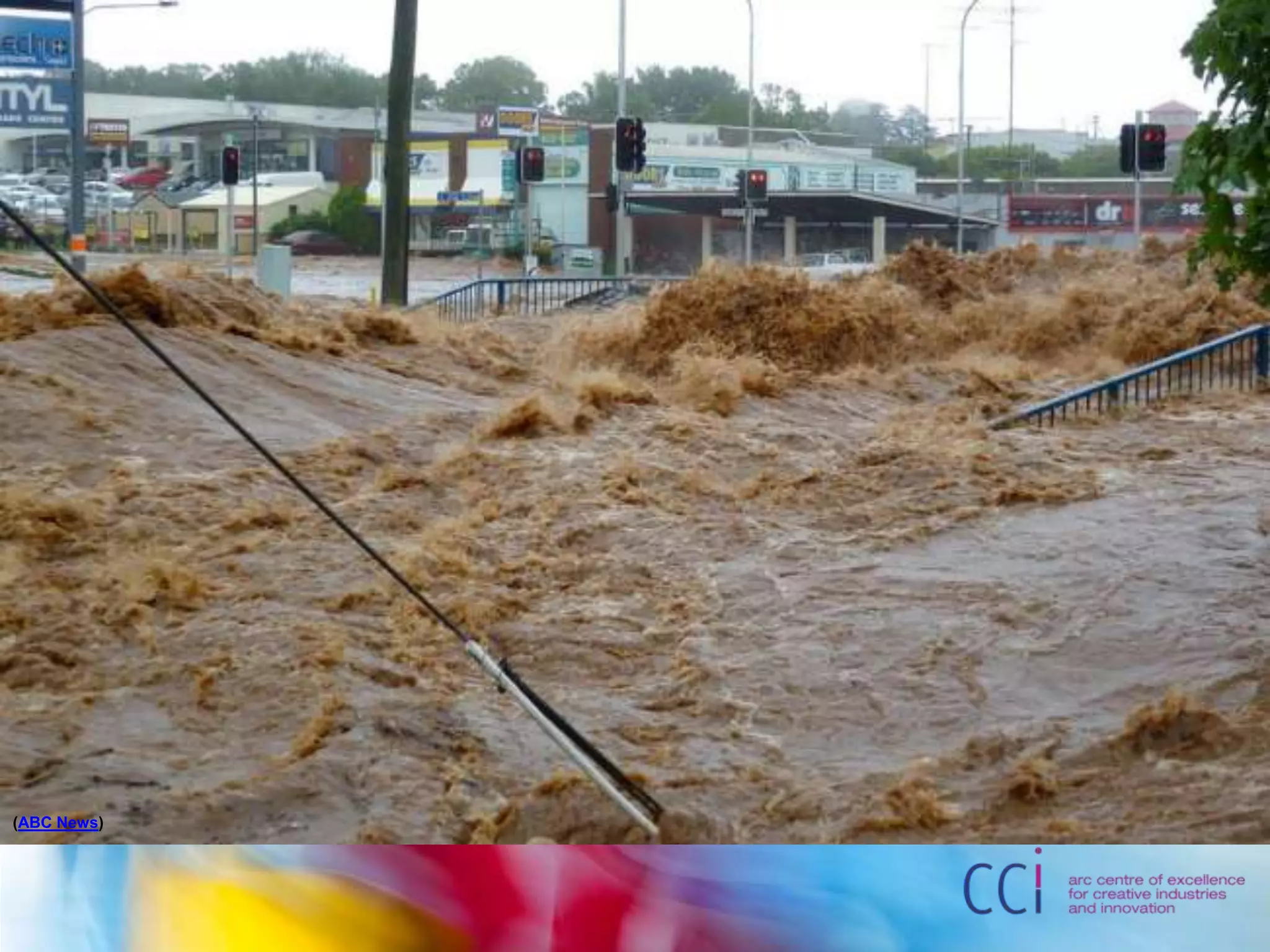
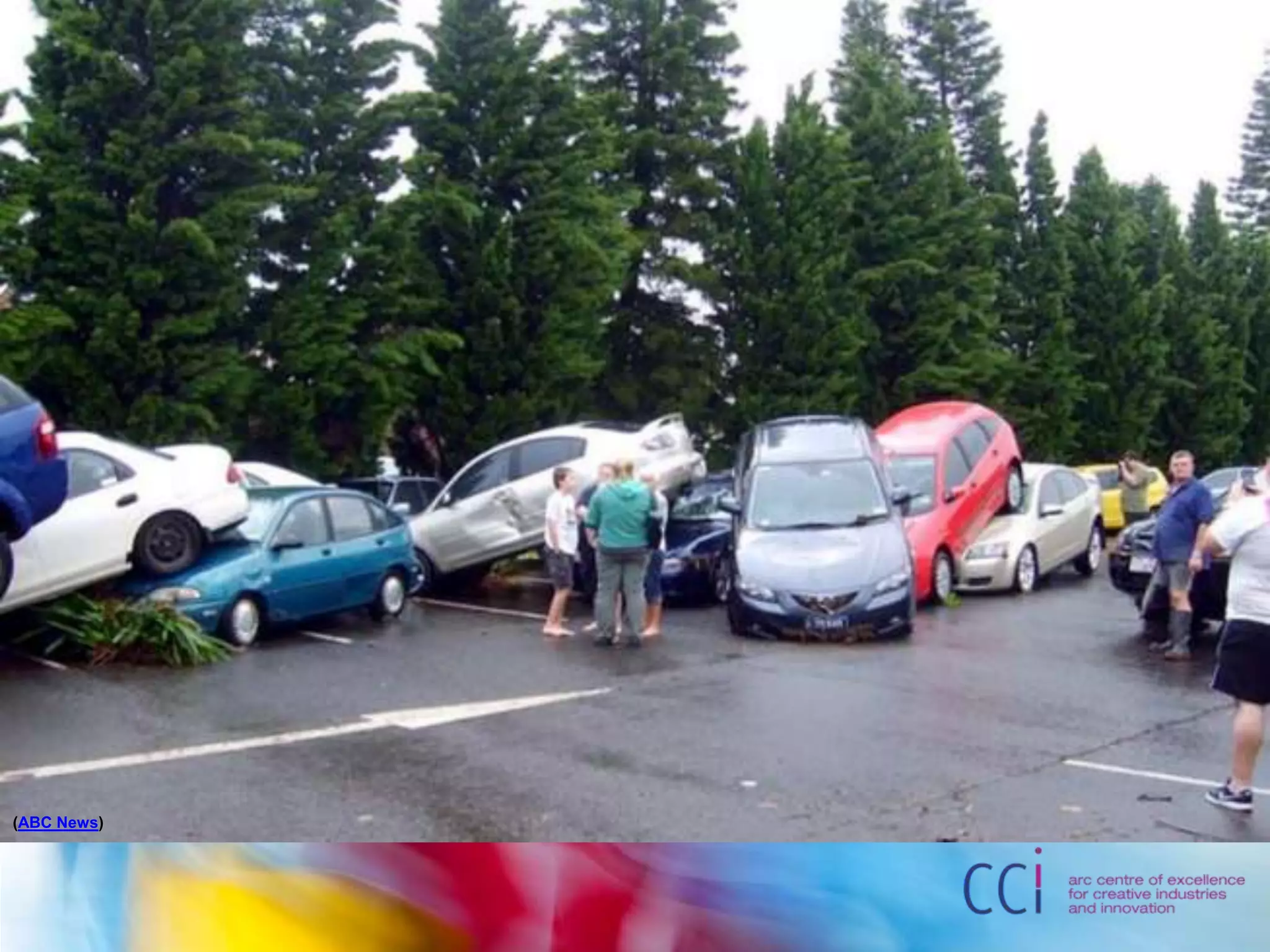
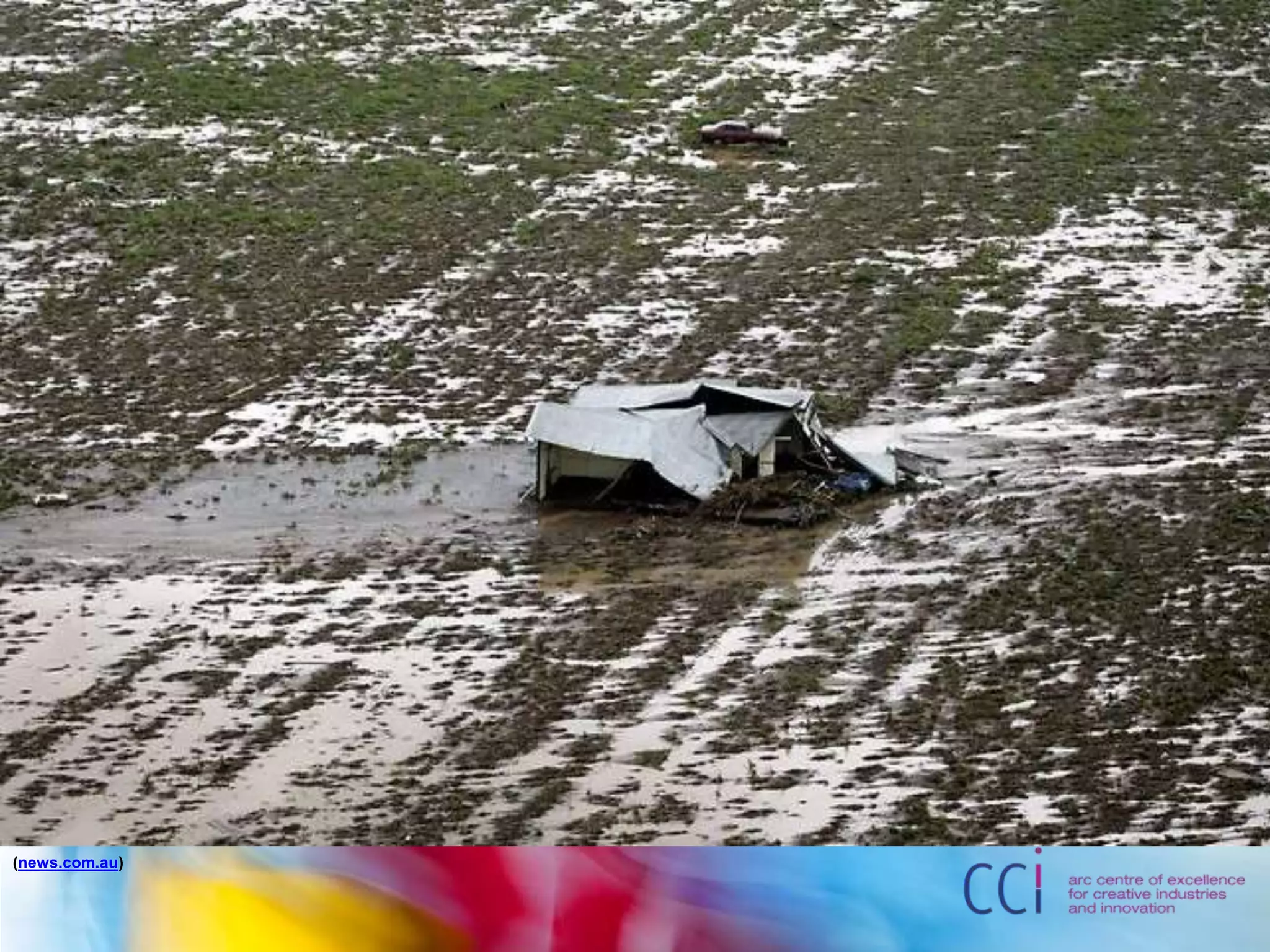
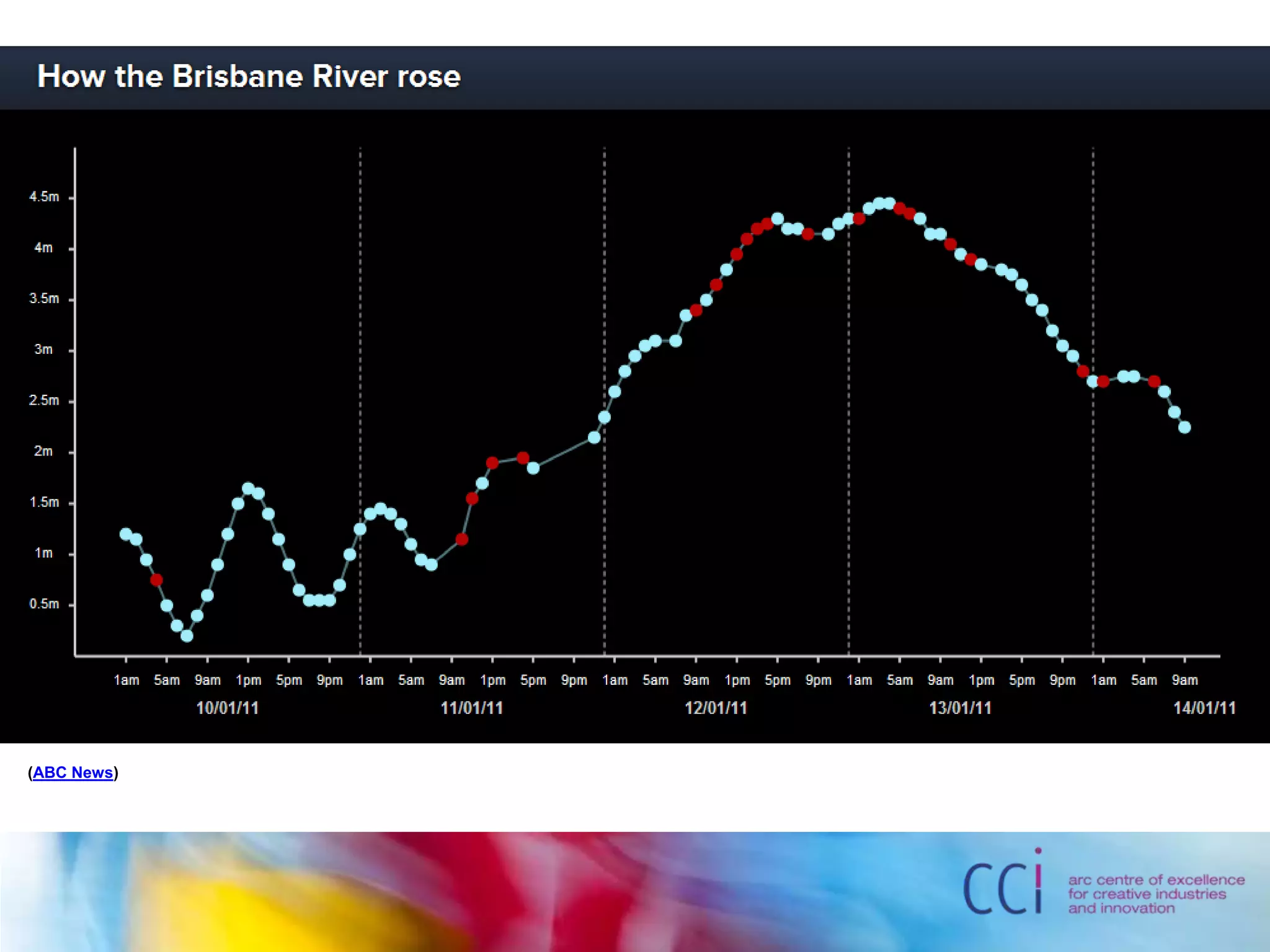
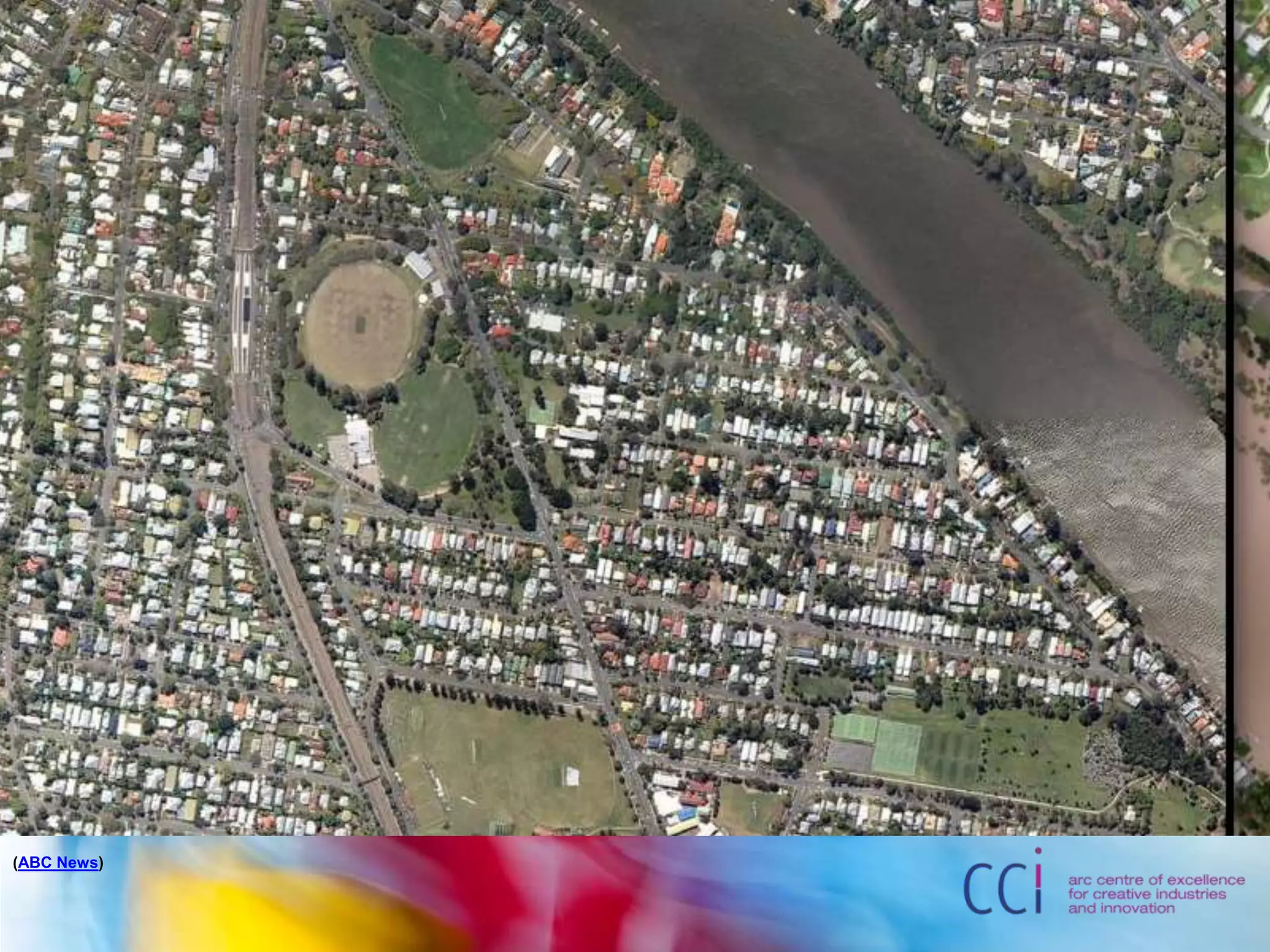
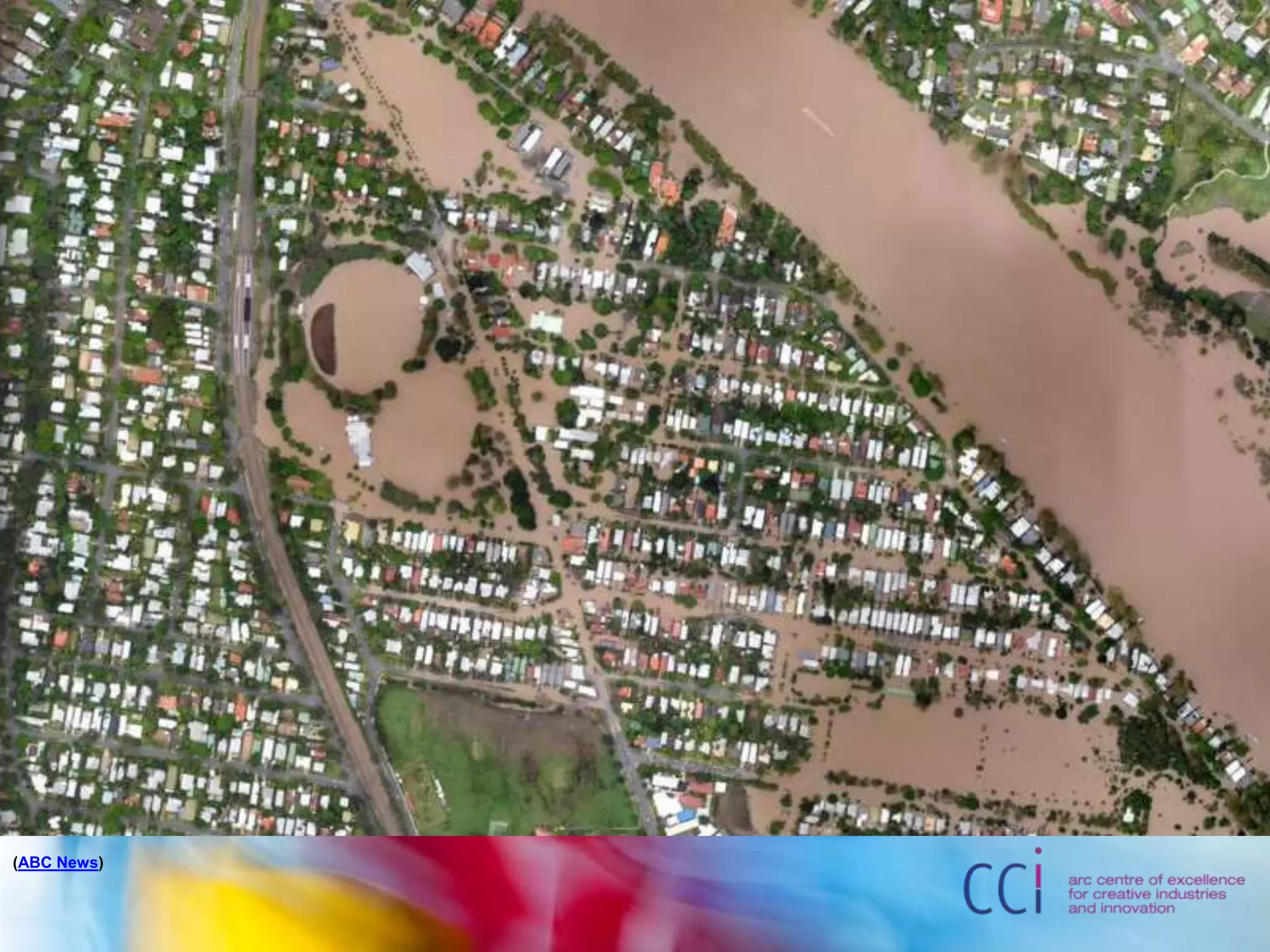
The 2011 Queensland FloodsChronology:December 2010 to January 2011: unprecedented rainfallEmergency declared for more than 50% of QueenslandWivenhoe dam reaches 180% capacityDecember 2010: Flooding in northern QueenslandJanuary 2011: Floods in southeast Queensland10 January 2011: flash flooding in Toowoomba10 January 2011: ‘inland tsunami’ in the Lockyer Valley11 January 2011: flooding begins in Ipswich12-16 January 2011: major flooding in Brisbane
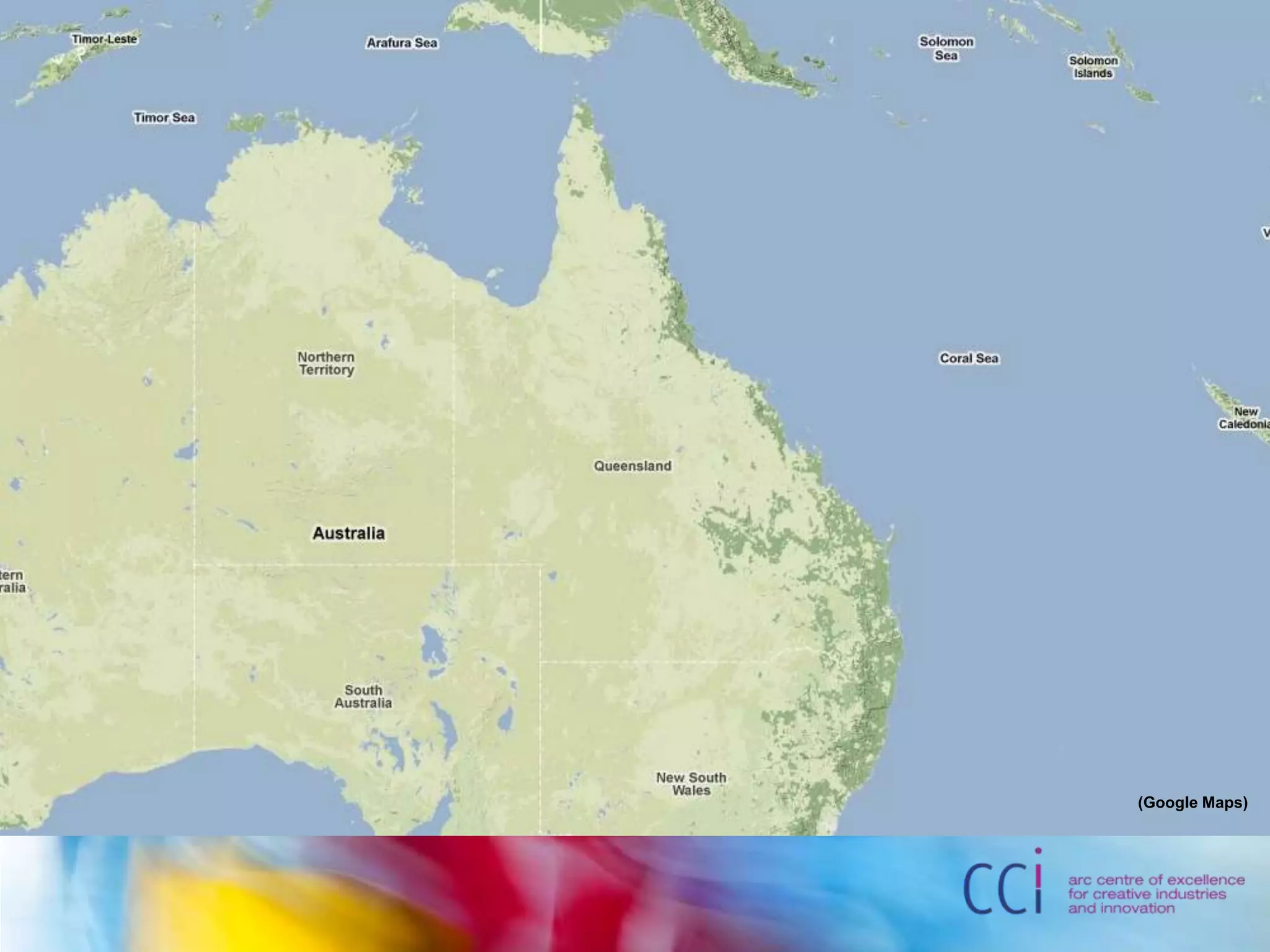
(Google Maps)
(Google Maps)
(ABC News)
(ABC News)
(news.com.au)
(ABC News)
(ABC News)
(ABC News)
Social Media during the FloodsVarious platforms:Facebook, Twitter – updates and informationYouTube, Flickr, Twitpic – first-hand video and photosGoogle Maps, Ushahidi – map-based information mashupsDifferent tools for different purposesVarious levels of maturity:Uses and use practices still developingDifferent demographic reachTechnological differences:e.g. Facebook: built around personal networks; semi-private; discussion threadse.g. Twitter: open, flat network; public #hashtag conversations; update stream
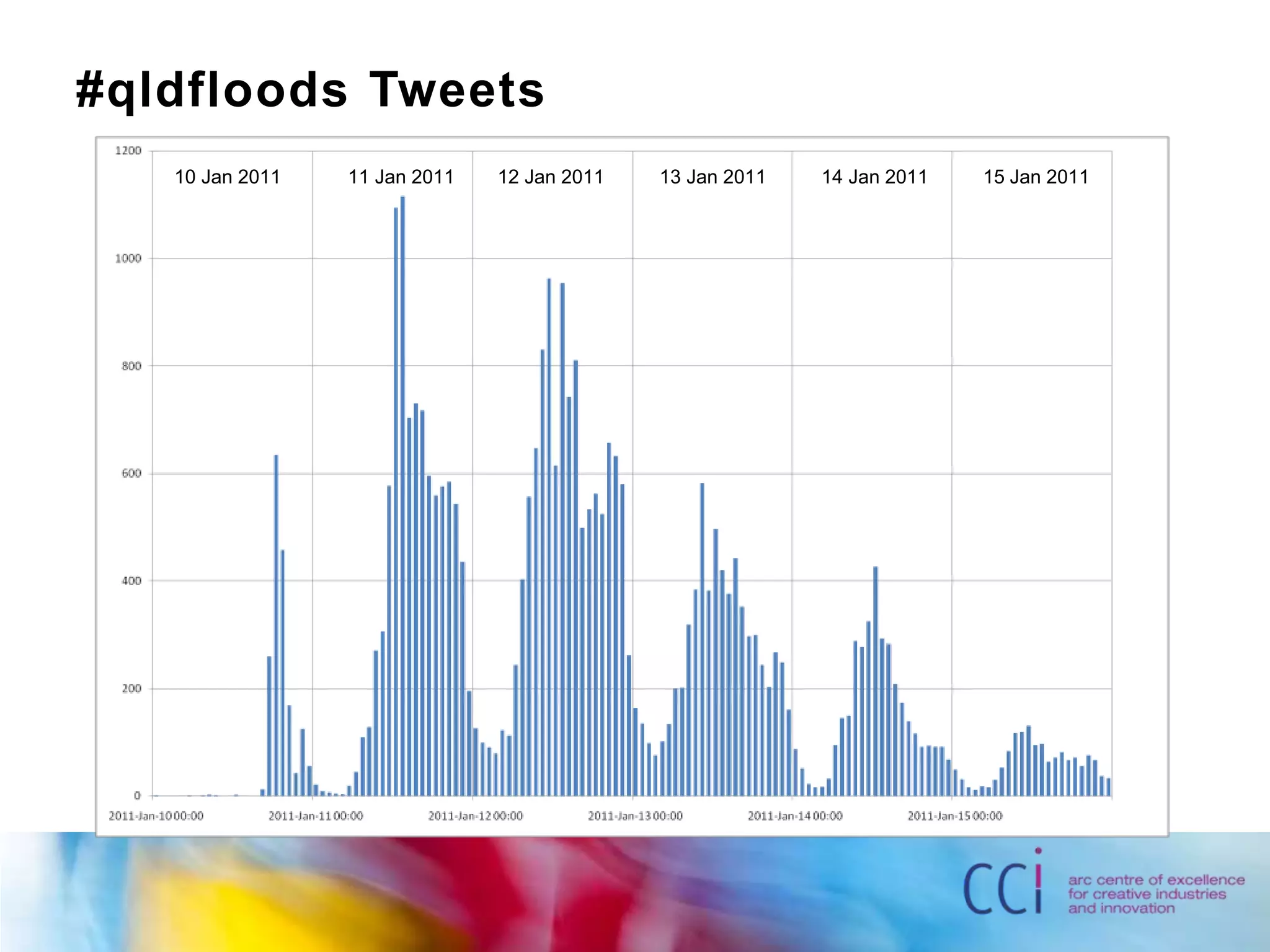
#qldfloodsTweets10 Jan 2011	11 Jan 2011	12 Jan 2011	13 Jan 2011	14 Jan 2011	15 Jan 2011
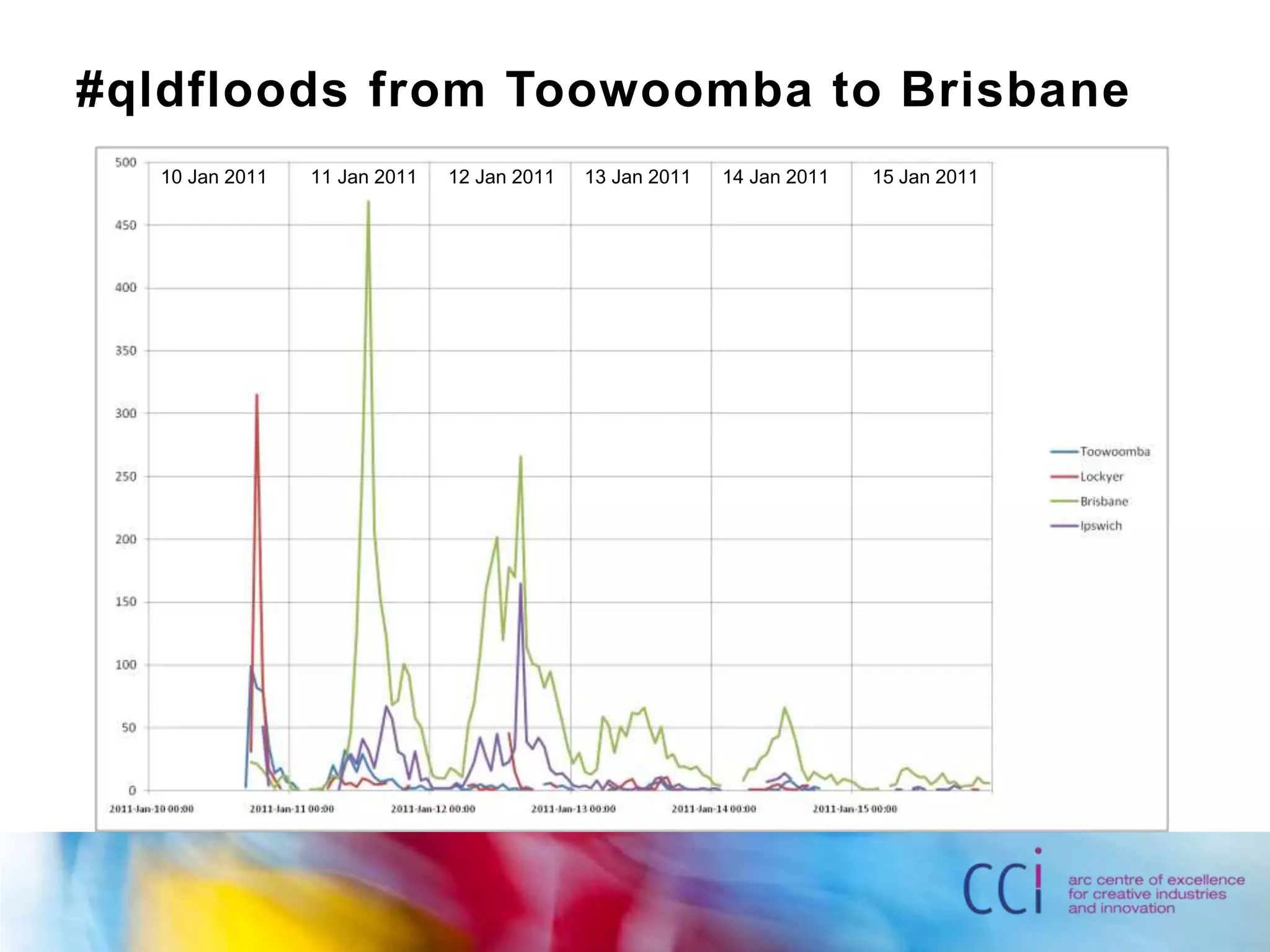
10 Jan 2011	11 Jan 2011	12 Jan 2011	13 Jan 2011	14 Jan 2011	15 Jan 2011#qldfloods from Toowoomba to Brisbane
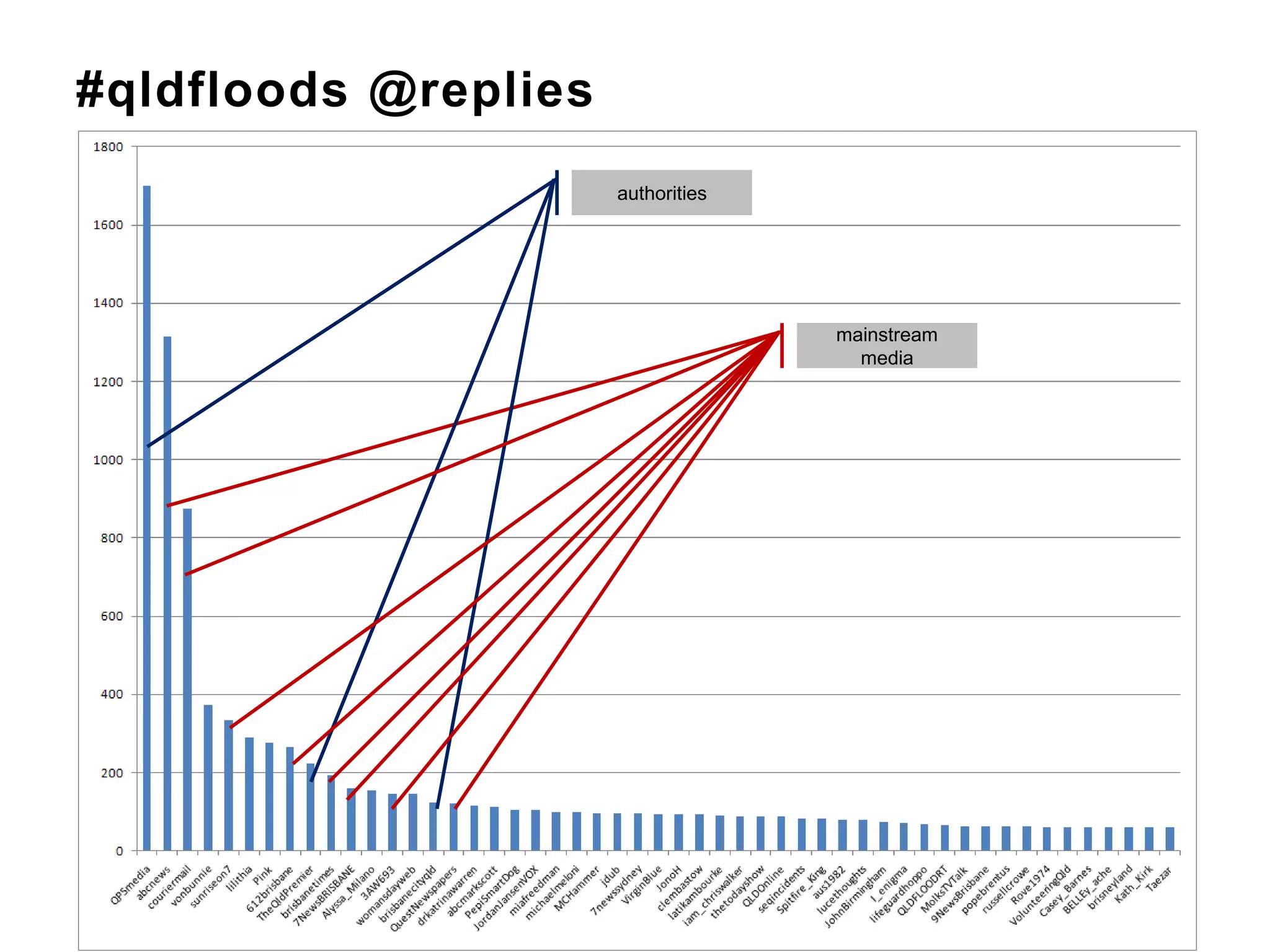
#qldfloods @repliesauthoritiesmainstream media
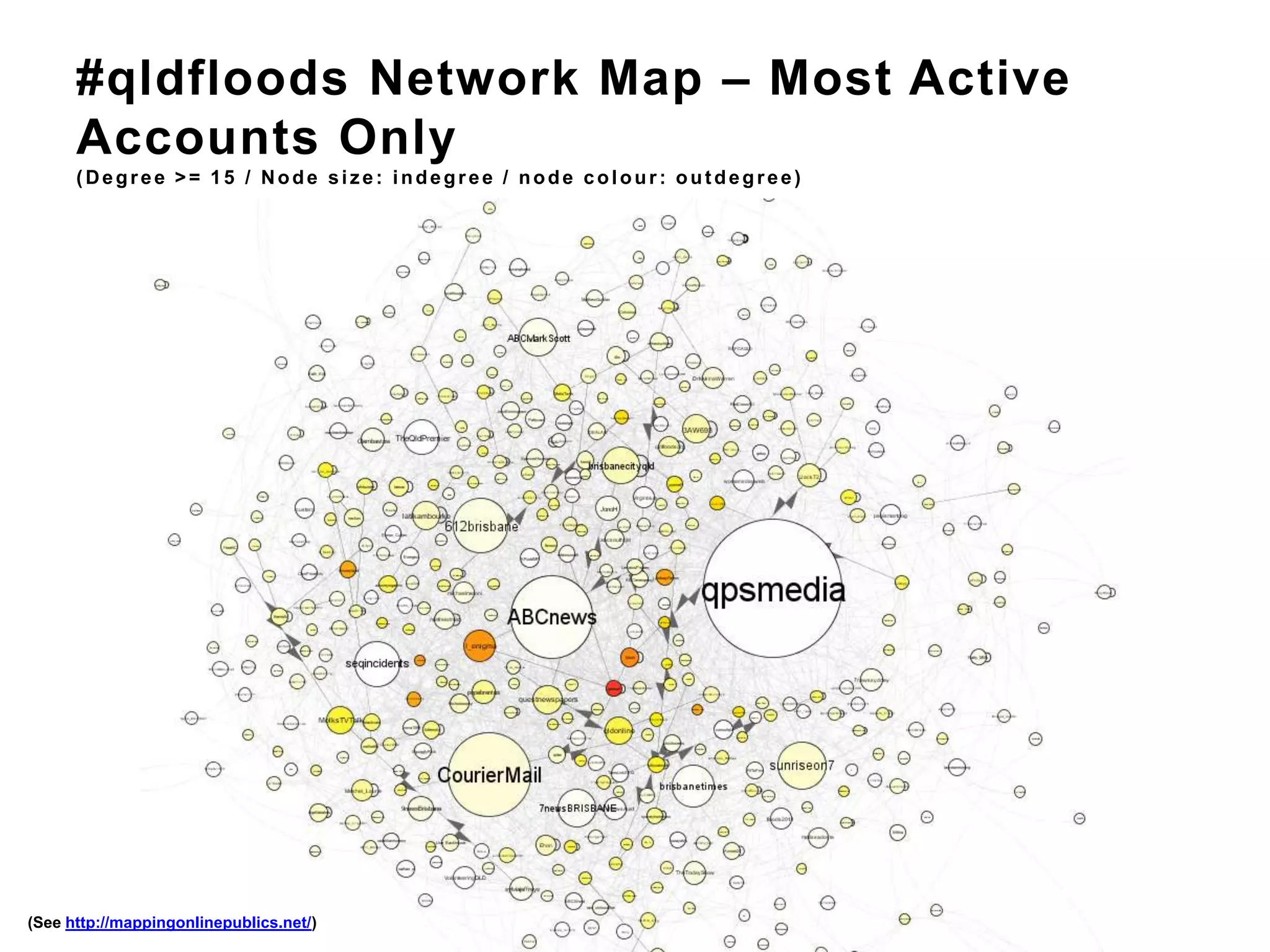
#qldfloods Network Map – Most Active Accounts Only(Degree >= 15 / Node size: indegree / node colour: outdegree)(See http://mappingonlinepublics.net/)
The Queensland Floods CommunitySelf-organisation:Rapid establishment of #qldfloodshashtagAd hoc development of community structuresHighlighting of leading accounts, vigilant against disruptionSuspension of petty squabbles (e.g. state politics)Innovation and rapid prototyping:Adjunct hashtags (#Mythbuster, #bakedrelief)Sharing and gathering of online resourcesAdditional tools (Google Maps, Ushahidi Maps)Emergency services rapidly adopting social media tools (despite lack of established strategies)	‘Go where they are’ rather than ‘build it and they will come’
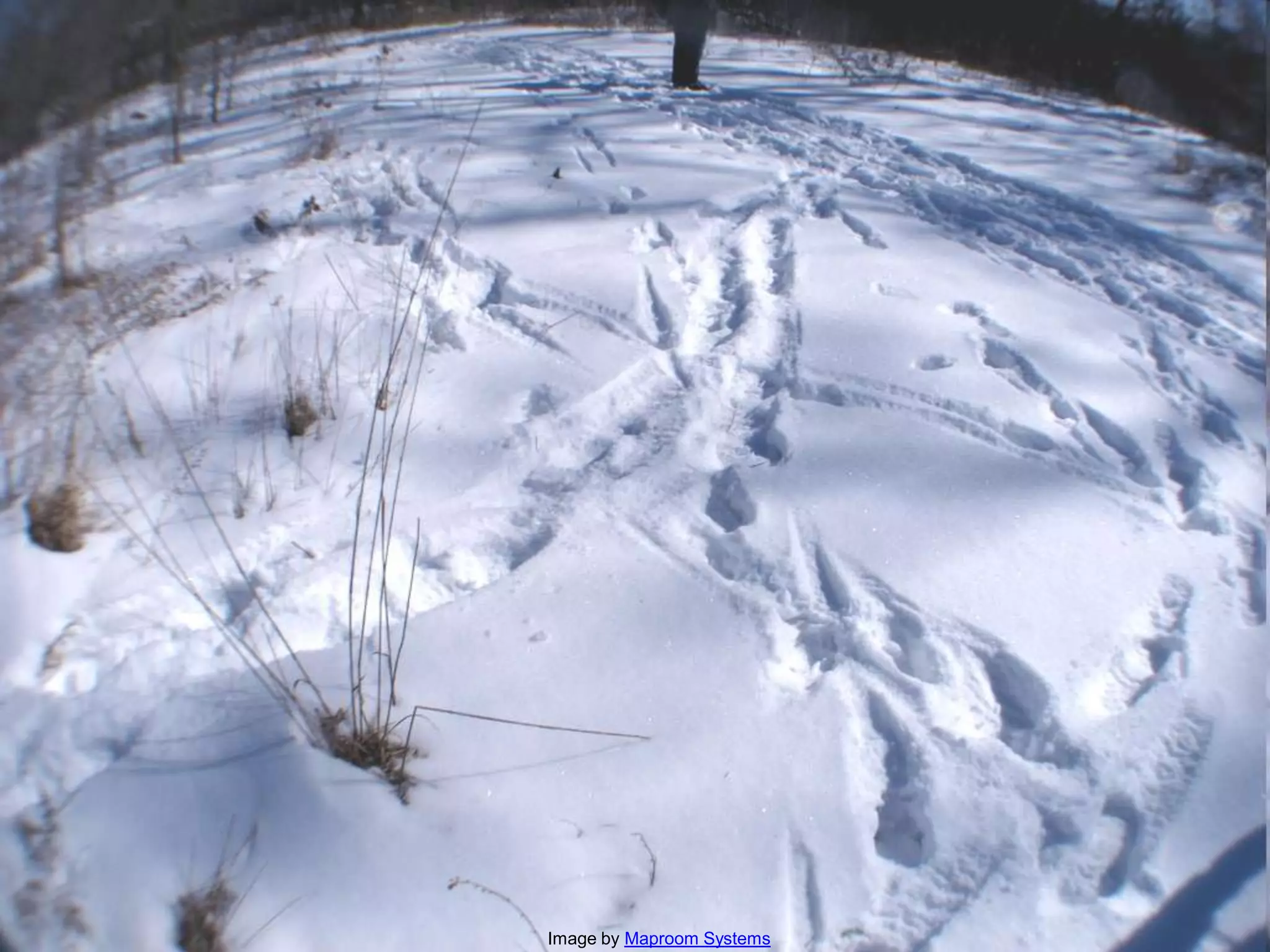
Image by Maproom Systems
WikiLeaks as Acute Event‘Cablegate’:Leaked US diplomatic cables published from late 2010Collaborations with The Guardian, The New York Times, Der Spiegel, Le Monde, El PaísAllegations against Julian Assange:Arrest and extradition hearings since 8 Dec. 2010WikiLeaks controversy:Withdrawal of services by EasyDNS, Paypal, Visa, Mastercard, Amazon Web Services, ...DDoS attacks against perceived ‘enemies’ of WikiLeaksInvolvement of ‘Anonymous’ hacker group	A continuing (orchestrated?) series of acute events
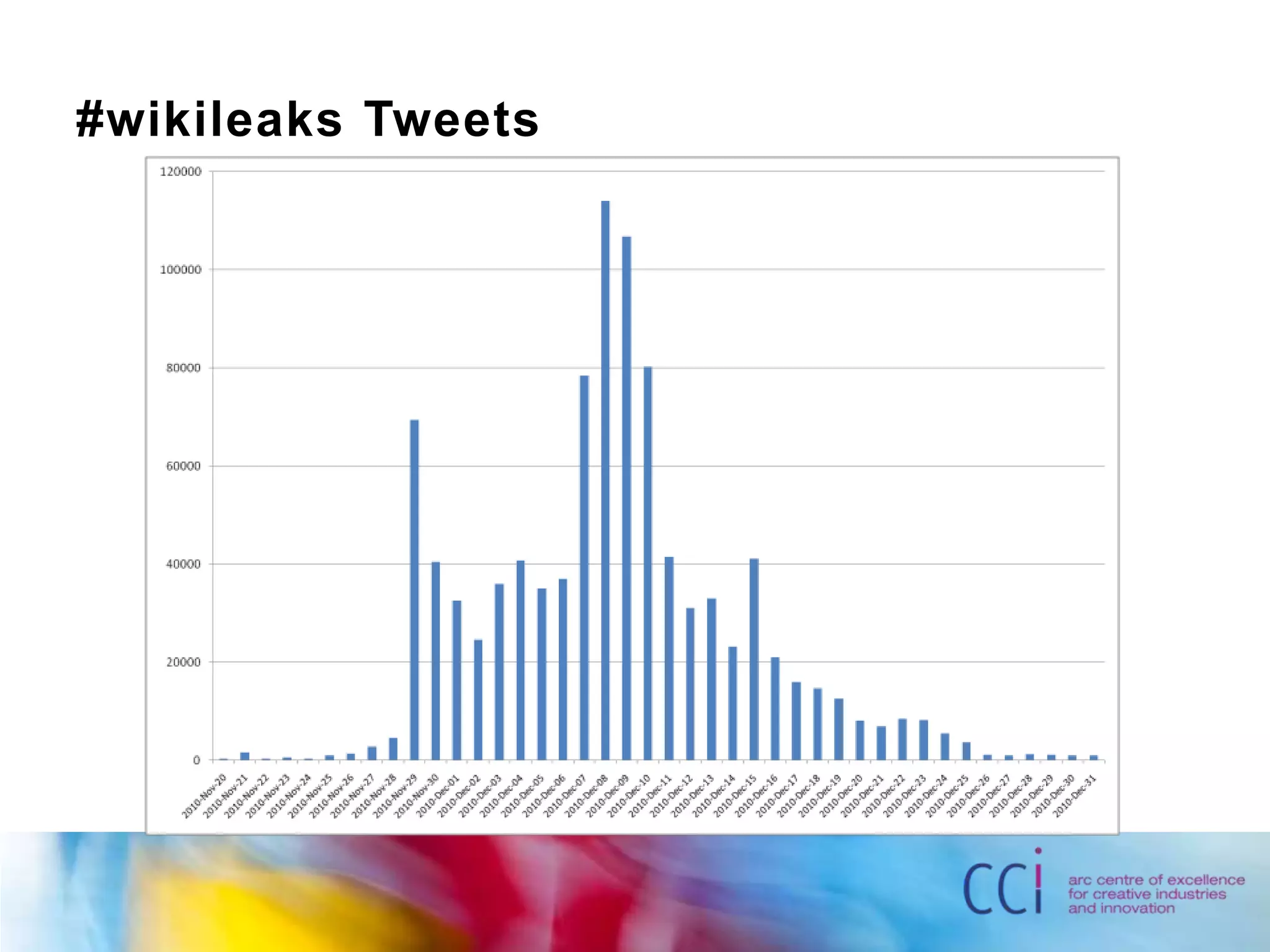
#wikileaks Tweets
A WikiLeaks Community?Various communal efforts:#wikileaks community on Twitter, Facebook groupsSupport and protest groups, loosely affiliatedPolitical support – e.g. Pirate PartiesActivist and hacker groupsCelebrity supporters (Geoffrey Robertson, Michael Moore)Media organisations collaborating with WikiLeaksDevelopers of additional tools building on WikiLeaks data
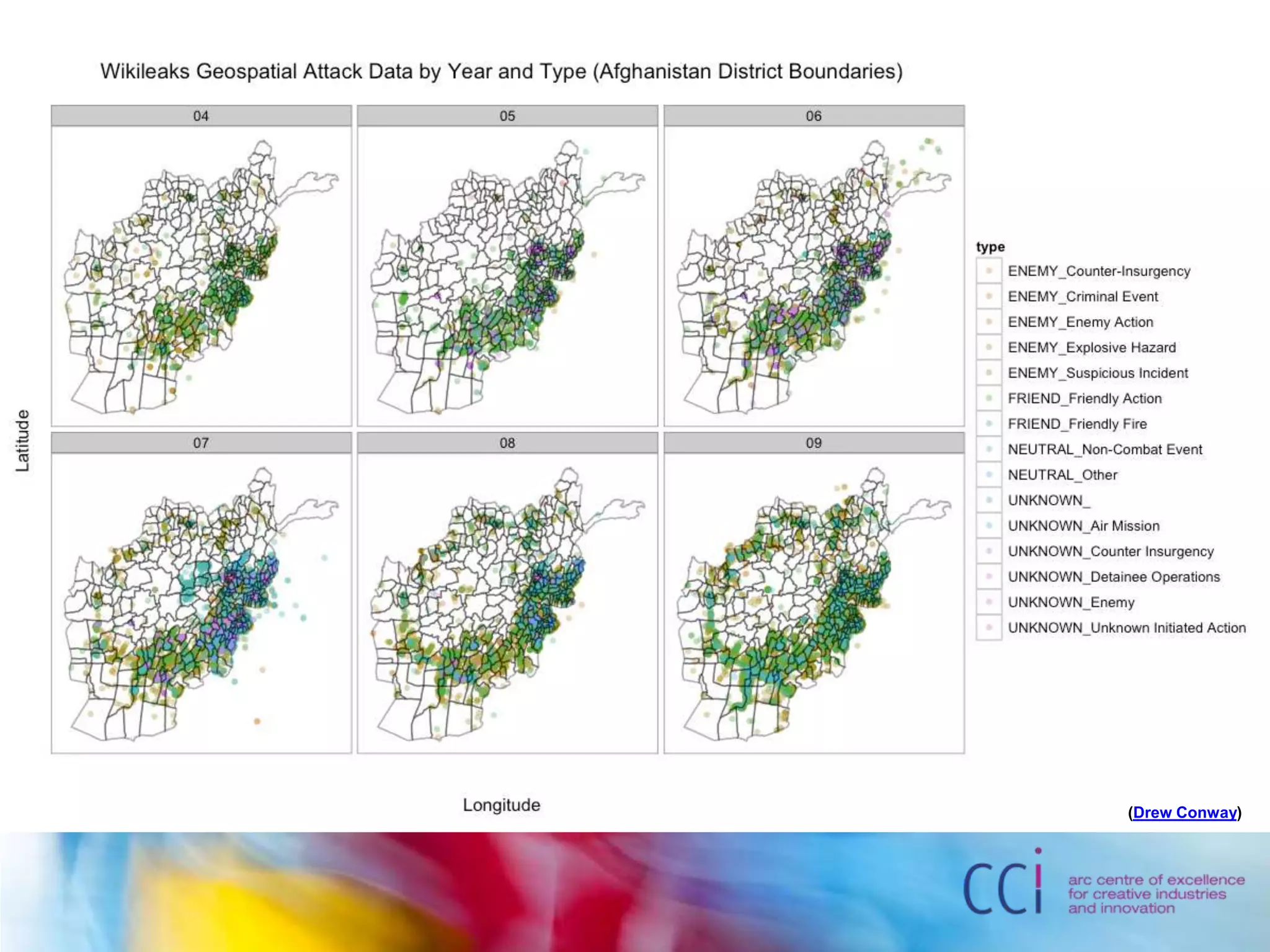
(Drew Conway)
Distributed Citizen ParticipationWikiLeaks as c2c:Successful mobilisation of broad coalition of supportersSustained engagement with political questionsParallels with filesharing networks:Forced into increasingly sophisticated sharing mechanismsGradual decentralisation of activitiesAssange and WikiLeaks HQ becoming less centralDisconnect between government responses and popular opinionTaps into overall disenchantment with established politics and mediaWikiLeaks as a distributed community:“the world’s first stateless news organization” (Jay Rosen)But is it out of control? How can the enthusiasm of its supporters be harnessed for e-democracy?
Lessons from WikiLeaks and the Floods Key observations for e-democracy initiatives:Low hurdles to participationMake it as easy as possible for people to participate meaningfullyDistribute across multiple platformsFind people where they are, harness the specific strengths of different platformsGenerate a sense of communityLet people define for themselves what they are working towards (or against)Allow community developmentFollow and aid the structures developed by the community, don’t impose structures on themEarn social capitalBe useful, and engage in good spirit – and the community will reward youConceptualise community engagement as a series of acute events, to focus and encourage participation?
More InformationSocial Media Reports:1 – 	State of the Art	(http://snurb.info/socialmedia-vol1)2 – 	User Engagement Strategies	(http://snurb.info/socialmedia-vol2)Axel BrunsAssociate ProfessorARC Centre of Excellence for Creative Industries and InnovationCreative Industries FacultyQueensland University of TechnologyBrisbane, AustraliaEmail:	a.bruns@qut.edu.auTwitter: 	@snurb_dot_infoBlog: 		http://snurb.info/Produsage:	http://produsage.org/LinkedIn:	http://www.linkedin.com/in/snurbBlogs, Wikipedia, Second Life, and Beyond:From Production to Produsage(Peter Lang, 2008)29

Towards Distributed Citizen Participation: Lessons from WikiLeaks and the Queensland Floods

  • 1.
    Towards Distributed CitizenParticipation: Lessons from WikiLeaks and the Queensland FloodsAssoc. Prof. Axel BrunsQueensland University of Technology, Brisbane, Australiaa.bruns@qut.edu.au – http://snurb.info/ –@snurb_dot_info
  • 2.
    e-Democracy?Active participation ofcitizens in the public discussion and deliberation of matters of public concern and policythe organisation of communal activities and initiatives to address such matters through the use of online mediaDepends on the sustained presence of a substantial community of users
  • 3.
    How Communities WorkCommunitiesare concentric – in values: Shared knowledge Key principles Core values and beliefs 3
  • 4.
    How Communities WorkCommunitiesare concentric – in membership: Marginal members General members Community leaders 4
  • 5.
    Strong e-Democracy Communities?Whatmodels?g2cc2cg4c2c?Civic Commons, Civic Commons 2.0?‘Roll your own’ vs. pre-existing platforms and communitiesColeman & Blumler (2009):a space of intersecting networks, pulled together through the agency of a democratically connecting institution
  • 6.
    e-Democracy during AcuteEventsOnline responses to acute events:Bypassing administrative hurdlesFasttracking community development and structurationSelf-organisation around shared concernsRapid prototyping, testing of tools and platformse-Democracy?Can we learn from this? Can we tap into it?What principles of citizen participation can we observe?
  • 7.
    The 2011 QueenslandFloodsChronology:December 2010 to January 2011: unprecedented rainfallEmergency declared for more than 50% of QueenslandWivenhoe dam reaches 180% capacityDecember 2010: Flooding in northern QueenslandJanuary 2011: Floods in southeast Queensland10 January 2011: flash flooding in Toowoomba10 January 2011: ‘inland tsunami’ in the Lockyer Valley11 January 2011: flooding begins in Ipswich12-16 January 2011: major flooding in Brisbane
  • 8.
  • 9.
  • 10.
  • 11.
  • 12.
  • 13.
  • 14.
  • 15.
  • 16.
    Social Media duringthe FloodsVarious platforms:Facebook, Twitter – updates and informationYouTube, Flickr, Twitpic – first-hand video and photosGoogle Maps, Ushahidi – map-based information mashupsDifferent tools for different purposesVarious levels of maturity:Uses and use practices still developingDifferent demographic reachTechnological differences:e.g. Facebook: built around personal networks; semi-private; discussion threadse.g. Twitter: open, flat network; public #hashtag conversations; update stream
  • 17.
    #qldfloodsTweets10 Jan 2011 11Jan 2011 12 Jan 2011 13 Jan 2011 14 Jan 2011 15 Jan 2011
  • 18.
    10 Jan 2011 11Jan 2011 12 Jan 2011 13 Jan 2011 14 Jan 2011 15 Jan 2011#qldfloods from Toowoomba to Brisbane
  • 19.
  • 20.
    #qldfloods Network Map– Most Active Accounts Only(Degree >= 15 / Node size: indegree / node colour: outdegree)(See http://mappingonlinepublics.net/)
  • 21.
    The Queensland FloodsCommunitySelf-organisation:Rapid establishment of #qldfloodshashtagAd hoc development of community structuresHighlighting of leading accounts, vigilant against disruptionSuspension of petty squabbles (e.g. state politics)Innovation and rapid prototyping:Adjunct hashtags (#Mythbuster, #bakedrelief)Sharing and gathering of online resourcesAdditional tools (Google Maps, Ushahidi Maps)Emergency services rapidly adopting social media tools (despite lack of established strategies) ‘Go where they are’ rather than ‘build it and they will come’
  • 22.
  • 23.
    WikiLeaks as AcuteEvent‘Cablegate’:Leaked US diplomatic cables published from late 2010Collaborations with The Guardian, The New York Times, Der Spiegel, Le Monde, El PaísAllegations against Julian Assange:Arrest and extradition hearings since 8 Dec. 2010WikiLeaks controversy:Withdrawal of services by EasyDNS, Paypal, Visa, Mastercard, Amazon Web Services, ...DDoS attacks against perceived ‘enemies’ of WikiLeaksInvolvement of ‘Anonymous’ hacker group A continuing (orchestrated?) series of acute events
  • 24.
  • 25.
    A WikiLeaks Community?Variouscommunal efforts:#wikileaks community on Twitter, Facebook groupsSupport and protest groups, loosely affiliatedPolitical support – e.g. Pirate PartiesActivist and hacker groupsCelebrity supporters (Geoffrey Robertson, Michael Moore)Media organisations collaborating with WikiLeaksDevelopers of additional tools building on WikiLeaks data
  • 26.
  • 27.
    Distributed Citizen ParticipationWikiLeaksas c2c:Successful mobilisation of broad coalition of supportersSustained engagement with political questionsParallels with filesharing networks:Forced into increasingly sophisticated sharing mechanismsGradual decentralisation of activitiesAssange and WikiLeaks HQ becoming less centralDisconnect between government responses and popular opinionTaps into overall disenchantment with established politics and mediaWikiLeaks as a distributed community:“the world’s first stateless news organization” (Jay Rosen)But is it out of control? How can the enthusiasm of its supporters be harnessed for e-democracy?
  • 28.
    Lessons from WikiLeaksand the Floods Key observations for e-democracy initiatives:Low hurdles to participationMake it as easy as possible for people to participate meaningfullyDistribute across multiple platformsFind people where they are, harness the specific strengths of different platformsGenerate a sense of communityLet people define for themselves what they are working towards (or against)Allow community developmentFollow and aid the structures developed by the community, don’t impose structures on themEarn social capitalBe useful, and engage in good spirit – and the community will reward youConceptualise community engagement as a series of acute events, to focus and encourage participation?
  • 29.
    More InformationSocial MediaReports:1 – State of the Art (http://snurb.info/socialmedia-vol1)2 – User Engagement Strategies (http://snurb.info/socialmedia-vol2)Axel BrunsAssociate ProfessorARC Centre of Excellence for Creative Industries and InnovationCreative Industries FacultyQueensland University of TechnologyBrisbane, AustraliaEmail: a.bruns@qut.edu.auTwitter: @snurb_dot_infoBlog: http://snurb.info/Produsage: http://produsage.org/LinkedIn: http://www.linkedin.com/in/snurbBlogs, Wikipedia, Second Life, and Beyond:From Production to Produsage(Peter Lang, 2008)29

Editor's Notes

  • #4 Communities aren’t simply some amorphous mass – they have their own, sometimes complex, internal structures.They are usually arranged in a concentric fashion – for one, in terms of their values.At the centre are a set of core values and beliefs: you can’t be a football fan without liking football; you can’t be religious without believing in a god of some form.Derived from these are a range of key principles, which you should adhere to but may be able to ignore from time to time.Yet further out is a larger collection of shared, communal knowledge – the better versed in it you are, the better a community member will you be seen to be, but you don’t have to know all of this to be accepted.
  • #5 What follows from this is that there are more central and more marginal community members, too:Community leaders will embody the values and principles of the community almost perfectly, and will be well versed in its shared knowledge.More general members will subscribe to the core values, but may not always follow all the rules, and may have a more limited understanding of community knowledge.Marginal members are marginal because they have limited knowledge (or dispute agreed facts), break the rules more often, and may not even subscribe to the community’s core beliefs.
  • #30 That’s just a very quick introduction to social media communities, of course. We provide more information – and strategies for how to engage with communities through social media – in our two reports for the CRC.More information, and contact details, are here…