Mohd Haziq Syafiiq Bin Haji
Kamsani
HNDBM11/02 A

Lecturer ; Mrs Hjh Jusnani Hj
Kassim
HOW ORGANIZATIONAL
CULTURE HAVE AN IMPACT
     ON EMPLOYEE
  PERFORMANCE AND
    SATISFACTION?
    A system of shared meanings and common beliefs held by
     organizational members that determines, in a large
     degree, how they act towards each other.
    “The way we do things around here.”
    Implications:
     Culture is a perception

     Culture is shared

     Culture is descriptive
Gives identity
 -Identity of company, automatically became the
 identity of people who work in the company, as
 well.
The people end up affecting the
 culture as much as the culture is
 affecting them.
    It helps to manifests or understands in:
    1. the ways the organization conducts its
       business, treats its employees, customers, and the
       wider community.
    2. the extent to which autonomy and freedom is allowed
       in decision making, developing new ideas, and
       personal expression.
    3. how power and information flow through its hierarchy.
    4. the strength of employee commitment towards
       collective objectives.
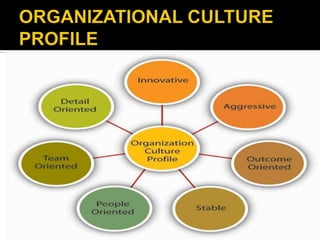
culture can help drive business
results, but it takes a cultural audit to
differentiate which elements of the culture
can lead to superior performance.
High   Performance when:
  the OC is effective and can be accepted by
   the employees . This can lead to motivation to
   the employees to increase their productivity.
  For example, if the organizational culture is
   Innovative, and the employees likes to
   improve and to do new things, then these can
   lead to high performance.
Low   Performance when:
  the culture of the organization is not proper
   and transparent and it is not accepted by the
   employees.
  For example, if the organizational culture is
   team oriented and the employee is
   individualistic who likes to do work in
   individual, then this can lead to low
   performance.
Employee  satisfaction is the terminology
 used to describe whether employees are
 happy and contented and fulfilling their
 desires and needs at work.

  High satisfaction when the employees is
   willing to adapt the organizational culture.
  Low satisfaction when the employees is
   unwilling to adapt the organizational culture.
HOW ORGANIZATIONAL CULTURE HAVE AN IMPACT ON EMPLOYEE PERFORMANCE AND SATISFACTION?

HOW ORGANIZATIONAL CULTURE HAVE AN IMPACT ON EMPLOYEE PERFORMANCE AND SATISFACTION?

  • 1.
    Mohd Haziq SyafiiqBin Haji Kamsani HNDBM11/02 A Lecturer ; Mrs Hjh Jusnani Hj Kassim
  • 3.
    HOW ORGANIZATIONAL CULTURE HAVEAN IMPACT ON EMPLOYEE PERFORMANCE AND SATISFACTION?
  • 4.
    A system of shared meanings and common beliefs held by organizational members that determines, in a large degree, how they act towards each other.  “The way we do things around here.”  Implications:  Culture is a perception  Culture is shared  Culture is descriptive
  • 5.
    Gives identity -Identityof company, automatically became the identity of people who work in the company, as well. The people end up affecting the culture as much as the culture is affecting them.
  • 6.
    It helps to manifests or understands in: 1. the ways the organization conducts its business, treats its employees, customers, and the wider community. 2. the extent to which autonomy and freedom is allowed in decision making, developing new ideas, and personal expression. 3. how power and information flow through its hierarchy. 4. the strength of employee commitment towards collective objectives.
  • 7.
    culture can helpdrive business results, but it takes a cultural audit to differentiate which elements of the culture can lead to superior performance.
  • 9.
    High Performance when:  the OC is effective and can be accepted by the employees . This can lead to motivation to the employees to increase their productivity.  For example, if the organizational culture is Innovative, and the employees likes to improve and to do new things, then these can lead to high performance.
  • 10.
    Low Performance when:  the culture of the organization is not proper and transparent and it is not accepted by the employees.  For example, if the organizational culture is team oriented and the employee is individualistic who likes to do work in individual, then this can lead to low performance.
  • 11.
    Employee satisfactionis the terminology used to describe whether employees are happy and contented and fulfilling their desires and needs at work.  High satisfaction when the employees is willing to adapt the organizational culture.  Low satisfaction when the employees is unwilling to adapt the organizational culture.