Top 10 Web ServerSecurity flawsAbertay ID 1007639Adam Smith ID 1001775
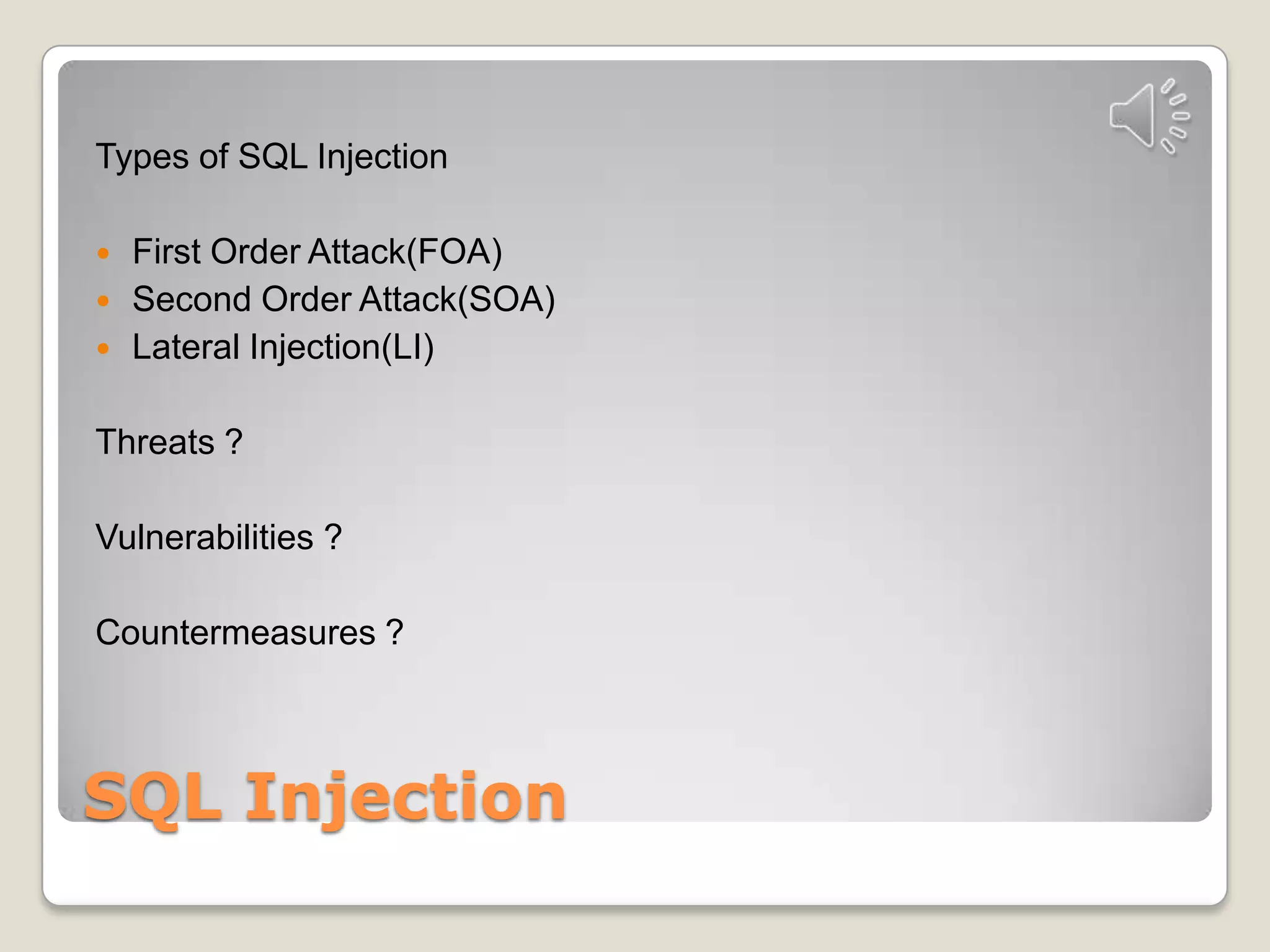
SQL InjectionTypes of SQL InjectionFirst Order Attack(FOA)Second Order Attack(SOA)Lateral Injection(LI)Threats ?Vulnerabilities ?Countermeasures ?
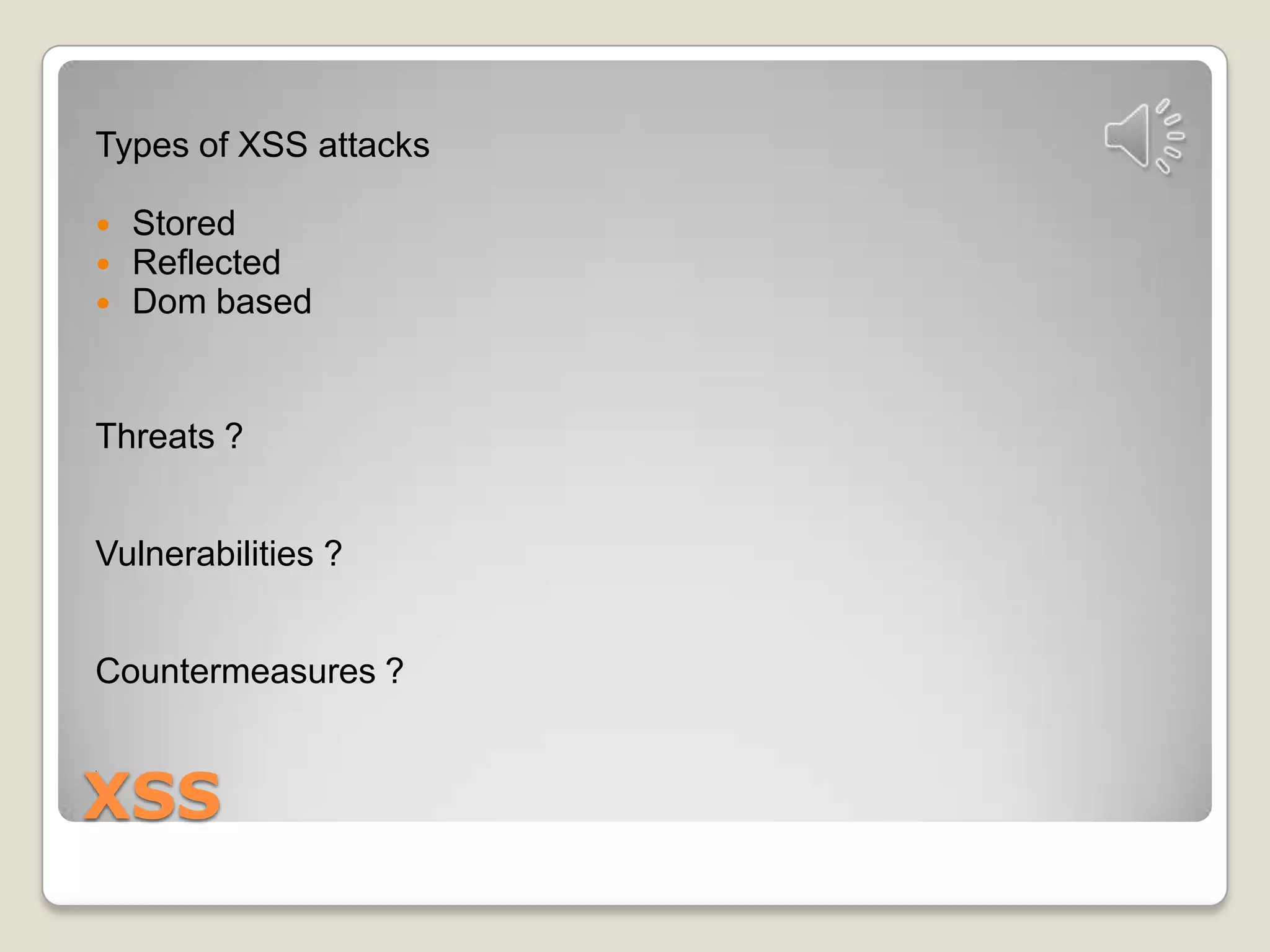
XSSTypes of XSS attacksStoredReflectedDom basedThreats ?Vulnerabilities ?Countermeasures ?.
Broken Authentication andSession ManagementThreats ?Vulnerabilities ?Countermeasures ?
Insecure Direct Object ReferencesThreats ?Vulnerabilities ?Countermeasures ?
CSRF attacks are also known by a number of other namesXSRFSea SurfSession RidingHostile Linking.Cross-Site Request Forgery Threats ?Vulnerabilities ?Countermeasures ?CSRF
Security MisconfigurationGood security requires having a secure configuration defined and deployed for the application, frameworks, application server, web server, database server, and platform. All these settings should be defined, implemented, and maintained as many are not shipped with secure defaults. This includes keeping all software up to date, including all code libraries used by the application.
Insecure Cryptographic storageMany web applications do not properly protect sensitive data, such as credit cards, SSNs, and authentication credentials, with appropriate encryption or hashing. Attackers may steal or modify such weakly protected data to conduct identity theft, credit card fraud, or other crimes.
Failure to Restrict URL accessMany web applications check URL access rights before rendering protected links and buttons. However, applications need to perform similar access control checks each time these pages are accessed, or attackers will be able to forge URLs to access these hidden pages anyway.
Insufficient Transport Layer ProtectionApplications frequently fail to authenticate, encrypt, and protect the confidentiality and integrity of sensitive network traffic. When they do, they sometimes support weak algorithms, use expired or invalid certificates, or do not use them correctly.
Redirects and ForwardsWeb applications frequently redirect and forward users to other pages and websites, and use untrusted data to determine the destination pages. Without proper validation, attackers can redirect victims to phishing or malware sites, or use forwards to access unauthorized pages.
Conclusions

Top 10 web server security flaws

  • 1.
    Top 10 WebServerSecurity flawsAbertay ID 1007639Adam Smith ID 1001775
  • 2.
    SQL InjectionTypes ofSQL InjectionFirst Order Attack(FOA)Second Order Attack(SOA)Lateral Injection(LI)Threats ?Vulnerabilities ?Countermeasures ?
  • 3.
    XSSTypes of XSSattacksStoredReflectedDom basedThreats ?Vulnerabilities ?Countermeasures ?.
  • 4.
    Broken Authentication andSessionManagementThreats ?Vulnerabilities ?Countermeasures ?
  • 5.
    Insecure Direct ObjectReferencesThreats ?Vulnerabilities ?Countermeasures ?
  • 6.
    CSRF attacks arealso known by a number of other namesXSRFSea SurfSession RidingHostile Linking.Cross-Site Request Forgery Threats ?Vulnerabilities ?Countermeasures ?CSRF
  • 7.
    Security MisconfigurationGood securityrequires having a secure configuration defined and deployed for the application, frameworks, application server, web server, database server, and platform. All these settings should be defined, implemented, and maintained as many are not shipped with secure defaults. This includes keeping all software up to date, including all code libraries used by the application.
  • 8.
    Insecure Cryptographic storageManyweb applications do not properly protect sensitive data, such as credit cards, SSNs, and authentication credentials, with appropriate encryption or hashing. Attackers may steal or modify such weakly protected data to conduct identity theft, credit card fraud, or other crimes.
  • 9.
    Failure to RestrictURL accessMany web applications check URL access rights before rendering protected links and buttons. However, applications need to perform similar access control checks each time these pages are accessed, or attackers will be able to forge URLs to access these hidden pages anyway.
  • 10.
    Insufficient Transport LayerProtectionApplications frequently fail to authenticate, encrypt, and protect the confidentiality and integrity of sensitive network traffic. When they do, they sometimes support weak algorithms, use expired or invalid certificates, or do not use them correctly.
  • 11.
    Redirects and ForwardsWebapplications frequently redirect and forward users to other pages and websites, and use untrusted data to determine the destination pages. Without proper validation, attackers can redirect victims to phishing or malware sites, or use forwards to access unauthorized pages.
  • 12.