Web Security
OWASP
OWASP (Open Web Application Security Project )
OWASP is an open community dedicated to enabling organizations
to conceive, develop, acquire, operate, and maintain applications that
can be trusted. All of the OWASP tools, documents, forums, and
chapters are free and open to anyone interested in improving
application security.
evolution in the safety
and security of the
world's software.
OWASP Top 10
vulnerabilities
OWASP maintains a list of the top ten web
security vulnerabilities that cyber security
experts should understand and defend
against to maintain secure web services.
The current version of the OWASP Top 10
was developed in 2013 and is currently
undergoing revision, with a new release in
2017.
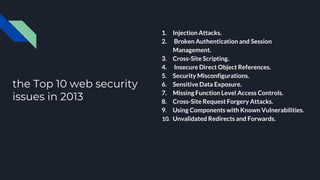
the Top 10 web security
issues in 2013
1. Injection Attacks.
2. Broken Authentication and Session
Management.
3. Cross-Site Scripting.
4. Insecure Direct Object References.
5. Security Misconfigurations.
6. Sensitive Data Exposure.
7. Missing Function Level Access Controls.
8. Cross-Site Request Forgery Attacks.
9. Using Components with Known Vulnerabilities.
10. Unvalidated Redirects and Forwards.
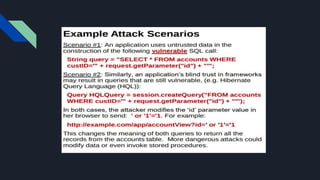
Injection Attacks
Injection Flaws occur when an attacker is able to
insert code into a request sent to a website and then
trick that website into passing the code along to a
back-end server where it is executed. The most
common example of Injection Attack is the Sequel
Injection Attack against databases.
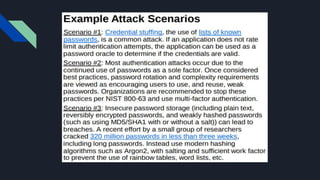
Broken Authentication and
Session Management
Application functions related to authentication and
session management are often not implemented
correctly, allowing attackers to compromise passwords,
keys, or session tokens, or to exploit other
implementation flaws to assume other users’ identities.
Cross-Site Scripting
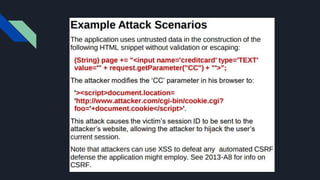
Cross-Site Scripting is an attack where the attacker
embeds scripts in third-party websites that may then
execute in the browsers of victims.
XSS flaws occur whenever an application takes untrusted
data and sends it to a web browser without proper
validation or escaping. XSS allows attackers to execute
scripts in the victim’s browser which can hijack user
sessions, deface web sites, or redirect the user to
malicious sites.
Insecure Direct Object References
Insecure Direct Object References occur when a
developer exposes some details of how an underlying
application functions and then doesn't perform proper
security checks to prevent unauthorized use of the
application.
Security Misconfigurations
Security Misconfigurations occur because web
applications depend upon a large number of complex
systems. These include web servers, application servers,
database servers, firewalls, routers and other
components.
Each one of these components has its own security
settings and an error anywhere in those settings could
jeopardize the security of the entire system.
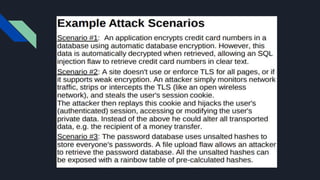
Sensitive Data Exposure
Sensitive Data Exposure occurs when an insecure web
application accidentally exposes sensitive information to
eavesdroppers. This may be as simple as accidentally
placing a customer file on a publicly accessible portion of
a website.
Or Sensitive Data Exposure may occur when web server
administrators fail to implement the https protocol to
encrypt information sent over the Internet.
Sensitive data deserves extra protection such as
encryption at rest or in transit
Missing Function Level Access Control
Missing Function Level Access Control occurs when
developers fail to check on the back end whether a user
is authorized to access a particular function of an
application. Users with knowledge of the application may
send requests directly to the server, bypassing the
security controls that are built into the user interface.
Cross-Site Request Forgery
Cross-Site Request Forgery exploits the fact that users
often have more than one website open at the same time.
Using Components with Known Vulnerabilities
Web developers must be very cautious about the components
that they use to build their applications, as many of these
components have known vulnerabilities. If a web application is
built using a vulnerable component, attackers may exploit that
component to attack the application itself. Administrators must be
sure to monitor their environment regularly and apply security
patches to components as soon as they are available.
Unvalidated Redirects and Forwards
Unvalidated Redirects and Forwards occur when a website allows
external links to other websites using the organization's URL.
For example, a URL like this one might redirect users from the
IRS site to a third-party website. Developers creating forwarding
capabilities should ensure that any redirects appear on an
approved list before allowing them to go through. Otherwise, an
attacker could use URLs like this one to hide the real identity of a
malicious site behind the domain name of a trusted organization.
Top 10 in 2017
1. Unvalidated Redirects and Forwards.
2. Missing Function Level Access Controls
3. Cross-Site Request Forgery Attacks.
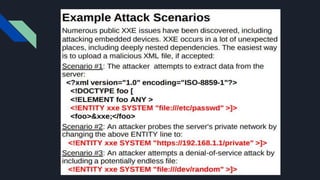
XML External Entity (XXE)
Many older or poorly configured XML processors evaluate
external entity references within XML
documents. External entities can be used to disclose internal
files using the file URI handler,
internal SMB file shares on unpatched Windows servers, internal
port scanning, remote code
execution, and denial of service attacks, such as the Billion
Laughs attack.
Insecure Deserialization
Insecure deserialization flaws occur when an application
receives hostile serialized objects.
Insecure deserialization leads to remote code execution. Even
if deserialization flaws do not result
in remote code execution, serialized objects can be replayed,
tampered or deleted to spoof users,
conduct injection attacks, and elevate privileges.
Insufficient Logging &
Monitoring
Insufficient logging and monitoring, coupled with missing or
ineffective integration with incident response allows attackers
to further attack systems, maintain persistence, pivot to more
systems, and tamper, extract or destroy data. Most breach
studies show time to detect a breach is over 200 days,
typically detected by external parties rather than internal
processes or monitoring.
Thank you

OWASP

  • 1.
  • 2.
    OWASP (Open WebApplication Security Project ) OWASP is an open community dedicated to enabling organizations to conceive, develop, acquire, operate, and maintain applications that can be trusted. All of the OWASP tools, documents, forums, and chapters are free and open to anyone interested in improving application security.
  • 4.
    evolution in thesafety and security of the world's software.
  • 5.
    OWASP Top 10 vulnerabilities OWASPmaintains a list of the top ten web security vulnerabilities that cyber security experts should understand and defend against to maintain secure web services. The current version of the OWASP Top 10 was developed in 2013 and is currently undergoing revision, with a new release in 2017.
  • 6.
    the Top 10web security issues in 2013 1. Injection Attacks. 2. Broken Authentication and Session Management. 3. Cross-Site Scripting. 4. Insecure Direct Object References. 5. Security Misconfigurations. 6. Sensitive Data Exposure. 7. Missing Function Level Access Controls. 8. Cross-Site Request Forgery Attacks. 9. Using Components with Known Vulnerabilities. 10. Unvalidated Redirects and Forwards.
  • 7.
    Injection Attacks Injection Flawsoccur when an attacker is able to insert code into a request sent to a website and then trick that website into passing the code along to a back-end server where it is executed. The most common example of Injection Attack is the Sequel Injection Attack against databases.
  • 9.
    Broken Authentication and SessionManagement Application functions related to authentication and session management are often not implemented correctly, allowing attackers to compromise passwords, keys, or session tokens, or to exploit other implementation flaws to assume other users’ identities.
  • 11.
    Cross-Site Scripting Cross-Site Scriptingis an attack where the attacker embeds scripts in third-party websites that may then execute in the browsers of victims. XSS flaws occur whenever an application takes untrusted data and sends it to a web browser without proper validation or escaping. XSS allows attackers to execute scripts in the victim’s browser which can hijack user sessions, deface web sites, or redirect the user to malicious sites.
  • 13.
    Insecure Direct ObjectReferences Insecure Direct Object References occur when a developer exposes some details of how an underlying application functions and then doesn't perform proper security checks to prevent unauthorized use of the application.
  • 14.
    Security Misconfigurations Security Misconfigurationsoccur because web applications depend upon a large number of complex systems. These include web servers, application servers, database servers, firewalls, routers and other components. Each one of these components has its own security settings and an error anywhere in those settings could jeopardize the security of the entire system.
  • 15.
    Sensitive Data Exposure SensitiveData Exposure occurs when an insecure web application accidentally exposes sensitive information to eavesdroppers. This may be as simple as accidentally placing a customer file on a publicly accessible portion of a website. Or Sensitive Data Exposure may occur when web server administrators fail to implement the https protocol to encrypt information sent over the Internet. Sensitive data deserves extra protection such as encryption at rest or in transit
  • 17.
    Missing Function LevelAccess Control Missing Function Level Access Control occurs when developers fail to check on the back end whether a user is authorized to access a particular function of an application. Users with knowledge of the application may send requests directly to the server, bypassing the security controls that are built into the user interface.
  • 18.
    Cross-Site Request Forgery Cross-SiteRequest Forgery exploits the fact that users often have more than one website open at the same time.
  • 19.
    Using Components withKnown Vulnerabilities Web developers must be very cautious about the components that they use to build their applications, as many of these components have known vulnerabilities. If a web application is built using a vulnerable component, attackers may exploit that component to attack the application itself. Administrators must be sure to monitor their environment regularly and apply security patches to components as soon as they are available.
  • 20.
    Unvalidated Redirects andForwards Unvalidated Redirects and Forwards occur when a website allows external links to other websites using the organization's URL. For example, a URL like this one might redirect users from the IRS site to a third-party website. Developers creating forwarding capabilities should ensure that any redirects appear on an approved list before allowing them to go through. Otherwise, an attacker could use URLs like this one to hide the real identity of a malicious site behind the domain name of a trusted organization.
  • 21.
    Top 10 in2017 1. Unvalidated Redirects and Forwards. 2. Missing Function Level Access Controls 3. Cross-Site Request Forgery Attacks.
  • 22.
    XML External Entity(XXE) Many older or poorly configured XML processors evaluate external entity references within XML documents. External entities can be used to disclose internal files using the file URI handler, internal SMB file shares on unpatched Windows servers, internal port scanning, remote code execution, and denial of service attacks, such as the Billion Laughs attack.
  • 24.
    Insecure Deserialization Insecure deserializationflaws occur when an application receives hostile serialized objects. Insecure deserialization leads to remote code execution. Even if deserialization flaws do not result in remote code execution, serialized objects can be replayed, tampered or deleted to spoof users, conduct injection attacks, and elevate privileges.
  • 26.
    Insufficient Logging & Monitoring Insufficientlogging and monitoring, coupled with missing or ineffective integration with incident response allows attackers to further attack systems, maintain persistence, pivot to more systems, and tamper, extract or destroy data. Most breach studies show time to detect a breach is over 200 days, typically detected by external parties rather than internal processes or monitoring.
  • 27.

Editor's Notes

  • #6 Cyber security consists of technologies, processes and measures that are designed to protect systems, networks and data from cyber crimes.
  • #14 For example, imagine a website URL like this one that has a user's account number embedded in the request. An attacker might try to simply change the account number to access a different account. If the web application doesn't check to make sure that the user is authorized to access that account, the attacker may gain unauthorized access. Like: https://www.company.com?AccountId=1442 https://www.company.com?AccountId=1443 https://www.company.com?AccountId=1444 And so on
  • #15 Ex- App server comes with sample apps that are not removed from your production server. These sample apps have known security flaws attackers use to compromise your server.
  • #28 https://www.owasp.org/index.php/Top_10_2013-Top_10 https://www.owasp.org/index.php/Category:OWASP_Top_Ten_Project https://www.owasp.org/images/b/b0/OWASP_Top_10_2017_RC2_Final.pdf