Tissue space infectionTissue space infection
DR.Adil SulimanDR.Adil Suliman
BDS,FOMFS (Sudan),ABBDS,FOMFS (Sudan),AB
Tissue space infectionTissue space infection
Space is misnomer so it is cleftsSpace is misnomer so it is clefts
(apotential space between the fascial(apotential space between the fascial
layers which contain CT AND Variouslayers which contain CT AND Various
anatomical structures ) there is no voids inanatomical structures ) there is no voids in
the tissuethe tissue..
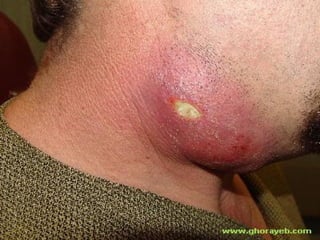
abcessabcess
Def.is apthological cavity which containDef.is apthological cavity which contain
pus and covered by pyogenic membanepus and covered by pyogenic membane
whywhy
Abcess should be drain before sun setAbcess should be drain before sun set
WHY WE STUDY THE TISSUEWHY WE STUDY THE TISSUE
SPACE INFECTIONSSPACE INFECTIONS
Tissue space infectionTissue space infection
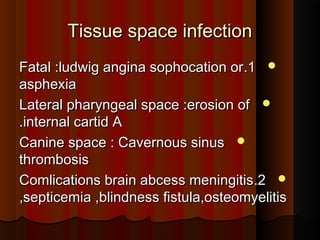
11..Fatal :ludwig angina sophocation orFatal :ludwig angina sophocation or
asphexiaasphexia
Lateral pharyngeal space :erosion ofLateral pharyngeal space :erosion of
internal cartid Ainternal cartid A..
Canine space : Cavernous sinusCanine space : Cavernous sinus
thrombosisthrombosis
22..Comlications brain abcess meningitisComlications brain abcess meningitis
,septicemia ,blindness fistula,osteomyelitis,septicemia ,blindness fistula,osteomyelitis
aetiologyaetiology
Odontogenic instrumentation ofOdontogenic instrumentation of
RCT,chemical,caries,deep pero.poccketRCT,chemical,caries,deep pero.poccket
TraumaTrauma
post surgery ie reconstructivepost surgery ie reconstructive
Contaminated needleContaminated needle
Secondary to cyst or neoplasmSecondary to cyst or neoplasm
Microbial bacterial ,viral fungalMicrobial bacterial ,viral fungal
bacteriologybacteriology
Aerobes and anaerobes are the causativeAerobes and anaerobes are the causative
agentsagents
Aerobes account for 5%Aerobes account for 5%
Anaerobes account for 35%Anaerobes account for 35%
Both or both account for 60%Both or both account for 60%
Life threatening featuresLife threatening features
Respiratory impairmentRespiratory impairment
Difficulty in swallowingDifficulty in swallowing
Impaired visionImpaired vision
Change in voice (hot potatoChange in voice (hot potato((
LethargyLethargy
Decrease level of consciousnessDecrease level of consciousness
Agitation, restlessness due to hypoxiaAgitation, restlessness due to hypoxia
Toxicity featuresToxicity features
PallorPallor
Rapid respirationRapid respiration
Throbbing pulseThrobbing pulse
Fever, shiveringFever, shivering
LethargyLethargy
Appear illAppear ill
Natural barriers against infectionNatural barriers against infection
MusclesMuscles
FasiaeFasiae
bonebone
Muscles containing infectionMuscles containing infection
11..mylohoidmylohoid
22..massetermasseter
33..buccinatorbuccinator
44..M&L. Ptregoid musclesM&L. Ptregoid muscles
55..temporalistemporalis
66..the superior constictorsthe superior constictors
The fascial layersThe fascial layers
A.Deep cervicalA.Deep cervical
PretrachealPretracheal
PrevertebralPrevertebral
Carotid sheath (vagus,internal jugularCarotid sheath (vagus,internal jugular
v.,inernal carotid Av.,inernal carotid A.(.(
B.Superficial or investing layerB.Superficial or investing layer
Bones containg abcessBones containg abcess
MaxillaMaxilla
mandiblemandible
SuperaperiosealSuperaperioseal
SubperiosealSubperioseal

Masticator space infectionMasticator space infection
It is space lie along the lower border of theIt is space lie along the lower border of the
mandible,ramus of the mandible and the msclesmandible,ramus of the mandible and the mscles
of masticationsof mastications
Outer sheath (masseter ,temporalis musclesOuter sheath (masseter ,temporalis muscles((
The inner sheath cover (mylohoid mThe inner sheath cover (mylohoid m.(.(
Poteriorly cover the m.ptregoid mPoteriorly cover the m.ptregoid m
Parotid space laterally,parapharyngeal spaceParotid space laterally,parapharyngeal space
medially ,it attach to temporal m. superiorlymedially ,it attach to temporal m. superiorly
The space of burns (suprasternalThe space of burns (suprasternal((
The superficial layer split below the levelThe superficial layer split below the level
of hyoid to form 2 spacesof hyoid to form 2 spaces
The lower part of ant. Triangle (2layersThe lower part of ant. Triangle (2layers
attach to) sternumattach to) sternum
The lower part of post.Triangle (2layersThe lower part of post.Triangle (2layers
attach to manibrum of the clavicleattach to manibrum of the clavicle
The space of burns (suprasternalThe space of burns (suprasternal((
ContentsContents
The sternal head of sternocliedomastoidThe sternal head of sternocliedomastoid
Communication between the anteriorCommunication between the anterior
jugular vjugular v..
Lymph glandLymph gland
The interclavicular ligamentThe interclavicular ligament
Stages of infectionStages of infection
Periapical osteitisPeriapical osteitis
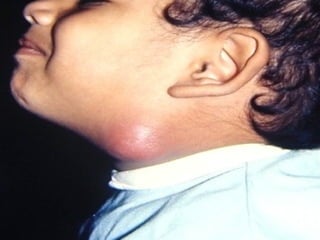
CellulitisCellulitis
abcessabcess
Stages of infectionStages of infection
Periapical abcessPeriapical abcess
A.infection confined within boneA.infection confined within bone
B.tooth extruded from socketB.tooth extruded from socket
C.painful tooth to biting and percussionC.painful tooth to biting and percussion
Stages of infectionStages of infection
CellulitisCellulitis
A.swelling not shaply demarcatingA.swelling not shaply demarcating
B. tissue has daughy consistencyB. tissue has daughy consistency
C.no fluctuationC.no fluctuation
Stages of infectionStages of infection
AbcessAbcess
A.swelling distinctly outlinedA.swelling distinctly outlined
B.tissue has firm consistencyB.tissue has firm consistency
C.fluctuation can usually be elicitedC.fluctuation can usually be elicited
Site of dental infection and directionSite of dental infection and direction
of sread from jaw bonesof sread from jaw bones
Upper and lower central incisors andUpper and lower central incisors and
canines and lower premolars the abcesscanines and lower premolars the abcess
exit labiallyexit labially
Lower third molars it exit lingually fromLower third molars it exit lingually from
bonebone
From other teeth it exit labially andFrom other teeth it exit labially and
occasionally exit palataly or linguallyoccasionally exit palataly or lingually
Clincal featureClincal feature
Rubor (Redness)-calor (heat)-dolar (pain)-Rubor (Redness)-calor (heat)-dolar (pain)-
tumor (swelling),fevertumor (swelling),fever
(pyrexia),headache,lymphadenopathy,diffi(pyrexia),headache,lymphadenopathy,diffi
culty inopening the mouth or swallowingorculty inopening the mouth or swallowingor
brathing,increase salivation, change inbrathing,increase salivation, change in
phonation ,bad breathphonation ,bad breath
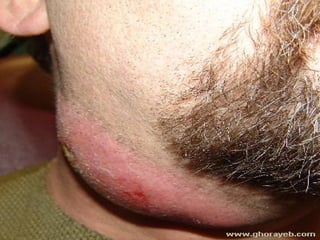
cellulitiscellulitis
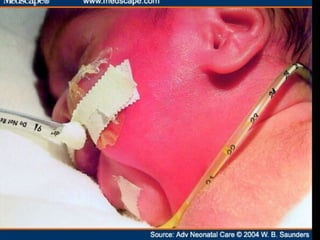
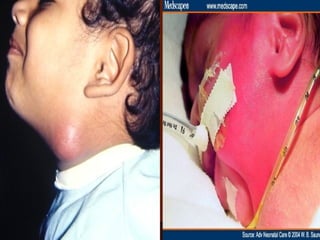
Def.oedematus swelling with all cardinalDef.oedematus swelling with all cardinal
signs of inflammation ,it is spreadingsigns of inflammation ,it is spreading
infection of loose connective tissue itinfection of loose connective tissue it
caused by streptococcus infection it doescaused by streptococcus infection it does
not produce alarge collection of pusnot produce alarge collection of pus..
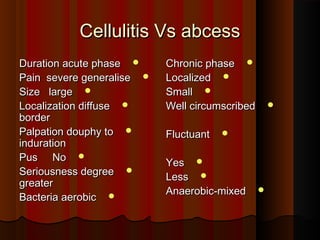
Cellulitis Vs abcessCellulitis Vs abcess
Duration acute phaseDuration acute phase
Pain severe generalisePain severe generalise
Size largeSize large
Localization diffuseLocalization diffuse
borderborder
Palpation douphy toPalpation douphy to
indurationinduration
Pus NoPus No
Seriousness degreeSeriousness degree
greatergreater
Bacteria aerobicBacteria aerobic
Chronic phaseChronic phase
LocalizedLocalized
SmallSmall
Well circumscribedWell circumscribed
FluctuantFluctuant
YesYes
LessLess
Anaerobic-mixedAnaerobic-mixed
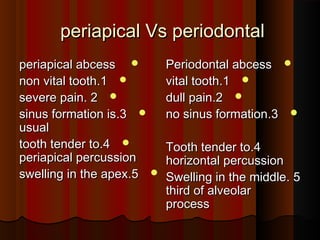
periapical Vs periodontalperiapical Vs periodontal
periapical abcessperiapical abcess
11..non vital toothnon vital tooth
22..severe painsevere pain
33..sinus formation issinus formation is
usualusual
44..tooth tender totooth tender to
periapical percussionperiapical percussion
55..swelling in the apexswelling in the apex
Periodontal abcessPeriodontal abcess
11..vital toothvital tooth
22..dull paindull pain
33..no sinus formationno sinus formation
44..Tooth tender toTooth tender to
horizontal percussionhorizontal percussion
55..Swelling in the middleSwelling in the middle
third of alveolarthird of alveolar
processprocess
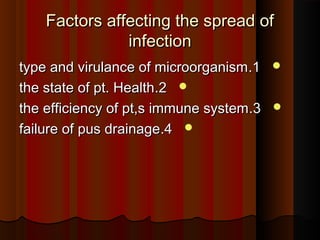
Factors affecting the spread ofFactors affecting the spread of
infectioninfection
11..type and virulance of microorganismtype and virulance of microorganism
22..the state of pt. Healththe state of pt. Health
33..the efficiency of pt,s immune systemthe efficiency of pt,s immune system
44..failure of pus drainagefailure of pus drainage
Anatomical factors influencing theAnatomical factors influencing the
direction of spread of infectiondirection of spread of infection
11..site of the source of infection ;lower orsite of the source of infection ;lower or
upper jaw molar region or premolarupper jaw molar region or premolar
,incisor ,canine .anterior or posterior,incisor ,canine .anterior or posterior
22..point at which pus escape from bone topoint at which pus escape from bone to
soft tissues ;labiolingual or buccopalatallysoft tissues ;labiolingual or buccopalatally
33..the natural barrier to spread ;fasciathe natural barrier to spread ;fascia
,muscle ,bone,muscle ,bone..
The spread of infection can beThe spread of infection can be
11..direct depend on the anatomicaldirect depend on the anatomical
barriersbarriers
22..by lympaticby lympatic
33..by blood (haematogenusby blood (haematogenus((
pericoronitispericoronitis
It is inflammation of the soft tissuesIt is inflammation of the soft tissues
covering the crown of partially erupted orcovering the crown of partially erupted or
unerupted tooth.it can beunerupted tooth.it can be
11..unilateralunilateral
22..bilateral (infectious mononucleosis orbilateral (infectious mononucleosis or
vincient ulcerative gingivitisvincient ulcerative gingivitis
pericoronitispericoronitis
Aetiology unknownAetiology unknown
But the causes could be food collectionBut the causes could be food collection
which is good media for bacteria to florishwhich is good media for bacteria to florish
due to 1.darkness,moist,fooddue to 1.darkness,moist,food
(nutrition),absence of oxygen (anaerobic(nutrition),absence of oxygen (anaerobic
conoizationconoization((
pericoronitispericoronitis
22..trauma of overlaying gumtrauma of overlaying gum
Factor influence the process ofFactor influence the process of
pericoronitispericoronitis
11..virulence of microorganismsvirulence of microorganisms
22..the host resistancethe host resistance
pericoronitispericoronitis
ClassificationsClassifications
SubacuteSubacute
AcuteAcute
chronicchronic
SubacuteSubacute
Localized dull painLocalized dull pain
Swelling,red,tnder gumSwelling,red,tnder gum
Foetor orisFoetor oris
SubmandibularSubmandibular
LN,tender,palpable,enlargedLN,tender,palpable,enlarged
Acute typeAcute type
Throbbing pain intrfere e sleepingThrobbing pain intrfere e sleeping
Facial swellingFacial swelling
Fever,malaiseFever,malaise
TrismusTrismus,,
Discomfort e swallowingDiscomfort e swallowing
Enlarged ,tender regional LNEnlarged ,tender regional LN
Chronic typeChronic type
AsymptomaticAsymptomatic
DiscomfortDiscomfort
Foeter orisFoeter oris
Change to acute or subauteChange to acute or subaute
treatmenttreatment
Irrigtion e normal salineIrrigtion e normal saline
AntiboiticAntiboitic
AnalgesicsAnalgesics
Removal of the causeRemoval of the cause
RehydrationRehydration
NutritionNutrition
Bed restBed rest
Reduction or extaction of opposing tooth or offenderReduction or extaction of opposing tooth or offender
toothtooth
OperculectomyOperculectomy
Incision and drainage and culture and sensitivity testIncision and drainage and culture and sensitivity test
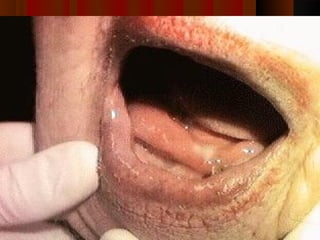
Sublingual spaceSublingual space
Firm painfull swelling in the ant. Part ofFirm painfull swelling in the ant. Part of
floor of the mouthfloor of the mouth
Raise the tongueRaise the tongue
Little not exetnded swellingLittle not exetnded swelling
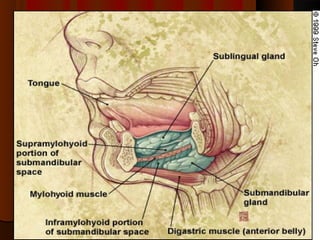
Sublingual spaceSublingual space
BounderyBoundery
V-shaped spaceV-shaped space
Medially the muscles of tongueMedially the muscles of tongue
(genio,hyoglossus m(genio,hyoglossus m.(.(
Inferiorly mylohoid mInferiorly mylohoid m..
Laterally the lingual aspect of theLaterally the lingual aspect of the
mandiblemandible
Superiorly the mucosa of the floor of theSuperiorly the mucosa of the floor of the
mouthmouth..
Surgical therapy aimSurgical therapy aim
11..toget rid of toxic purulent materialtoget rid of toxic purulent material
22..to decompress the abcessto decompress the abcess
33..to allow better perfusion ofto allow better perfusion of
blood,containing antiboics and defenseblood,containing antiboics and defense
elementselements
To increase the oxygenation of infectedTo increase the oxygenation of infected
areaarea
Submental spaceSubmental space
Surgical anatomy it lies between theSurgical anatomy it lies between the
anterior and posterior bellies of diagastricanterior and posterior bellies of diagastric
musclemuscle
Submental spaceSubmental space
Boundry :Superiorly ;the mylohoid mBoundry :Superiorly ;the mylohoid m..
Inferiorly ;skin,platysma, deep cervicalInferiorly ;skin,platysma, deep cervical
fasciafascia
Laterally; the anterior belley of daigasricLaterally; the anterior belley of daigasric
mm..
Anteriolaterally ;lingual surface of the bodyAnteriolaterally ;lingual surface of the body
of the mandibleof the mandible
Posterioly ;the hyoid bonePosterioly ;the hyoid bone
Submental contentsSubmental contents
Submental LN embbeded in adiposeSubmental LN embbeded in adipose
tissuetissue
The source of infection:tip of the tongueThe source of infection:tip of the tongue
Lower incisors,anterior part of floor of theLower incisors,anterior part of floor of the
mouth,lower lip skin or infection from themouth,lower lip skin or infection from the
submandibular spacesubmandibular space
Submandibular spaceSubmandibular space
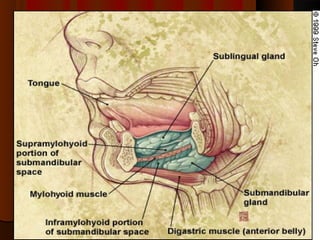
Surgical anatomy between the anteriorSurgical anatomy between the anterior
and posterior belly of diagastric mand posterior belly of diagastric m..
Medially the mylohyoid &hyoglossus mMedially the mylohyoid &hyoglossus m..
Inferiorly the investing layer of deepInferiorly the investing layer of deep
cervical fasciacervical fascia
Laterally the medial aspect of theLaterally the medial aspect of the
mandiblemandible
Submandibular spaceSubmandibular space
ContentsContents
The submandibular gland ,LN,ductThe submandibular gland ,LN,duct
Facial a.n, common facial v.nFacial a.n, common facial v.n
Mylohyoid n.vesselsMylohyoid n.vessels
CausesCauses
Infection from teeth ,LNInfection from teeth ,LN
Truma in the angle of the mandibuleTruma in the angle of the mandibule
Submandibular spaceSubmandibular space
CFCF
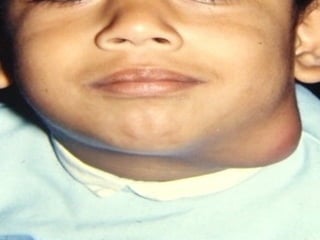
Swelling of the submandibular regionSwelling of the submandibular region
Pain tenerness,dysphagiaPain tenerness,dysphagia
Systemic toxic effectSystemic toxic effect
DiscomfortDiscomfort
Difficult opening of the mouthDifficult opening of the mouth
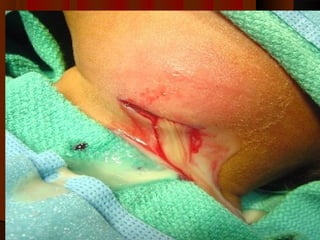
HILTON METHODHILTON METHOD
THE METHOD OF OPENING THETHE METHOD OF OPENING THE
ABCESS ENSURES THAT NO BLOODABCESS ENSURES THAT NO BLOOD
VESSELS OR NERVE IN THE VICINITYVESSELS OR NERVE IN THE VICINITY
IS DAMAGEIS DAMAGE
HILTON METHODHILTON METHOD
TOPICAL ANAESTHESIATOPICAL ANAESTHESIA
STAP INCISION IN MORESTAP INCISION IN MORE
FLUCTUATION REGIONFLUCTUATION REGION
CLOSED FORCEP PUSH TO DEEPCLOSED FORCEP PUSH TO DEEP
FASCIAFASCIA
OPEN FORCEPS TO DECOMPESSOPEN FORCEPS TO DECOMPESS
PLACEMENT OF DRAIN UNTIL SOPPPLACEMENT OF DRAIN UNTIL SOPP
DRAININDDRAININD
DRESSINGDRESSING
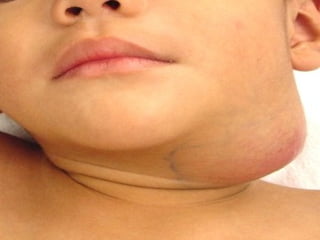
Ludwig anginaLudwig angina
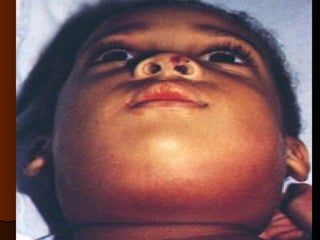
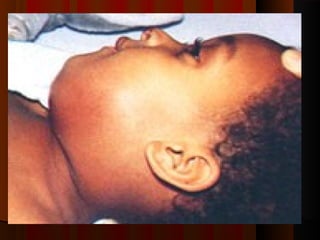
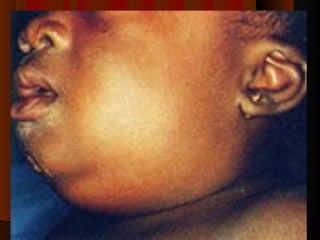
Apotential life threatining Bilateral massiveApotential life threatining Bilateral massive
diffuse septic gangernous cellulitis ofdiffuse septic gangernous cellulitis of
submental , sublingual ,submandibularsubmental , sublingual ,submandibular
regionregion
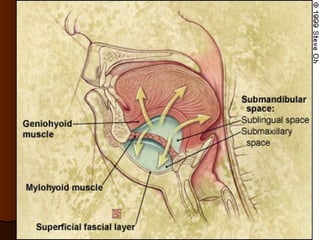
Surgical anatomy of sublingual spaceSurgical anatomy of sublingual space
Surgical anatomy of submental spaceSurgical anatomy of submental space
Surgcal anatomy of submandibular spaceSurgcal anatomy of submandibular space
Ludwig anginaLudwig angina
AetiologyAetiology
Dental (odontogenicDental (odontogenic((
Foreign bodyForeign body
SailadentitsSailadentits
Purulent tonsilitisPurulent tonsilitis
Ludwig anginaLudwig angina
BacteriologyBacteriology
Strepto staph.cocci aureus,albusStrepto staph.cocci aureus,albus
Spirocheats ,fusiform ,colli form bacteriaSpirocheats ,fusiform ,colli form bacteria
Ludwig anginaLudwig angina
CFCF
Fever,malaise,pyrexiaFever,malaise,pyrexia
,dysphonia,dehydration ,oedema of,dysphonia,dehydration ,oedema of
epiglotis,drooling of saliva ,dynoeaepiglotis,drooling of saliva ,dynoea,,
Raise tonueRaise tonue
Nonfluctuant ,brawny ,hard,in the 3Nonfluctuant ,brawny ,hard,in the 3
spaces,asphyxia or souphication in latespaces,asphyxia or souphication in late
stagestage
Ludwig anginaLudwig angina
DiagnosisDiagnosis
11..deep tender,bilateral swellingdeep tender,bilateral swelling
22..It must be swelling of floor of the mouthIt must be swelling of floor of the mouth
33..Raise the tongueRaise the tongue
Ludwig anginaLudwig angina
TttTtt
massive Antiboiticsmassive Antiboitics
Early intubation to control the airwayEarly intubation to control the airway
Nasotracheal intubation,cricotherodotomy and tracheostomy (lateNasotracheal intubation,cricotherodotomy and tracheostomy (late
stagestage((
Surgical drianageSurgical drianage
Culture &sensetivity testCulture &sensetivity test
Bed rest fluid and electrolytes balanceBed rest fluid and electrolytes balance
Monitring of vital signsMonitring of vital signs
Nutrition (multivitamines ,high protein diet (forcevalNutrition (multivitamines ,high protein diet (forceval((
analgesicsanalgesics
Folow upFolow up

Ptregomandibular spacePtregomandibular space
Surgical anatomy :between the medialSurgical anatomy :between the medial
surface of the mandiblar ramus &thesurface of the mandiblar ramus &the
medial ptregoid mmedial ptregoid m..
Pterygomandibular spacePterygomandibular space
BoundriesBoundries
superiorly: the latral ptregoid msuperiorly: the latral ptregoid m..
Laterally :the ramus of the mandibleLaterally :the ramus of the mandible
Medially :the medial ptregoid mMedially :the medial ptregoid m..
Pterygomandibular spacePterygomandibular space
contentscontents::
Inferior dental v.a.nInferior dental v.a.n..
LingualnLingualn..
Maxillary aMaxillary a..
Ptergoid venous plexusPtergoid venous plexus
Pterygomandibular spacePterygomandibular space
CausesCauses
11..pericoronitispericoronitis
22..apical infection of mandibular molarapical infection of mandibular molar
33..trauma at the angle of mandibletrauma at the angle of mandible
44..infected odontoma or cystinfected odontoma or cyst
Pterygomandibular spacePterygomandibular space
Fever malaise,dysphagiaFever malaise,dysphagia
Intraoral swelling in the anterior border ofIntraoral swelling in the anterior border of
the ramusthe ramus
Severe trismusSevere trismus
Submassetric spaceSubmassetric space
The masseter muscle has 3heads eThe masseter muscle has 3heads e
insertion into the ramus seprated frominsertion into the ramus seprated from
each other by bare areas the spaceeach other by bare areas the space
beteen the middle &deep head calledbeteen the middle &deep head called
(submasseteric space) the origin the lower(submasseteric space) the origin the lower
border and medial surface of zygomaticborder and medial surface of zygomatic
arch insertion in the lateral aspect of thearch insertion in the lateral aspect of the
ramus of mandibleramus of mandible..
Submassetric spaceSubmassetric space
AetiologyAetiology
Pericorinitis vertical distoangular wisdomPericorinitis vertical distoangular wisdom
toothtooth
Periapical infection of mandibular molarPeriapical infection of mandibular molar
extend distallyextend distally..
Submassetric spaceSubmassetric space
CFCF
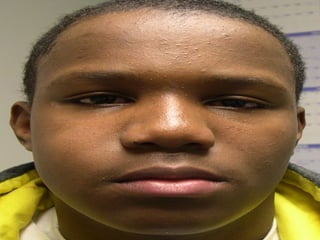
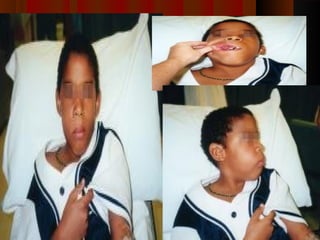
Facial swelling outline the masseter mFacial swelling outline the masseter m..
Swelling does not extend beyond theSwelling does not extend beyond the
posterior border of ramus or lift the lobe ofposterior border of ramus or lift the lobe of
ear (DD.Acute parotitisear (DD.Acute parotitis((
TrismusTrismus
Pyrexia,malaisePyrexia,malaise
Submassetric spaceSubmassetric space
ComplicationComplication
OsteomylitisOsteomylitis
Misdiagnosed as sarcomaMisdiagnosed as sarcoma
Buccal spaceBuccal space
BoundriesBoundries
Anteriomedially the buccinator mAnteriomedially the buccinator m..
Posteriorly :the masseter mPosteriorly :the masseter m..
Laterally ;paotid fascia covered by platysmaLaterally ;paotid fascia covered by platysma
Limited below by the attachement of deepLimited below by the attachement of deep
cervical fasciato the mandible &depressorcervical fasciato the mandible &depressor
angularis orisangularis oris
Limted above by zygomatic process of maxillaLimted above by zygomatic process of maxilla
&zygomaticus major and minor&zygomaticus major and minor..
Parotid spaceParotid space
Deep cervical fascia at the angle of theDeep cervical fascia at the angle of the
mandible covere it large swelling posteriormandible covere it large swelling posterior
to masseter mto masseter m..
It raise the lobe of the earIt raise the lobe of the ear
Doesnot cause trismusDoesnot cause trismus
Parotid spaceParotid space
ContentsContents
Parotid lobes superfacial ,deep,LN,DuctParotid lobes superfacial ,deep,LN,Duct
Facial nFacial n
Auriculotemporal nAuriculotemporal n..
Infratemporal spaceInfratemporal space

it form the upper exteremty of theit form the upper exteremty of the
pterygoid spacepterygoid space
BoundryBoundry
Laterally the ramus of the mandibleLaterally the ramus of the mandible
&the temporalis&the temporalis
Medially the lateral ptregoid m plateMedially the lateral ptregoid m plate
Superiorly infratemporal surface ofSuperiorly infratemporal surface of
the greater wing of sphenoidthe greater wing of sphenoid
Infratemporal spaceInfratemporal space
CausesCauses
Infection of upper third molarInfection of upper third molar
Conamined LA InjectionConamined LA Injection
CFCF
TrismusTrismus
Bulging of temporalis mBulging of temporalis m..
Complication cavernous sinus thrombosisComplication cavernous sinus thrombosis
Infratemporal spaceInfratemporal space
ContentsContents
The origin of the L&Medial ptregoidThe origin of the L&Medial ptregoid
The maxillaryThe maxillary
The ptregoid venous plexusThe ptregoid venous plexus
Peritonsillar (QUINSYPeritonsillar (QUINSY((
It is locaized infectionin the CT betweenIt is locaized infectionin the CT between
the tonsil& superior constrictor m.betweenthe tonsil& superior constrictor m.between
the ant. And pos. pillar of faucesthe ant. And pos. pillar of fauces..
AetiologyAetiology
Tonsillar cyrpts and supratonsillar fossaTonsillar cyrpts and supratonsillar fossa
infectioninfection
Pericoronal infectionPericoronal infection..
Peritonsillar (QUINSYPeritonsillar (QUINSY((
CFCF
Ill,toxic,dehydrated,pain radiated to ear,hotIll,toxic,dehydrated,pain radiated to ear,hot
potato mouth,drooling of saliva,potato mouth,drooling of saliva,
trismus,intra oral tense swelling in thetrismus,intra oral tense swelling in the
anterior pillar facuesanterior pillar facues
Parapharyngeal spaceParapharyngeal space
Lateral pharyngeal space+retrophayngealLateral pharyngeal space+retrophayngeal
space (Prevertebral spcespace (Prevertebral spce((
Space form ring around the pharynxSpace form ring around the pharynx
extended to mediastinum andextended to mediastinum and
communicate e submandibular spacecommunicate e submandibular space
anterinferiorly and retromandibular spaceanterinferiorly and retromandibular space
posteriorlyposteriorly
Lateral pharyngeal spaceLateral pharyngeal space
Surgical anatomy it is cone shape space itSurgical anatomy it is cone shape space it
is base at the base of skull and it is apexis base at the base of skull and it is apex
at the hyoid boneat the hyoid bone
Lateral pharyngeal spaceLateral pharyngeal space
The medial wall is superior constrictorThe medial wall is superior constrictor
The laterl wall the medial ptregoidThe laterl wall the medial ptregoid
m.,down to the angle of the mandiblem.,down to the angle of the mandible
&Submandibular gland&Submandibular gland
The posterior border is prevertebral fasciaThe posterior border is prevertebral fascia
It consists of 2 componentsIt consists of 2 components
11..anterior component (muscularanterior component (muscular((
22..posterior component (vascularposterior component (vascular((
Lateral pharyngeal spaceLateral pharyngeal space
AetiologyAetiology
Lower third mlar infectionLower third mlar infection
Tonsillar abscessTonsillar abscess
Sublingual,submandibular infectionSublingual,submandibular infection
CFCF
Prexia,malaise,swelling below the angle ofPrexia,malaise,swelling below the angle of
mandible,intraoral swelling in the lateralmandible,intraoral swelling in the lateral
wall of pharynxwall of pharynx..
Retropharyngeal spaceRetropharyngeal space
Laterally carotid sheath,the space isLaterally carotid sheath,the space is
continous e retro-oesophageal space intocontinous e retro-oesophageal space into
posterior mediastinum to level of 6posterior mediastinum to level of 6thth
thoracic vertebrathoracic vertebra
Lateral pharyngeal spaceLateral pharyngeal space
The vascular componentsThe vascular components
11..the carotid sheaththe carotid sheath
22..the sympathetic trunkthe sympathetic trunk
33..cranial nerves ;9,10,11,12cranial nerves ;9,10,11,12
Lateral pharyngeal spaceLateral pharyngeal space
ComplicationsComplications
11..thromophelibitis of the internal jugular vthromophelibitis of the internal jugular v..
22..erossion of common carotid a.erossion of common carotid a.
(haemrraghe(haemrraghe((
33..tongue paresistongue paresis
Retropharyngeal spaceRetropharyngeal space
Midlinespce between the pharyngobasillarMidlinespce between the pharyngobasillar
fascia which attach the pharyngealfascia which attach the pharyngeal
constrictor to base of skull andconstrictor to base of skull and
prevertebral fasciaprevertebral fascia
AetiologyAetiology
Lateral pharyngeal space infectionLateral pharyngeal space infection
Retropharyngeal spaceRetropharyngeal space
CFCF
Recurent sore throat,snoringRecurent sore throat,snoring
choking,dyspnoea,cervical adentischoking,dyspnoea,cervical adentis
Hot potatoes voiceHot potatoes voice
Canine spaceCanine space
Lie deep into muscles of facial expressionLie deep into muscles of facial expression
involve upper lip (levator labiiinvolve upper lip (levator labii
superioris,levator angularis oris ,labiisuperioris,levator angularis oris ,labii
superioris alaeque nasisuperioris alaeque nasi((
Levator anguli oris below the infraorbitalLevator anguli oris below the infraorbital
n.levator labii superioris above itn.levator labii superioris above it
Short canine level below levator anguliiShort canine level below levator angulii
orisoris..
Canine spaceCanine space
CFCF
Oedema of upper lip & cheekOedema of upper lip & cheek
Obliteration of nasolabial foldObliteration of nasolabial fold
Drooping of the angle of the mouthDrooping of the angle of the mouth
Swelling of medial corner of lower eyelidSwelling of medial corner of lower eyelid
Complication cavernous sinus thrombosisComplication cavernous sinus thrombosis
Cavernous sinus thrombosisCavernous sinus thrombosis
It is serious condition consisting formation ofIt is serious condition consisting formation of
thrombus in the cavernous sinus or it isthrombus in the cavernous sinus or it is
communicating branchescommunicating branches
2routes2routes
External route face,lipExternal route face,lip ––facialfacial ––angular vein-angular vein-
opthalmic v.-superior orbital fissureopthalmic v.-superior orbital fissure ––cavenouscavenous
sinussinus
Internal route ;dental infectionInternal route ;dental infection ––ptregoidptregoid
v.plexus-inferior opth. V. inferior orbital fissurev.plexus-inferior opth. V. inferior orbital fissure ––
cavernus sinuscavernus sinus
Cavernous sinus thrombosisCavernous sinus thrombosis
Crainal nerves involvedCrainal nerves involved
Occulomoter,trochlear, adbucent,optlamicOcculomoter,trochlear, adbucent,optlamic
(trigeminal),carotid venous plexus(trigeminal),carotid venous plexus
Microbilogy common bacteria sreptococci,Microbilogy common bacteria sreptococci,
staph.cocci,and GM-VE Bcteriastaph.cocci,and GM-VE Bcteria
Cavernous sinus thrombosisCavernous sinus thrombosis
Facial swelling (venous obstuctionFacial swelling (venous obstuction((
Pulsating exopthalmus (carotid pulsePulsating exopthalmus (carotid pulse
transmitted to retrobublar oedematransmitted to retrobublar oedema((
Opthalmoplegia ,absence of cornealOpthalmoplegia ,absence of corneal
reflex,ptosis ,dilatation of pupilreflex,ptosis ,dilatation of pupil
,exopthamus ,profuse lacrimation,exopthamus ,profuse lacrimation
,chemosis , epistaxis (parlysis of cranial,chemosis , epistaxis (parlysis of cranial
nerves 3,4,5a ,carotid sympathetic plexusnerves 3,4,5a ,carotid sympathetic plexus
Cavernous sinus thrombosisCavernous sinus thrombosis
Late CFLate CF
TOXIMIA ,MENINGITIS,KERINGTOXIMIA ,MENINGITIS,KERING
SIGNS,BRUDZINSKI SINGNSIGNS,BRUDZINSKI SINGN
,SEPTICEMIA,BLINDNESS,SEPTICEMIA,BLINDNESS
Cavernous sinus thrombosisCavernous sinus thrombosis
Or ptregoid v. plexusOr ptregoid v. plexus ––emissary v.-emissary v.-
foramen ovaleforamen ovale ––cavernous sinuscavernous sinus
Rapid complications lead to deathRapid complications lead to death
becausebecause
Short distance from facial region to theShort distance from facial region to the
sinussinus
Frequent anastomosis of vein(directFrequent anastomosis of vein(direct
communicationcommunication((
Valveless vessels (no protectionValveless vessels (no protection((
Cavernous sinus thrombosisCavernous sinus thrombosis
TREATMENTTREATMENT
Antiboitics (chlormaphenicol 1g 6hAntiboitics (chlormaphenicol 1g 6h((
Mannitol (reduce oedemaMannitol (reduce oedema((
Anticoagulants (heparin 20000 unit inAnticoagulants (heparin 20000 unit in
1500 ml 5% dextrose1500 ml 5% dextrose((
Surgical drinageSurgical drinage
Culture &sensitivity ,bed rest ,fluidCulture &sensitivity ,bed rest ,fluid
,nutrition,follow up of general heath,nutrition,follow up of general heath..
managementmanagement
DrainageDrainage
Culture &sensetivity testCulture &sensetivity test
AntiboticsAntibotics
AnalgesicsAnalgesics
Fluid and electolytes balanceFluid and electolytes balance
NutritionNutrition
Bed restBed rest
Monitring the vital signs and general healthMonitring the vital signs and general health
Follow upFollow up
MERCI BEACOUPMERCI BEACOUP
thanksthanks

Tissue space infection ‫‬

  • 1.
    Tissue space infectionTissuespace infection DR.Adil SulimanDR.Adil Suliman BDS,FOMFS (Sudan),ABBDS,FOMFS (Sudan),AB
  • 2.
    Tissue space infectionTissuespace infection Space is misnomer so it is cleftsSpace is misnomer so it is clefts (apotential space between the fascial(apotential space between the fascial layers which contain CT AND Variouslayers which contain CT AND Various anatomical structures ) there is no voids inanatomical structures ) there is no voids in the tissuethe tissue..
  • 3.
    abcessabcess Def.is apthological cavitywhich containDef.is apthological cavity which contain pus and covered by pyogenic membanepus and covered by pyogenic membane
  • 4.
    whywhy Abcess should bedrain before sun setAbcess should be drain before sun set
  • 7.
    WHY WE STUDYTHE TISSUEWHY WE STUDY THE TISSUE SPACE INFECTIONSSPACE INFECTIONS
  • 8.
    Tissue space infectionTissuespace infection 11..Fatal :ludwig angina sophocation orFatal :ludwig angina sophocation or asphexiaasphexia Lateral pharyngeal space :erosion ofLateral pharyngeal space :erosion of internal cartid Ainternal cartid A.. Canine space : Cavernous sinusCanine space : Cavernous sinus thrombosisthrombosis 22..Comlications brain abcess meningitisComlications brain abcess meningitis ,septicemia ,blindness fistula,osteomyelitis,septicemia ,blindness fistula,osteomyelitis
  • 9.
    aetiologyaetiology Odontogenic instrumentation ofOdontogenicinstrumentation of RCT,chemical,caries,deep pero.poccketRCT,chemical,caries,deep pero.poccket TraumaTrauma post surgery ie reconstructivepost surgery ie reconstructive Contaminated needleContaminated needle Secondary to cyst or neoplasmSecondary to cyst or neoplasm Microbial bacterial ,viral fungalMicrobial bacterial ,viral fungal
  • 10.
    bacteriologybacteriology Aerobes and anaerobesare the causativeAerobes and anaerobes are the causative agentsagents Aerobes account for 5%Aerobes account for 5% Anaerobes account for 35%Anaerobes account for 35% Both or both account for 60%Both or both account for 60%
  • 11.
    Life threatening featuresLifethreatening features Respiratory impairmentRespiratory impairment Difficulty in swallowingDifficulty in swallowing Impaired visionImpaired vision Change in voice (hot potatoChange in voice (hot potato(( LethargyLethargy Decrease level of consciousnessDecrease level of consciousness Agitation, restlessness due to hypoxiaAgitation, restlessness due to hypoxia
  • 12.
    Toxicity featuresToxicity features PallorPallor RapidrespirationRapid respiration Throbbing pulseThrobbing pulse Fever, shiveringFever, shivering LethargyLethargy Appear illAppear ill
  • 13.
    Natural barriers againstinfectionNatural barriers against infection MusclesMuscles FasiaeFasiae bonebone
  • 14.
    Muscles containing infectionMusclescontaining infection 11..mylohoidmylohoid 22..massetermasseter 33..buccinatorbuccinator 44..M&L. Ptregoid musclesM&L. Ptregoid muscles 55..temporalistemporalis 66..the superior constictorsthe superior constictors
  • 15.
    The fascial layersThefascial layers A.Deep cervicalA.Deep cervical PretrachealPretracheal PrevertebralPrevertebral Carotid sheath (vagus,internal jugularCarotid sheath (vagus,internal jugular v.,inernal carotid Av.,inernal carotid A.(.( B.Superficial or investing layerB.Superficial or investing layer
  • 16.
    Bones containg abcessBonescontaing abcess MaxillaMaxilla mandiblemandible SuperaperiosealSuperaperioseal SubperiosealSubperioseal 
  • 17.
    Masticator space infectionMasticatorspace infection It is space lie along the lower border of theIt is space lie along the lower border of the mandible,ramus of the mandible and the msclesmandible,ramus of the mandible and the mscles of masticationsof mastications Outer sheath (masseter ,temporalis musclesOuter sheath (masseter ,temporalis muscles(( The inner sheath cover (mylohoid mThe inner sheath cover (mylohoid m.(.( Poteriorly cover the m.ptregoid mPoteriorly cover the m.ptregoid m Parotid space laterally,parapharyngeal spaceParotid space laterally,parapharyngeal space medially ,it attach to temporal m. superiorlymedially ,it attach to temporal m. superiorly
  • 18.
    The space ofburns (suprasternalThe space of burns (suprasternal(( The superficial layer split below the levelThe superficial layer split below the level of hyoid to form 2 spacesof hyoid to form 2 spaces The lower part of ant. Triangle (2layersThe lower part of ant. Triangle (2layers attach to) sternumattach to) sternum The lower part of post.Triangle (2layersThe lower part of post.Triangle (2layers attach to manibrum of the clavicleattach to manibrum of the clavicle
  • 19.
    The space ofburns (suprasternalThe space of burns (suprasternal(( ContentsContents The sternal head of sternocliedomastoidThe sternal head of sternocliedomastoid Communication between the anteriorCommunication between the anterior jugular vjugular v.. Lymph glandLymph gland The interclavicular ligamentThe interclavicular ligament
  • 20.
    Stages of infectionStagesof infection Periapical osteitisPeriapical osteitis CellulitisCellulitis abcessabcess
  • 21.
    Stages of infectionStagesof infection Periapical abcessPeriapical abcess A.infection confined within boneA.infection confined within bone B.tooth extruded from socketB.tooth extruded from socket C.painful tooth to biting and percussionC.painful tooth to biting and percussion
  • 22.
    Stages of infectionStagesof infection CellulitisCellulitis A.swelling not shaply demarcatingA.swelling not shaply demarcating B. tissue has daughy consistencyB. tissue has daughy consistency C.no fluctuationC.no fluctuation
  • 23.
    Stages of infectionStagesof infection AbcessAbcess A.swelling distinctly outlinedA.swelling distinctly outlined B.tissue has firm consistencyB.tissue has firm consistency C.fluctuation can usually be elicitedC.fluctuation can usually be elicited
  • 24.
    Site of dentalinfection and directionSite of dental infection and direction of sread from jaw bonesof sread from jaw bones Upper and lower central incisors andUpper and lower central incisors and canines and lower premolars the abcesscanines and lower premolars the abcess exit labiallyexit labially Lower third molars it exit lingually fromLower third molars it exit lingually from bonebone From other teeth it exit labially andFrom other teeth it exit labially and occasionally exit palataly or linguallyoccasionally exit palataly or lingually
  • 25.
    Clincal featureClincal feature Rubor(Redness)-calor (heat)-dolar (pain)-Rubor (Redness)-calor (heat)-dolar (pain)- tumor (swelling),fevertumor (swelling),fever (pyrexia),headache,lymphadenopathy,diffi(pyrexia),headache,lymphadenopathy,diffi culty inopening the mouth or swallowingorculty inopening the mouth or swallowingor brathing,increase salivation, change inbrathing,increase salivation, change in phonation ,bad breathphonation ,bad breath
  • 26.
    cellulitiscellulitis Def.oedematus swelling withall cardinalDef.oedematus swelling with all cardinal signs of inflammation ,it is spreadingsigns of inflammation ,it is spreading infection of loose connective tissue itinfection of loose connective tissue it caused by streptococcus infection it doescaused by streptococcus infection it does not produce alarge collection of pusnot produce alarge collection of pus..
  • 30.
    Cellulitis Vs abcessCellulitisVs abcess Duration acute phaseDuration acute phase Pain severe generalisePain severe generalise Size largeSize large Localization diffuseLocalization diffuse borderborder Palpation douphy toPalpation douphy to indurationinduration Pus NoPus No Seriousness degreeSeriousness degree greatergreater Bacteria aerobicBacteria aerobic Chronic phaseChronic phase LocalizedLocalized SmallSmall Well circumscribedWell circumscribed FluctuantFluctuant YesYes LessLess Anaerobic-mixedAnaerobic-mixed
  • 31.
    periapical Vs periodontalperiapicalVs periodontal periapical abcessperiapical abcess 11..non vital toothnon vital tooth 22..severe painsevere pain 33..sinus formation issinus formation is usualusual 44..tooth tender totooth tender to periapical percussionperiapical percussion 55..swelling in the apexswelling in the apex Periodontal abcessPeriodontal abcess 11..vital toothvital tooth 22..dull paindull pain 33..no sinus formationno sinus formation 44..Tooth tender toTooth tender to horizontal percussionhorizontal percussion 55..Swelling in the middleSwelling in the middle third of alveolarthird of alveolar processprocess
  • 32.
    Factors affecting thespread ofFactors affecting the spread of infectioninfection 11..type and virulance of microorganismtype and virulance of microorganism 22..the state of pt. Healththe state of pt. Health 33..the efficiency of pt,s immune systemthe efficiency of pt,s immune system 44..failure of pus drainagefailure of pus drainage
  • 33.
    Anatomical factors influencingtheAnatomical factors influencing the direction of spread of infectiondirection of spread of infection 11..site of the source of infection ;lower orsite of the source of infection ;lower or upper jaw molar region or premolarupper jaw molar region or premolar ,incisor ,canine .anterior or posterior,incisor ,canine .anterior or posterior 22..point at which pus escape from bone topoint at which pus escape from bone to soft tissues ;labiolingual or buccopalatallysoft tissues ;labiolingual or buccopalatally 33..the natural barrier to spread ;fasciathe natural barrier to spread ;fascia ,muscle ,bone,muscle ,bone..
  • 34.
    The spread ofinfection can beThe spread of infection can be 11..direct depend on the anatomicaldirect depend on the anatomical barriersbarriers 22..by lympaticby lympatic 33..by blood (haematogenusby blood (haematogenus((
  • 35.
    pericoronitispericoronitis It is inflammationof the soft tissuesIt is inflammation of the soft tissues covering the crown of partially erupted orcovering the crown of partially erupted or unerupted tooth.it can beunerupted tooth.it can be 11..unilateralunilateral 22..bilateral (infectious mononucleosis orbilateral (infectious mononucleosis or vincient ulcerative gingivitisvincient ulcerative gingivitis
  • 36.
    pericoronitispericoronitis Aetiology unknownAetiology unknown Butthe causes could be food collectionBut the causes could be food collection which is good media for bacteria to florishwhich is good media for bacteria to florish due to 1.darkness,moist,fooddue to 1.darkness,moist,food (nutrition),absence of oxygen (anaerobic(nutrition),absence of oxygen (anaerobic conoizationconoization((
  • 37.
    pericoronitispericoronitis 22..trauma of overlayinggumtrauma of overlaying gum Factor influence the process ofFactor influence the process of pericoronitispericoronitis 11..virulence of microorganismsvirulence of microorganisms 22..the host resistancethe host resistance
  • 38.
  • 39.
    SubacuteSubacute Localized dull painLocalizeddull pain Swelling,red,tnder gumSwelling,red,tnder gum Foetor orisFoetor oris SubmandibularSubmandibular LN,tender,palpable,enlargedLN,tender,palpable,enlarged
  • 40.
    Acute typeAcute type Throbbingpain intrfere e sleepingThrobbing pain intrfere e sleeping Facial swellingFacial swelling Fever,malaiseFever,malaise TrismusTrismus,, Discomfort e swallowingDiscomfort e swallowing Enlarged ,tender regional LNEnlarged ,tender regional LN
  • 41.
    Chronic typeChronic type AsymptomaticAsymptomatic DiscomfortDiscomfort FoeterorisFoeter oris Change to acute or subauteChange to acute or subaute
  • 42.
    treatmenttreatment Irrigtion e normalsalineIrrigtion e normal saline AntiboiticAntiboitic AnalgesicsAnalgesics Removal of the causeRemoval of the cause RehydrationRehydration NutritionNutrition Bed restBed rest Reduction or extaction of opposing tooth or offenderReduction or extaction of opposing tooth or offender toothtooth OperculectomyOperculectomy Incision and drainage and culture and sensitivity testIncision and drainage and culture and sensitivity test
  • 43.
    Sublingual spaceSublingual space Firmpainfull swelling in the ant. Part ofFirm painfull swelling in the ant. Part of floor of the mouthfloor of the mouth Raise the tongueRaise the tongue Little not exetnded swellingLittle not exetnded swelling
  • 45.
    Sublingual spaceSublingual space BounderyBoundery V-shapedspaceV-shaped space Medially the muscles of tongueMedially the muscles of tongue (genio,hyoglossus m(genio,hyoglossus m.(.( Inferiorly mylohoid mInferiorly mylohoid m.. Laterally the lingual aspect of theLaterally the lingual aspect of the mandiblemandible Superiorly the mucosa of the floor of theSuperiorly the mucosa of the floor of the mouthmouth..
  • 47.
    Surgical therapy aimSurgicaltherapy aim 11..toget rid of toxic purulent materialtoget rid of toxic purulent material 22..to decompress the abcessto decompress the abcess 33..to allow better perfusion ofto allow better perfusion of blood,containing antiboics and defenseblood,containing antiboics and defense elementselements To increase the oxygenation of infectedTo increase the oxygenation of infected areaarea
  • 48.
    Submental spaceSubmental space Surgicalanatomy it lies between theSurgical anatomy it lies between the anterior and posterior bellies of diagastricanterior and posterior bellies of diagastric musclemuscle
  • 49.
    Submental spaceSubmental space Boundry:Superiorly ;the mylohoid mBoundry :Superiorly ;the mylohoid m.. Inferiorly ;skin,platysma, deep cervicalInferiorly ;skin,platysma, deep cervical fasciafascia Laterally; the anterior belley of daigasricLaterally; the anterior belley of daigasric mm.. Anteriolaterally ;lingual surface of the bodyAnteriolaterally ;lingual surface of the body of the mandibleof the mandible Posterioly ;the hyoid bonePosterioly ;the hyoid bone
  • 50.
    Submental contentsSubmental contents SubmentalLN embbeded in adiposeSubmental LN embbeded in adipose tissuetissue The source of infection:tip of the tongueThe source of infection:tip of the tongue Lower incisors,anterior part of floor of theLower incisors,anterior part of floor of the mouth,lower lip skin or infection from themouth,lower lip skin or infection from the submandibular spacesubmandibular space
  • 51.
    Submandibular spaceSubmandibular space Surgicalanatomy between the anteriorSurgical anatomy between the anterior and posterior belly of diagastric mand posterior belly of diagastric m.. Medially the mylohyoid &hyoglossus mMedially the mylohyoid &hyoglossus m.. Inferiorly the investing layer of deepInferiorly the investing layer of deep cervical fasciacervical fascia Laterally the medial aspect of theLaterally the medial aspect of the mandiblemandible
  • 55.
    Submandibular spaceSubmandibular space ContentsContents Thesubmandibular gland ,LN,ductThe submandibular gland ,LN,duct Facial a.n, common facial v.nFacial a.n, common facial v.n Mylohyoid n.vesselsMylohyoid n.vessels CausesCauses Infection from teeth ,LNInfection from teeth ,LN Truma in the angle of the mandibuleTruma in the angle of the mandibule
  • 56.
    Submandibular spaceSubmandibular space CFCF Swellingof the submandibular regionSwelling of the submandibular region Pain tenerness,dysphagiaPain tenerness,dysphagia Systemic toxic effectSystemic toxic effect DiscomfortDiscomfort Difficult opening of the mouthDifficult opening of the mouth
  • 57.
    HILTON METHODHILTON METHOD THEMETHOD OF OPENING THETHE METHOD OF OPENING THE ABCESS ENSURES THAT NO BLOODABCESS ENSURES THAT NO BLOOD VESSELS OR NERVE IN THE VICINITYVESSELS OR NERVE IN THE VICINITY IS DAMAGEIS DAMAGE
  • 58.
    HILTON METHODHILTON METHOD TOPICALANAESTHESIATOPICAL ANAESTHESIA STAP INCISION IN MORESTAP INCISION IN MORE FLUCTUATION REGIONFLUCTUATION REGION CLOSED FORCEP PUSH TO DEEPCLOSED FORCEP PUSH TO DEEP FASCIAFASCIA OPEN FORCEPS TO DECOMPESSOPEN FORCEPS TO DECOMPESS PLACEMENT OF DRAIN UNTIL SOPPPLACEMENT OF DRAIN UNTIL SOPP DRAININDDRAININD DRESSINGDRESSING
  • 61.
    Ludwig anginaLudwig angina Apotentiallife threatining Bilateral massiveApotential life threatining Bilateral massive diffuse septic gangernous cellulitis ofdiffuse septic gangernous cellulitis of submental , sublingual ,submandibularsubmental , sublingual ,submandibular regionregion Surgical anatomy of sublingual spaceSurgical anatomy of sublingual space Surgical anatomy of submental spaceSurgical anatomy of submental space Surgcal anatomy of submandibular spaceSurgcal anatomy of submandibular space
  • 62.
    Ludwig anginaLudwig angina AetiologyAetiology Dental(odontogenicDental (odontogenic(( Foreign bodyForeign body SailadentitsSailadentits Purulent tonsilitisPurulent tonsilitis
  • 63.
    Ludwig anginaLudwig angina BacteriologyBacteriology Streptostaph.cocci aureus,albusStrepto staph.cocci aureus,albus Spirocheats ,fusiform ,colli form bacteriaSpirocheats ,fusiform ,colli form bacteria
  • 64.
    Ludwig anginaLudwig angina CFCF Fever,malaise,pyrexiaFever,malaise,pyrexia ,dysphonia,dehydration,oedema of,dysphonia,dehydration ,oedema of epiglotis,drooling of saliva ,dynoeaepiglotis,drooling of saliva ,dynoea,, Raise tonueRaise tonue Nonfluctuant ,brawny ,hard,in the 3Nonfluctuant ,brawny ,hard,in the 3 spaces,asphyxia or souphication in latespaces,asphyxia or souphication in late stagestage
  • 67.
    Ludwig anginaLudwig angina DiagnosisDiagnosis 11..deeptender,bilateral swellingdeep tender,bilateral swelling 22..It must be swelling of floor of the mouthIt must be swelling of floor of the mouth 33..Raise the tongueRaise the tongue
  • 69.
    Ludwig anginaLudwig angina TttTtt massiveAntiboiticsmassive Antiboitics Early intubation to control the airwayEarly intubation to control the airway Nasotracheal intubation,cricotherodotomy and tracheostomy (lateNasotracheal intubation,cricotherodotomy and tracheostomy (late stagestage(( Surgical drianageSurgical drianage Culture &sensetivity testCulture &sensetivity test Bed rest fluid and electrolytes balanceBed rest fluid and electrolytes balance Monitring of vital signsMonitring of vital signs Nutrition (multivitamines ,high protein diet (forcevalNutrition (multivitamines ,high protein diet (forceval(( analgesicsanalgesics Folow upFolow up 
  • 71.
    Ptregomandibular spacePtregomandibular space Surgicalanatomy :between the medialSurgical anatomy :between the medial surface of the mandiblar ramus &thesurface of the mandiblar ramus &the medial ptregoid mmedial ptregoid m..
  • 72.
    Pterygomandibular spacePterygomandibular space BoundriesBoundries superiorly:the latral ptregoid msuperiorly: the latral ptregoid m.. Laterally :the ramus of the mandibleLaterally :the ramus of the mandible Medially :the medial ptregoid mMedially :the medial ptregoid m..
  • 73.
    Pterygomandibular spacePterygomandibular space contentscontents:: Inferiordental v.a.nInferior dental v.a.n.. LingualnLingualn.. Maxillary aMaxillary a.. Ptergoid venous plexusPtergoid venous plexus
  • 74.
    Pterygomandibular spacePterygomandibular space CausesCauses 11..pericoronitispericoronitis 22..apicalinfection of mandibular molarapical infection of mandibular molar 33..trauma at the angle of mandibletrauma at the angle of mandible 44..infected odontoma or cystinfected odontoma or cyst
  • 75.
    Pterygomandibular spacePterygomandibular space Fevermalaise,dysphagiaFever malaise,dysphagia Intraoral swelling in the anterior border ofIntraoral swelling in the anterior border of the ramusthe ramus Severe trismusSevere trismus
  • 76.
    Submassetric spaceSubmassetric space Themasseter muscle has 3heads eThe masseter muscle has 3heads e insertion into the ramus seprated frominsertion into the ramus seprated from each other by bare areas the spaceeach other by bare areas the space beteen the middle &deep head calledbeteen the middle &deep head called (submasseteric space) the origin the lower(submasseteric space) the origin the lower border and medial surface of zygomaticborder and medial surface of zygomatic arch insertion in the lateral aspect of thearch insertion in the lateral aspect of the ramus of mandibleramus of mandible..
  • 77.
    Submassetric spaceSubmassetric space AetiologyAetiology Pericorinitisvertical distoangular wisdomPericorinitis vertical distoangular wisdom toothtooth Periapical infection of mandibular molarPeriapical infection of mandibular molar extend distallyextend distally..
  • 78.
    Submassetric spaceSubmassetric space CFCF Facialswelling outline the masseter mFacial swelling outline the masseter m.. Swelling does not extend beyond theSwelling does not extend beyond the posterior border of ramus or lift the lobe ofposterior border of ramus or lift the lobe of ear (DD.Acute parotitisear (DD.Acute parotitis(( TrismusTrismus Pyrexia,malaisePyrexia,malaise
  • 79.
  • 80.
    Buccal spaceBuccal space BoundriesBoundries Anteriomediallythe buccinator mAnteriomedially the buccinator m.. Posteriorly :the masseter mPosteriorly :the masseter m.. Laterally ;paotid fascia covered by platysmaLaterally ;paotid fascia covered by platysma Limited below by the attachement of deepLimited below by the attachement of deep cervical fasciato the mandible &depressorcervical fasciato the mandible &depressor angularis orisangularis oris Limted above by zygomatic process of maxillaLimted above by zygomatic process of maxilla &zygomaticus major and minor&zygomaticus major and minor..
  • 83.
    Parotid spaceParotid space Deepcervical fascia at the angle of theDeep cervical fascia at the angle of the mandible covere it large swelling posteriormandible covere it large swelling posterior to masseter mto masseter m.. It raise the lobe of the earIt raise the lobe of the ear Doesnot cause trismusDoesnot cause trismus
  • 84.
    Parotid spaceParotid space ContentsContents Parotidlobes superfacial ,deep,LN,DuctParotid lobes superfacial ,deep,LN,Duct Facial nFacial n Auriculotemporal nAuriculotemporal n..
  • 85.
    Infratemporal spaceInfratemporal space  itform the upper exteremty of theit form the upper exteremty of the pterygoid spacepterygoid space BoundryBoundry Laterally the ramus of the mandibleLaterally the ramus of the mandible &the temporalis&the temporalis Medially the lateral ptregoid m plateMedially the lateral ptregoid m plate Superiorly infratemporal surface ofSuperiorly infratemporal surface of the greater wing of sphenoidthe greater wing of sphenoid
  • 86.
    Infratemporal spaceInfratemporal space CausesCauses Infectionof upper third molarInfection of upper third molar Conamined LA InjectionConamined LA Injection CFCF TrismusTrismus Bulging of temporalis mBulging of temporalis m.. Complication cavernous sinus thrombosisComplication cavernous sinus thrombosis
  • 87.
    Infratemporal spaceInfratemporal space ContentsContents Theorigin of the L&Medial ptregoidThe origin of the L&Medial ptregoid The maxillaryThe maxillary The ptregoid venous plexusThe ptregoid venous plexus
  • 88.
    Peritonsillar (QUINSYPeritonsillar (QUINSY(( Itis locaized infectionin the CT betweenIt is locaized infectionin the CT between the tonsil& superior constrictor m.betweenthe tonsil& superior constrictor m.between the ant. And pos. pillar of faucesthe ant. And pos. pillar of fauces.. AetiologyAetiology Tonsillar cyrpts and supratonsillar fossaTonsillar cyrpts and supratonsillar fossa infectioninfection Pericoronal infectionPericoronal infection..
  • 89.
    Peritonsillar (QUINSYPeritonsillar (QUINSY(( CFCF Ill,toxic,dehydrated,painradiated to ear,hotIll,toxic,dehydrated,pain radiated to ear,hot potato mouth,drooling of saliva,potato mouth,drooling of saliva, trismus,intra oral tense swelling in thetrismus,intra oral tense swelling in the anterior pillar facuesanterior pillar facues
  • 90.
    Parapharyngeal spaceParapharyngeal space Lateralpharyngeal space+retrophayngealLateral pharyngeal space+retrophayngeal space (Prevertebral spcespace (Prevertebral spce(( Space form ring around the pharynxSpace form ring around the pharynx extended to mediastinum andextended to mediastinum and communicate e submandibular spacecommunicate e submandibular space anterinferiorly and retromandibular spaceanterinferiorly and retromandibular space posteriorlyposteriorly
  • 91.
    Lateral pharyngeal spaceLateralpharyngeal space Surgical anatomy it is cone shape space itSurgical anatomy it is cone shape space it is base at the base of skull and it is apexis base at the base of skull and it is apex at the hyoid boneat the hyoid bone
  • 92.
    Lateral pharyngeal spaceLateralpharyngeal space The medial wall is superior constrictorThe medial wall is superior constrictor The laterl wall the medial ptregoidThe laterl wall the medial ptregoid m.,down to the angle of the mandiblem.,down to the angle of the mandible &Submandibular gland&Submandibular gland The posterior border is prevertebral fasciaThe posterior border is prevertebral fascia It consists of 2 componentsIt consists of 2 components 11..anterior component (muscularanterior component (muscular(( 22..posterior component (vascularposterior component (vascular((
  • 93.
    Lateral pharyngeal spaceLateralpharyngeal space AetiologyAetiology Lower third mlar infectionLower third mlar infection Tonsillar abscessTonsillar abscess Sublingual,submandibular infectionSublingual,submandibular infection CFCF Prexia,malaise,swelling below the angle ofPrexia,malaise,swelling below the angle of mandible,intraoral swelling in the lateralmandible,intraoral swelling in the lateral wall of pharynxwall of pharynx..
  • 94.
    Retropharyngeal spaceRetropharyngeal space Laterallycarotid sheath,the space isLaterally carotid sheath,the space is continous e retro-oesophageal space intocontinous e retro-oesophageal space into posterior mediastinum to level of 6posterior mediastinum to level of 6thth thoracic vertebrathoracic vertebra
  • 95.
    Lateral pharyngeal spaceLateralpharyngeal space The vascular componentsThe vascular components 11..the carotid sheaththe carotid sheath 22..the sympathetic trunkthe sympathetic trunk 33..cranial nerves ;9,10,11,12cranial nerves ;9,10,11,12
  • 96.
    Lateral pharyngeal spaceLateralpharyngeal space ComplicationsComplications 11..thromophelibitis of the internal jugular vthromophelibitis of the internal jugular v.. 22..erossion of common carotid a.erossion of common carotid a. (haemrraghe(haemrraghe(( 33..tongue paresistongue paresis
  • 97.
    Retropharyngeal spaceRetropharyngeal space Midlinespcebetween the pharyngobasillarMidlinespce between the pharyngobasillar fascia which attach the pharyngealfascia which attach the pharyngeal constrictor to base of skull andconstrictor to base of skull and prevertebral fasciaprevertebral fascia AetiologyAetiology Lateral pharyngeal space infectionLateral pharyngeal space infection
  • 98.
    Retropharyngeal spaceRetropharyngeal space CFCF Recurentsore throat,snoringRecurent sore throat,snoring choking,dyspnoea,cervical adentischoking,dyspnoea,cervical adentis Hot potatoes voiceHot potatoes voice
  • 99.
    Canine spaceCanine space Liedeep into muscles of facial expressionLie deep into muscles of facial expression involve upper lip (levator labiiinvolve upper lip (levator labii superioris,levator angularis oris ,labiisuperioris,levator angularis oris ,labii superioris alaeque nasisuperioris alaeque nasi(( Levator anguli oris below the infraorbitalLevator anguli oris below the infraorbital n.levator labii superioris above itn.levator labii superioris above it Short canine level below levator anguliiShort canine level below levator angulii orisoris..
  • 100.
    Canine spaceCanine space CFCF Oedemaof upper lip & cheekOedema of upper lip & cheek Obliteration of nasolabial foldObliteration of nasolabial fold Drooping of the angle of the mouthDrooping of the angle of the mouth Swelling of medial corner of lower eyelidSwelling of medial corner of lower eyelid Complication cavernous sinus thrombosisComplication cavernous sinus thrombosis
  • 101.
    Cavernous sinus thrombosisCavernoussinus thrombosis It is serious condition consisting formation ofIt is serious condition consisting formation of thrombus in the cavernous sinus or it isthrombus in the cavernous sinus or it is communicating branchescommunicating branches 2routes2routes External route face,lipExternal route face,lip ––facialfacial ––angular vein-angular vein- opthalmic v.-superior orbital fissureopthalmic v.-superior orbital fissure ––cavenouscavenous sinussinus Internal route ;dental infectionInternal route ;dental infection ––ptregoidptregoid v.plexus-inferior opth. V. inferior orbital fissurev.plexus-inferior opth. V. inferior orbital fissure –– cavernus sinuscavernus sinus
  • 102.
    Cavernous sinus thrombosisCavernoussinus thrombosis Crainal nerves involvedCrainal nerves involved Occulomoter,trochlear, adbucent,optlamicOcculomoter,trochlear, adbucent,optlamic (trigeminal),carotid venous plexus(trigeminal),carotid venous plexus Microbilogy common bacteria sreptococci,Microbilogy common bacteria sreptococci, staph.cocci,and GM-VE Bcteriastaph.cocci,and GM-VE Bcteria
  • 103.
    Cavernous sinus thrombosisCavernoussinus thrombosis Facial swelling (venous obstuctionFacial swelling (venous obstuction(( Pulsating exopthalmus (carotid pulsePulsating exopthalmus (carotid pulse transmitted to retrobublar oedematransmitted to retrobublar oedema(( Opthalmoplegia ,absence of cornealOpthalmoplegia ,absence of corneal reflex,ptosis ,dilatation of pupilreflex,ptosis ,dilatation of pupil ,exopthamus ,profuse lacrimation,exopthamus ,profuse lacrimation ,chemosis , epistaxis (parlysis of cranial,chemosis , epistaxis (parlysis of cranial nerves 3,4,5a ,carotid sympathetic plexusnerves 3,4,5a ,carotid sympathetic plexus
  • 104.
    Cavernous sinus thrombosisCavernoussinus thrombosis Late CFLate CF TOXIMIA ,MENINGITIS,KERINGTOXIMIA ,MENINGITIS,KERING SIGNS,BRUDZINSKI SINGNSIGNS,BRUDZINSKI SINGN ,SEPTICEMIA,BLINDNESS,SEPTICEMIA,BLINDNESS
  • 105.
    Cavernous sinus thrombosisCavernoussinus thrombosis Or ptregoid v. plexusOr ptregoid v. plexus ––emissary v.-emissary v.- foramen ovaleforamen ovale ––cavernous sinuscavernous sinus Rapid complications lead to deathRapid complications lead to death becausebecause Short distance from facial region to theShort distance from facial region to the sinussinus Frequent anastomosis of vein(directFrequent anastomosis of vein(direct communicationcommunication(( Valveless vessels (no protectionValveless vessels (no protection((
  • 106.
    Cavernous sinus thrombosisCavernoussinus thrombosis TREATMENTTREATMENT Antiboitics (chlormaphenicol 1g 6hAntiboitics (chlormaphenicol 1g 6h(( Mannitol (reduce oedemaMannitol (reduce oedema(( Anticoagulants (heparin 20000 unit inAnticoagulants (heparin 20000 unit in 1500 ml 5% dextrose1500 ml 5% dextrose(( Surgical drinageSurgical drinage Culture &sensitivity ,bed rest ,fluidCulture &sensitivity ,bed rest ,fluid ,nutrition,follow up of general heath,nutrition,follow up of general heath..
  • 107.
    managementmanagement DrainageDrainage Culture &sensetivity testCulture&sensetivity test AntiboticsAntibotics AnalgesicsAnalgesics Fluid and electolytes balanceFluid and electolytes balance NutritionNutrition Bed restBed rest Monitring the vital signs and general healthMonitring the vital signs and general health Follow upFollow up
  • 108.