Pneumatic Tire and Wheel
2/16/2023
1
Wheel and Rim
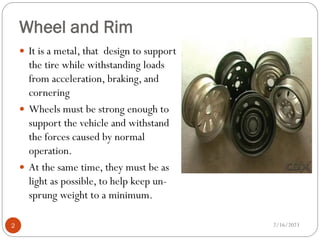
 It is a metal, that design to support
the tire while withstanding loads
from acceleration, braking, and
cornering
 Wheels must be strong enough to
support the vehicle and withstand
the forces caused by normal
operation.
 At the same time, they must be as
light as possible, to help keep un-
sprung weight to a minimum.
2/16/2023
2
 Wheels can be made from steel, cast aluminum
alloy or magnesium alloy.
 Alloy wheels are popular because of their
appearance and because they are lighter than
similar steel wheels.
 Most passenger car wheels are of well, or drop-
centre design.
 This design allows for tyre removal and fitting.
2/16/2023
3
Rim Sizes & Designations
 To ensure correct fit between
a tyre and rim, all
manufacturers of wheels and
tyres comply with standard
dimensions, as recommended
by automotive manufactures.
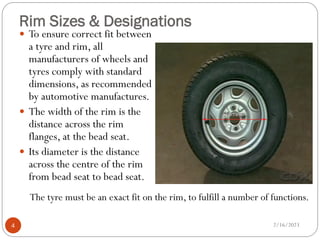
 The width of the rim is the
distance across the rim
flanges, at the bead seat.
 Its diameter is the distance
across the centre of the rim
from bead seat to bead seat.
The tyre must be an exact fit on the rim, to fulfill a number of functions.
2/16/2023
4
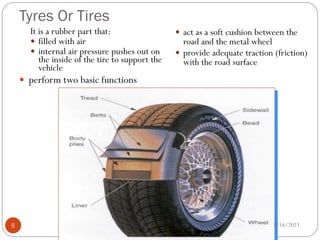
Tyres Or Tires
It is a rubber part that:
 filled with air
 internal air pressure pushes out on
the inside of the tire to support the
vehicle
 perform two basic functions
 act as a soft cushion between the
road and the metal wheel
 provide adequate traction (friction)
with the road surface
2/16/2023
5
Types of Tire Construction
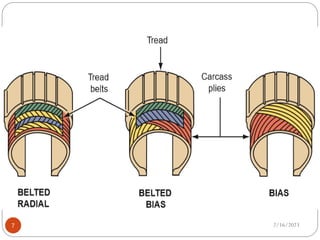
 There are three basic types of tire construction:
 bias ply,
 belted bias, and
 radial ply.
 Bias ply and belted bias tires are only used on heavy equipment,
trailers, and older cars.
 Today, nearly all vehicles are fitted with radial tires.
 Bias ply tires have fabric plies that run alternatively and form a
crisscross design.The angle varies from 30 to 38 degrees with the
centerline of the tire.
 Belted bias ply tires are similar to bias ply tires, except that two or
more belts run the circumference of the tire under the tread.This
construction gives strength to the sidewall and greater stability to
the tread.
2/16/2023
6
2/16/2023
7
Cont…..
 Radial ply tires have body cords that extend from bead to
bead at an angle of about 90 degrees or “radial’’ to the
circumferential centerline of the tire plus two or more
layers of relatively inflexible belts under the tread.
 The construction of various combinations of rayon, nylon,
fiberglass, and steel gives greater strength to the tread area
and flexibility to the sidewall.
 The belts restrict tread motion during contact with the road,
thus improving tread life and traction. Radial ply tires also
offer greater fuel economy, increased skid resistance, and
more positive braking.
2/16/2023
8
Benefits of Radial tyre over non radial
or bias type
 Softer, smoother, quieter ride
 Improved fuel economy
 Flat, wider footprint for better tire wear
 Runs cooler than a bias ply, minimizing risk of a blowout on
the highway (especially under high loads like those found in
trailer applications)
 Longer tire life
 Better tracking –
2/16/2023
9
Tyre Materials
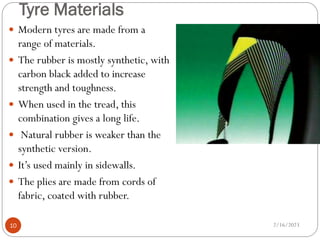
 Modern tyres are made from a
range of materials.
 The rubber is mostly synthetic, with
carbon black added to increase
strength and toughness.
 When used in the tread, this
combination gives a long life.
 Natural rubber is weaker than the
synthetic version.
 It’s used mainly in sidewalls.
 The plies are made from cords of
fabric, coated with rubber.
2/16/2023
10
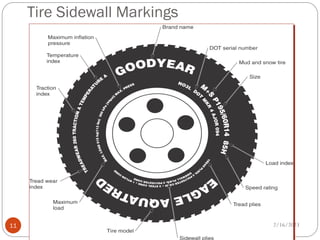
Tire Sidewall Markings
2/16/2023
11
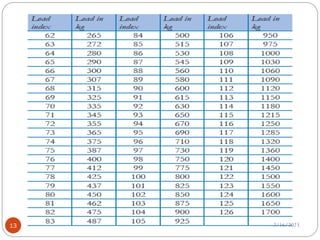
 Amount of weight the tire can carry at the recommended
inflation pressure is called Maximum Load Rating
 Highest air pressure that should be pumped into the tire is
Maximum Inflation Pressure
 Many tires have a maximum recommended pressure of 32 to 40
psi (220 to 275 kPa)
2/16/2023
12
2/16/2023
13
2/16/2023
14
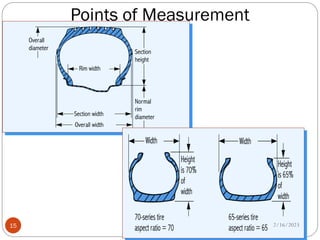
Points of Measurement
2/16/2023
15
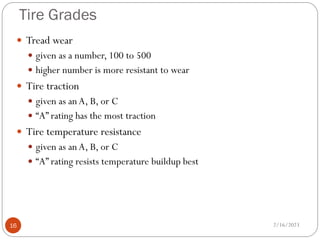
Tire Grades
 Tread wear
 given as a number, 100 to 500
 higher number is more resistant to wear
 Tire traction
 given as an A, B, or C
 “A” rating has the most traction
 Tire temperature resistance
 given as an A, B, or C
 “A” rating resists temperature buildup best
2/16/2023
16
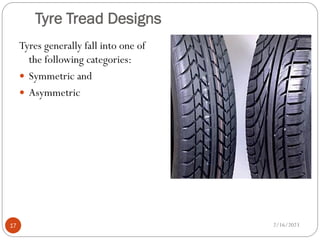
Tyre Tread Designs
Tyres generally fall into one of
the following categories:
 Symmetric and
 Asymmetric
2/16/2023
17
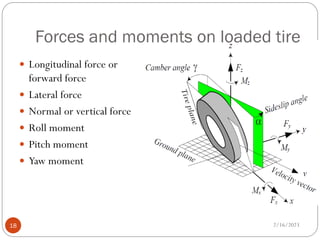
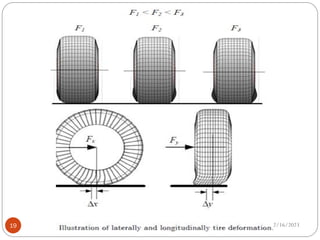
Forces and moments on loaded tire
 Longitudinal force or
forward force
 Lateral force
 Normal or vertical force
 Roll moment
 Pitch moment
 Yaw moment
2/16/2023
18
2/16/2023
19
2/16/2023
20

Tire and Wheel vvvhbbbhhhhhhhhhbbbbbbb.pdf

  • 1.
    Pneumatic Tire andWheel 2/16/2023 1
  • 2.
    Wheel and Rim It is a metal, that design to support the tire while withstanding loads from acceleration, braking, and cornering  Wheels must be strong enough to support the vehicle and withstand the forces caused by normal operation.  At the same time, they must be as light as possible, to help keep un- sprung weight to a minimum. 2/16/2023 2
  • 3.
     Wheels canbe made from steel, cast aluminum alloy or magnesium alloy.  Alloy wheels are popular because of their appearance and because they are lighter than similar steel wheels.  Most passenger car wheels are of well, or drop- centre design.  This design allows for tyre removal and fitting. 2/16/2023 3
  • 4.
    Rim Sizes &Designations  To ensure correct fit between a tyre and rim, all manufacturers of wheels and tyres comply with standard dimensions, as recommended by automotive manufactures.  The width of the rim is the distance across the rim flanges, at the bead seat.  Its diameter is the distance across the centre of the rim from bead seat to bead seat. The tyre must be an exact fit on the rim, to fulfill a number of functions. 2/16/2023 4
  • 5.
    Tyres Or Tires Itis a rubber part that:  filled with air  internal air pressure pushes out on the inside of the tire to support the vehicle  perform two basic functions  act as a soft cushion between the road and the metal wheel  provide adequate traction (friction) with the road surface 2/16/2023 5
  • 6.
    Types of TireConstruction  There are three basic types of tire construction:  bias ply,  belted bias, and  radial ply.  Bias ply and belted bias tires are only used on heavy equipment, trailers, and older cars.  Today, nearly all vehicles are fitted with radial tires.  Bias ply tires have fabric plies that run alternatively and form a crisscross design.The angle varies from 30 to 38 degrees with the centerline of the tire.  Belted bias ply tires are similar to bias ply tires, except that two or more belts run the circumference of the tire under the tread.This construction gives strength to the sidewall and greater stability to the tread. 2/16/2023 6
  • 7.
  • 8.
    Cont…..  Radial plytires have body cords that extend from bead to bead at an angle of about 90 degrees or “radial’’ to the circumferential centerline of the tire plus two or more layers of relatively inflexible belts under the tread.  The construction of various combinations of rayon, nylon, fiberglass, and steel gives greater strength to the tread area and flexibility to the sidewall.  The belts restrict tread motion during contact with the road, thus improving tread life and traction. Radial ply tires also offer greater fuel economy, increased skid resistance, and more positive braking. 2/16/2023 8
  • 9.
    Benefits of Radialtyre over non radial or bias type  Softer, smoother, quieter ride  Improved fuel economy  Flat, wider footprint for better tire wear  Runs cooler than a bias ply, minimizing risk of a blowout on the highway (especially under high loads like those found in trailer applications)  Longer tire life  Better tracking – 2/16/2023 9
  • 10.
    Tyre Materials  Moderntyres are made from a range of materials.  The rubber is mostly synthetic, with carbon black added to increase strength and toughness.  When used in the tread, this combination gives a long life.  Natural rubber is weaker than the synthetic version.  It’s used mainly in sidewalls.  The plies are made from cords of fabric, coated with rubber. 2/16/2023 10
  • 11.
  • 12.
     Amount ofweight the tire can carry at the recommended inflation pressure is called Maximum Load Rating  Highest air pressure that should be pumped into the tire is Maximum Inflation Pressure  Many tires have a maximum recommended pressure of 32 to 40 psi (220 to 275 kPa) 2/16/2023 12
  • 13.
  • 14.
  • 15.
  • 16.
    Tire Grades  Treadwear  given as a number, 100 to 500  higher number is more resistant to wear  Tire traction  given as an A, B, or C  “A” rating has the most traction  Tire temperature resistance  given as an A, B, or C  “A” rating resists temperature buildup best 2/16/2023 16
  • 17.
    Tyre Tread Designs Tyresgenerally fall into one of the following categories:  Symmetric and  Asymmetric 2/16/2023 17
  • 18.
    Forces and momentson loaded tire  Longitudinal force or forward force  Lateral force  Normal or vertical force  Roll moment  Pitch moment  Yaw moment 2/16/2023 18
  • 19.
  • 20.