Tipu
A pragmatic approach
to managed improvement
Improvement
• All professionals want to improve
• It is expected
• Make a difference
• Transfer knowledge
• Everyone wants next year to be better
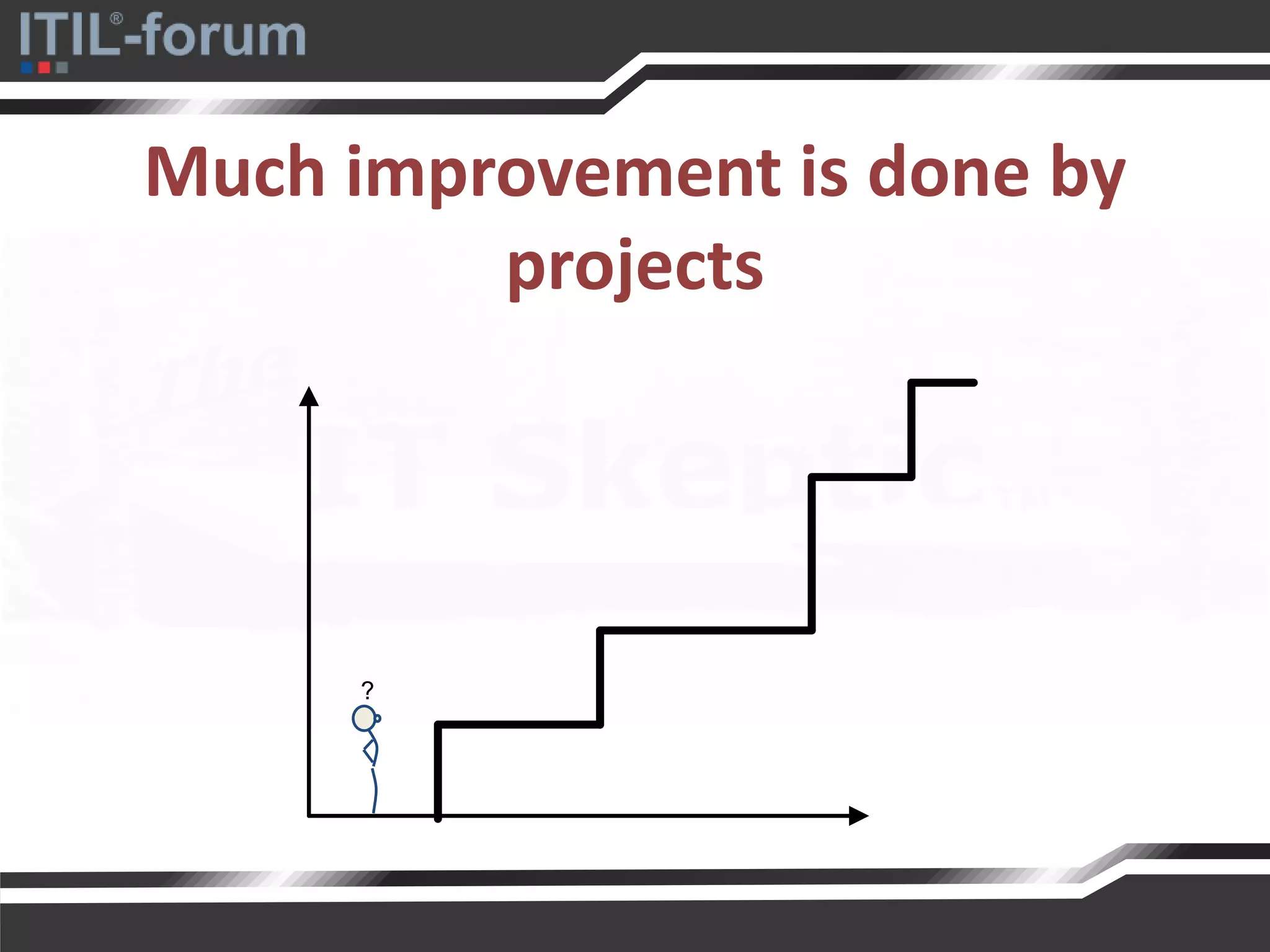
Much improvement is done by
projects
?
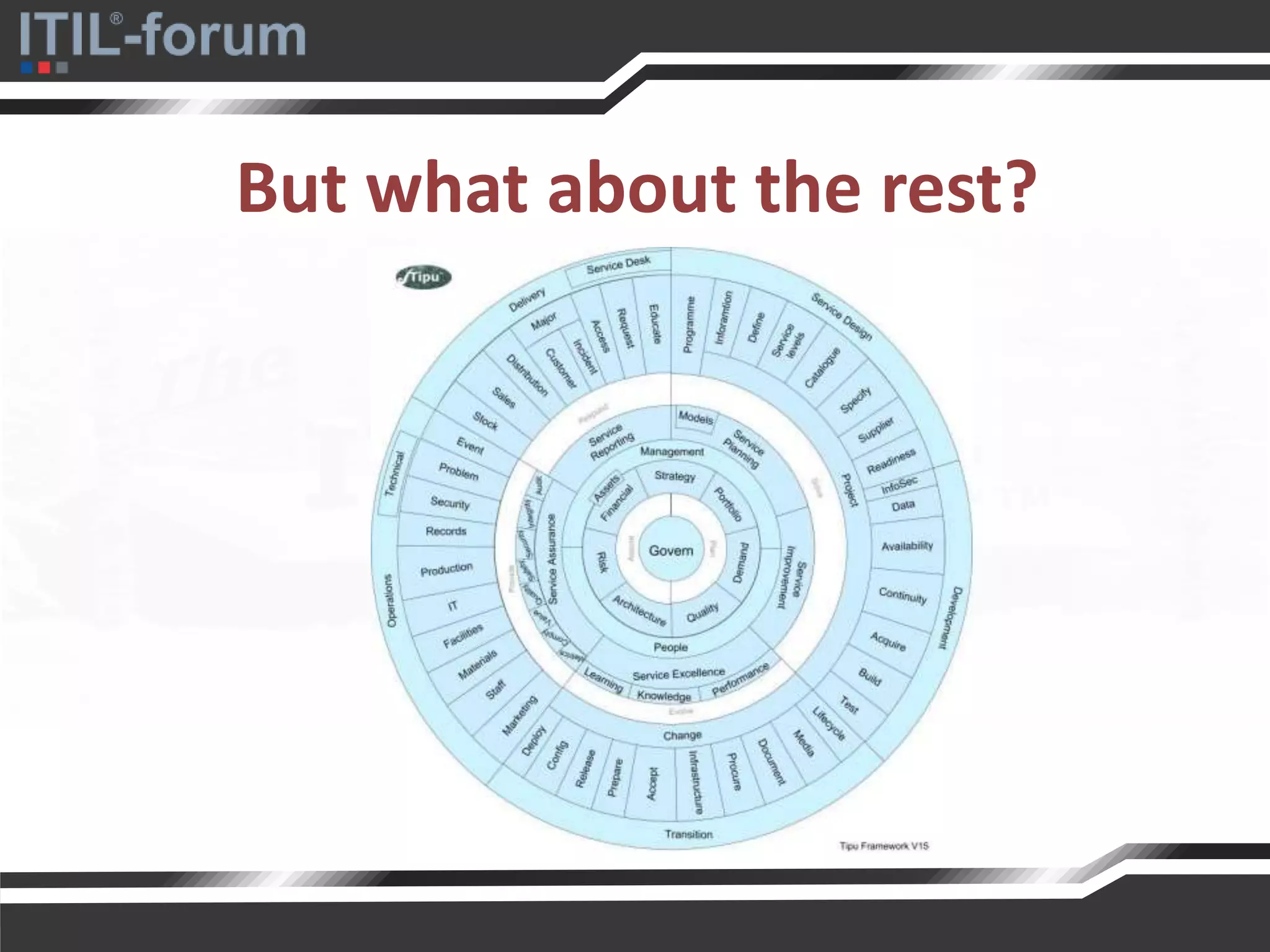
But what about the rest?
Business as usual (BAU)
We do it as part of BAU, in our “spare time”
Pros and cons
• We own the task
• Work on our own domain, reap the
benefits
• Small is beautiful
• Frustrating when the urgent trumps the
important
• So much to do, so little time
• Working in isolation
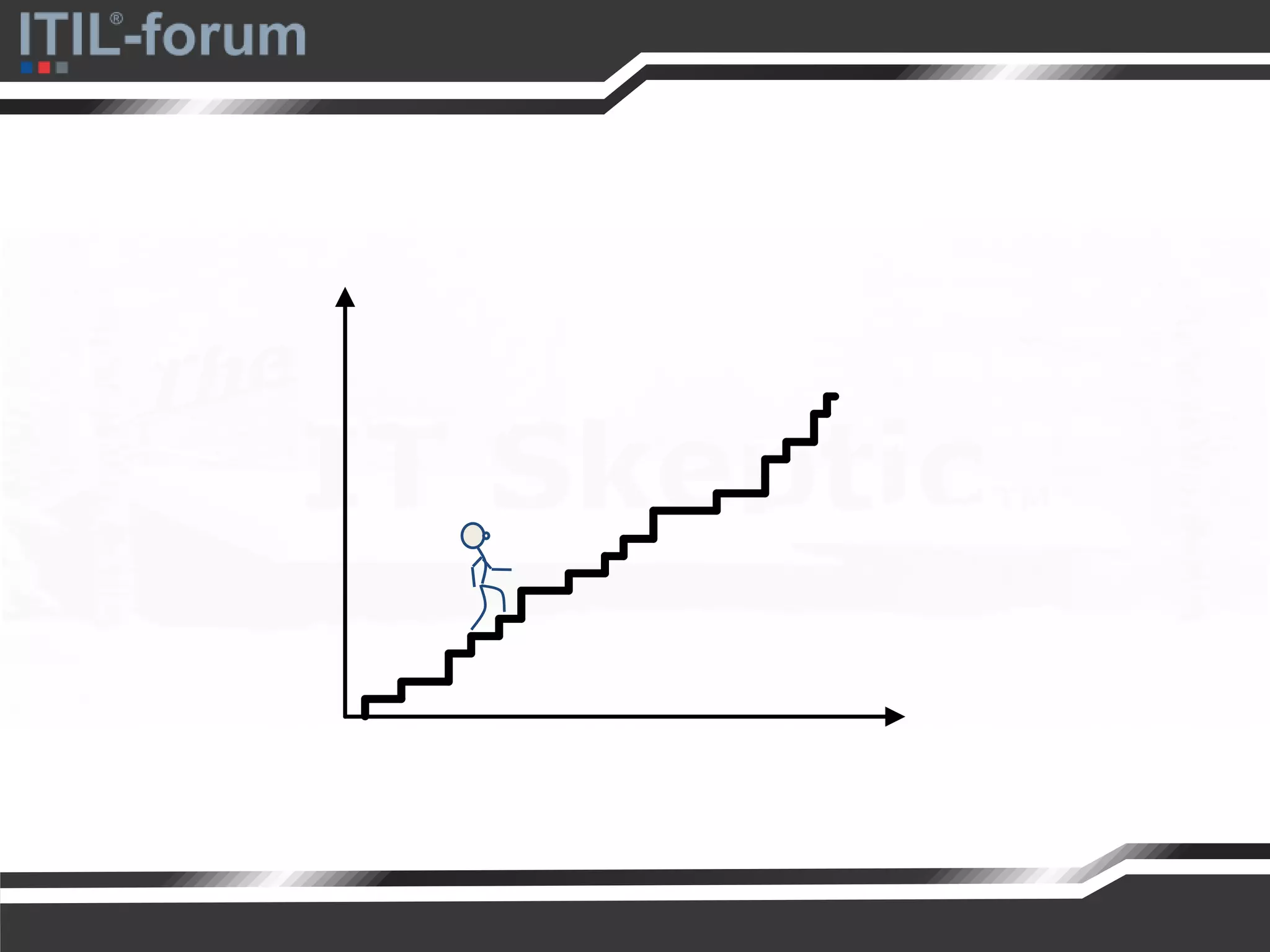
How do we coordinate that effort?
• Have a plan
• Empower staff
• Create teams
• Coordinate the work
• Executive support
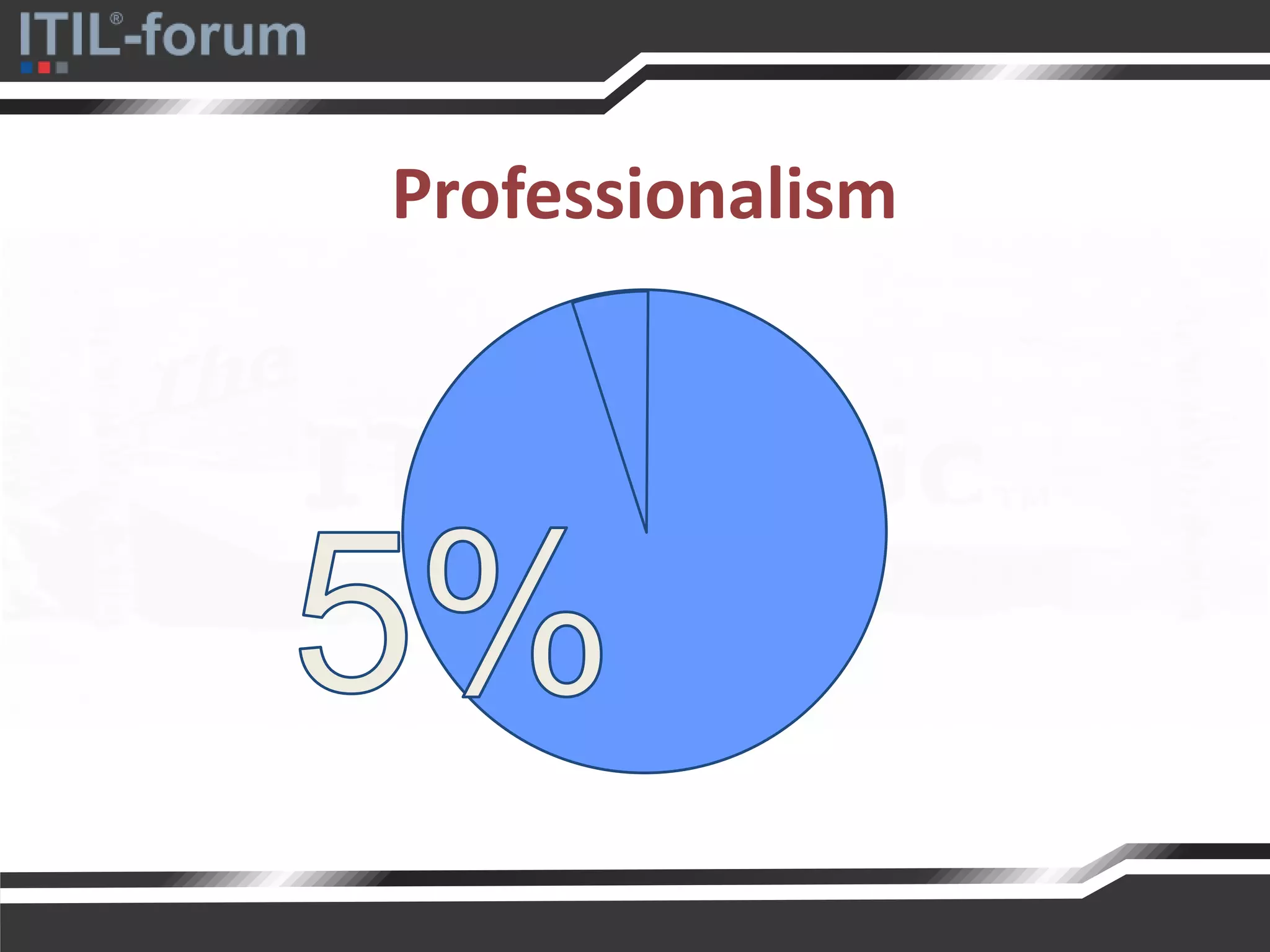
Professionalism
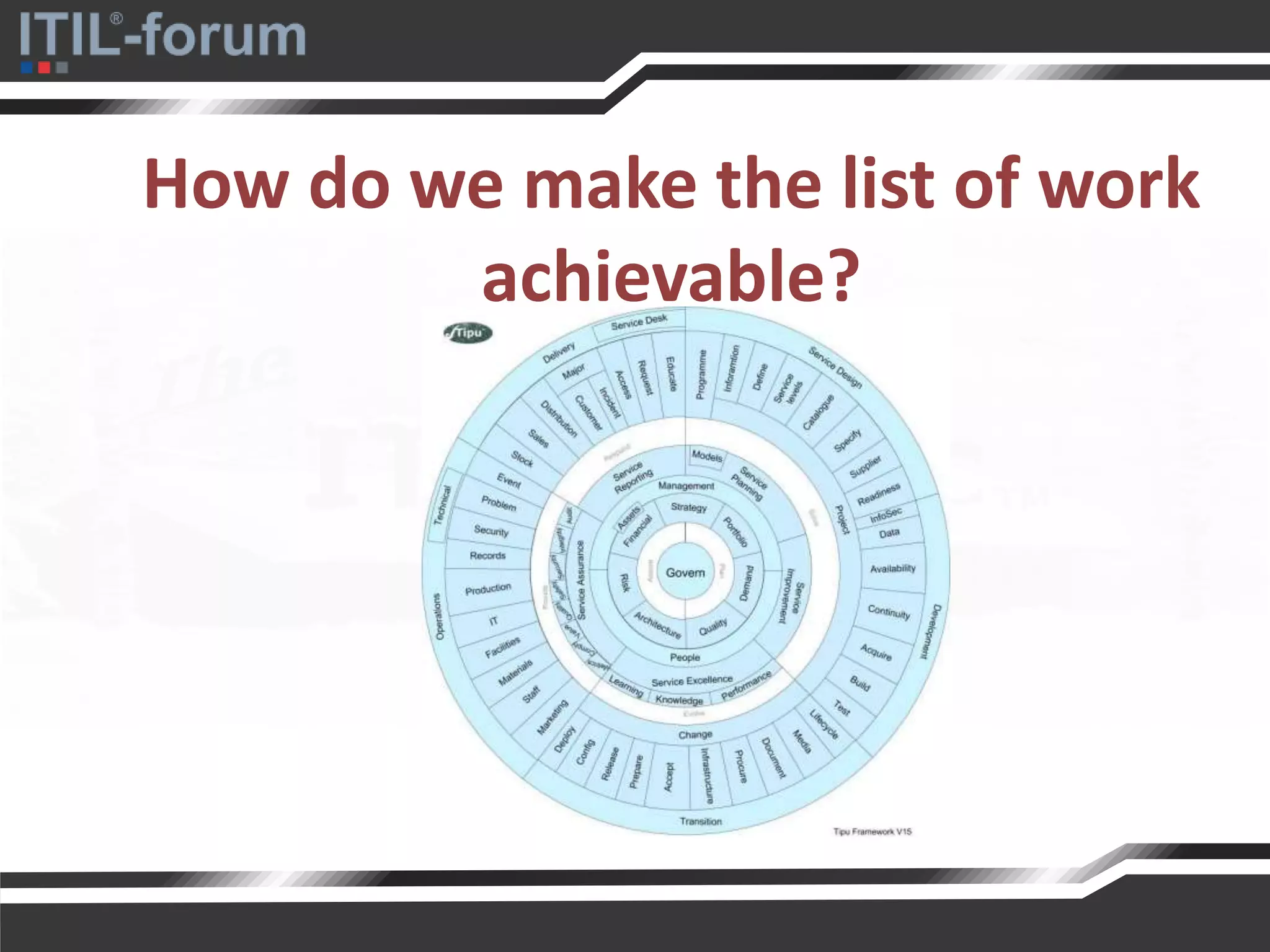
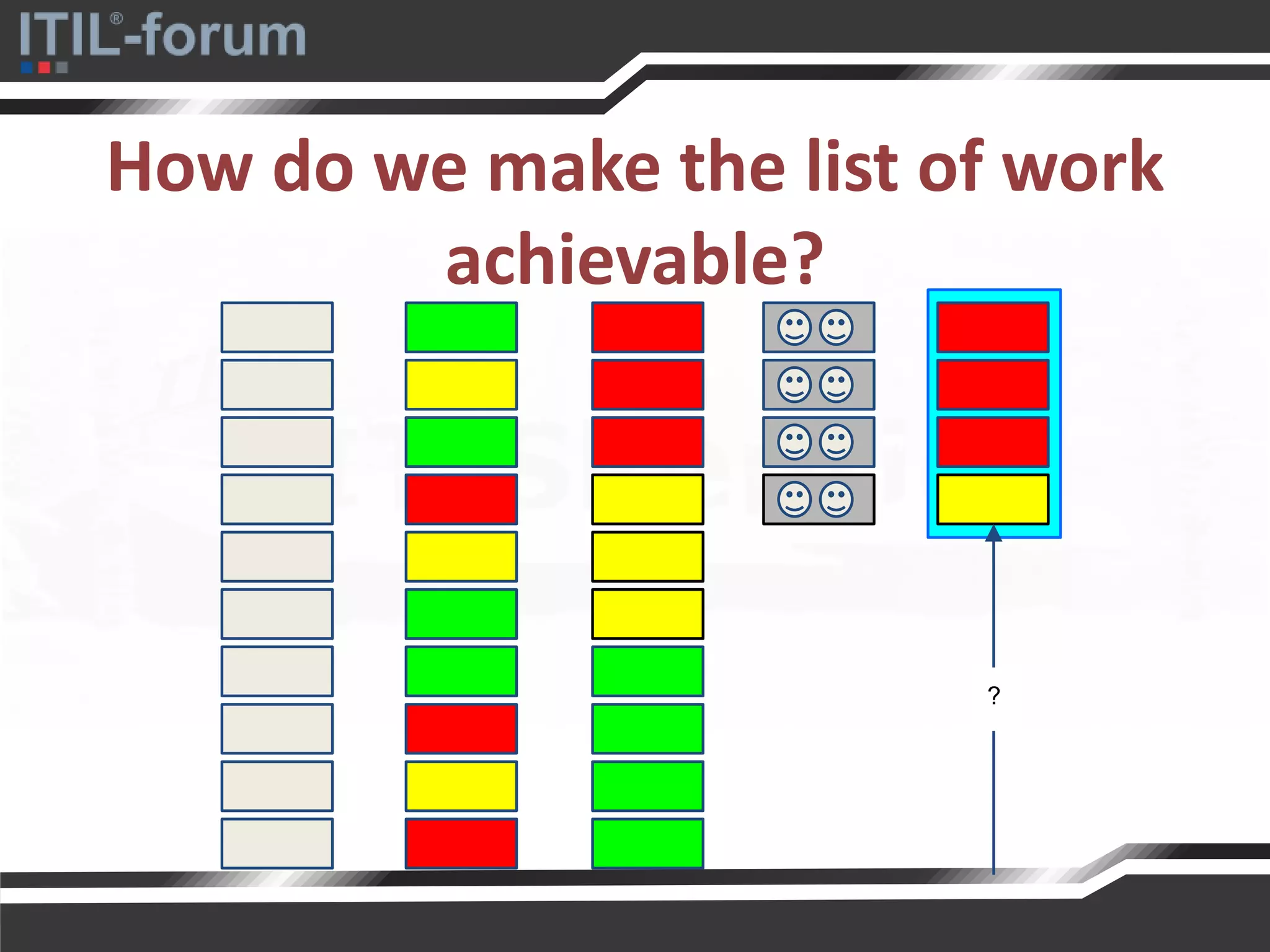
How do we make the list of work
achievable?
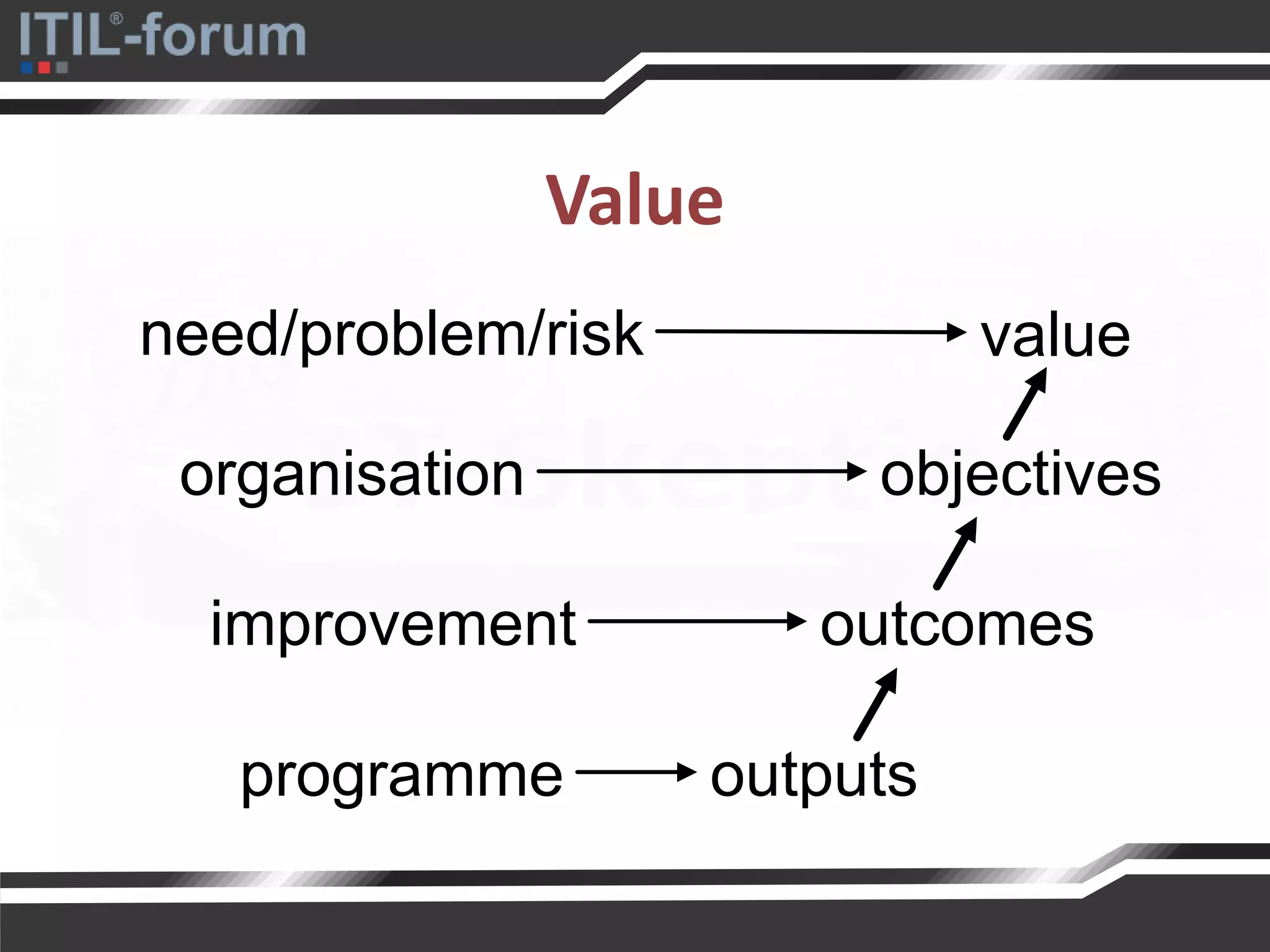
valueneed/problem/risk
outputsprogramme
outcomesimprovement
objectivesorganisation
Value
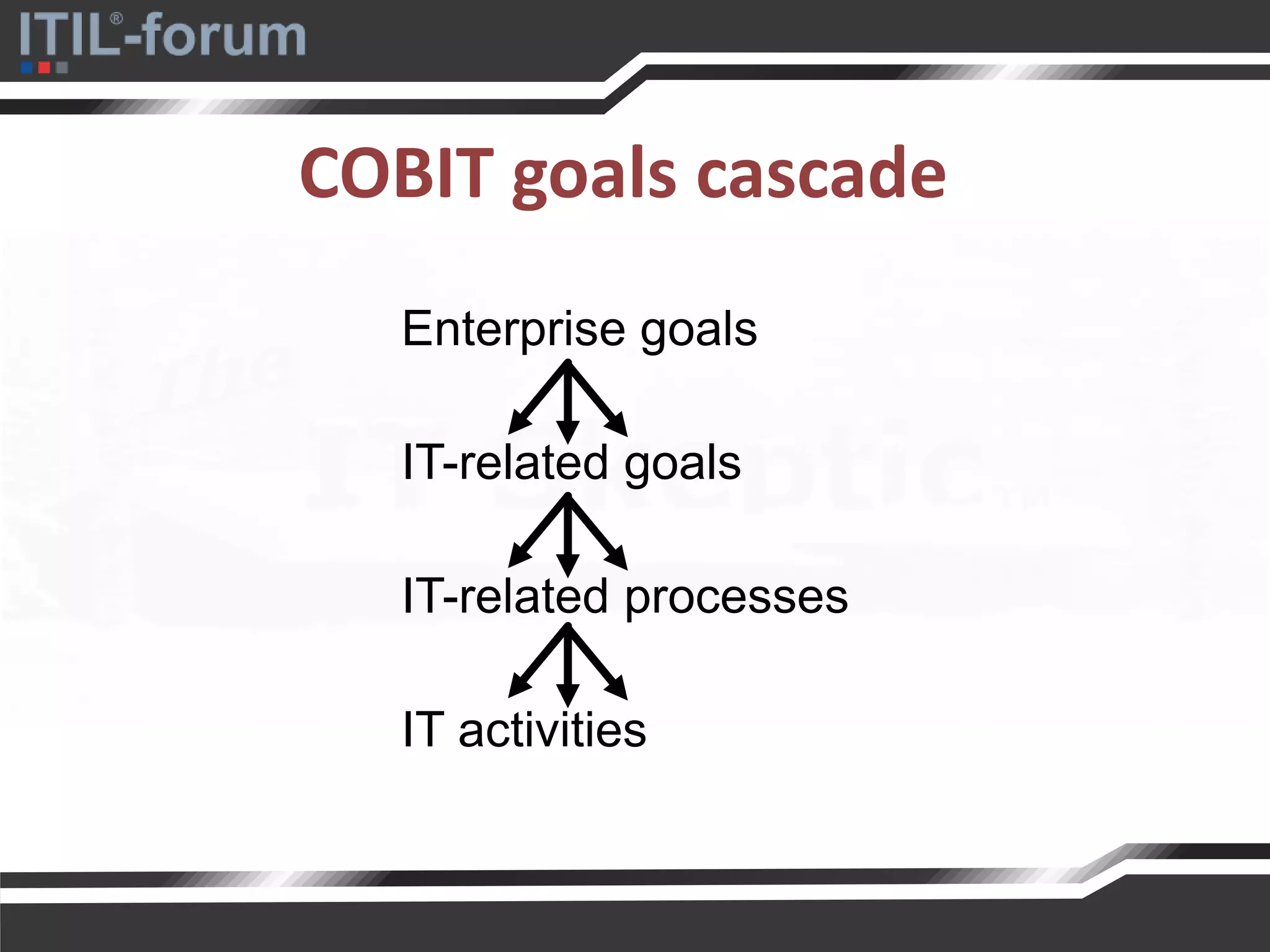
COBIT goals cascade
Enterprise goals
IT-related goals
IT-related processes
IT activities
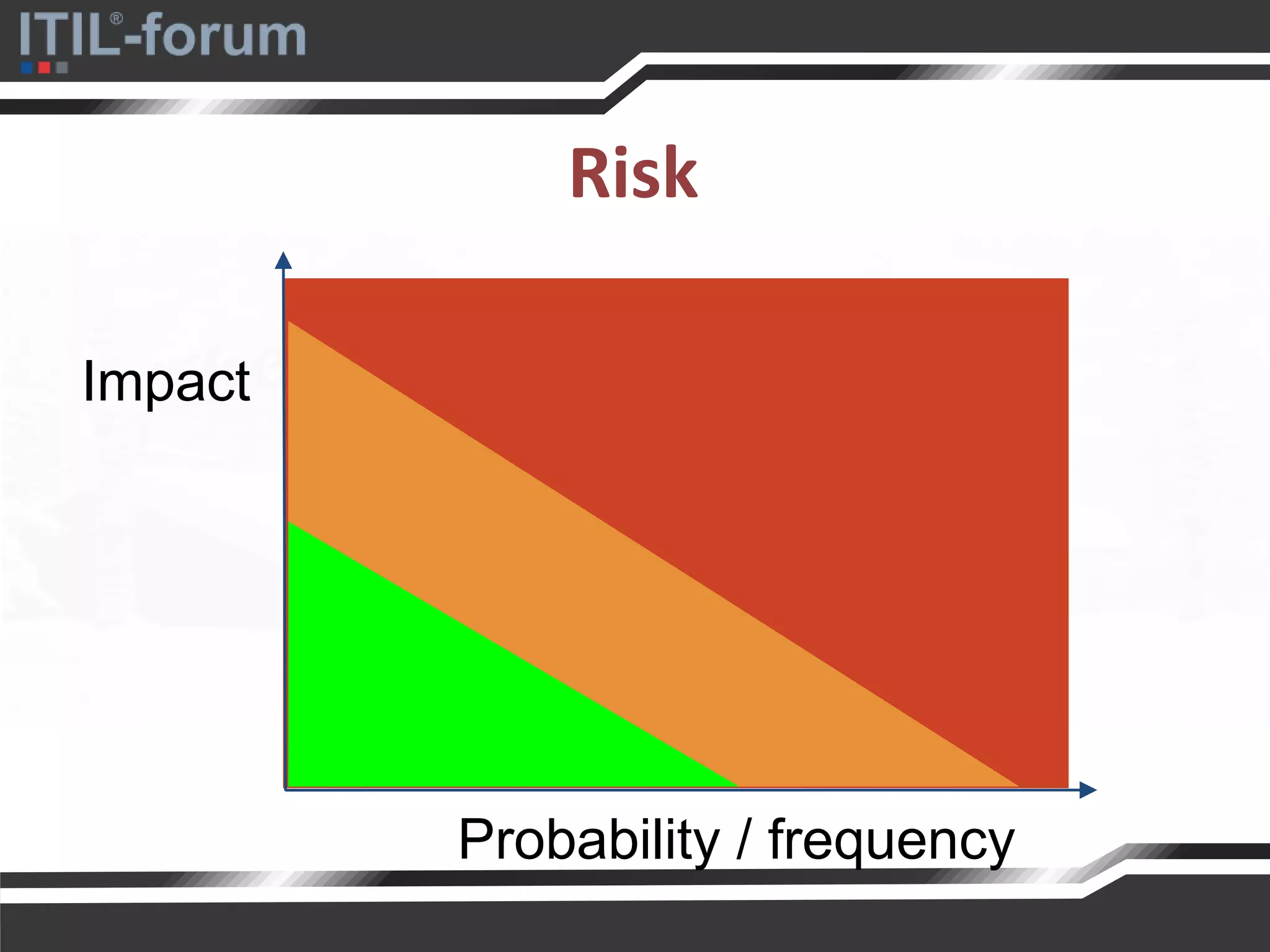
Risk
Probability / frequency
Impact
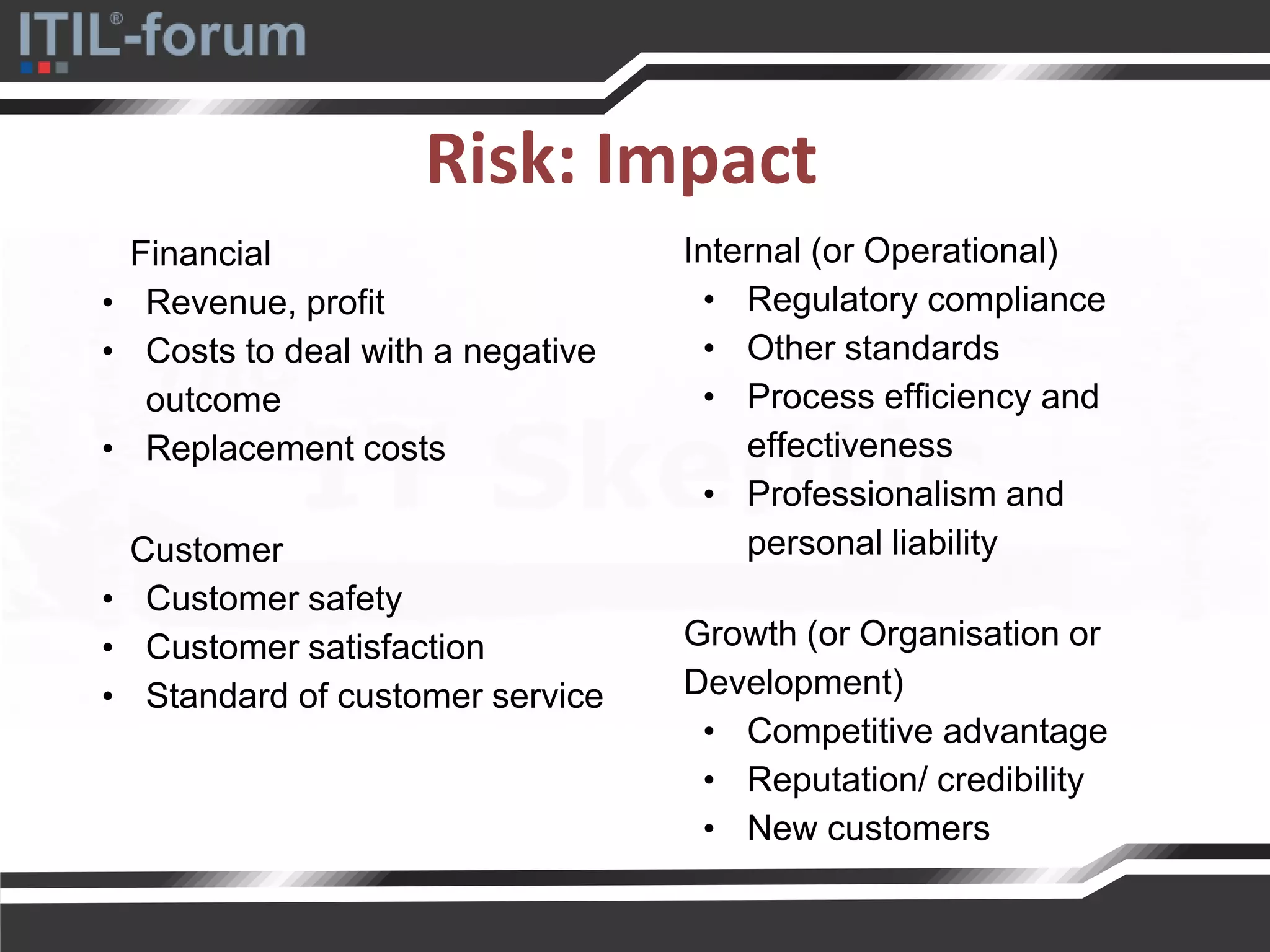
Risk: Impact
Financial
• Revenue, profit
• Costs to deal with a negative
outcome
• Replacement costs
Customer
• Customer safety
• Customer satisfaction
• Standard of customer service
Internal (or Operational)
• Regulatory compliance
• Other standards
• Process efficiency and
effectiveness
• Professionalism and
personal liability
Growth (or Organisation or
Development)
• Competitive advantage
• Reputation/ credibility
• New customers
How do we make the list of work
achievable?
?
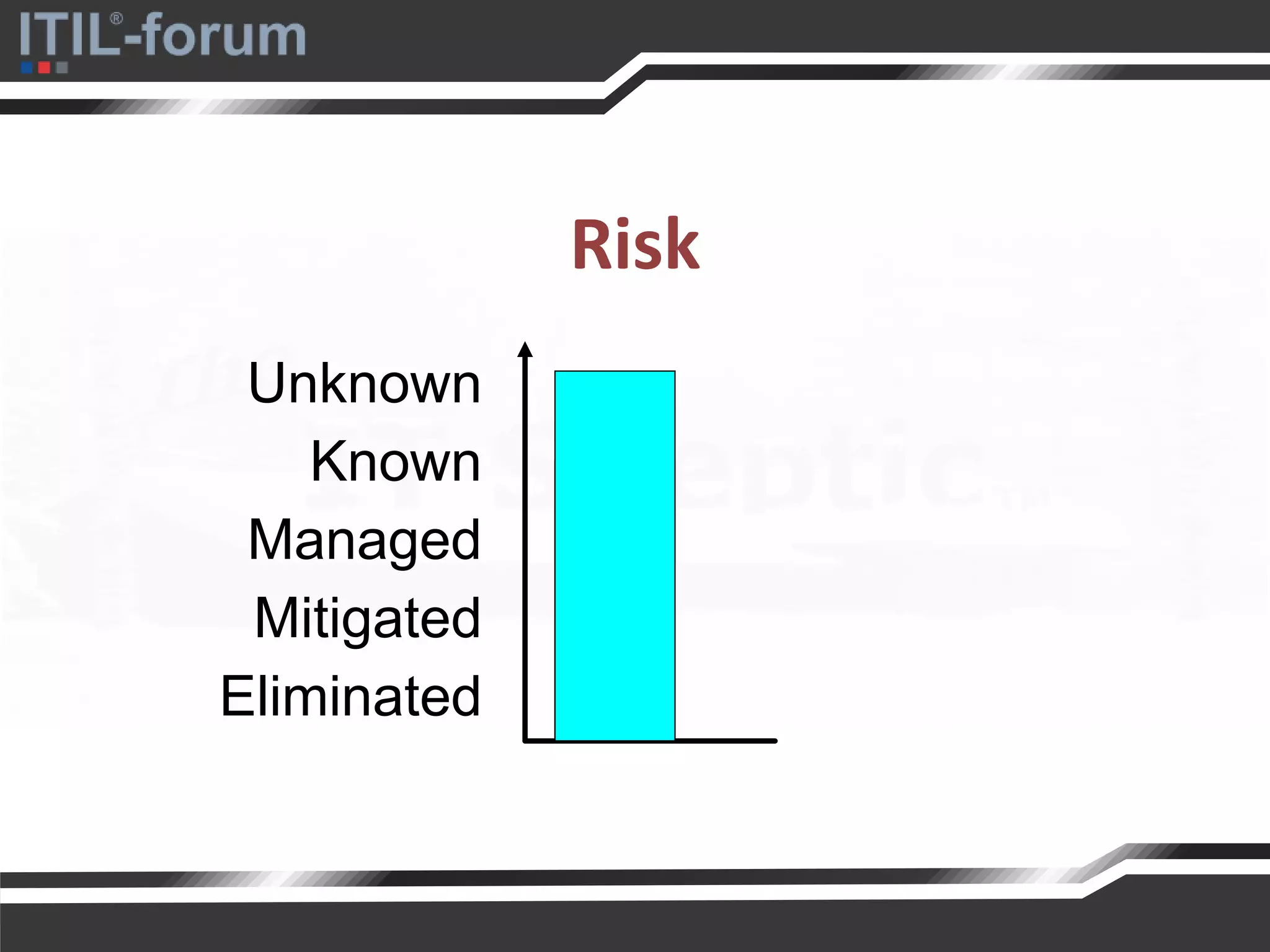
Risk
Unknown
Known
Managed
Mitigated
Eliminated
"Relaxed"
• Loose management
• Pragmatic
• Imperfect
• Incomplete
• Noble failure
• Play the averages
Manage risk
• Align to goals
• Communicate risks
• Programme management
• CSI Board
• Service Excellence team
• Service Architect
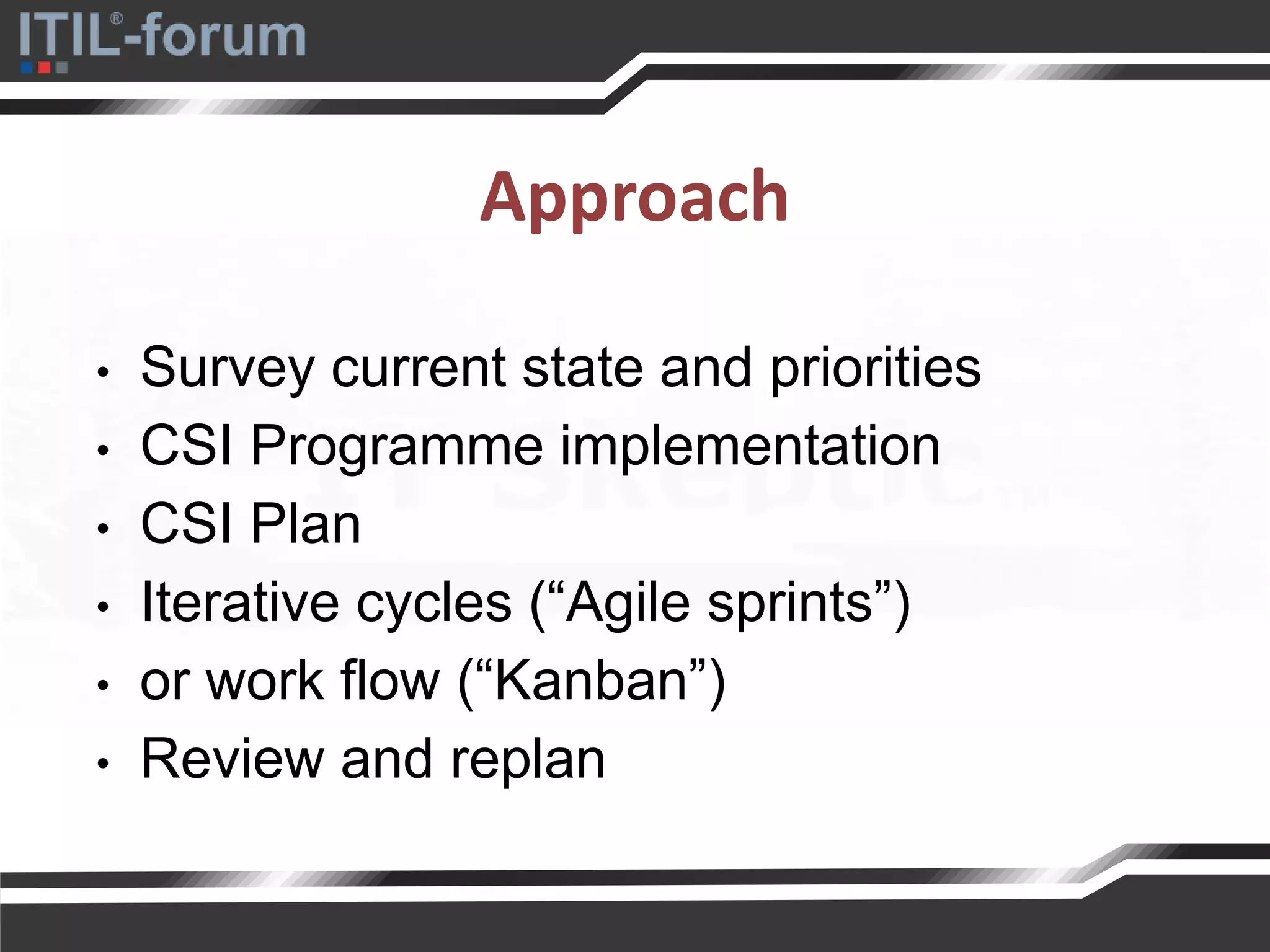
Approach
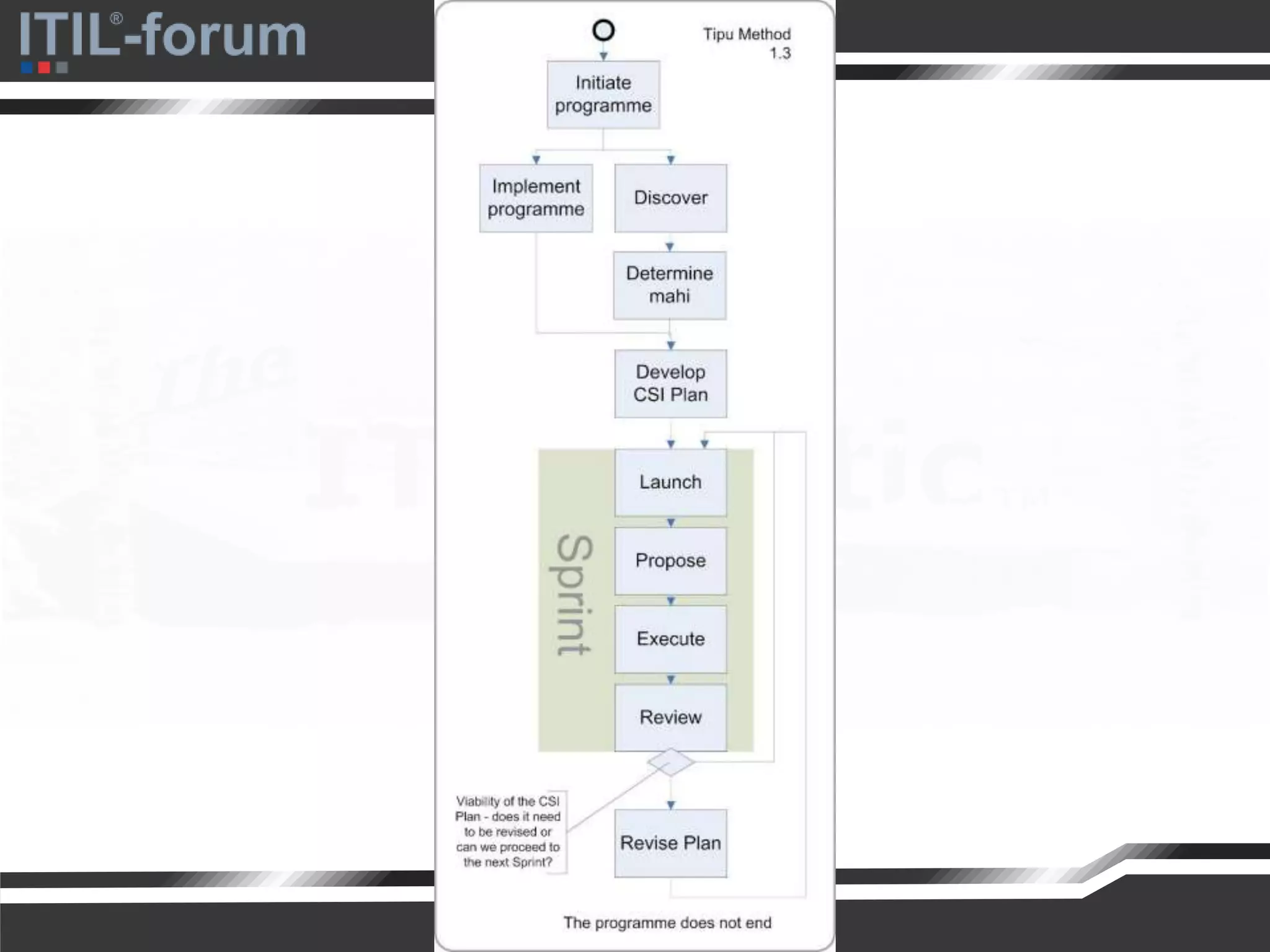
• Survey current state and priorities
• CSI Programme implementation
• CSI Plan
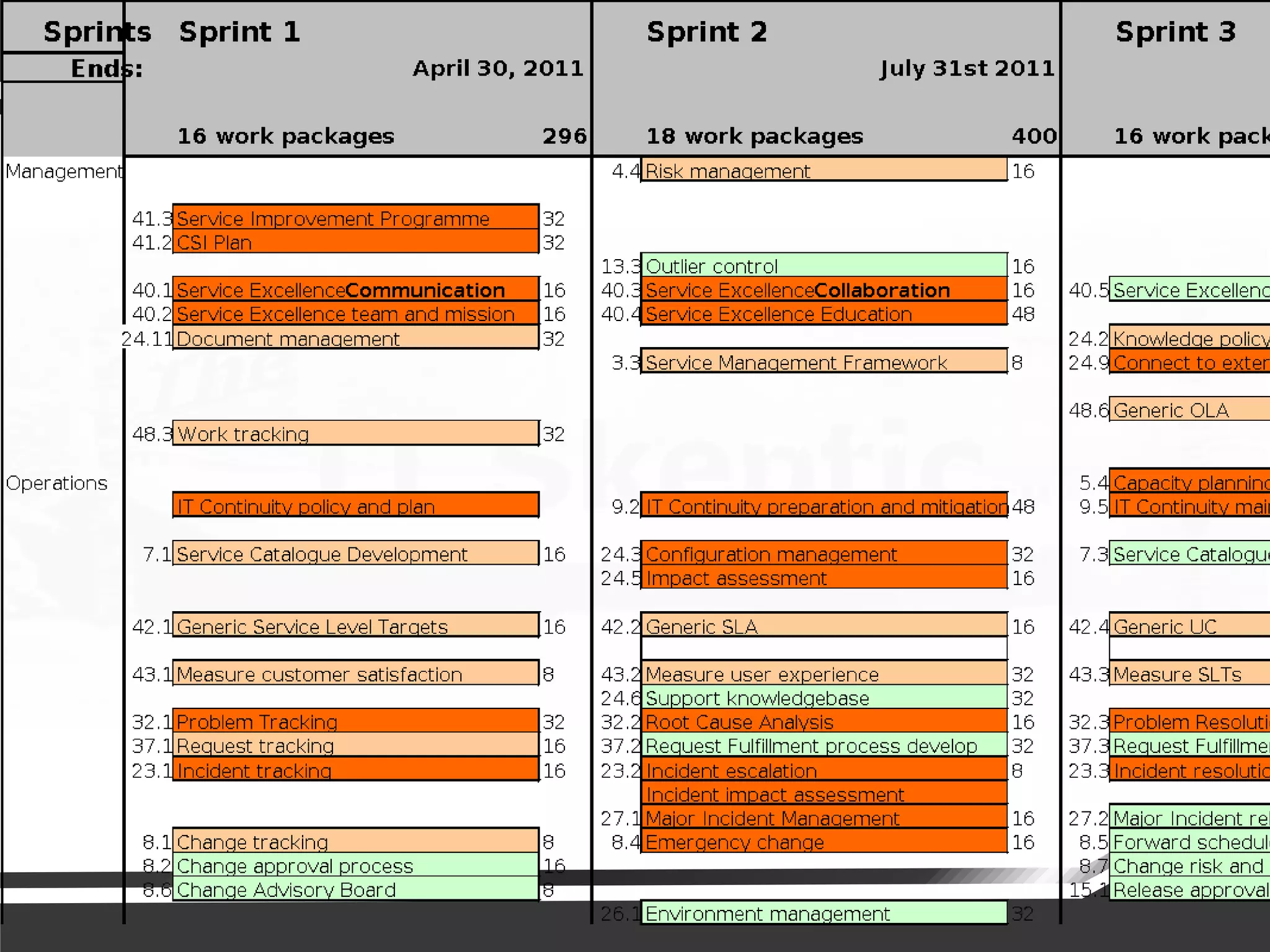
• Iterative cycles (“Agile sprints”)
• or work flow (“Kanban”)
• Review and replan
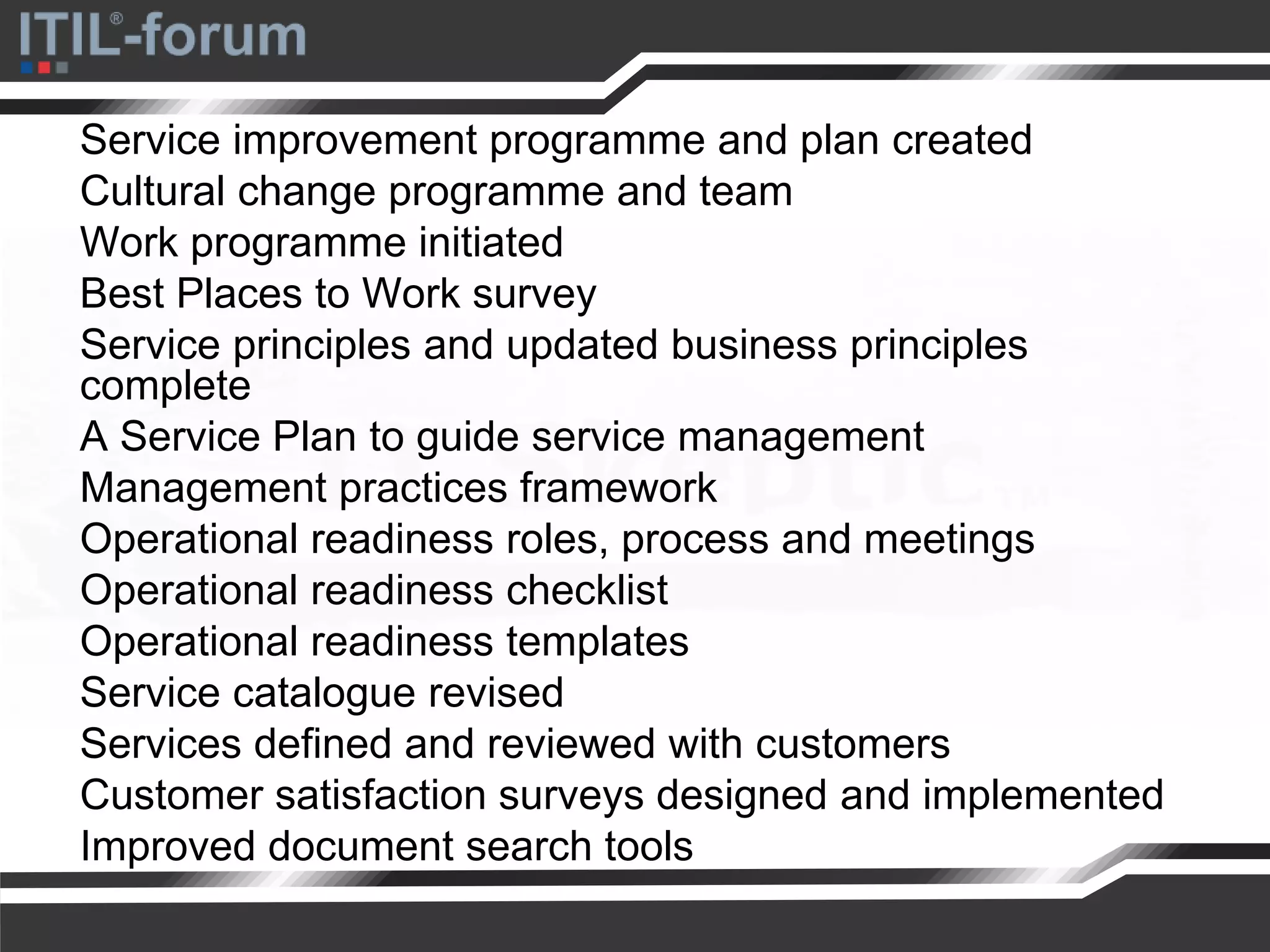
Service improvement programme and plan created
Cultural change programme and team
Work programme initiated
Best Places to Work survey
Service principles and updated business principles
complete
A Service Plan to guide service management
Management practices framework
Operational readiness roles, process and meetings
Operational readiness checklist
Operational readiness templates
Service catalogue revised
Services defined and reviewed with customers
Customer satisfaction surveys designed and implemented
Improved document search tools
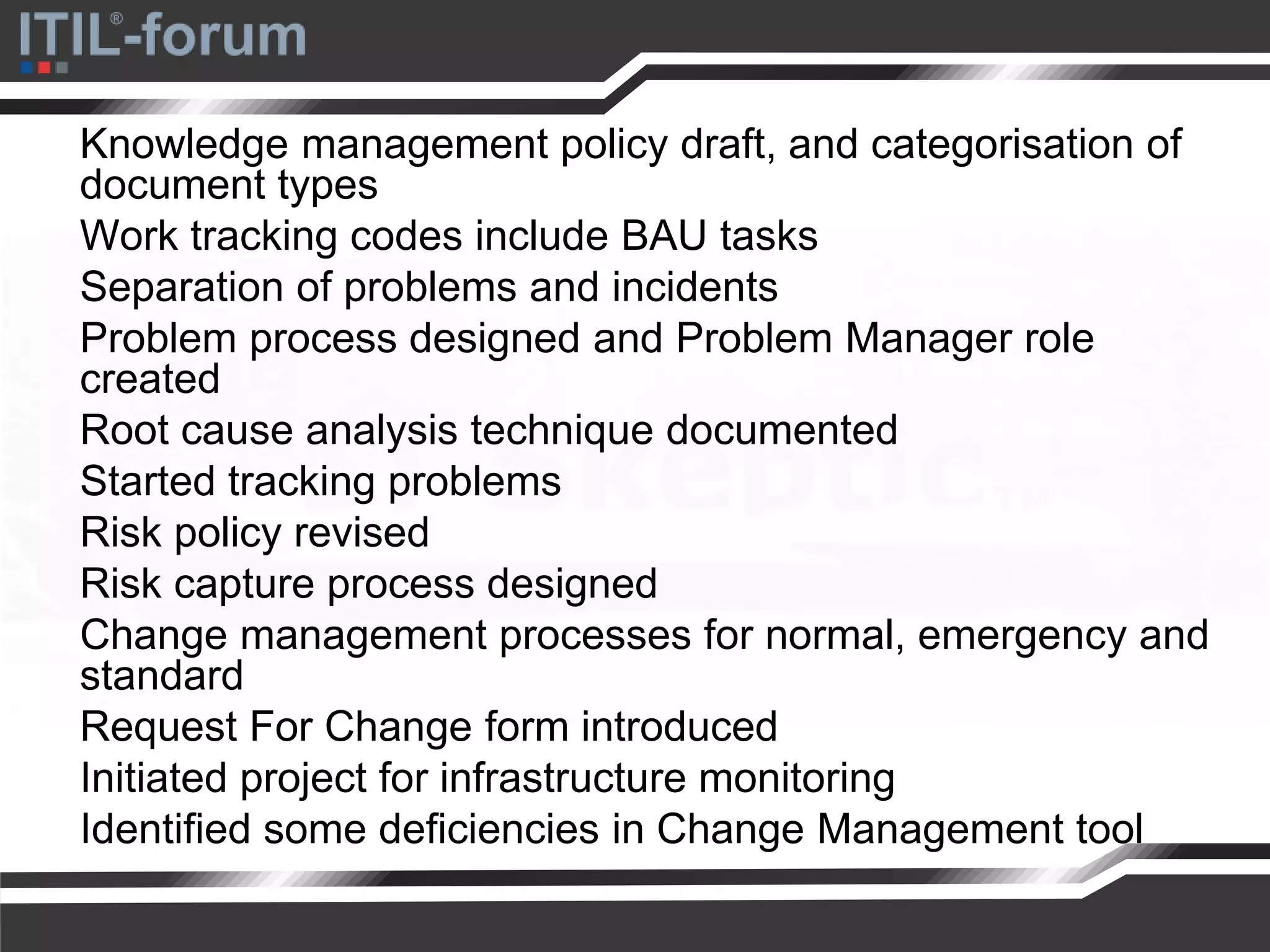
Knowledge management policy draft, and categorisation of
document types
Work tracking codes include BAU tasks
Separation of problems and incidents
Problem process designed and Problem Manager role
created
Root cause analysis technique documented
Started tracking problems
Risk policy revised
Risk capture process designed
Change management processes for normal, emergency and
standard
Request For Change form introduced
Initiated project for infrastructure monitoring
Identified some deficiencies in Change Management tool
Requirements gathering for service management toolset
New work assignment template
IT Continuity Plan template
Knowledge meta-data collection tool
Started collecting knowledge meta-data
Major Incident Management process
IT events calendar established and functioning
Change management procedures handbook
• Business as usual
• Integrates with projects
• Professional
• Agile, nimble, iterative
• Managed risk
• Coordinated empowerment
• Grass roots
• Public domain
Managed improvement
www.basicsm.com

Tipu: agile service improvement

  • 1.
    Tipu A pragmatic approach tomanaged improvement
  • 2.
    Improvement • All professionalswant to improve • It is expected • Make a difference • Transfer knowledge • Everyone wants next year to be better
  • 3.
    Much improvement isdone by projects ?
  • 4.
    But what aboutthe rest?
  • 5.
    Business as usual(BAU) We do it as part of BAU, in our “spare time”
  • 6.
    Pros and cons •We own the task • Work on our own domain, reap the benefits • Small is beautiful • Frustrating when the urgent trumps the important • So much to do, so little time • Working in isolation
  • 7.
    How do wecoordinate that effort? • Have a plan • Empower staff • Create teams • Coordinate the work • Executive support
  • 8.
  • 9.
    How do wemake the list of work achievable?
  • 10.
  • 11.
    COBIT goals cascade Enterprisegoals IT-related goals IT-related processes IT activities
  • 12.
  • 13.
    Risk: Impact Financial • Revenue,profit • Costs to deal with a negative outcome • Replacement costs Customer • Customer safety • Customer satisfaction • Standard of customer service Internal (or Operational) • Regulatory compliance • Other standards • Process efficiency and effectiveness • Professionalism and personal liability Growth (or Organisation or Development) • Competitive advantage • Reputation/ credibility • New customers
  • 15.
    How do wemake the list of work achievable? ?
  • 16.
  • 18.
    "Relaxed" • Loose management •Pragmatic • Imperfect • Incomplete • Noble failure • Play the averages
  • 20.
    Manage risk • Alignto goals • Communicate risks • Programme management • CSI Board • Service Excellence team • Service Architect
  • 21.
    Approach • Survey currentstate and priorities • CSI Programme implementation • CSI Plan • Iterative cycles (“Agile sprints”) • or work flow (“Kanban”) • Review and replan
  • 23.
    Service improvement programmeand plan created Cultural change programme and team Work programme initiated Best Places to Work survey Service principles and updated business principles complete A Service Plan to guide service management Management practices framework Operational readiness roles, process and meetings Operational readiness checklist Operational readiness templates Service catalogue revised Services defined and reviewed with customers Customer satisfaction surveys designed and implemented Improved document search tools
  • 24.
    Knowledge management policydraft, and categorisation of document types Work tracking codes include BAU tasks Separation of problems and incidents Problem process designed and Problem Manager role created Root cause analysis technique documented Started tracking problems Risk policy revised Risk capture process designed Change management processes for normal, emergency and standard Request For Change form introduced Initiated project for infrastructure monitoring Identified some deficiencies in Change Management tool
  • 25.
    Requirements gathering forservice management toolset New work assignment template IT Continuity Plan template Knowledge meta-data collection tool Started collecting knowledge meta-data Major Incident Management process IT events calendar established and functioning Change management procedures handbook
  • 26.
    • Business asusual • Integrates with projects • Professional • Agile, nimble, iterative • Managed risk • Coordinated empowerment • Grass roots • Public domain
  • 27.