
DevOps and ITSM
How they relate in an enterprise
v5
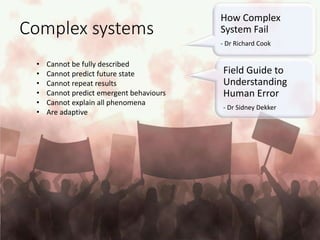
Complex systems
How Complex
System Fail
- Dr Richard Cook
• Cannot be fully described
• Cannot predict future state
• Cannot repeat results
• Cannot predict emergent behaviours
• Cannot explain all phenomena
• Are adaptive
Field Guide to
Understanding
Human Error
- Dr Sidney Dekker
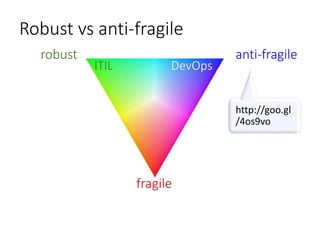
robust anti-fragile
fragile
ITIL DevOps
http://goo.gl
/4os9vo
Robust vs anti-fragile
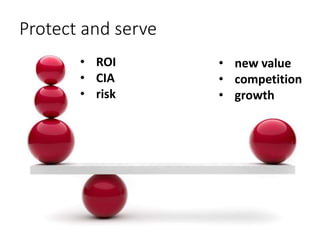
Protect and serve
• ROI
• CIA
• risk
• new value
• competition
• growth
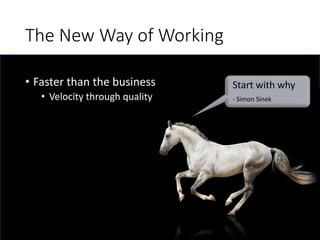
The New Way of Working
• Faster than the business
• Velocity through quality
Start with why
- Simon Sinek
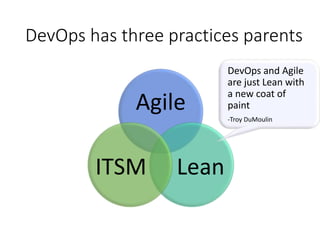
DevOps has three practices parents
Agile
LeanITSM
DevOps and Agile
are just Lean with
a new coat of
paint
-Troy DuMoulin
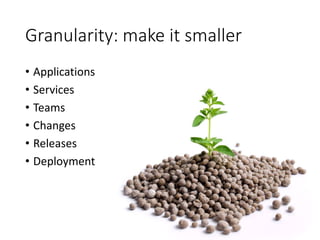
Granularity: make it smaller
• Applications
• Services
• Teams
• Changes
• Releases
• Deployment
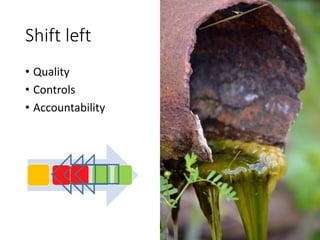
Shift left
• Quality
• Controls
• Accountability
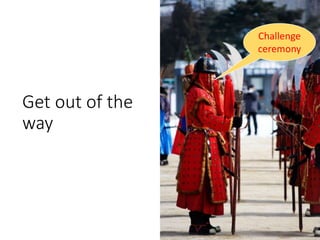
Get out of the
way
Challenge
ceremony
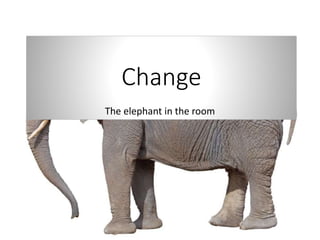
Change
The elephant in the room
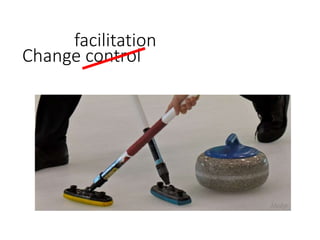
Change control
facilitation
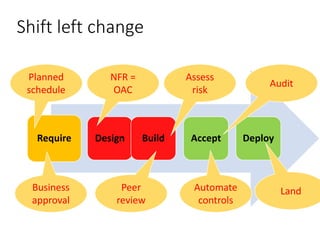
Shift left change
Require Design Build Accept Deploy
Business
approval
Peer
review
Assess
risk
NFR =
OAC
Automate
controls
Planned
schedule
Audit
Land
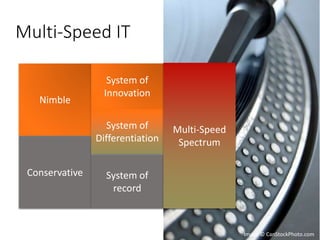
Multi-Speed IT
Nimble
Conservative
System of
Innovation
System of
Differentiation
System of
record
Multi-Speed
Spectrum
Image © CanStockPhoto.com
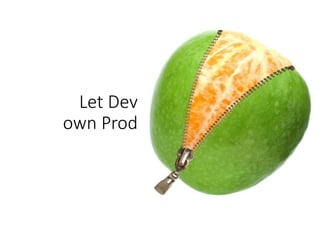
Let Dev
own Prod
Release
What does it mean?
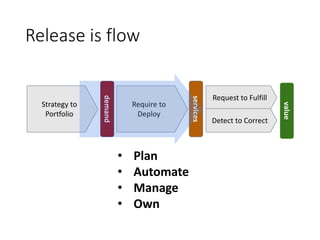
Release is flow
Strategy to
Portfolio
Require to
Deploy
demand
services
Request to Fulfill
Detect to Correct
value
• Plan
• Automate
• Manage
• Own
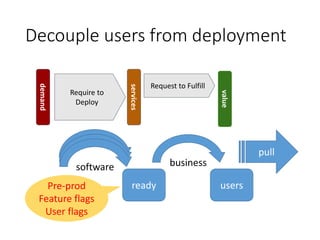
Decouple users from deployment
Require to
Deploy
services
Request to Fulfill
value
business
ready users
software
pull
demand
Pre-prod
Feature flags
User flags
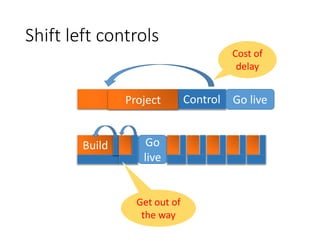
Shift left controls
Project Control Go live
Cost of
delay
Build Go
live
Project
Get out of
the way
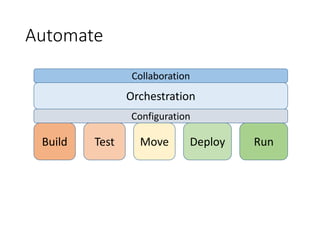
Automate
Orchestration
Configuration
Build Test Move Deploy Run
Collaboration
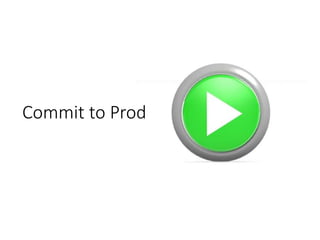
Commit to Prod
Project
A transient phenomenon
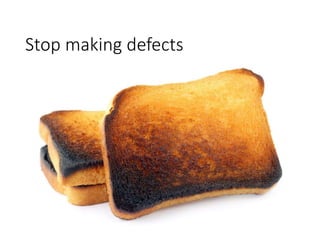
Stop making defects
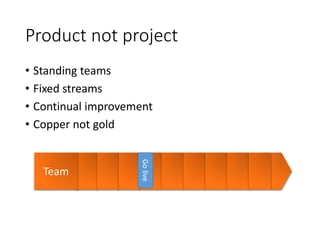
Product not project
• Standing teams
• Fixed streams
• Continual improvement
• Copper not gold
Team
Golive
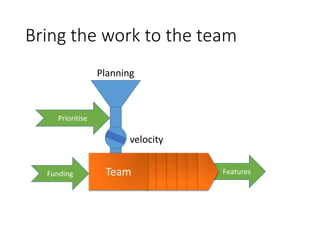
Features
Bring the work to the team
Team
velocity
Planning
Funding
Prioritise
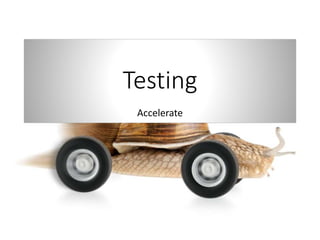
Testing
Accelerate
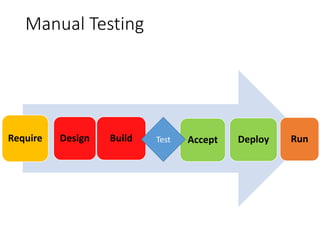
Manual Testing
Require Design Build Accept Deploy RunTest
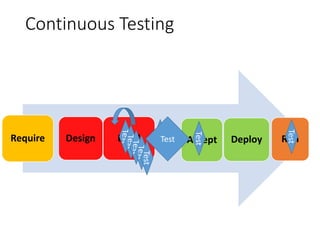
Continuous Testing
Require Design Build Accept Deploy Run
Test
Test
Test
Test
Test
Test
Test
Test Test
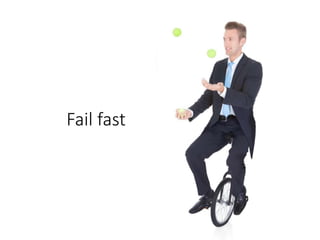
Fail fast
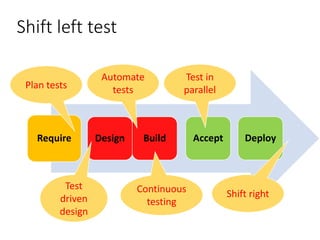
Shift left test
Require Design Build Accept Deploy
Test
driven
design
Continuous
testing
Test in
parallel
Automate
tests
Shift right
Plan tests
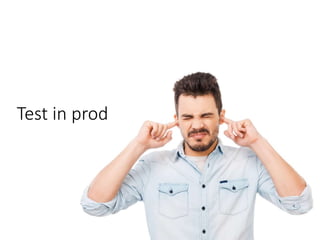
Test in prod
ITIL
Needs to flex and evolve
Problems with ITIL
http://www.bmc.com/blogs/itil-and-devops-lets-not-paper-over-the-differences/
• sequential
• siloed
• plan-centric
• deterministic
• controlling
• formal, high ceremony
Benefits of ITIL
• service focus
• drives resilience
• widely understood
• not prescriptive
• fairly complete
• narrative
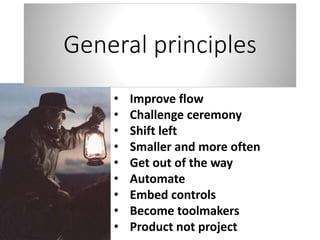
• Improve flow
• Challenge ceremony
• Shift left
• Smaller and more often
• Get out of the way
• Automate
• Embed controls
• Become toolmakers
• Product not project
General principles
More information
• ITIL Practitioner Guidance
• ITSM Review http://goo.gl/M0tY82
• All Things ITSM http://goo.gl/pWz4m4
• 25 opinions https://goo.gl/dd4rLE
• Axelos http://goo.gl/GCRU7R
• Kamu G+ https://goo.gl/IpIyWZ
• Rob England
• twohills.co.nz/contact
© Two Hills Ltd 2015-2016

DevOps and ITSM

Editor's Notes

  • #2 © Two Hills Ltd 2015-2017 Created and published by Two Hills letterbox@twohills.co.nz www.twohills.co.nz PO Box 57-150, Mana Porirua 5247 New Zealand This work by Two Hills Ltd is licensed under a Creative Commons Attribution-ShareAlike 3.0 Unported License. Content must be attributed to "Two Hills Ltd www.twohills.co.nz".
  • #3 Cannot be fully described (CMDB) Cannot predict future state with 100% certainty – we are pretty good as compared to say weather Cannot predict emergent behaviours Cannot explain all phenomena –root cause is a myth Are adaptive
  • #4 http://continuousdelivery.com/2013/01/on-antifragility-in-systems-and-organizational-architecture/ On Antifragility in Systems and Organizational Architecture Published 09 January 2013 Jez Humble
  • #5 In exactly the same way, the Information Technology department exists to protect the IT interests of the owners of the organisation whilst also serving IT's customers and users. The two don't always align. IT is entrusted with custody of the organisation's IT assets. Sometimes it is not in the best interests of the organisation to abandon those investments or to increase the risks to the confidentiality, integrity and availability of the information, in order to meet demands for new IT from the customers. Put another way, IT's role is to balance extracting maximum value from existing investments against facilitating the generation of value from new investments.
  • #8 DevOps focuses on Requirement to Deploy
  • #9 Controls scope of failure
  • #11 Trust Empowerment Change facilitation Improved flow Let them do their own risk assessment
  • #16 Development owns as much of the lifecycle as possible, possibly including deployment to production. Toolsmiths and boilermen Rugged DevOps Operations move to more of a supervisory capability, setting policy and controls and overseeing environments, with execution of many operational tasks performed by Development teams. Operationally ready code
  • #19 DevOps focuses on Requirement to Deploy
  • #20 DevOps focuses on Requirement to Deploy
  • #23 Automation is key to increasing deployment speed and frequency without sacrificing quality: automation of merge, build, test, approve, release, deploy. The extreme ideal is a "deploy" button which allows a developer to deploy through all environments, tests, and controls into production without intervention.
  • #25 Andon Cord Intelligent Swarming
  • #30 Definition comes from Wikipedia
  • #31 Definition comes from Wikipedia
  • #32 Smaller, earlier, more limited scope, more controlled be able to fix failures so quickly that it is more efficient than preventing them Be prepared to fail: experiment and learn. My term: noble failure.