1


TIME WELL SPENT
HOW TO GET MORE TIME OUT OF
YOUR DAY.


       With Kimberly Medlock, CPO of
                    Productive Matters…
               For quicker, easier, better results.
Get to know you better…
2


       Who walks into a room and has no idea why?
       Who makes to-do lists?
       Who here thinks they have “ADD?”
       Who remembers when there were only 3 channels?
                    Life is more complicated.

                       The busier you are,
               the more organized you have to be.
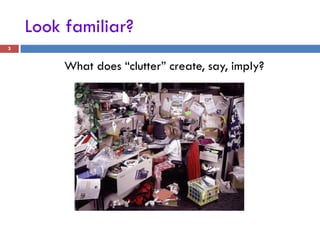
Look familiar?
3


         What does “clutter” create, say, imply?
The 3 questions…
4


       How would you feel/act if you were more
        organized?
       How would this affect the way you treated or
        interacted with others?
       How could this affect the way they treated or
        responded to you?
    How could this change the entire culture of your business?
         Let’s look at some of the other connections…..
Time is money…
5


     The average American worker spends 28% of their
      day on unnecessary distractions and interruptions
     The average professional spends at least 1 hour a

      day just looking for things
     If 50 employees each spent only 10 minutes a day

      on unnecessary email = over 2,000 hours a year
     Over 75% of workers have not participated in any
      modern information management training
Stress and money…
6


       Information and workload management was reported
        as the leading cause of stress by employees.
       According to the CDC, 50% of all deaths before age
        65 are because of stress related lifestyles.
       Up to 80% of all doctor’s appointments are from
        stress related lifestyles.
       Up to 60 percent of employee absences are due to
        psychological problems such as stress and depression.

        What are these “stress-related” health affects?
Excessive stress warning signs…
7


       Fatigue, low energy
       Poor sleep
       Weight changes
       Irritability, short fuse
       Can’t focus, forgetful
       Stomach problems
       Bowel problems
       Frequent headaches
       Depression
Your work – home connection
8


    The quality of your work life will greatly
      influence the quality of your home life.
    I want to help you have as much energy,
      enthusiasm and commitment left for when you
      get home.
    Do I have your attention?
The only two ways to create more time in
    your day…
9


    1.   Eliminate - Reduce the number of activities
         you are currently doing
    2.   Simplify - Reduce the time it takes to do the
         things you have to do
6 Key Areas for
10
     Productivity Success
     1.   Be clear with your roles, goals and objectives
     2.   Proper planning and prioritizing
     3.   Your tools and systems
     4.   Ability to stay focused
     5.   Ability to delegate, ask for help
     6.   Your energy and wellness factor
1. Be clear with your roles, goals and
11
        objectives
     “If you don’t know where you are going, you will
              probably end up someplace else.”
      More time for what?

      Know where you are spending your time now.

      “Begin with the end in mind.” – Stephen Covey

      It takes time

      It takes courage
2. Proper daily/weekly planning
12


     Who starts their day with a written plan?
     Average of only 1 out of 5.
     Statistics repeatedly confirm that for every hour of
       planning, 3-4 hours are saved from redundancy,
       waiting for information, not being prepared,
       and poorly managed tasks.
Best practices for daily/weekly planning:
13


        Write everything down!
        Keep it centralized
        Never work from one endless “to-do” list
        Schedule really important tasks on your calendar to
         work on, not just left on a to-do list
        Avoid hard-scheduling more than 50% of your
         day/week
        Include 2-3 HVA’s for every day
        “Time out” each of your tasks (Do the math)
Prioritizing your 168 hours…
14


           “If everything is a priority, then nothing really is.”
        Only 37% of those that make a “to-do” list prioritize
         what needs to be done.
        Are you familiar with the Pareto Principle?
        Are you spending at least 20% of your day/week on
         the most important things you should do?
        20% of your day is 96 minutes. Imagine your
         productivity level if you focused on the most important
         things for the first 96 minutes of your day.
3. Your tools and systems
15


        Planning requires a planner tool(s)
        Your planning tool(s) should include consideration
         for:
          Calendar
          Tasks (To-do’s)

          Contacts

          Note taking

            Portability (ease of use)
Tools and Systems
16


      Who uses Outlook?
      Paper filing system –(this can make or break you!)

      Have your e-files mirror your paper files as

       much as possible
      Group like with like (items and activities)

      Create routines for task and activities
4. Ability to stay focused
17


     Identify and learn to push-back distractions and
       interruptions.
     How can you reduce these common types of
       interruptions?
      People

      Email

      Clutter/Disorganization

      Noise

      Phone
5. Ability to delegate, let-go and get
18
     help
          “You could do anything but you can’t do
                         everything.”
      Do you have control issues?

      Practice delegation.

      Does it require your unique talent or expertise

       to be completed?
6. Stay well!
19


                     Disease is dis-ease.
      Be clear on the priorities – eliminate mental
       clutter
      Eliminate the tolerations and clutter in your
       environment
      You are what you eat
      Be active
      Disconnect
      Reconnect
3 Ways to fix a problem…
20


     1.   Change something about yourself
     2.   Change something about your environment
     3.   Change something about someone else

                    What will you do?
Did you know?
21


       If you reduced your caloric intake by only 67
      calories for just two meals a day, at the end of a
            year you could lose up to 14 pounds?
Thank you for your time…
22


                        I KNOW how valuable it is.


                                Productive Matters
                   For quicker, easier, better results.
                          www.kimberlymedlock.com
                                     662-893-7933

Time Well Spent

  • 1.
    1 TIME WELL SPENT HOWTO GET MORE TIME OUT OF YOUR DAY. With Kimberly Medlock, CPO of Productive Matters… For quicker, easier, better results.
  • 2.
    Get to knowyou better… 2  Who walks into a room and has no idea why?  Who makes to-do lists?  Who here thinks they have “ADD?”  Who remembers when there were only 3 channels? Life is more complicated. The busier you are, the more organized you have to be.
  • 3.
    Look familiar? 3 What does “clutter” create, say, imply?
  • 4.
    The 3 questions… 4  How would you feel/act if you were more organized?  How would this affect the way you treated or interacted with others?  How could this affect the way they treated or responded to you? How could this change the entire culture of your business? Let’s look at some of the other connections…..
  • 5.
    Time is money… 5  The average American worker spends 28% of their day on unnecessary distractions and interruptions  The average professional spends at least 1 hour a day just looking for things  If 50 employees each spent only 10 minutes a day on unnecessary email = over 2,000 hours a year  Over 75% of workers have not participated in any modern information management training
  • 6.
    Stress and money… 6  Information and workload management was reported as the leading cause of stress by employees.  According to the CDC, 50% of all deaths before age 65 are because of stress related lifestyles.  Up to 80% of all doctor’s appointments are from stress related lifestyles.  Up to 60 percent of employee absences are due to psychological problems such as stress and depression. What are these “stress-related” health affects?
  • 7.
    Excessive stress warningsigns… 7  Fatigue, low energy  Poor sleep  Weight changes  Irritability, short fuse  Can’t focus, forgetful  Stomach problems  Bowel problems  Frequent headaches  Depression
  • 8.
    Your work –home connection 8 The quality of your work life will greatly influence the quality of your home life. I want to help you have as much energy, enthusiasm and commitment left for when you get home. Do I have your attention?
  • 9.
    The only twoways to create more time in your day… 9 1. Eliminate - Reduce the number of activities you are currently doing 2. Simplify - Reduce the time it takes to do the things you have to do
  • 10.
    6 Key Areasfor 10 Productivity Success 1. Be clear with your roles, goals and objectives 2. Proper planning and prioritizing 3. Your tools and systems 4. Ability to stay focused 5. Ability to delegate, ask for help 6. Your energy and wellness factor
  • 11.
    1. Be clearwith your roles, goals and 11 objectives “If you don’t know where you are going, you will probably end up someplace else.”  More time for what?  Know where you are spending your time now.  “Begin with the end in mind.” – Stephen Covey  It takes time  It takes courage
  • 12.
    2. Proper daily/weeklyplanning 12 Who starts their day with a written plan? Average of only 1 out of 5. Statistics repeatedly confirm that for every hour of planning, 3-4 hours are saved from redundancy, waiting for information, not being prepared, and poorly managed tasks.
  • 13.
    Best practices fordaily/weekly planning: 13  Write everything down!  Keep it centralized  Never work from one endless “to-do” list  Schedule really important tasks on your calendar to work on, not just left on a to-do list  Avoid hard-scheduling more than 50% of your day/week  Include 2-3 HVA’s for every day  “Time out” each of your tasks (Do the math)
  • 14.
    Prioritizing your 168hours… 14 “If everything is a priority, then nothing really is.”  Only 37% of those that make a “to-do” list prioritize what needs to be done.  Are you familiar with the Pareto Principle?  Are you spending at least 20% of your day/week on the most important things you should do?  20% of your day is 96 minutes. Imagine your productivity level if you focused on the most important things for the first 96 minutes of your day.
  • 15.
    3. Your toolsand systems 15  Planning requires a planner tool(s)  Your planning tool(s) should include consideration for:  Calendar  Tasks (To-do’s)  Contacts  Note taking  Portability (ease of use)
  • 16.
    Tools and Systems 16  Who uses Outlook?  Paper filing system –(this can make or break you!)  Have your e-files mirror your paper files as much as possible  Group like with like (items and activities)  Create routines for task and activities
  • 17.
    4. Ability tostay focused 17 Identify and learn to push-back distractions and interruptions. How can you reduce these common types of interruptions?  People  Email  Clutter/Disorganization  Noise  Phone
  • 18.
    5. Ability todelegate, let-go and get 18 help “You could do anything but you can’t do everything.”  Do you have control issues?  Practice delegation.  Does it require your unique talent or expertise to be completed?
  • 19.
    6. Stay well! 19 Disease is dis-ease.  Be clear on the priorities – eliminate mental clutter  Eliminate the tolerations and clutter in your environment  You are what you eat  Be active  Disconnect  Reconnect
  • 20.
    3 Ways tofix a problem… 20 1. Change something about yourself 2. Change something about your environment 3. Change something about someone else What will you do?
  • 21.
    Did you know? 21 If you reduced your caloric intake by only 67 calories for just two meals a day, at the end of a year you could lose up to 14 pounds?
  • 22.
    Thank you foryour time… 22 I KNOW how valuable it is. Productive Matters For quicker, easier, better results. www.kimberlymedlock.com 662-893-7933