1
NITANAND
220101040024
MBA(FINANCE)
HARYANA SCHOOL OF BUSINESS
OUTLINE OF PRESENTATION
2
 What is time management?
 About Mr. benjamin franklin
 Why Time Management is Important in
Corporate ?
 Skills of time management
 Conclusion
 Reference
WHAT IS TIME MANAGEMENT?
3
 We all get the same 24 hours – so why do
some people seem to achieve more with
their time than others?
 The answer is good time management.
 Time management is the process of
organizing and planning how to divide your
time between different activities.
ABOUT MR. BENJAMIN FRANKLIN
4
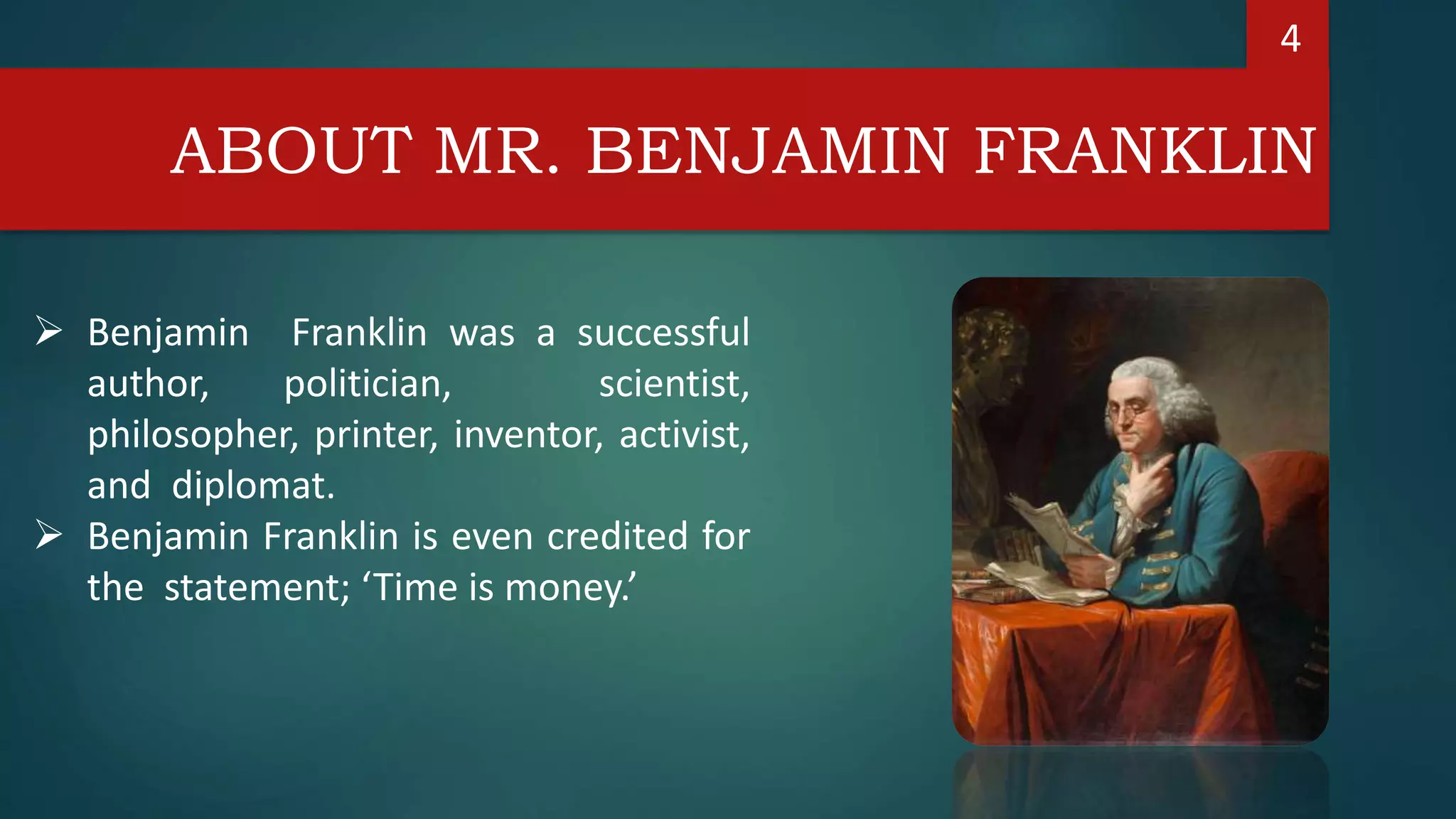
 Benjamin Franklin was a successful
author, politician, scientist,
philosopher, printer, inventor, activist,
and diplomat.
 Benjamin Franklin is even credited for
the statement; ‘Time is money.’
Why Time Management is Important in
Corporate ?
5
Good time management leads to
lower levels of stress and higher
levels of job performance and life
satisfaction.
One who understands the value of
time is never overburdened and
enjoys each and every moment to the
fullest.
SKILLS OF TIME MANAGEMENT
6
 Effective planning
 Setting goals and objectives
 Setting deadlines
 Differentiate between urgent and important
 Delegation of responsibilities
 Spending the right time on right activity
 Stay focused
 Enjoy your work
 Proper coordination
 Organize yourself
 Reduces time to reach goal & objectives
EFFECTIVE PLANNING
7
 Plan your day well in advance.
1. Prepare a To Do List or a “TASK PLAN”.
2. Order activities according to their priority.
3. Allocate suitable time to each activity.
 Complete pending tasks one by one.
 Tick the ones you have already
completed.
 Ensure you finish tasks within the given time
period.
SETTING GOALS AND OBJECTIVES
8
 Working without goals and targets in
an organization would be similar to a
situation where the captain of the ship
loses his way in the sea.
 Set targets for yourself and make sure
they are realistic and achievable.
SETTING DEADLINES
9
 Ask yourself “how much time needs to
be devoted to a particular
task?”
 Set deadlines for every task, and be
committed to.
 Do not wait for your superiors to ask
you every time.
 Learn to be self driven.
DIFFERENTIATE BETWEEN URGENT
AND IMPORTANT
10
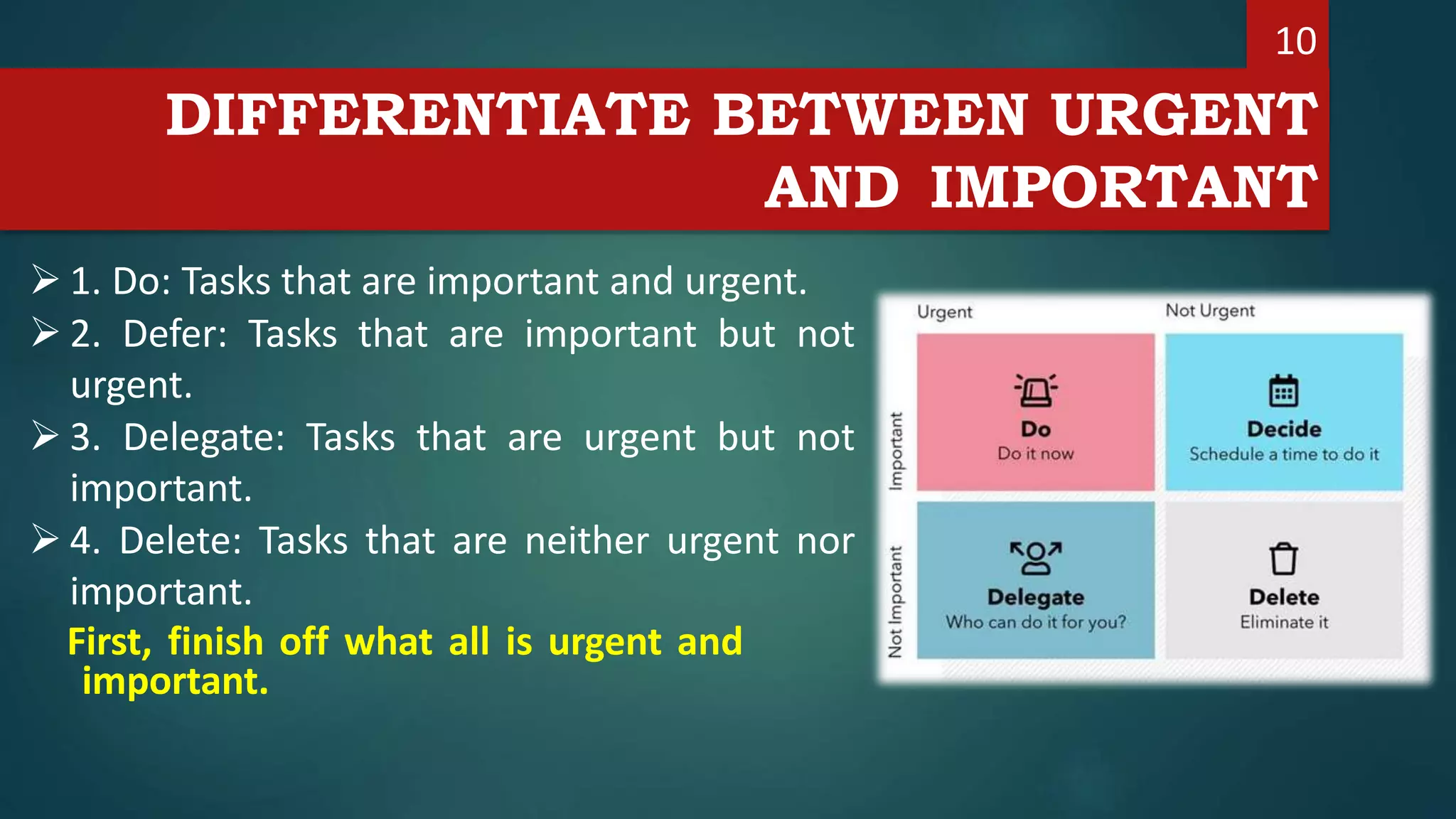
 1. Do: Tasks that are important and urgent.
 2. Defer: Tasks that are important but not
urgent.
 3. Delegate: Tasks that are urgent but not
important.
 4. Delete: Tasks that are neither urgent nor
important.
First, finish off what all is urgent and
important.
DELEGATION OF RESPONSIBILITIES
11
 Don’t do everything on your own,
there are other people as well.
 Roles and responsibilities should be delegated
to employees according to their interest and
specialization to ensure they would finish
within deadlines.
 An employee who does not have enough
knowledge needs more time than someone
who knows the work well.
SPENDING THE RIGHT TIME ON RIGHT
ACTIVITY
12
Develop the habit of doing the right
thing at the right time.
Work done at the wrong time is not of
much use.
Keep some time separate for your
personal calls or checking updates on
Face book or Twitter.
– After all human being is not a machine.
STAY FOCUSED
13
 Being punctual helps you complete
tasks way ahead of deadline.
 Avoid taking too many leaves from work, such an
attitude is completely unprofessional.
 Make sure you are there at your desk five minutes
before your actual time.
 Do your best to complete tasks on time, do not
keep assignments pending and wait for the last
minute.
ENJOY YOUR WORK
14
 Do not treat your organization as a
ordinary source of money, change your
attitude.
 Avoid playing games on computer or
cell phones during office hours, it is
unprofessional.
 Do not work only when your boss is
around, taking ownership of work pays
you in the long run.
PROPER COORDINATION
15
 Employees must have an easy
access to their Boss’s cabin.
 Proper coordination between employees and
their team leaders is essential for effective
time management.
 Do not keep tasks pending at your end.
 Give approvals on time and make sure your
team members do not be involved in
unproductive tasks.
ORGANIZE YOURSELF
16
 Be very careful about your files,
important documents, visiting cards,
folders etc.
 Keep them at their proper places so
that you do not waste half of your
time in searching them.
REDUCES TIME TO REACH GOAL &
OBJECTIVES
17
 Managing time effectively helps
employees to meet targets way of
ahead deadlines.
 Effective time management play a
important role in increasing an
individual’s productivity.
CONCLUSION
18
 Time management is important for
balance work and life.
 Time management is a very important
skill to be learned and to be mastered in
order to have a better lifestyle.
 By managing well time, you will no
longer suffer from stress and your tasks
will be done on time and with great
quality.
REFERENCE
19
 Pdfdrive.com
 Effective time management strategies’ book by
lavender coaching
 Yourarticlelibrary.com
 Toggl.com
 Corporatefinanceinstitute.com
 Mindtools.com
 Pinterest.com
THANK YOU :)
20

Time management PPT for seminar.pptx

  • 1.
  • 2.
    OUTLINE OF PRESENTATION 2 What is time management?  About Mr. benjamin franklin  Why Time Management is Important in Corporate ?  Skills of time management  Conclusion  Reference
  • 3.
    WHAT IS TIMEMANAGEMENT? 3  We all get the same 24 hours – so why do some people seem to achieve more with their time than others?  The answer is good time management.  Time management is the process of organizing and planning how to divide your time between different activities.
  • 4.
    ABOUT MR. BENJAMINFRANKLIN 4  Benjamin Franklin was a successful author, politician, scientist, philosopher, printer, inventor, activist, and diplomat.  Benjamin Franklin is even credited for the statement; ‘Time is money.’
  • 5.
    Why Time Managementis Important in Corporate ? 5 Good time management leads to lower levels of stress and higher levels of job performance and life satisfaction. One who understands the value of time is never overburdened and enjoys each and every moment to the fullest.
  • 6.
    SKILLS OF TIMEMANAGEMENT 6  Effective planning  Setting goals and objectives  Setting deadlines  Differentiate between urgent and important  Delegation of responsibilities  Spending the right time on right activity  Stay focused  Enjoy your work  Proper coordination  Organize yourself  Reduces time to reach goal & objectives
  • 7.
    EFFECTIVE PLANNING 7  Planyour day well in advance. 1. Prepare a To Do List or a “TASK PLAN”. 2. Order activities according to their priority. 3. Allocate suitable time to each activity.  Complete pending tasks one by one.  Tick the ones you have already completed.  Ensure you finish tasks within the given time period.
  • 8.
    SETTING GOALS ANDOBJECTIVES 8  Working without goals and targets in an organization would be similar to a situation where the captain of the ship loses his way in the sea.  Set targets for yourself and make sure they are realistic and achievable.
  • 9.
    SETTING DEADLINES 9  Askyourself “how much time needs to be devoted to a particular task?”  Set deadlines for every task, and be committed to.  Do not wait for your superiors to ask you every time.  Learn to be self driven.
  • 10.
    DIFFERENTIATE BETWEEN URGENT ANDIMPORTANT 10  1. Do: Tasks that are important and urgent.  2. Defer: Tasks that are important but not urgent.  3. Delegate: Tasks that are urgent but not important.  4. Delete: Tasks that are neither urgent nor important. First, finish off what all is urgent and important.
  • 11.
    DELEGATION OF RESPONSIBILITIES 11 Don’t do everything on your own, there are other people as well.  Roles and responsibilities should be delegated to employees according to their interest and specialization to ensure they would finish within deadlines.  An employee who does not have enough knowledge needs more time than someone who knows the work well.
  • 12.
    SPENDING THE RIGHTTIME ON RIGHT ACTIVITY 12 Develop the habit of doing the right thing at the right time. Work done at the wrong time is not of much use. Keep some time separate for your personal calls or checking updates on Face book or Twitter. – After all human being is not a machine.
  • 13.
    STAY FOCUSED 13  Beingpunctual helps you complete tasks way ahead of deadline.  Avoid taking too many leaves from work, such an attitude is completely unprofessional.  Make sure you are there at your desk five minutes before your actual time.  Do your best to complete tasks on time, do not keep assignments pending and wait for the last minute.
  • 14.
    ENJOY YOUR WORK 14 Do not treat your organization as a ordinary source of money, change your attitude.  Avoid playing games on computer or cell phones during office hours, it is unprofessional.  Do not work only when your boss is around, taking ownership of work pays you in the long run.
  • 15.
    PROPER COORDINATION 15  Employeesmust have an easy access to their Boss’s cabin.  Proper coordination between employees and their team leaders is essential for effective time management.  Do not keep tasks pending at your end.  Give approvals on time and make sure your team members do not be involved in unproductive tasks.
  • 16.
    ORGANIZE YOURSELF 16  Bevery careful about your files, important documents, visiting cards, folders etc.  Keep them at their proper places so that you do not waste half of your time in searching them.
  • 17.
    REDUCES TIME TOREACH GOAL & OBJECTIVES 17  Managing time effectively helps employees to meet targets way of ahead deadlines.  Effective time management play a important role in increasing an individual’s productivity.
  • 18.
    CONCLUSION 18  Time managementis important for balance work and life.  Time management is a very important skill to be learned and to be mastered in order to have a better lifestyle.  By managing well time, you will no longer suffer from stress and your tasks will be done on time and with great quality.
  • 19.
    REFERENCE 19  Pdfdrive.com  Effectivetime management strategies’ book by lavender coaching  Yourarticlelibrary.com  Toggl.com  Corporatefinanceinstitute.com  Mindtools.com  Pinterest.com
  • 20.