THYROID
MALIGNANCY
MADE BY: IN
ANATOMY
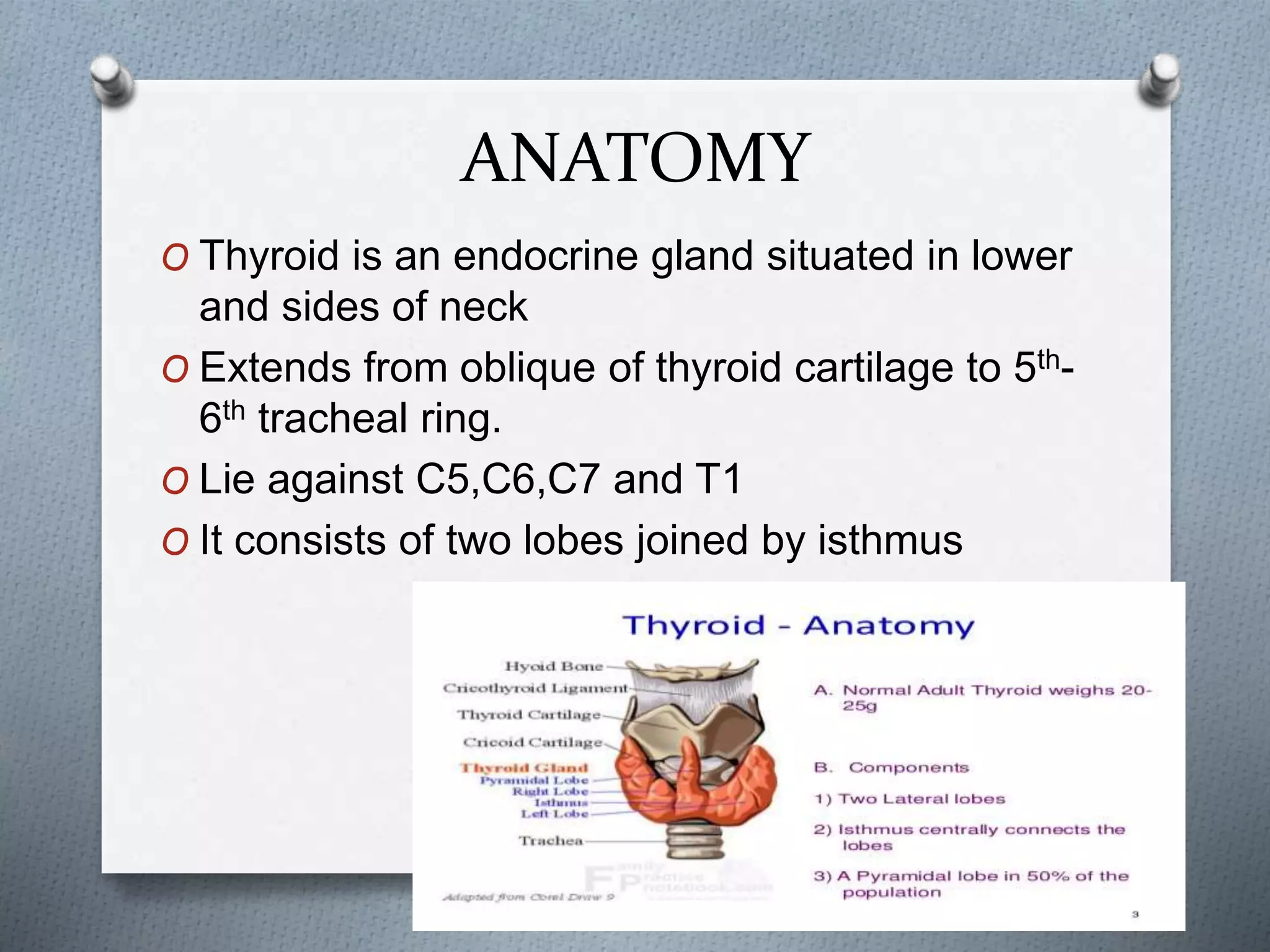
O Thyroid is an endocrine gland situated in lower
and sides of neck
O Extends from oblique of thyroid cartilage to 5th-
6th tracheal ring.
O Lie against C5,C6,C7 and T1
O It consists of two lobes joined by isthmus
c
 Blood supply:
O • Superior and inferior thyroid
O arteries.
O • Superior, middle and inferior thyroid
veins
 Lymphatic supply:
O Upper and lower deep cervical lymph
nodes
O Pretracheal and Para tracheal lymph
nodes
HISTOLOGY
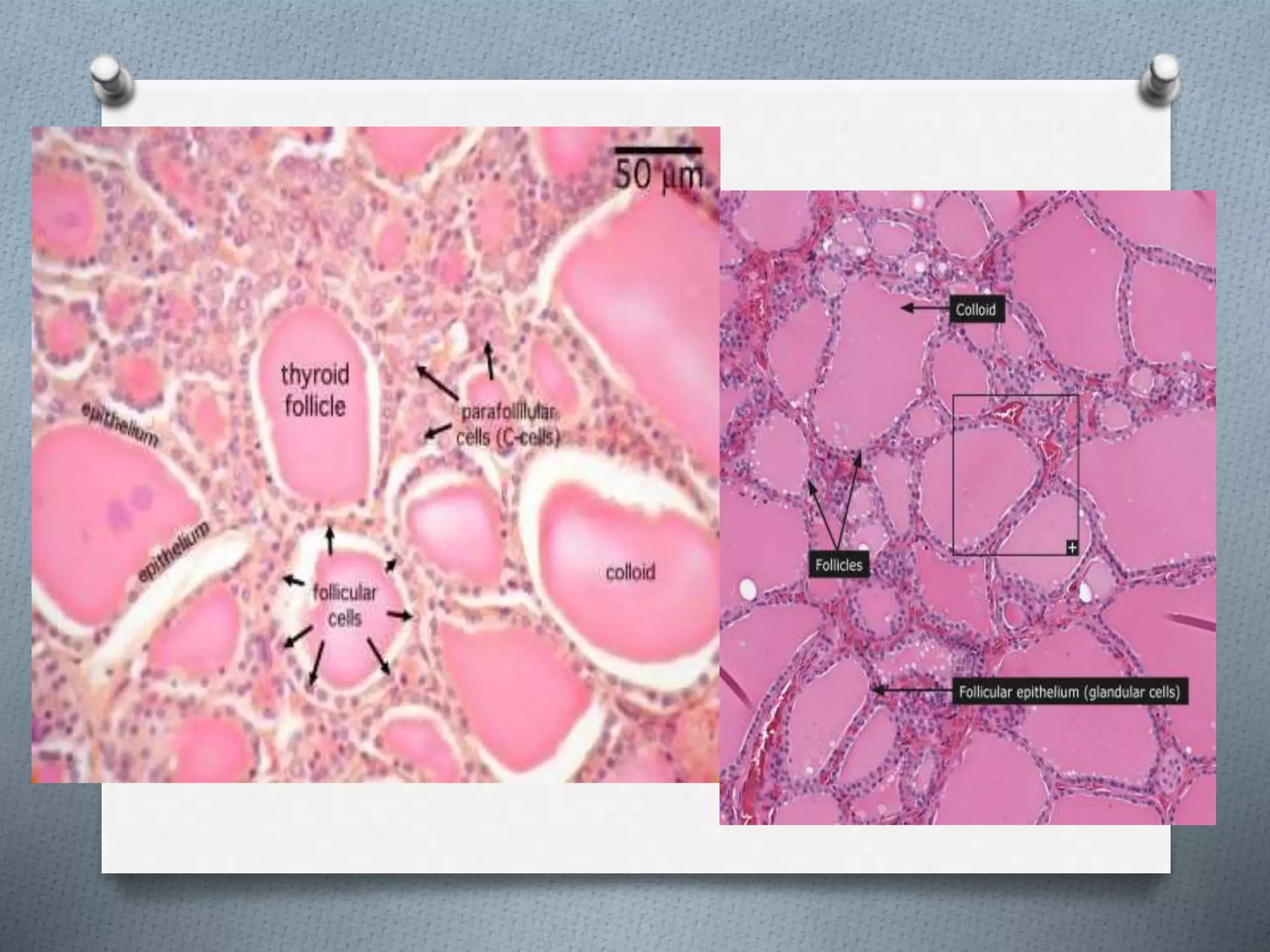
O Thyroid has two types of cells
 Para follicular : it produces calcitonin which
regulates the calcium in the body
 Follicular epithelial cells: synthesise thyroid
hormones (T4 thyroxine and T3
triiodothyronine) by incorporating iodine into
amino acid tyrosine on the surface of
thyroglobulin(Tg) , a protein into the colloid of
follicle.
Types of neoplasms
 BENIGN NEOPLASMS:
• Colloid nodule
• Follicular adenoma
 MALIGNANT NEOPLASMS:
• Papillary carcinoma 60%
• Follicular carcinoma 20%
• Anaplastic carcinoma 10%
• medullary carcinoma 5%
• Malignant carcinoma 5%
Toxic adenoma
O A solitary toxic nodule is the cause of less than
5% of all causes of thyrotoxicosis.
O The nodule is follicular adenoma, which
secretes excess thyroid hormones and inhibits
endogenous TSH secretion with subsequently
atrophy of the thyroid gland.
O Most patients are females and over 40 yrs of
age
O The thyrotoxicosis is usually mild and in 50%
of the patients only T3 is elevated.
treatment
O Radioactive iodine is highly effective and
is an ideal treatment since the atrophic
cells surrounding the nodule do not take
up iodine and so receive little or no
radiation.
O Surgical hemi thyroidectomy is an
alternative.
Differentiated carcinoma
Follicular papillary
O accounts for 20%
O Common in iodine deficient
anaemia.
O Haematogenous spread
common (lungs and bones)
O Encapsulated, but there is
invasion of capsule
O Mortality rate 24%
O Accounts for 60%
O Most common thyroid
cancer
O Lymphatic spread is
common cervical lymph
nodes
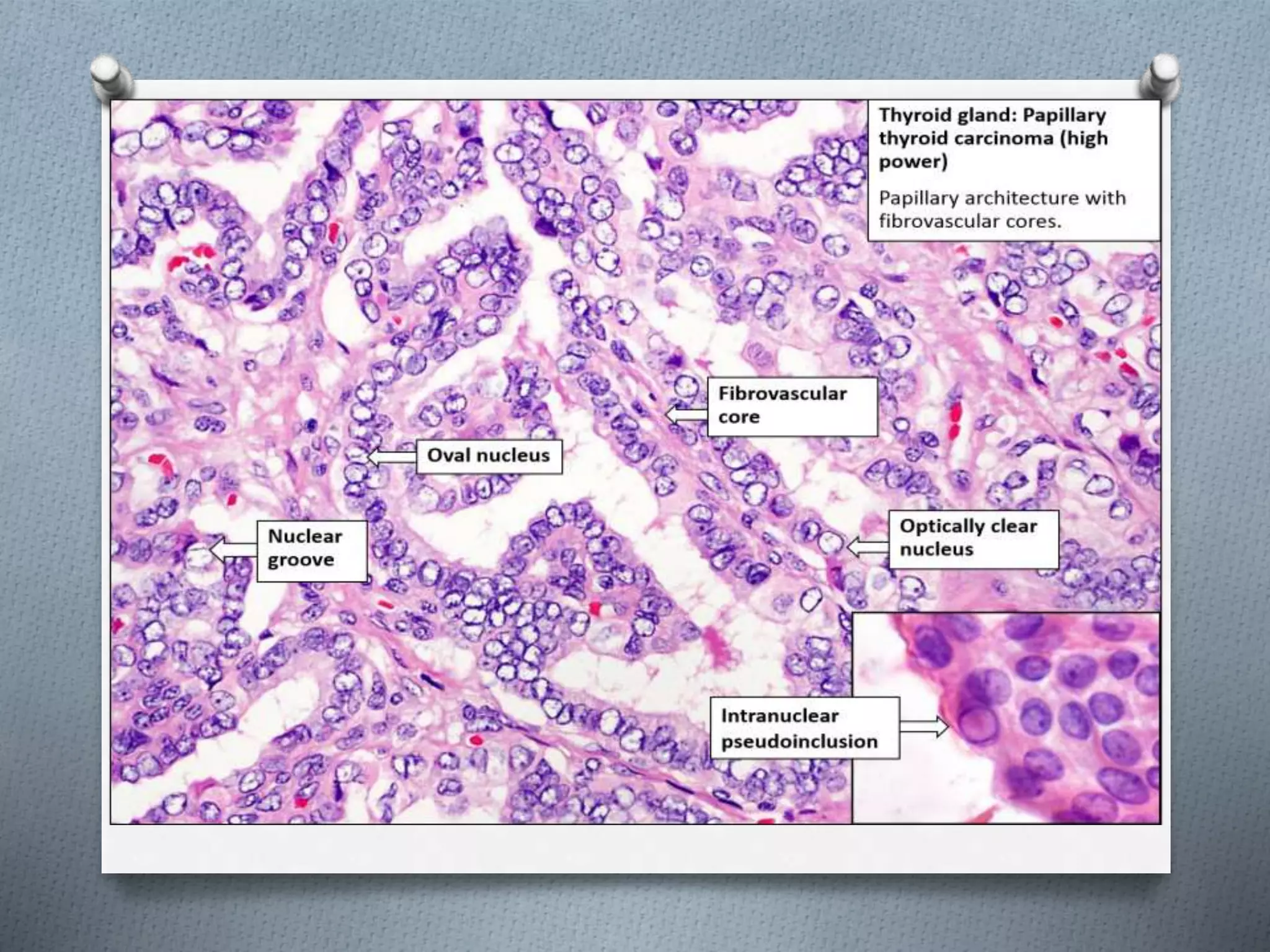
O No capsule
O Orphan Annie eye nuclei
present(empty nuclei)
O Psammoma
bodies(dystrophic calcified
cancer cells)
O Mortality rate is 11%
Diagnosis and investigation
O TFT’S
O Thyroid auto-antibodies
O FNAC
O Neck ultrasound, MRI OR CT scan
O Incisional biopsy : not advised in
resectable carcinoma as it may cause
local recurrence but is justified in an
anaplastic and obviously irremovable
tumour.
management
 Surgical treatment:
 Thyroid lobectomy :minimum operation for thyroid
tumours. It is considered curative for minimal
papillary cancers(<1cm) and for minimally
invasive follicular cancers.
 Total thyroidectomy: it is indicated for cytological
proven cancers. It is indicated for papillary
cancers >1cm and for widely invasive follicular
cancers. It is combined with neck dissection in
patients with palpable lymphadenopathy.
cont.
 Medical treatment:
 Thyroxine: it is given to all patients after total
thyroidectomy and in majority of patients
after near total thyroidectomy.
it suppresses TSH production, as most
tumours are TSH dependent.
 radio- iodine: it is administered to patients
with thyroid cancer after total
thyroidectomy.
Effective in killing any residual thyroid cells
or malignant cells.
prognosis
O Most patients with papillary and thyroid cancers will
be cured with appropriate treatment.
O Adverse prognostic factors include :
• Older age
• Male sex
• Distant metastases
O But radio iodine therapy can treat even distant
metastases and so prolonged survival is quite
common.
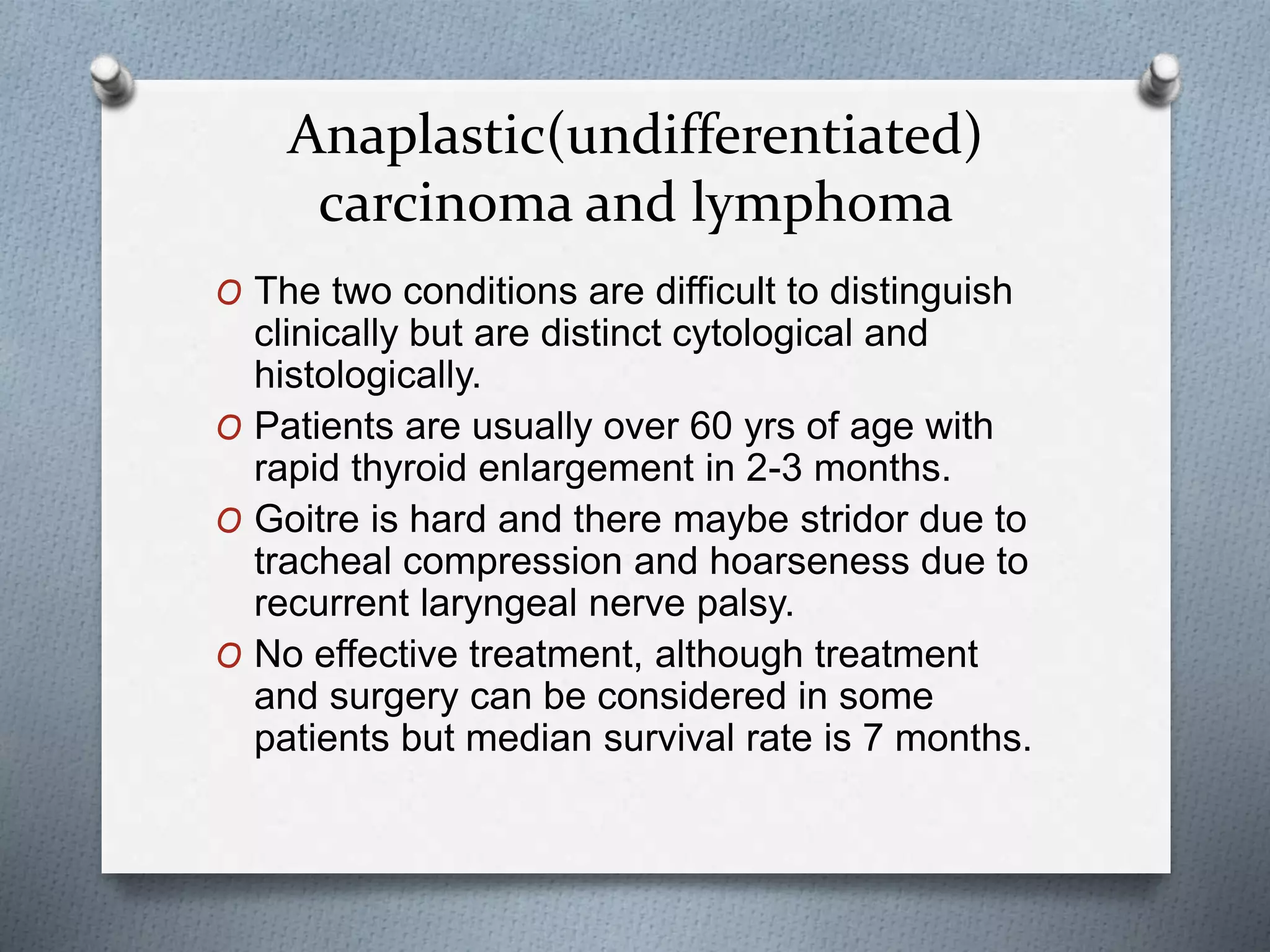
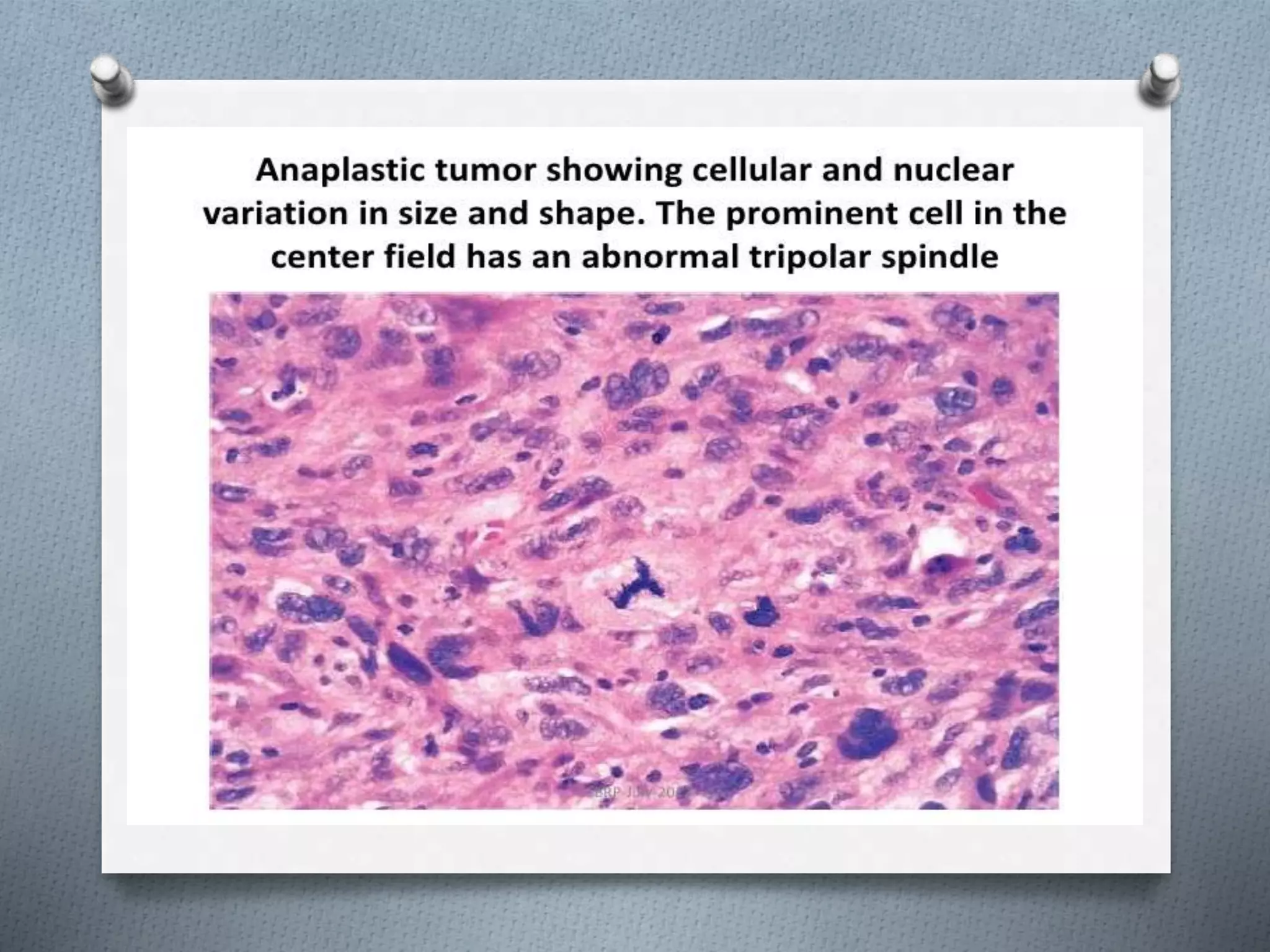
Anaplastic(undifferentiated)
carcinoma and lymphoma
O The two conditions are difficult to distinguish
clinically but are distinct cytological and
histologically.
O Patients are usually over 60 yrs of age with
rapid thyroid enlargement in 2-3 months.
O Goitre is hard and there maybe stridor due to
tracheal compression and hoarseness due to
recurrent laryngeal nerve palsy.
O No effective treatment, although treatment
and surgery can be considered in some
patients but median survival rate is 7 months.
Cont.
O Prognosis for lymphoma, which may arise
from pre-existing hashimoto’s thyroiditis,
is better.
O Survival rate is 9 years.
O Some are non- Hodgkin's lymphomas,
usually the diffuse large B cell type.
O Treatment is combination chemotherapy,
CHOP(cyclophosphamide, doxorubicin ,
vincristine, prednisolone) and external
beam radiotherapy.
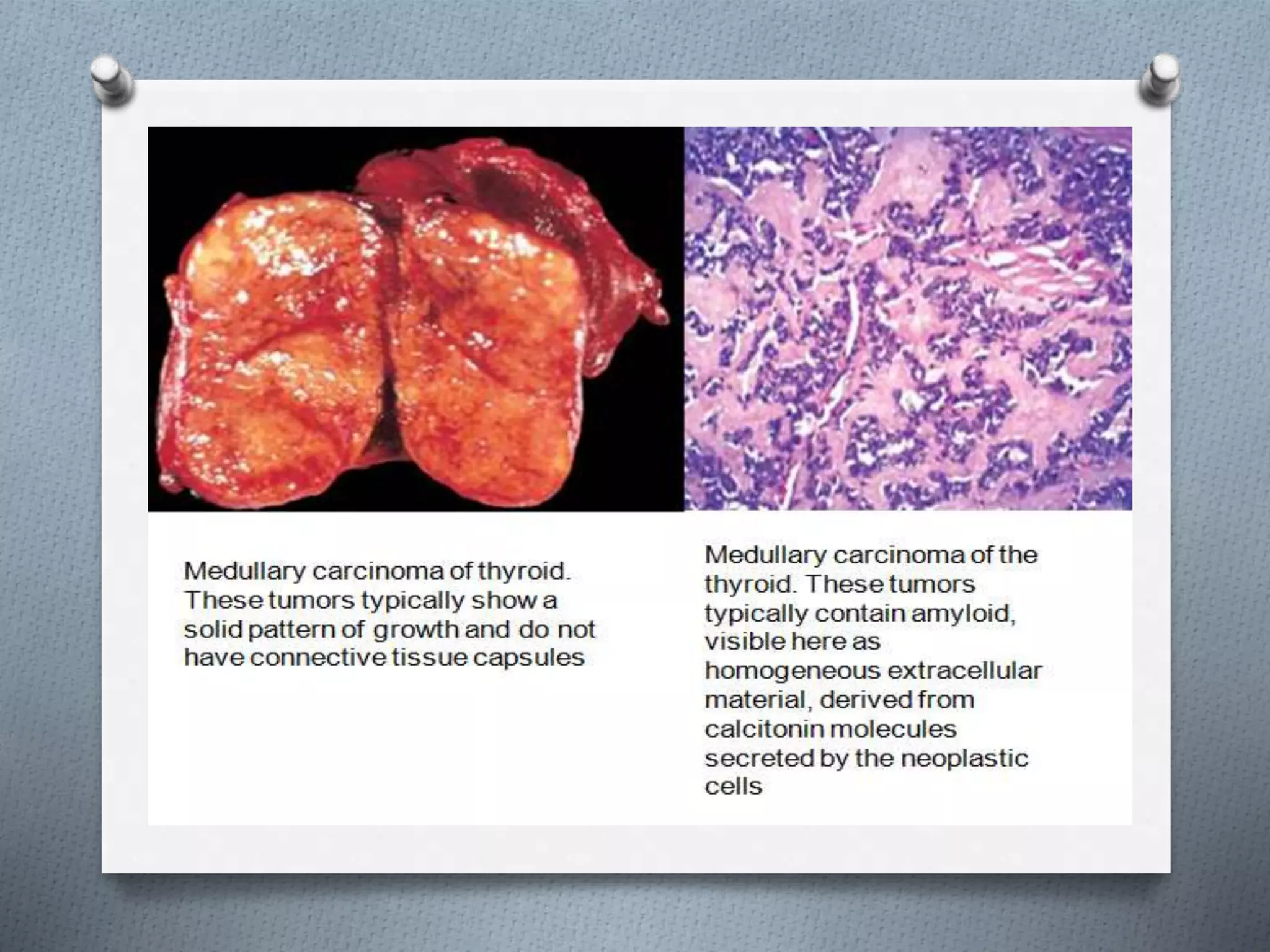
Medullary carcinoma
O This tumour arises from parafollicular C cells.
O It can occur sporadically or in families as part
of MEN TYPE 2 syndrome.
O It secretes calcitonin and may secrete 5-
hydroxytryptamine (5HT, serotonin),
adrenocorticotrophic hormone(ACTH) and
prostaglandins.
O Patients usually present in middle age with
firm thyroid mass.
O Cervical lymph node involvement is common
but distant metastases are rare.
Cont.
O Serum calcitonin levels are inc. and are useful
in monitoring response to treatment.
O Due to high levels of calcitonin,
hypocalcaemia is rare but
hypercalcitoninaemia can be associated with
severe, watery diarrhoea.
O Treatment by total thyroidectomy with removal
of regional cervical lymph nodes.
O There is no Role of radio iodine or TSH
suppression levothyroxine.
O Prognosis is less than papillary and follicular
carcinoma but individuals live for many
decades.
Riedel’s thyroiditis
O This is not a form of thyroid cancer but the
presentation is similar and can only be
differentiated by thyroid biopsy.
O Slow growing goitre which is irregular and
stony hard and usually there is
oesophageal and tracheal compression.
O Other complications include recurrent
laryngeal nerve palsy ,
hypoparathyroidism and hypothyroidism.
Thyroid malignancy
Thyroid malignancy

Thyroid malignancy

  • 1.
  • 2.
    ANATOMY O Thyroid isan endocrine gland situated in lower and sides of neck O Extends from oblique of thyroid cartilage to 5th- 6th tracheal ring. O Lie against C5,C6,C7 and T1 O It consists of two lobes joined by isthmus
  • 3.
    c  Blood supply: O• Superior and inferior thyroid O arteries. O • Superior, middle and inferior thyroid veins  Lymphatic supply: O Upper and lower deep cervical lymph nodes O Pretracheal and Para tracheal lymph nodes
  • 4.
    HISTOLOGY O Thyroid hastwo types of cells  Para follicular : it produces calcitonin which regulates the calcium in the body  Follicular epithelial cells: synthesise thyroid hormones (T4 thyroxine and T3 triiodothyronine) by incorporating iodine into amino acid tyrosine on the surface of thyroglobulin(Tg) , a protein into the colloid of follicle.
  • 6.
    Types of neoplasms BENIGN NEOPLASMS: • Colloid nodule • Follicular adenoma  MALIGNANT NEOPLASMS: • Papillary carcinoma 60% • Follicular carcinoma 20% • Anaplastic carcinoma 10% • medullary carcinoma 5% • Malignant carcinoma 5%
  • 7.
    Toxic adenoma O Asolitary toxic nodule is the cause of less than 5% of all causes of thyrotoxicosis. O The nodule is follicular adenoma, which secretes excess thyroid hormones and inhibits endogenous TSH secretion with subsequently atrophy of the thyroid gland. O Most patients are females and over 40 yrs of age O The thyrotoxicosis is usually mild and in 50% of the patients only T3 is elevated.
  • 8.
    treatment O Radioactive iodineis highly effective and is an ideal treatment since the atrophic cells surrounding the nodule do not take up iodine and so receive little or no radiation. O Surgical hemi thyroidectomy is an alternative.
  • 9.
    Differentiated carcinoma Follicular papillary Oaccounts for 20% O Common in iodine deficient anaemia. O Haematogenous spread common (lungs and bones) O Encapsulated, but there is invasion of capsule O Mortality rate 24% O Accounts for 60% O Most common thyroid cancer O Lymphatic spread is common cervical lymph nodes O No capsule O Orphan Annie eye nuclei present(empty nuclei) O Psammoma bodies(dystrophic calcified cancer cells) O Mortality rate is 11%
  • 12.
    Diagnosis and investigation OTFT’S O Thyroid auto-antibodies O FNAC O Neck ultrasound, MRI OR CT scan O Incisional biopsy : not advised in resectable carcinoma as it may cause local recurrence but is justified in an anaplastic and obviously irremovable tumour.
  • 13.
    management  Surgical treatment: Thyroid lobectomy :minimum operation for thyroid tumours. It is considered curative for minimal papillary cancers(<1cm) and for minimally invasive follicular cancers.  Total thyroidectomy: it is indicated for cytological proven cancers. It is indicated for papillary cancers >1cm and for widely invasive follicular cancers. It is combined with neck dissection in patients with palpable lymphadenopathy.
  • 14.
    cont.  Medical treatment: Thyroxine: it is given to all patients after total thyroidectomy and in majority of patients after near total thyroidectomy. it suppresses TSH production, as most tumours are TSH dependent.  radio- iodine: it is administered to patients with thyroid cancer after total thyroidectomy. Effective in killing any residual thyroid cells or malignant cells.
  • 15.
    prognosis O Most patientswith papillary and thyroid cancers will be cured with appropriate treatment. O Adverse prognostic factors include : • Older age • Male sex • Distant metastases O But radio iodine therapy can treat even distant metastases and so prolonged survival is quite common.
  • 16.
    Anaplastic(undifferentiated) carcinoma and lymphoma OThe two conditions are difficult to distinguish clinically but are distinct cytological and histologically. O Patients are usually over 60 yrs of age with rapid thyroid enlargement in 2-3 months. O Goitre is hard and there maybe stridor due to tracheal compression and hoarseness due to recurrent laryngeal nerve palsy. O No effective treatment, although treatment and surgery can be considered in some patients but median survival rate is 7 months.
  • 18.
    Cont. O Prognosis forlymphoma, which may arise from pre-existing hashimoto’s thyroiditis, is better. O Survival rate is 9 years. O Some are non- Hodgkin's lymphomas, usually the diffuse large B cell type. O Treatment is combination chemotherapy, CHOP(cyclophosphamide, doxorubicin , vincristine, prednisolone) and external beam radiotherapy.
  • 21.
    Medullary carcinoma O Thistumour arises from parafollicular C cells. O It can occur sporadically or in families as part of MEN TYPE 2 syndrome. O It secretes calcitonin and may secrete 5- hydroxytryptamine (5HT, serotonin), adrenocorticotrophic hormone(ACTH) and prostaglandins. O Patients usually present in middle age with firm thyroid mass. O Cervical lymph node involvement is common but distant metastases are rare.
  • 22.
    Cont. O Serum calcitoninlevels are inc. and are useful in monitoring response to treatment. O Due to high levels of calcitonin, hypocalcaemia is rare but hypercalcitoninaemia can be associated with severe, watery diarrhoea. O Treatment by total thyroidectomy with removal of regional cervical lymph nodes. O There is no Role of radio iodine or TSH suppression levothyroxine. O Prognosis is less than papillary and follicular carcinoma but individuals live for many decades.
  • 24.
    Riedel’s thyroiditis O Thisis not a form of thyroid cancer but the presentation is similar and can only be differentiated by thyroid biopsy. O Slow growing goitre which is irregular and stony hard and usually there is oesophageal and tracheal compression. O Other complications include recurrent laryngeal nerve palsy , hypoparathyroidism and hypothyroidism.