This document provides an overview of thrombocytes (platelets) including their physiology, formation, structure, properties, functions, and variations. Key points include:
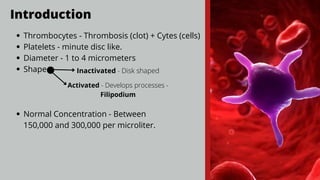
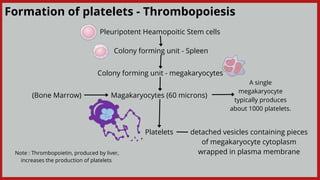
- Platelets are minute disc-shaped cell fragments that form clots to stop bleeding. They are produced from megakaryocytes in the bone marrow.
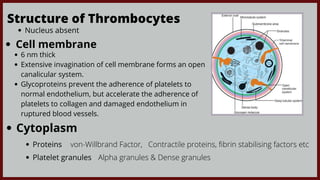
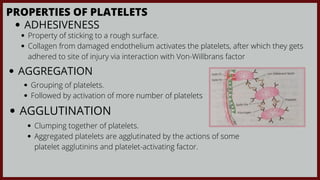
- Platelets have a cell membrane, cytoplasm containing proteins, and granules. Their properties include adhesiveness, aggregation, and agglutination which help form clots.
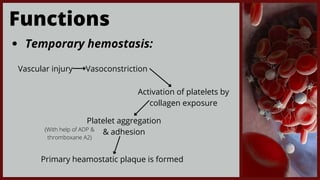
- Platelets function in temporary hemostasis, phagocytosis, and blood coagulation by releasing factors that help clots form. Variations include thrombocytopenia and thrombocytosis.