THERMAL POLLUTION SOURCES
AND CONTROL MEASURES
Presented by:
THERMAL POLLUTION
 Thermal pollution is the degradation of water
quality by any process that changes ambient
water temperature.
 Rise or fall in the temperature of a natural body of
water caused by human influence.
 Results in a change in
the physical properties of water.
DISCOVERY
 Industrial thermal pollution was first
addressed in 1970.
 Also called
 “thermal enrichment”
SOURCES
NATURAL
ANTHROPOGENI
C
NATURAL CAUSES
Geothermal vents
 The Geothermal Vent
is a resource seam
found exclusively in the
mountains that emits
steam.
 The cold seawater is
heated by hot magma
and reemerges to form
the vents.
NATURAL CAUSES
Hot springs
 Hot springs also
introduce excessive
heat in water bodies.
NATURAL CAUSES
Volcanoes
 Fresh water supply and
wastewater collection
and treatment become
vulnerable during a
volcanic ash fall, which
can: cause changes to
water quality in raw
water sources.
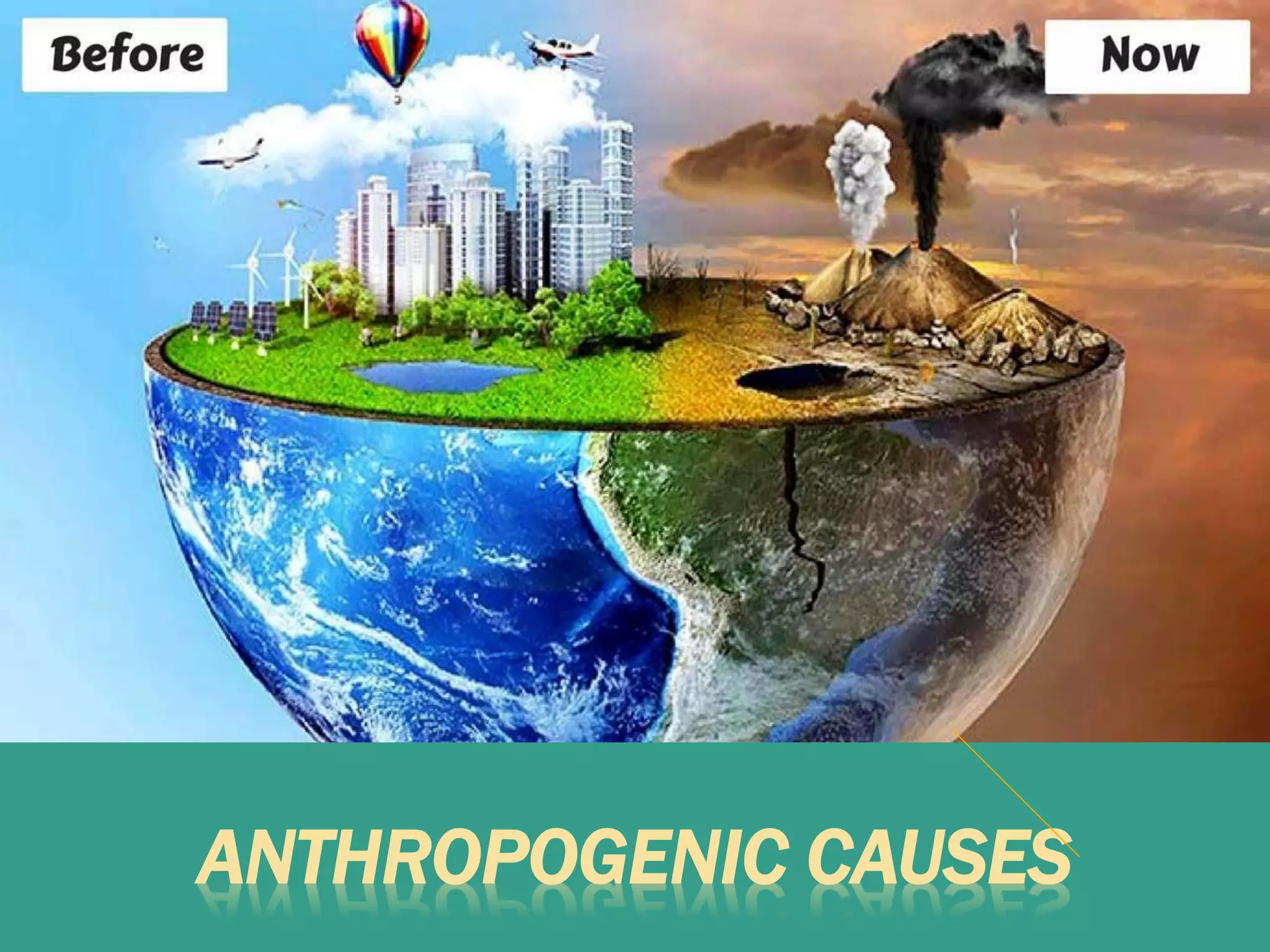
ANTHROPOGENIC CAUSES
HYDRO ELECTRIC POWER
 Generation of
hydroelectric power
sometimes cause
negative thermal
loading of water.
 Creates heat loss
on water resources.
SOIL EROSION
 It is an other major
factor for thermal
pollution.
 Soil start deposition
on the floor of water
basin.
 Water id more
exposed to sunlight.
NUCLEAR POWER POINTS
 Water is used as a
coolant agent in
nuclear reactor.
 Water is heated and
When water is
returned to water
bodies it raise the
temprature of water
bodies.
 It effects water
composition and
oxygen supply
COAL FIRED POWER STATIONS
 Coal is used as fuel.
 Condenser coils are
cooled with water from
nearby water resource.
 Heated effluents are
released in water and
decrease dissolved
oxygen.
THERMAL SHOCK
 When a power plant is
opened or shut down
for repair purpose
water temprature is
changed .
 In result life in water
adapted for narrow
temprature range can
not survive.
DOMESTIC SEWAGE
 Domestic sewage is
commonly discharged
into rivers, canals and
lakes.
 This sewage water has
high temprature than
the receiving water .
 Decrease the
dissolved oxygen foul
gases also produced
causing the death of
organisms.
DEFORESTATION
 Trees and plants
prevent the direct
falling of sunlight to
water canals and
lakes.
 When deforestation
occurs canals and
lakes are directly
exposed to sun and
water temprature
increased.
CONSEQUENCES
 Decreased dissolved Oxygen.
 Migration
 Increased toxins
 Loss of biodiversity.
 Ecological impacts
 Reproductive effects
 Increased metabolic rate.
PLANTS AND THERMAL POLLUTION
 Hot water makes plant roots incapable of
absorbing water and nutrients from the soil.
 Hot water causes the cuticle on the plant
leaves to melt away. This increases the
exposure of plants leaves to diseases,
pathogens and pests more than usual.
 The foliage of plants may get scalded by hot
water.
CONTROL
MEASURES
SPRAY PONDS
 Man made system to
lower the temperature of
water by evaporation,
convention and radiation.
 Evaporation reduces the
energy of remaing water.
COOLING TOWERS
 A cooling tower is a
specialized heat
exchanger in which air
and water are brought
into direct contact with
each other in order to
reduce the water
temperature.
ENERGY CHIPS
 Production of
electricity from heat
than thought possible
by creating a silicon
chip, known as device
that convert heat
energy into electricity.
DESALINATION PLANTS
 Desalination uses
reverse osmosis
technology to separate
molecules from sea
water .
 Salts are removed and
temperature is
maintained.
LESS NUCLEAR POWER POINTS
 Reduce use of nuclear
power points save
world from pollution as
well as destruction.
END SHORELINE DEFORESTATION
 Shore line
deforestation is also
involved in sources of
thermal pollution so
grow trees on shore
line and end
deforestation.
 Shade of plants
prevent water from
sudden change in
temperature.
PREVENT SOIL EROSION
 Stop soil erosion
 Grow plants and
grasses which reduce
soil erosion.
 This will increase the
life of water bodies and
protect water life.
COGENERATION
 A process in which
heat is recycled for
industrial or domestic
use.
 It reduces thermal
pollution.
is
Recycled
Heat
ARTIFICIAL LAKES
 Artificial lakes can be
used to store water for
a short time
 When temperature is
decreased it is
released into natural
water bodies like
canals and rivers and
oceans.
WATER SHEDS
 . A watershed is an area of land draining into a
common body of water, such as a river, wetland,
reservoir, or ocean.
 Rain that falls on land flows to lower elevations
and toward a common body of water; the rain
transports with it many particulates and pollutants
from the land.
 The term watershed is sometimes used
interchangeably with the terms drainage basin and
TYPES OF WATER SHEDS
IMPORTANCE
 Biological, physical, and chemical processes
occurring within watersheds provide critical
ecosystem functions and services that support
plants and animals, including humans.
 Services provided by ecosystems within
watersheds
WATER STORAGE AND FLOOD
CONTROLS
 At a larger scale, naturally vegetated floodplains
provide storage and slow release of water. This
benefit reduces the risk of flooding for anyone who
lives near a river.
NUTRIENT CYCLING
 The role of watersheds
in nutrient cycling is
important for stabilizing
the environment at
local and global scales
IMPROVED WATER QUALITY.
 Natural landscapes
and floodplains filter
pollutants from point
and nonpoint sources,
promote nutrient
cycling, and help retain
sediment.
CARBON STORAGE OPPORTUNITIES
 . Watersheds with
intact natural land
cover and soil
resources are capable
of sequestering
carbon, thereby
offsetting greenhouse
gas emissions
INCREASED RESILIENCE IN THE FACE OF
CLIMATE CHANGE THREATS
 Intact floodplains and
riparian areas enable
healthy watersheds to
be better adapted to
more extreme weather
patterns and changes
in precipitation
associated with climate
change.
REDUCED RISK FOR INVASIVE SPECIES
COLONIZATION
 Naturally functioning
ecosystems are more
resilient and can favor
indigenous species,
helping them out-
compete invasive
species.
 Reduced vulnerability
to invasive species.
SOIL FORMATION
 Stable soils, an absence of pollutants, and a rich
biological community are all characteristics of a
healthy watershed.
 Healthy watershed help in soil formation and stop
soil from erosion.
OTHER SERVICES OF WATERSHEDS
 Wildlife corridors
 Increased biodiversity
 Effect of natural disasters
ECONOMIC IMPORTANCE
1. Protecting healthy watersheds can reduce
capital costs for water treatment plants and
reduce damages to property and
infrastructure due to flooding, thereby
avoiding future costs.
2. Additionally, protecting healthy watersheds
an generate revenue through property value
premiums, recreation and tourism
REDUCED DRINKING WATER TREATMENT AND
INFRASTRUCTURE COSTS
 Natural landscapes filter pollutants and protect
water quality.
 A review of treatment costs and watershed
characteristics for 27 drinking water utilities found
that for every 10% increase in forest cover of the
source water area, chemical and treatment costs
decrease by 20%
REDUCED FLOOD MITIGATION COSTS
 Floodplains and natural landscapes minimize the
area and impacts of floods, reduce the burden on
public drainage infrastructure and increase
groundwater recharge
INCREASED REVENUES AND JOB
OPPORTUNITIES
 . Healthy watersheds provide ample
opportunities for fishing, boating, swimming,
hiking, biking, wildlife viewing and
ecotourism. Over 30 million people in the
U.S. fish recreationally and these anglers
generate approximately 1 million jobs and
over $45 billion in retail sales annually
INCREASED PROPERTY VALUES
 Housing near healthy watersheds has higher
property values than those in or around
degraded ecosystems and impaired waters
Thermal Pollution.pptx

Thermal Pollution.pptx

  • 1.
    THERMAL POLLUTION SOURCES ANDCONTROL MEASURES Presented by:
  • 2.
    THERMAL POLLUTION  Thermalpollution is the degradation of water quality by any process that changes ambient water temperature.  Rise or fall in the temperature of a natural body of water caused by human influence.  Results in a change in the physical properties of water.
  • 3.
    DISCOVERY  Industrial thermalpollution was first addressed in 1970.  Also called  “thermal enrichment”
  • 4.
  • 5.
    NATURAL CAUSES Geothermal vents The Geothermal Vent is a resource seam found exclusively in the mountains that emits steam.  The cold seawater is heated by hot magma and reemerges to form the vents.
  • 6.
    NATURAL CAUSES Hot springs Hot springs also introduce excessive heat in water bodies.
  • 7.
    NATURAL CAUSES Volcanoes  Freshwater supply and wastewater collection and treatment become vulnerable during a volcanic ash fall, which can: cause changes to water quality in raw water sources.
  • 8.
  • 9.
    HYDRO ELECTRIC POWER Generation of hydroelectric power sometimes cause negative thermal loading of water.  Creates heat loss on water resources.
  • 10.
    SOIL EROSION  Itis an other major factor for thermal pollution.  Soil start deposition on the floor of water basin.  Water id more exposed to sunlight.
  • 11.
    NUCLEAR POWER POINTS Water is used as a coolant agent in nuclear reactor.  Water is heated and When water is returned to water bodies it raise the temprature of water bodies.  It effects water composition and oxygen supply
  • 12.
    COAL FIRED POWERSTATIONS  Coal is used as fuel.  Condenser coils are cooled with water from nearby water resource.  Heated effluents are released in water and decrease dissolved oxygen.
  • 13.
    THERMAL SHOCK  Whena power plant is opened or shut down for repair purpose water temprature is changed .  In result life in water adapted for narrow temprature range can not survive.
  • 14.
    DOMESTIC SEWAGE  Domesticsewage is commonly discharged into rivers, canals and lakes.  This sewage water has high temprature than the receiving water .  Decrease the dissolved oxygen foul gases also produced causing the death of organisms.
  • 15.
    DEFORESTATION  Trees andplants prevent the direct falling of sunlight to water canals and lakes.  When deforestation occurs canals and lakes are directly exposed to sun and water temprature increased.
  • 16.
    CONSEQUENCES  Decreased dissolvedOxygen.  Migration  Increased toxins  Loss of biodiversity.  Ecological impacts  Reproductive effects  Increased metabolic rate.
  • 17.
    PLANTS AND THERMALPOLLUTION  Hot water makes plant roots incapable of absorbing water and nutrients from the soil.  Hot water causes the cuticle on the plant leaves to melt away. This increases the exposure of plants leaves to diseases, pathogens and pests more than usual.  The foliage of plants may get scalded by hot water.
  • 18.
  • 19.
    SPRAY PONDS  Manmade system to lower the temperature of water by evaporation, convention and radiation.  Evaporation reduces the energy of remaing water.
  • 20.
    COOLING TOWERS  Acooling tower is a specialized heat exchanger in which air and water are brought into direct contact with each other in order to reduce the water temperature.
  • 21.
    ENERGY CHIPS  Productionof electricity from heat than thought possible by creating a silicon chip, known as device that convert heat energy into electricity.
  • 22.
    DESALINATION PLANTS  Desalinationuses reverse osmosis technology to separate molecules from sea water .  Salts are removed and temperature is maintained.
  • 24.
    LESS NUCLEAR POWERPOINTS  Reduce use of nuclear power points save world from pollution as well as destruction.
  • 25.
    END SHORELINE DEFORESTATION Shore line deforestation is also involved in sources of thermal pollution so grow trees on shore line and end deforestation.  Shade of plants prevent water from sudden change in temperature.
  • 26.
    PREVENT SOIL EROSION Stop soil erosion  Grow plants and grasses which reduce soil erosion.  This will increase the life of water bodies and protect water life.
  • 27.
    COGENERATION  A processin which heat is recycled for industrial or domestic use.  It reduces thermal pollution. is Recycled Heat
  • 28.
    ARTIFICIAL LAKES  Artificiallakes can be used to store water for a short time  When temperature is decreased it is released into natural water bodies like canals and rivers and oceans.
  • 29.
    WATER SHEDS  .A watershed is an area of land draining into a common body of water, such as a river, wetland, reservoir, or ocean.  Rain that falls on land flows to lower elevations and toward a common body of water; the rain transports with it many particulates and pollutants from the land.  The term watershed is sometimes used interchangeably with the terms drainage basin and
  • 30.
  • 31.
    IMPORTANCE  Biological, physical,and chemical processes occurring within watersheds provide critical ecosystem functions and services that support plants and animals, including humans.  Services provided by ecosystems within watersheds
  • 32.
    WATER STORAGE ANDFLOOD CONTROLS  At a larger scale, naturally vegetated floodplains provide storage and slow release of water. This benefit reduces the risk of flooding for anyone who lives near a river.
  • 33.
    NUTRIENT CYCLING  Therole of watersheds in nutrient cycling is important for stabilizing the environment at local and global scales
  • 34.
    IMPROVED WATER QUALITY. Natural landscapes and floodplains filter pollutants from point and nonpoint sources, promote nutrient cycling, and help retain sediment.
  • 35.
    CARBON STORAGE OPPORTUNITIES . Watersheds with intact natural land cover and soil resources are capable of sequestering carbon, thereby offsetting greenhouse gas emissions
  • 36.
    INCREASED RESILIENCE INTHE FACE OF CLIMATE CHANGE THREATS  Intact floodplains and riparian areas enable healthy watersheds to be better adapted to more extreme weather patterns and changes in precipitation associated with climate change.
  • 37.
    REDUCED RISK FORINVASIVE SPECIES COLONIZATION  Naturally functioning ecosystems are more resilient and can favor indigenous species, helping them out- compete invasive species.  Reduced vulnerability to invasive species.
  • 38.
    SOIL FORMATION  Stablesoils, an absence of pollutants, and a rich biological community are all characteristics of a healthy watershed.  Healthy watershed help in soil formation and stop soil from erosion.
  • 39.
    OTHER SERVICES OFWATERSHEDS  Wildlife corridors  Increased biodiversity  Effect of natural disasters
  • 40.
    ECONOMIC IMPORTANCE 1. Protectinghealthy watersheds can reduce capital costs for water treatment plants and reduce damages to property and infrastructure due to flooding, thereby avoiding future costs. 2. Additionally, protecting healthy watersheds an generate revenue through property value premiums, recreation and tourism
  • 41.
    REDUCED DRINKING WATERTREATMENT AND INFRASTRUCTURE COSTS  Natural landscapes filter pollutants and protect water quality.  A review of treatment costs and watershed characteristics for 27 drinking water utilities found that for every 10% increase in forest cover of the source water area, chemical and treatment costs decrease by 20%
  • 42.
    REDUCED FLOOD MITIGATIONCOSTS  Floodplains and natural landscapes minimize the area and impacts of floods, reduce the burden on public drainage infrastructure and increase groundwater recharge
  • 43.
    INCREASED REVENUES ANDJOB OPPORTUNITIES  . Healthy watersheds provide ample opportunities for fishing, boating, swimming, hiking, biking, wildlife viewing and ecotourism. Over 30 million people in the U.S. fish recreationally and these anglers generate approximately 1 million jobs and over $45 billion in retail sales annually
  • 44.
    INCREASED PROPERTY VALUES Housing near healthy watersheds has higher property values than those in or around degraded ecosystems and impaired waters