THERMAL POLLUTION
• Thermal Pollution is the harmful increase in water
temperature in streams, rivers, lakes, or occasionally, coastal
ocean waters.
• It is the degradation of water quality by any process that
changes ambient water temperature.
• A temperature increase as small as 1 or 2 Celsius degrees
(about 2 to 4 Fahrenheit degrees) can kill native fish,
shellfish, and plants, or drive them out in favor of other
species, often with undesirable effects.
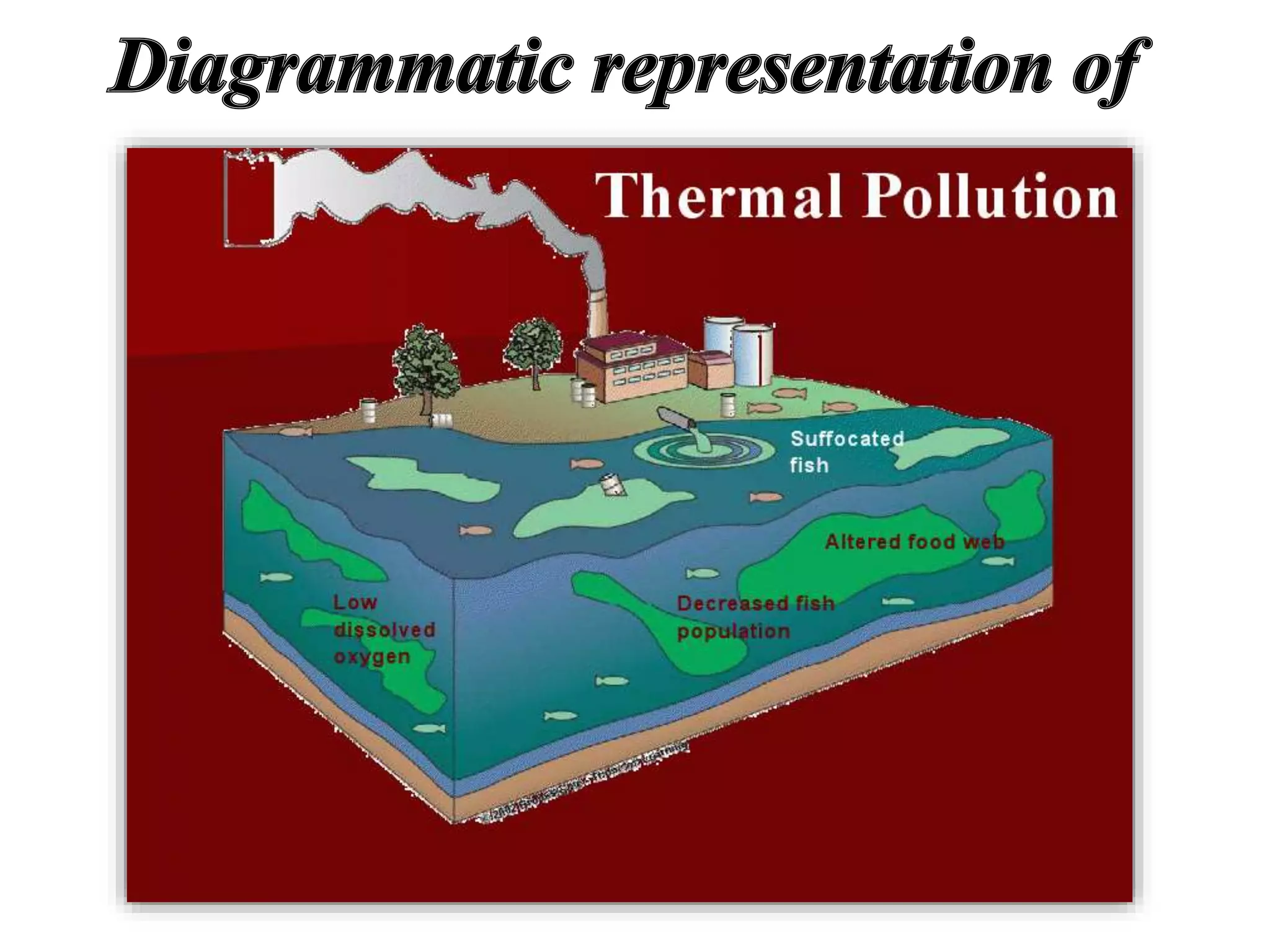
It occurs when an industry removes water from a
source (e.g., a river), uses the water for cooling
purposes, and then returns the heated water to its
source. Power plants heat water to convert it into
steam, to drive the turbines that generate electricity.
For efficient functioning of the steam turbines, the
steam is condensed into water after it leaves the
turbines. This condensation is done by taking water
from a water body to absorb the heat. This heated
water, which is at least 15 degrees celsius higher than
the normal, is later discharged back into the water
body.
The major sources of thermal pollution are
discharge of heated water or hot waste material into
water bodies from
• Nuclear power plant
• Industrial effluents
• Domestic sewage
• Hydro-electric power
• Coal fired power plants
• Thermal shock
Other causes are :
• Deforestation
• Soil erosion
 Nuclear power plants use water as a
cooling agent.
 After the water is used, it is put back into a
water supply at 9-20oC warmer .
 Emission from nuclear reactors increase
the temperature of water bodies.
 Coal is utilized as a fuel.
 Condenser coils are cooled with water
from nearby lake or river.
 The heated effluents decrease the DO of
water.
 Damages the marine organisms.
 Discharged water from steam-electric
power industry using turbo generators will
have a higher temperature ranging from 6 to
9˚C than the receiving water.
 In modern stations, producing 100 MW,
nearly one million gallons are discharged in an
hour with increase in temperature of the
cooling water passing by 8 to 10 ˚C .
 Sewage is commonly discharged into lakes,
canals or streams.
 Municipal sewage normally has a higher
temperature than the receiving water.
 Increase in temperature of the receiving
water decreases the dissolved oxygen of water.
 The foul smelling gases increased in water
resulting in death of marine organisms.
 Generation of hydro electric power
sometimes results in negative thermal
loading in water systems.
 Creates less heat on water sources less
than nuclear power plant.

thermal pollution.pptx

  • 1.
  • 2.
    • Thermal Pollutionis the harmful increase in water temperature in streams, rivers, lakes, or occasionally, coastal ocean waters. • It is the degradation of water quality by any process that changes ambient water temperature. • A temperature increase as small as 1 or 2 Celsius degrees (about 2 to 4 Fahrenheit degrees) can kill native fish, shellfish, and plants, or drive them out in favor of other species, often with undesirable effects.
  • 4.
    It occurs whenan industry removes water from a source (e.g., a river), uses the water for cooling purposes, and then returns the heated water to its source. Power plants heat water to convert it into steam, to drive the turbines that generate electricity. For efficient functioning of the steam turbines, the steam is condensed into water after it leaves the turbines. This condensation is done by taking water from a water body to absorb the heat. This heated water, which is at least 15 degrees celsius higher than the normal, is later discharged back into the water body.
  • 5.
    The major sourcesof thermal pollution are discharge of heated water or hot waste material into water bodies from • Nuclear power plant • Industrial effluents • Domestic sewage • Hydro-electric power • Coal fired power plants • Thermal shock Other causes are : • Deforestation • Soil erosion
  • 6.
     Nuclear powerplants use water as a cooling agent.  After the water is used, it is put back into a water supply at 9-20oC warmer .  Emission from nuclear reactors increase the temperature of water bodies.
  • 7.
     Coal isutilized as a fuel.  Condenser coils are cooled with water from nearby lake or river.  The heated effluents decrease the DO of water.  Damages the marine organisms.
  • 8.
     Discharged waterfrom steam-electric power industry using turbo generators will have a higher temperature ranging from 6 to 9˚C than the receiving water.  In modern stations, producing 100 MW, nearly one million gallons are discharged in an hour with increase in temperature of the cooling water passing by 8 to 10 ˚C .
  • 9.
     Sewage iscommonly discharged into lakes, canals or streams.  Municipal sewage normally has a higher temperature than the receiving water.  Increase in temperature of the receiving water decreases the dissolved oxygen of water.  The foul smelling gases increased in water resulting in death of marine organisms.
  • 10.
     Generation ofhydro electric power sometimes results in negative thermal loading in water systems.  Creates less heat on water sources less than nuclear power plant.