Fiedler’s Contingency Theory


                           K E L LY S C H M U T Z
 U N I V E R S I T Y O F T E X A S AT A R L I N G T O N C O L L E G E O F
                                NURSING


I N PA R T I A L F U L F I L L M E N T O F T H E R E Q U I R E M E N T S O F
     N 5 3 11 N U R S I N G M A N A G E M E N T I N H E A LT H C A R E
              R O W E N A R . YAT E S , R N , M S N , C C R N
                               M AY 6 , 2 0 1 2
Contingency Model Theory - Background

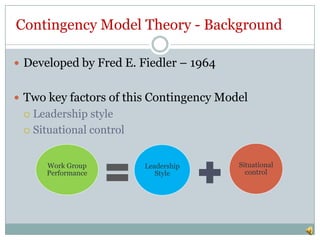
 Developed by Fred E. Fiedler – 1964


 Two key factors of this Contingency Model
  Leadership style
  Situational control


      Work Group         Leadership      Situational
      Performance           Style          control
Contingency Model - Leadership Style

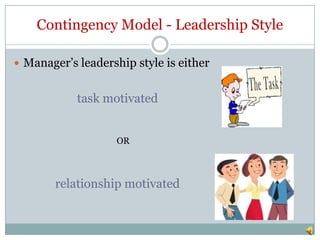
 Manager’s leadership style is either


            task motivated


                   OR


        relationship motivated
Least Preferred Co-worker (LPC) Scale

 Rate the co-worker who you work
 least well with on scale of 1-8 on
 the following items:
  unfriendly or friendly
  untrustworthy or trustworthy
  hostile or supportive
  uncooperative or cooperative


 Note: The LPC scale is a 16 item scale and can be
  found at http://www.wiley.com/college/
  man/schermerhorn371939/site/sa/page03.htm
Contingency Model – Situational Control

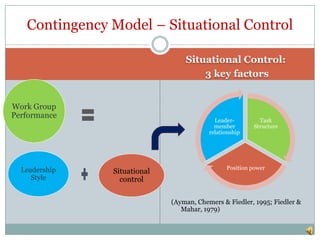
                                 Situational Control:
                                     3 key factors


Work Group
Performance
                                           Leader-        Task
                                           member       Structure
                                         relationship


  Leadership                                   Position power
               Situational
     Style       control

                             (Ayman, Chemers & Fiedler, 1995; Fiedler &
                                Mahar, 1979)
Strengths of the Contingency Model

       Highlighted the situational nature of
        leadership.

       Created the LEADER MATCH training
        program.

       Contributed to the study and
        application of leadership principles

      (Gibson, Ivancevich, Donnelly, & Konopaske, 2012)
Weaknesses of the Contingency Model


 Leader cannot be sensitive to tasks
 AND to followers at the same time.

 Model is weak when research is not
 associated with Fiedler (Gibson et al., 2012)

 The meaning of the variables are
 unclear
Perspective of the Contingency Model


 Leaders should have self-awareness of leadership
 style

 Not very many current research studies


 Other Situational theories have been developed
Usefulness in Present Day Management


Nurse leaders:

 can positively or negatively effect work group
  performance

 modify leadership actions to change situations
Recommendations of Use of Theory

Nurse leaders can positively effect work group
 performance by:

 Improving working relationship with staff – lunch breaks,
  socializing after work, special privileges

 Provide training or assistance or provide step-by-step
  procedures when working on highly structured tasks

 Involve staff on planning and decision making functions to
  decrease position power
                                           (Fiedler & Mahar, 1979)
References

Ayman, R., Chemers, M. M., & Fiedler, F. (1995) The contingency model of
  leadership effectiveness: Its levels of analysis. Leadership Quarterly, 6(2), 147-
  167. doi:10.1016/1048-9843(95)90032-2

Fiedler, F. E and Chemers, M. M. (1984). Improving leadership effectiveness:
   The leader match concept, ed. 2 New York: John Wiley & sons. Retrieved from
   http://www.wiley.com/legacy/college/cgi-bin/preferred_coworker.cgi

Fiedler, F. E., & Mahar, L. (1979). A field experiment validating contingency
   model leadership training. Journal of Applied Psychology, 64(3) 247-254.
   doi:10.1037/0021-9010.64.3.247

Gibson, J. L., Ivancevich, J. M., Donnelly, J. H., & Konopaske, R. (2012).
  Organization: Behavior, structure and processes. 14th ed. Boston, MA: Irwin
  McGraw.

Theory2

  • 1.
    Fiedler’s Contingency Theory K E L LY S C H M U T Z U N I V E R S I T Y O F T E X A S AT A R L I N G T O N C O L L E G E O F NURSING I N PA R T I A L F U L F I L L M E N T O F T H E R E Q U I R E M E N T S O F N 5 3 11 N U R S I N G M A N A G E M E N T I N H E A LT H C A R E R O W E N A R . YAT E S , R N , M S N , C C R N M AY 6 , 2 0 1 2
  • 2.
    Contingency Model Theory- Background  Developed by Fred E. Fiedler – 1964  Two key factors of this Contingency Model  Leadership style  Situational control Work Group Leadership Situational Performance Style control
  • 3.
    Contingency Model -Leadership Style  Manager’s leadership style is either task motivated OR relationship motivated
  • 4.
    Least Preferred Co-worker(LPC) Scale  Rate the co-worker who you work least well with on scale of 1-8 on the following items:  unfriendly or friendly  untrustworthy or trustworthy  hostile or supportive  uncooperative or cooperative Note: The LPC scale is a 16 item scale and can be found at http://www.wiley.com/college/ man/schermerhorn371939/site/sa/page03.htm
  • 5.
    Contingency Model –Situational Control Situational Control: 3 key factors Work Group Performance Leader- Task member Structure relationship Leadership Position power Situational Style control (Ayman, Chemers & Fiedler, 1995; Fiedler & Mahar, 1979)
  • 6.
    Strengths of theContingency Model  Highlighted the situational nature of leadership.  Created the LEADER MATCH training program.  Contributed to the study and application of leadership principles (Gibson, Ivancevich, Donnelly, & Konopaske, 2012)
  • 7.
    Weaknesses of theContingency Model  Leader cannot be sensitive to tasks AND to followers at the same time.  Model is weak when research is not associated with Fiedler (Gibson et al., 2012)  The meaning of the variables are unclear
  • 8.
    Perspective of theContingency Model  Leaders should have self-awareness of leadership style  Not very many current research studies  Other Situational theories have been developed
  • 9.
    Usefulness in PresentDay Management Nurse leaders:  can positively or negatively effect work group performance  modify leadership actions to change situations
  • 10.
    Recommendations of Useof Theory Nurse leaders can positively effect work group performance by:  Improving working relationship with staff – lunch breaks, socializing after work, special privileges  Provide training or assistance or provide step-by-step procedures when working on highly structured tasks  Involve staff on planning and decision making functions to decrease position power (Fiedler & Mahar, 1979)
  • 11.
    References Ayman, R., Chemers,M. M., & Fiedler, F. (1995) The contingency model of leadership effectiveness: Its levels of analysis. Leadership Quarterly, 6(2), 147- 167. doi:10.1016/1048-9843(95)90032-2 Fiedler, F. E and Chemers, M. M. (1984). Improving leadership effectiveness: The leader match concept, ed. 2 New York: John Wiley & sons. Retrieved from http://www.wiley.com/legacy/college/cgi-bin/preferred_coworker.cgi Fiedler, F. E., & Mahar, L. (1979). A field experiment validating contingency model leadership training. Journal of Applied Psychology, 64(3) 247-254. doi:10.1037/0021-9010.64.3.247 Gibson, J. L., Ivancevich, J. M., Donnelly, J. H., & Konopaske, R. (2012). Organization: Behavior, structure and processes. 14th ed. Boston, MA: Irwin McGraw.

Editor's Notes

  • #2 Hi – my name is Kelly Schmutz and I will be discussing Fiedler’s Contingency Theory.
  • #3 The first Contingency Model Theorywas developed by Fred Fiedler in 1964.Two key factors of this Contingency ModelLeadership styleSituational controlThe leader’s effectiveness is based on the situation and thus the performance of the group is based on the interaction between the leader and the situation’s favorableness.
  • #4 Fiedler felt that the managers leadership style was eithertask motivated or relationship motivated.Fiedler felt that this was a fixed part of the leader’s personality, therefore it is difficult to change.A leader can determine his/her leadership style by taking the least preferred co-worker scale.
  • #5 This instrument has the leader describe the one person with whom he/she worked least well with among all co-workers. So think of that peer, boss, or subordinate that you worked least well with on the job or on a project and which adjective would you choose best describes them and rate them on a scale from 1 to 8.The first item is unfriendly or friendly. Rate that co-worker by giving a score of 1 or 2 if you would describe them as unfriendly.Other items on this scale are:untrustworthy or trustworthy hostile or supportive uncooperative or cooperativeIf you rated that co-worker using the negative terms (giving them a 1 or 2) you give higher priority to the task. This is just 4 of the 16 item scale. I have given you the website if you would like to take the full scale and find out are you have a more task-motivated or relationship-motivated leadership style.The internal consistency coefficient reported is .88 with Cronbach’s alpha of .90 (Ayman, Chemers, & Fiedler, 1995)
  • #6 Work Group Performance =leadership style + situational controlSituational control refers to the degree a situation enables the leader to exert influence and control on the work group (Ayman, Chemers, & Fiedler, 1995).3 factors Leader-member relationship is the cohesiveness of the group and support for the team leader. “Leader-member relations is the most important aspect of the situation, because if the leader lacks group support, energy is diverted into controlling the group rather than toward planning, problem-solving and productivity (Ayman, Chemers, & Fiedler, 1995, p. 155). “Task structure – the degree to which the task is clearly defined in terms of goals and procedures” (Fiedler & Mahar, 1979, p. 248)Position power – authority to reward/punish followers, hire/promote/ receive the backing in their decisions.
  • #7 Highlighted the situational nature of leadership.Created LEADER MATCH training program. Leaders learn how to modify the leadership situation to fit their personality.Contributions to the study and application of leadership principles; encouraged further research on leadership.(Gibson, Ivancevich, Donnelly, & Konopaske, 2012)
  • #8 According to the Contingency Model, leadership style is fixed and the leader cannot be sensitive to tasks and to followers at the same time. Difficult to change a leaders style so leaders should pick situation to fit their style.Model is weak when research is not associated with Fiedler – many of the reported research findings were from Fiedler and his students (Gibson, Ivancevich, Donnelly, & Konopaske, 2012). Reliability and validity scores are lower in other studies.The meaning of the variables are unclear; structured task – when does it become unstructured?(Gibson et al., 2012).
  • #9 Leaders should have self-awareness of leadership styleNot very many current research studies Other Situational theories have been developed and be more reliable and valid
  • #10 Nurse leaders can positively or negatively effect work group performance. They must find a balance between being motivated by tasks and maintaining relationships.Task motivated leaders must find ways that they can build relationships with staff, becausenurses arriving in the workforce today want to have a relationship with their manager and feedback on their performance.Relationship motivated leaders must lead their staff through our ever-changing healthcare system and sometimes make tough decisions to be fair to all employees.Nurse leaders must modify their actions to change situations. Managers who only communicate via memos; or see employees by appointment only --- are negatively effecting their working relationship with staff which may increase staff turnover.
  • #11 Leader-member relationship is the most important. Improving working relationship with staff (positively effect) lunch breaks, socializing after work, special privileges“Task structure – Provide training or assistance or provide step-by-step procedures when working on highly structured tasks; break down into smaller tasksLess structured tasks – ask for new or unusual problems to solve; involve group members in planning and decision makingPosition power – Improved if the leader knows all the rules and regulations of the organization or becomes an expert on the job (Fiedler & Mahar, 1979).Decrease position power – call on members to help plan ; delegate to assistants