Theory and practice of anti-
monopolistic regulation
BANSI MADLANI
Sr. No Topics Page No
1. Introduction 3
2. Types of Anti Competitive
Behavior
4
3. Three Significant anti trust
laws
5
4. Case Studies 9
5. Method to restrict monopoly
in market
10
6. Conclusion 11
INTRODUCTION
• Meaning of terms Anti- Monopoly or Competition in market.
o Concerned with:
a. Fears of concentration of economic power in few hands.
b. Harmful effects of some forms of business cooperation.
c. Misuse of ‘monopoly’ power
• Three Principle Components
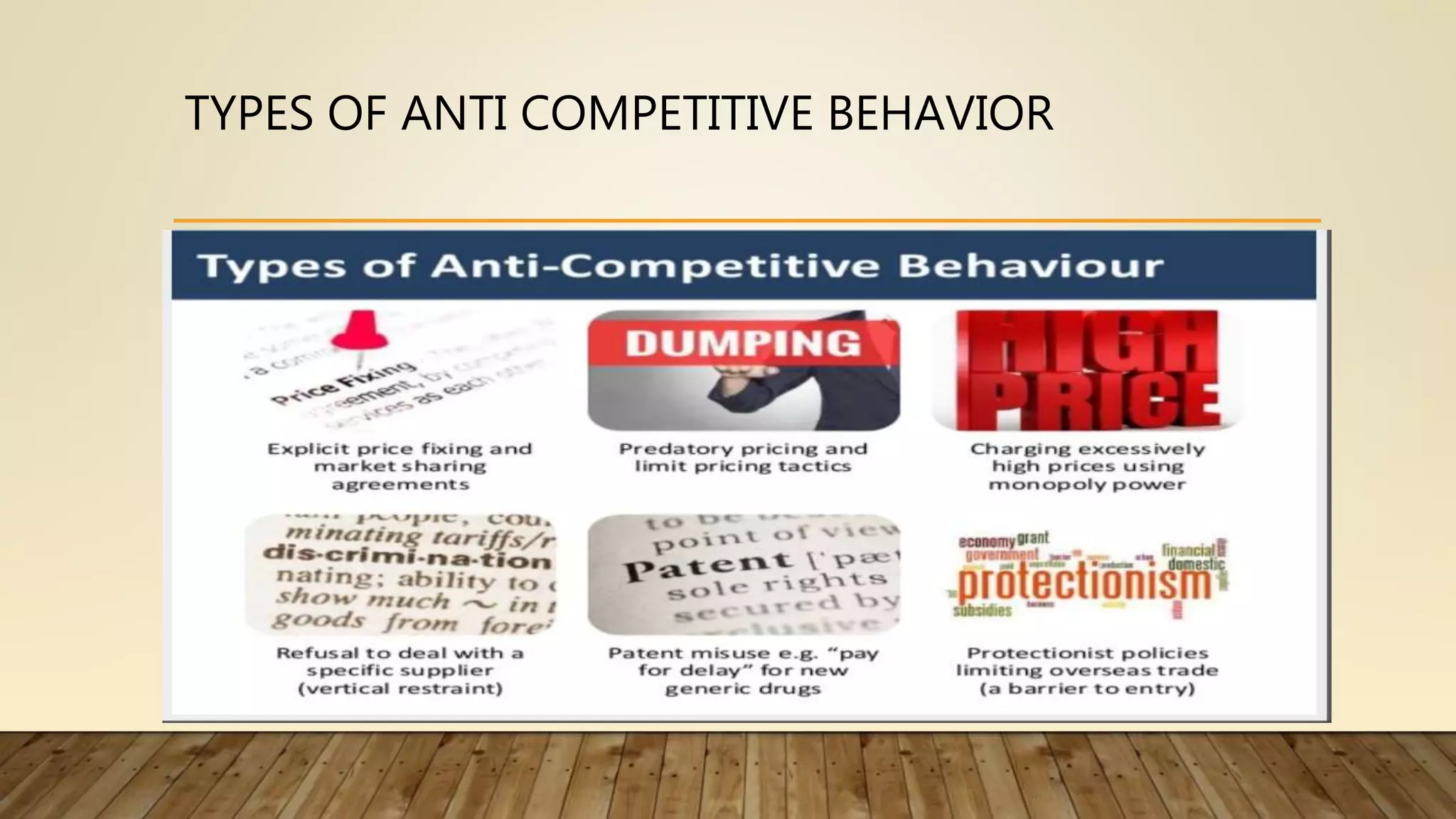
TYPES OF ANTI COMPETITIVE BEHAVIOR
THREE SIGNIFICANT ANTITRUST LAWS
• The Sherman Act
The Sherman act of 1890 is the federal antitrust law that prohibits
monopolization and conspiracies to restrain trade.
- This is still used today as the cornerstone of antitrust legislation
- Section 1 – Made trust illegal (i.e. no cartels)
- Section 2 – No monopolization of industry
THREE SIGNIFICANT ANTITRUST LAWS
• The Clayton Act
The Clayton act of 1914 is an amendment that strengthened the Sherman act by making it illegal
for firms to engaged in certain anti competitive business practices.
- Made these things illegal when they ‘substantially lessen competition or tend to create a
monopoly
Price Discrimination
Exclusive Dealing
Typing contracts
Interlocking Directories
THREE SIGNIFICANT ANTITRUST LAWS
• The Federal Trade Commission
- The Act established the federal trade commission (FTC) to investigate unfair
competitive practices of firms.
- Today’s concerns
Enforcing consumer protection legislation
Prohibiting deceptive advertising
Preventing collusion
CASE STUDIES
• The Apple vs Epic Case (Fortnite game)(Apple taking undue advantage of
monopoly powers)
• The Reliance industries – JIO
METHOD TO RESTRICT MONOPOLY IN MARKET
• Imposition of specific taxes by government on such firms
If government feels that a particular company or firm is going towards monopoly
and gaining unnecessary powers, it has right to lay extra obligation and deals
charge.
• Imposition of lumpsum tax.
Also a tax such as profit tax or license tax are imposed on a firm regardless of its
level of output.
CONCLUSION
• Some myths regarding formation of Anti Monopolistic laws.
a) Monopolies are illegal
b) Anti trust protects smaller firms from big rivals
c) Antitrust laws are too old to be relevant to the tech company
SOME REFERENCES
•Khurana R & Dholakia N, (1982) ‘The working of antimonopoly law in India: an Explanatory study and some
comparative Insights’; retrieved from Proceedings of the 1982 Academy of Marketing Science (AMS) accessed
on 11-10-2020
•Unknown. (2020) ‘The progressive weakening of Indian Competition Law’; retrieved from
https://www.lexology.com/library/detail.aspx?g=77c2bacd-c0e2-4eed-88ad-34a7293f0f47 accessed on 21-10-2020
•Verma A, (2020) ‘Epic says Fortnite is work of hard labour and Apple has no right to share in it’ ; retrieved from
https://www.indiatoday.in/technology/news/story/epic-says-fortnite-is-work-ofhard-labour-and-apple-has-no-right-to-
share-in-it-1734930-2020-10-25 accessed on 13-10-2020
•Kang C, (2020) ‘F.T.C Decision on pursuing Facebook Antitrust Case is said to be near’; retrieved from
https://www.nytimes.com/2020/10/22/technology/facebook-antitrust-ftc.html accessed on 21-10-2020
Thank You

Theory and practice of anti monopolistic regulation

  • 1.
    Theory and practiceof anti- monopolistic regulation BANSI MADLANI
  • 2.
    Sr. No TopicsPage No 1. Introduction 3 2. Types of Anti Competitive Behavior 4 3. Three Significant anti trust laws 5 4. Case Studies 9 5. Method to restrict monopoly in market 10 6. Conclusion 11
  • 3.
    INTRODUCTION • Meaning ofterms Anti- Monopoly or Competition in market. o Concerned with: a. Fears of concentration of economic power in few hands. b. Harmful effects of some forms of business cooperation. c. Misuse of ‘monopoly’ power • Three Principle Components
  • 4.
    TYPES OF ANTICOMPETITIVE BEHAVIOR
  • 5.
    THREE SIGNIFICANT ANTITRUSTLAWS • The Sherman Act The Sherman act of 1890 is the federal antitrust law that prohibits monopolization and conspiracies to restrain trade. - This is still used today as the cornerstone of antitrust legislation - Section 1 – Made trust illegal (i.e. no cartels) - Section 2 – No monopolization of industry
  • 6.
    THREE SIGNIFICANT ANTITRUSTLAWS • The Clayton Act The Clayton act of 1914 is an amendment that strengthened the Sherman act by making it illegal for firms to engaged in certain anti competitive business practices. - Made these things illegal when they ‘substantially lessen competition or tend to create a monopoly Price Discrimination Exclusive Dealing Typing contracts Interlocking Directories
  • 7.
    THREE SIGNIFICANT ANTITRUSTLAWS • The Federal Trade Commission - The Act established the federal trade commission (FTC) to investigate unfair competitive practices of firms. - Today’s concerns Enforcing consumer protection legislation Prohibiting deceptive advertising Preventing collusion
  • 8.
    CASE STUDIES • TheApple vs Epic Case (Fortnite game)(Apple taking undue advantage of monopoly powers) • The Reliance industries – JIO
  • 9.
    METHOD TO RESTRICTMONOPOLY IN MARKET • Imposition of specific taxes by government on such firms If government feels that a particular company or firm is going towards monopoly and gaining unnecessary powers, it has right to lay extra obligation and deals charge. • Imposition of lumpsum tax. Also a tax such as profit tax or license tax are imposed on a firm regardless of its level of output.
  • 10.
    CONCLUSION • Some mythsregarding formation of Anti Monopolistic laws. a) Monopolies are illegal b) Anti trust protects smaller firms from big rivals c) Antitrust laws are too old to be relevant to the tech company
  • 11.
    SOME REFERENCES •Khurana R& Dholakia N, (1982) ‘The working of antimonopoly law in India: an Explanatory study and some comparative Insights’; retrieved from Proceedings of the 1982 Academy of Marketing Science (AMS) accessed on 11-10-2020 •Unknown. (2020) ‘The progressive weakening of Indian Competition Law’; retrieved from https://www.lexology.com/library/detail.aspx?g=77c2bacd-c0e2-4eed-88ad-34a7293f0f47 accessed on 21-10-2020 •Verma A, (2020) ‘Epic says Fortnite is work of hard labour and Apple has no right to share in it’ ; retrieved from https://www.indiatoday.in/technology/news/story/epic-says-fortnite-is-work-ofhard-labour-and-apple-has-no-right-to- share-in-it-1734930-2020-10-25 accessed on 13-10-2020 •Kang C, (2020) ‘F.T.C Decision on pursuing Facebook Antitrust Case is said to be near’; retrieved from https://www.nytimes.com/2020/10/22/technology/facebook-antitrust-ftc.html accessed on 21-10-2020 Thank You