The VRC Project
Towards a cataloguing standard
         for open data
    Alick Macdonnel McLean
       Augusto Palombini
        fabrizio giudici
Agenda
 •     Origins and philosophy of
       SUF Media Lab/VRC: open
       data, the community
 •     Commonality of interests
       between VRC original users
       and archaeologists
 •     Technical realization with
       open source tools


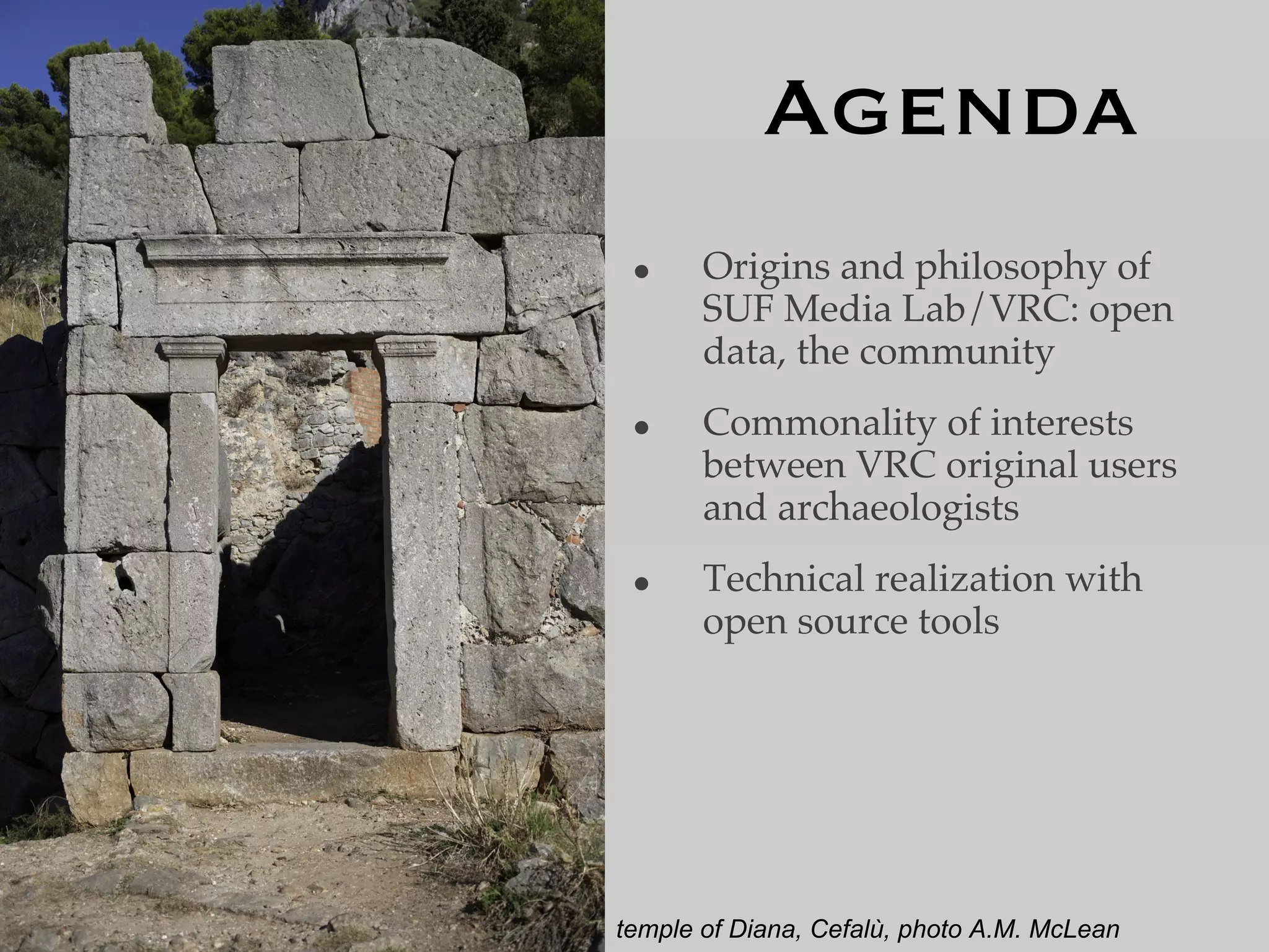
temple of Diana, Cefalù, photo A.M. McLean
Origins and philosophy
of SUF Media Lab/VRC:
 open data, community
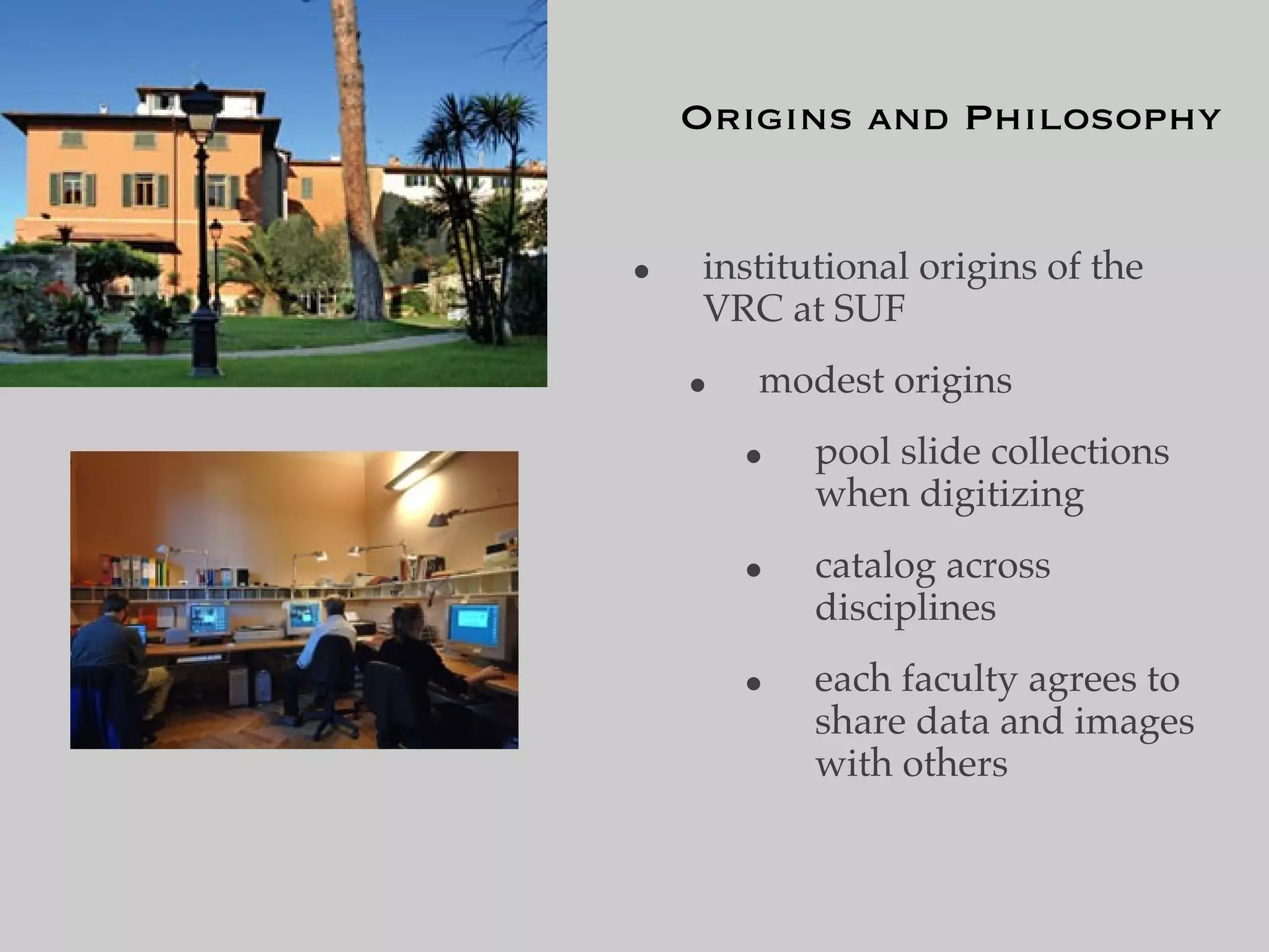
Origins and Philosophy


•   institutional origins of the
    VRC at SUF
    •   modest origins
        •   pool slide collections
            when digitizing
        •   catalog across
            disciplines
        •   each faculty agrees to
            share data and images
            with others
Data community


•   extensible, rich cataloging blessing and challenge
      •   extend pool of catalogers by extending pool of
          users/institutions
      •   expand based on original model
      •   distribute program in exchange for user
          engagement in data community through
          cataloging and image contributions
Commonality of interests
between VRC original users
    and archaeologists
Common Interests?


•   Commonality of interest between VRC original users
    and archaeologists:
    •   public utility of open data and transparency of
        processes
    •   flexible classification as a powerful research tool
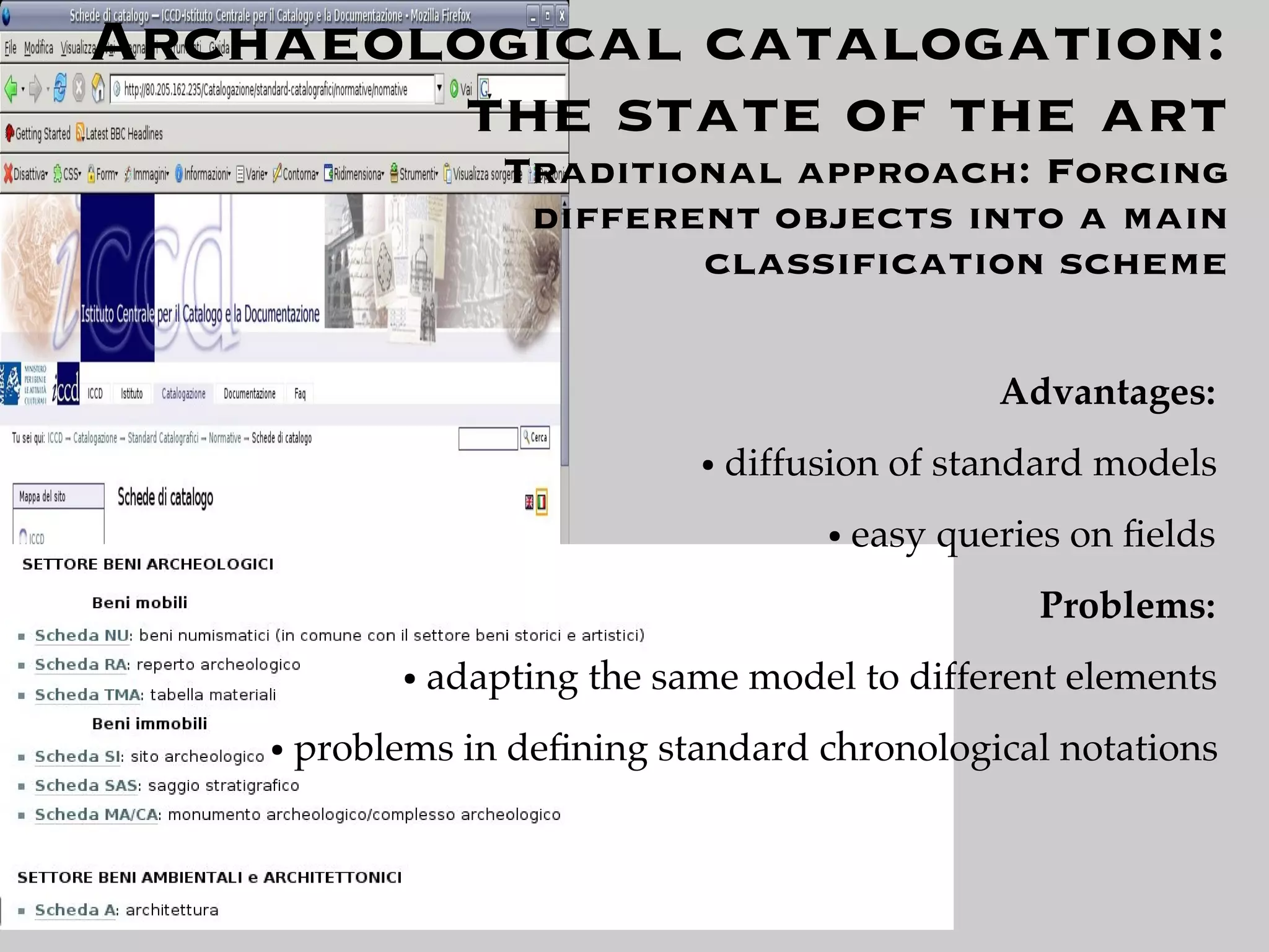
Archaeological catalogation:
        the state of the art
                      Traditional approach: Forcing
                       different objects into a main
                              classification scheme

                                                      Advantages:
                                 ●   diffusion of standard models
                                          ●   easy queries on fields
                                                        Problems:
              ●   adapting the same model to different elements
    ●   problems in defining standard chronological notations
Archaeological catalogation:
        the state of the art
          Traditional approach: Forcing
           different objects into a main
                  classification scheme


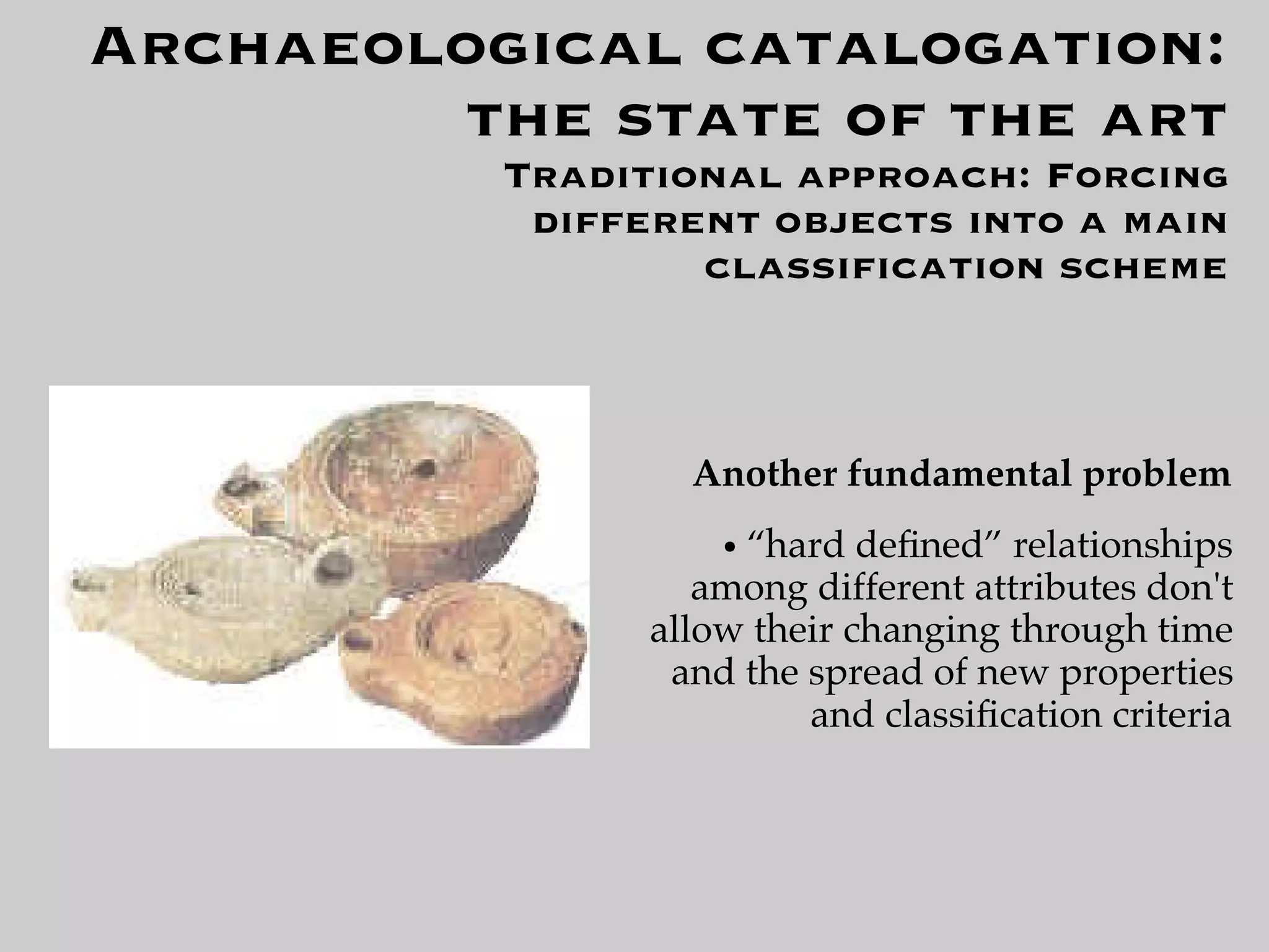
                  Another fundamental problem
                    ●“hard defined” relationships
                   among different attributes don't
                allow their changing through time
                 and the spread of new properties
                         and classification criteria
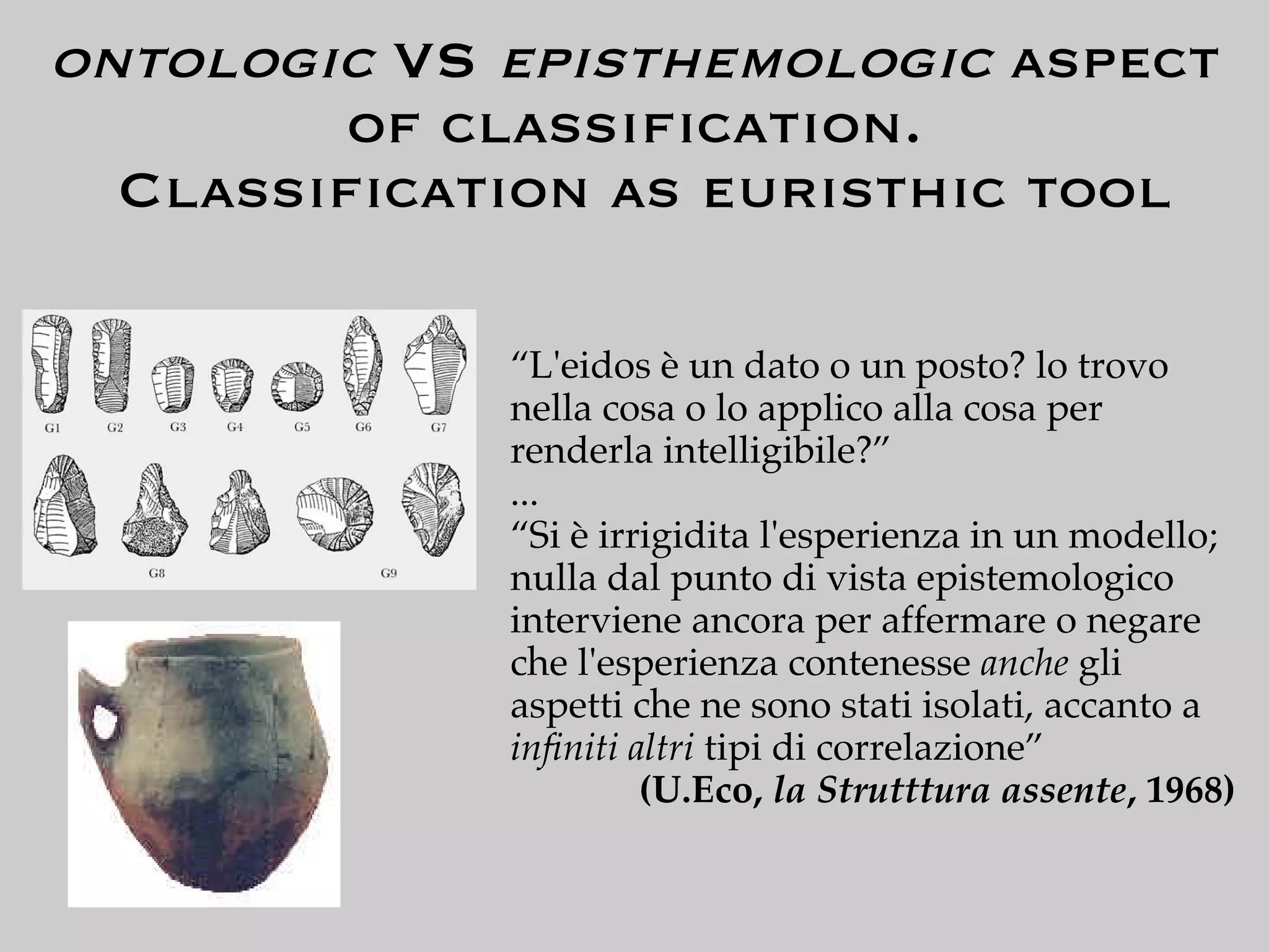
ontologic VS episthemologic aspect
        of classification.
  Classification as euristhic tool

             “L'eidos è un dato o un posto? lo trovo
             nella cosa o lo applico alla cosa per
             renderla intelligibile?”
             ...
             “Si è irrigidita l'esperienza in un modello;
             nulla dal punto di vista epistemologico
             interviene ancora per affermare o negare
             che l'esperienza contenesse anche gli
             aspetti che ne sono stati isolati, accanto a
             infiniti altri tipi di correlazione”
                      (U.Eco, la Strutttura assente, 1968)
Technical realization
with open source tools
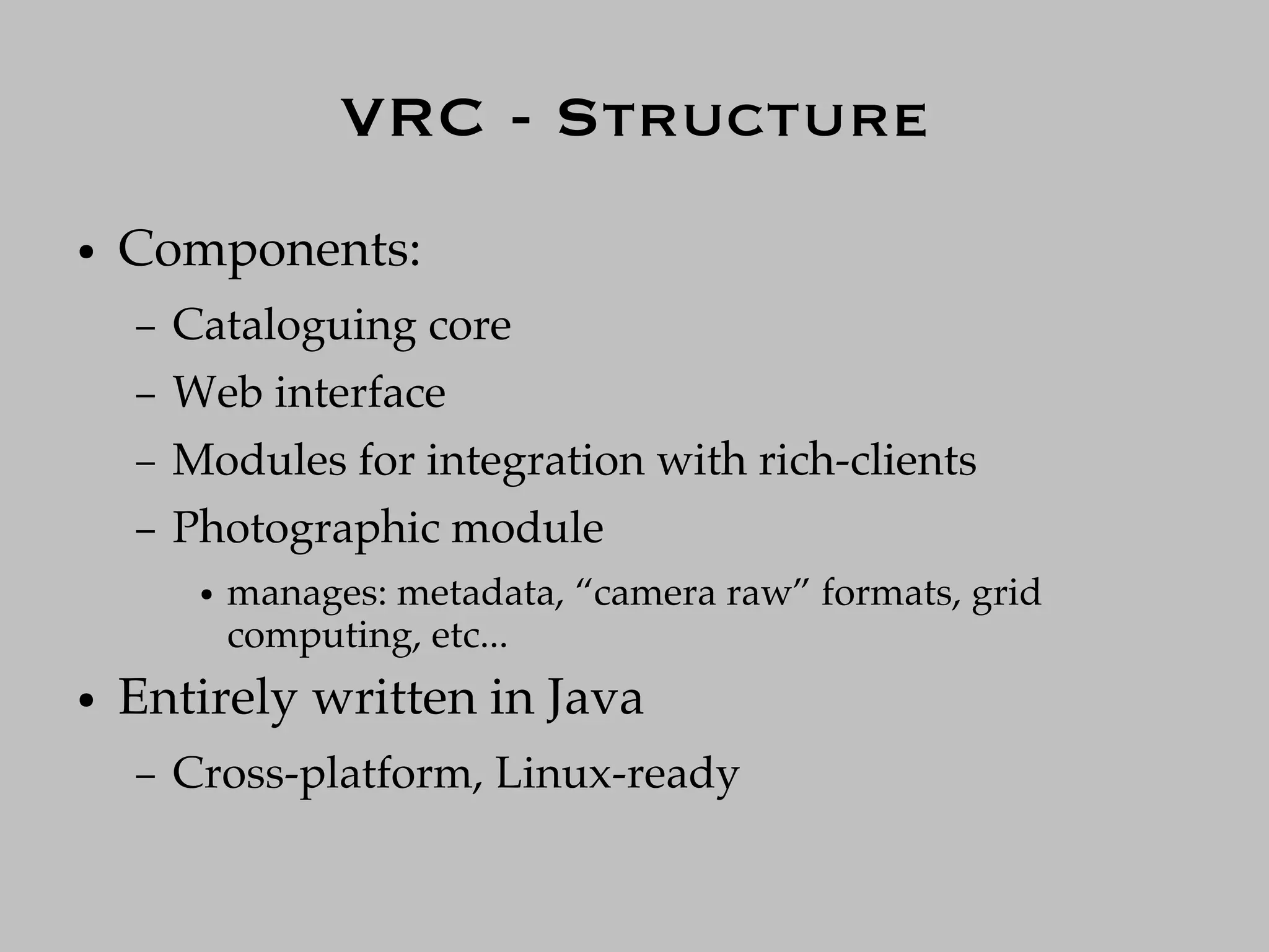
VRC - Structure
●   Components:
    –   Cataloguing core
    –   Web interface
    –   Modules for integration with rich-clients
    –   Photographic module
         ●   manages: metadata, “camera raw” formats, grid
             computing, etc...
●   Entirely written in Java
    –   Cross-platform, Linux-ready
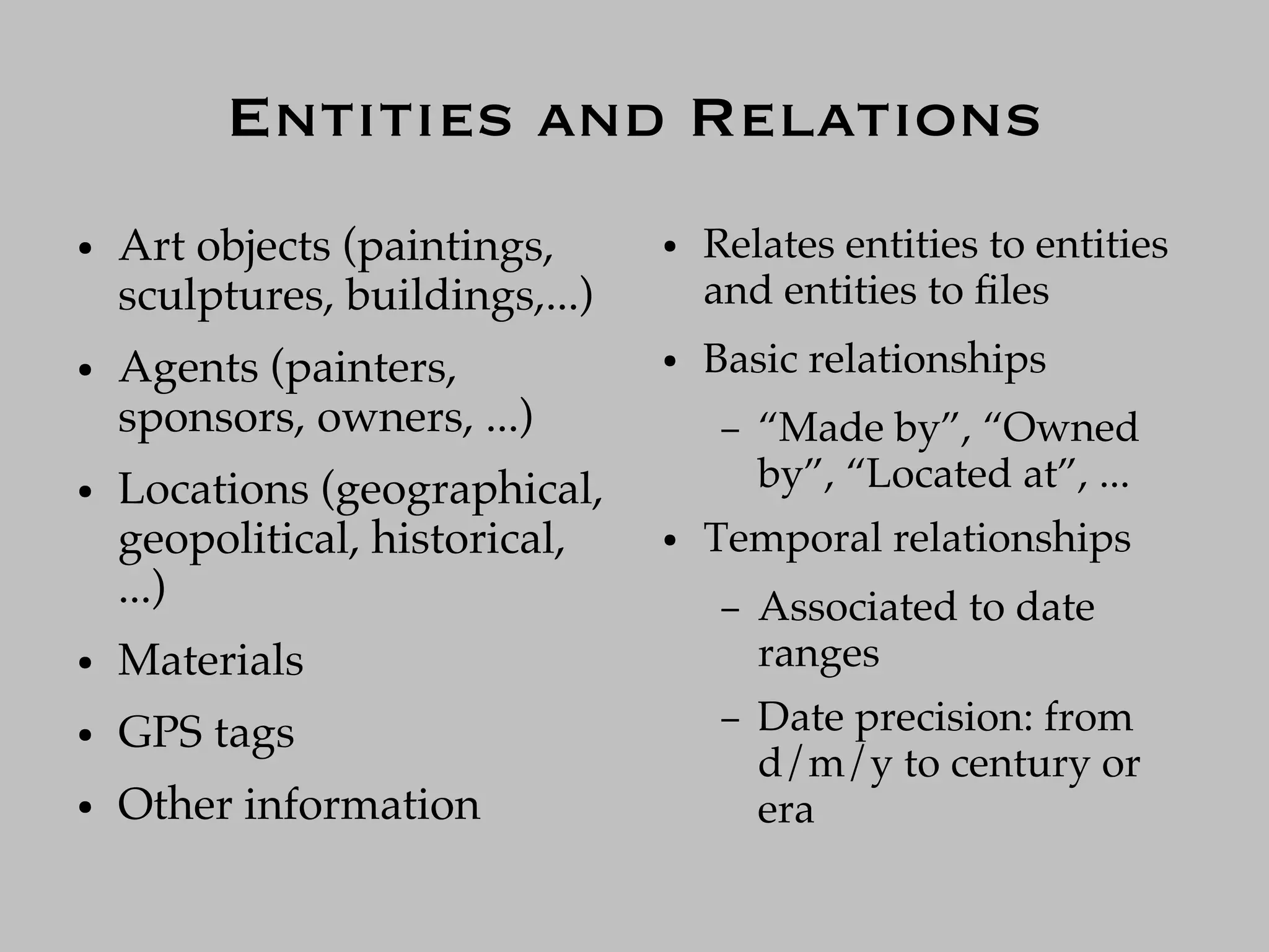
Entities and Relations
●   Art objects (paintings,      ●   Relates entities to entities
    sculptures, buildings,...)       and entities to files
●   Agents (painters,            ●   Basic relationships
    sponsors, owners, ...)            –   “Made by”, “Owned
●   Locations (geographical,              by”, “Located at”, ...
    geopolitical, historical,    ●   Temporal relationships
    ...)                              –   Associated to date
●   Materials                             ranges
●   GPS tags                          –   Date precision: from
                                          d/m/y to century or
●   Other information                     era
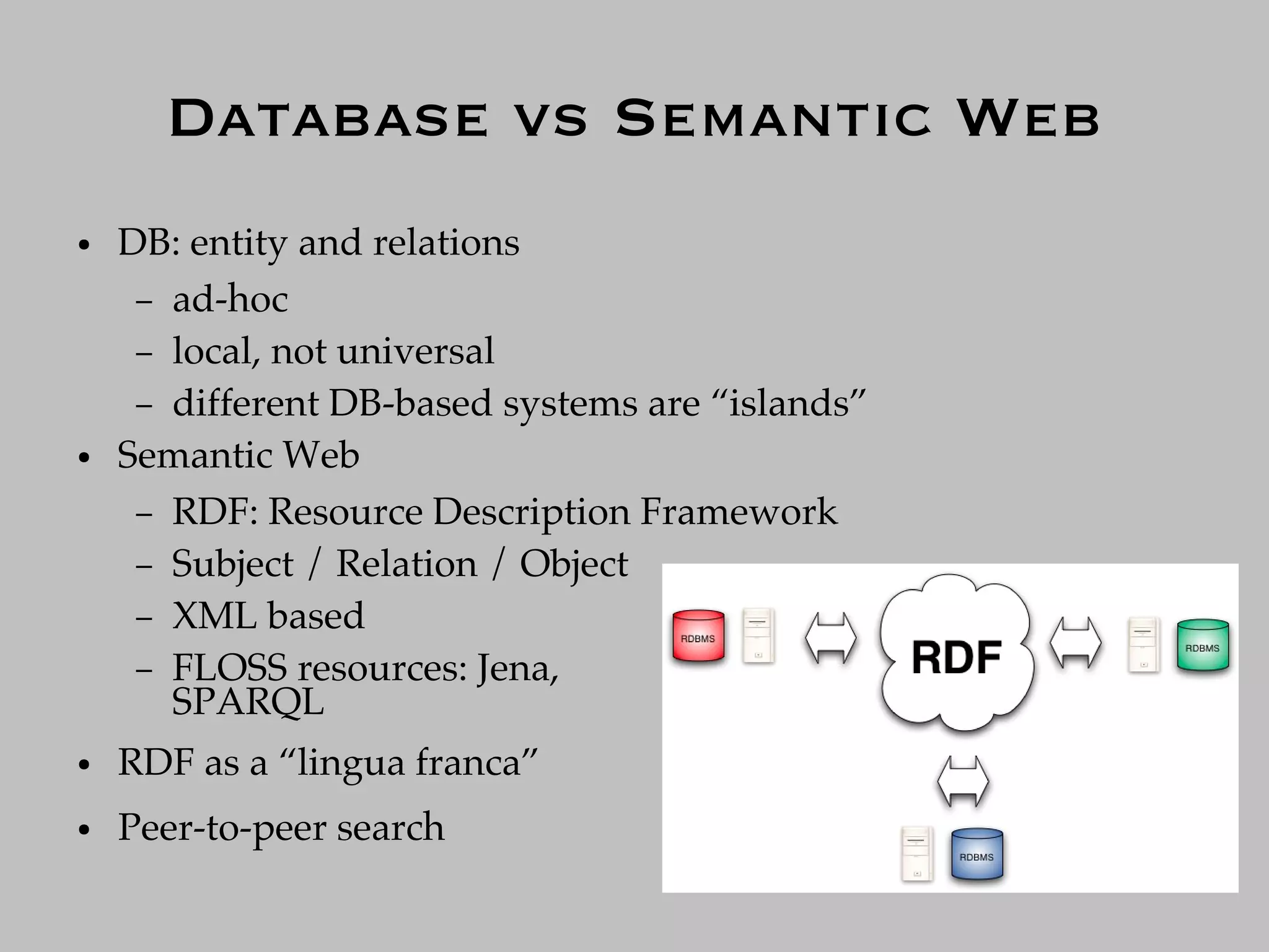
Database vs Semantic Web
●   DB: entity and relations
     – ad-hoc
     – local, not universal
     – different DB-based systems are “islands”
●   Semantic Web
     – RDF: Resource Description Framework
     – Subject / Relation / Object
     – XML based
     – FLOSS resources: Jena,
       SPARQL
●   RDF as a “lingua franca”
●   Peer-to-peer search
“Ontologies”
●   Data models with relations
    –   classes
    –   attributes
    –   relations
●   OWL – Web Ontology Language
●   Standard ontologies
●   More can be defined
    –   Requires pool of expert, agreement
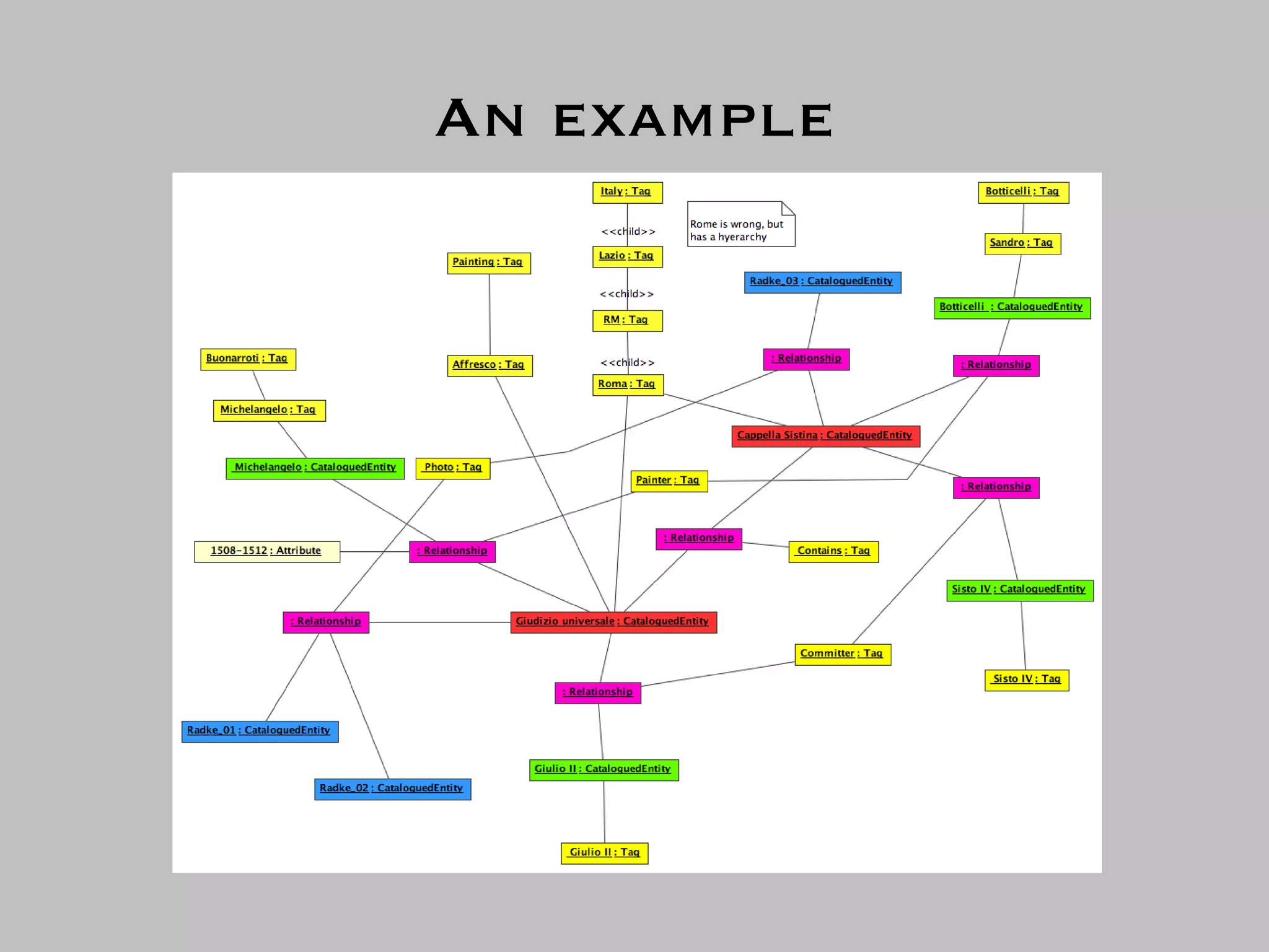
An example
Concluding Remarks


                                                     •   what does SUF need to go open source?

                                                             •   sharing high-quality, vetted data for
                                                                 sites across Italy and the world

                                                             •   extension of data across institutions,
                                                                 disciplines, geography and time

                                                         •   how to structure data community?
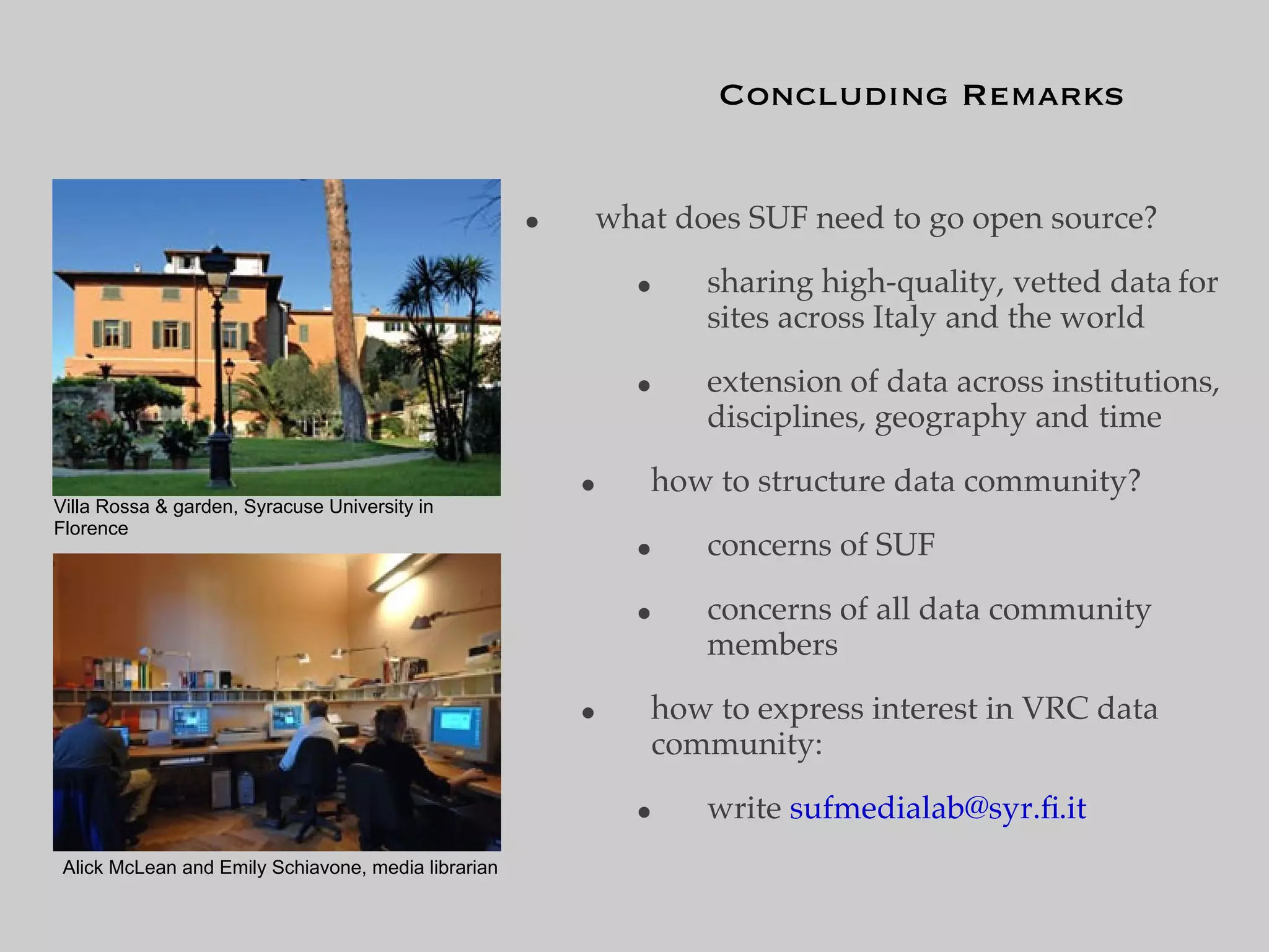
Villa Rossa & garden, Syracuse University in
Florence
                                                             •   concerns of SUF

                                                             •   concerns of all data community
                                                                 members

                                                         •   how to express interest in VRC data
                                                             community:

                                                             •   write sufmedialab@syr.fi.it
 Alick McLean and Emily Schiavone, media librarian
• Prof. Alick Macdonnel McLean
 Syracuse University
 ammclean@syr.fi.it
 http://www.syr.fi.it/study-abroad-florence-media-lab.php

• Dr. Augusto Palombini
 CNR VHLab Rome
 augusto.palombini@itabc.cnr.it
• Ing. Fabrizio Giudici
 TidalWave / SourceSense
 fabrizio.giudici@tidalwave.it

The VRC Project

  • 1.
    The VRC Project Towardsa cataloguing standard for open data Alick Macdonnel McLean Augusto Palombini fabrizio giudici
  • 2.
    Agenda • Origins and philosophy of SUF Media Lab/VRC: open data, the community • Commonality of interests between VRC original users and archaeologists • Technical realization with open source tools temple of Diana, Cefalù, photo A.M. McLean
  • 3.
    Origins and philosophy ofSUF Media Lab/VRC: open data, community
  • 4.
    Origins and Philosophy • institutional origins of the VRC at SUF • modest origins • pool slide collections when digitizing • catalog across disciplines • each faculty agrees to share data and images with others
  • 5.
    Data community • extensible, rich cataloging blessing and challenge • extend pool of catalogers by extending pool of users/institutions • expand based on original model • distribute program in exchange for user engagement in data community through cataloging and image contributions
  • 6.
    Commonality of interests betweenVRC original users and archaeologists
  • 7.
    Common Interests? • Commonality of interest between VRC original users and archaeologists: • public utility of open data and transparency of processes • flexible classification as a powerful research tool
  • 8.
    Archaeological catalogation: the state of the art Traditional approach: Forcing different objects into a main classification scheme Advantages: ● diffusion of standard models ● easy queries on fields Problems: ● adapting the same model to different elements ● problems in defining standard chronological notations
  • 9.
    Archaeological catalogation: the state of the art Traditional approach: Forcing different objects into a main classification scheme Another fundamental problem ●“hard defined” relationships among different attributes don't allow their changing through time and the spread of new properties and classification criteria
  • 10.
    ontologic VS episthemologicaspect of classification. Classification as euristhic tool “L'eidos è un dato o un posto? lo trovo nella cosa o lo applico alla cosa per renderla intelligibile?” ... “Si è irrigidita l'esperienza in un modello; nulla dal punto di vista epistemologico interviene ancora per affermare o negare che l'esperienza contenesse anche gli aspetti che ne sono stati isolati, accanto a infiniti altri tipi di correlazione” (U.Eco, la Strutttura assente, 1968)
  • 11.
  • 12.
    VRC - Structure ● Components: – Cataloguing core – Web interface – Modules for integration with rich-clients – Photographic module ● manages: metadata, “camera raw” formats, grid computing, etc... ● Entirely written in Java – Cross-platform, Linux-ready
  • 13.
    Entities and Relations ● Art objects (paintings, ● Relates entities to entities sculptures, buildings,...) and entities to files ● Agents (painters, ● Basic relationships sponsors, owners, ...) – “Made by”, “Owned ● Locations (geographical, by”, “Located at”, ... geopolitical, historical, ● Temporal relationships ...) – Associated to date ● Materials ranges ● GPS tags – Date precision: from d/m/y to century or ● Other information era
  • 14.
    Database vs SemanticWeb ● DB: entity and relations – ad-hoc – local, not universal – different DB-based systems are “islands” ● Semantic Web – RDF: Resource Description Framework – Subject / Relation / Object – XML based – FLOSS resources: Jena, SPARQL ● RDF as a “lingua franca” ● Peer-to-peer search
  • 15.
    “Ontologies” ● Data models with relations – classes – attributes – relations ● OWL – Web Ontology Language ● Standard ontologies ● More can be defined – Requires pool of expert, agreement
  • 16.
  • 17.
    Concluding Remarks • what does SUF need to go open source? • sharing high-quality, vetted data for sites across Italy and the world • extension of data across institutions, disciplines, geography and time • how to structure data community? Villa Rossa & garden, Syracuse University in Florence • concerns of SUF • concerns of all data community members • how to express interest in VRC data community: • write sufmedialab@syr.fi.it Alick McLean and Emily Schiavone, media librarian
  • 18.
    • Prof. AlickMacdonnel McLean Syracuse University ammclean@syr.fi.it http://www.syr.fi.it/study-abroad-florence-media-lab.php • Dr. Augusto Palombini CNR VHLab Rome augusto.palombini@itabc.cnr.it • Ing. Fabrizio Giudici TidalWave / SourceSense fabrizio.giudici@tidalwave.it