Digital content, VREs
(Virtual Research Environments)
and Communities of Practice
Dov Winer
MAKASH – Advancing ICT Applications in
Education, Culture and Science
Judaica Europeana Partners
*
* YIVO: The Power of Persuasion, Jewish Posters from Prewar Poland 1900-1939
http://www.yivoinstitute.org/exhibits/posterfr.htm
~ millions of
digital objects
Mosaica Semantically Enhanced, Multifaceted, Collaborative
Access to Cultural Heritage
Athena
Judaica Europeana
Linked Heritage
DM2E Digital Manuscripts to Europeana
JudaicaLink
There are tangible benefits for humanities scholarship from the integration of
contents, communities of practice, and tools/infrastructures.
 Digital Humanities: basic scholarship activities
 Common Data Model / Who, What, When, Where
 Tools and Infrastructure
 VRE Virtual Research Environment
 Communities of Practice
Outline
Digital Humanities
 Digital Humanities: basic scholarship activities
 Common Data Model / Who, What, When, Where
 Tools and Infrastructure
 VRE Virtual Research Environment
 Communities of Practice
The scholarship work cycle
From S.Gradmann and J.C. Meister, Digital document and interpretation: re-thinking “text” and scholarship in electronic settings .
Poiesis & Praxis, V5 N2 (2008)
Scholarly Primitives
Scholarly Primitives: what methods do humanities
researchers have in common, and how might our
tools reflect this?
John Unsworth
Humanities Computing: formal methods, experimental practice
King’s College, London, May 13, 2000
Discovering Annotating
Comparing Referring
Sampling Illustrating
Representing
Unsworth primitive Bamboo theme of scholarly
practice
OCLC Scholarly Information Activity
Discovery Gathering / Foraging Searching (direct searching, chaining, browsing, probing,
accessing)
Sampling Synthesizing / Filtering Comparing Collecting (gathering, organizing)
Referring Contextualizing Searching (chaining, browsing, probing)
Collecting (organizing)
Cross-cutting (monitoring)
Illustrating
Representing
Comparing
Conceptualizing,
Refining and Critiquing
Reading (scanning, assessing, rereading)
Cross-cutting (note taking, translating)
Writing (assembling)
Collaborating (consulting)
Representing Documenting methods Writing (disseminating)
Cross-cutting (translating)
Discovering Referring
Representing
Managing data Searching (accessing)
Collecting (organizing)
Collaborating (coordinating, consulting)
Annotating Annotating /
documenting
Writing (assembling)
Cross-cutting (note taking)
Illustrating
Representing
Modelling / visualizing Cross-cutting (translating)
Writing (assembling)
Representing Overlapping teaching and research Collaborating (coordinating)
Cross-cutting (translating)
Representing Sharing / dissemination
/ publishing
Writing (disseminating)
Suggested parenthetically Funding No analogue
Common thread Collaborating Writing (co-authoring)
Collaborating (coordinating, networking, consulting)
Referring Citation, credit, peer-review Reading (assessing)
Writing (dissemination)
Collaborating (consulting)
OCLC: Scholarly Information Practices in the Online Environment
http://www.oclc.org/content/dam/research/publications/library/2009/2009-02.pdf?urlm=162919
Project Bamboo Scholarly Practice Report
https://wikihub.berkeley.edu/display/pbamboo/Project+Bamboo+Scholarly+Practice+Report
Scholarly primitives: Building institutional
infrastructure for humanities e-Science
Tobias Blanke, Mark Hedges
King’s College London, Centre for e-Research
Future Generation Computer Systems 29 (2013) 654-661
Scholarly Information Practices in the Online
Environment
Carole L. Palmer, Lauren C. Teffeau, Carrie M. Pirmannn
2009 OCLC Online Computer Library Center, Inc.
OCLC Online Computer Library Center 2009
http://www.oclc.org/content/dam/research/publications/library/2009/2009-02.pdf?urlm=162919
Scholarly Primitives
Common Data Model for
Content Description
 Digital Humanities: basic scholarship activities
 Common Data Model / Who, What, When, Where
 Tools and Infrastructure
 VRE Virtual Research Environment
 Communities of Practice
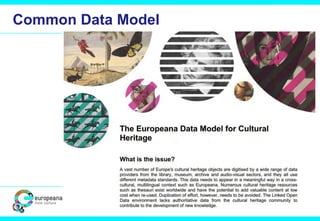
Common Data Model
Outline
Linked Data: structured
data on the Web
David Woood
Marsha Zeidman
Luke Ruth
with
Michael Hausenblas
Manning Publications
MEAP 2013
The essence of RDF: the “triple”
Source: “The thirty minute guide to RDF and Linked Data”, by Ian Davis and Tom Heath
Who? What? When? Where?
Controlled vocabularies: hubs of
Jewish Knowledge in the
Structured Web
Jewish encyclopedias: CONTEXT
The goals of the project
Linking and Populating the
Digital Humanities are to
create and maintain data
integration tools tailored to
digital humanities collections in
order to build a machine-
readable web of facts about
covered domains.
Jewish encyclopedias: CONTEXT
Encyclopedia Judaica
Encyclopedia of Russian Jewry
http://www.rujen.ru/
http://www.jewishencyclopedia.com/
Rav Zeev Vagner
Josh Kopelman
http://www.judaica-europeana.eu/Search_Europeana_Collections_with_Judaic_categories.html
Tools and Infrastructure
 Digital Humanities: basic scholarship activities
 Common Data Model / Who, What, When, Where
 Tools and Infrastructure
 VRE Virtual Research Environment
 Communities of Practice
Prof. Stefan Gradmann
Prof. Christian Bizer
Scholarly services
Document Mapping;
Concordance; Collocation/Cloud;
Frequency; Morphological
Analysis; Syntactic Analysis;
Named Entity Identification;
Proxied SEASR Analytics
VRE
Virtual Research Environment
Community+Content+
Tools/Infrastructure
Outline
From JISC's VRE Programme – supporting collaborative research
Christopher Brown - JISC Digital Infrastructure Team
http://www.slideshare.net/chriscb/jisc-vreresearch-tools-presentation?from_search=2
From: Guus van den Brekel Central Medical Library, UMCG
Virtual Research Networks: towards Research 2.0
http://www.slideshare.net/digicmb/virtual-research-networks-towards-research-20?from_search=1
Communities
of Practice
Constructionist approach
Open system
input output
environment
environment
a viable system is that able to elaborate the inputs so as to build itself
and create value for the environment (outputs)
Distinction between Structural Elements
and Dynamic Core
Structural elements
Infrastructure
Technology
Management
Structure
Dynamic Core
High agreement on well defined goals
Congruency between participants and system’s
goals / benefit from the system operation
Good relations among participants
Uri Meri, Coping with crisis in organizations, communities and business,Tel aviv, Cherikower 1999
Thank you for your attention!
Dov Winer
The Van Leer Jerusalem Institute
dov.winer@gmail.com
Mapping the Republic of Letters (Stanford)
http://republicofletters.stanford.edu/publications.html
Circulation of Knowledge and Learned Practices in the 17th-
century Dutch Republic
http://ckcc.huygens.knaw.nl/
Linked Jazz
http://www.linkedjazz.org/52ndStreet/
RelFinder
http://www.visualdataweb.org/relfinder.php

SNSInkCloudWiner20150410

  • 1.
    Digital content, VREs (VirtualResearch Environments) and Communities of Practice Dov Winer MAKASH – Advancing ICT Applications in Education, Culture and Science
  • 2.
  • 3.
    * * YIVO: ThePower of Persuasion, Jewish Posters from Prewar Poland 1900-1939 http://www.yivoinstitute.org/exhibits/posterfr.htm
  • 4.
    ~ millions of digitalobjects Mosaica Semantically Enhanced, Multifaceted, Collaborative Access to Cultural Heritage Athena Judaica Europeana Linked Heritage DM2E Digital Manuscripts to Europeana JudaicaLink
  • 5.
    There are tangiblebenefits for humanities scholarship from the integration of contents, communities of practice, and tools/infrastructures.  Digital Humanities: basic scholarship activities  Common Data Model / Who, What, When, Where  Tools and Infrastructure  VRE Virtual Research Environment  Communities of Practice Outline
  • 6.
    Digital Humanities  DigitalHumanities: basic scholarship activities  Common Data Model / Who, What, When, Where  Tools and Infrastructure  VRE Virtual Research Environment  Communities of Practice
  • 7.
    The scholarship workcycle From S.Gradmann and J.C. Meister, Digital document and interpretation: re-thinking “text” and scholarship in electronic settings . Poiesis & Praxis, V5 N2 (2008)
  • 9.
    Scholarly Primitives Scholarly Primitives:what methods do humanities researchers have in common, and how might our tools reflect this? John Unsworth Humanities Computing: formal methods, experimental practice King’s College, London, May 13, 2000 Discovering Annotating Comparing Referring Sampling Illustrating Representing
  • 10.
    Unsworth primitive Bambootheme of scholarly practice OCLC Scholarly Information Activity Discovery Gathering / Foraging Searching (direct searching, chaining, browsing, probing, accessing) Sampling Synthesizing / Filtering Comparing Collecting (gathering, organizing) Referring Contextualizing Searching (chaining, browsing, probing) Collecting (organizing) Cross-cutting (monitoring) Illustrating Representing Comparing Conceptualizing, Refining and Critiquing Reading (scanning, assessing, rereading) Cross-cutting (note taking, translating) Writing (assembling) Collaborating (consulting) Representing Documenting methods Writing (disseminating) Cross-cutting (translating) Discovering Referring Representing Managing data Searching (accessing) Collecting (organizing) Collaborating (coordinating, consulting) Annotating Annotating / documenting Writing (assembling) Cross-cutting (note taking) Illustrating Representing Modelling / visualizing Cross-cutting (translating) Writing (assembling) Representing Overlapping teaching and research Collaborating (coordinating) Cross-cutting (translating) Representing Sharing / dissemination / publishing Writing (disseminating) Suggested parenthetically Funding No analogue Common thread Collaborating Writing (co-authoring) Collaborating (coordinating, networking, consulting) Referring Citation, credit, peer-review Reading (assessing) Writing (dissemination) Collaborating (consulting) OCLC: Scholarly Information Practices in the Online Environment http://www.oclc.org/content/dam/research/publications/library/2009/2009-02.pdf?urlm=162919 Project Bamboo Scholarly Practice Report https://wikihub.berkeley.edu/display/pbamboo/Project+Bamboo+Scholarly+Practice+Report
  • 12.
    Scholarly primitives: Buildinginstitutional infrastructure for humanities e-Science Tobias Blanke, Mark Hedges King’s College London, Centre for e-Research Future Generation Computer Systems 29 (2013) 654-661 Scholarly Information Practices in the Online Environment Carole L. Palmer, Lauren C. Teffeau, Carrie M. Pirmannn 2009 OCLC Online Computer Library Center, Inc. OCLC Online Computer Library Center 2009 http://www.oclc.org/content/dam/research/publications/library/2009/2009-02.pdf?urlm=162919 Scholarly Primitives
  • 13.
    Common Data Modelfor Content Description  Digital Humanities: basic scholarship activities  Common Data Model / Who, What, When, Where  Tools and Infrastructure  VRE Virtual Research Environment  Communities of Practice
  • 14.
  • 15.
  • 16.
    Linked Data: structured dataon the Web David Woood Marsha Zeidman Luke Ruth with Michael Hausenblas Manning Publications MEAP 2013
  • 18.
    The essence ofRDF: the “triple” Source: “The thirty minute guide to RDF and Linked Data”, by Ian Davis and Tom Heath
  • 19.
    Who? What? When?Where? Controlled vocabularies: hubs of Jewish Knowledge in the Structured Web
  • 20.
    Jewish encyclopedias: CONTEXT Thegoals of the project Linking and Populating the Digital Humanities are to create and maintain data integration tools tailored to digital humanities collections in order to build a machine- readable web of facts about covered domains.
  • 21.
    Jewish encyclopedias: CONTEXT EncyclopediaJudaica Encyclopedia of Russian Jewry http://www.rujen.ru/ http://www.jewishencyclopedia.com/ Rav Zeev Vagner Josh Kopelman
  • 25.
  • 26.
    Tools and Infrastructure Digital Humanities: basic scholarship activities  Common Data Model / Who, What, When, Where  Tools and Infrastructure  VRE Virtual Research Environment  Communities of Practice
  • 27.
  • 32.
    Scholarly services Document Mapping; Concordance;Collocation/Cloud; Frequency; Morphological Analysis; Syntactic Analysis; Named Entity Identification; Proxied SEASR Analytics
  • 33.
  • 34.
    Outline From JISC's VREProgramme – supporting collaborative research Christopher Brown - JISC Digital Infrastructure Team http://www.slideshare.net/chriscb/jisc-vreresearch-tools-presentation?from_search=2
  • 37.
    From: Guus vanden Brekel Central Medical Library, UMCG Virtual Research Networks: towards Research 2.0 http://www.slideshare.net/digicmb/virtual-research-networks-towards-research-20?from_search=1
  • 38.
  • 43.
    Open system input output environment environment aviable system is that able to elaborate the inputs so as to build itself and create value for the environment (outputs)
  • 44.
    Distinction between StructuralElements and Dynamic Core Structural elements Infrastructure Technology Management Structure Dynamic Core High agreement on well defined goals Congruency between participants and system’s goals / benefit from the system operation Good relations among participants Uri Meri, Coping with crisis in organizations, communities and business,Tel aviv, Cherikower 1999
  • 45.
    Thank you foryour attention! Dov Winer The Van Leer Jerusalem Institute dov.winer@gmail.com
  • 46.
    Mapping the Republicof Letters (Stanford) http://republicofletters.stanford.edu/publications.html Circulation of Knowledge and Learned Practices in the 17th- century Dutch Republic http://ckcc.huygens.knaw.nl/ Linked Jazz http://www.linkedjazz.org/52ndStreet/ RelFinder http://www.visualdataweb.org/relfinder.php