

The Usability
of Usability
A ND R E W CHA K
F E B R UA R Y 20 1 4
About Me
• 19 years spanning
visual design, front
end
coding, information
architecture, usability
research, and digital
strategy
• AVP, Digital Customer
Experience at TD
• Klick
Health, OnX, Immersa
nt

• Connect with me on
LinkedIn if you’re
interested in a contract
UX position
• I’m an avid runner and
overshare about it on
Twitter @andrewchak
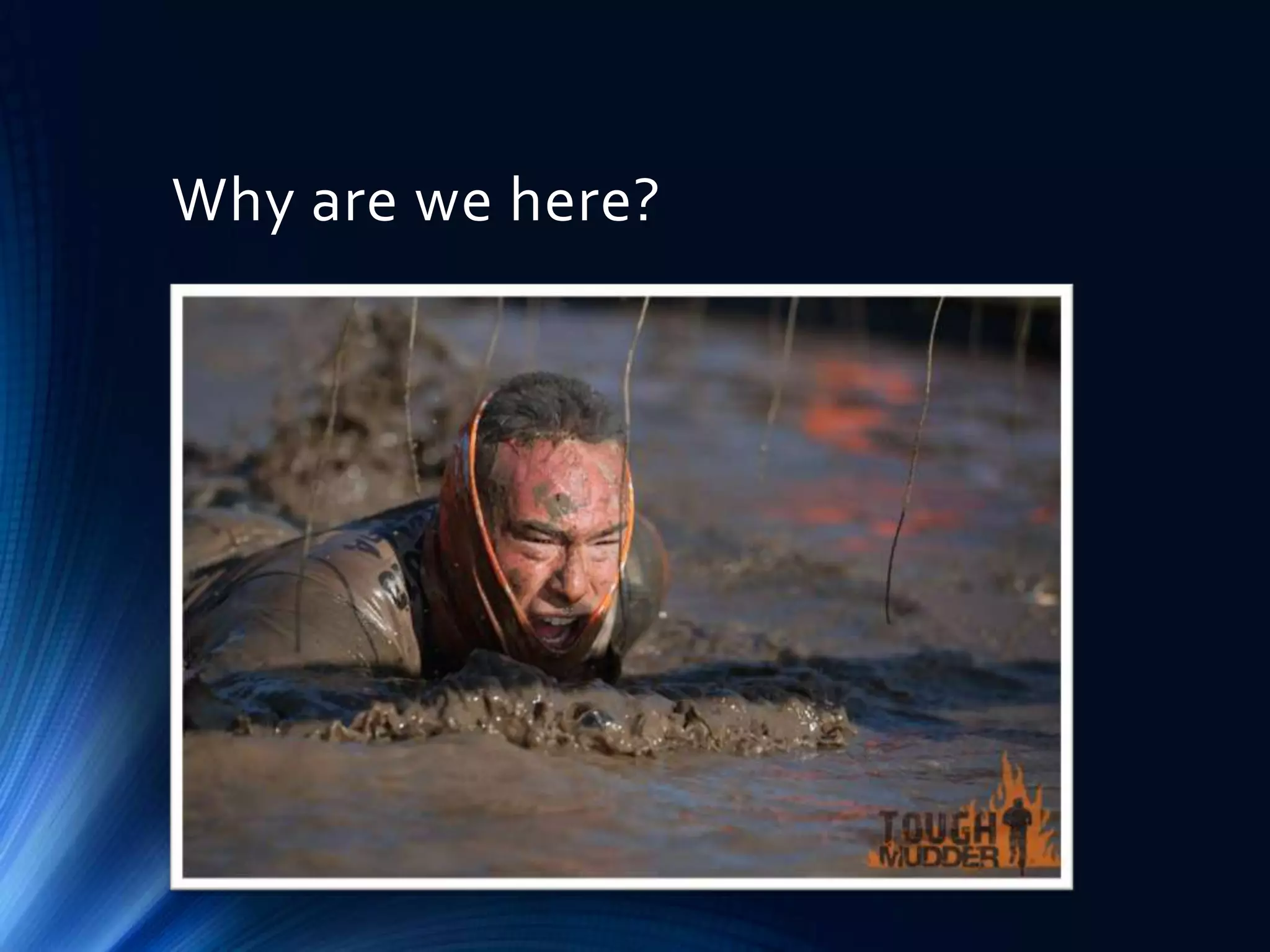
Why are we here?
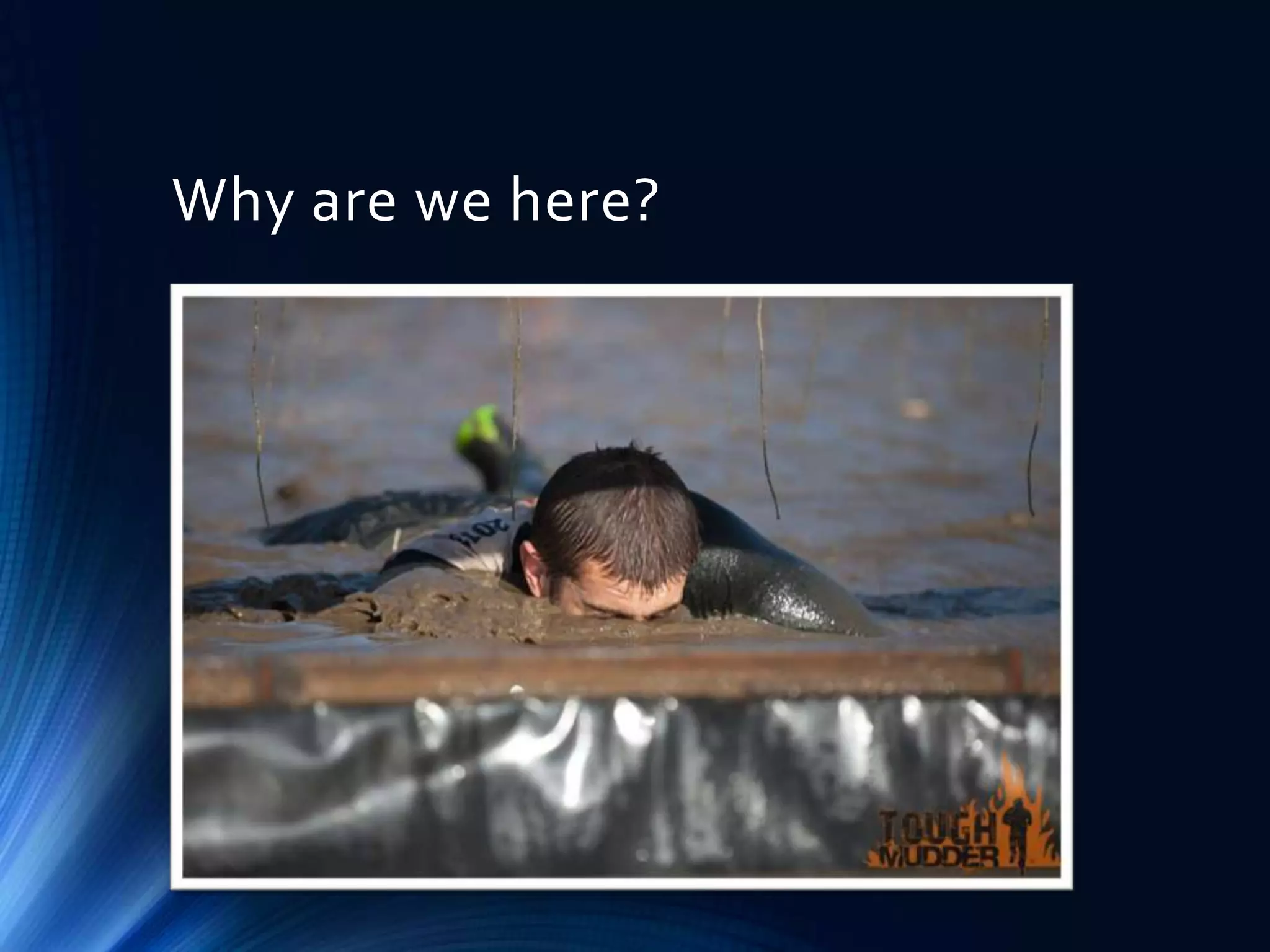
Why are we here?
About today

I share
You share
Pick a partner…

“Hi there… I’m…”

“What’s the best thing that has
happened to you recently?”
Now pick a role…

Tappers

Listeners

Keep eyes open
Read instructions

Get a pen & paper
Close your eyes
The Mystery Song

“Twinkle, Twinkle Little Star”
Instructions

Tappers
When
prompted, start
tapping
the song

Listeners
Write down song
names until you
are correct
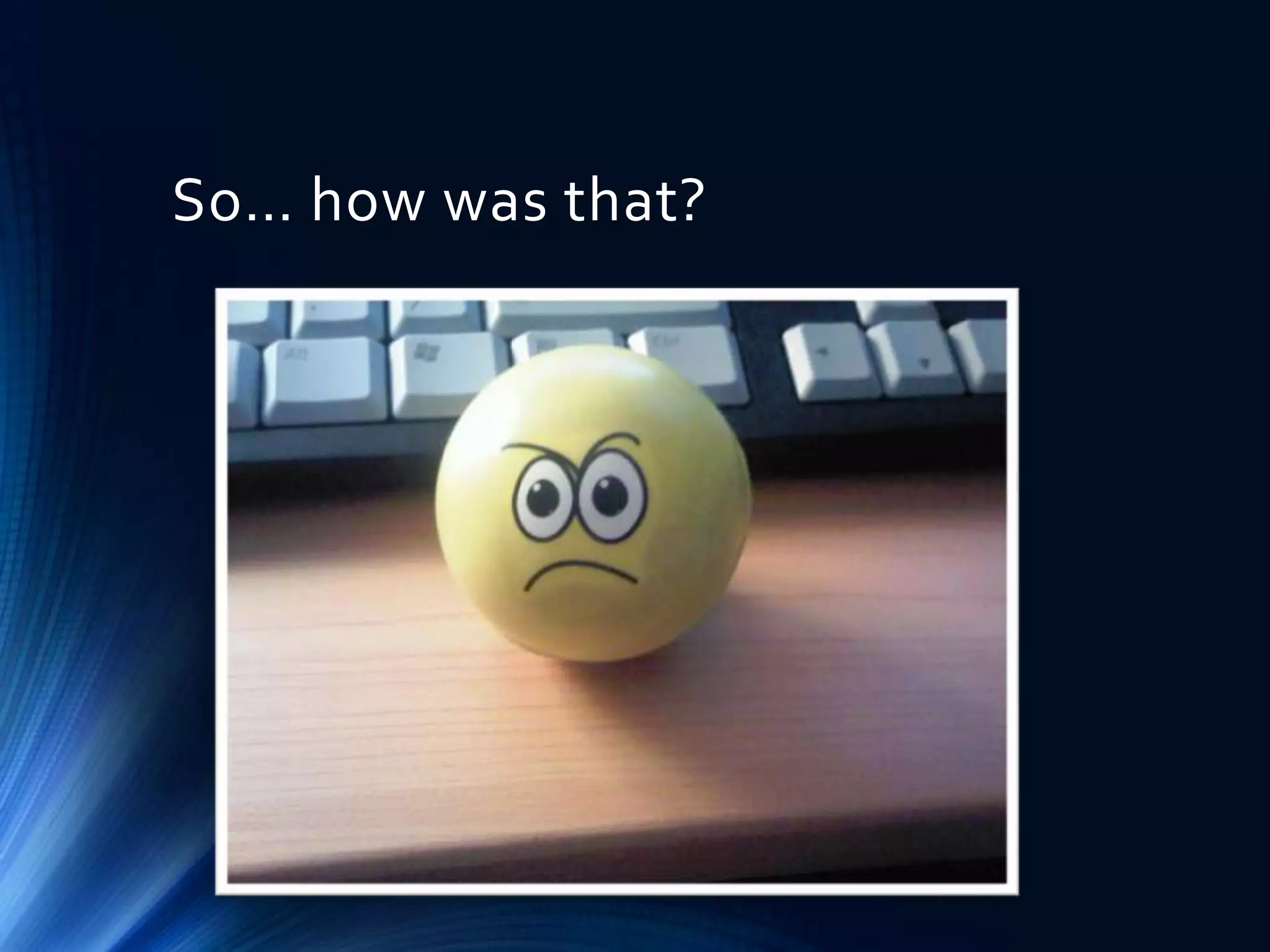
So… how was that?
The Problem

We know everything,
they don’t
What we do

Our job is to do the hard
work to make something
so easy that people don’t
even notice
In other words…

It’s hard to be easy
but most people
don’t know that
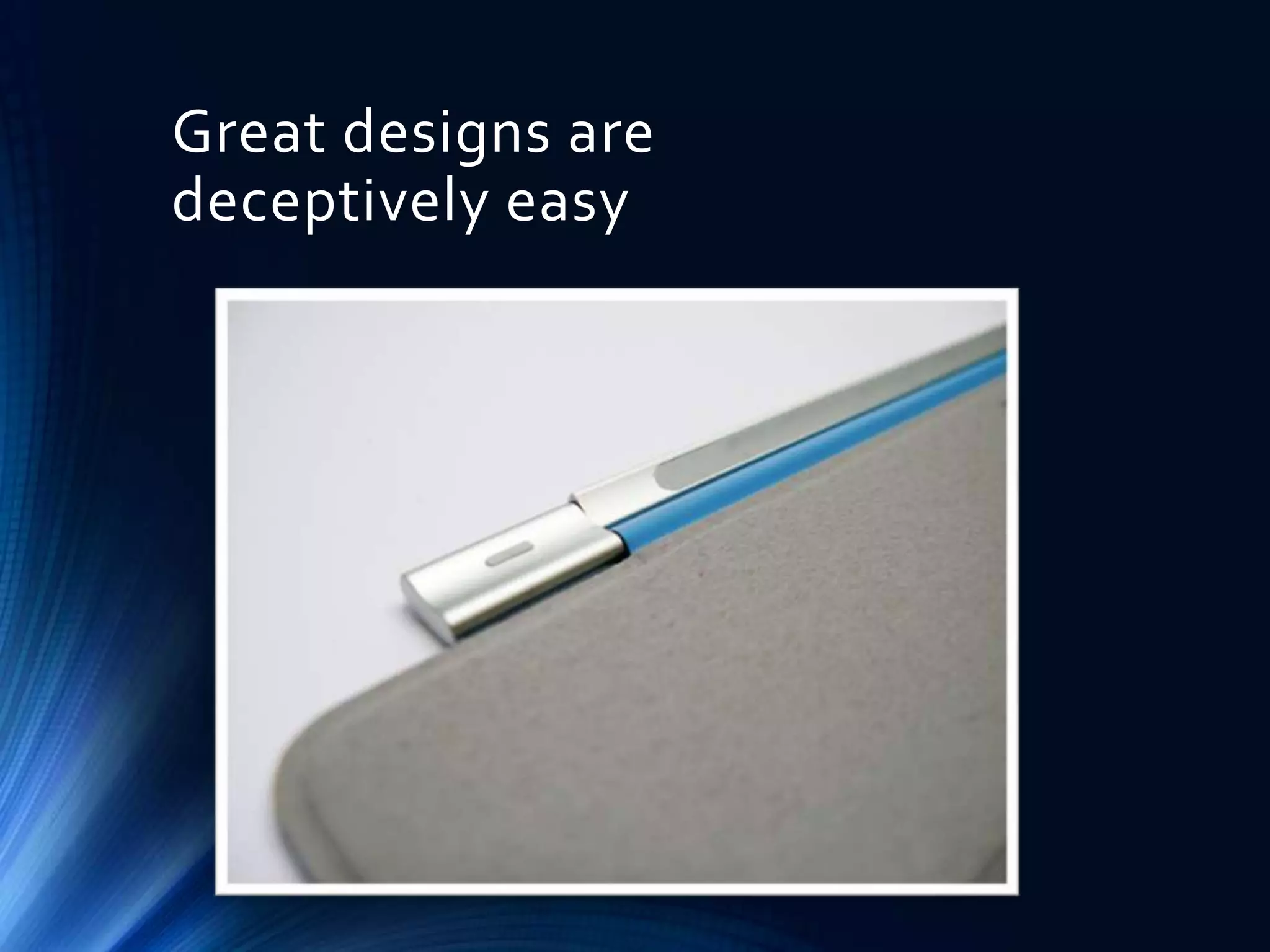
Great designs are
deceptively easy
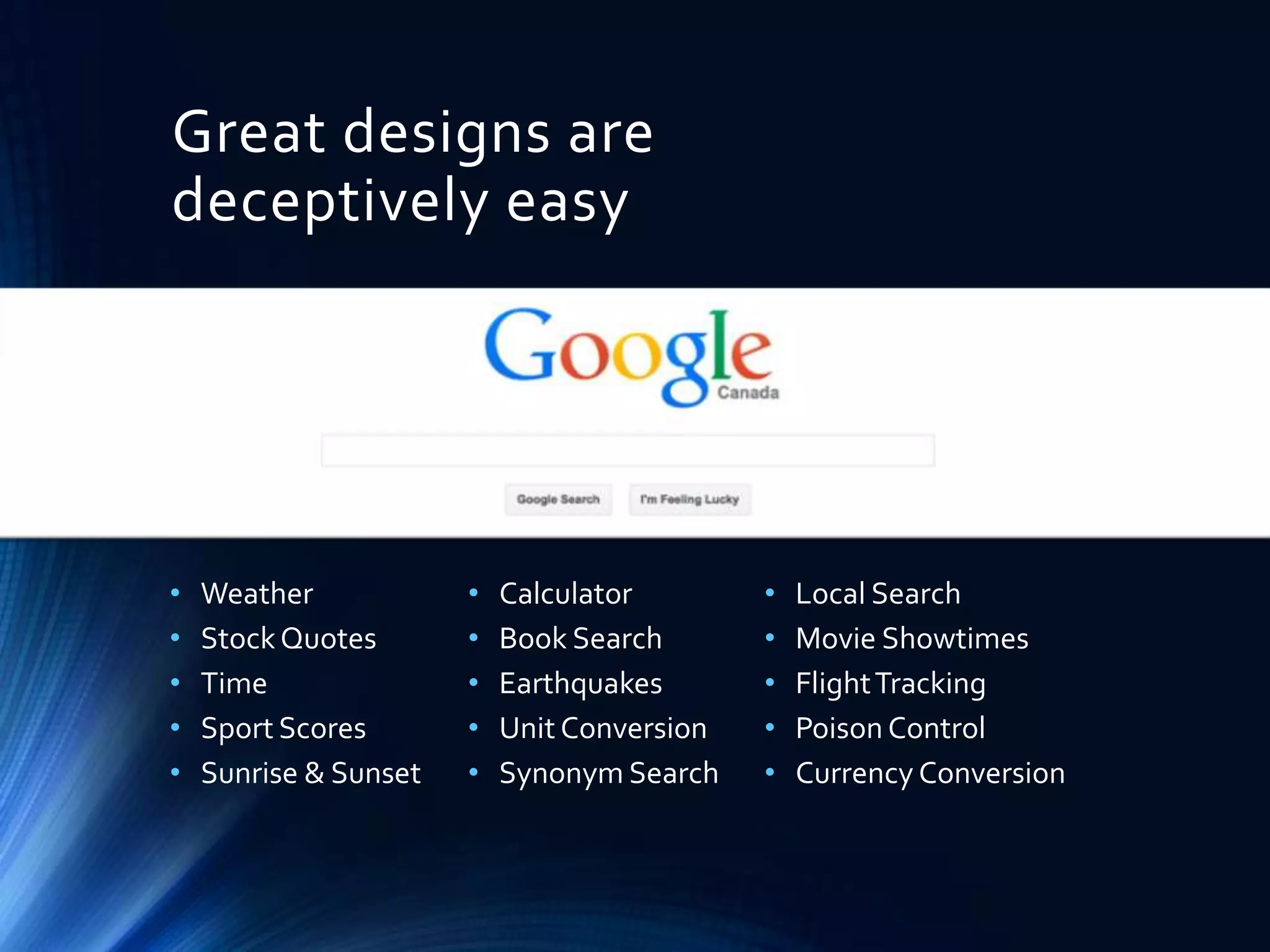
Great designs are
deceptively easy

•
•
•
•
•

Weather
Stock Quotes
Time
Sport Scores
Sunrise & Sunset

•
•
•
•
•

Calculator
Book Search
Earthquakes
Unit Conversion
Synonym Search

•
•
•
•
•

Local Search
Movie Showtimes
Flight Tracking
Poison Control
Currency Conversion
When it comes to our work…
• It’s like we get
challenged with the
same questions over
and over and over
again…
So…

What are the recurring
issues you encounter
about our practice
over and over again?
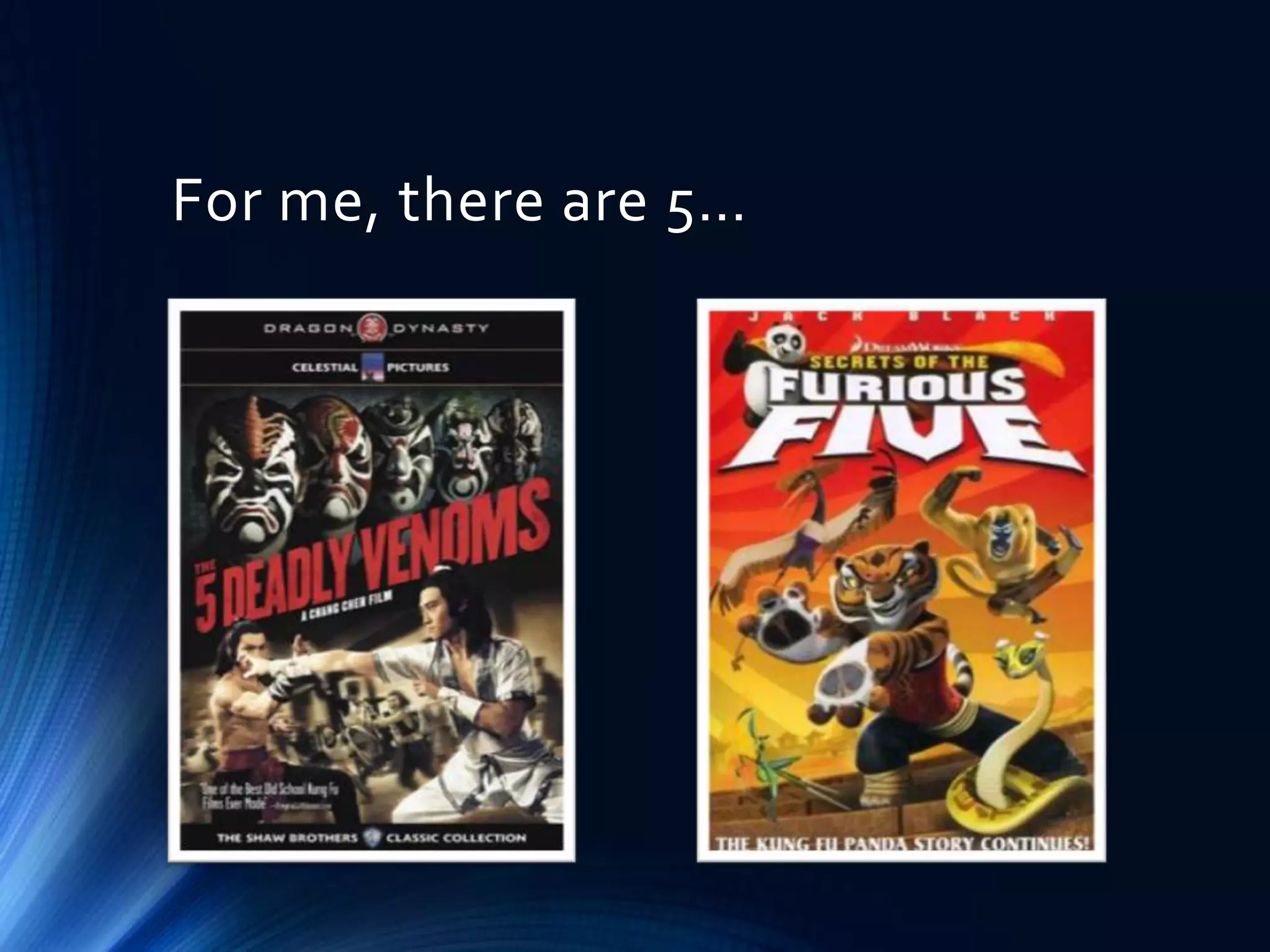
For me, there are 5…
#1
Defining solutions
before problems
Bertrand Russell

“The greatest challenge to
any thinker is stating the
problem in a way that
will allow a solution.”
Ever get requirements like this?

“We just need to
add this button”
Ever get requirements like this?

“We just need
to improve the
functionality”
Ever get requirements like this?

“We just need
to redesign it”
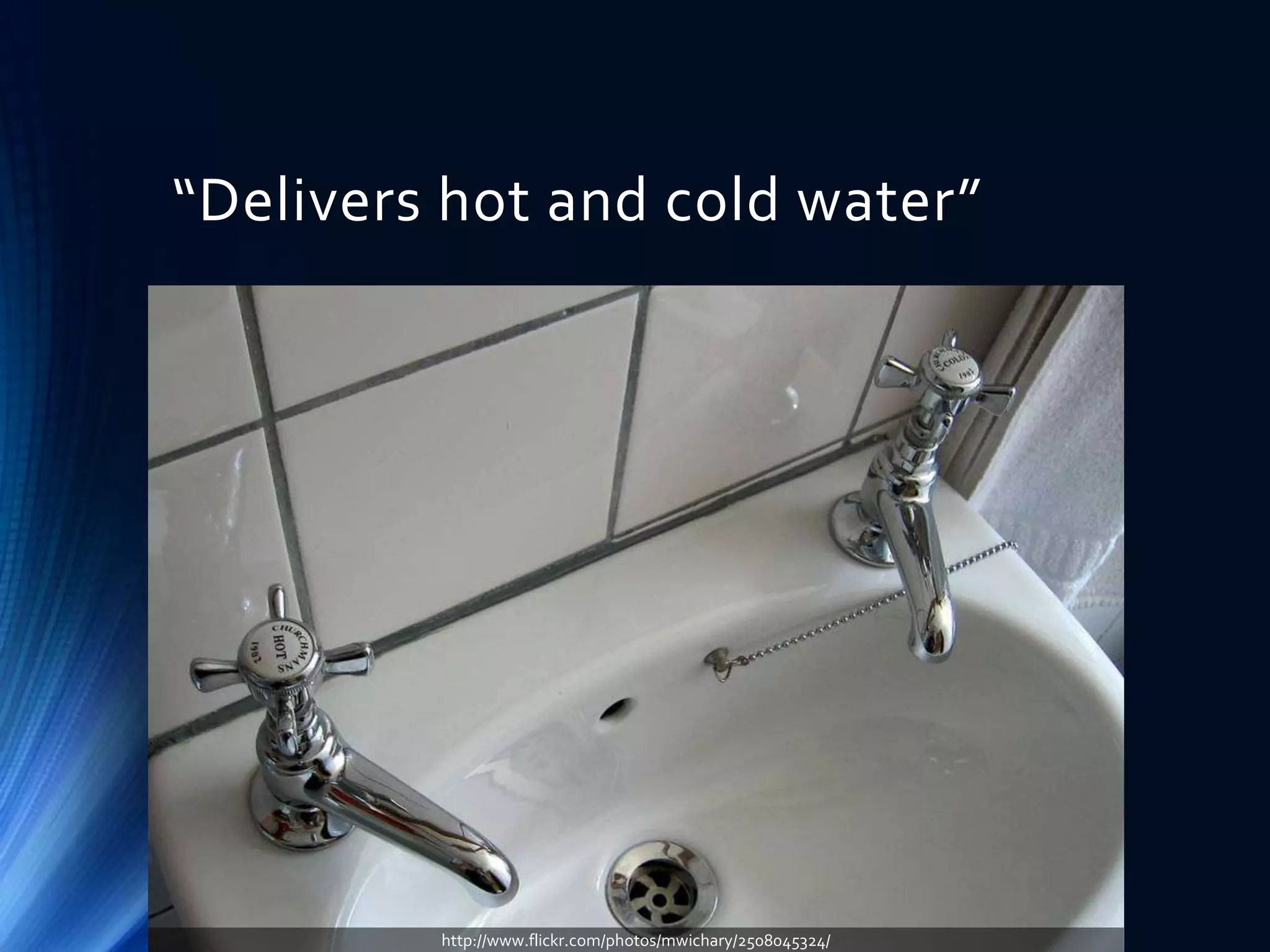
“Delivers hot and cold water”

http://www.flickr.com/photos/mwichary/2508045324/
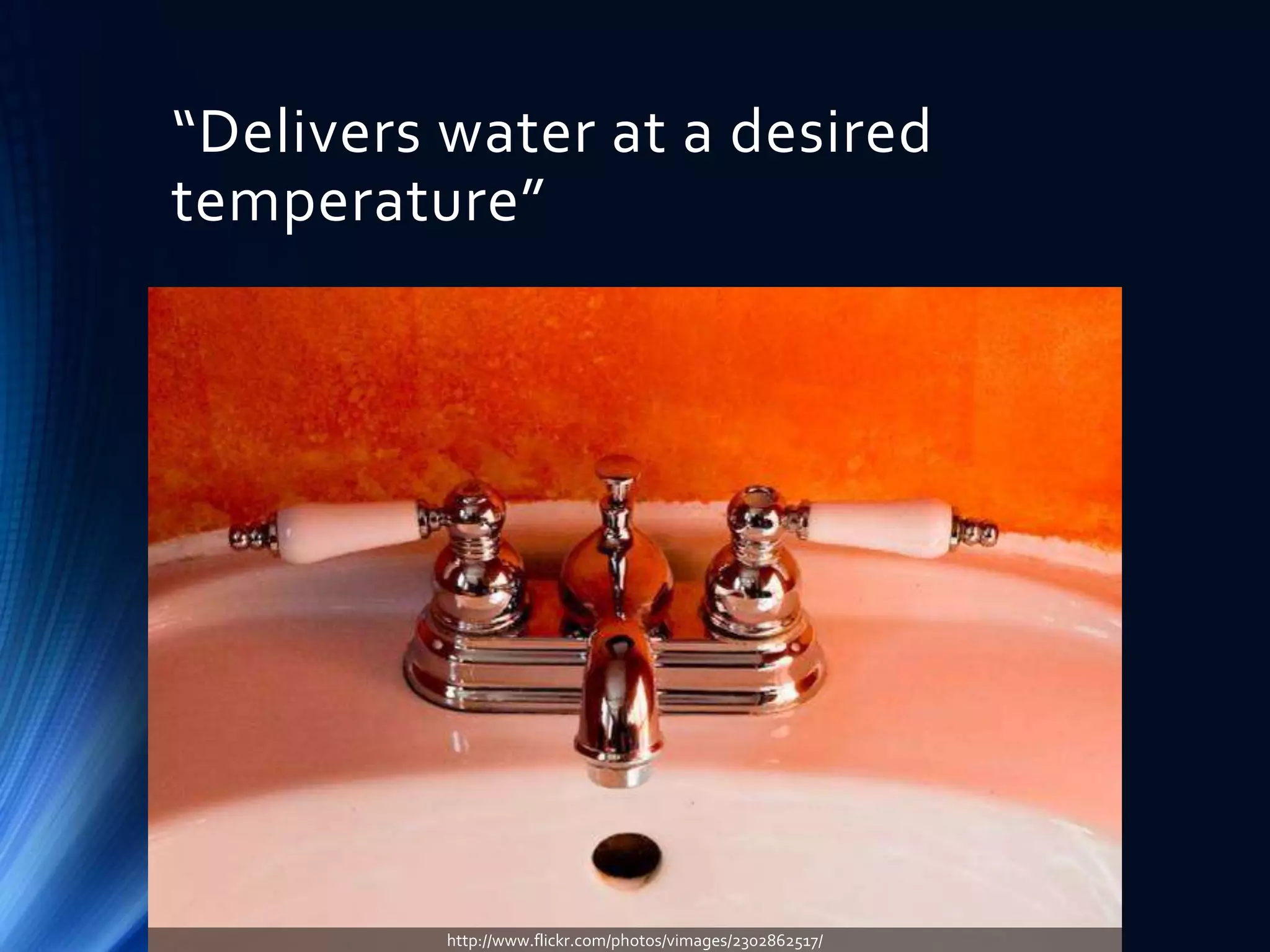
“Delivers water at a desired
temperature”

http://www.flickr.com/photos/vimages/2302862517/
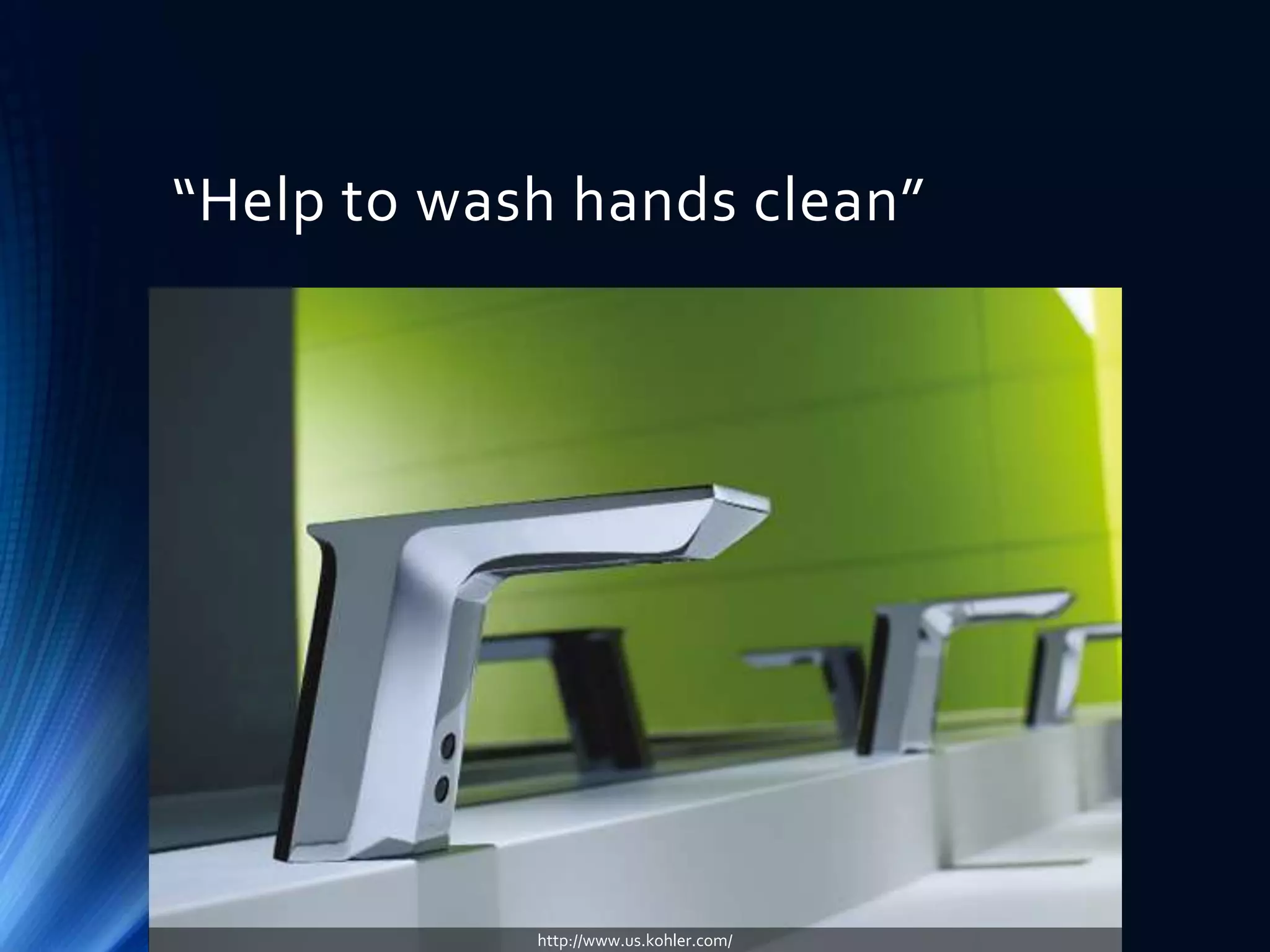
“Help to wash hands clean”

http://www.us.kohler.com/
The most important question
you can ask is…

“Why?”
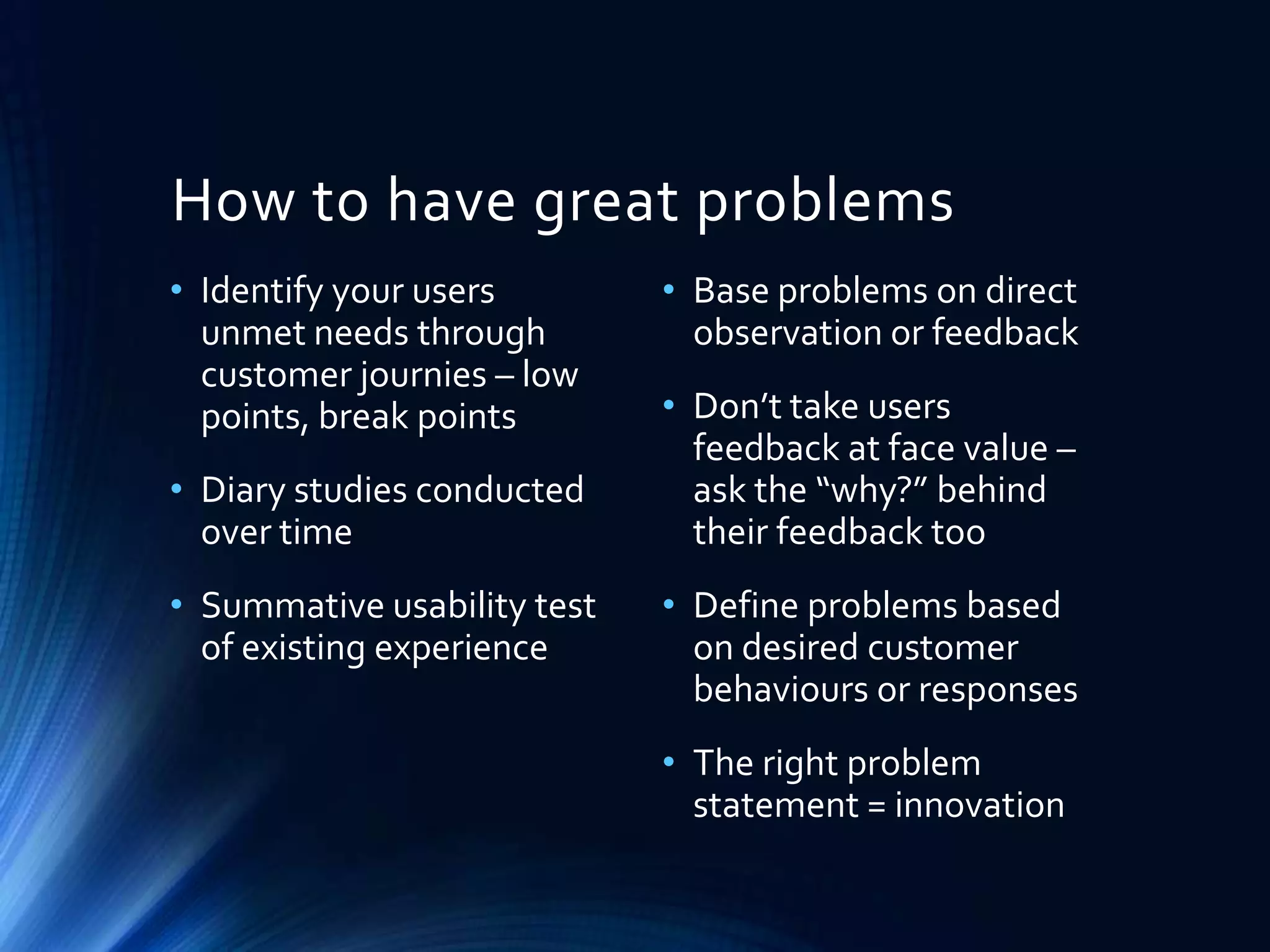
How to have great problems
• Identify your users
unmet needs through
customer journies – low
points, break points
• Diary studies conducted
over time
• Summative usability test
of existing experience

• Base problems on direct
observation or feedback
• Don’t take users
feedback at face value –
ask the “why?” behind
their feedback too
• Define problems based
on desired customer
behaviours or responses
• The right problem
statement = innovation
So…

What are your
examples of “poor”
requirements and
how did you deal with it?
#2
Everyone’s a user so
everyone’s a designer
A rhetorical question

“Why is that when people
watch a movie, they don’t
necessarily think they can be
a director, but when they use
a web site, they think they
can be a designer?”
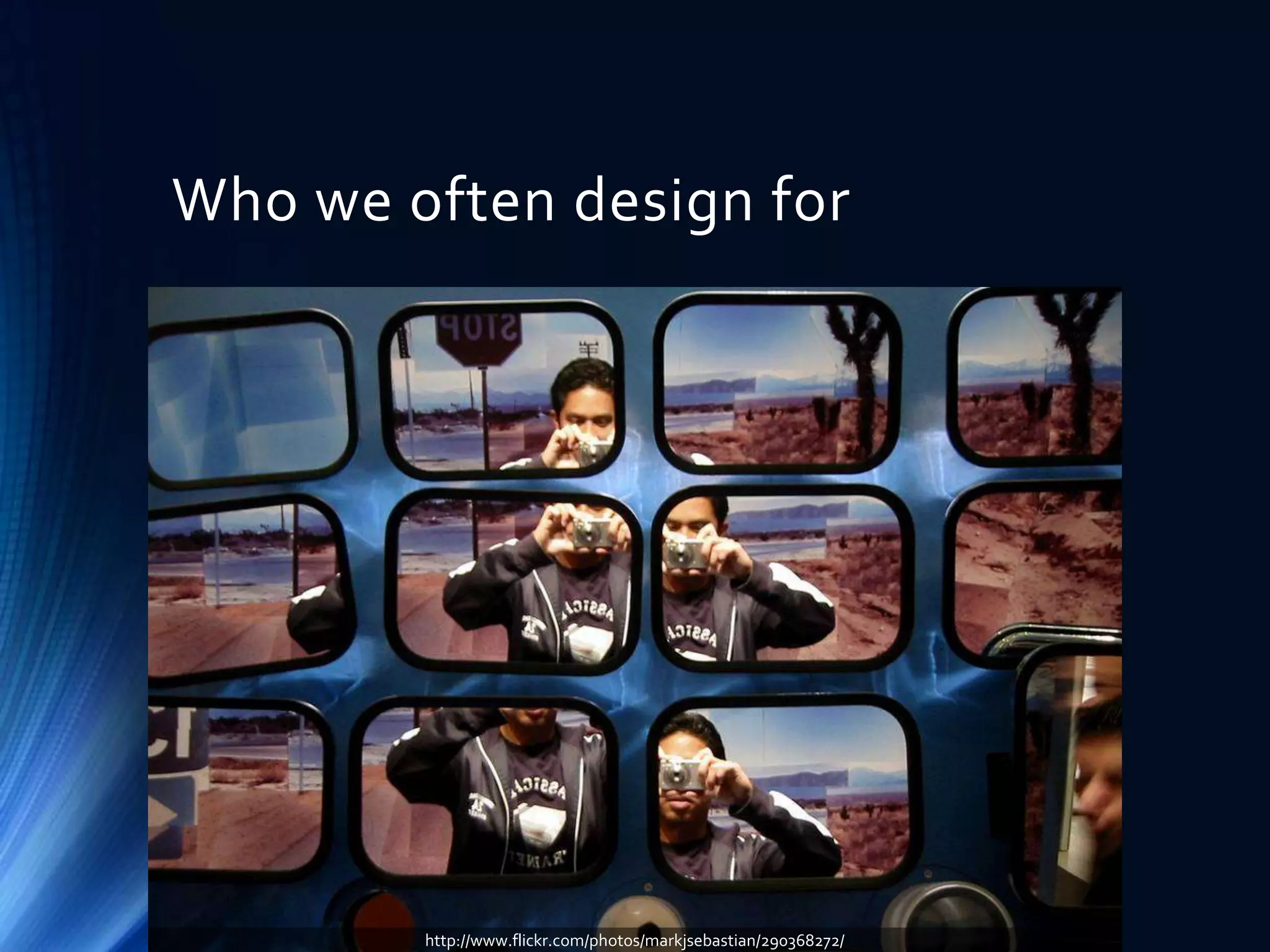
Who we often design for

http://www.flickr.com/photos/markjsebastian/290368272/
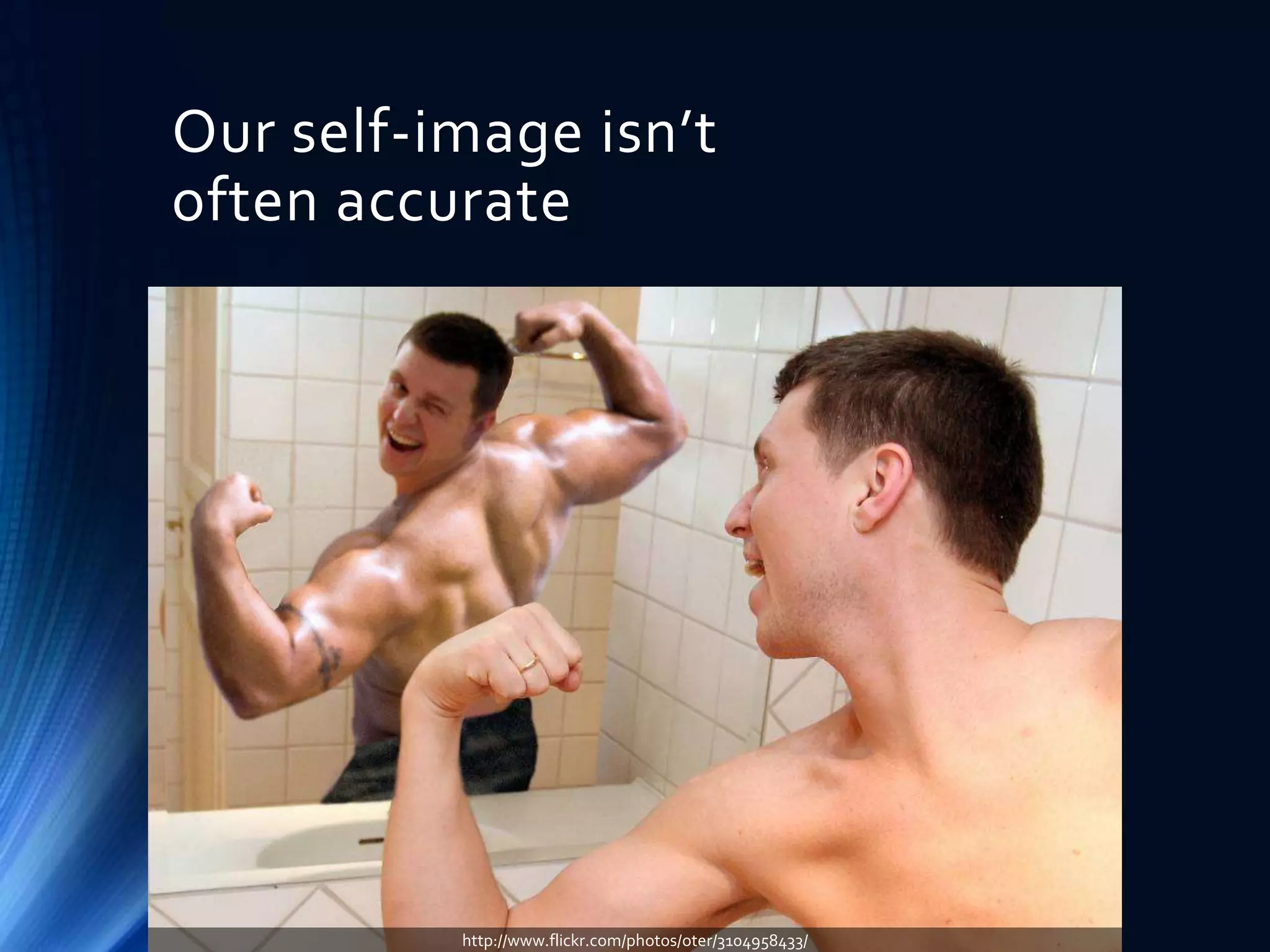
Our self-image isn’t
often accurate

http://www.flickr.com/photos/oter/3104958433/
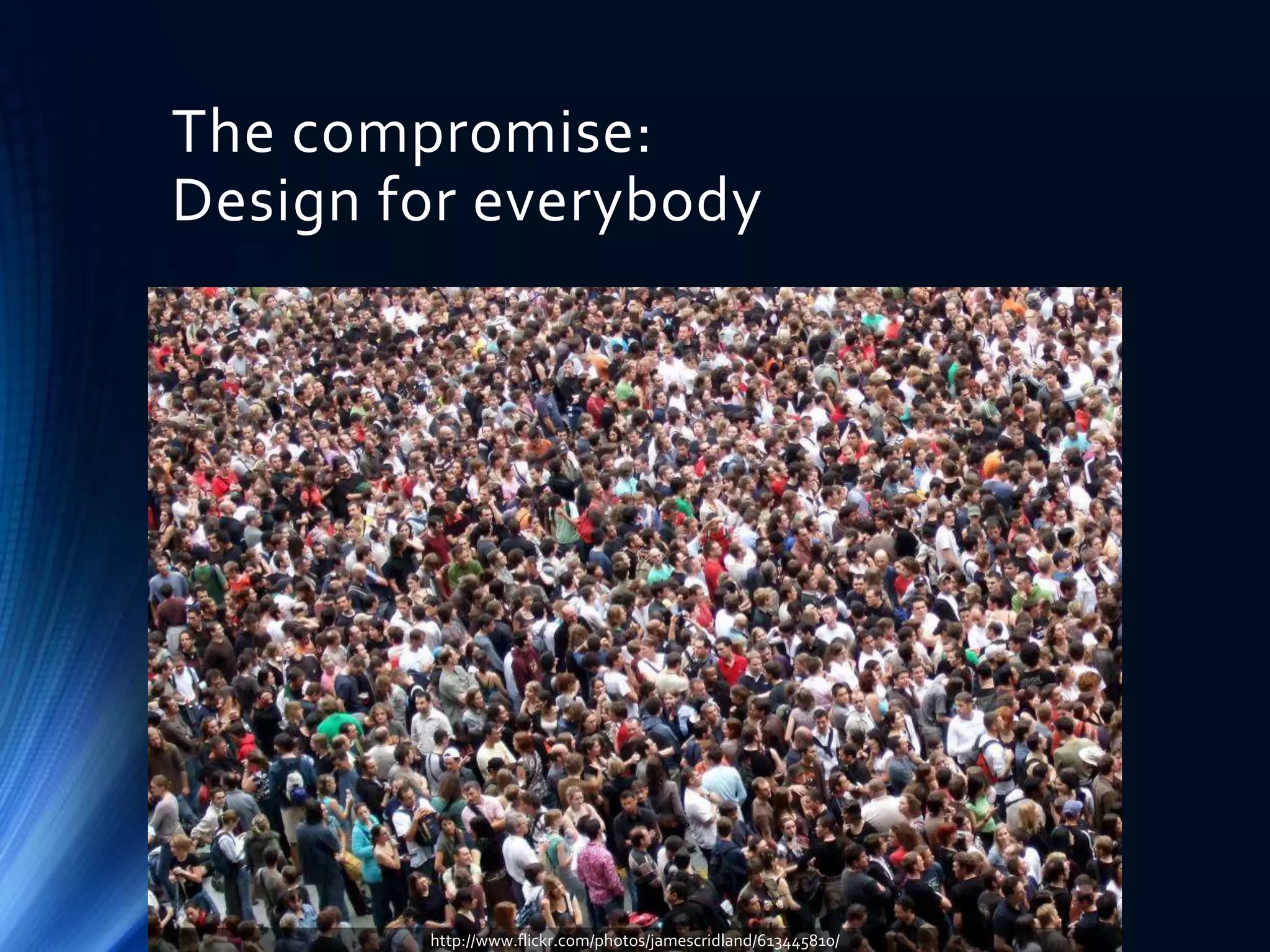
The compromise:
Design for everybody

http://www.flickr.com/photos/jamescridland/613445810/
What do you get when you
design for everybody?

32 flavours of vanilla
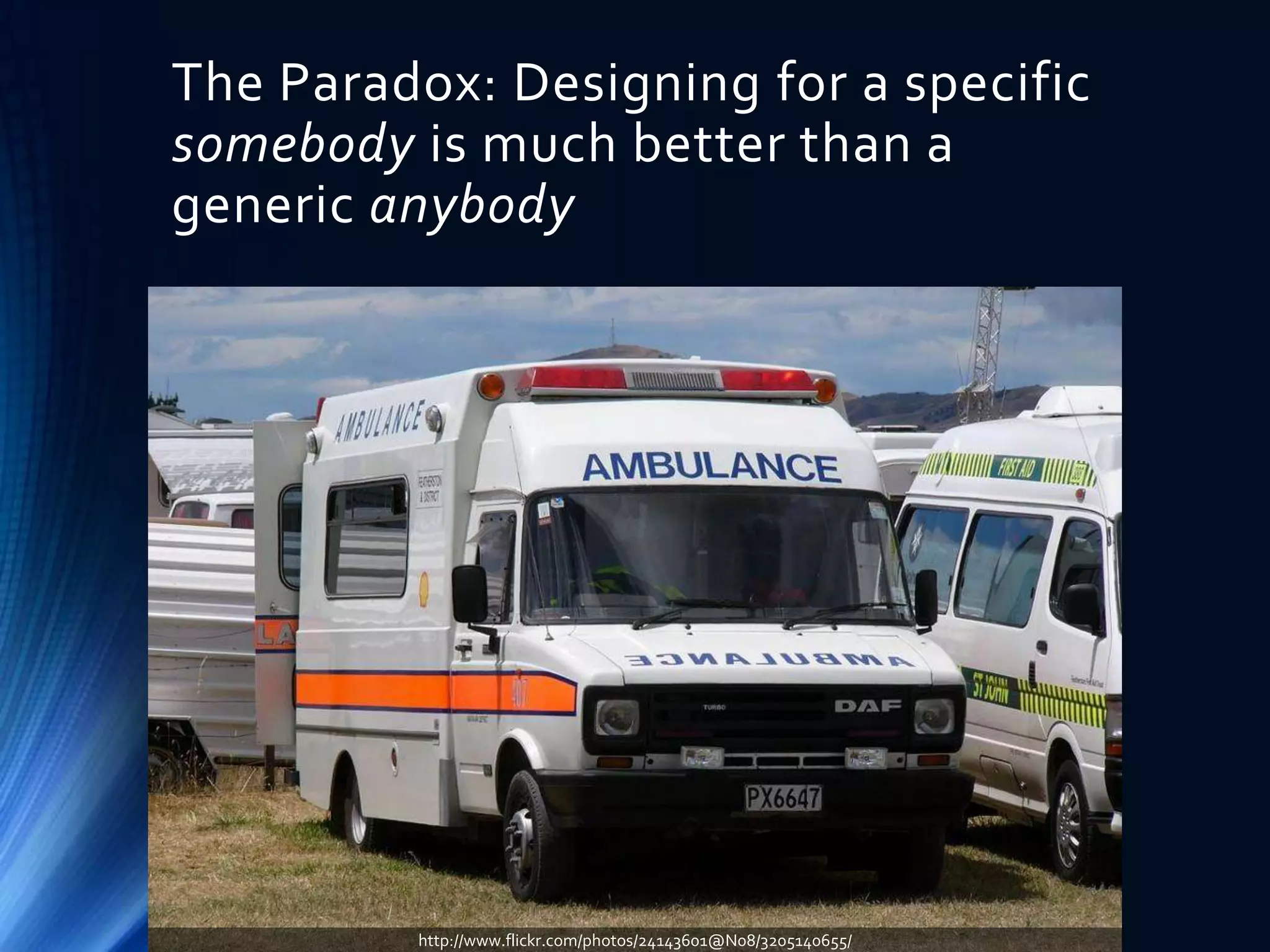
The Paradox: Designing for a specific
somebody is much better than a
generic anybody

http://www.flickr.com/photos/24143601@N08/3205140655/
Designing for a specific, more
“difficult” user
• The user that isn’t motivated

• The user that doesn’t know much
• The user that is a newbie
• Designing for someone specific & more “difficult”:
• Makes design decisions easier – gives us the courage to
make tradeoffs
• Hones us in on creating a robust solution
So…

Any examples of “extra”
designers in your work?
#3
Thinking that the little
design details are
simply “cosmetic”
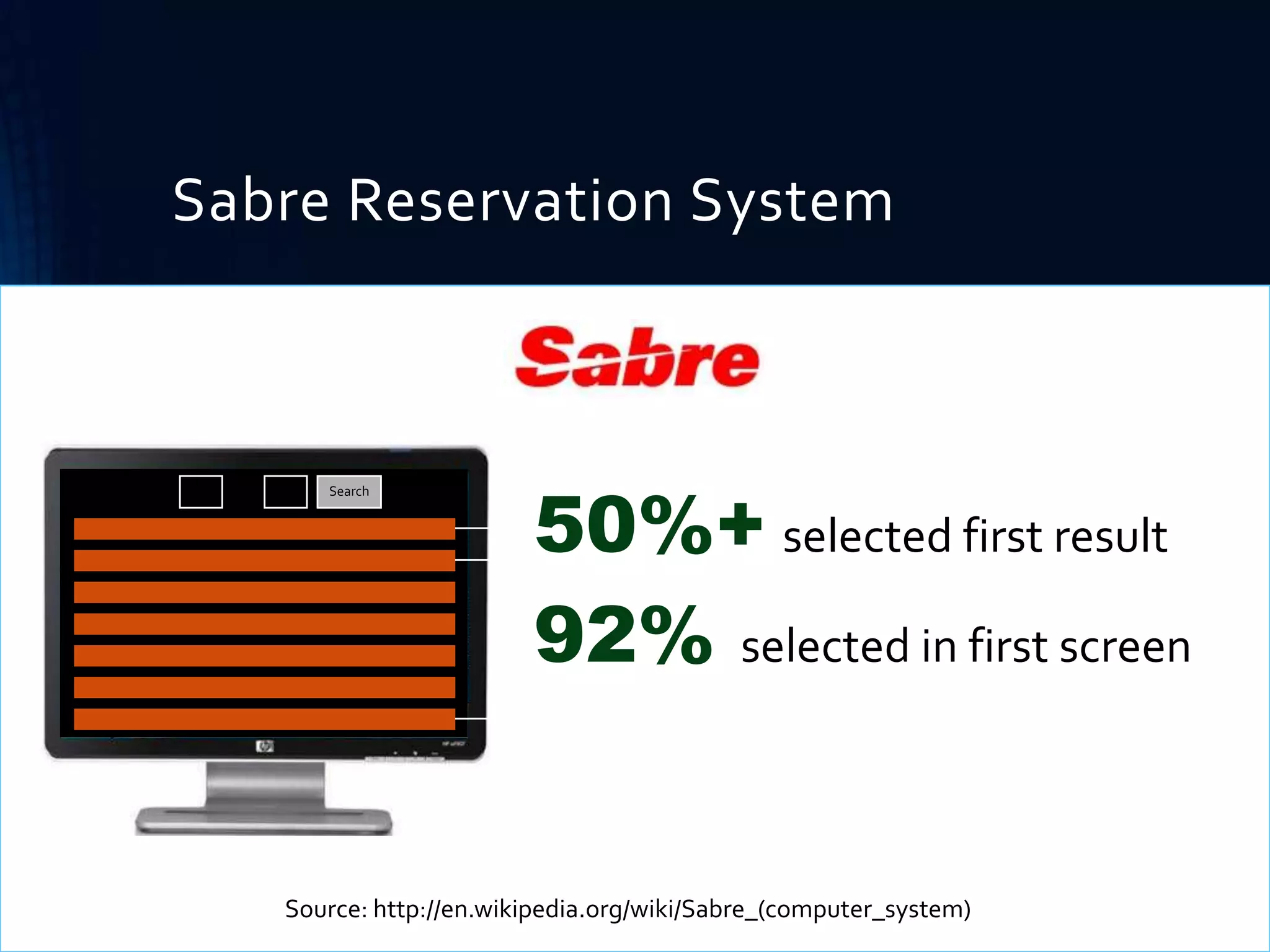
Sabre Reservation System

From: LGA

To:

DTW

Search

50%+ selected first result
92% selected in first screen

Source: http://en.wikipedia.org/wiki/Sabre_(computer_system)
Sabre Reservation System

From: LGA

To:

DTW

Search

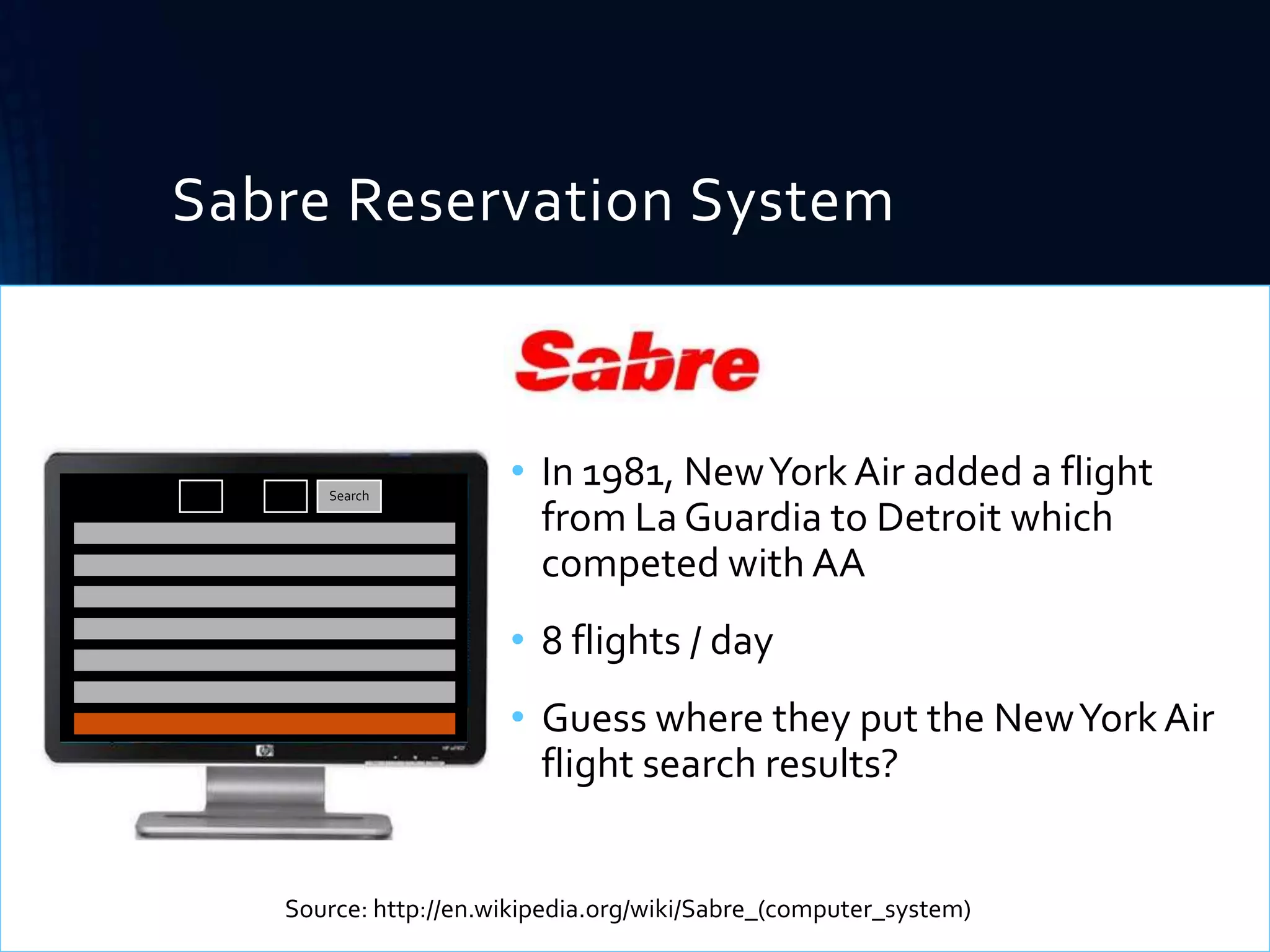
• In 1981, New York Air added a flight
from La Guardia to Detroit which
competed with AA
• 8 flights / day
• Guess where they put the New York Air
flight search results?

Source: http://en.wikipedia.org/wiki/Sabre_(computer_system)
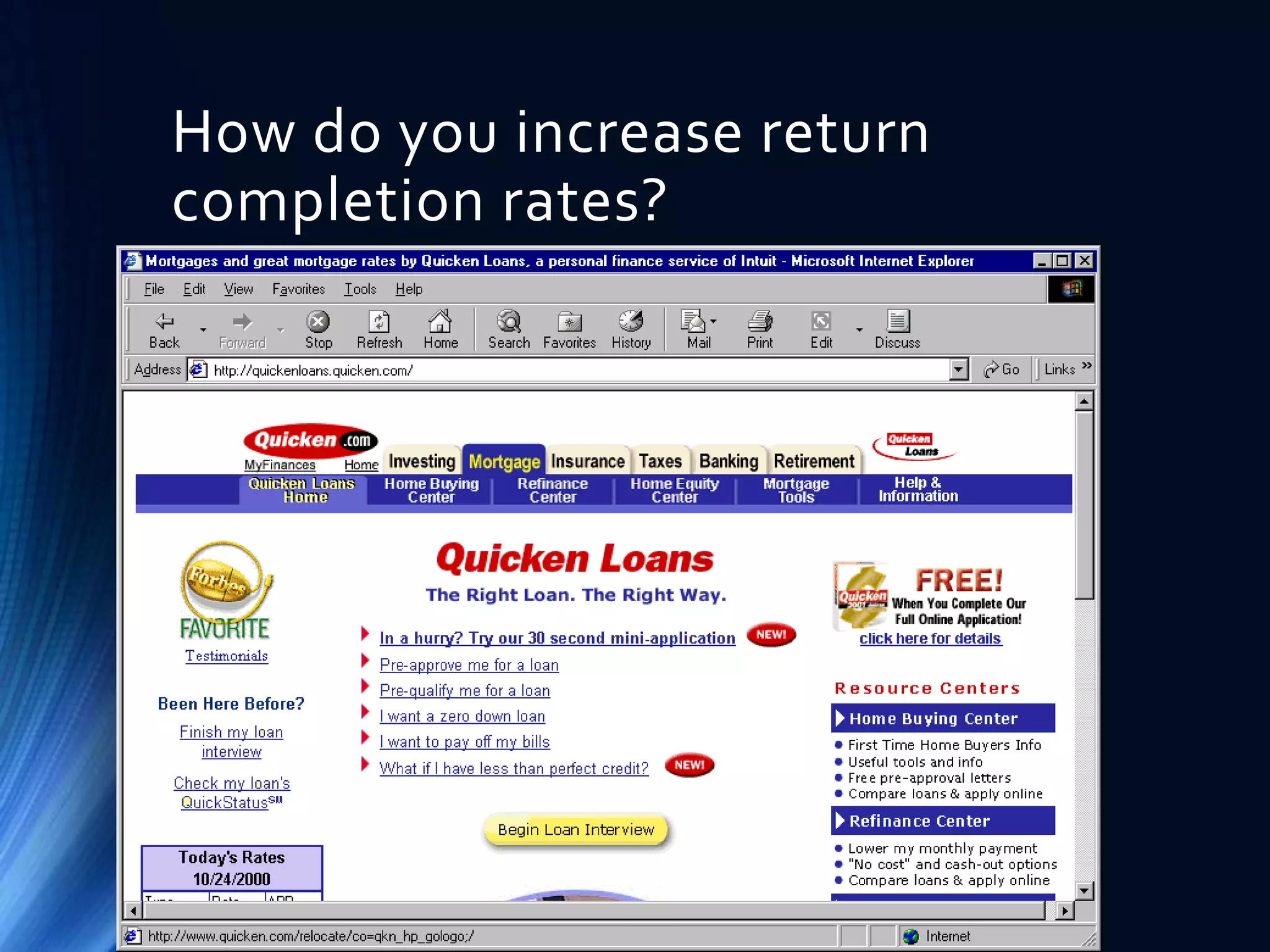
How do you increase return
completion rates?
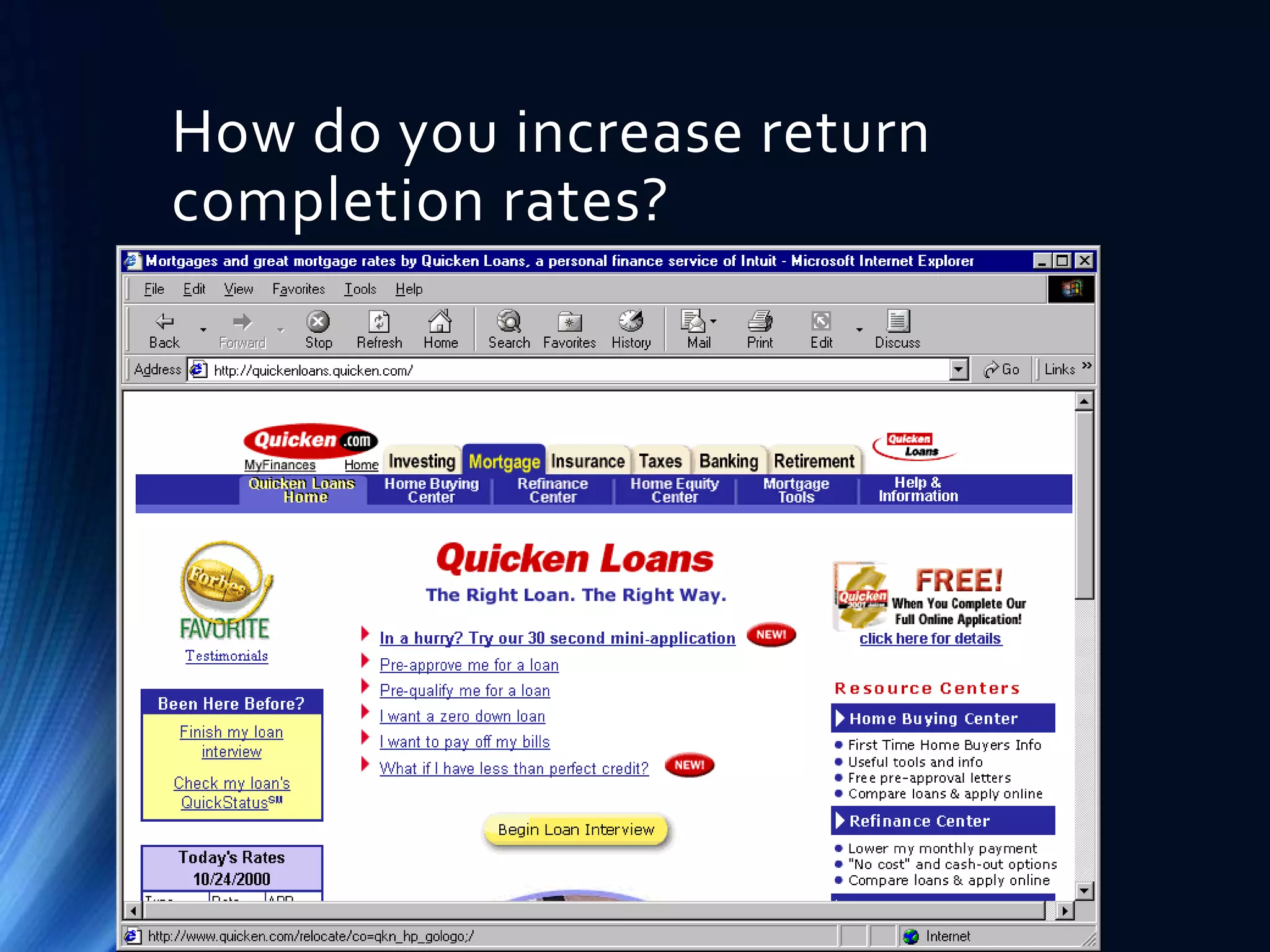
How do you increase return
completion rates?
Every little thing matters in
context
• Some things that worked well for certain products
didn’t work at all for others
• Sometimes it’s better to have more clicks – there is
no such thing as a 3-click rule
• Be suspicious of “best practices”
• The only correct answer is “it depends”
So…

What are some of your
learnings on the “little
things” that have made a
big difference?
#4
Lack of time, money,
or desire to do
user research
A common usability
testing question

“Isn’t it the same thing as
a focus group?”
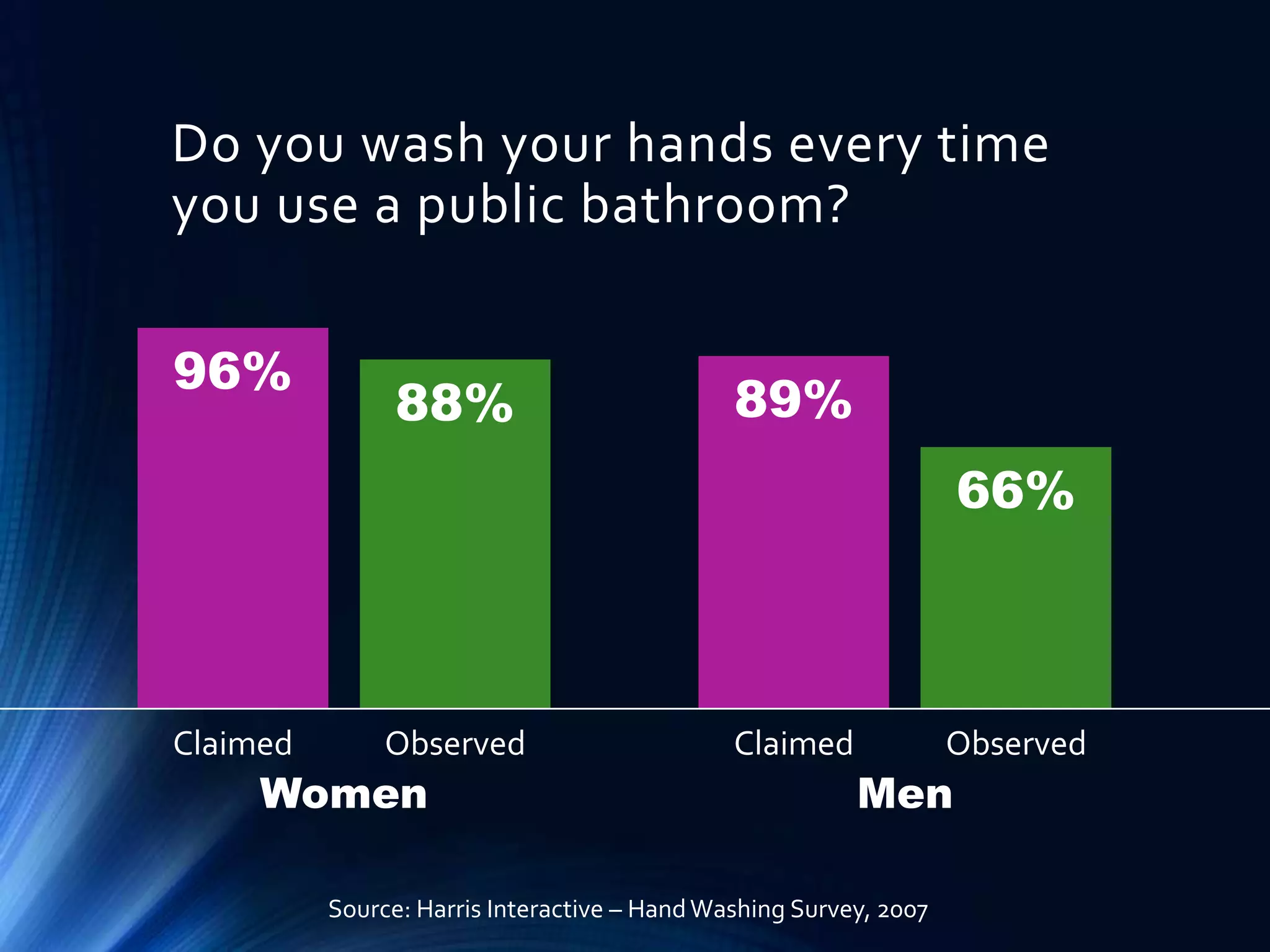
Do you wash your hands every time
you use a public bathroom?
96%

88%

89%
66%

Claimed

Observed

Women

Claimed

Observed

Men

Source: Harris Interactive – Hand Washing Survey, 2007
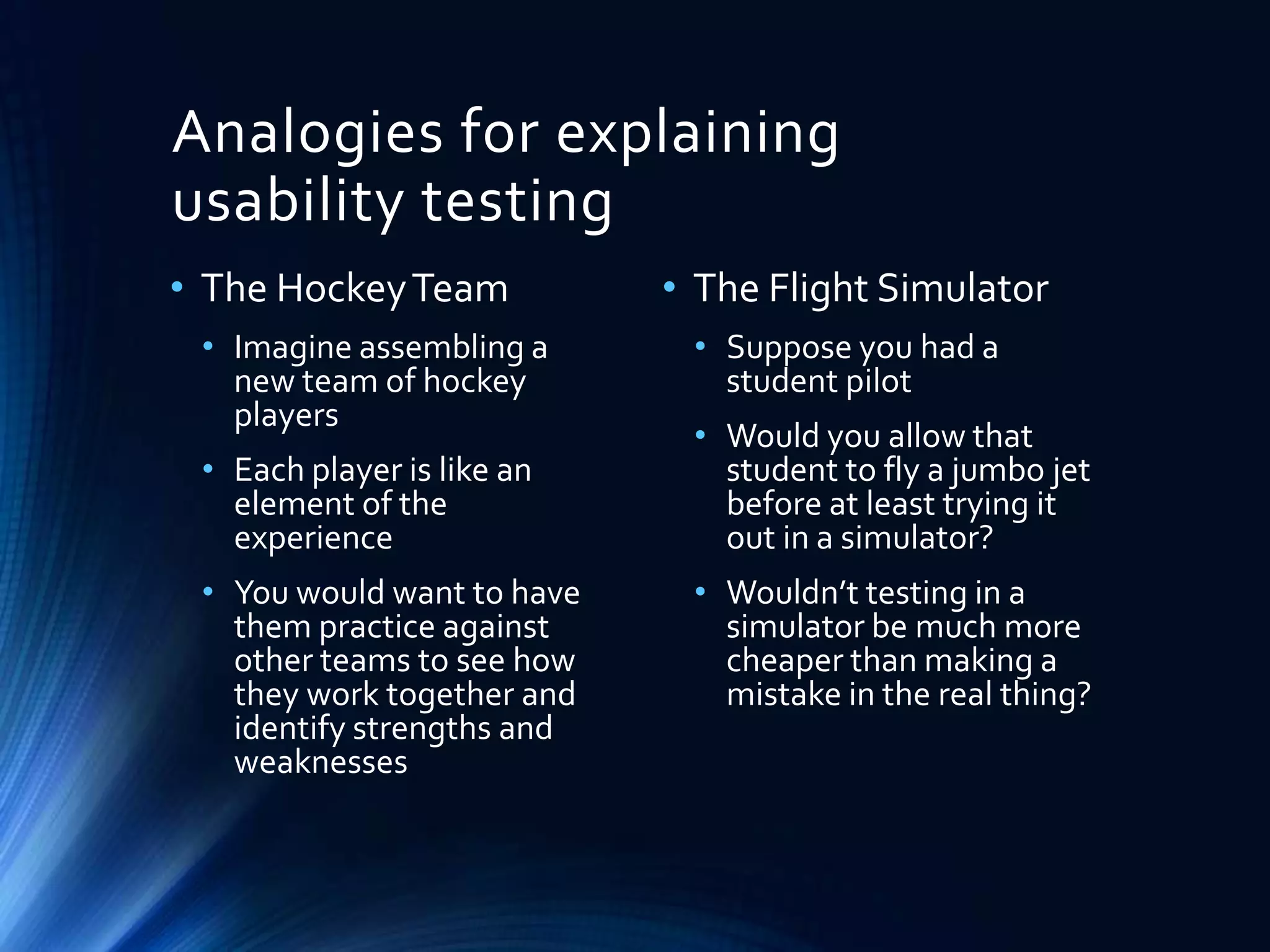
Analogies for explaining
usability testing
• The Hockey Team
• Imagine assembling a
new team of hockey
players
• Each player is like an
element of the
experience
• You would want to have
them practice against
other teams to see how
they work together and
identify strengths and
weaknesses

• The Flight Simulator
• Suppose you had a
student pilot
• Would you allow that
student to fly a jumbo jet
before at least trying it
out in a simulator?
• Wouldn’t testing in a
simulator be much more
cheaper than making a
mistake in the real thing?
Remember what we did in the
beginning?

“Twinkle, Twinkle Little
Star”
We can’t “undo” our
knowledge
“Your first usability test”
• The intent of this test is to find out where the gaps
are in the experience – it’s perfectly OK for us to
find mistakes as that is what this test is for
• Your role is to listen and observe – please make
note of what users struggle with and try to identify
what the real issue is
• You’ll be given an opportunity to ask your
questions at a prescribed time so please don’t yell
at the participants if they don’t navigate through
the experience with flying colours
So…

What’s your tip for selling
user research?
#5
The use of foul
language
There is one thing that is true
across all UX practitioners

We’re anal about
definitions of artefacts
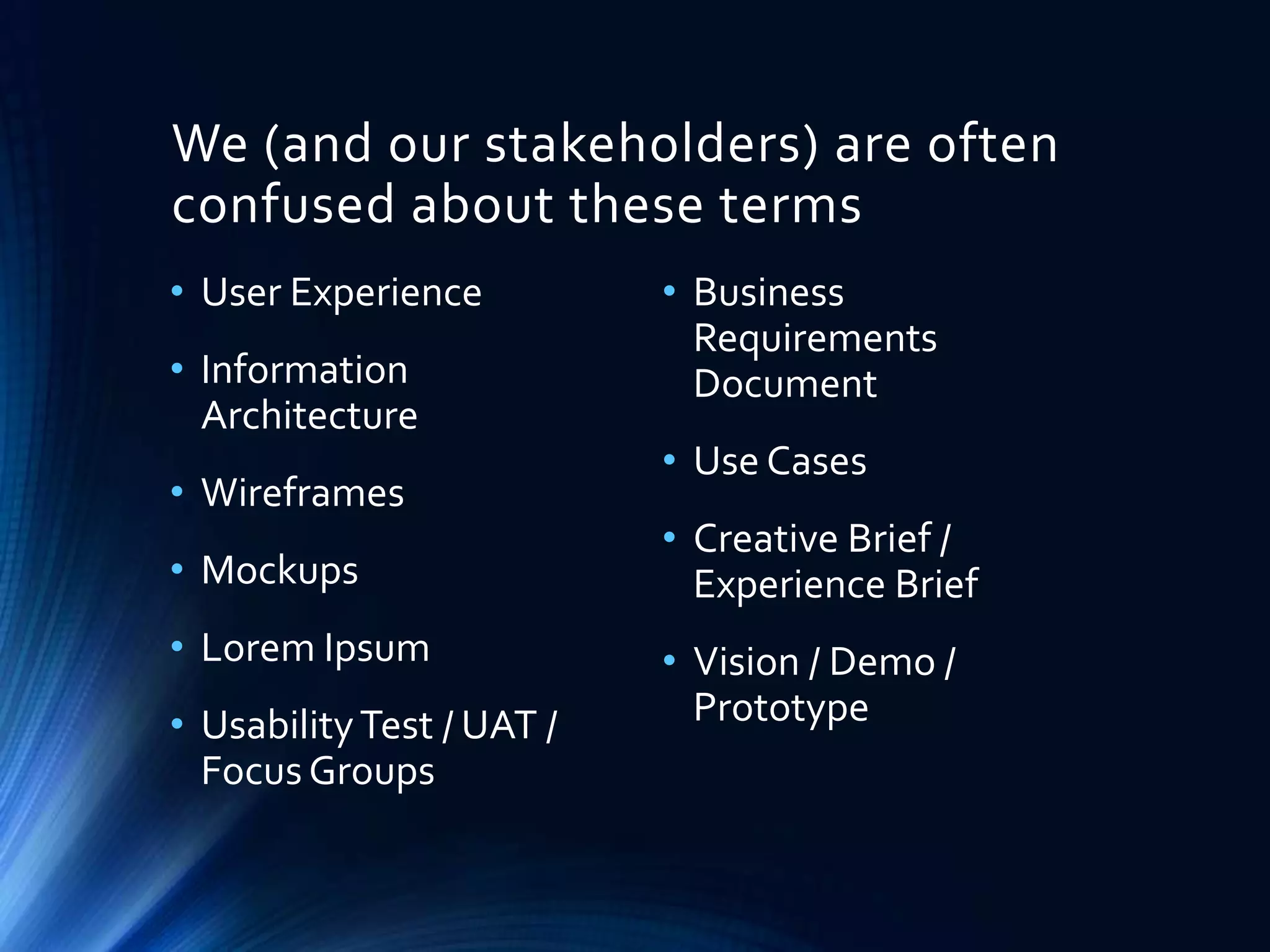
We (and our stakeholders) are often
confused about these terms
• User Experience
• Information
Architecture
• Wireframes

• Mockups
• Lorem Ipsum
• Usability Test / UAT /
Focus Groups

• Business
Requirements
Document
• Use Cases
• Creative Brief /
Experience Brief
• Vision / Demo /
Prototype
The #1 tip for clarity

Always show
don’t just tell
So…

What UX words are in
your “foul” language?
In closing…

Usability is like oxygen –
you don’t notice it
until it’s missing

The Usability of Usability

  • 1.
    The Usability of Usability AND R E W CHA K F E B R UA R Y 20 1 4
  • 2.
    About Me • 19years spanning visual design, front end coding, information architecture, usability research, and digital strategy • AVP, Digital Customer Experience at TD • Klick Health, OnX, Immersa nt • Connect with me on LinkedIn if you’re interested in a contract UX position • I’m an avid runner and overshare about it on Twitter @andrewchak
  • 3.
  • 4.
  • 5.
  • 6.
    Pick a partner… “Hithere… I’m…” “What’s the best thing that has happened to you recently?”
  • 7.
    Now pick arole… Tappers Listeners Keep eyes open Read instructions Get a pen & paper Close your eyes
  • 8.
    The Mystery Song “Twinkle,Twinkle Little Star”
  • 9.
  • 10.
  • 11.
    The Problem We knoweverything, they don’t
  • 12.
    What we do Ourjob is to do the hard work to make something so easy that people don’t even notice
  • 13.
    In other words… It’shard to be easy but most people don’t know that
  • 14.
  • 15.
    Great designs are deceptivelyeasy • • • • • Weather Stock Quotes Time Sport Scores Sunrise & Sunset • • • • • Calculator Book Search Earthquakes Unit Conversion Synonym Search • • • • • Local Search Movie Showtimes Flight Tracking Poison Control Currency Conversion
  • 16.
    When it comesto our work… • It’s like we get challenged with the same questions over and over and over again…
  • 17.
    So… What are therecurring issues you encounter about our practice over and over again?
  • 18.
    For me, thereare 5…
  • 19.
  • 20.
    Bertrand Russell “The greatestchallenge to any thinker is stating the problem in a way that will allow a solution.”
  • 21.
    Ever get requirementslike this? “We just need to add this button”
  • 22.
    Ever get requirementslike this? “We just need to improve the functionality”
  • 23.
    Ever get requirementslike this? “We just need to redesign it”
  • 24.
    “Delivers hot andcold water” http://www.flickr.com/photos/mwichary/2508045324/
  • 25.
    “Delivers water ata desired temperature” http://www.flickr.com/photos/vimages/2302862517/
  • 26.
    “Help to washhands clean” http://www.us.kohler.com/
  • 27.
    The most importantquestion you can ask is… “Why?”
  • 28.
    How to havegreat problems • Identify your users unmet needs through customer journies – low points, break points • Diary studies conducted over time • Summative usability test of existing experience • Base problems on direct observation or feedback • Don’t take users feedback at face value – ask the “why?” behind their feedback too • Define problems based on desired customer behaviours or responses • The right problem statement = innovation
  • 29.
    So… What are your examplesof “poor” requirements and how did you deal with it?
  • 30.
    #2 Everyone’s a userso everyone’s a designer
  • 31.
    A rhetorical question “Whyis that when people watch a movie, they don’t necessarily think they can be a director, but when they use a web site, they think they can be a designer?”
  • 32.
    Who we oftendesign for http://www.flickr.com/photos/markjsebastian/290368272/
  • 33.
    Our self-image isn’t oftenaccurate http://www.flickr.com/photos/oter/3104958433/
  • 34.
    The compromise: Design foreverybody http://www.flickr.com/photos/jamescridland/613445810/
  • 35.
    What do youget when you design for everybody? 32 flavours of vanilla
  • 36.
    The Paradox: Designingfor a specific somebody is much better than a generic anybody http://www.flickr.com/photos/24143601@N08/3205140655/
  • 37.
    Designing for aspecific, more “difficult” user • The user that isn’t motivated • The user that doesn’t know much • The user that is a newbie • Designing for someone specific & more “difficult”: • Makes design decisions easier – gives us the courage to make tradeoffs • Hones us in on creating a robust solution
  • 38.
    So… Any examples of“extra” designers in your work?
  • 39.
    #3 Thinking that thelittle design details are simply “cosmetic”
  • 40.
    Sabre Reservation System From:LGA To: DTW Search 50%+ selected first result 92% selected in first screen Source: http://en.wikipedia.org/wiki/Sabre_(computer_system)
  • 41.
    Sabre Reservation System From:LGA To: DTW Search • In 1981, New York Air added a flight from La Guardia to Detroit which competed with AA • 8 flights / day • Guess where they put the New York Air flight search results? Source: http://en.wikipedia.org/wiki/Sabre_(computer_system)
  • 42.
    How do youincrease return completion rates?
  • 43.
    How do youincrease return completion rates?
  • 44.
    Every little thingmatters in context • Some things that worked well for certain products didn’t work at all for others • Sometimes it’s better to have more clicks – there is no such thing as a 3-click rule • Be suspicious of “best practices” • The only correct answer is “it depends”
  • 45.
    So… What are someof your learnings on the “little things” that have made a big difference?
  • 46.
    #4 Lack of time,money, or desire to do user research
  • 47.
    A common usability testingquestion “Isn’t it the same thing as a focus group?”
  • 48.
    Do you washyour hands every time you use a public bathroom? 96% 88% 89% 66% Claimed Observed Women Claimed Observed Men Source: Harris Interactive – Hand Washing Survey, 2007
  • 49.
    Analogies for explaining usabilitytesting • The Hockey Team • Imagine assembling a new team of hockey players • Each player is like an element of the experience • You would want to have them practice against other teams to see how they work together and identify strengths and weaknesses • The Flight Simulator • Suppose you had a student pilot • Would you allow that student to fly a jumbo jet before at least trying it out in a simulator? • Wouldn’t testing in a simulator be much more cheaper than making a mistake in the real thing?
  • 50.
    Remember what wedid in the beginning? “Twinkle, Twinkle Little Star” We can’t “undo” our knowledge
  • 51.
    “Your first usabilitytest” • The intent of this test is to find out where the gaps are in the experience – it’s perfectly OK for us to find mistakes as that is what this test is for • Your role is to listen and observe – please make note of what users struggle with and try to identify what the real issue is • You’ll be given an opportunity to ask your questions at a prescribed time so please don’t yell at the participants if they don’t navigate through the experience with flying colours
  • 52.
    So… What’s your tipfor selling user research?
  • 53.
    #5 The use offoul language
  • 54.
    There is onething that is true across all UX practitioners We’re anal about definitions of artefacts
  • 55.
    We (and ourstakeholders) are often confused about these terms • User Experience • Information Architecture • Wireframes • Mockups • Lorem Ipsum • Usability Test / UAT / Focus Groups • Business Requirements Document • Use Cases • Creative Brief / Experience Brief • Vision / Demo / Prototype
  • 56.
    The #1 tipfor clarity Always show don’t just tell
  • 57.
    So… What UX wordsare in your “foul” language?
  • 58.
    In closing… Usability islike oxygen – you don’t notice it until it’s missing