The Thinking Edge:
 Thefirst edge is about how we view education and
 the traditional roles that exist within the school
 culture:
           teachers
           parents
           students
           administration
 As Chen describes the situation, “the biggest
  obstacle to school change is our memories”
   (Chen, 2010, p. 11).
 Educators and parents find it difficult to stray from
  the school culture that they were indoctrinated in
  as children. This inability to see past our own
  experiences hinders the growth and change that
  needs to take place in our education system.
Education and Ecstasy
by George Leonard
 Chendescribes topics written in this book by
 Leonard over 50 years ago and its impact on
 schools today. He recounts an interview with
 Leonard in 1984 and the author’s views on what
 education should look like. In includes:
    individualizededucation
    curriculum development
    increase teacher pay and respect
    provided consistent and tough rules for disruptive
     behavior
    get parents and community involved
    most importantly, make school engaging and interesting
     to students
Either/Or versus Both-And Chart
   Schools inherently seem resistant to change. As schools
    test more and more, with no changes in the results, the
    impetus is not to change the way schools are run, but to
    increase testing in hopes that the results will change.
   Chen depicts this with his either/or versus both-and
    chart. Some examples from this are the decision to
    teach phonics skills OR whole language, when instead
    the “smarter synthesis” is the both-and approach, which
    states that “Both are critical to reading. What kinds of
    rich linguistic environments support both?” (Chen, 2010,
    p. 23).
   This chart summarizes the rigid views that exist in
    education today and the openness that educators
    needs to exhibit in which to meet the needs of students.
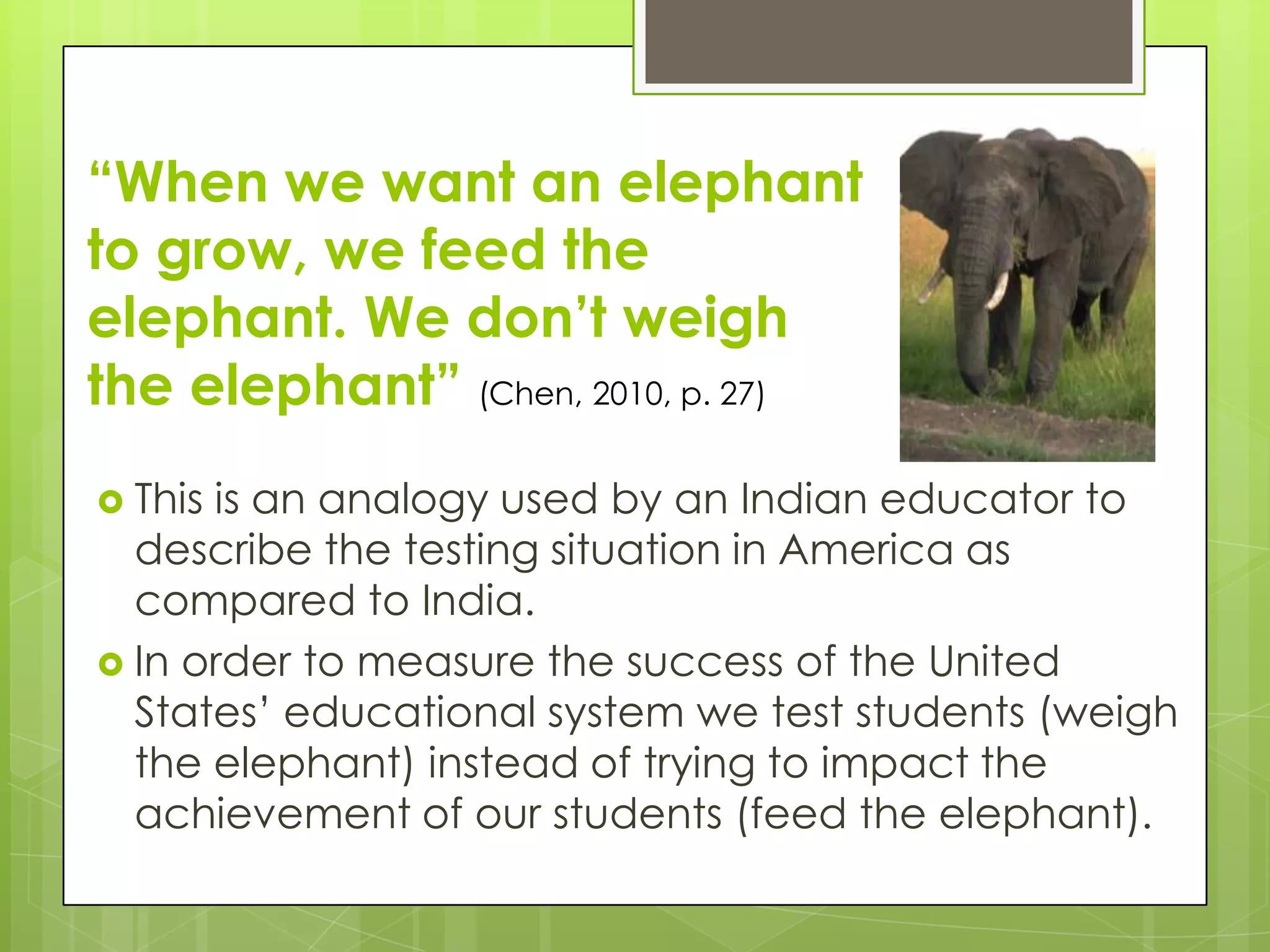
“When we want an elephant
to grow, we feed the
elephant. We don’t weigh
the elephant” (Chen, 2010, p. 27)
 Thisis an analogy used by an Indian educator to
  describe the testing situation in America as
  compared to India.
 In order to measure the success of the United
  States’ educational system we test students (weigh
  the elephant) instead of trying to impact the
  achievement of our students (feed the elephant).
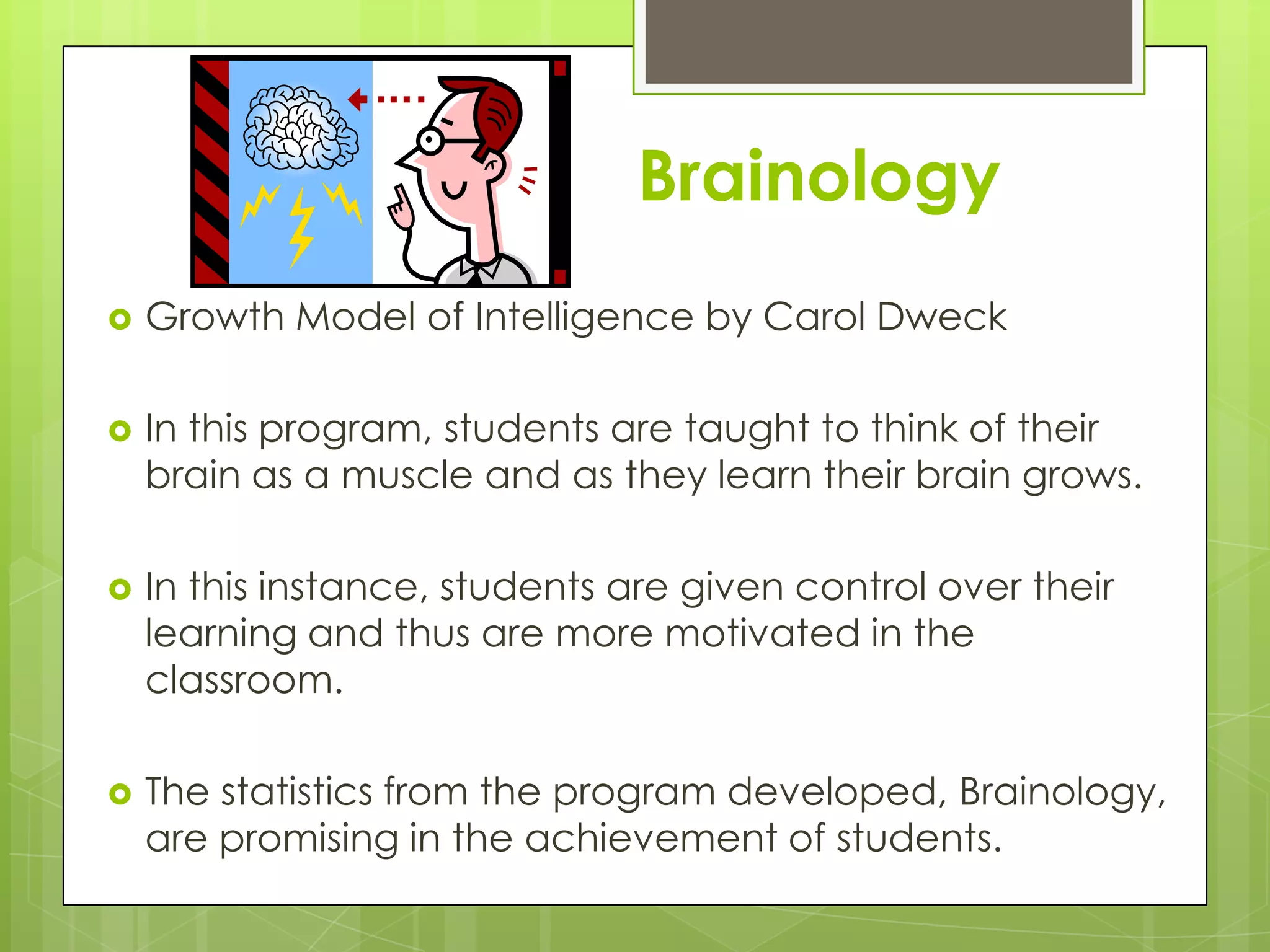
Brainology
   Growth Model of Intelligence by Carol Dweck

   In this program, students are taught to think of their
    brain as a muscle and as they learn their brain grows.

   In this instance, students are given control over their
    learning and thus are more motivated in the
    classroom.

   The statistics from the program developed, Brainology,
    are promising in the achievement of students.
Teaching Basketball from textbooks:
 Chen concludes the discussion on the thinking
 edge with the example of teaching basketball
 through textbooks.

 Never  would one imagine teaching a sport from
 just reading about it, students need to participate
 and practice.

 He describes how this mindset should be applied
 to how we teach our students in the classroom.

The thinking edge

  • 1.
    The Thinking Edge: Thefirst edge is about how we view education and the traditional roles that exist within the school culture:  teachers  parents  students  administration  As Chen describes the situation, “the biggest obstacle to school change is our memories” (Chen, 2010, p. 11).  Educators and parents find it difficult to stray from the school culture that they were indoctrinated in as children. This inability to see past our own experiences hinders the growth and change that needs to take place in our education system.
  • 2.
    Education and Ecstasy byGeorge Leonard  Chendescribes topics written in this book by Leonard over 50 years ago and its impact on schools today. He recounts an interview with Leonard in 1984 and the author’s views on what education should look like. In includes:  individualizededucation  curriculum development  increase teacher pay and respect  provided consistent and tough rules for disruptive behavior  get parents and community involved  most importantly, make school engaging and interesting to students
  • 3.
    Either/Or versus Both-AndChart  Schools inherently seem resistant to change. As schools test more and more, with no changes in the results, the impetus is not to change the way schools are run, but to increase testing in hopes that the results will change.  Chen depicts this with his either/or versus both-and chart. Some examples from this are the decision to teach phonics skills OR whole language, when instead the “smarter synthesis” is the both-and approach, which states that “Both are critical to reading. What kinds of rich linguistic environments support both?” (Chen, 2010, p. 23).  This chart summarizes the rigid views that exist in education today and the openness that educators needs to exhibit in which to meet the needs of students.
  • 4.
    “When we wantan elephant to grow, we feed the elephant. We don’t weigh the elephant” (Chen, 2010, p. 27)  Thisis an analogy used by an Indian educator to describe the testing situation in America as compared to India.  In order to measure the success of the United States’ educational system we test students (weigh the elephant) instead of trying to impact the achievement of our students (feed the elephant).
  • 5.
    Brainology  Growth Model of Intelligence by Carol Dweck  In this program, students are taught to think of their brain as a muscle and as they learn their brain grows.  In this instance, students are given control over their learning and thus are more motivated in the classroom.  The statistics from the program developed, Brainology, are promising in the achievement of students.
  • 6.
    Teaching Basketball fromtextbooks:  Chen concludes the discussion on the thinking edge with the example of teaching basketball through textbooks.  Never would one imagine teaching a sport from just reading about it, students need to participate and practice.  He describes how this mindset should be applied to how we teach our students in the classroom.