The Technology Edge

 Thisedge of education describes how
  technology should be implemented in
  the classroom:
     One   to One Computing
     Online Learning
     Gaming
     Assistive Technology
One to One Computing
    Chen    describes one to one computing as
     “weapons of mass instruction” (2010, p. 86).
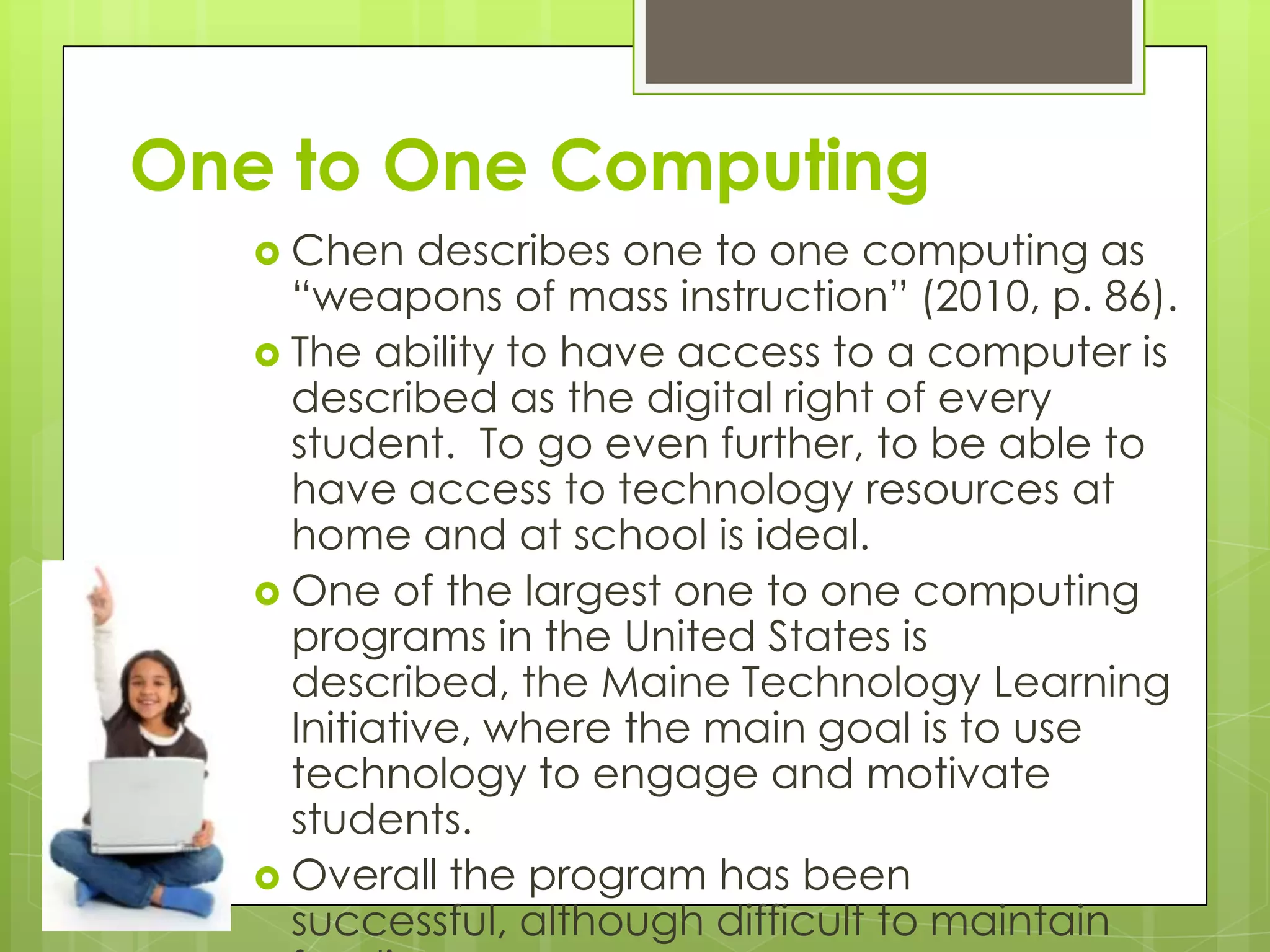
    The ability to have access to a computer is
     described as the digital right of every
     student. To go even further, to be able to
     have access to technology resources at
     home and at school is ideal.
    One of the largest one to one computing
     programs in the United States is
     described, the Maine Technology Learning
     Initiative, where the main goal is to use
     technology to engage and motivate
     students.
    Overall the program has been
     successful, although difficult to maintain
Online Learning
   Several different types of online learning are described in
    this section:
       Fully online-the majority of learning and class meetings take
        place online
       Hybrid or Blended Classes- online and face to face elements

   The use of online learning has several advantages, the
    increase of opportunities for students to have access to
    courses that would otherwise not be able to them and
    the emergence of learning communities inside the online
    classroom.
   Blended classes are leading to the “death of the lecture”
    (2010, p.118). Students are able to access the lectures
    online outside of class, so while in class, students can
    focus on learning activities and discussions rather than
    the less engaging lecture.
Gaming
 Games     and virtual simulations are one area of
  education that is slowly progressing.
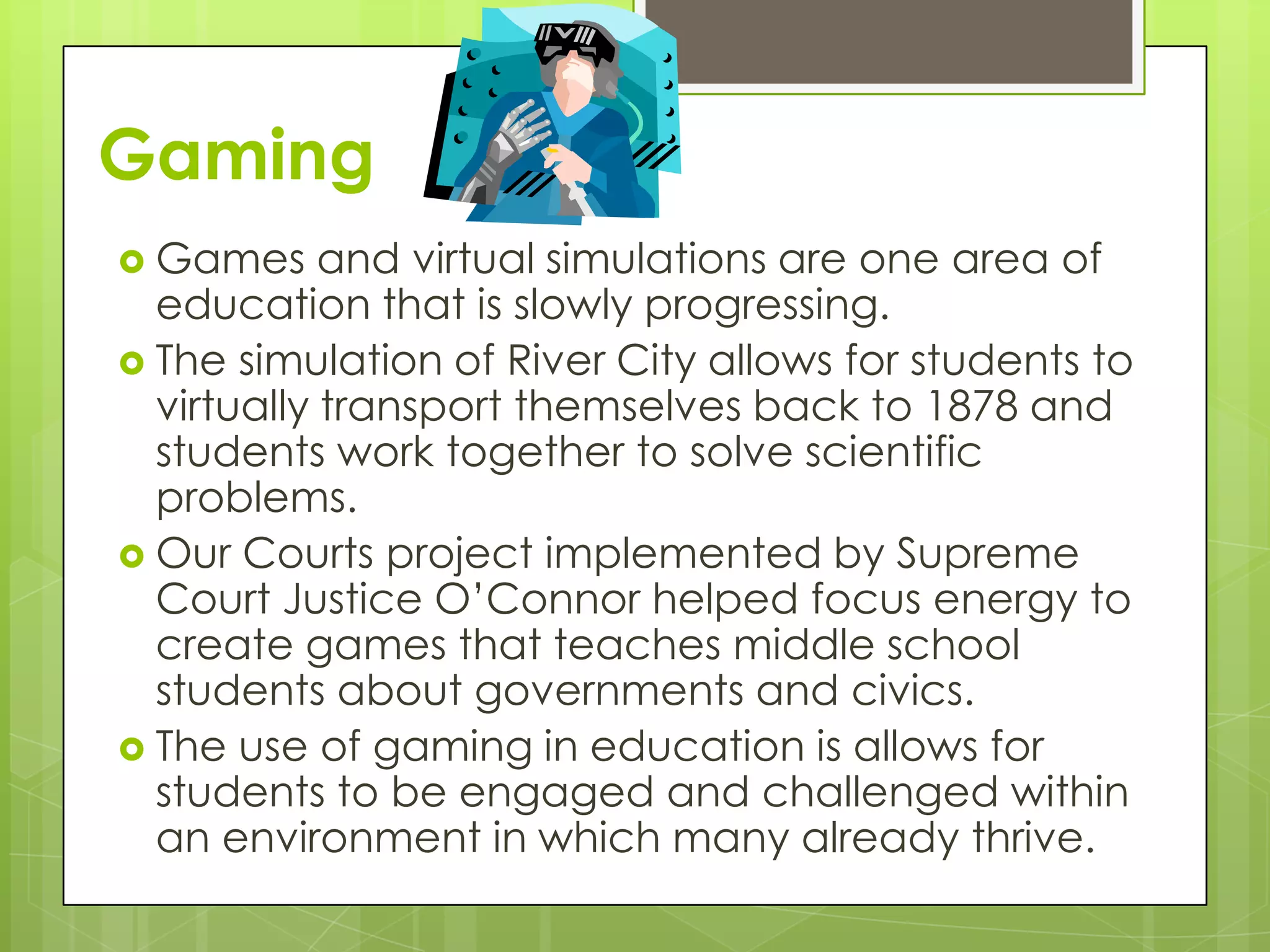
 The simulation of River City allows for students to
  virtually transport themselves back to 1878 and
  students work together to solve scientific
  problems.
 Our Courts project implemented by Supreme
  Court Justice O’Connor helped focus energy to
  create games that teaches middle school
  students about governments and civics.
 The use of gaming in education is allows for
  students to be engaged and challenged within
  an environment in which many already thrive.
Assistive Technology
 There   are about 6 million students served with
  assistive technology within the United States.
 The development of these tools can not only help
  students with disabilities, but the technology
  advances will be able to help other students as
  well. For example, many educational materials
  are now produced in multiple formats to meet the
  needs of all learners.
 Chen describes the development of an Intel
  Reader as part of the new technology being
  developed that can translate any written text to
  speech. The possibilities are endless.

The technology edge

  • 1.
    The Technology Edge Thisedge of education describes how technology should be implemented in the classroom:  One to One Computing  Online Learning  Gaming  Assistive Technology
  • 2.
    One to OneComputing  Chen describes one to one computing as “weapons of mass instruction” (2010, p. 86).  The ability to have access to a computer is described as the digital right of every student. To go even further, to be able to have access to technology resources at home and at school is ideal.  One of the largest one to one computing programs in the United States is described, the Maine Technology Learning Initiative, where the main goal is to use technology to engage and motivate students.  Overall the program has been successful, although difficult to maintain
  • 3.
    Online Learning  Several different types of online learning are described in this section:  Fully online-the majority of learning and class meetings take place online  Hybrid or Blended Classes- online and face to face elements  The use of online learning has several advantages, the increase of opportunities for students to have access to courses that would otherwise not be able to them and the emergence of learning communities inside the online classroom.  Blended classes are leading to the “death of the lecture” (2010, p.118). Students are able to access the lectures online outside of class, so while in class, students can focus on learning activities and discussions rather than the less engaging lecture.
  • 4.
    Gaming  Games and virtual simulations are one area of education that is slowly progressing.  The simulation of River City allows for students to virtually transport themselves back to 1878 and students work together to solve scientific problems.  Our Courts project implemented by Supreme Court Justice O’Connor helped focus energy to create games that teaches middle school students about governments and civics.  The use of gaming in education is allows for students to be engaged and challenged within an environment in which many already thrive.
  • 5.
    Assistive Technology  There are about 6 million students served with assistive technology within the United States.  The development of these tools can not only help students with disabilities, but the technology advances will be able to help other students as well. For example, many educational materials are now produced in multiple formats to meet the needs of all learners.  Chen describes the development of an Intel Reader as part of the new technology being developed that can translate any written text to speech. The possibilities are endless.