GROUP ASSIGNMENT
Submitted to
Dr. B.S. Rathore
Presented by
Priyanka jain
Rajshree verma
Tanya balana
Romika sahu
Monika sharma
Sakshi agarwal
CASE STUDY
ON
THE TATA GROUP: INTEGRATING SOCIAL RESPONSIBILITY WITH
CORPORATE STRATEGY
CORPORATE SOCIAL
RESPONSIBILITY
 The CSR approach is holistic and integrated with the core business
strategy for addressing social and environmental impacts of businesses.
 CSR needs to address the well-being of all stakeholders and not just the
company’s shareholders.
 Philanthropic activities are only a part of CSR, which otherwise constitutes
a much larger set of activities entailing strategic business benefits.
 The Companies Act, 2013 has introduced the idea of CSR to the forefront
and through its disclose-or-explain mandate, is promoting greater
transparency and disclosure. Schedule VII of the Act, which lists out the
CSR activities, suggests communities to be the focal point.
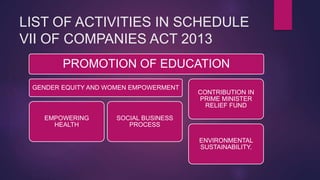
LIST OF ACTIVITIES IN SCHEDULE
VII OF COMPANIES ACT 2013
PROMOTION OF EDUCATION
GENDER EQUITY AND WOMEN EMPOWERMENT
EMPOWERING
HEALTH
SOCIAL BUSINESS
PROCESS
CONTRIBUTION IN
PRIME MINISTER
RELIEF FUND
ENVIRONMENTAL
SUSTAINABILITY.
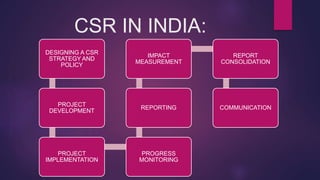
CSR IN INDIA:
DESIGNING A CSR
STRATEGY AND
POLICY
PROJECT
DEVELOPMENT
PROJECT
IMPLEMENTATION
PROGRESS
MONITORING
REPORTING
IMPACT
MEASUREMENT
REPORT
CONSOLIDATION
COMMUNICATION
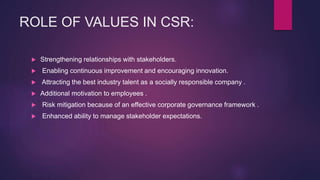
ROLE OF VALUES IN CSR:
 Strengthening relationships with stakeholders.
 Enabling continuous improvement and encouraging innovation.
 Attracting the best industry talent as a socially responsible company .
 Additional motivation to employees .
 Risk mitigation because of an effective corporate governance framework .
 Enhanced ability to manage stakeholder expectations.
THE TATA GROUP
VISION
 For over 100 years, the Tata group has been led by visionaries who have
stayed true to the vision of the founder, Jamshed ji Tata.
 A vision that placed the greater good of society at par with business
growth.
 A vision that put into practice pioneering social initiatives that changed the
way responsible business was run.
 And a vision that brought into the group a strong social conscience.
CORE PRINCIPLES.
 Committed to benefit the economic development of
the countries in which it operates.
 Prepares and maintain accounts fairly
 Fully supports the development and operation of
competitive open market.
 Provide equal opportunity.
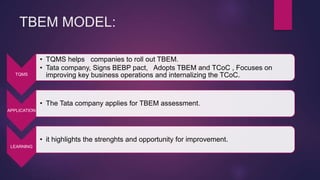
TBEM MODEL:
TQMS
• TQMS helps companies to roll out TBEM.
• Tata company, Signs BEBP pact, Adopts TBEM and TCoC , Focuses on
improving key business operations and internalizing the TCoC.
APPLICATION
• The Tata company applies for TBEM assessment.
LEARNING
• it highlights the strenghts and opportunity for improvement.
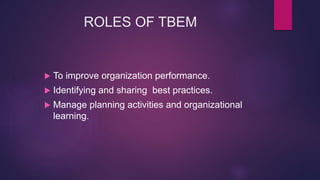
ROLES OF TBEM
 To improve organization performance.
 Identifying and sharing best practices.
 Manage planning activities and organizational
learning.
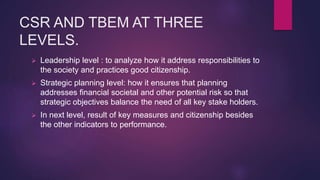
CSR AND TBEM AT THREE
LEVELS.
 Leadership level : to analyze how it address responsibilities to
the society and practices good citizenship.
 Strategic planning level: how it ensures that planning
addresses financial societal and other potential risk so that
strategic objectives balance the need of all key stake holders.
 In next level, result of key measures and citizenship besides
the other indicators to performance.
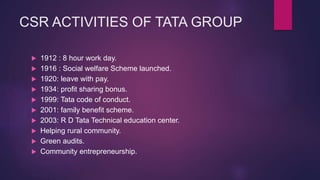
CSR ACTIVITIES OF TATA GROUP
 1912 : 8 hour work day.
 1916 : Social welfare Scheme launched.
 1920: leave with pay.
 1934: profit sharing bonus.
 1999: Tata code of conduct.
 2001: family benefit scheme.
 2003: R D Tata Technical education center.
 Helping rural community.
 Green audits.
 Community entrepreneurship.
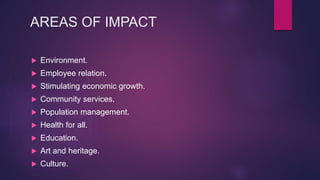
AREAS OF IMPACT
 Environment.
 Employee relation.
 Stimulating economic growth.
 Community services.
 Population management.
 Health for all.
 Education.
 Art and heritage.
 Culture.
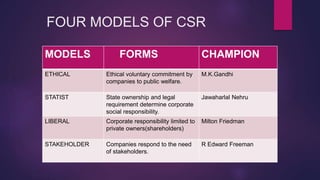
FOUR MODELS OF CSR
MODELS FORMS CHAMPION
ETHICAL Ethical voluntary commitment by
companies to public welfare.
M.K.Gandhi
STATIST State ownership and legal
requirement determine corporate
social responsibility.
Jawaharlal Nehru
LIBERAL Corporate responsibility limited to
private owners(shareholders)
Milton Friedman
STAKEHOLDER Companies respond to the need
of stakeholders.
R Edward Freeman
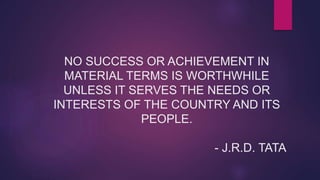
NO SUCCESS OR ACHIEVEMENT IN
MATERIAL TERMS IS WORTHWHILE
UNLESS IT SERVES THE NEEDS OR
INTERESTS OF THE COUNTRY AND ITS
PEOPLE.
- J.R.D. TATA

The tata group

  • 1.
    GROUP ASSIGNMENT Submitted to Dr.B.S. Rathore Presented by Priyanka jain Rajshree verma Tanya balana Romika sahu Monika sharma Sakshi agarwal
  • 2.
    CASE STUDY ON THE TATAGROUP: INTEGRATING SOCIAL RESPONSIBILITY WITH CORPORATE STRATEGY
  • 3.
    CORPORATE SOCIAL RESPONSIBILITY  TheCSR approach is holistic and integrated with the core business strategy for addressing social and environmental impacts of businesses.  CSR needs to address the well-being of all stakeholders and not just the company’s shareholders.  Philanthropic activities are only a part of CSR, which otherwise constitutes a much larger set of activities entailing strategic business benefits.  The Companies Act, 2013 has introduced the idea of CSR to the forefront and through its disclose-or-explain mandate, is promoting greater transparency and disclosure. Schedule VII of the Act, which lists out the CSR activities, suggests communities to be the focal point.
  • 4.
    LIST OF ACTIVITIESIN SCHEDULE VII OF COMPANIES ACT 2013 PROMOTION OF EDUCATION GENDER EQUITY AND WOMEN EMPOWERMENT EMPOWERING HEALTH SOCIAL BUSINESS PROCESS CONTRIBUTION IN PRIME MINISTER RELIEF FUND ENVIRONMENTAL SUSTAINABILITY.
  • 5.
    CSR IN INDIA: DESIGNINGA CSR STRATEGY AND POLICY PROJECT DEVELOPMENT PROJECT IMPLEMENTATION PROGRESS MONITORING REPORTING IMPACT MEASUREMENT REPORT CONSOLIDATION COMMUNICATION
  • 6.
    ROLE OF VALUESIN CSR:  Strengthening relationships with stakeholders.  Enabling continuous improvement and encouraging innovation.  Attracting the best industry talent as a socially responsible company .  Additional motivation to employees .  Risk mitigation because of an effective corporate governance framework .  Enhanced ability to manage stakeholder expectations.
  • 7.
  • 8.
    VISION  For over100 years, the Tata group has been led by visionaries who have stayed true to the vision of the founder, Jamshed ji Tata.  A vision that placed the greater good of society at par with business growth.  A vision that put into practice pioneering social initiatives that changed the way responsible business was run.  And a vision that brought into the group a strong social conscience.
  • 10.
    CORE PRINCIPLES.  Committedto benefit the economic development of the countries in which it operates.  Prepares and maintain accounts fairly  Fully supports the development and operation of competitive open market.  Provide equal opportunity.
  • 11.
    TBEM MODEL: TQMS • TQMShelps companies to roll out TBEM. • Tata company, Signs BEBP pact, Adopts TBEM and TCoC , Focuses on improving key business operations and internalizing the TCoC. APPLICATION • The Tata company applies for TBEM assessment. LEARNING • it highlights the strenghts and opportunity for improvement.
  • 12.
    ROLES OF TBEM To improve organization performance.  Identifying and sharing best practices.  Manage planning activities and organizational learning.
  • 13.
    CSR AND TBEMAT THREE LEVELS.  Leadership level : to analyze how it address responsibilities to the society and practices good citizenship.  Strategic planning level: how it ensures that planning addresses financial societal and other potential risk so that strategic objectives balance the need of all key stake holders.  In next level, result of key measures and citizenship besides the other indicators to performance.
  • 14.
    CSR ACTIVITIES OFTATA GROUP  1912 : 8 hour work day.  1916 : Social welfare Scheme launched.  1920: leave with pay.  1934: profit sharing bonus.  1999: Tata code of conduct.  2001: family benefit scheme.  2003: R D Tata Technical education center.  Helping rural community.  Green audits.  Community entrepreneurship.
  • 15.
    AREAS OF IMPACT Environment.  Employee relation.  Stimulating economic growth.  Community services.  Population management.  Health for all.  Education.  Art and heritage.  Culture.
  • 16.
    FOUR MODELS OFCSR MODELS FORMS CHAMPION ETHICAL Ethical voluntary commitment by companies to public welfare. M.K.Gandhi STATIST State ownership and legal requirement determine corporate social responsibility. Jawaharlal Nehru LIBERAL Corporate responsibility limited to private owners(shareholders) Milton Friedman STAKEHOLDER Companies respond to the need of stakeholders. R Edward Freeman
  • 17.
    NO SUCCESS ORACHIEVEMENT IN MATERIAL TERMS IS WORTHWHILE UNLESS IT SERVES THE NEEDS OR INTERESTS OF THE COUNTRY AND ITS PEOPLE. - J.R.D. TATA