

THE SEARCH PROCESS
Step 1: Starts with Problem or Need for Information/
Developing a Clear Research Question
Tompkins-McCaw Library for the Health Sciences, VCU Libraries
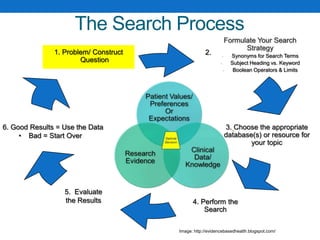
The Search Process
2.
5. Evaluate
the Results
6. Good Results = Use the Data
• Bad = Start Over
3. Choose the appropriate
database(s) or resource for
your topic
4. Perform the
Search
1. Problem/ Construct
Question
Image: http://evidencebasedhealth.blogspot.com/
Formulate Your Search
Strategy
• Synonyms for Search Terms
• Subject Heading vs. Keyword
• Boolean Operators & Limits
The Problem……….
• Helping a older, female
patient to deal with the
pain or other issues related
to fibromyalgia
• Improve Quality of Life
Question - Brings Focus to Search of the Literature
Chronic Pain / Fatigue / Sleep Issues
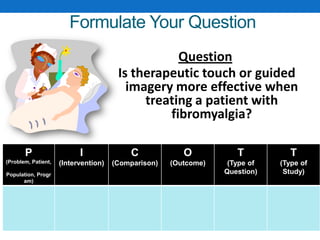
Formulate Your Question
Question
Is therapeutic touch or guided
imagery more effective when
treating a patient with
fibromyalgia?
P
(Problem, Patient,
Population, Progr
am)
I
(Intervention)
C
(Comparison)
O
(Outcome)
T
(Type of
Question)
T
(Type of
Study)
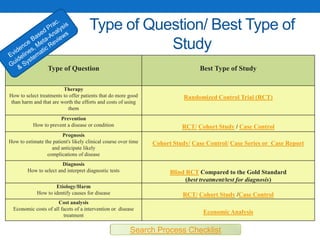
Type of Question/ Best Type of
Study
Type of Question Best Type of Study
Therapy
How to select treatments to offer patients that do more good
than harm and that are worth the efforts and costs of using
them
Randomized Control Trial (RCT)
Prevention
How to prevent a disease or condition RCT/ Cohort Study / Case Control
Prognosis
How to estimate the patient's likely clinical course over time
and anticipate likely
complications of disease
Cohort Study/ Case Control/ Case Series or Case Report
Diagnosis
How to select and interpret diagnostic tests Blind RCT Compared to the Gold Standard
(best treatment/test for diagnosis)
Etiology/Harm
How to identify causes for disease RCT/ Cohort Study /Case Control
Cost analysis
Economic costs of all facets of a intervention or disease
treatment
Economic Analysis
Search Process Checklist
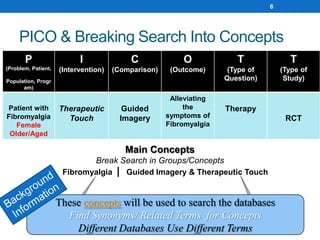
PICO & Breaking Search Into Concepts
Main Concepts
Break Search in Groups/Concepts
6
Fibromyalgia | Guided Imagery & Therapeutic Touch
These concepts will be used to search the databases
Find Synonyms/ Related Terms for Concepts
Different Databases Use Different Terms
P
(Problem, Patient,
Population, Progr
am)
I
(Intervention)
C
(Comparison)
O
(Outcome)
T
(Type of
Question)
T
(Type of
Study)
Patient with
Fibromyalgia
Female
Older/Aged
Therapeutic
Touch
Guided
Imagery
Alleviating
the
symptoms of
Fibromyalgia
Therapy
RCT
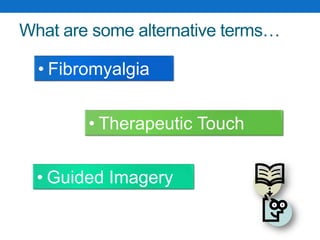
What are some alternative terms…
• Guided Imagery
• Fibromyalgia
• Therapeutic Touch
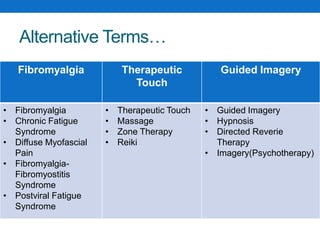
Fibromyalgia Therapeutic
Touch
Guided Imagery
• Fibromyalgia
• Chronic Fatigue
Syndrome
• Diffuse Myofascial
Pain
• Fibromyalgia-
Fibromyostitis
Syndrome
• Postviral Fatigue
Syndrome
• Therapeutic Touch
• Massage
• Zone Therapy
• Reiki
• Guided Imagery
• Hypnosis
• Directed Reverie
Therapy
• Imagery(Psychotherapy)
Alternative Terms…
Ways to Find Alternative Terms/
Background Information
• Good Sources:
1. Point-of-Care Tools
• First Consult
• Up to Date
2. Government Sites
• Medline Plus
• PubMed Health
3. Controlled Vocab. Entry
Terms
4. Google Scholar Term/Concept
Mining
Google vs. Google Scholar
 main purpose of is to
hunt for text in Web
pages
 Displays results based
on Page Rank
 Does not really cover
information contained in
library catalogs, official
government documents,
phone books, etc.
• Indexes the full text of
scholarly literature across an
array of publishing formats
and disciplines
• Includes most peer-
reviewed online journals of
Europe and America's
largest scholarly publishers
• Tends to put weight on
citation counts when
displaying search results
Falagas, M. E., Pitsouni, E. I., Malietzis, G. A., & Pappas, G. (2008). Comparison of PubMed, scopus, web of science, and google scholar: Strengths and weaknesses The FASEB Journal :
Official Publication of the Federation of American Societies for Experimental Biology, 22(2), 338-342. doi:10.1096/fj.07-9492LSF
Vine, #., & Rita. (2006). Google scholar Journal of the Medical Library Association, 94(1), 97–9.
Wikipedia contributors.Google search Retrieved, 2012,
The Search Process : Step 1

The Search Process : Step 1

  • 1.
    THE SEARCH PROCESS Step1: Starts with Problem or Need for Information/ Developing a Clear Research Question Tompkins-McCaw Library for the Health Sciences, VCU Libraries
  • 2.
    The Search Process 2. 5.Evaluate the Results 6. Good Results = Use the Data • Bad = Start Over 3. Choose the appropriate database(s) or resource for your topic 4. Perform the Search 1. Problem/ Construct Question Image: http://evidencebasedhealth.blogspot.com/ Formulate Your Search Strategy • Synonyms for Search Terms • Subject Heading vs. Keyword • Boolean Operators & Limits
  • 3.
    The Problem………. • Helpinga older, female patient to deal with the pain or other issues related to fibromyalgia • Improve Quality of Life Question - Brings Focus to Search of the Literature Chronic Pain / Fatigue / Sleep Issues
  • 4.
    Formulate Your Question Question Istherapeutic touch or guided imagery more effective when treating a patient with fibromyalgia? P (Problem, Patient, Population, Progr am) I (Intervention) C (Comparison) O (Outcome) T (Type of Question) T (Type of Study)
  • 5.
    Type of Question/Best Type of Study Type of Question Best Type of Study Therapy How to select treatments to offer patients that do more good than harm and that are worth the efforts and costs of using them Randomized Control Trial (RCT) Prevention How to prevent a disease or condition RCT/ Cohort Study / Case Control Prognosis How to estimate the patient's likely clinical course over time and anticipate likely complications of disease Cohort Study/ Case Control/ Case Series or Case Report Diagnosis How to select and interpret diagnostic tests Blind RCT Compared to the Gold Standard (best treatment/test for diagnosis) Etiology/Harm How to identify causes for disease RCT/ Cohort Study /Case Control Cost analysis Economic costs of all facets of a intervention or disease treatment Economic Analysis Search Process Checklist
  • 6.
    PICO & BreakingSearch Into Concepts Main Concepts Break Search in Groups/Concepts 6 Fibromyalgia | Guided Imagery & Therapeutic Touch These concepts will be used to search the databases Find Synonyms/ Related Terms for Concepts Different Databases Use Different Terms P (Problem, Patient, Population, Progr am) I (Intervention) C (Comparison) O (Outcome) T (Type of Question) T (Type of Study) Patient with Fibromyalgia Female Older/Aged Therapeutic Touch Guided Imagery Alleviating the symptoms of Fibromyalgia Therapy RCT
  • 7.
    What are somealternative terms… • Guided Imagery • Fibromyalgia • Therapeutic Touch
  • 8.
    Fibromyalgia Therapeutic Touch Guided Imagery •Fibromyalgia • Chronic Fatigue Syndrome • Diffuse Myofascial Pain • Fibromyalgia- Fibromyostitis Syndrome • Postviral Fatigue Syndrome • Therapeutic Touch • Massage • Zone Therapy • Reiki • Guided Imagery • Hypnosis • Directed Reverie Therapy • Imagery(Psychotherapy) Alternative Terms…
  • 9.
    Ways to FindAlternative Terms/ Background Information • Good Sources: 1. Point-of-Care Tools • First Consult • Up to Date 2. Government Sites • Medline Plus • PubMed Health 3. Controlled Vocab. Entry Terms 4. Google Scholar Term/Concept Mining
  • 10.
    Google vs. GoogleScholar  main purpose of is to hunt for text in Web pages  Displays results based on Page Rank  Does not really cover information contained in library catalogs, official government documents, phone books, etc. • Indexes the full text of scholarly literature across an array of publishing formats and disciplines • Includes most peer- reviewed online journals of Europe and America's largest scholarly publishers • Tends to put weight on citation counts when displaying search results Falagas, M. E., Pitsouni, E. I., Malietzis, G. A., & Pappas, G. (2008). Comparison of PubMed, scopus, web of science, and google scholar: Strengths and weaknesses The FASEB Journal : Official Publication of the Federation of American Societies for Experimental Biology, 22(2), 338-342. doi:10.1096/fj.07-9492LSF Vine, #., & Rita. (2006). Google scholar Journal of the Medical Library Association, 94(1), 97–9. Wikipedia contributors.Google search Retrieved, 2012,