





The SaaS Founder’s Journey
What matters at each stage
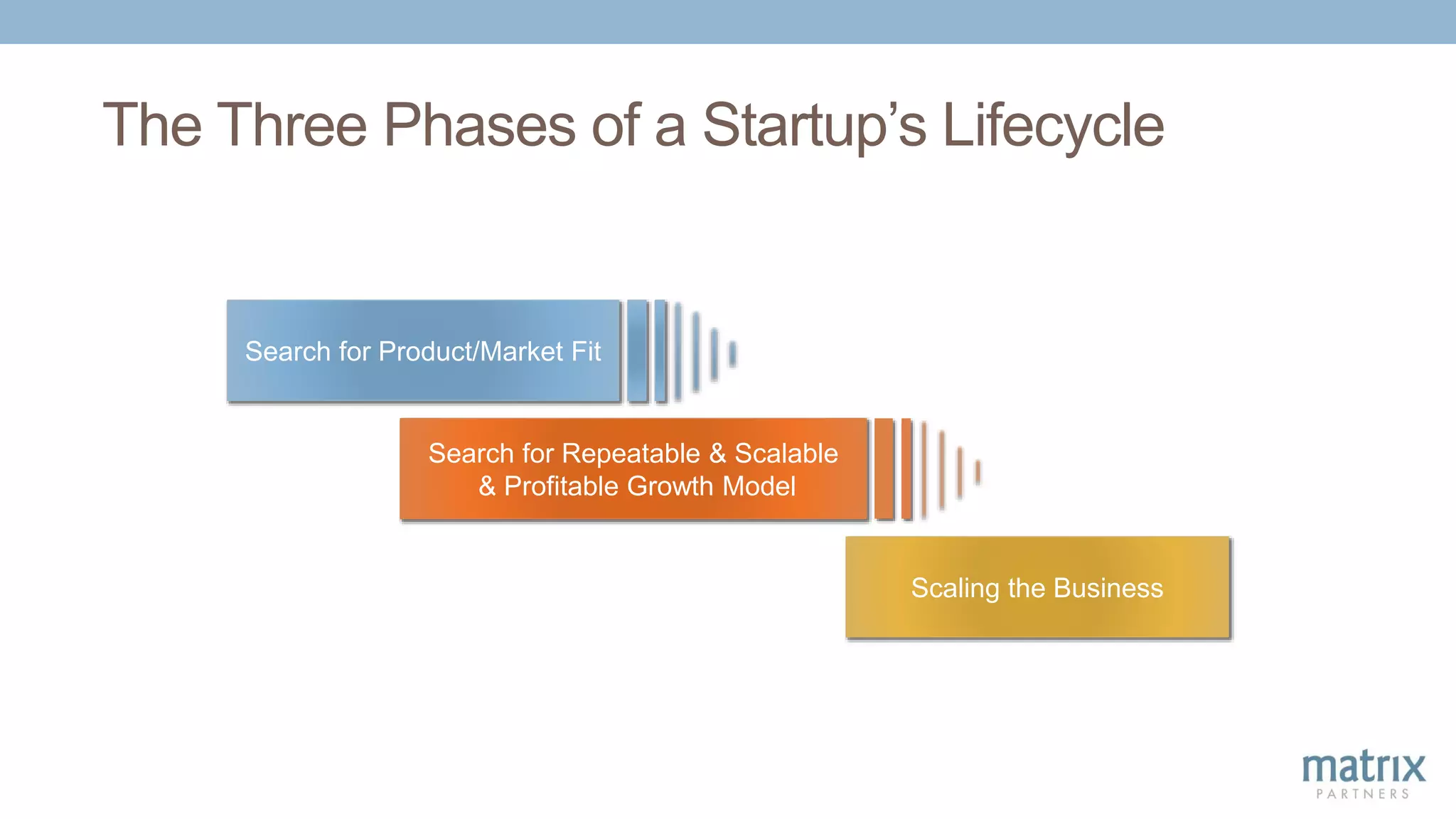
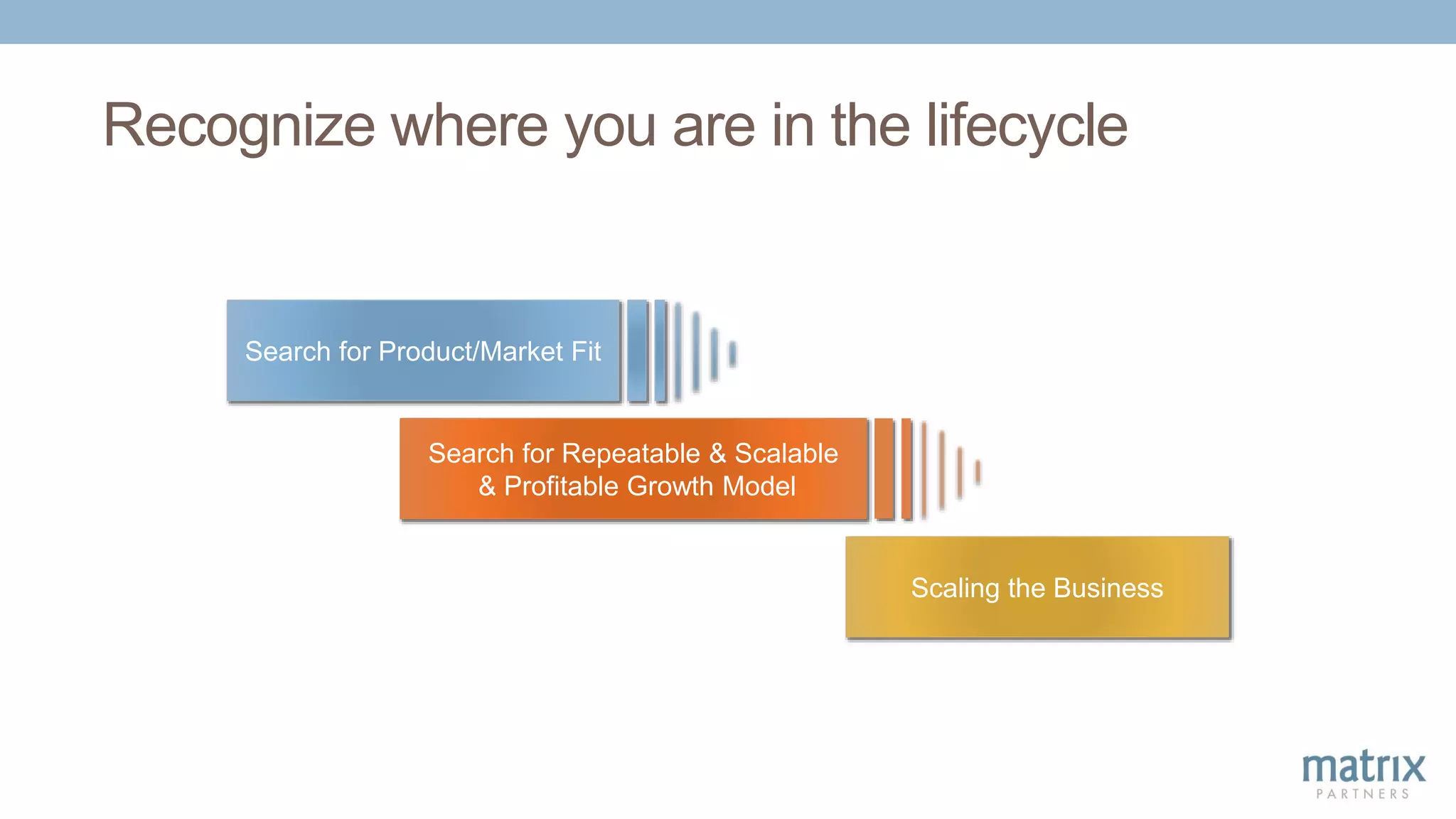
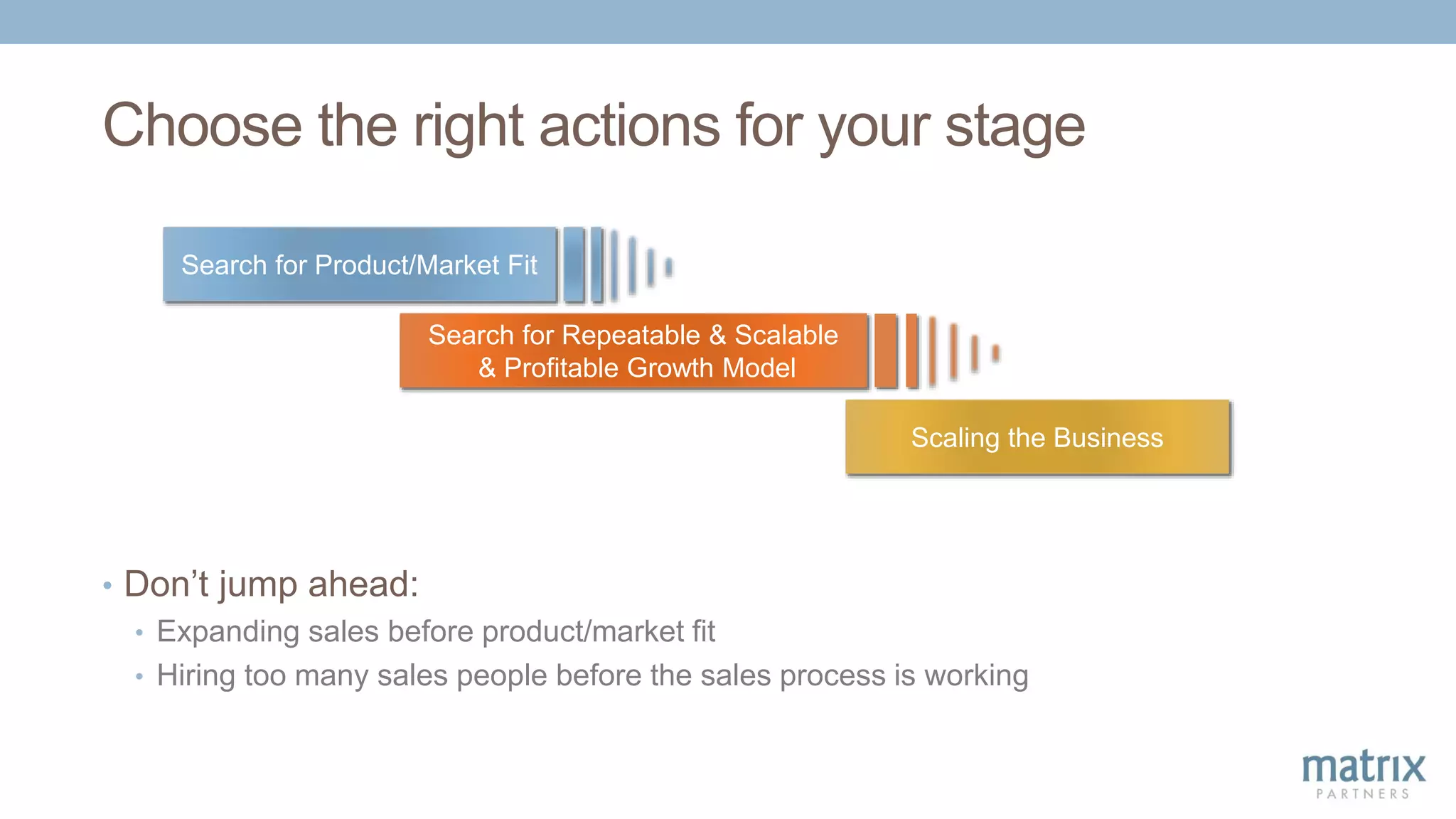
Search for Product/Market Fit
Scaling the Business
Search for Repeatable & Scalable
& Profitable Growth Model
The Three Phases of a Startup’s Lifecycle
The Most important Startup Questions
• When will we run out of cash?
• Are we on track to reach the
milestones needed for a
successful fundraise?
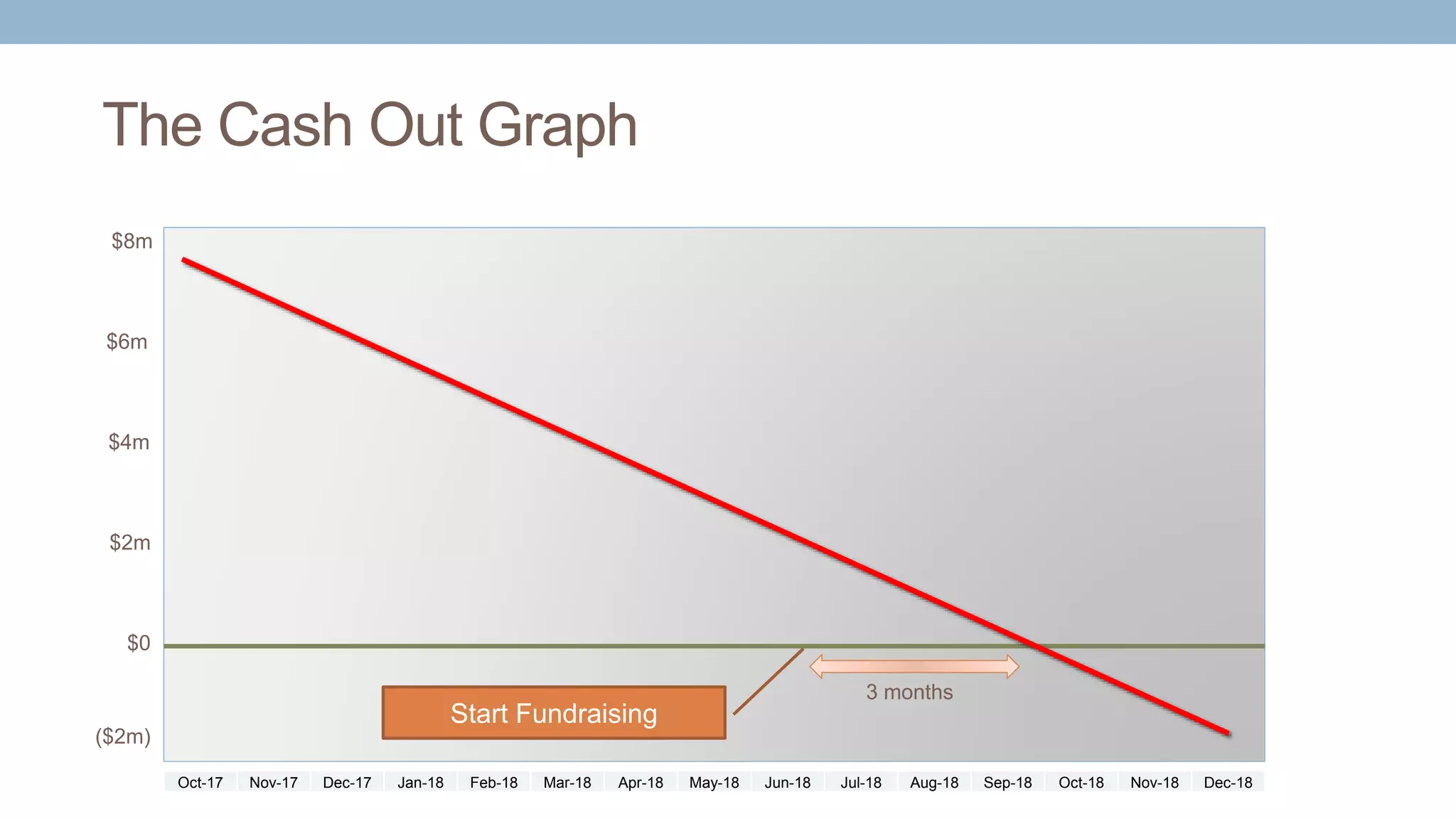
The Cash Out Graph
Oct-17 Nov-17 Dec-17 Jan-18 Feb-18 Mar-18 Apr-18 May-18 Jun-18 Jul-18 Aug-18 Sep-18 Oct-18 Nov-18 Dec-18
$0
$2m
$4m
$6m
$8m
($2m)
Start Fundraising
3 months
Startups are a race against time
• The way to win is extreme Focus
• & total alignment across all departments
But… what to focus on?
Since cash is crucial to
survival…
… let’s look at how to
successfully close your next
round
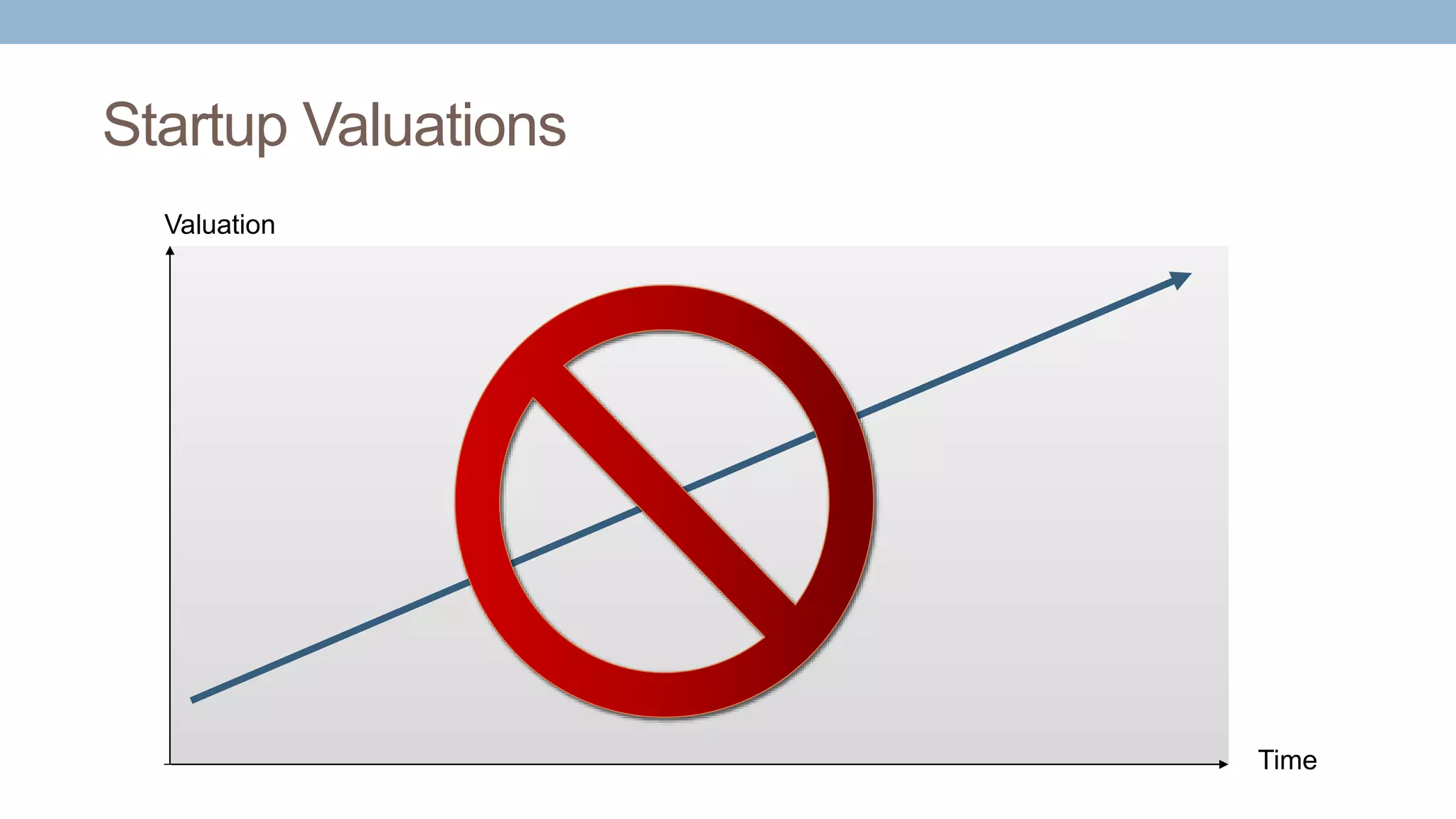
Startup Valuations
Time
Valuation
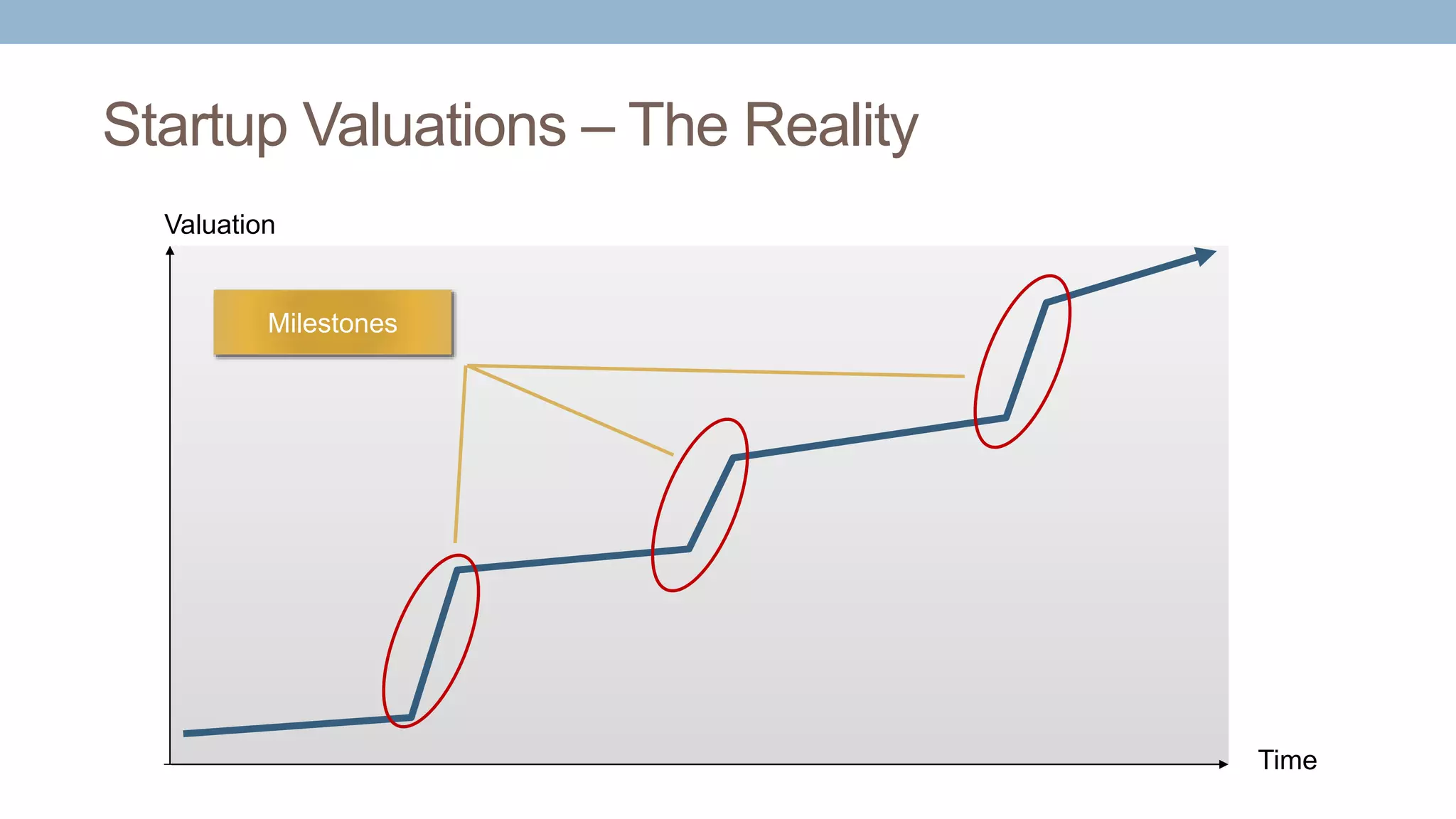
Startup Valuations – The Reality
Time
Valuation
Milestones
Scaling the Business
Search for Product/Market Fit
Search for Repeatable & Scalable
& Profitable Growth Model
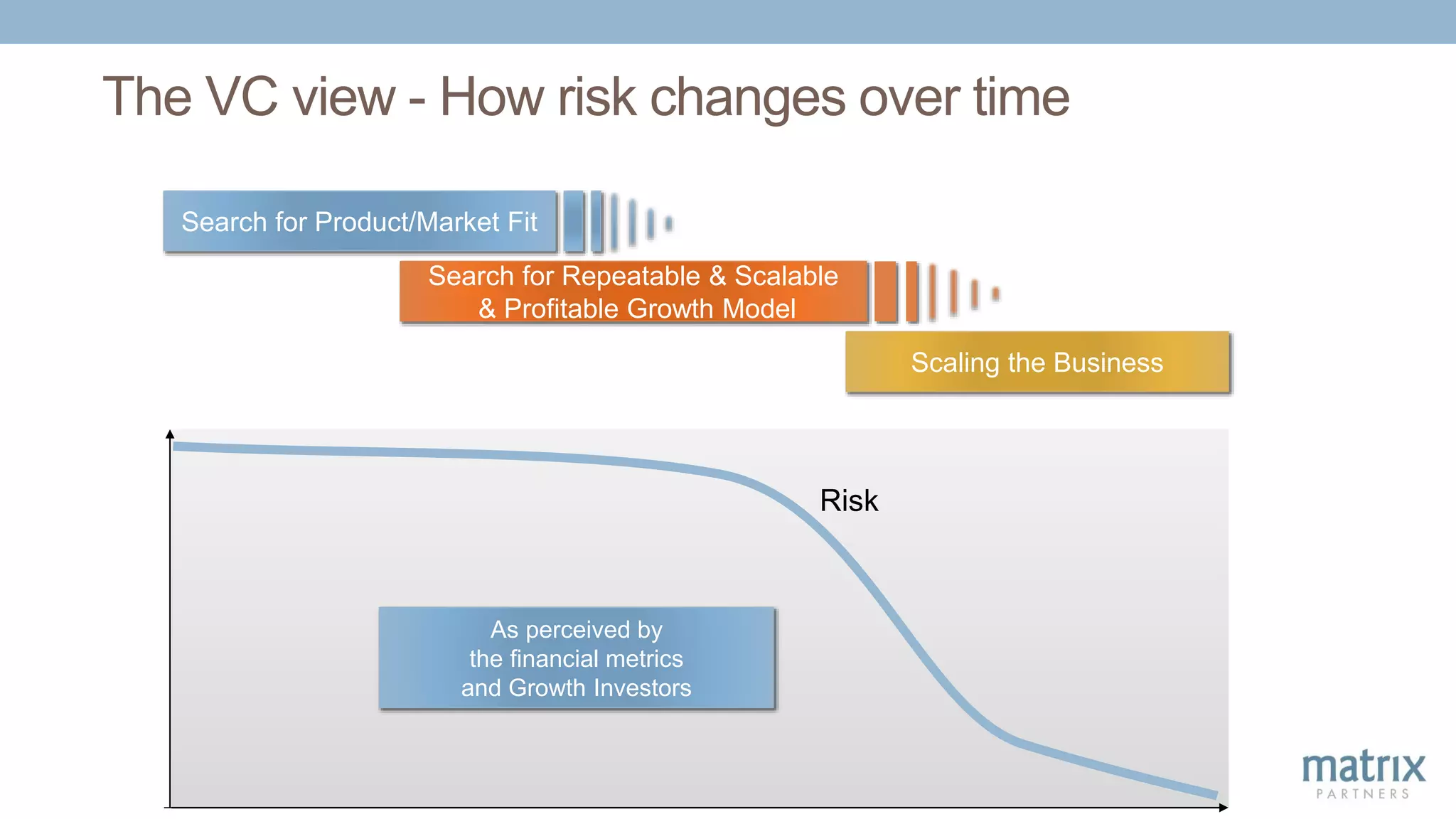
The VC view - How risk changes over time
Risk
As perceived by
the financial metrics
and Growth Investors
Scaling the Business
Search for Product/Market Fit
Search for Repeatable & Scalable
& Profitable Growth Model
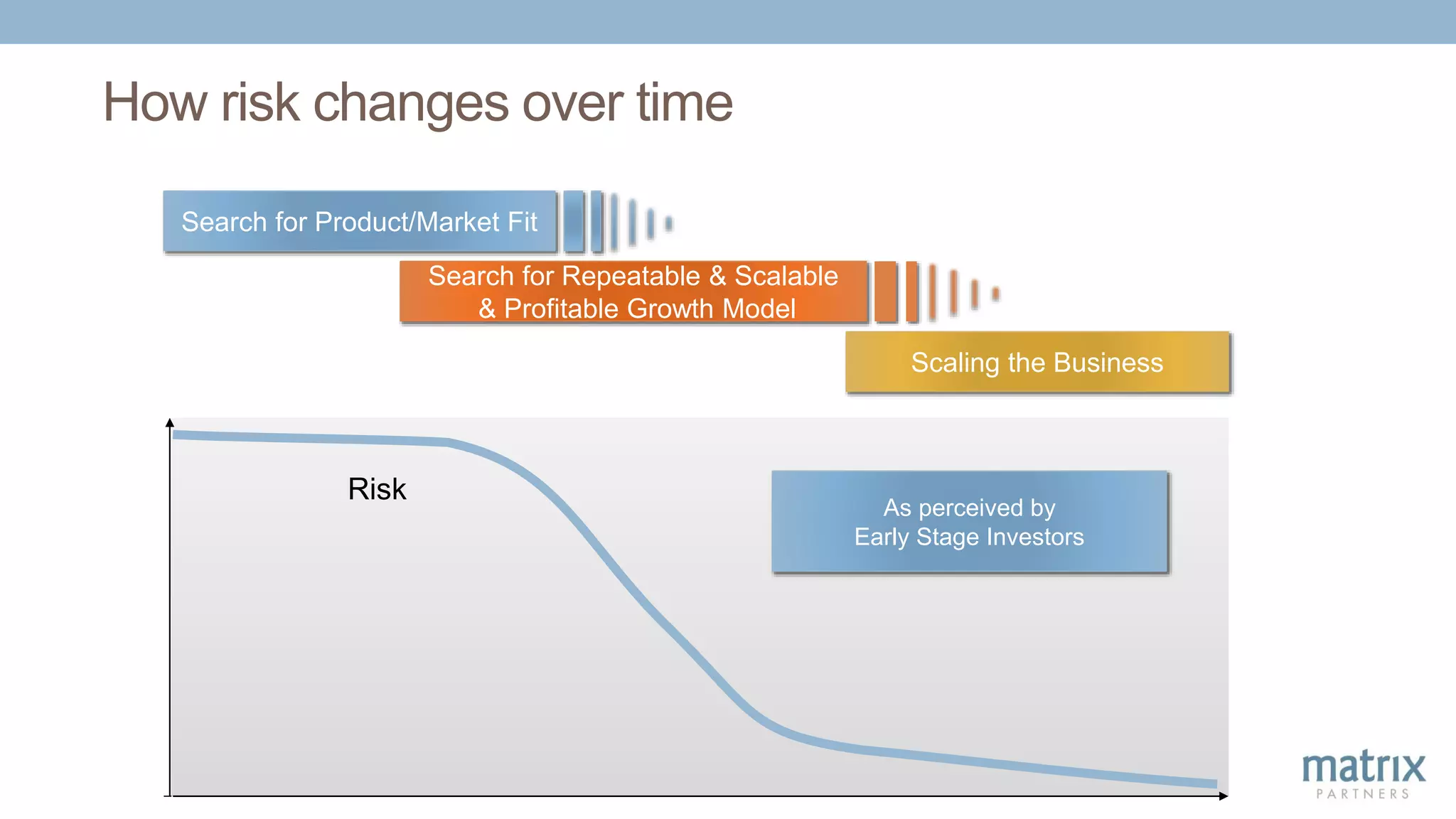
How risk changes over time
Risk
As perceived by
Early Stage Investors
Scaling the Business
Search for Product/Market Fit
Search for Repeatable & Scalable
& Profitable Growth Model
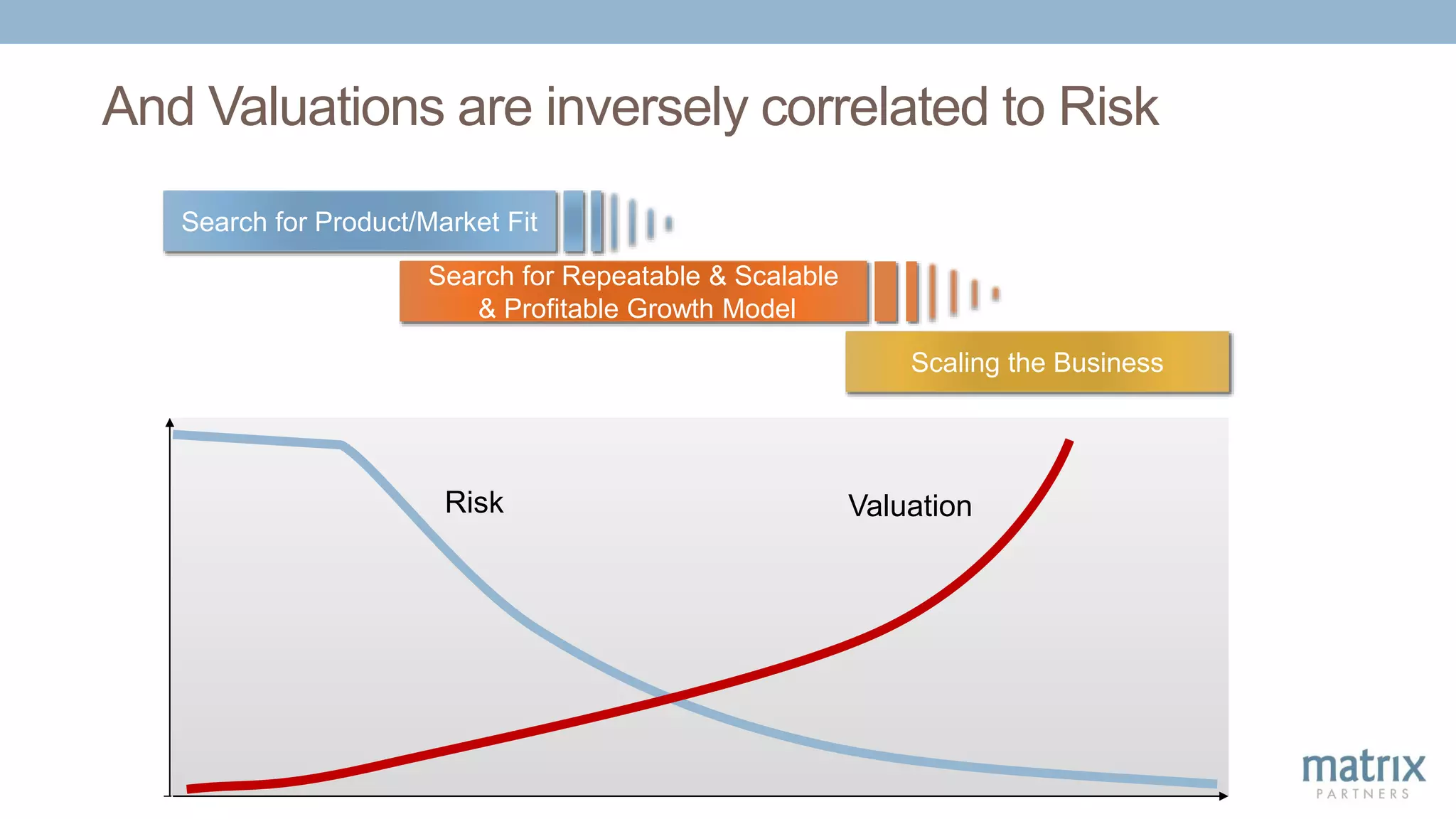
And Valuations are inversely correlated to Risk
Risk Valuation
Scaling the Business
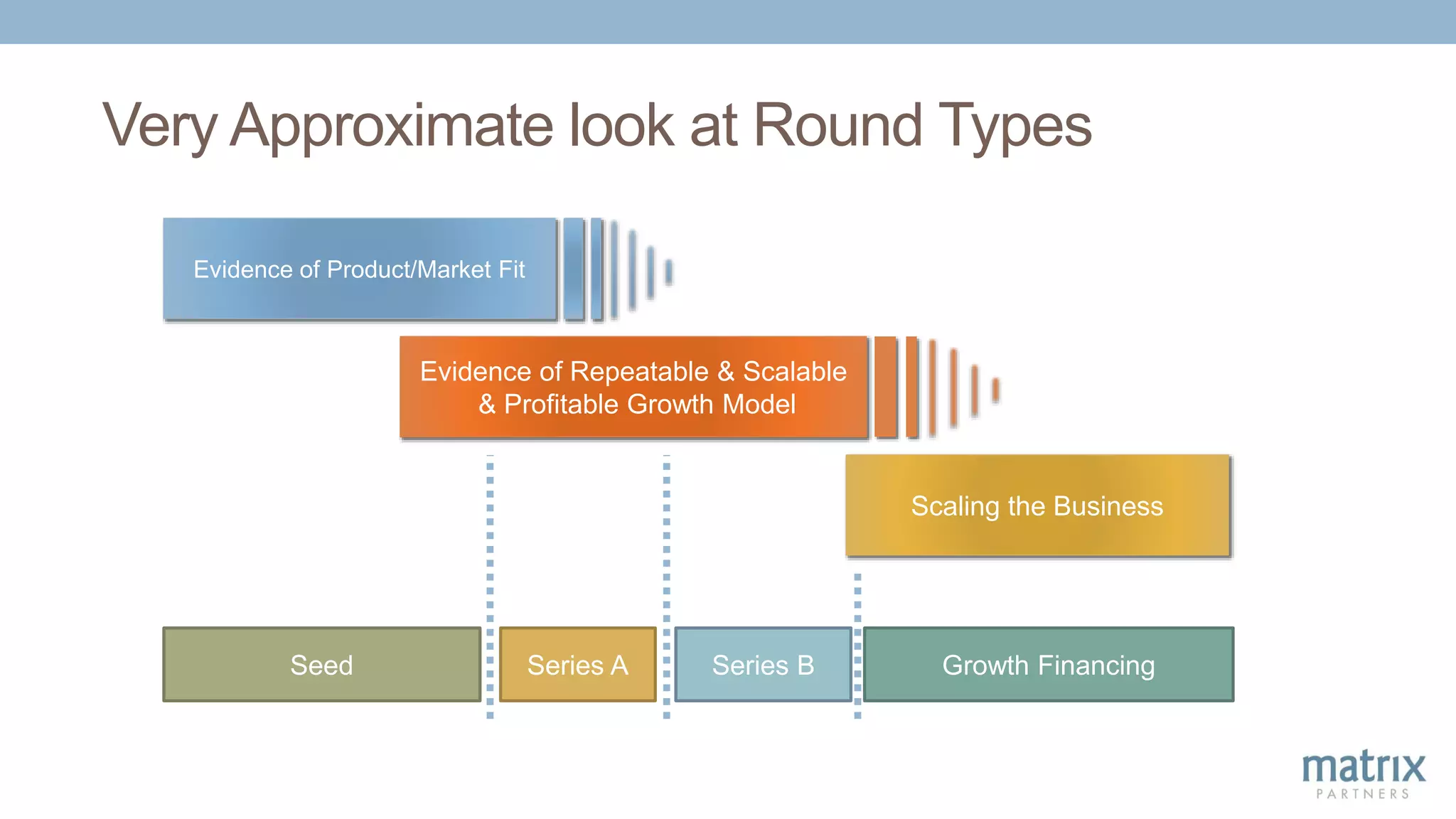
Evidence of Product/Market Fit
Evidence of Repeatable & Scalable
& Profitable Growth Model
Very Approximate look at Round Types
Seed Series A Series B Growth Financing
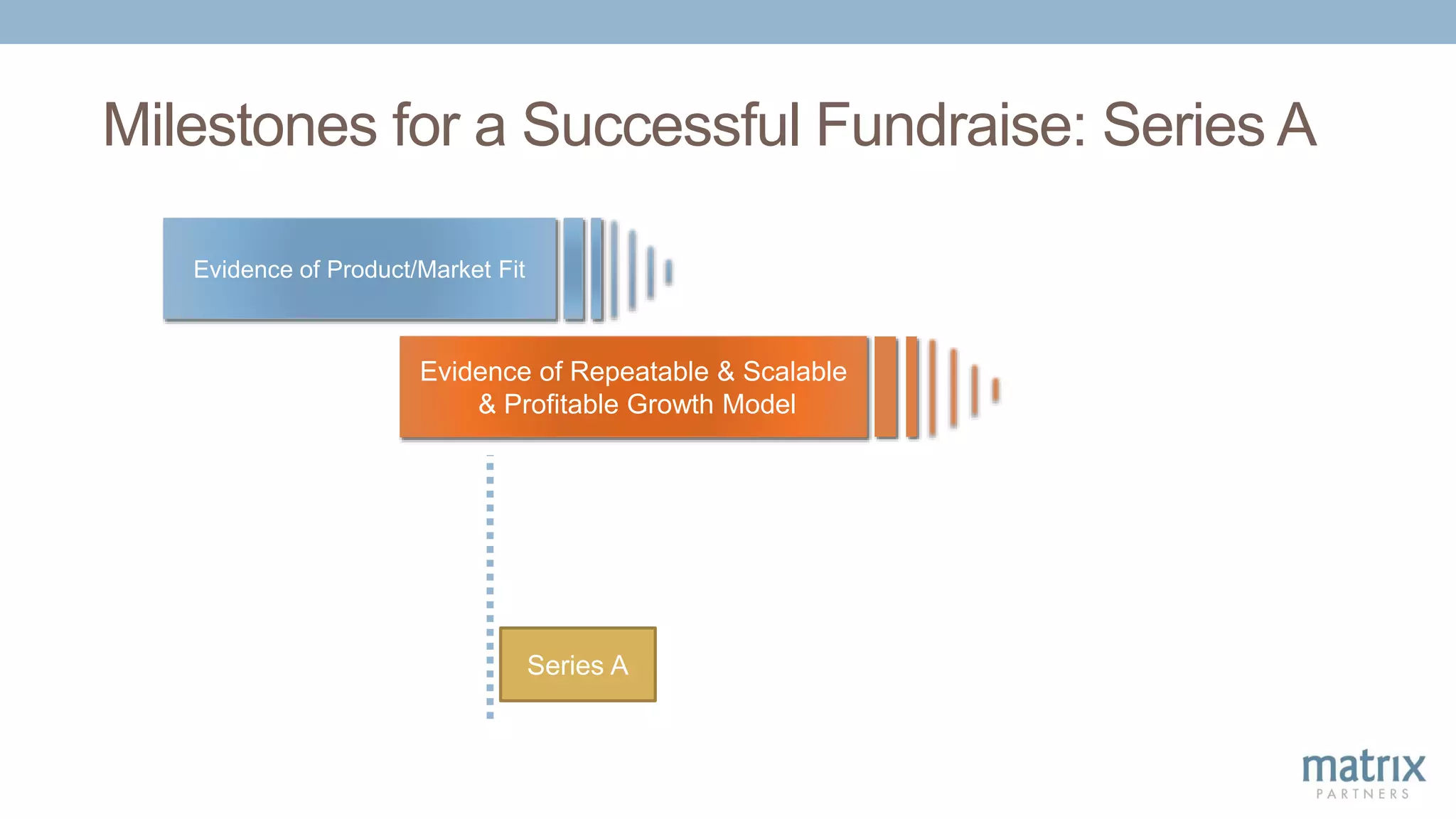
Evidence of Product/Market Fit
Evidence of Repeatable & Scalable
& Profitable Growth Model
Milestones for a Successful Fundraise: Series A
Series A
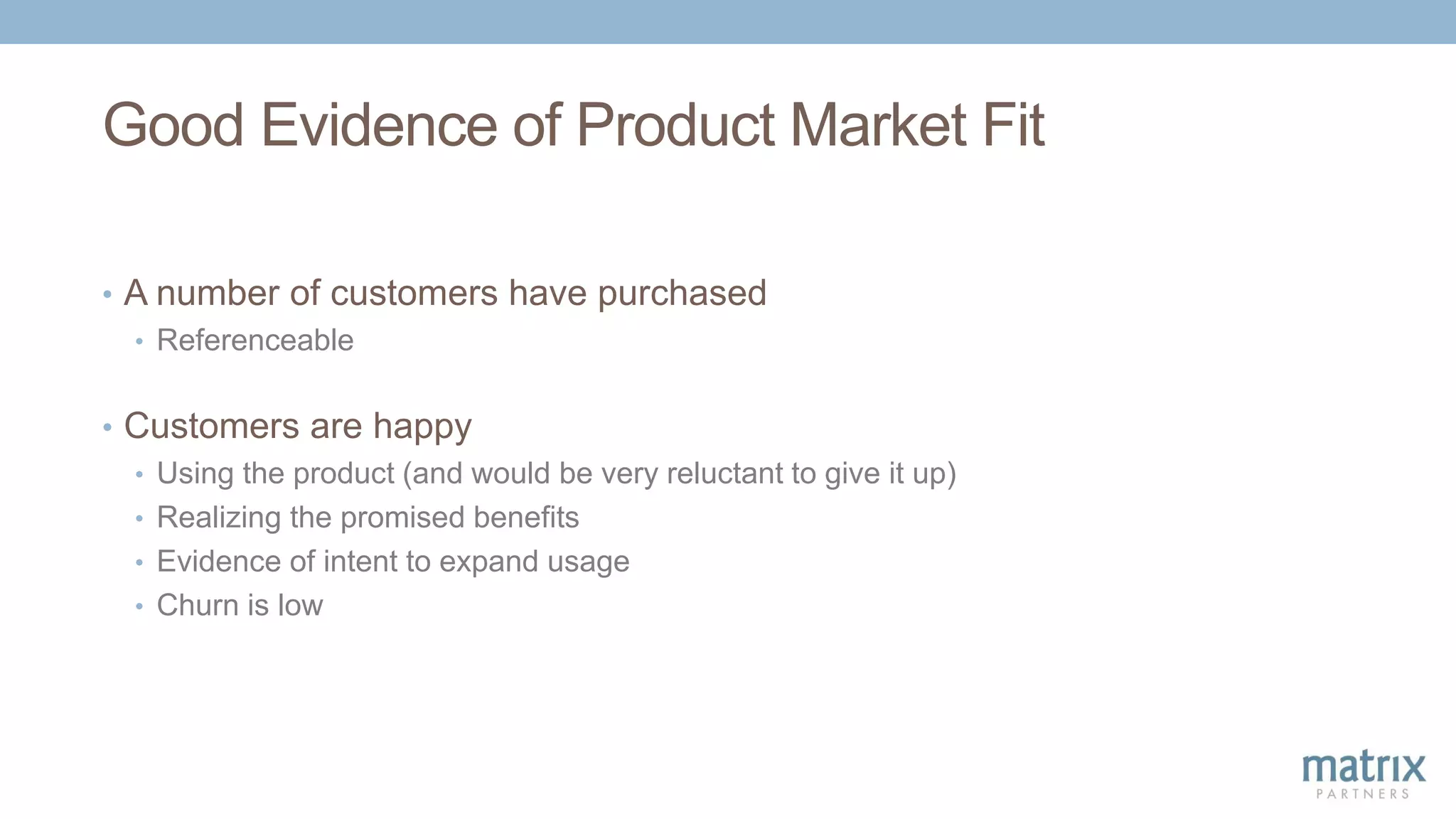
Good Evidence of Product Market Fit
• A number of customers have purchased
• Referenceable
• Customers are happy
• Using the product (and would be very reluctant to give it up)
• Realizing the promised benefits
• Evidence of intent to expand usage
• Churn is low
Milestones for a Successful Growth Round
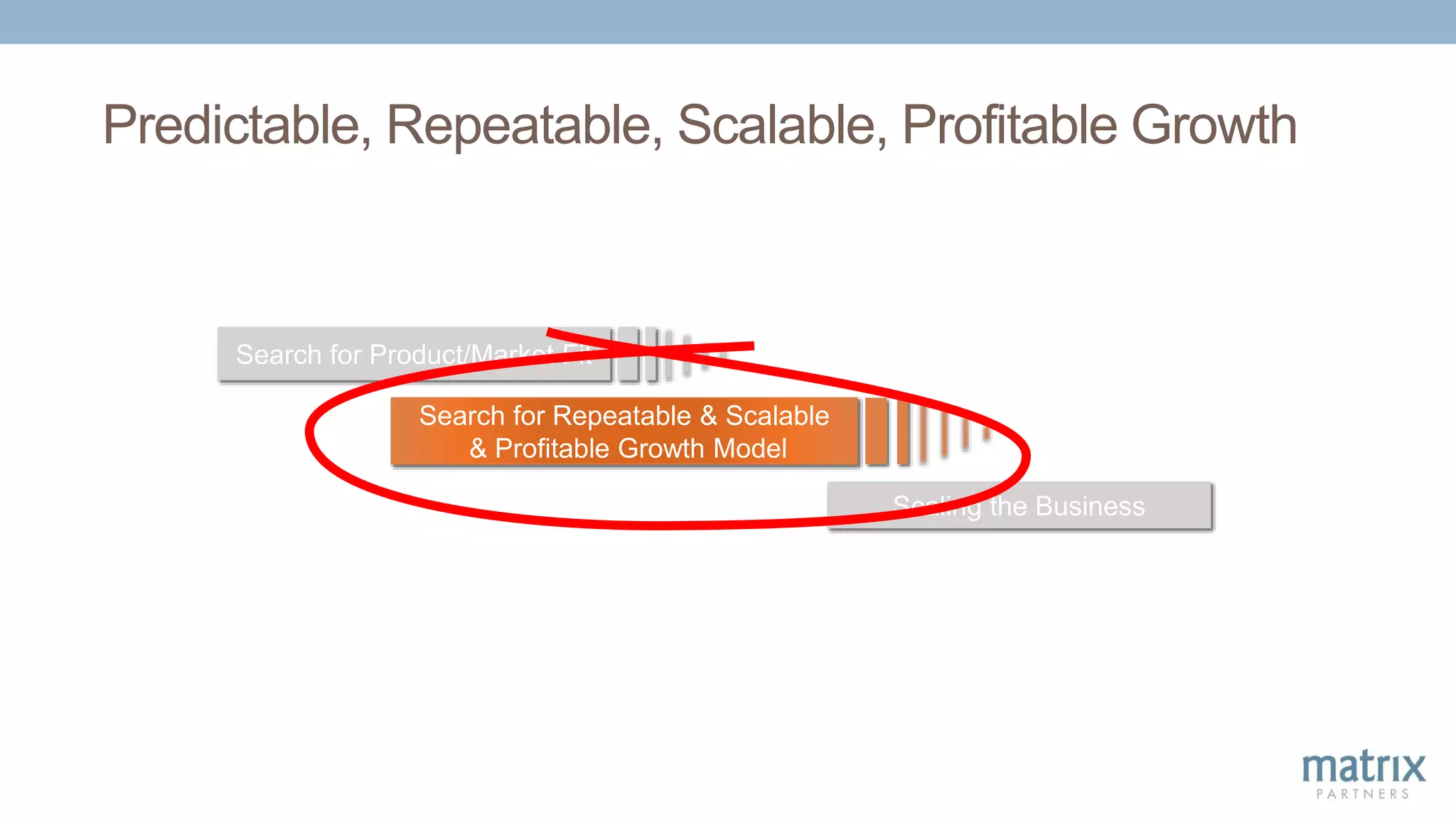
Predictable, Repeatable, Scalable, Profitable Growth
Scaling the Business
Search for Product/Market Fit
Search for Repeatable & Scalable
& Profitable Growth Model
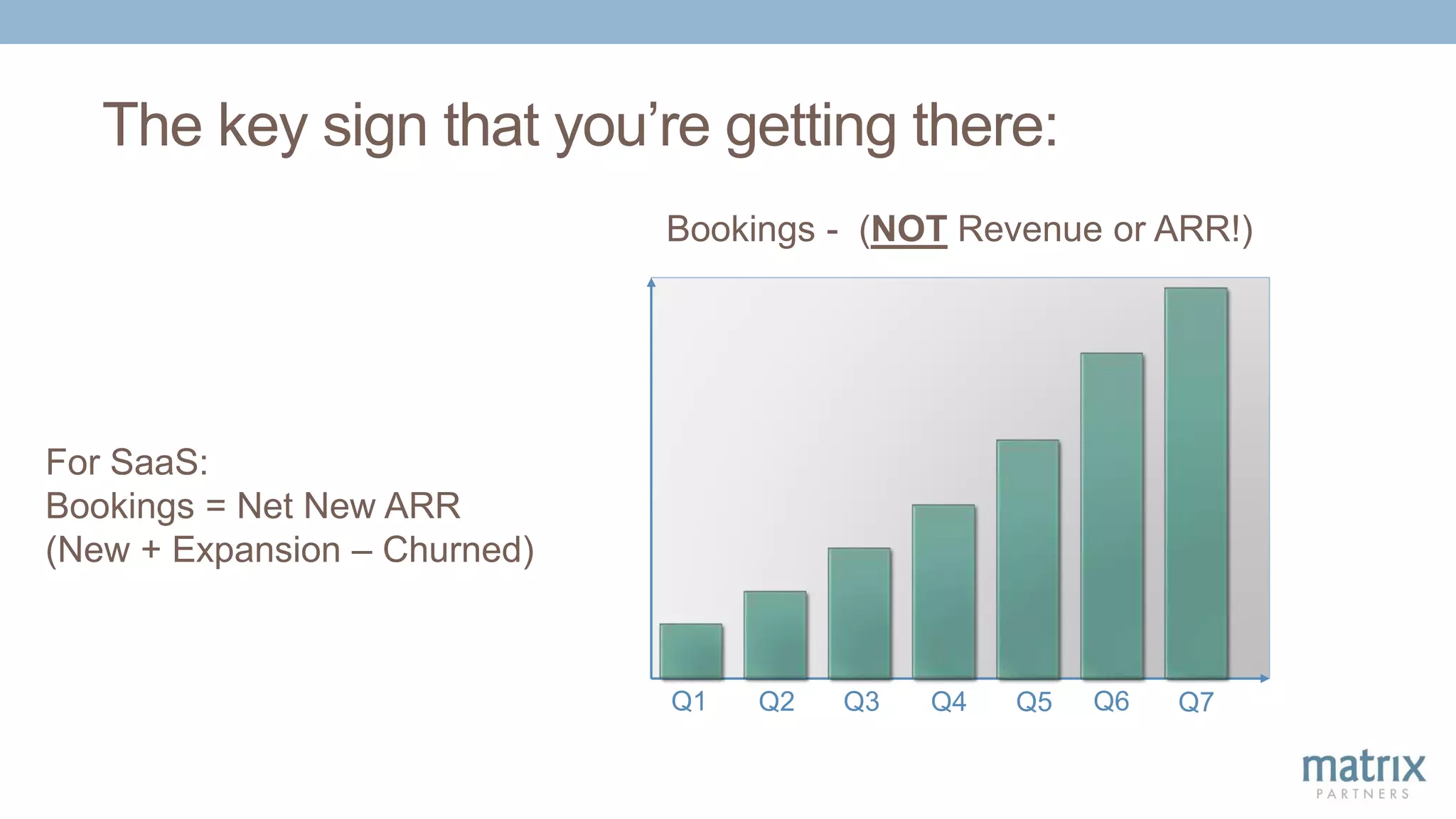
The key sign that you’re getting there:
Bookings - (NOT Revenue or ARR!)
For SaaS:
Bookings = Net New ARR
(New + Expansion – Churned)
Q1 Q2 Q3 Q4 Q5 Q6 Q7
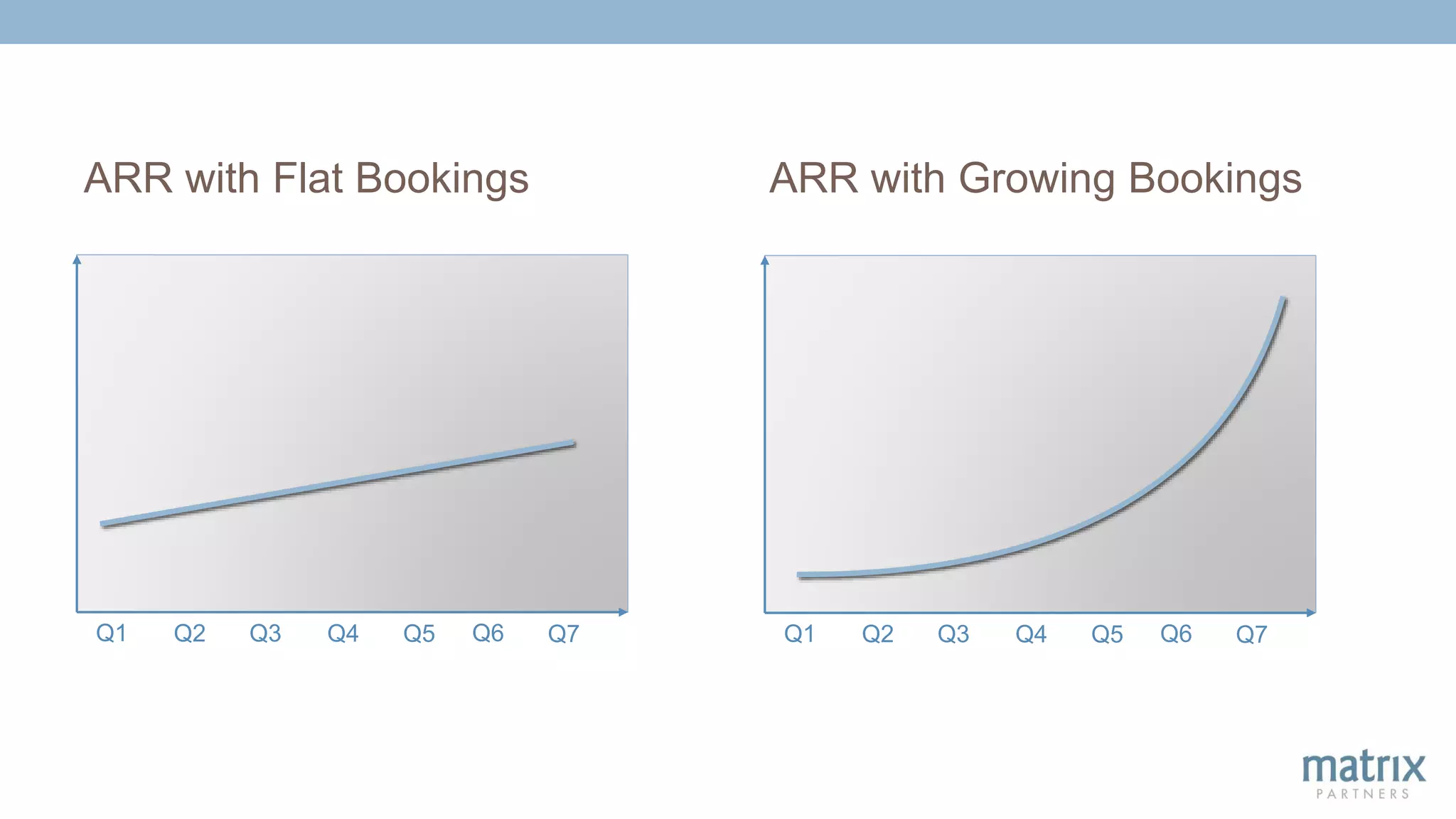
ARR with Flat Bookings ARR with Growing Bookings
Q1 Q2 Q3 Q4 Q5 Q6 Q7Q1 Q2 Q3 Q4 Q5 Q6 Q7
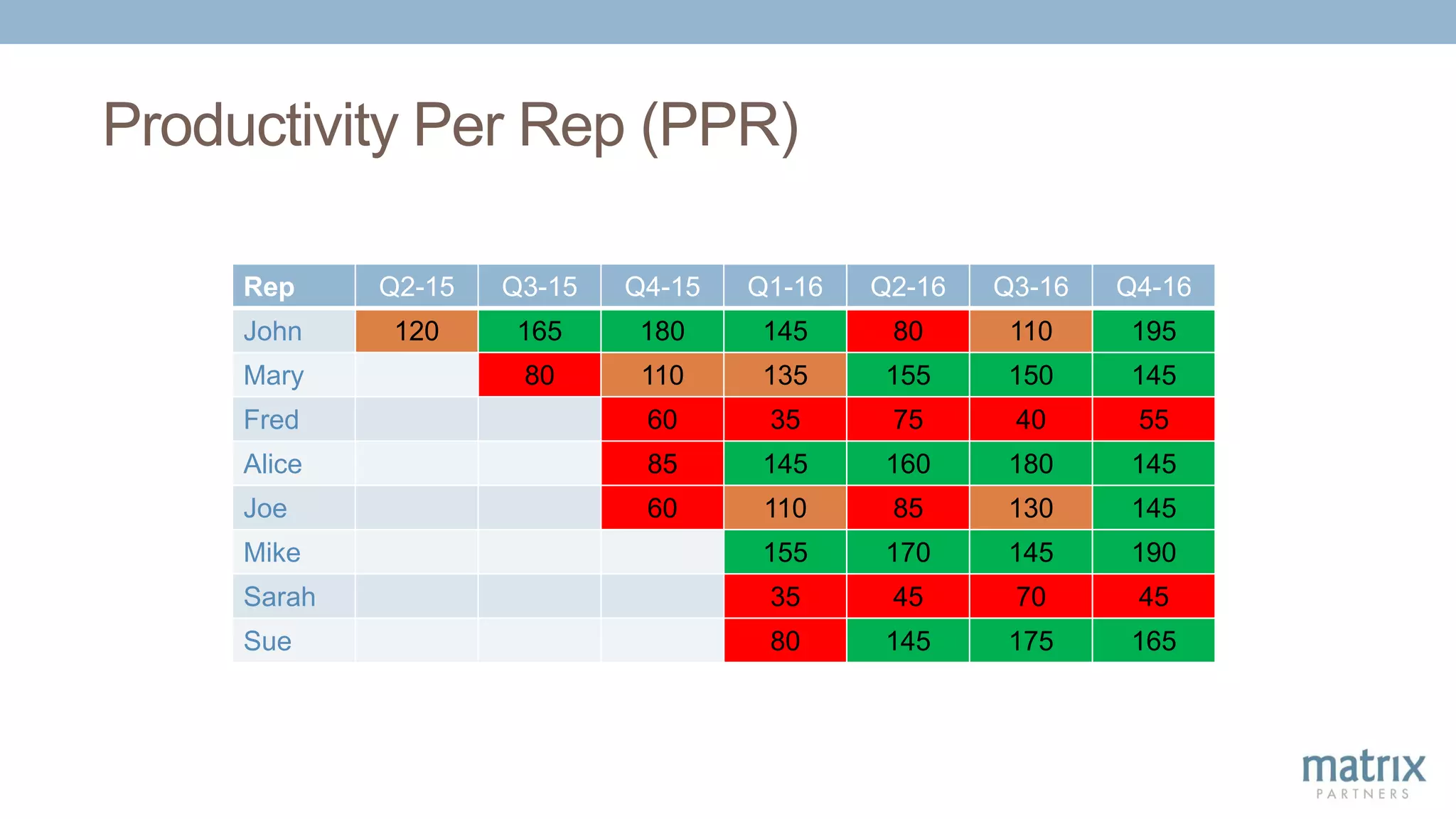
Productivity Per Rep (PPR)
Rep Q2-15 Q3-15 Q4-15 Q1-16 Q2-16 Q3-16 Q4-16
John 120 165 180 145 80 110 195
Mary 80 110 135 155 150 145
Fred 60 35 75 40 55
Alice 85 145 160 180 145
Joe 60 110 85 130 145
Mike 155 170 145 190
Sarah 35 45 70 45
Sue 80 145 175 165
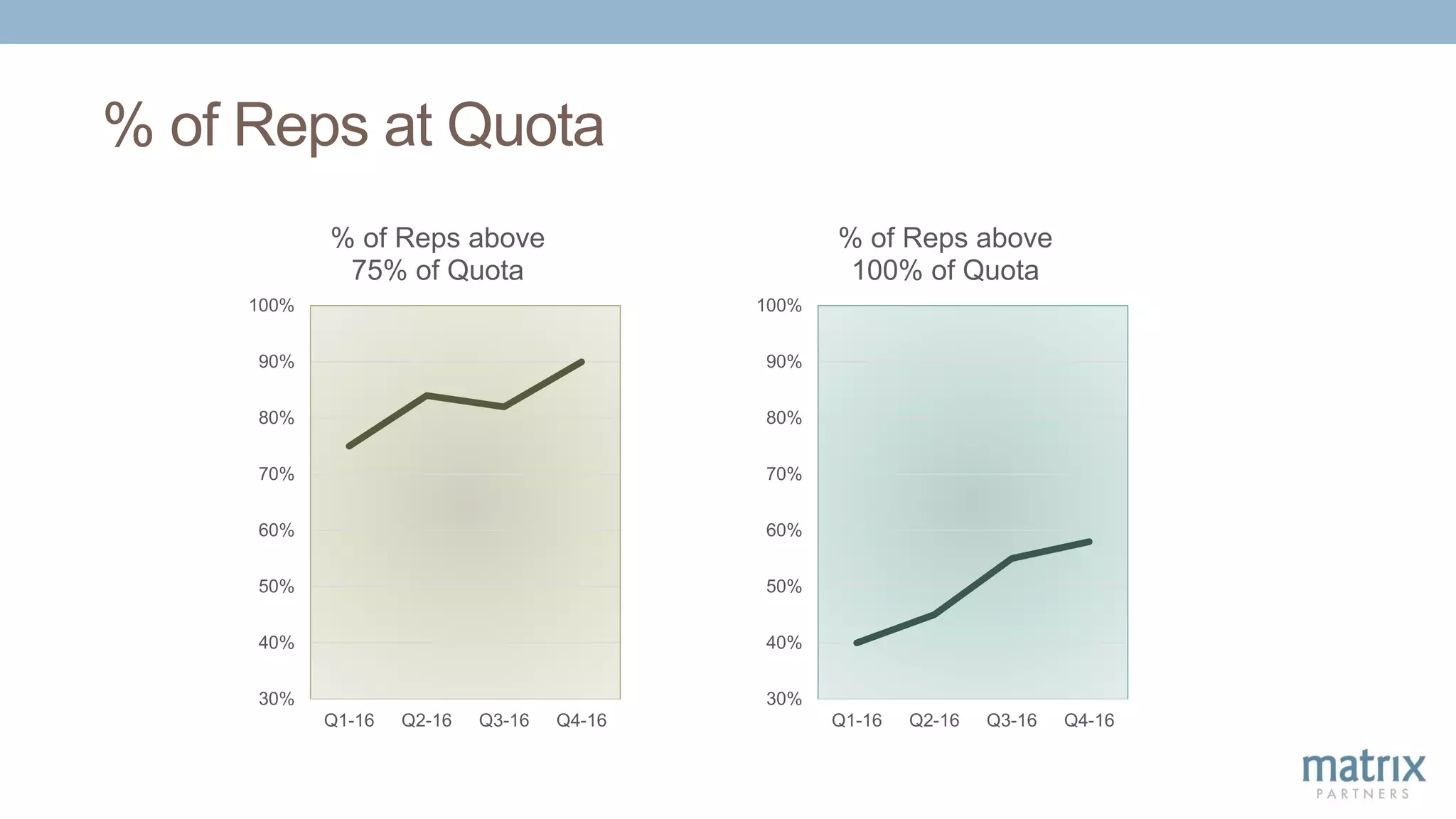
% of Reps at Quota
30%
40%
50%
60%
70%
80%
90%
100%
Q1-16 Q2-16 Q3-16 Q4-16
% of Reps above
75% of Quota
30%
40%
50%
60%
70%
80%
90%
100%
Q1-16 Q2-16 Q3-16 Q4-16
% of Reps above
100% of Quota
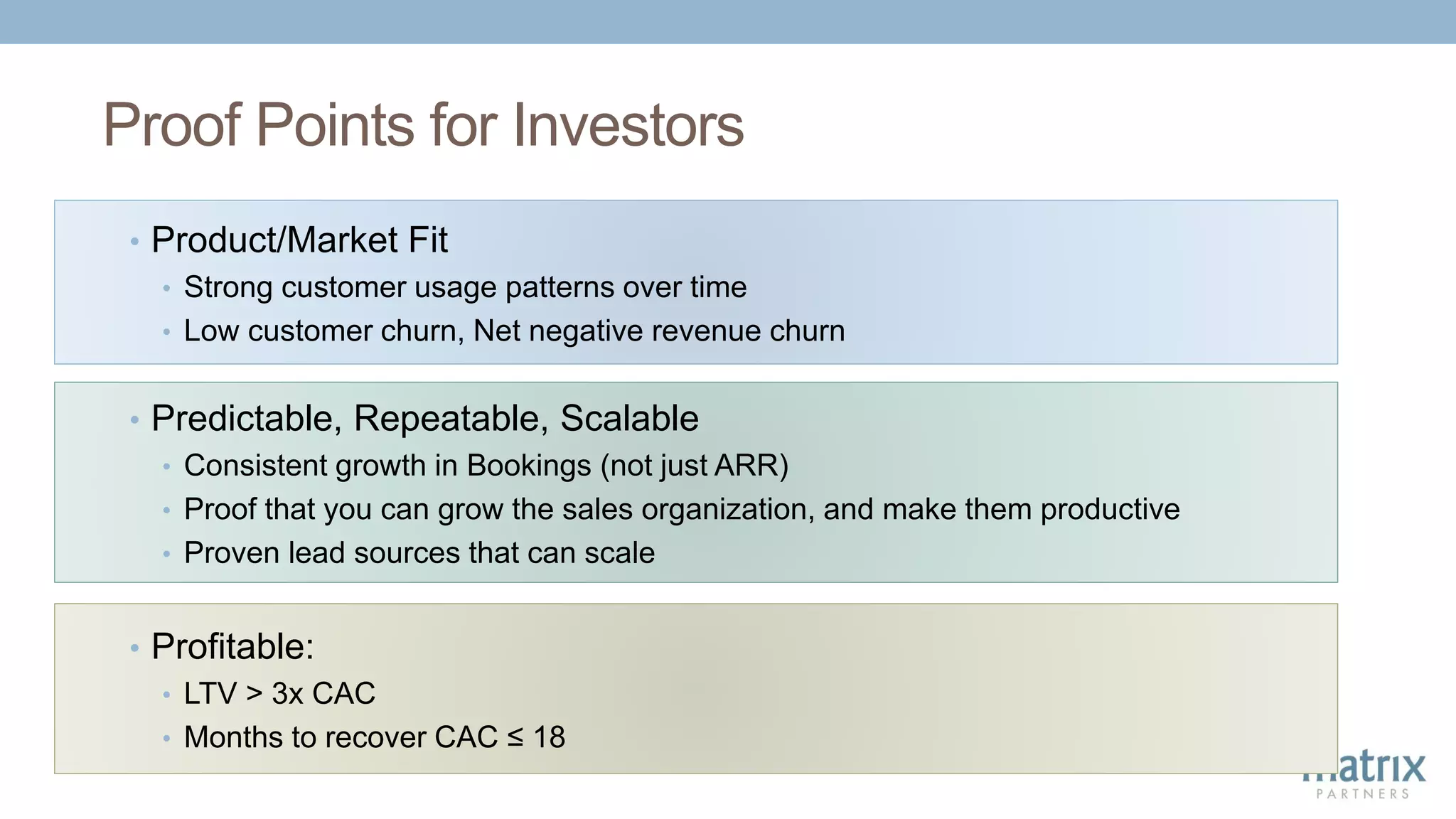
Proof Points for Investors
• Predictable, Repeatable, Scalable
• Consistent growth in Bookings (not just ARR)
• Proof that you can grow the sales organization, and make them productive
• Proven lead sources that can scale
• Profitable:
• LTV > 3x CAC
• Months to recover CAC ≤ 18
• Product/Market Fit
• Strong customer usage patterns over time
• Low customer churn, Net negative revenue churn
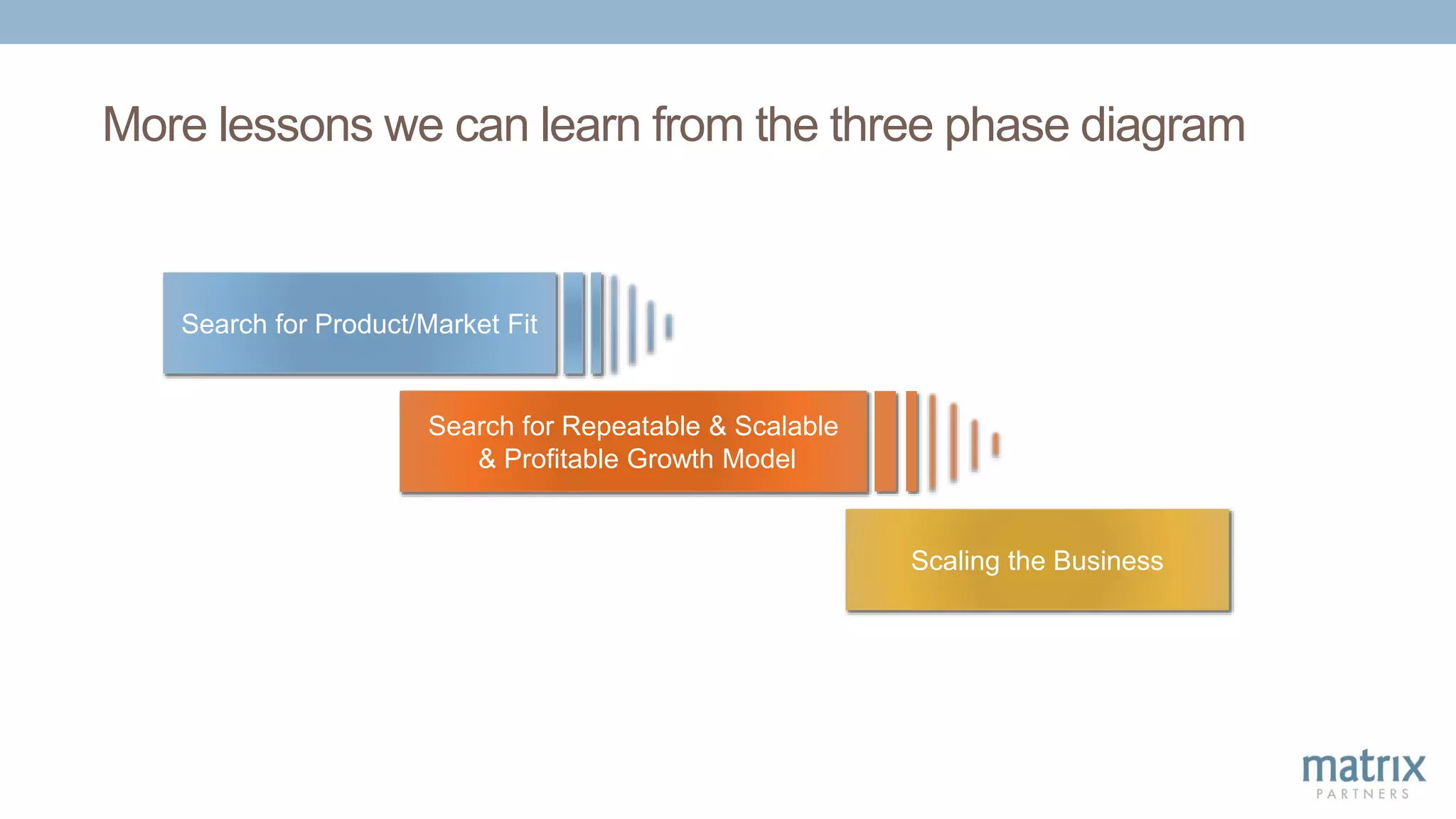
Scaling the Business
Search for Product/Market Fit
Search for Repeatable & Scalable
& Profitable Growth Model
More lessons we can learn from the three phase diagram
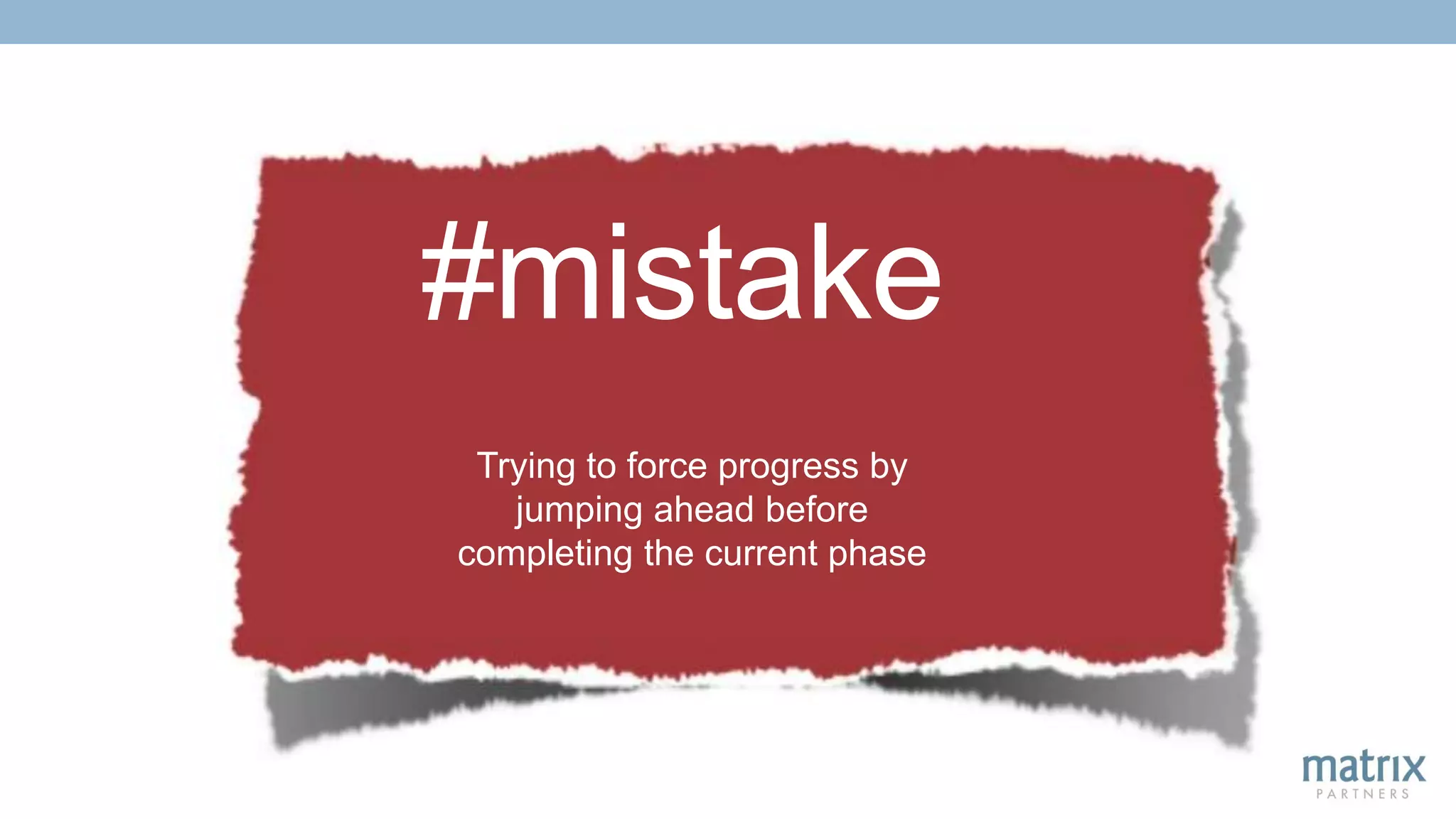
#mistake
Trying to force progress by
jumping ahead before
completing the current phase
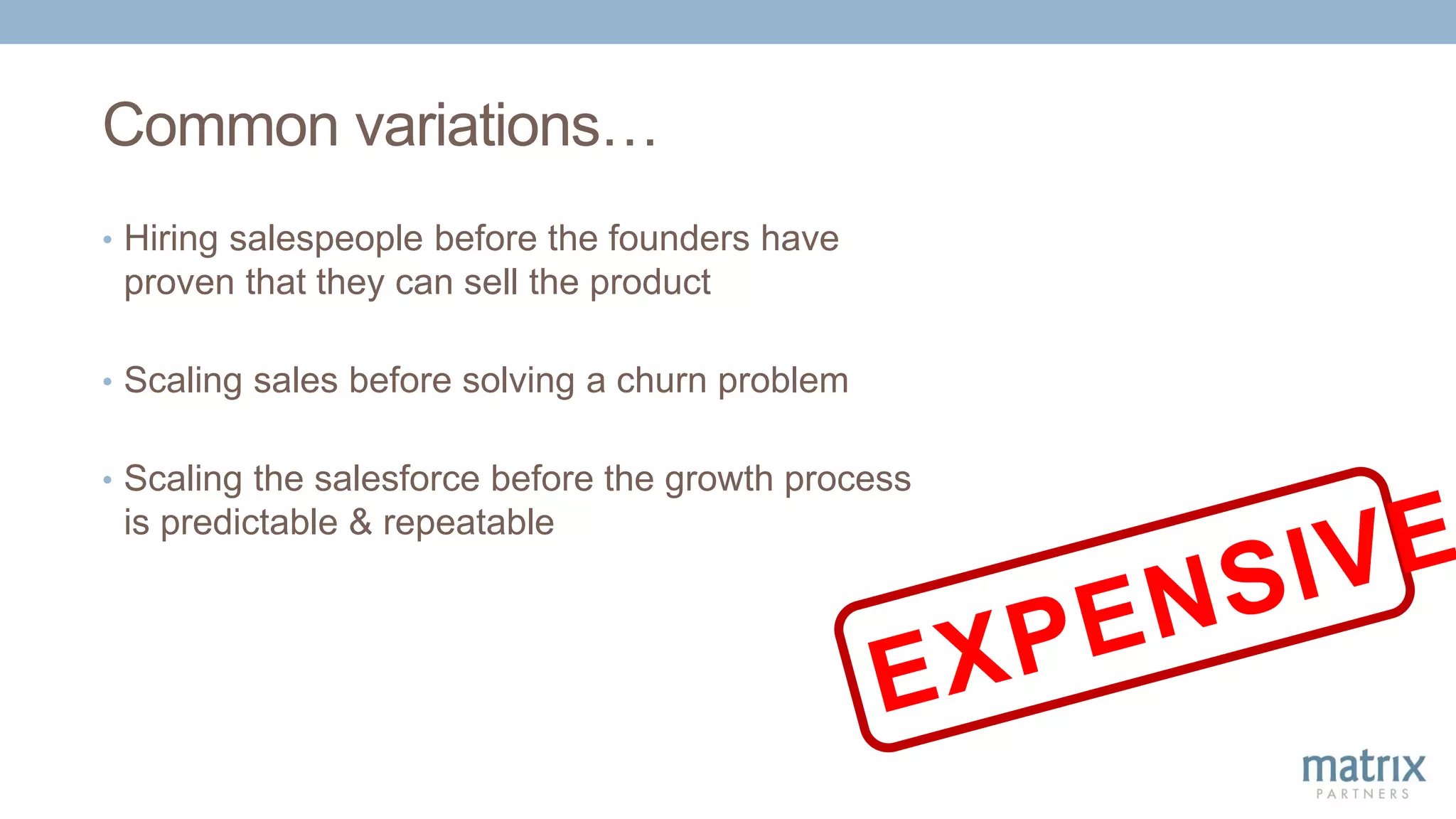
Common variations…
• Hiring salespeople before the founders have
proven that they can sell the product
• Scaling sales before solving a churn problem
• Scaling the salesforce before the growth process
is predictable & repeatable
Burn Cash
& shorten the runway
Scaling the Business
Search for Product/Market Fit
Search for Repeatable & Scalable
& Profitable Growth Model
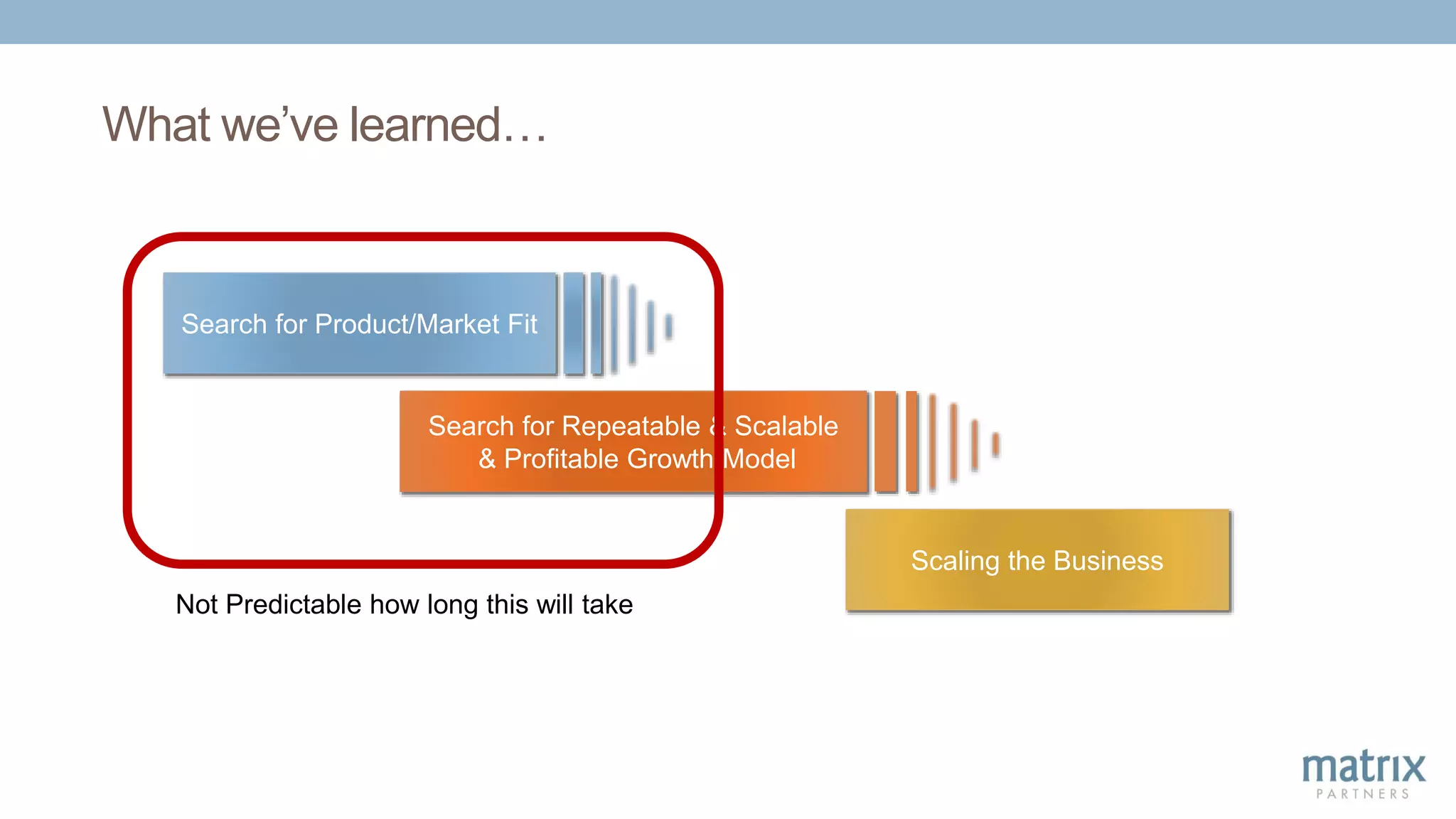
What we’ve learned…
Not Predictable how long this will take
Scaling the Business
Search for Product/Market Fit
Search for Repeatable & Scalable
& Profitable Growth Model
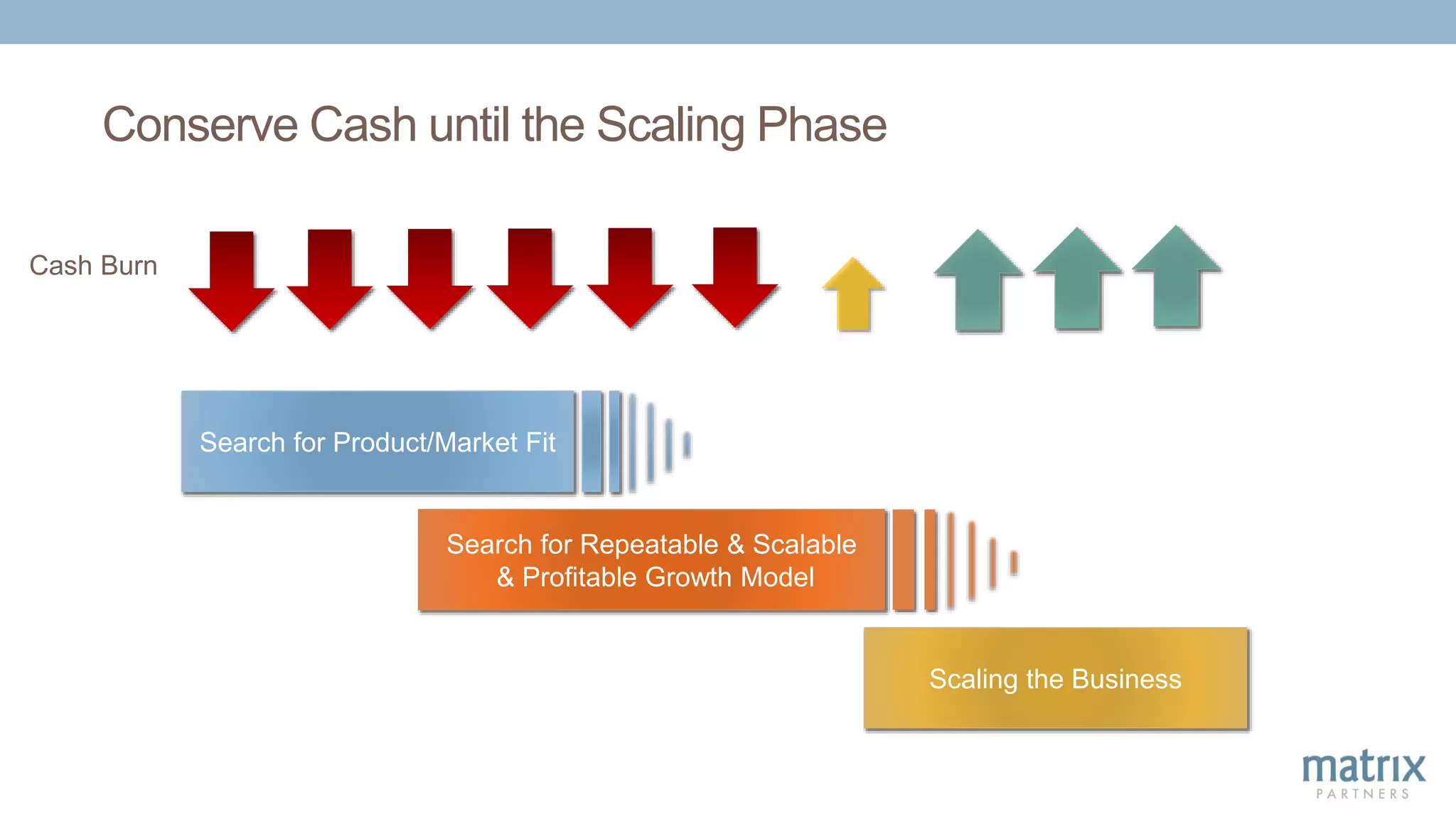
Conserve Cash until the Scaling Phase
Cash Burn
A FINER LOOK AT THE PHASES
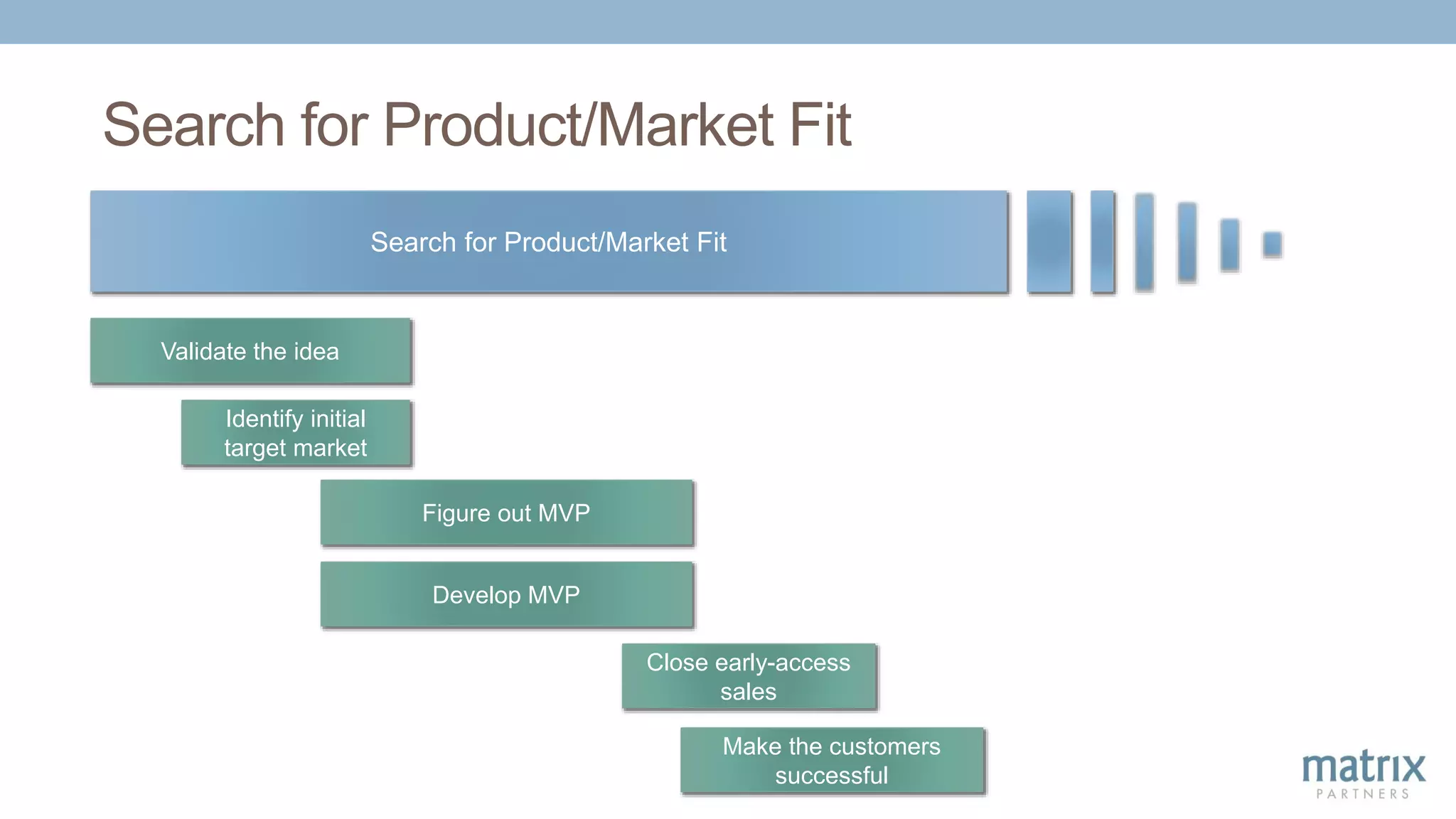
Search for Product/Market Fit
Develop MVP
Figure out MVP
Close early-access
sales
Make the customers
successful
Validate the idea
Identify initial
target market
The number one problem at this Stage
• Not enough customer meetings set up for validation
• Both before, and during product development
• Results:
• Product doesn’t quite fit the needs of the market
• Interest is there, but can’t close sales
• Lots of wasted time, and cash burned
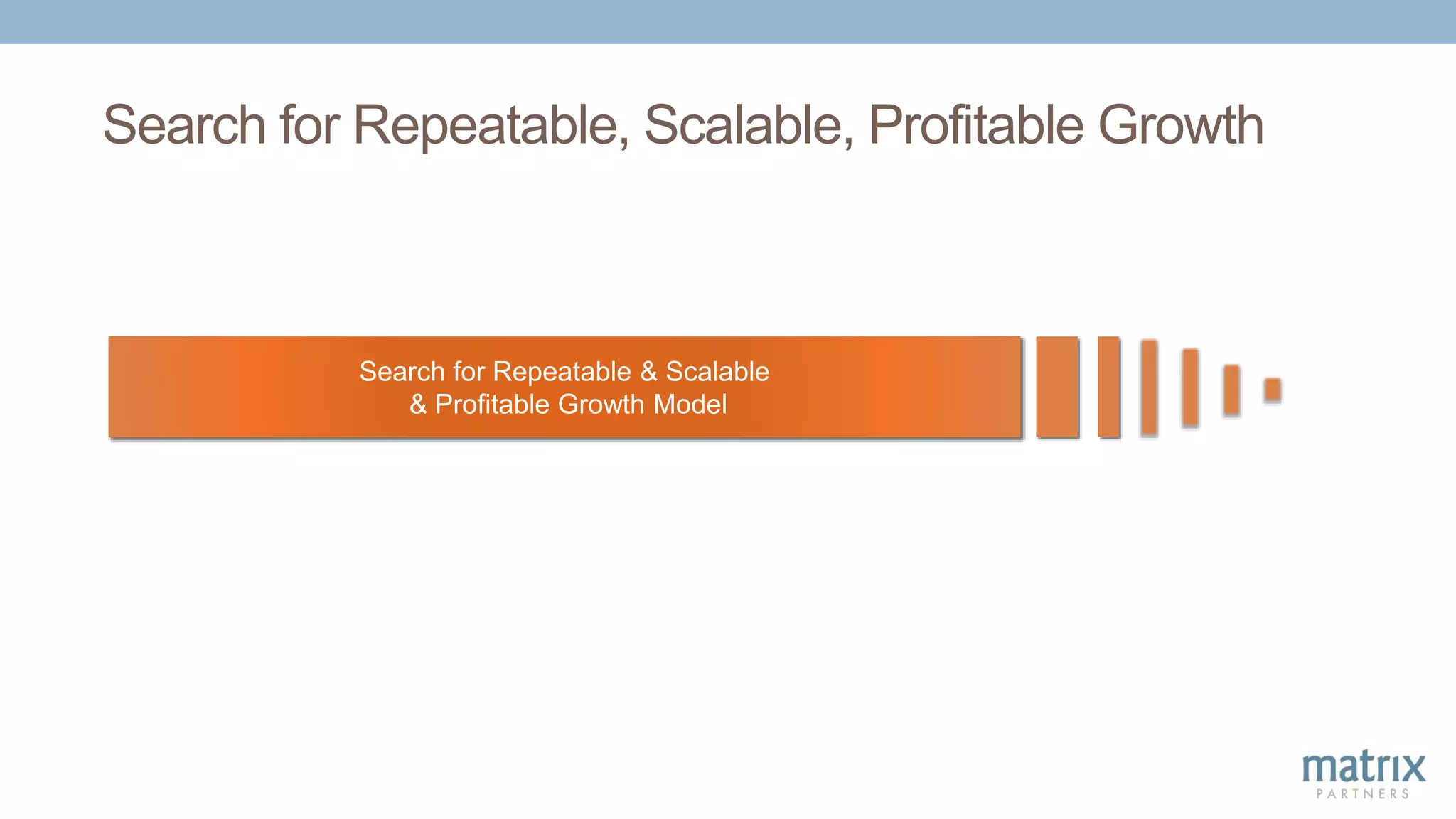
Search for Repeatable, Scalable, Profitable Growth
Search for Repeatable & Scalable
& Profitable Growth Model
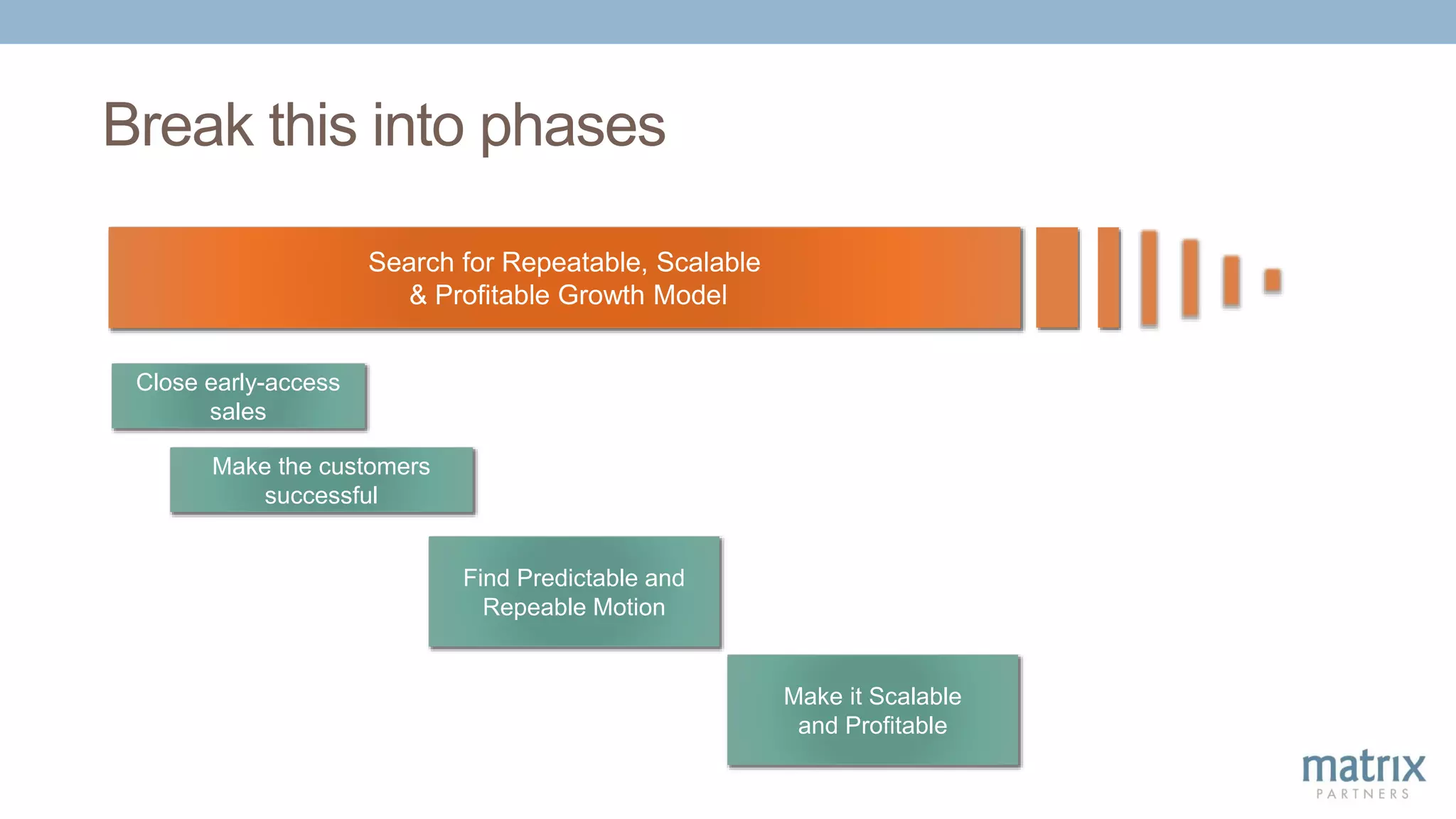
Break this into phases
Search for Repeatable, Scalable
& Profitable Growth Model
Close early-access
sales
Make the customers
successful
Find Predictable and
Repeable Motion
Make it Scalable
and Profitable
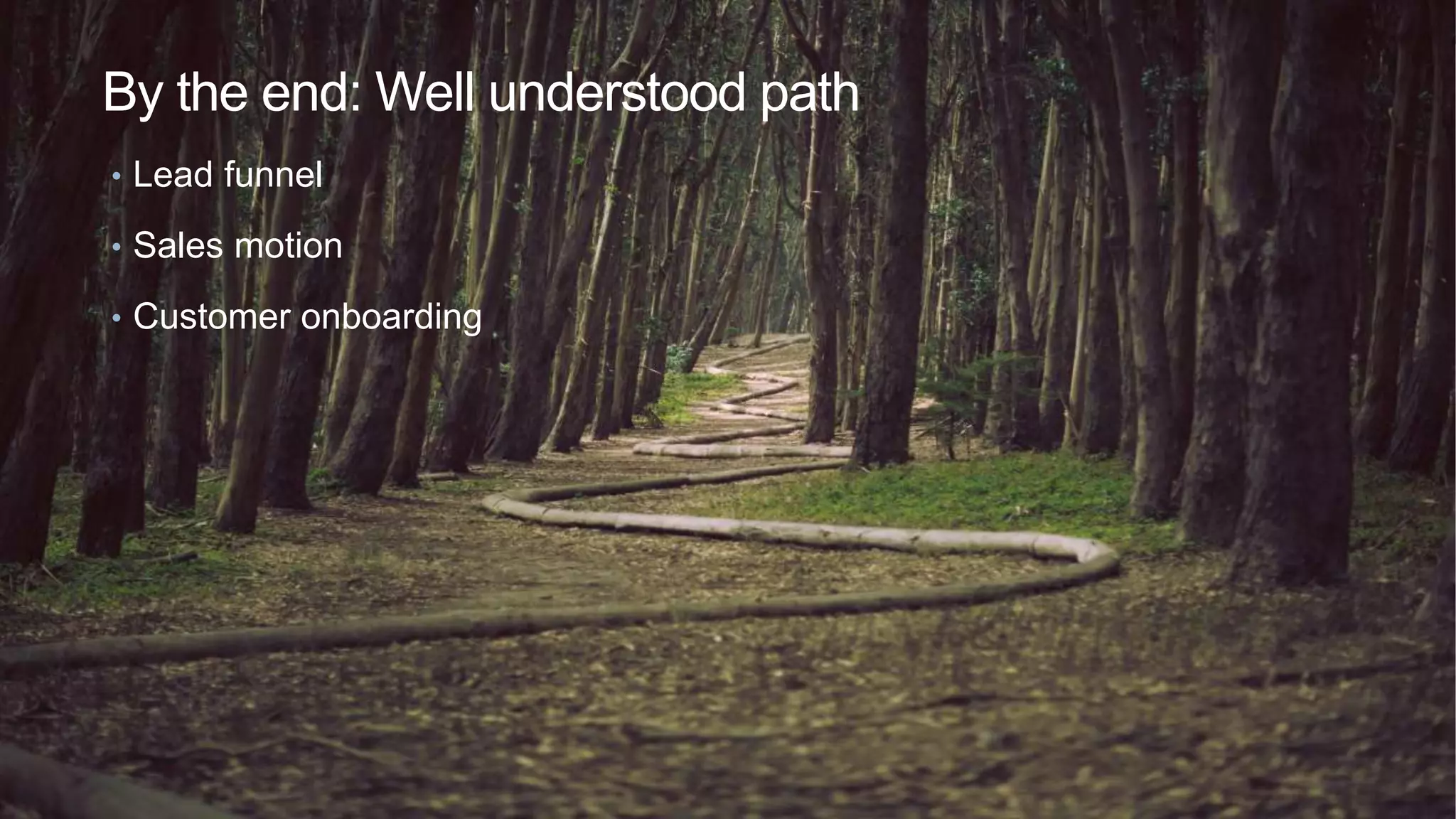
At the beginning: No clear sales path
By the end: Well understood path
• Lead funnel
• Sales motion
• Customer onboarding
Where do you start?
Pick one target market
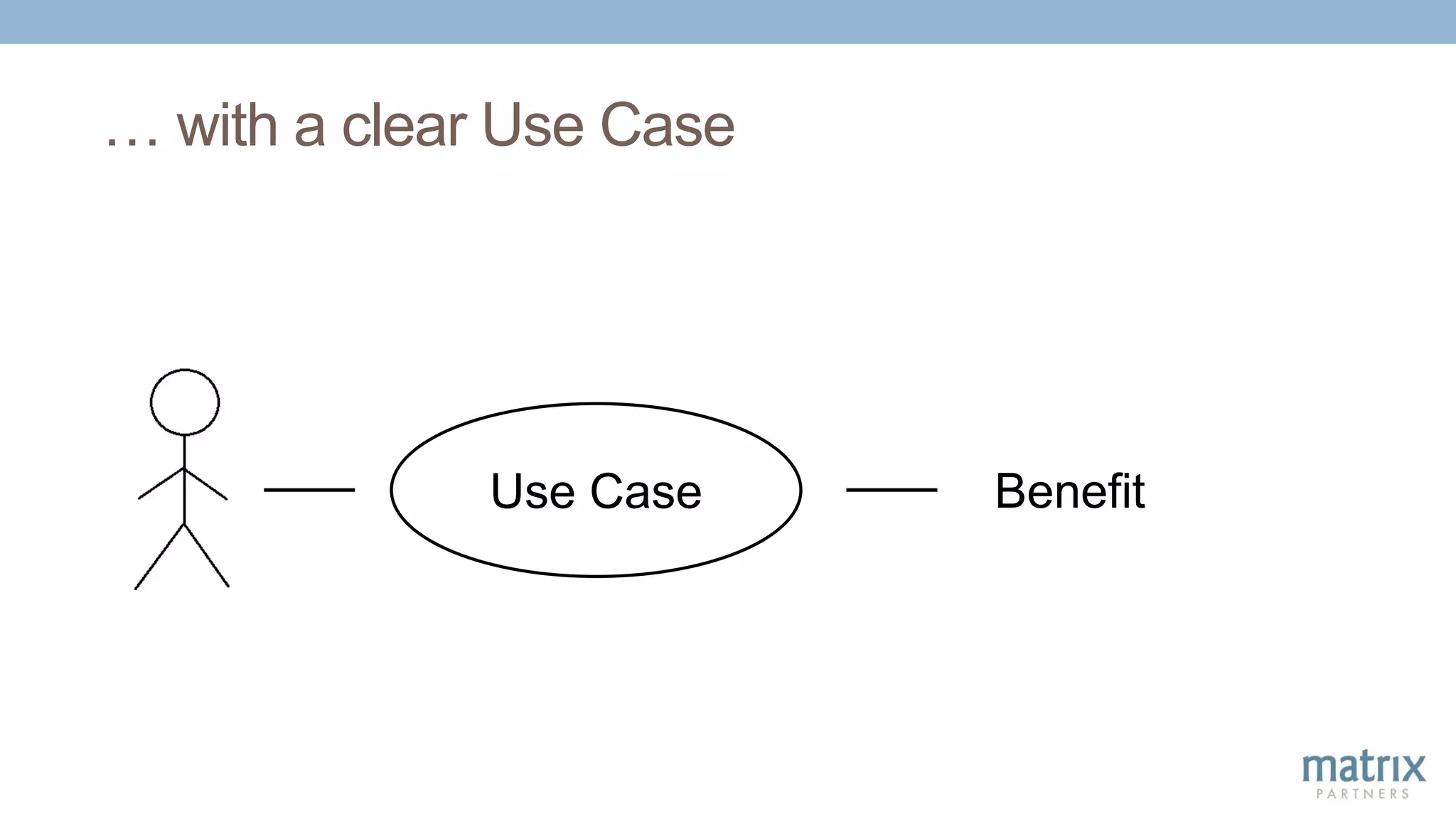
… with a clear Use Case
Use Case Benefit
Messaging
• Business benefits, not product features
• Clear
• Simple
• Short
• Explains differentiation from competition
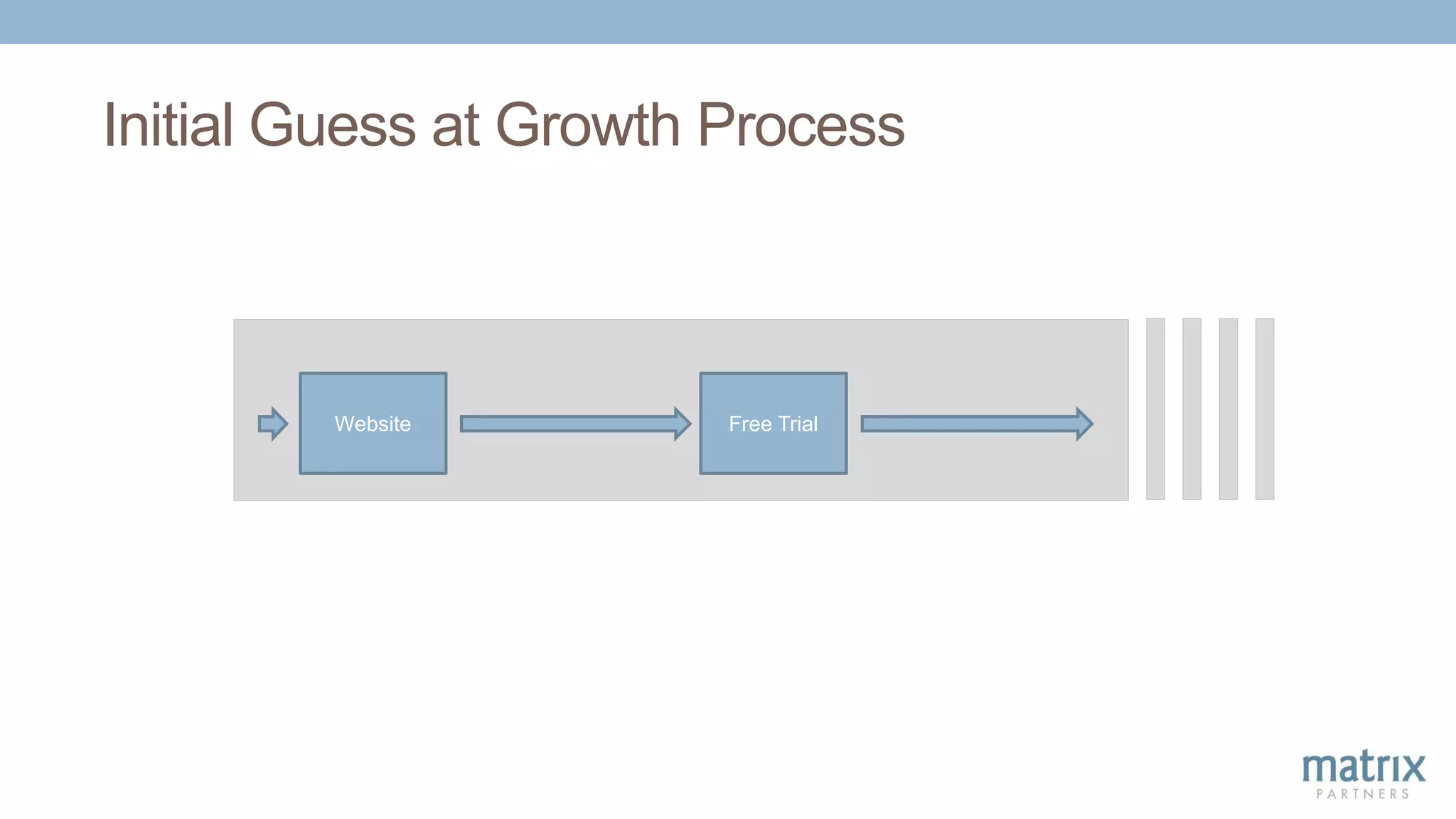
Initial Guess at Growth Process
Website Free Trial
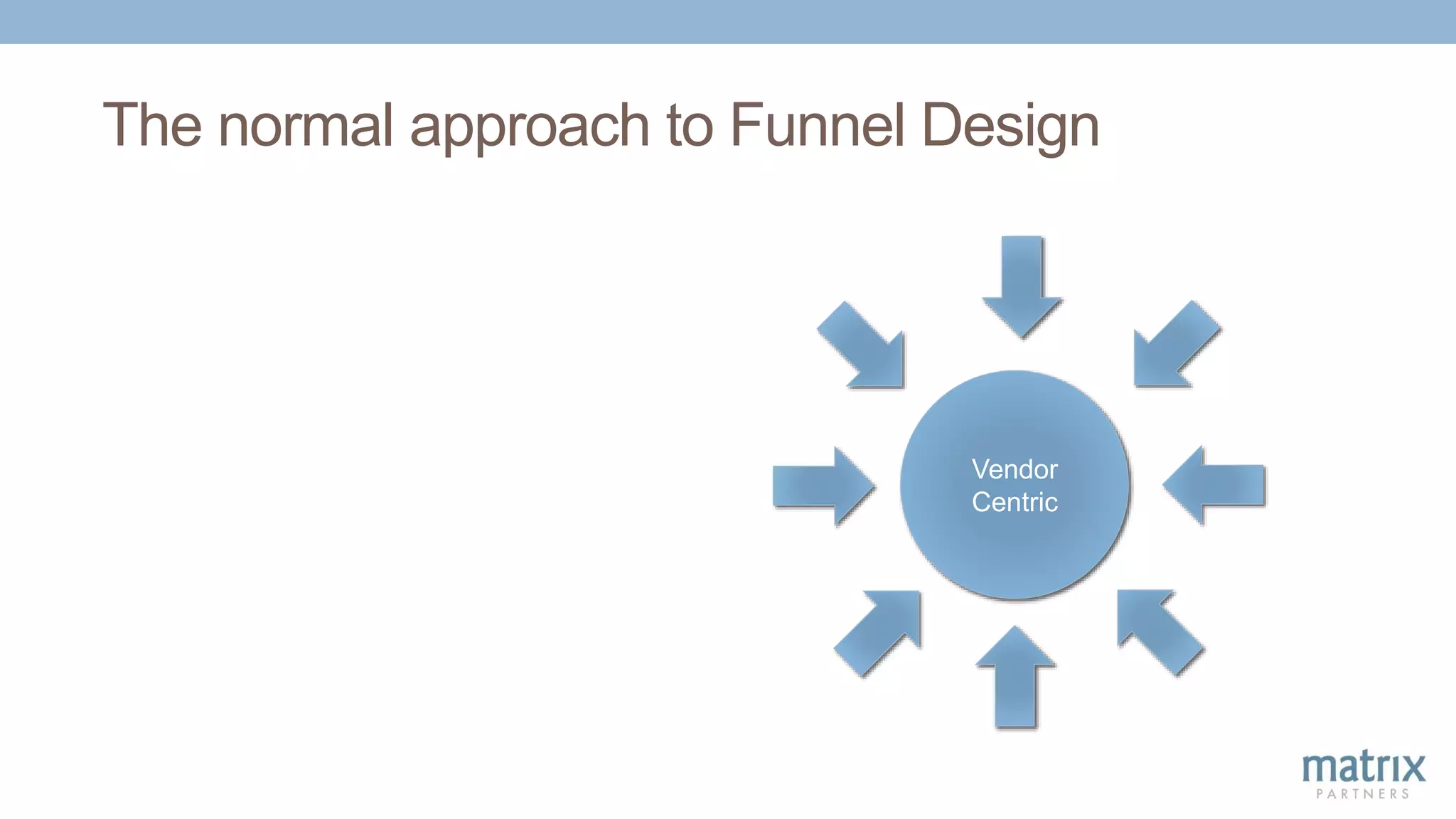
The normal approach to Funnel Design
Vendor
Centric
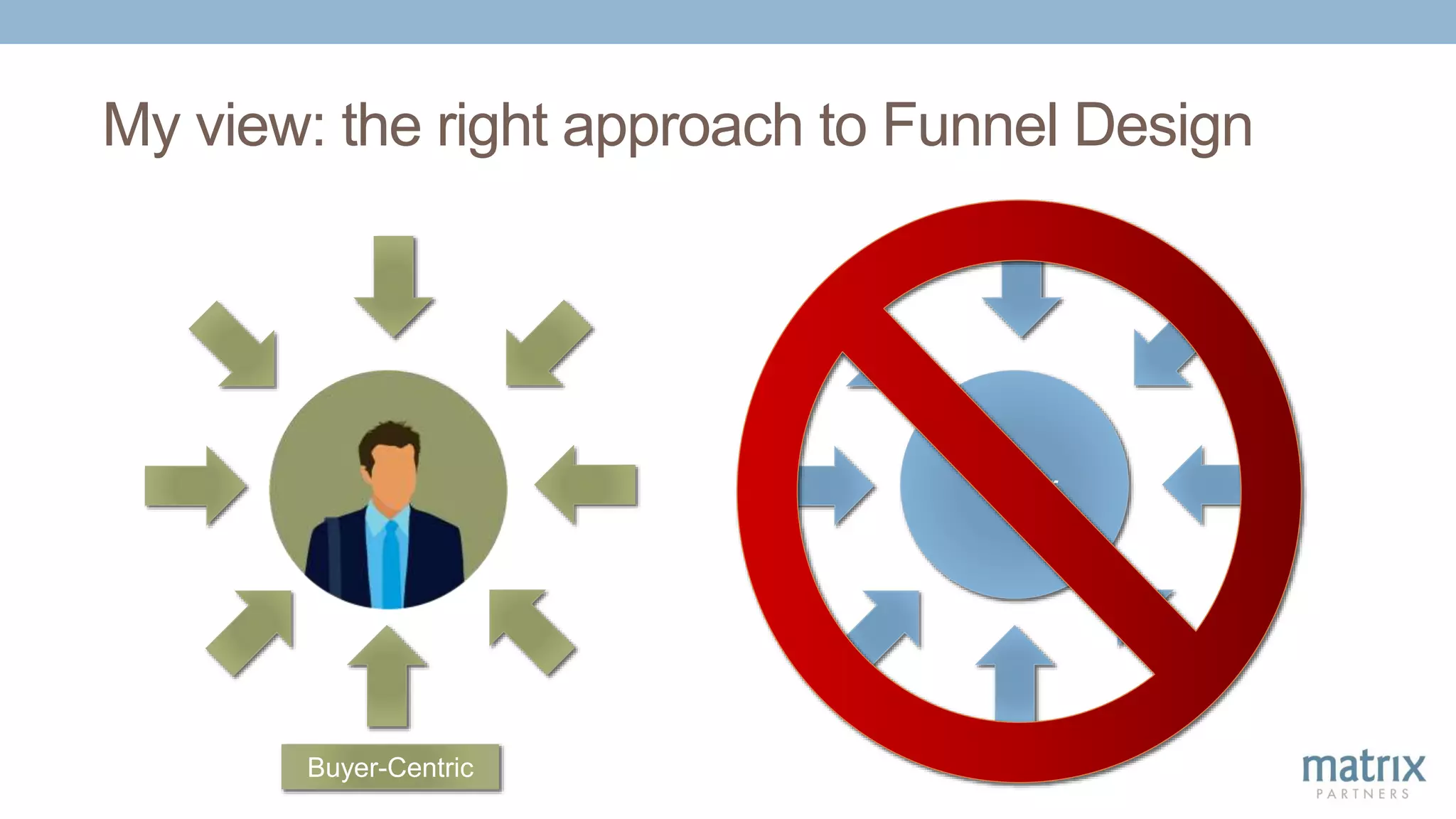
My view: the right approach to Funnel Design
Buyer
Centric
Vendor
Buyer-Centric
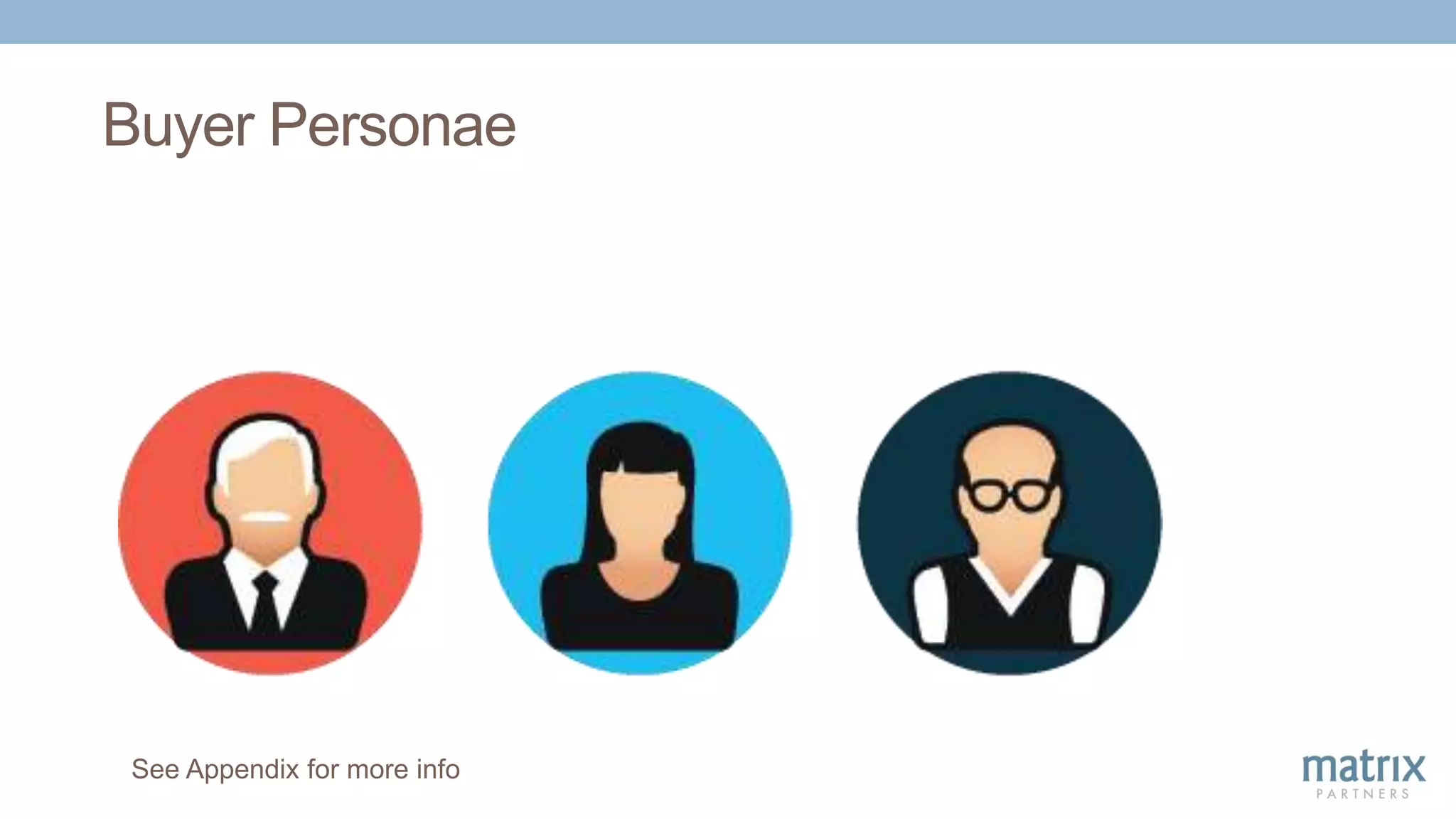
Buyer Personae
See Appendix for more info
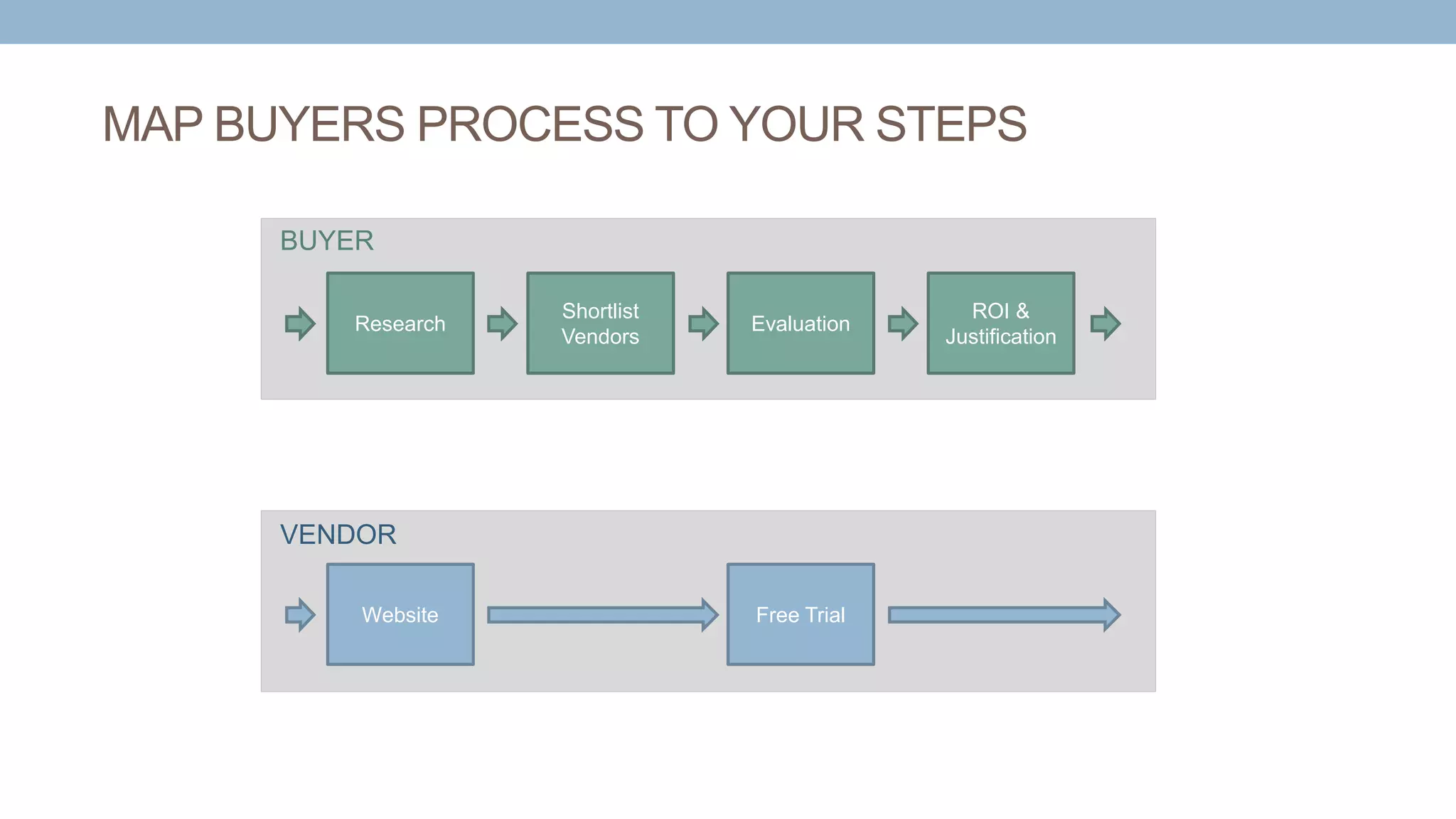
MAP BUYERS PROCESS TO YOUR STEPS
Research
Shortlist
Vendors
Evaluation
ROI &
Justification
Website Free Trial
BUYER
VENDOR
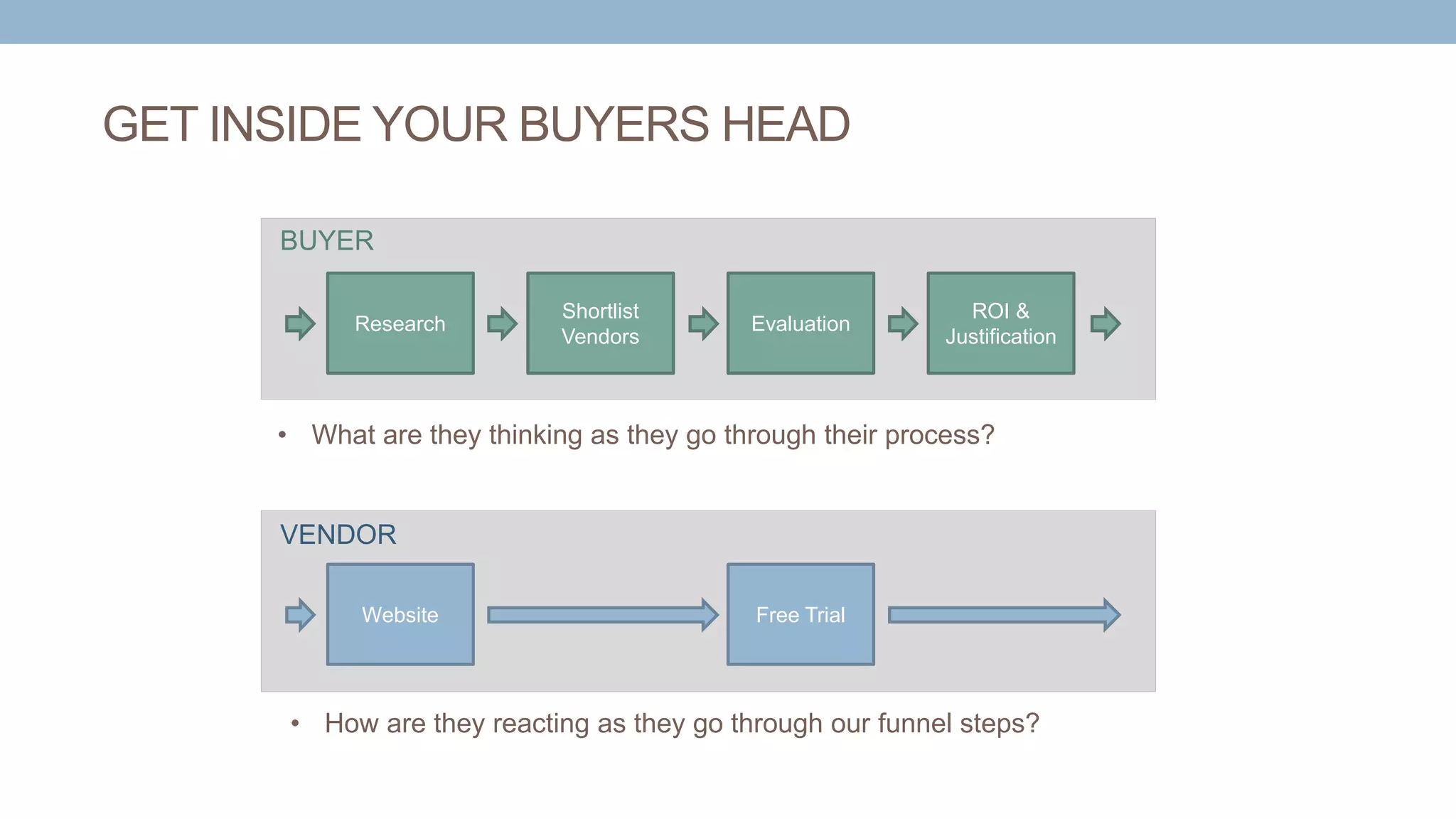
GET INSIDE YOUR BUYERS HEAD
Research
Shortlist
Vendors
Evaluation
ROI &
Justification
Website Free Trial
BUYER
VENDOR
• How are they reacting as they go through our funnel steps?
• What are they thinking as they go through their process?
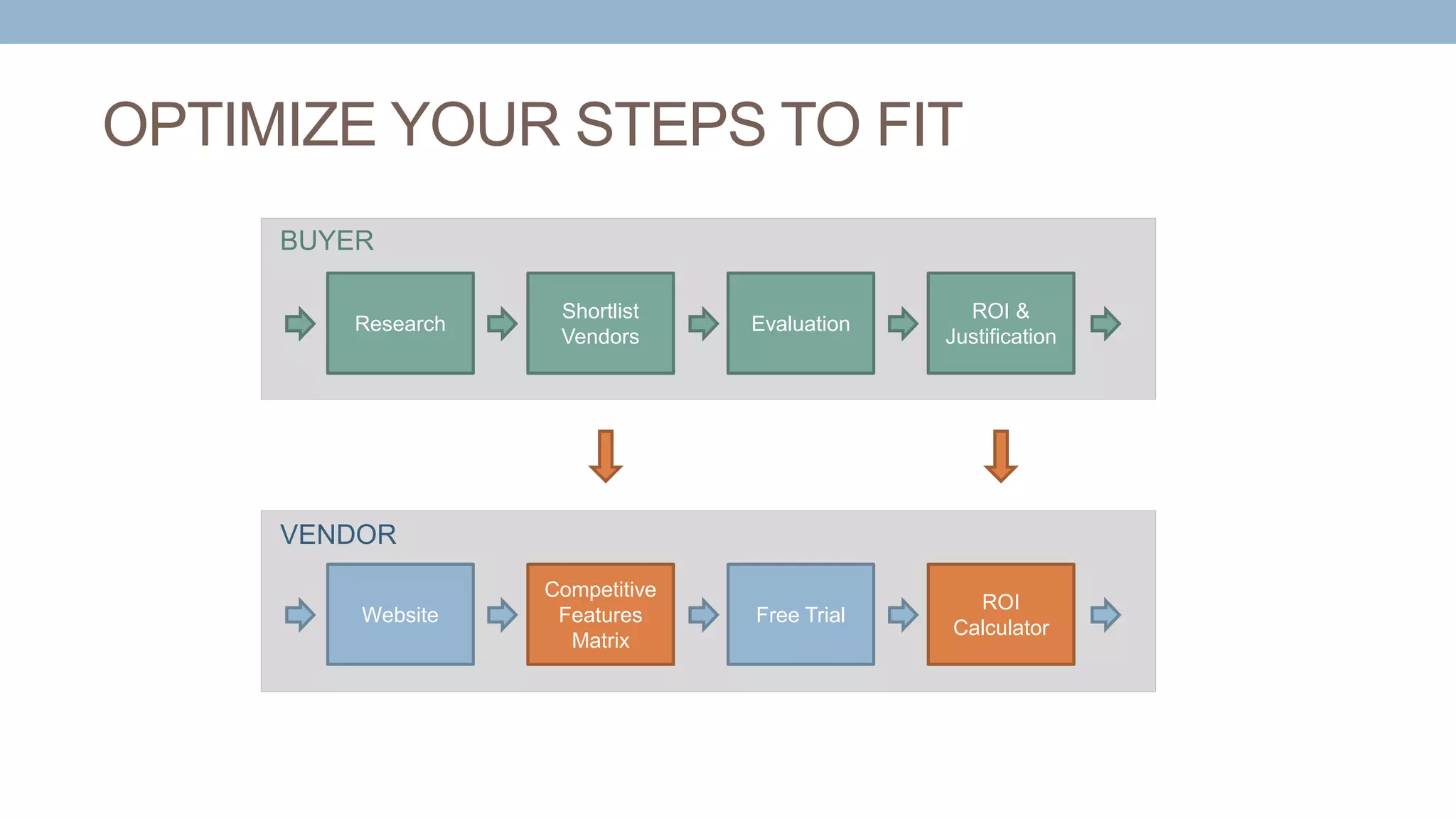
OPTIMIZE YOUR STEPS TO FIT
Research
Shortlist
Vendors
Evaluation
ROI &
Justification
Website Free Trial
ROI
Calculator
Competitive
Features
Matrix
BUYER
VENDOR
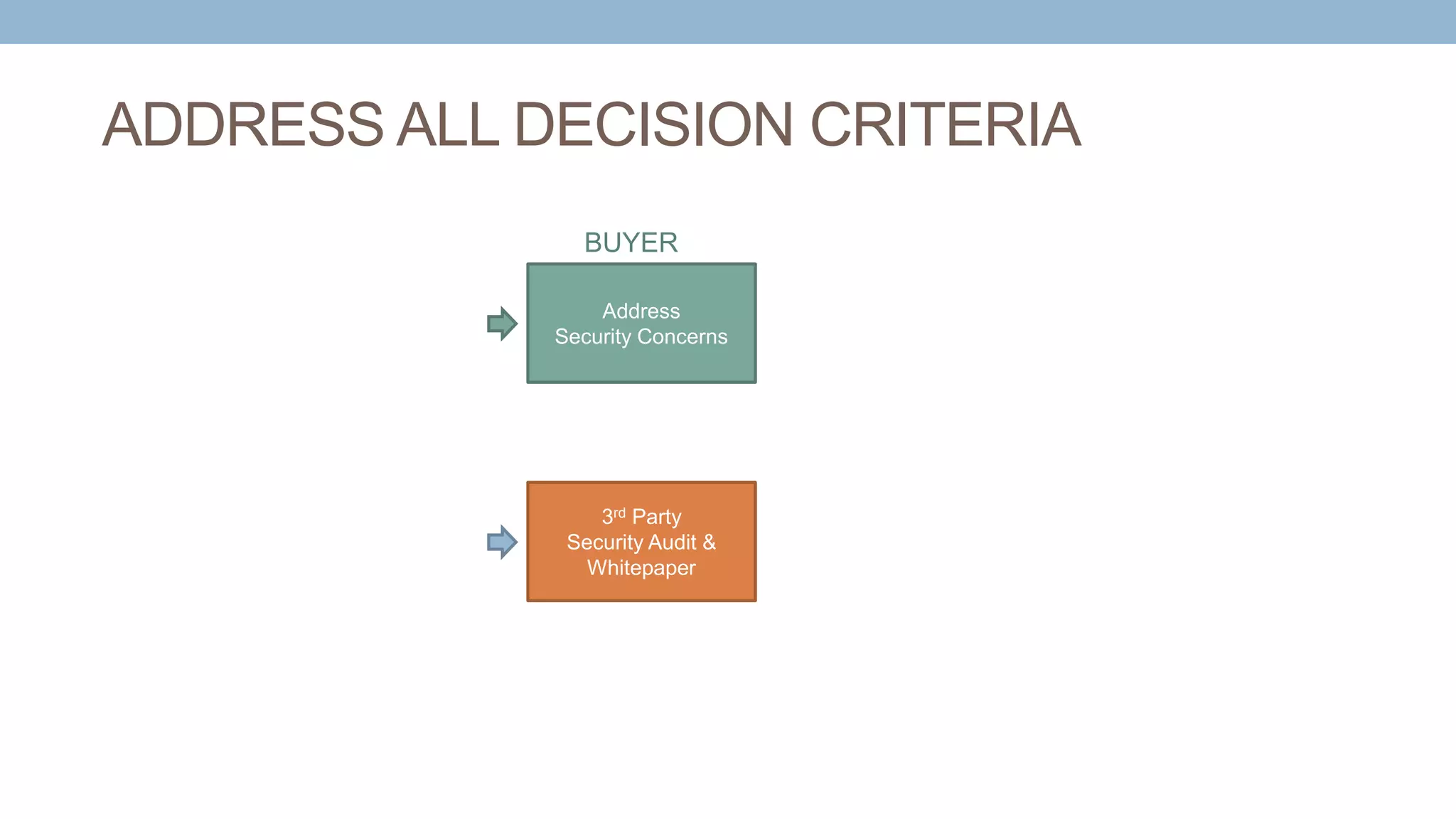
ADDRESS ALL DECISION CRITERIA
Address
Security Concerns
3rd Party
Security Audit &
Whitepaper
BUYER
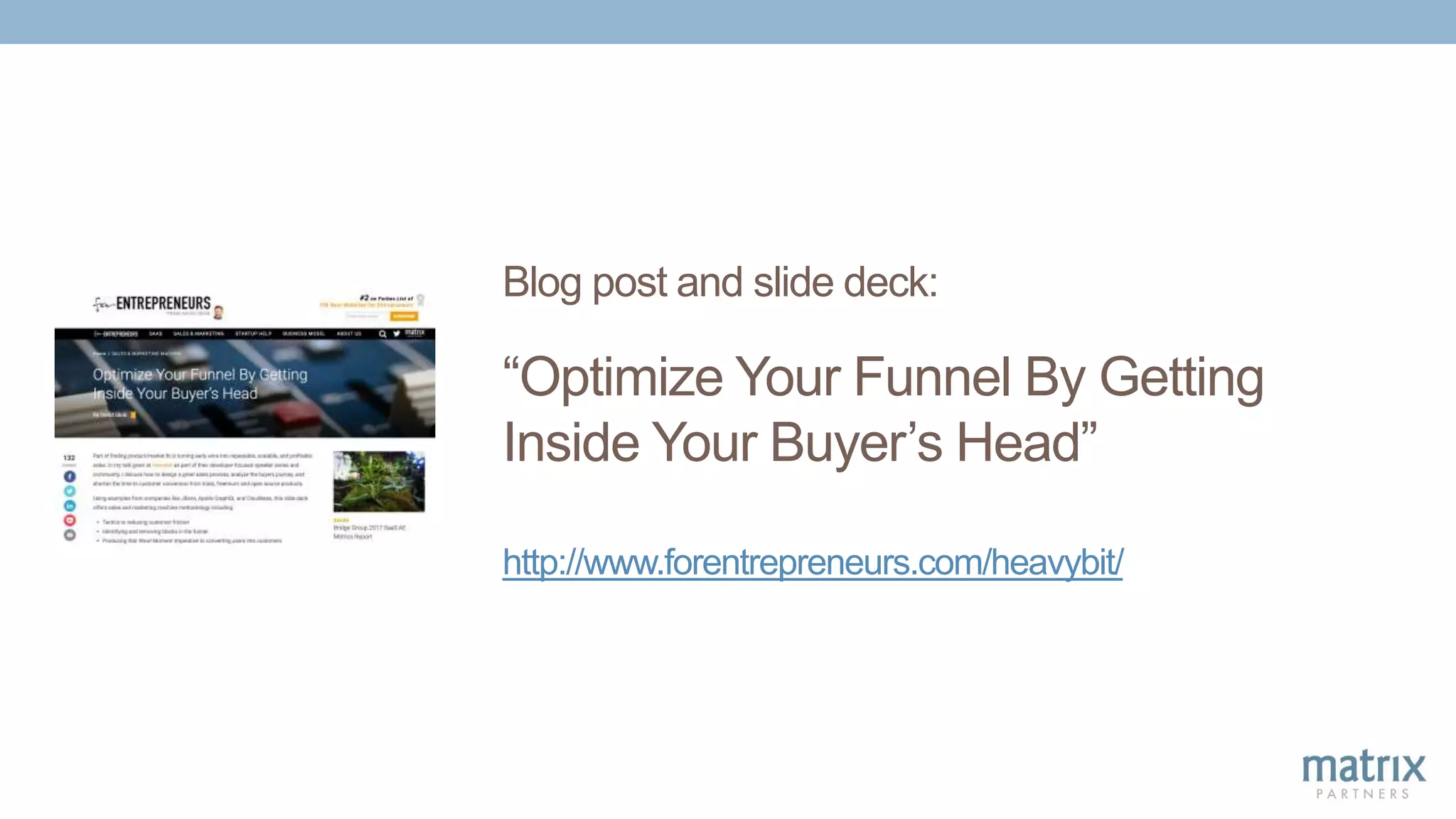
Blog post and slide deck:
“Optimize Your Funnel By Getting
Inside Your Buyer’s Head”
http://www.forentrepreneurs.com/heavybit/
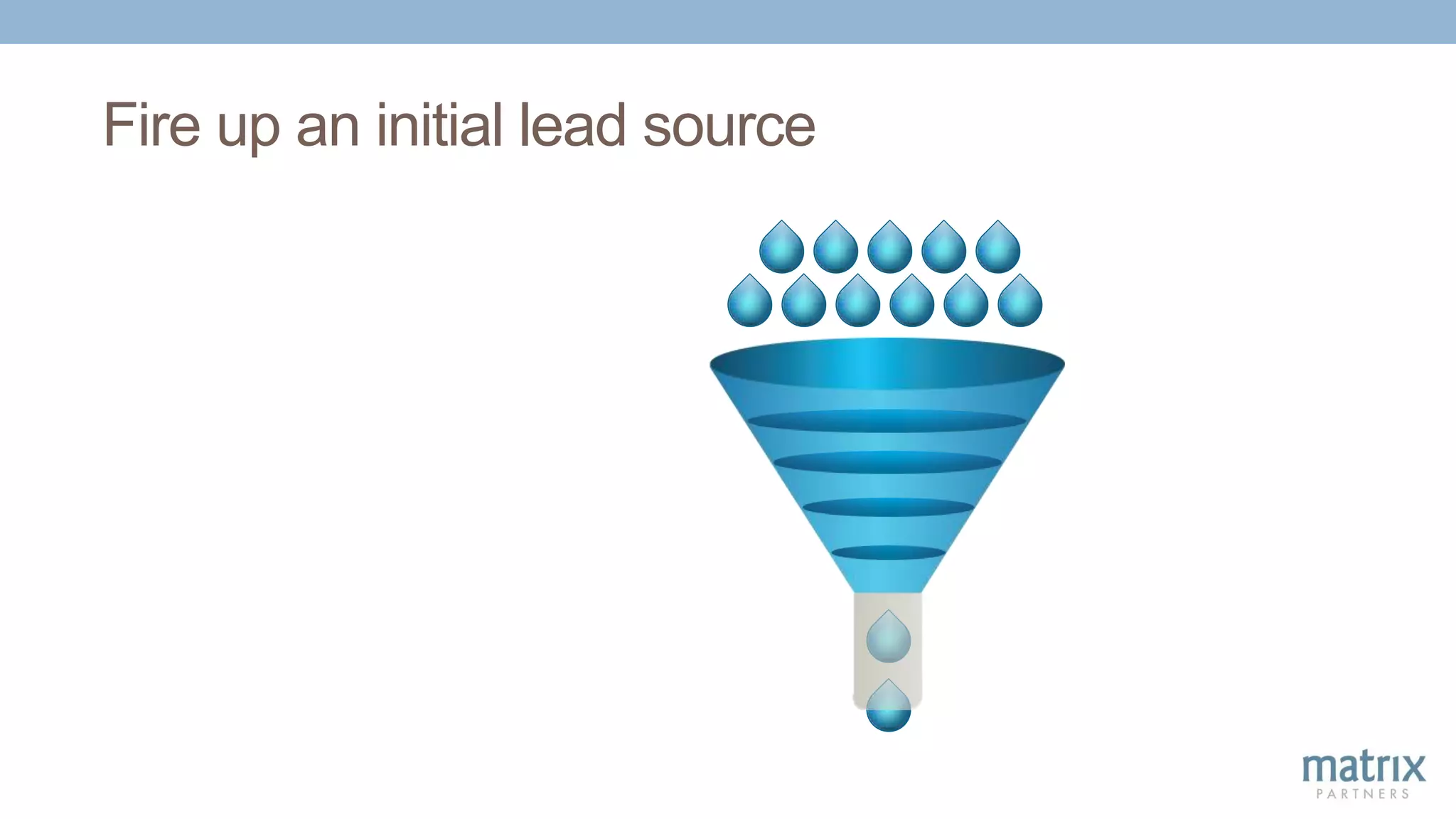
Fire up an initial lead source
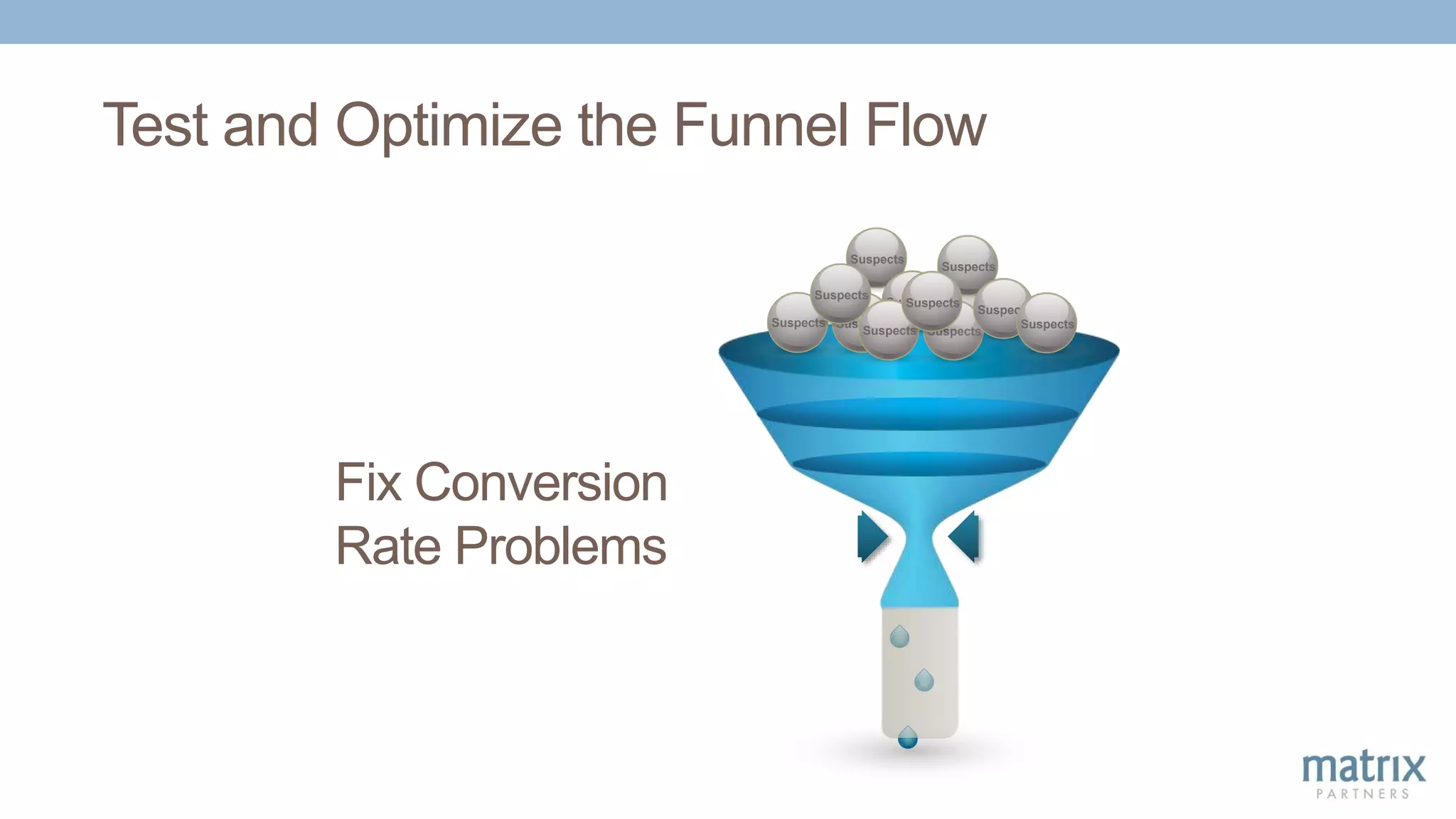
Test and Optimize the Funnel Flow
Fix Conversion
Rate Problems
Suspects Suspects
Suspects
Suspects
Suspects
Suspects
Suspects Suspects
Suspects
Suspects
Suspects
Suspects
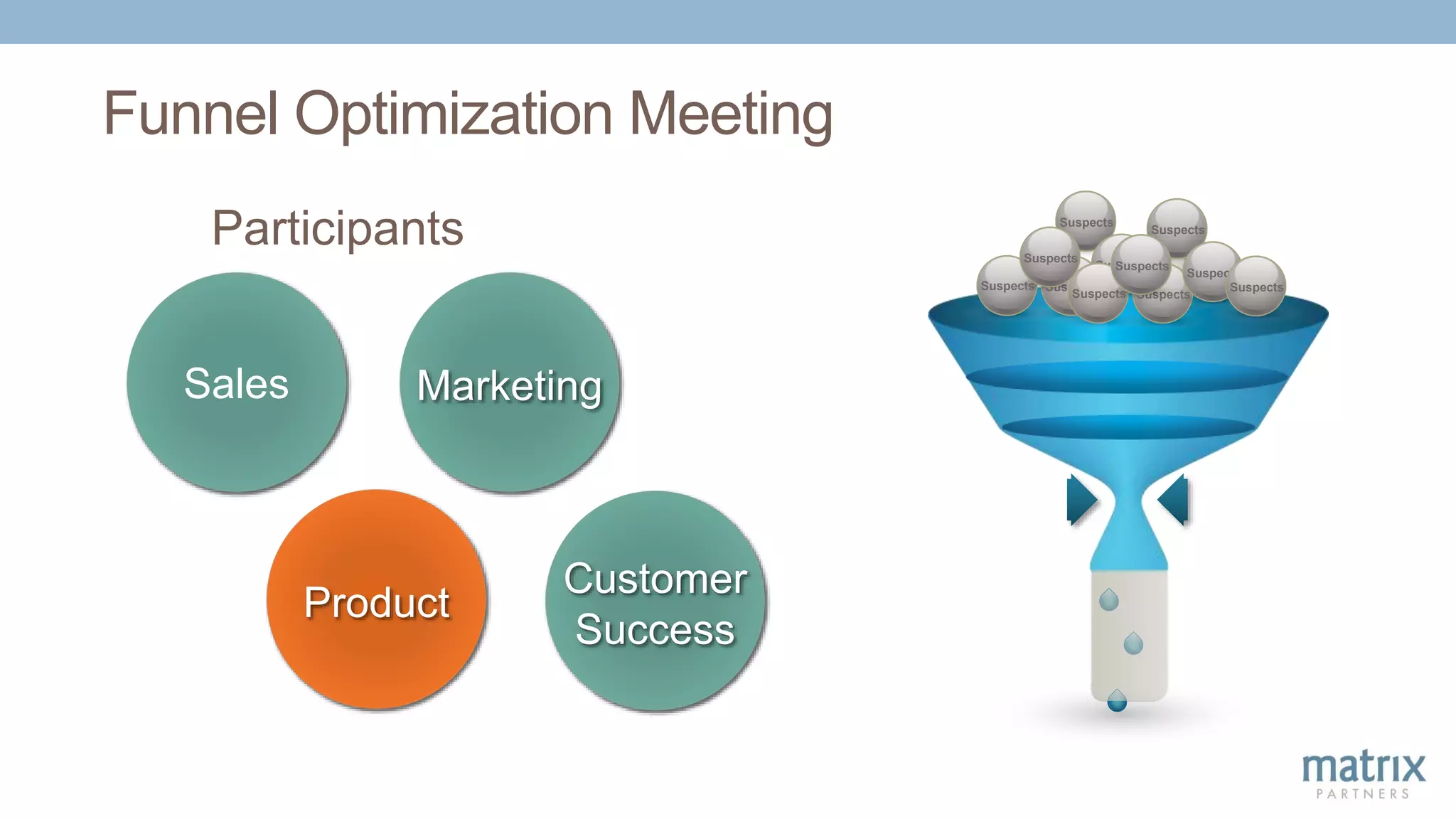
Funnel Optimization Meeting
Participants
Sales Marketing
Product
Suspects Suspects
Suspects
Suspects
Suspects
Suspects
Suspects Suspects
Suspects
Suspects
Suspects
Suspects
Customer
Success
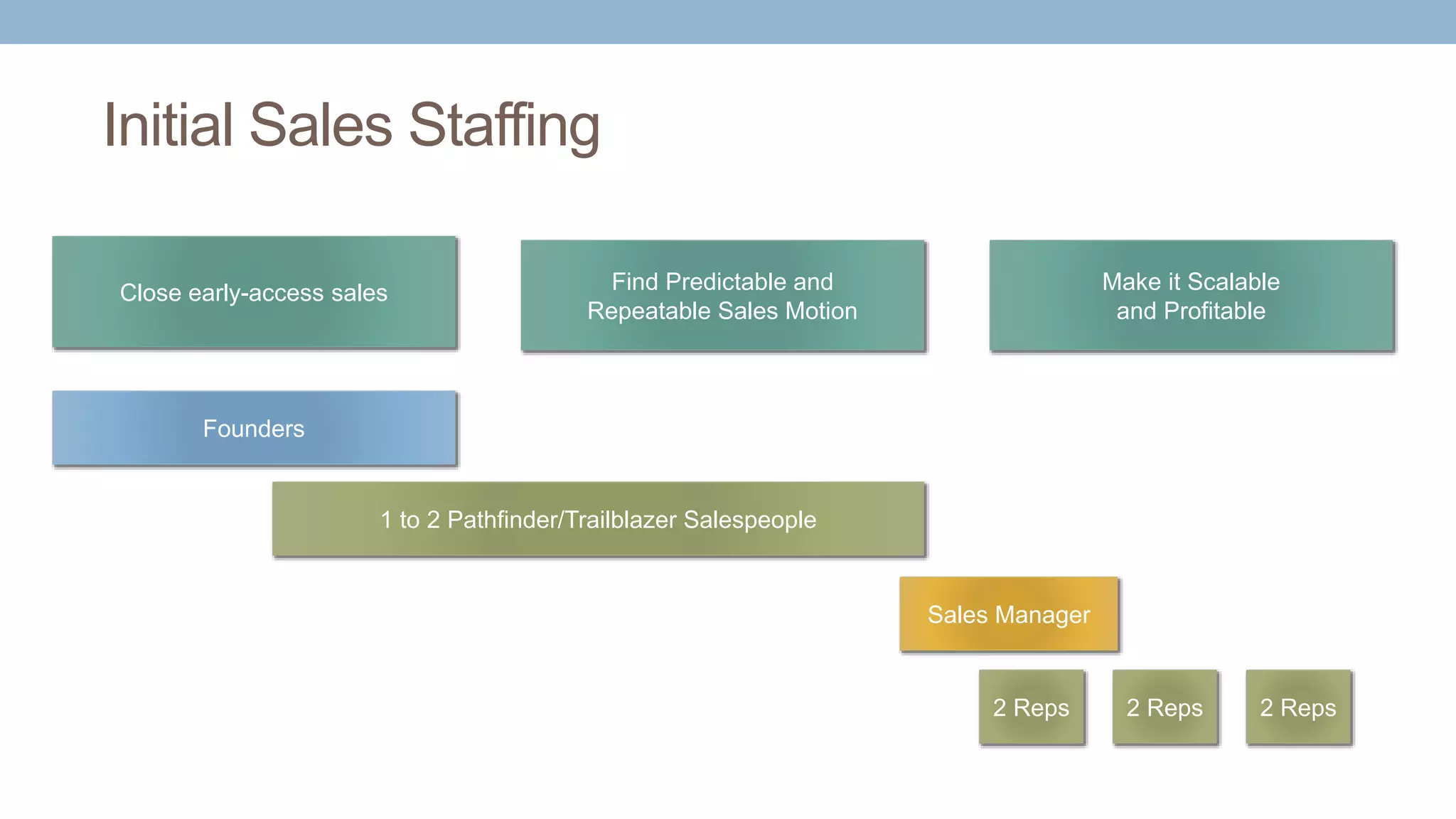
Initial Sales Staffing
Close early-access sales Find Predictable and
Repeatable Sales Motion
Make it Scalable
and Profitable
Founders
1 to 2 Pathfinder/Trailblazer Salespeople
Sales Manager
2 Reps 2 Reps 2 Reps
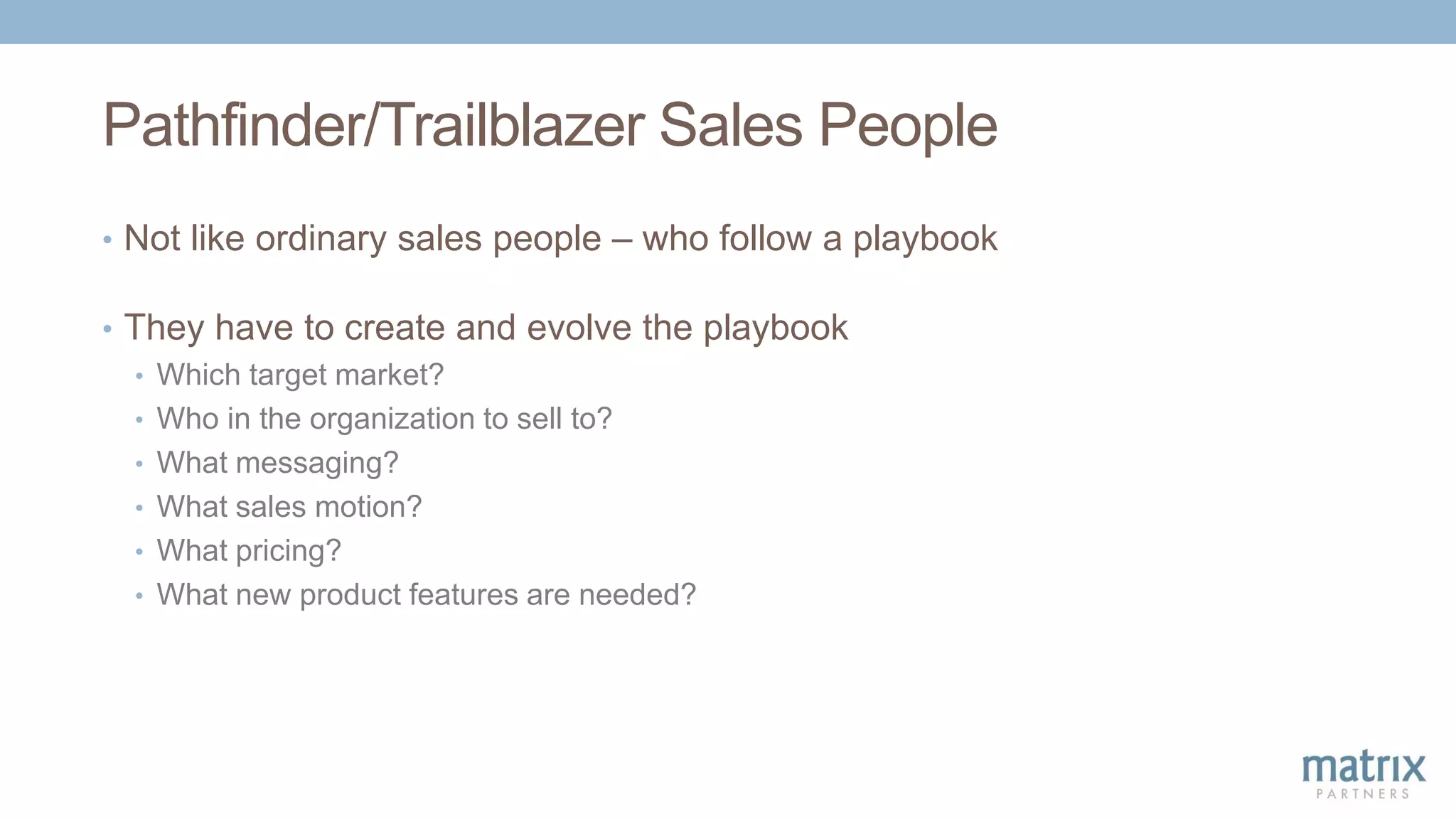
Pathfinder/Trailblazer Sales People
• Not like ordinary sales people – who follow a playbook
• They have to create and evolve the playbook
• Which target market?
• Who in the organization to sell to?
• What messaging?
• What sales motion?
• What pricing?
• What new product features are needed?
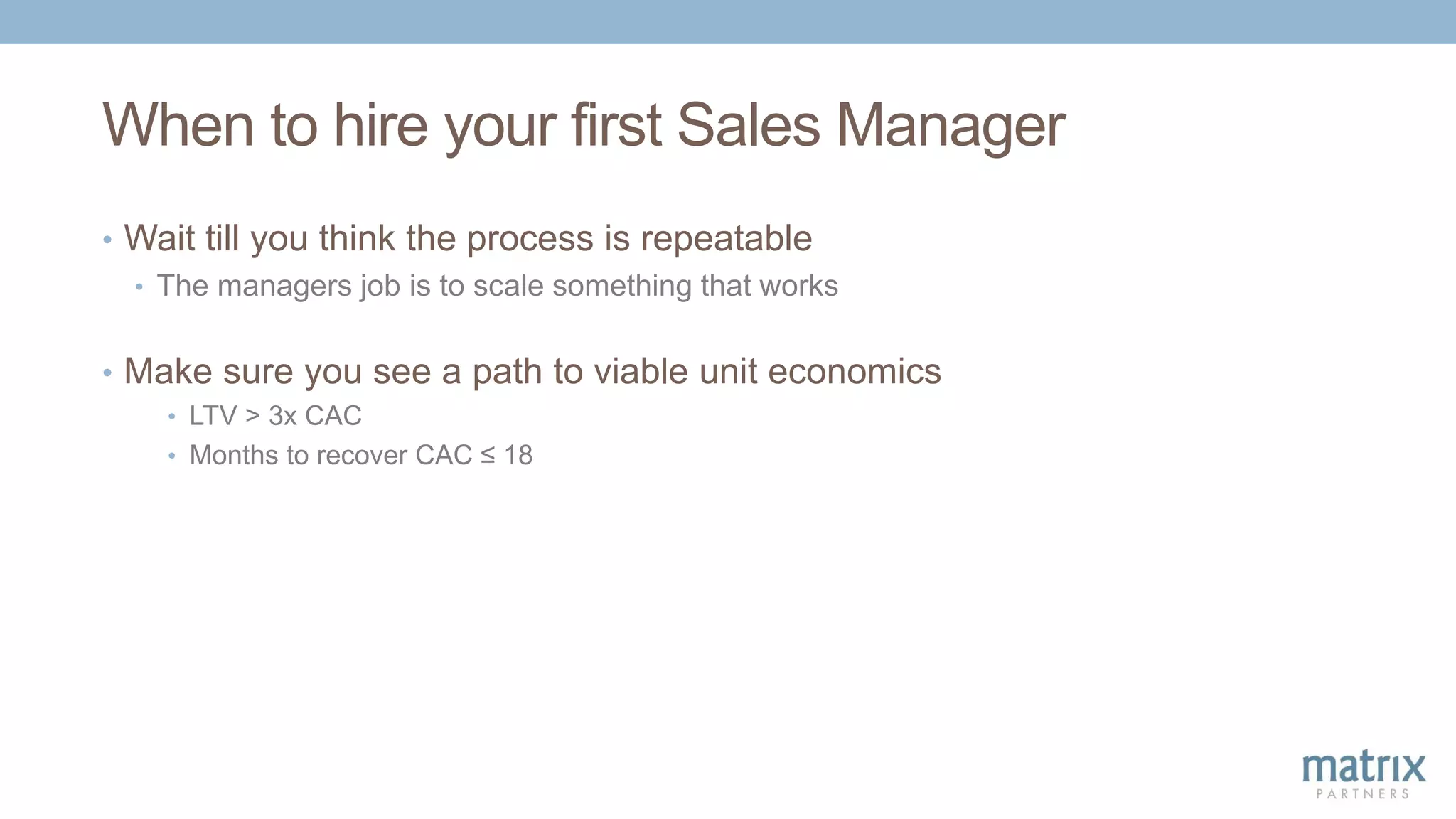
When to hire your first Sales Manager
• Wait till you think the process is repeatable
• The managers job is to scale something that works
• Make sure you see a path to viable unit economics
• LTV > 3x CAC
• Months to recover CAC ≤ 18
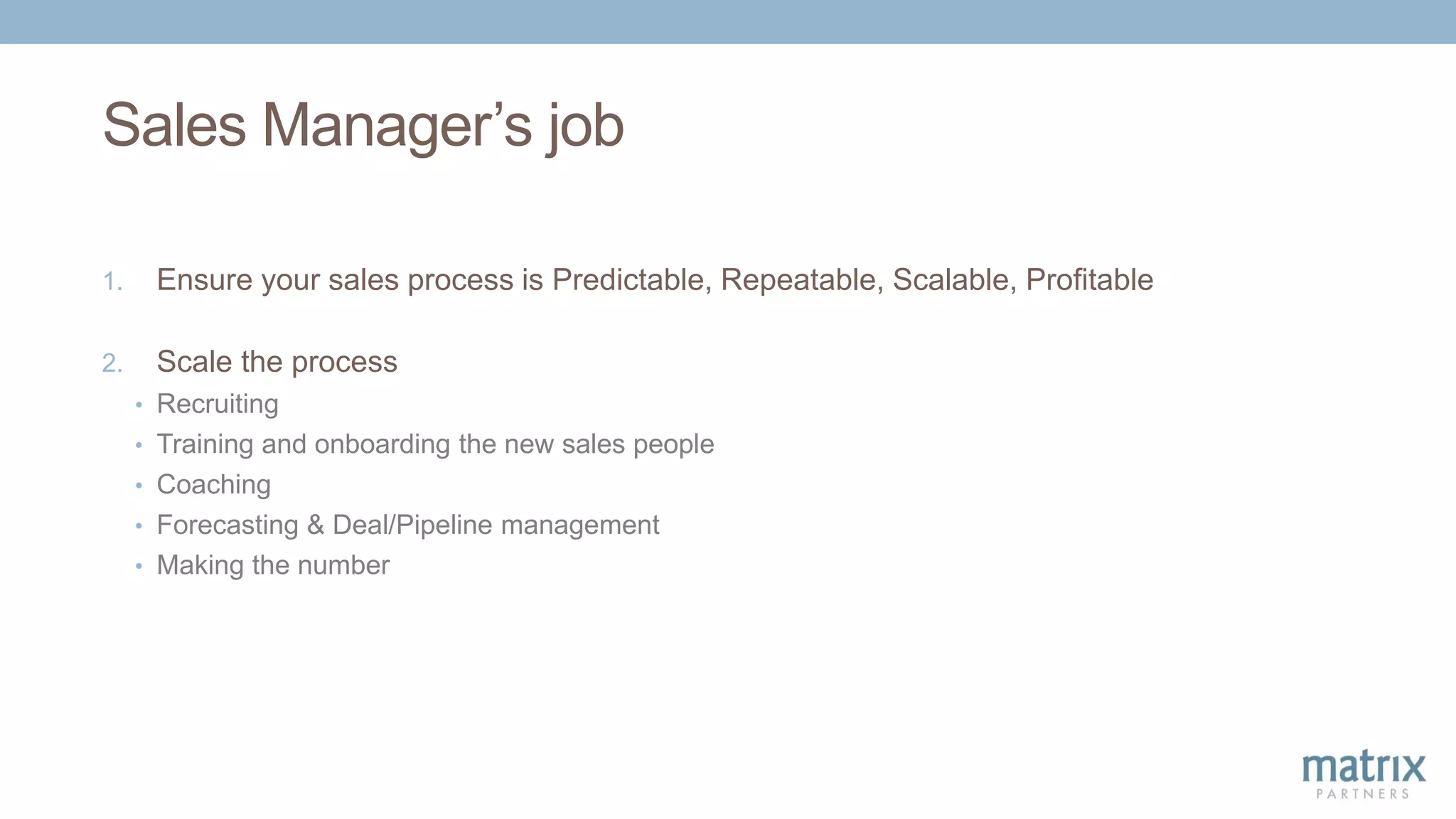
Sales Manager’s job
1. Ensure your sales process is Predictable, Repeatable, Scalable, Profitable
2. Scale the process
• Recruiting
• Training and onboarding the new sales people
• Coaching
• Forecasting & Deal/Pipeline management
• Making the number
Bookings
Driven by very simple math
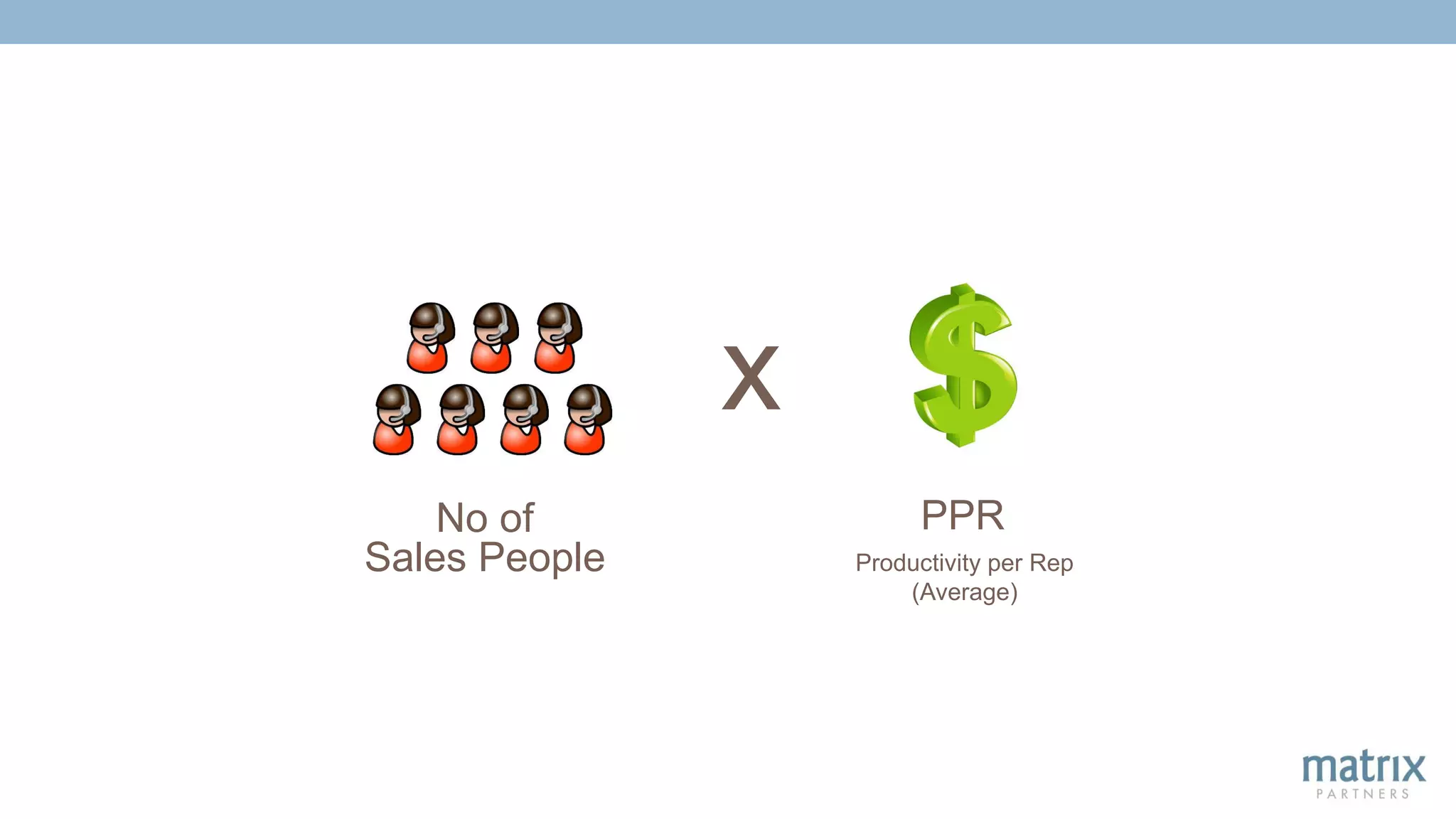
What Drives Bookings?
No of
Sales People Productivity per Rep
(Average)
x
PPR
Lets look at each of these in turn…
Number of Sales People
One of the most common reasons for missing plan
Didn’t hire sales people fast enough
Sales Hiring
• You will need to build an in house recruiting machine
See my blog post:
“Recruiting: the third crucial Startup Skill”
PPR: Productivity per Rep
• Quality of sales hires
• Sales Training and
Onboarding
PPR: Sales Training and Onboarding
• Sales people: one of the most expensive resources
• Yet typically little effort put in to sales training in early days
• High payback
• Worth having the founders spend time to develop & deliver a lot of the material
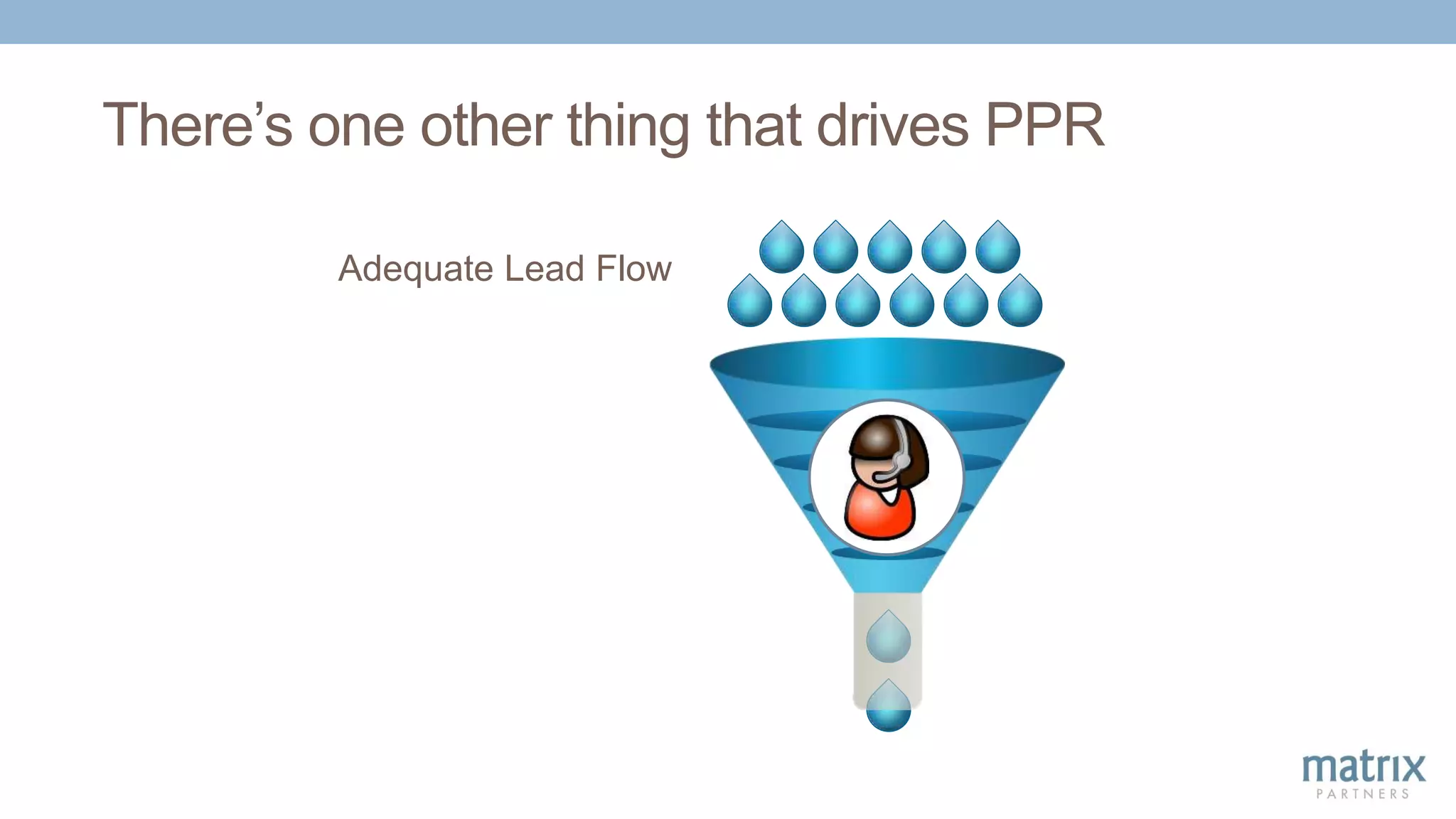
There’s one other thing that drives PPR
Adequate Lead Flow
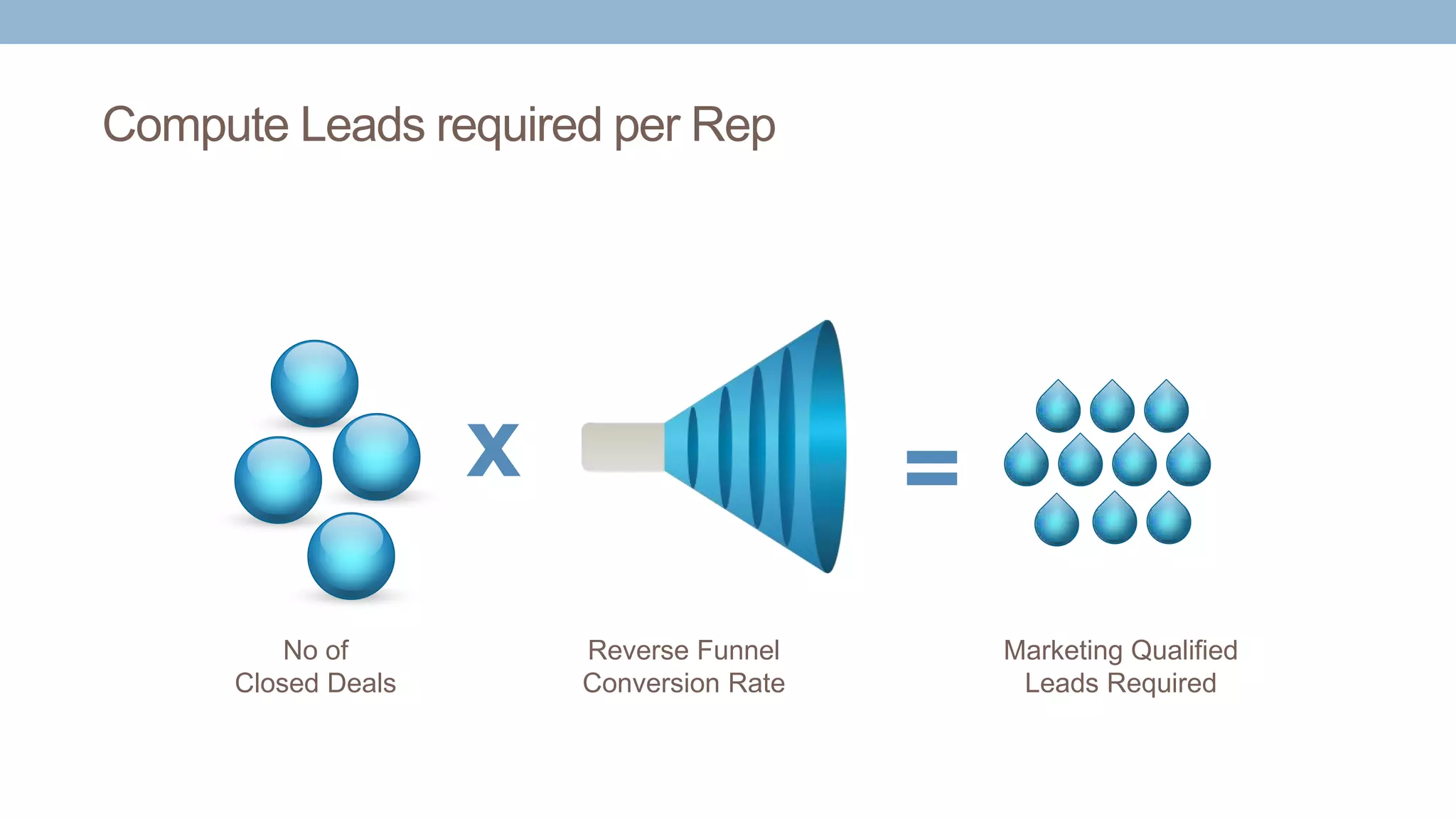
Compute Leads required per Rep
x
No of
Closed Deals
=
Reverse Funnel
Conversion Rate
Marketing Qualified
Leads Required
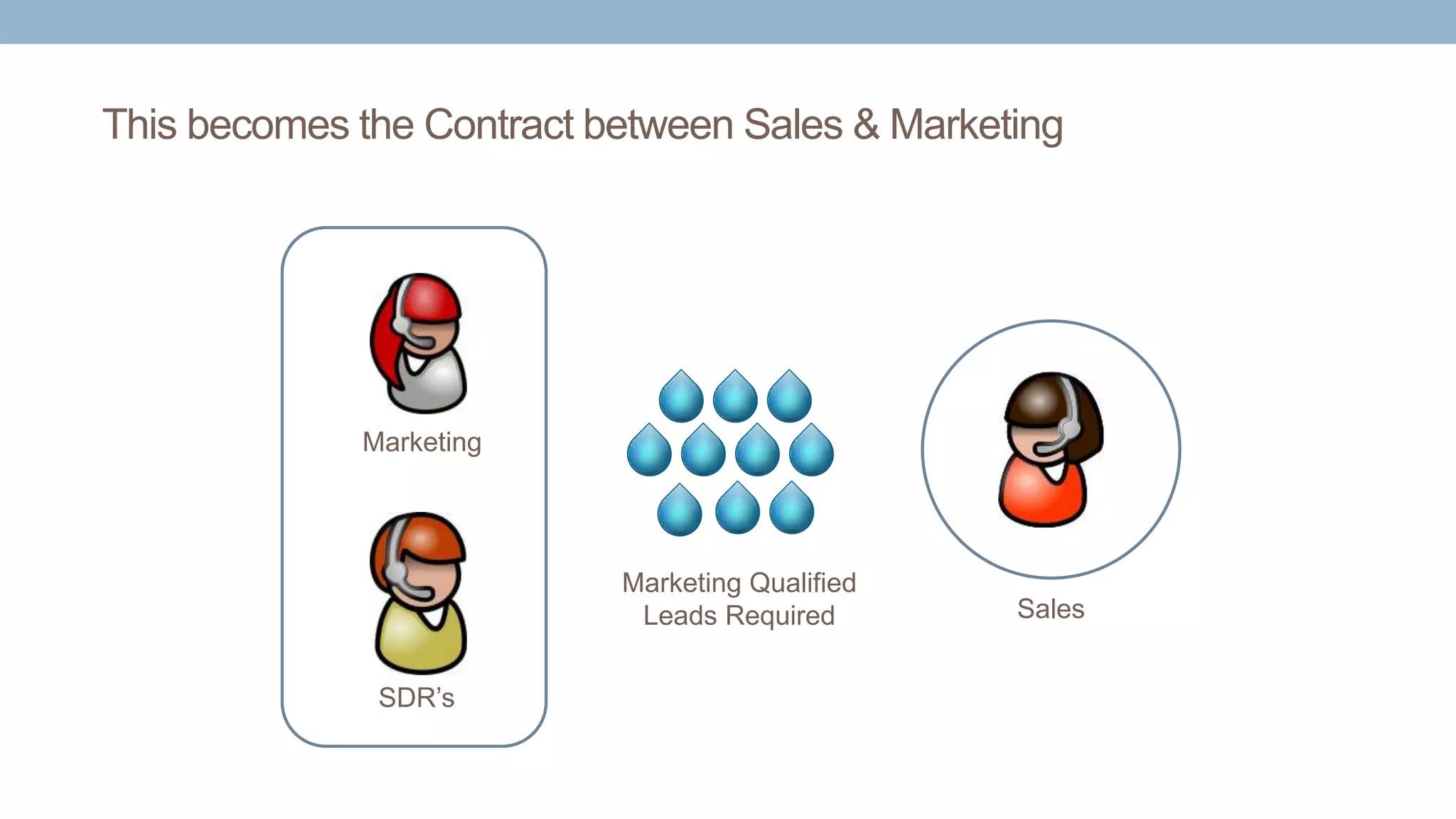
This becomes the Contract between Sales & Marketing
Marketing Qualified
Leads Required Sales
Marketing
SDR’s
Scaling phase
Scaling the Business
Search for Product/Market Fit
Search for Repeatable & Scalable
& Profitable Growth Model
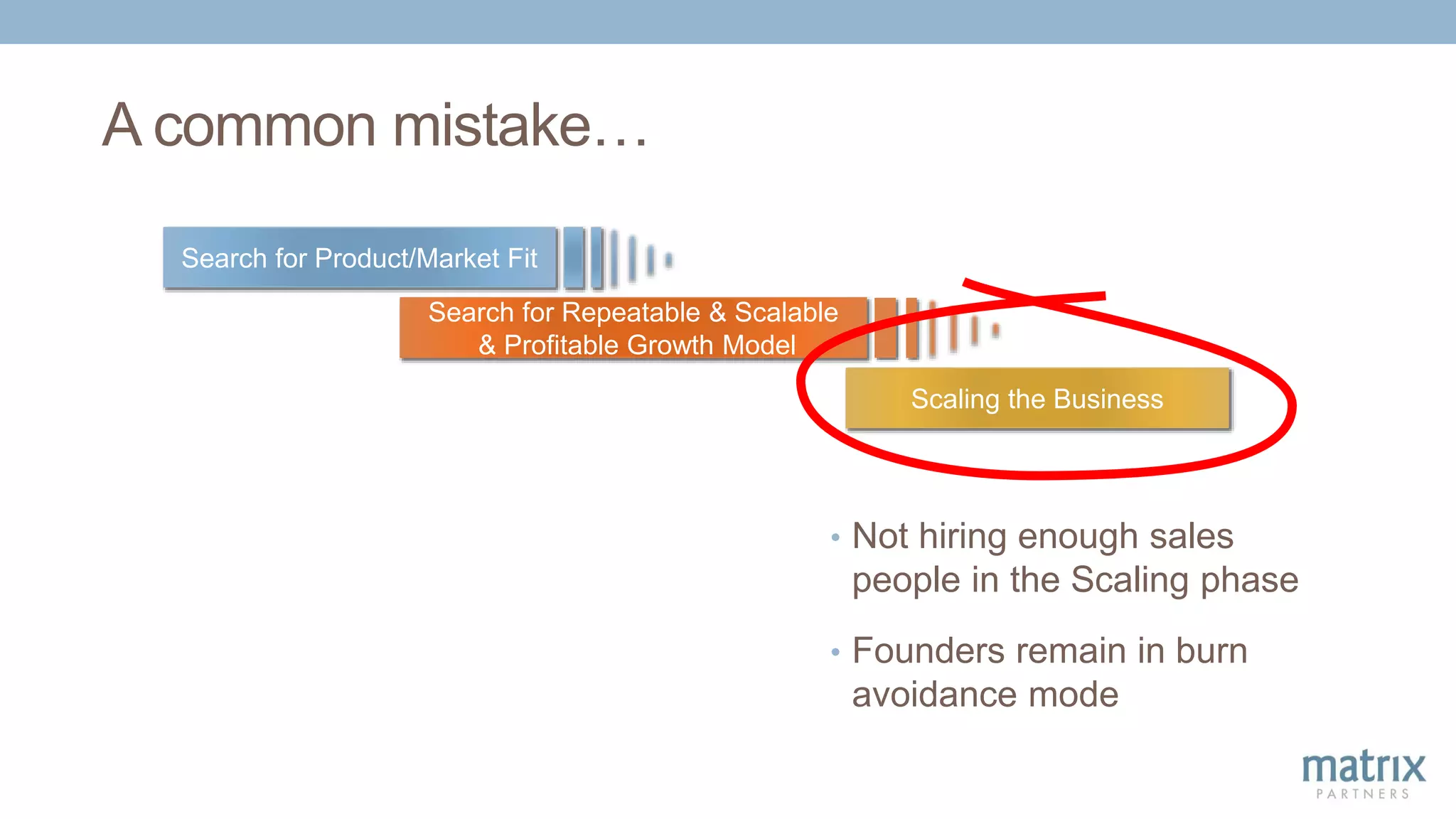
A common mistake…
• Not hiring enough sales
people in the Scaling phase
• Founders remain in burn
avoidance mode
SUMMARY
The SaaS Founders Journey – What Matters at Each Stage
Search for Product/Market Fit
Scaling the Business
Search for Repeatable & Scalable
& Profitable Growth Model
Recognize where you are in the lifecycle
Scaling the Business
Search for Product/Market Fit
Search for Repeatable & Scalable
& Profitable Growth Model
Choose the right actions for your stage
• Don’t jump ahead:
• Expanding sales before product/market fit
• Hiring too many sales people before the sales process is working
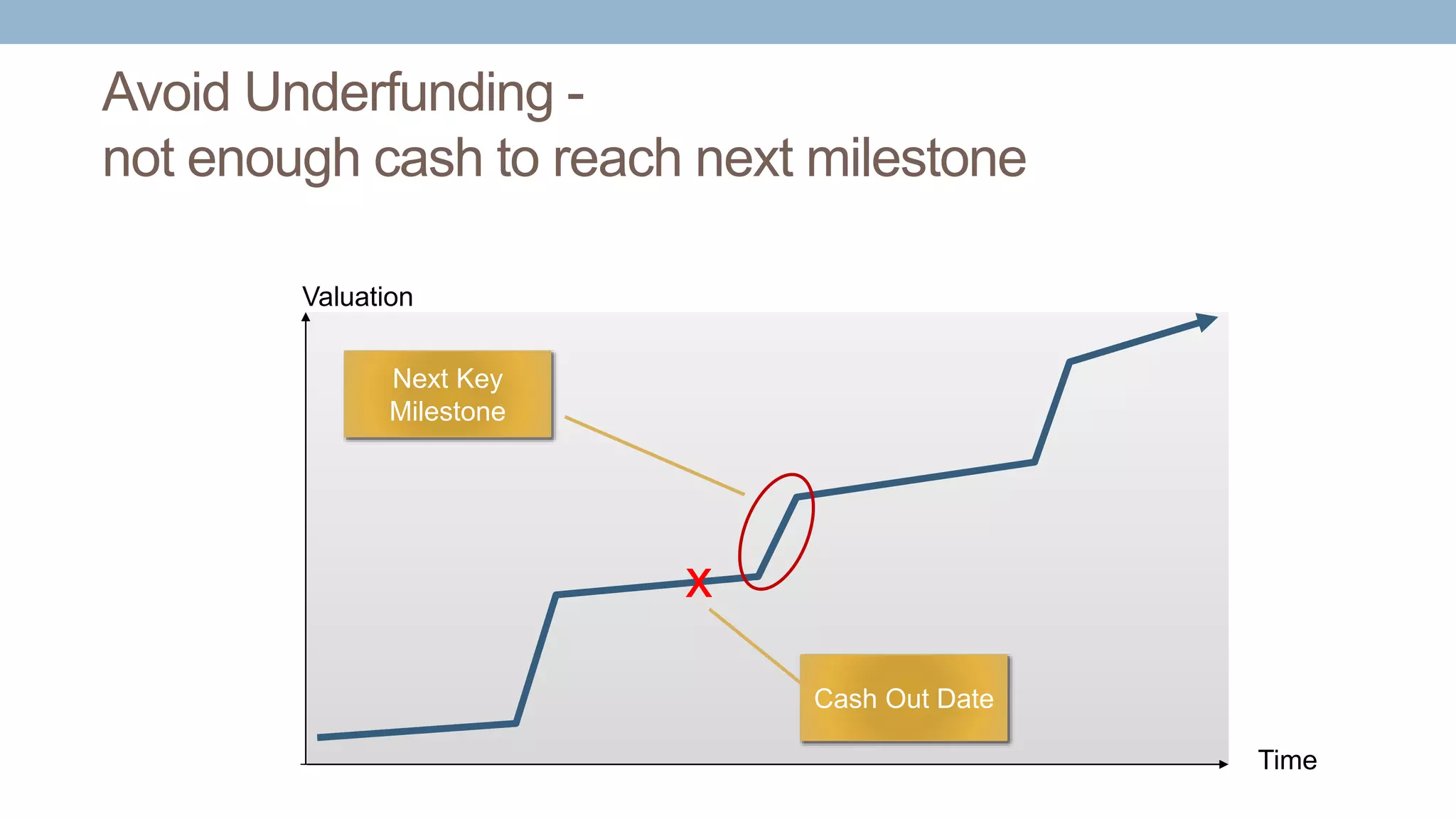
Avoid Underfunding -
not enough cash to reach next milestone
Time
Valuation
Next Key
Milestone
x
Cash Out Date
Use the cash out date and financing milestones
… and Alignment
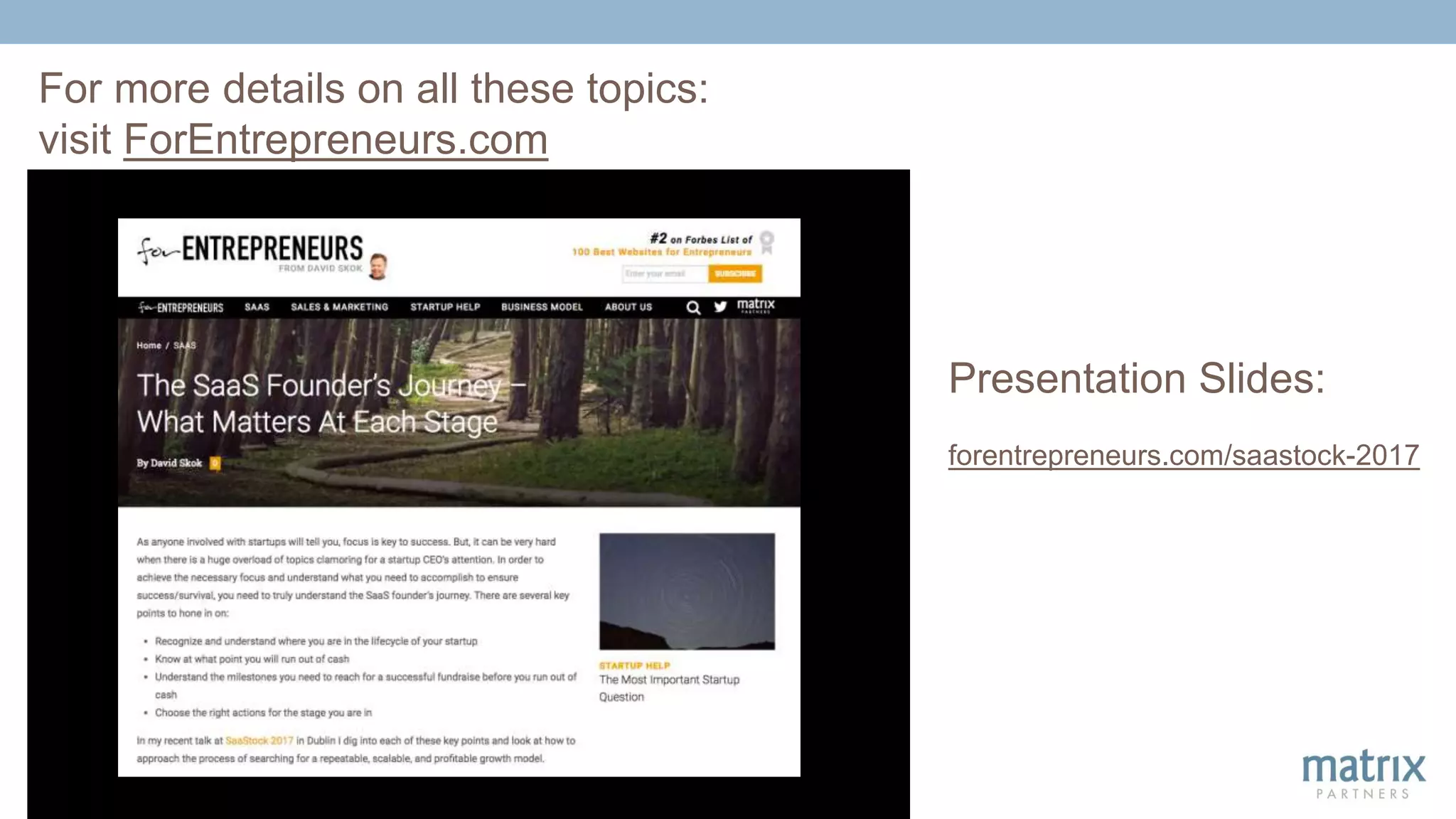
For more details on all these topics:
visit ForEntrepreneurs.com
Presentation Slides:
forentrepreneurs.com/saastock-2017
APPENDIX
Getting to know your Buyer Personae
• Identifying Characteristics
• What are their key business goals?
• How does our product help them achieve those?
• What does their Boss expect of them?
• What pain do they have that we address?
• Is it latent pain, or obvious pain?
• How do they describe the pain and what they are looking
for?
• (Helpful for messaging)
• Are they out there searching for solutions?
• If so, how?
• Is solving this pain a high priority for them?
• If not, what features would make it a higher priority?
• What are the most important features on their checklist?
• What are their reactions to our product/company?
• What will they like? What will they not like?
• What are the main questions and concerns they will have?
• What are the steps in their purchasing process?
• What are their likely decision making criteria?
• Who else has to be involved in the decision (e.g. Business
buyer, IT)?
• Who influences them? (Sites, organizations, and
people)
• (Helps us figure out how to market to them)
• Other characteristics that are relevant to this purchase
• E.g. Developers:
• Don't have a budget
• Prefer Open Source, and don't like to pay for software
A more detailed look at what
drives bookings…
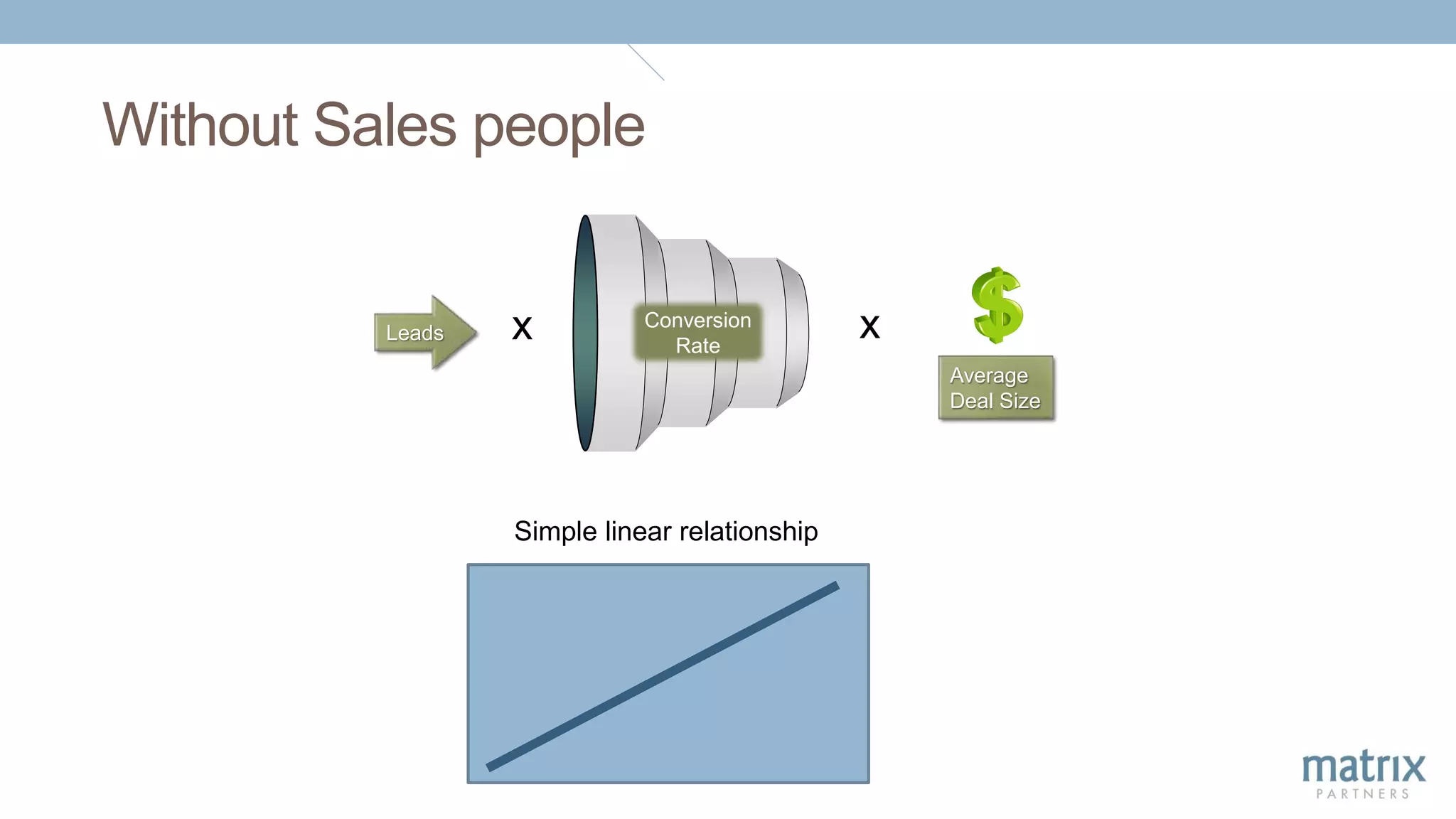
Without Sales people
Leads
Simple linear relationship
Conversion
Rate
Average
Deal Size
x x
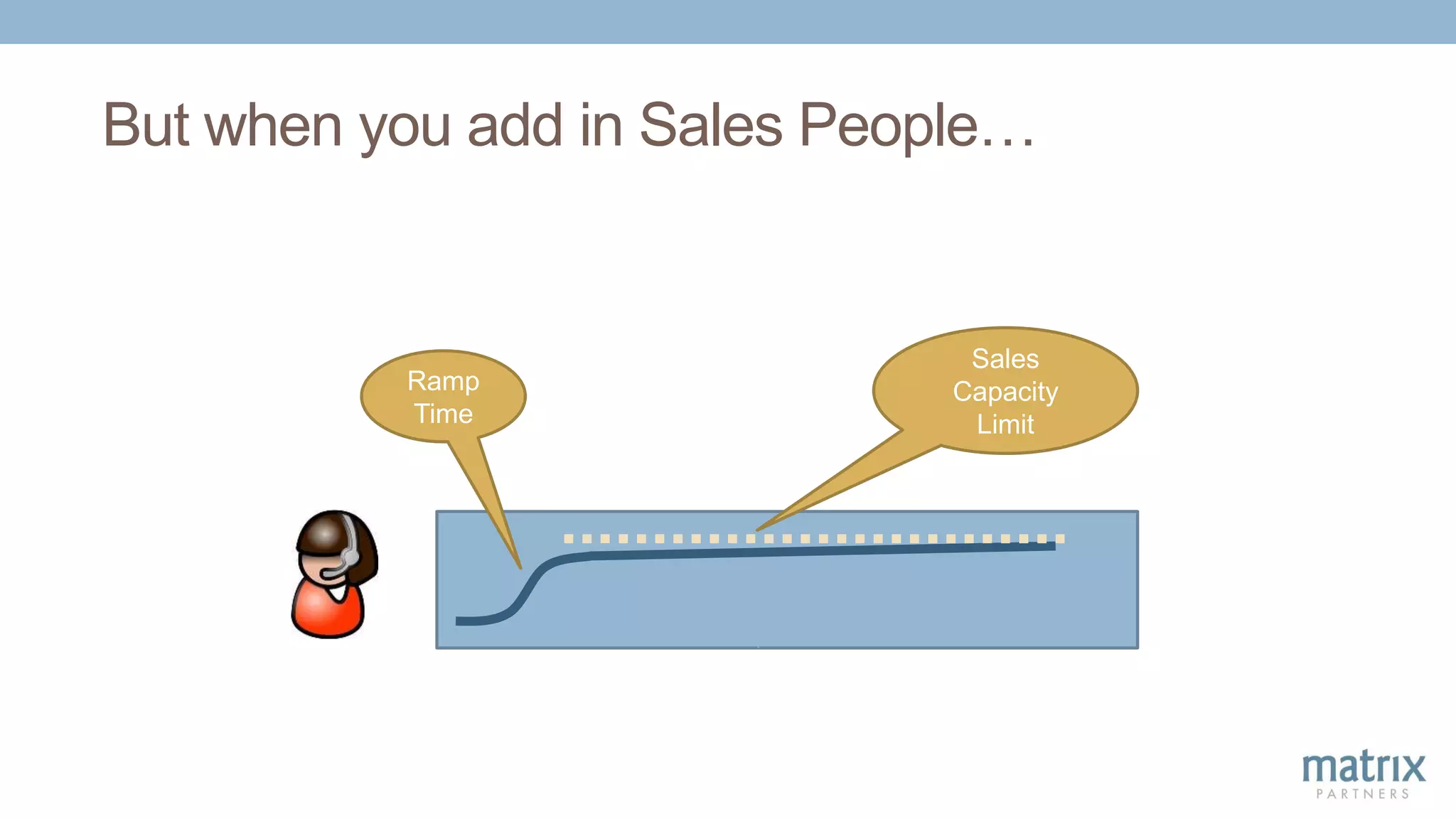
But when you add in Sales People…
Ramp
Time
Sales
Capacity
Limit
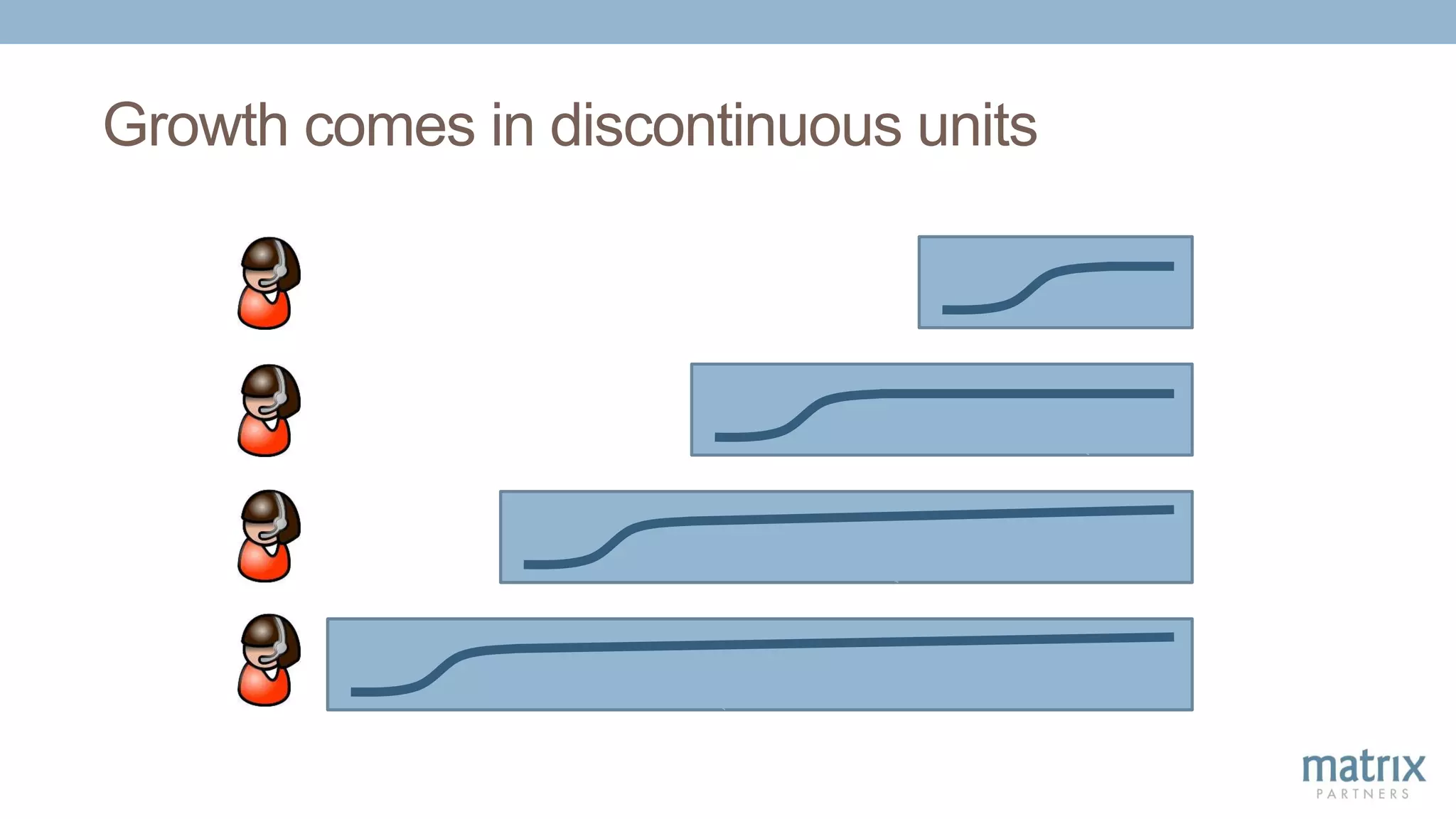
Growth comes in discontinuous units
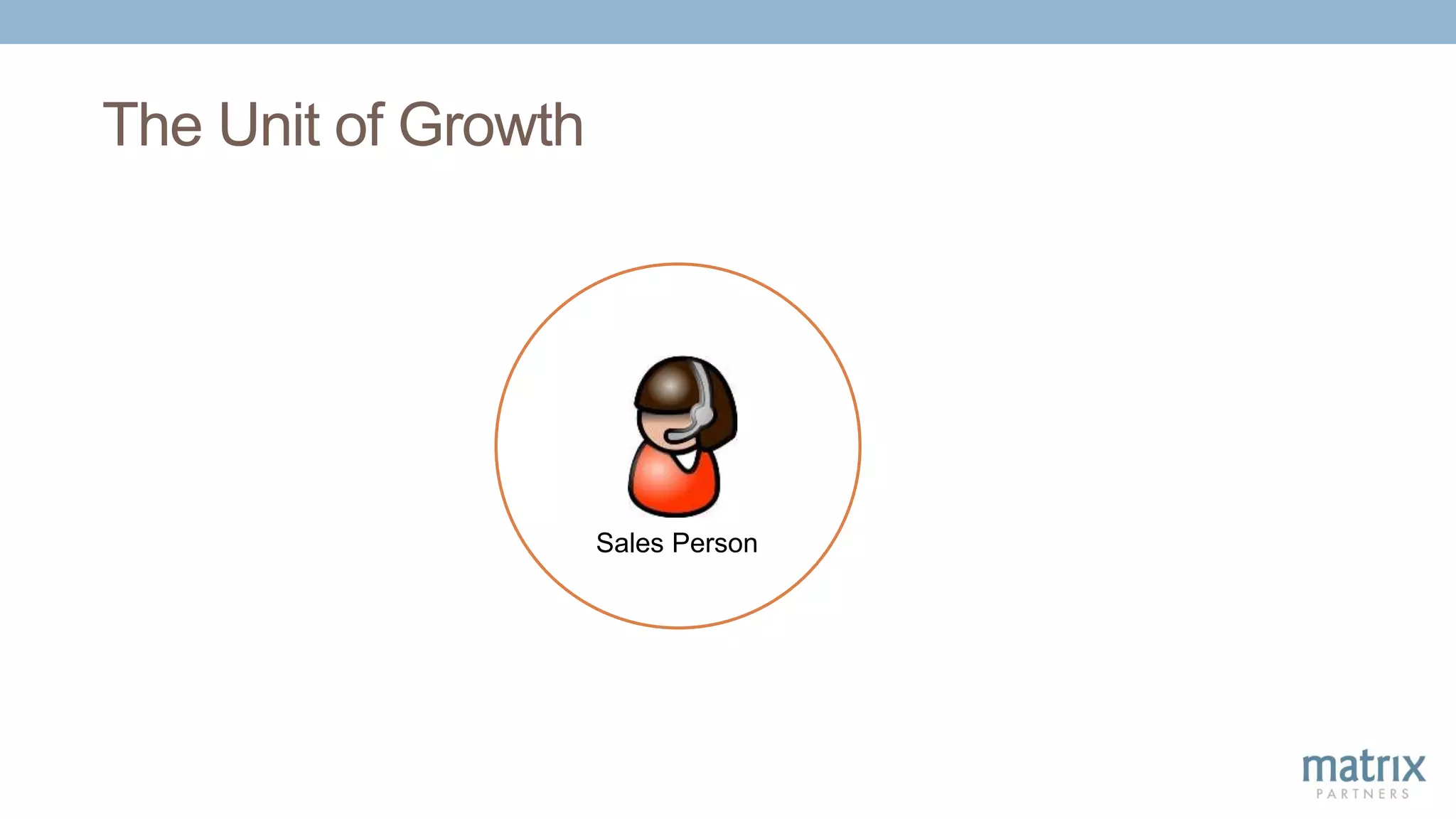
The Unit of Growth
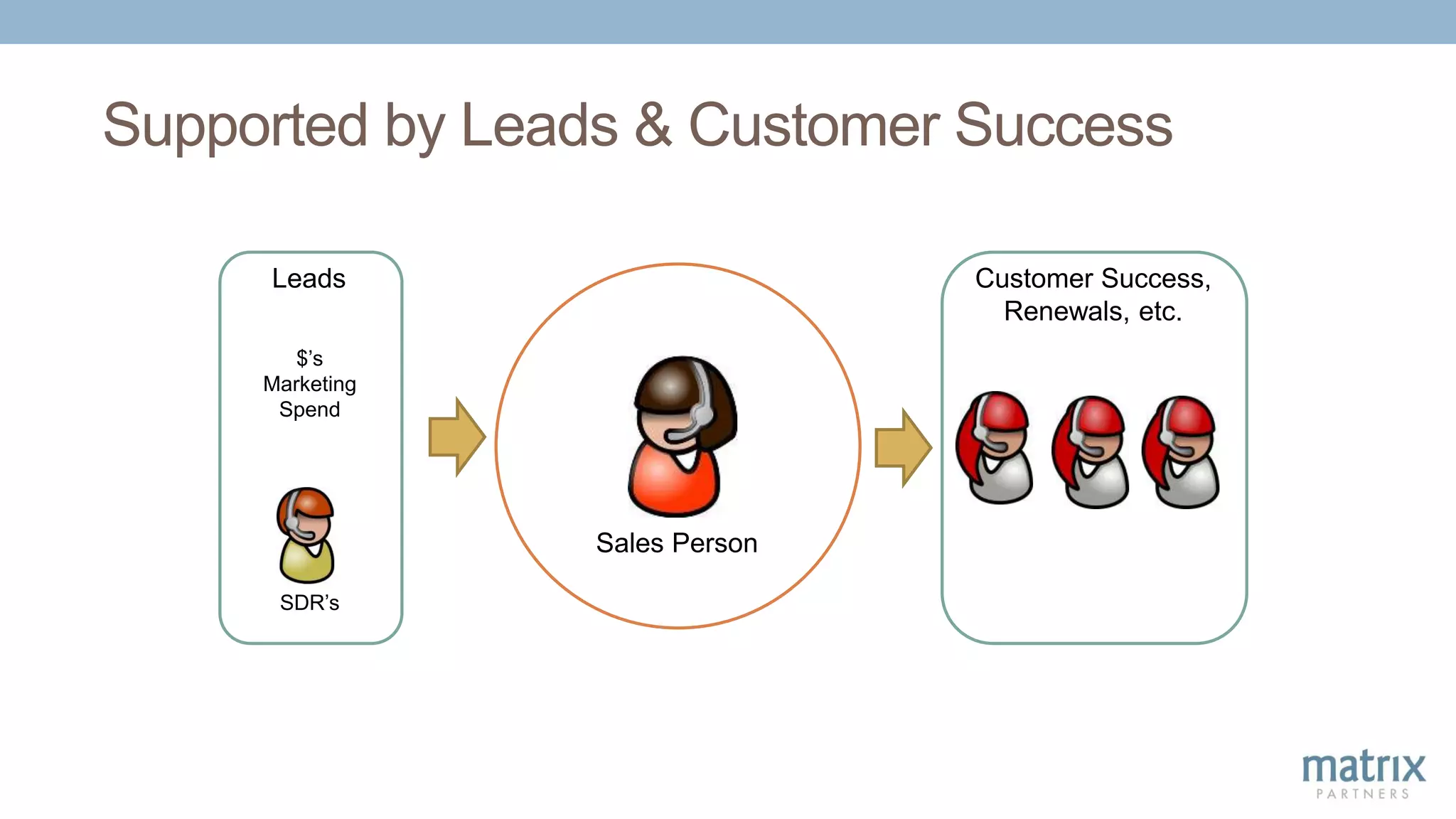
Sales Person
Supported by Leads & Customer Success
Sales Person
$’s
Marketing
Spend
SDR’s
Leads Customer Success,
Renewals, etc.
It’s not just the front of the funnel…
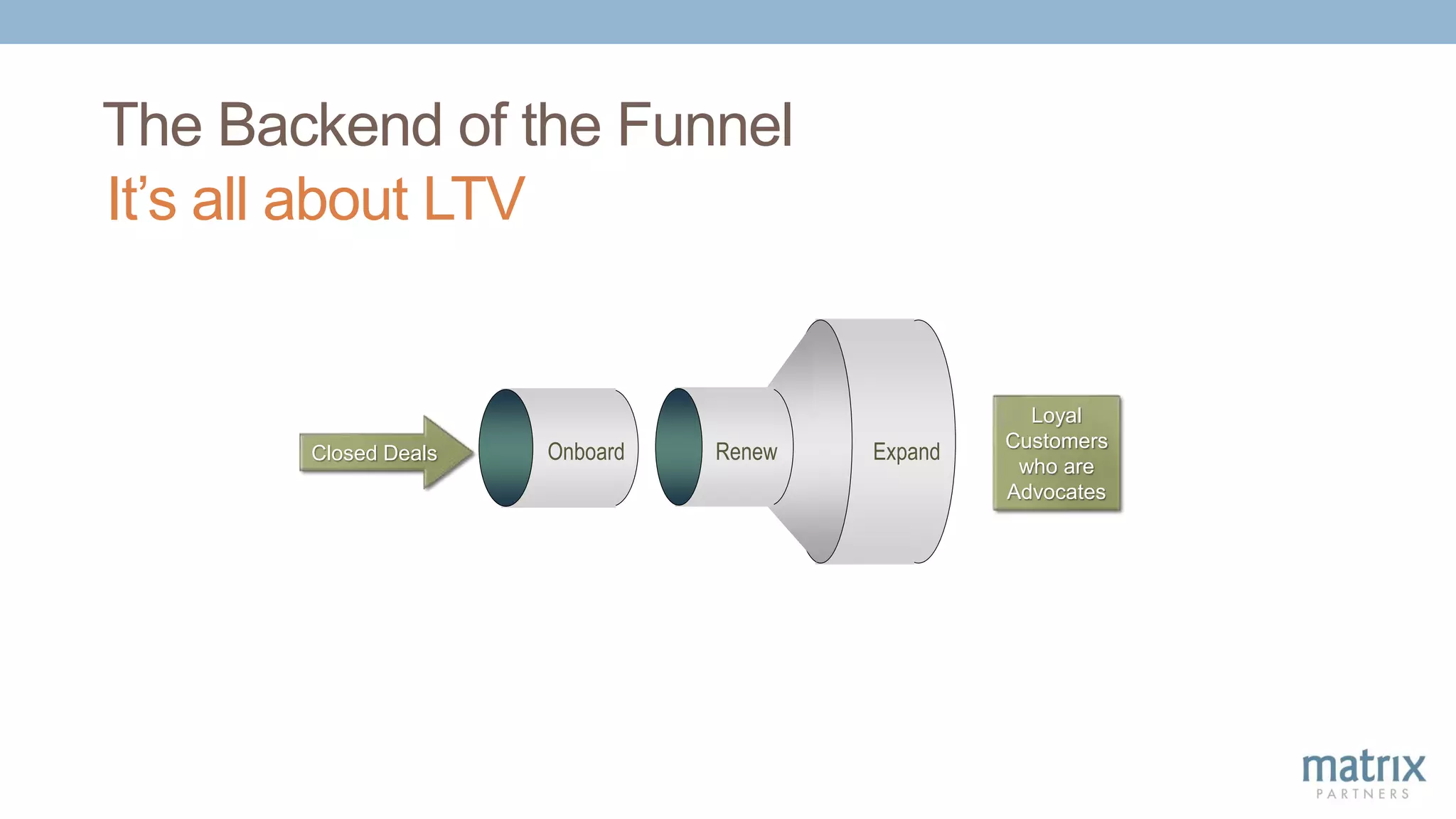
The Backend of the Funnel
Closed Deals
Loyal
Customers
who are
Advocates
Renew ExpandOnboard
It’s all about LTV
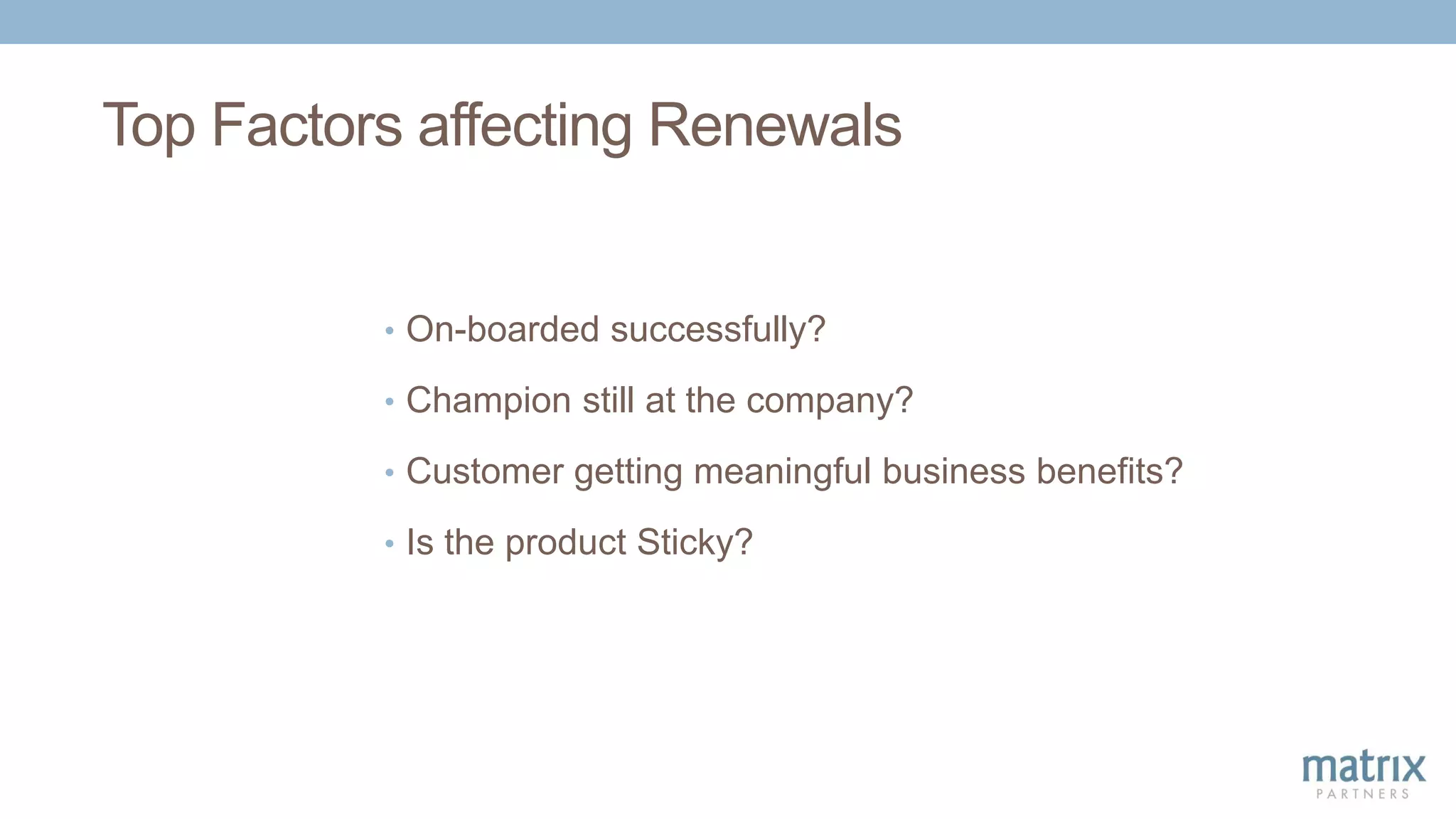
Top Factors affecting Renewals
• On-boarded successfully?
• Champion still at the company?
• Customer getting meaningful business benefits?
• Is the product Sticky?
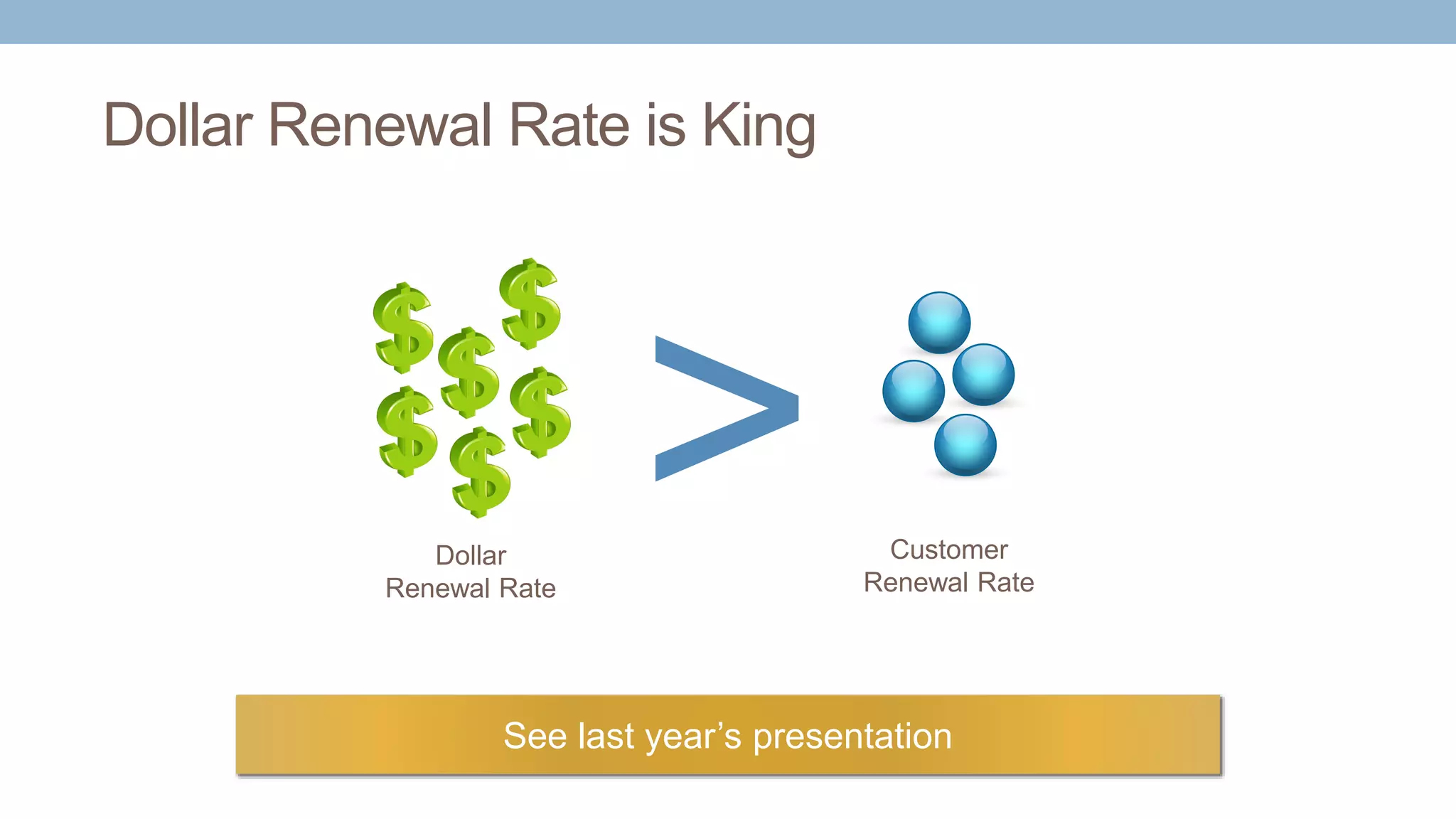
Dollar Renewal Rate is King
See last year’s presentation
Customer
Renewal Rate
>Dollar
Renewal Rate

The SaaS Founder's Journey - What matters at each stage

  • 1.
    The SaaS Founder’sJourney What matters at each stage
  • 2.
    Search for Product/MarketFit Scaling the Business Search for Repeatable & Scalable & Profitable Growth Model The Three Phases of a Startup’s Lifecycle
  • 3.
    The Most importantStartup Questions • When will we run out of cash? • Are we on track to reach the milestones needed for a successful fundraise?
  • 4.
    The Cash OutGraph Oct-17 Nov-17 Dec-17 Jan-18 Feb-18 Mar-18 Apr-18 May-18 Jun-18 Jul-18 Aug-18 Sep-18 Oct-18 Nov-18 Dec-18 $0 $2m $4m $6m $8m ($2m) Start Fundraising 3 months
  • 5.
    Startups are arace against time • The way to win is extreme Focus • & total alignment across all departments
  • 6.
    But… what tofocus on?
  • 7.
    Since cash iscrucial to survival…
  • 8.
    … let’s lookat how to successfully close your next round
  • 9.
  • 10.
    Startup Valuations –The Reality Time Valuation Milestones
  • 11.
    Scaling the Business Searchfor Product/Market Fit Search for Repeatable & Scalable & Profitable Growth Model The VC view - How risk changes over time Risk As perceived by the financial metrics and Growth Investors
  • 12.
    Scaling the Business Searchfor Product/Market Fit Search for Repeatable & Scalable & Profitable Growth Model How risk changes over time Risk As perceived by Early Stage Investors
  • 13.
    Scaling the Business Searchfor Product/Market Fit Search for Repeatable & Scalable & Profitable Growth Model And Valuations are inversely correlated to Risk Risk Valuation
  • 14.
    Scaling the Business Evidenceof Product/Market Fit Evidence of Repeatable & Scalable & Profitable Growth Model Very Approximate look at Round Types Seed Series A Series B Growth Financing
  • 15.
    Evidence of Product/MarketFit Evidence of Repeatable & Scalable & Profitable Growth Model Milestones for a Successful Fundraise: Series A Series A
  • 16.
    Good Evidence ofProduct Market Fit • A number of customers have purchased • Referenceable • Customers are happy • Using the product (and would be very reluctant to give it up) • Realizing the promised benefits • Evidence of intent to expand usage • Churn is low
  • 17.
    Milestones for aSuccessful Growth Round
  • 18.
    Predictable, Repeatable, Scalable,Profitable Growth Scaling the Business Search for Product/Market Fit Search for Repeatable & Scalable & Profitable Growth Model
  • 19.
    The key signthat you’re getting there: Bookings - (NOT Revenue or ARR!) For SaaS: Bookings = Net New ARR (New + Expansion – Churned) Q1 Q2 Q3 Q4 Q5 Q6 Q7
  • 20.
    ARR with FlatBookings ARR with Growing Bookings Q1 Q2 Q3 Q4 Q5 Q6 Q7Q1 Q2 Q3 Q4 Q5 Q6 Q7
  • 21.
    Productivity Per Rep(PPR) Rep Q2-15 Q3-15 Q4-15 Q1-16 Q2-16 Q3-16 Q4-16 John 120 165 180 145 80 110 195 Mary 80 110 135 155 150 145 Fred 60 35 75 40 55 Alice 85 145 160 180 145 Joe 60 110 85 130 145 Mike 155 170 145 190 Sarah 35 45 70 45 Sue 80 145 175 165
  • 22.
    % of Repsat Quota 30% 40% 50% 60% 70% 80% 90% 100% Q1-16 Q2-16 Q3-16 Q4-16 % of Reps above 75% of Quota 30% 40% 50% 60% 70% 80% 90% 100% Q1-16 Q2-16 Q3-16 Q4-16 % of Reps above 100% of Quota
  • 23.
    Proof Points forInvestors • Predictable, Repeatable, Scalable • Consistent growth in Bookings (not just ARR) • Proof that you can grow the sales organization, and make them productive • Proven lead sources that can scale • Profitable: • LTV > 3x CAC • Months to recover CAC ≤ 18 • Product/Market Fit • Strong customer usage patterns over time • Low customer churn, Net negative revenue churn
  • 24.
    Scaling the Business Searchfor Product/Market Fit Search for Repeatable & Scalable & Profitable Growth Model More lessons we can learn from the three phase diagram
  • 25.
    #mistake Trying to forceprogress by jumping ahead before completing the current phase
  • 26.
    Common variations… • Hiringsalespeople before the founders have proven that they can sell the product • Scaling sales before solving a churn problem • Scaling the salesforce before the growth process is predictable & repeatable
  • 27.
  • 28.
    Scaling the Business Searchfor Product/Market Fit Search for Repeatable & Scalable & Profitable Growth Model What we’ve learned… Not Predictable how long this will take
  • 29.
    Scaling the Business Searchfor Product/Market Fit Search for Repeatable & Scalable & Profitable Growth Model Conserve Cash until the Scaling Phase Cash Burn
  • 30.
    A FINER LOOKAT THE PHASES
  • 31.
    Search for Product/MarketFit Search for Product/Market Fit Develop MVP Figure out MVP Close early-access sales Make the customers successful Validate the idea Identify initial target market
  • 32.
    The number oneproblem at this Stage • Not enough customer meetings set up for validation • Both before, and during product development • Results: • Product doesn’t quite fit the needs of the market • Interest is there, but can’t close sales • Lots of wasted time, and cash burned
  • 33.
    Search for Repeatable,Scalable, Profitable Growth Search for Repeatable & Scalable & Profitable Growth Model
  • 34.
    Break this intophases Search for Repeatable, Scalable & Profitable Growth Model Close early-access sales Make the customers successful Find Predictable and Repeable Motion Make it Scalable and Profitable
  • 35.
    At the beginning:No clear sales path
  • 36.
    By the end:Well understood path • Lead funnel • Sales motion • Customer onboarding
  • 37.
  • 38.
  • 39.
    … with aclear Use Case Use Case Benefit
  • 40.
    Messaging • Business benefits,not product features • Clear • Simple • Short • Explains differentiation from competition
  • 41.
    Initial Guess atGrowth Process Website Free Trial
  • 42.
    The normal approachto Funnel Design Vendor Centric
  • 43.
    My view: theright approach to Funnel Design Buyer Centric Vendor Buyer-Centric
  • 44.
  • 45.
    MAP BUYERS PROCESSTO YOUR STEPS Research Shortlist Vendors Evaluation ROI & Justification Website Free Trial BUYER VENDOR
  • 46.
    GET INSIDE YOURBUYERS HEAD Research Shortlist Vendors Evaluation ROI & Justification Website Free Trial BUYER VENDOR • How are they reacting as they go through our funnel steps? • What are they thinking as they go through their process?
  • 47.
    OPTIMIZE YOUR STEPSTO FIT Research Shortlist Vendors Evaluation ROI & Justification Website Free Trial ROI Calculator Competitive Features Matrix BUYER VENDOR
  • 48.
    ADDRESS ALL DECISIONCRITERIA Address Security Concerns 3rd Party Security Audit & Whitepaper BUYER
  • 49.
    Blog post andslide deck: “Optimize Your Funnel By Getting Inside Your Buyer’s Head” http://www.forentrepreneurs.com/heavybit/
  • 50.
    Fire up aninitial lead source
  • 51.
    Test and Optimizethe Funnel Flow Fix Conversion Rate Problems Suspects Suspects Suspects Suspects Suspects Suspects Suspects Suspects Suspects Suspects Suspects Suspects
  • 52.
    Funnel Optimization Meeting Participants SalesMarketing Product Suspects Suspects Suspects Suspects Suspects Suspects Suspects Suspects Suspects Suspects Suspects Suspects Customer Success
  • 53.
    Initial Sales Staffing Closeearly-access sales Find Predictable and Repeatable Sales Motion Make it Scalable and Profitable Founders 1 to 2 Pathfinder/Trailblazer Salespeople Sales Manager 2 Reps 2 Reps 2 Reps
  • 54.
    Pathfinder/Trailblazer Sales People •Not like ordinary sales people – who follow a playbook • They have to create and evolve the playbook • Which target market? • Who in the organization to sell to? • What messaging? • What sales motion? • What pricing? • What new product features are needed?
  • 55.
    When to hireyour first Sales Manager • Wait till you think the process is repeatable • The managers job is to scale something that works • Make sure you see a path to viable unit economics • LTV > 3x CAC • Months to recover CAC ≤ 18
  • 56.
    Sales Manager’s job 1.Ensure your sales process is Predictable, Repeatable, Scalable, Profitable 2. Scale the process • Recruiting • Training and onboarding the new sales people • Coaching • Forecasting & Deal/Pipeline management • Making the number
  • 57.
  • 58.
    What Drives Bookings? Noof Sales People Productivity per Rep (Average) x PPR
  • 59.
    Lets look ateach of these in turn…
  • 60.
    Number of SalesPeople One of the most common reasons for missing plan Didn’t hire sales people fast enough
  • 61.
    Sales Hiring • Youwill need to build an in house recruiting machine See my blog post: “Recruiting: the third crucial Startup Skill”
  • 62.
    PPR: Productivity perRep • Quality of sales hires • Sales Training and Onboarding
  • 63.
    PPR: Sales Trainingand Onboarding • Sales people: one of the most expensive resources • Yet typically little effort put in to sales training in early days • High payback • Worth having the founders spend time to develop & deliver a lot of the material
  • 64.
    There’s one otherthing that drives PPR Adequate Lead Flow
  • 65.
    Compute Leads requiredper Rep x No of Closed Deals = Reverse Funnel Conversion Rate Marketing Qualified Leads Required
  • 66.
    This becomes theContract between Sales & Marketing Marketing Qualified Leads Required Sales Marketing SDR’s
  • 67.
  • 68.
    Scaling the Business Searchfor Product/Market Fit Search for Repeatable & Scalable & Profitable Growth Model A common mistake… • Not hiring enough sales people in the Scaling phase • Founders remain in burn avoidance mode
  • 69.
    SUMMARY The SaaS FoundersJourney – What Matters at Each Stage
  • 70.
    Search for Product/MarketFit Scaling the Business Search for Repeatable & Scalable & Profitable Growth Model Recognize where you are in the lifecycle
  • 71.
    Scaling the Business Searchfor Product/Market Fit Search for Repeatable & Scalable & Profitable Growth Model Choose the right actions for your stage • Don’t jump ahead: • Expanding sales before product/market fit • Hiring too many sales people before the sales process is working
  • 72.
    Avoid Underfunding - notenough cash to reach next milestone Time Valuation Next Key Milestone x Cash Out Date
  • 73.
    Use the cashout date and financing milestones
  • 74.
  • 75.
    For more detailson all these topics: visit ForEntrepreneurs.com Presentation Slides: forentrepreneurs.com/saastock-2017
  • 76.
  • 77.
    Getting to knowyour Buyer Personae • Identifying Characteristics • What are their key business goals? • How does our product help them achieve those? • What does their Boss expect of them? • What pain do they have that we address? • Is it latent pain, or obvious pain? • How do they describe the pain and what they are looking for? • (Helpful for messaging) • Are they out there searching for solutions? • If so, how? • Is solving this pain a high priority for them? • If not, what features would make it a higher priority? • What are the most important features on their checklist? • What are their reactions to our product/company? • What will they like? What will they not like? • What are the main questions and concerns they will have? • What are the steps in their purchasing process? • What are their likely decision making criteria? • Who else has to be involved in the decision (e.g. Business buyer, IT)? • Who influences them? (Sites, organizations, and people) • (Helps us figure out how to market to them) • Other characteristics that are relevant to this purchase • E.g. Developers: • Don't have a budget • Prefer Open Source, and don't like to pay for software
  • 78.
    A more detailedlook at what drives bookings…
  • 79.
    Without Sales people Leads Simplelinear relationship Conversion Rate Average Deal Size x x
  • 80.
    But when youadd in Sales People… Ramp Time Sales Capacity Limit
  • 81.
    Growth comes indiscontinuous units
  • 82.
    The Unit ofGrowth Sales Person
  • 83.
    Supported by Leads& Customer Success Sales Person $’s Marketing Spend SDR’s Leads Customer Success, Renewals, etc.
  • 84.
    It’s not justthe front of the funnel…
  • 85.
    The Backend ofthe Funnel Closed Deals Loyal Customers who are Advocates Renew ExpandOnboard It’s all about LTV
  • 86.
    Top Factors affectingRenewals • On-boarded successfully? • Champion still at the company? • Customer getting meaningful business benefits? • Is the product Sticky?
  • 87.
    Dollar Renewal Rateis King See last year’s presentation Customer Renewal Rate >Dollar Renewal Rate

Editor's Notes

  • #2 Going to talk about some lessons that I have learned working with many startups My goal is to help make it clear what is important at each stage of the journey, and hopefully help provide you with a tool to bring focus and alignment to your organization