Scaling a Startup: From Idea
to Million-Dollar Business
Transform your startup vision into a million-dollar reality. This guide walks
you through every critical stage of building a scalable business that
thrives.
by Ozías Rondón
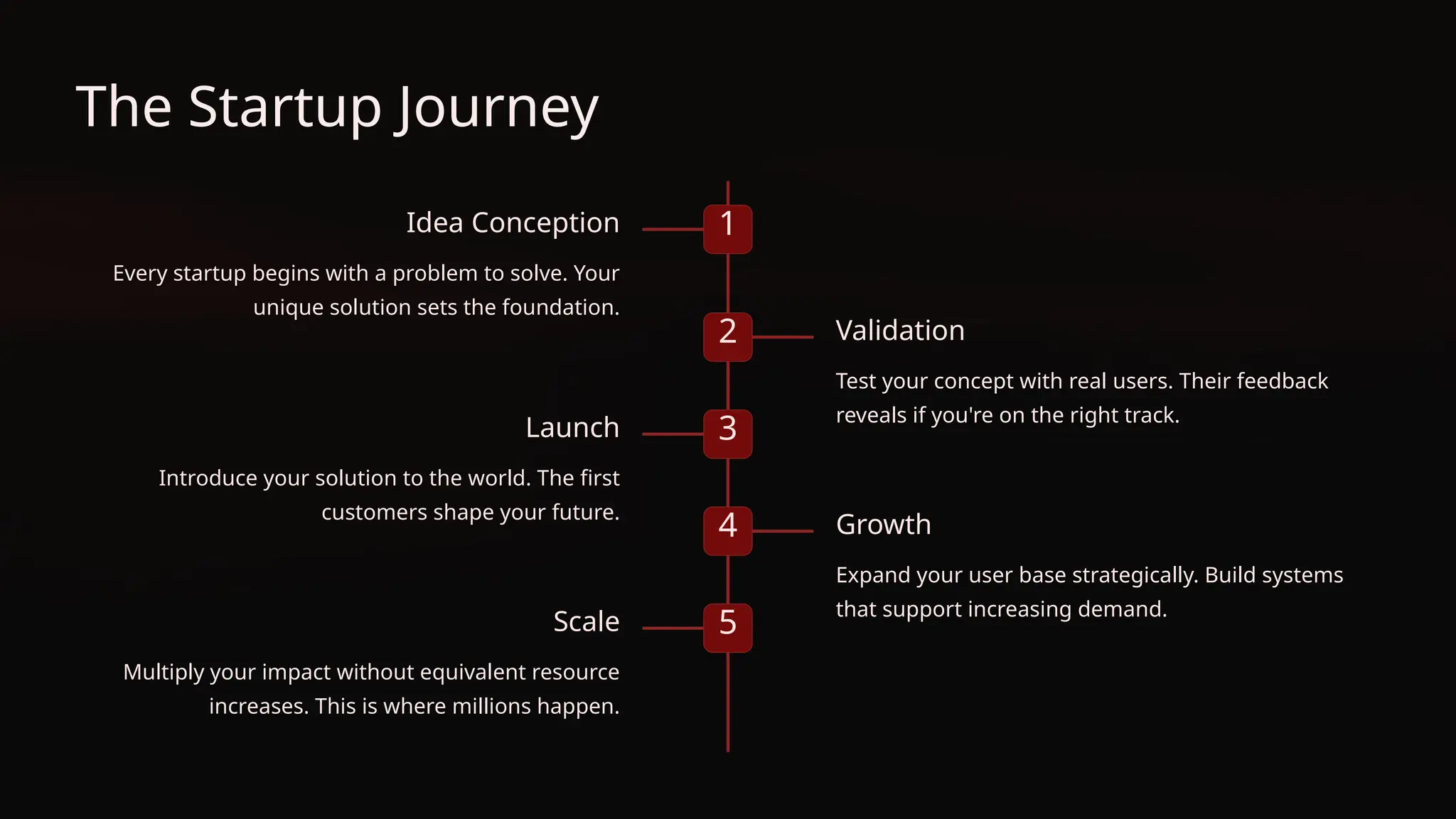
The Startup Journey
1
Idea Conception
Every startup begins with a problem to solve. Your
unique solution sets the foundation.
2 Validation
Test your concept with real users. Their feedback
reveals if you're on the right track.
3
Launch
Introduce your solution to the world. The first
customers shape your future.
4 Growth
Expand your user base strategically. Build systems
that support increasing demand.
5
Scale
Multiply your impact without equivalent resource
increases. This is where millions happen.
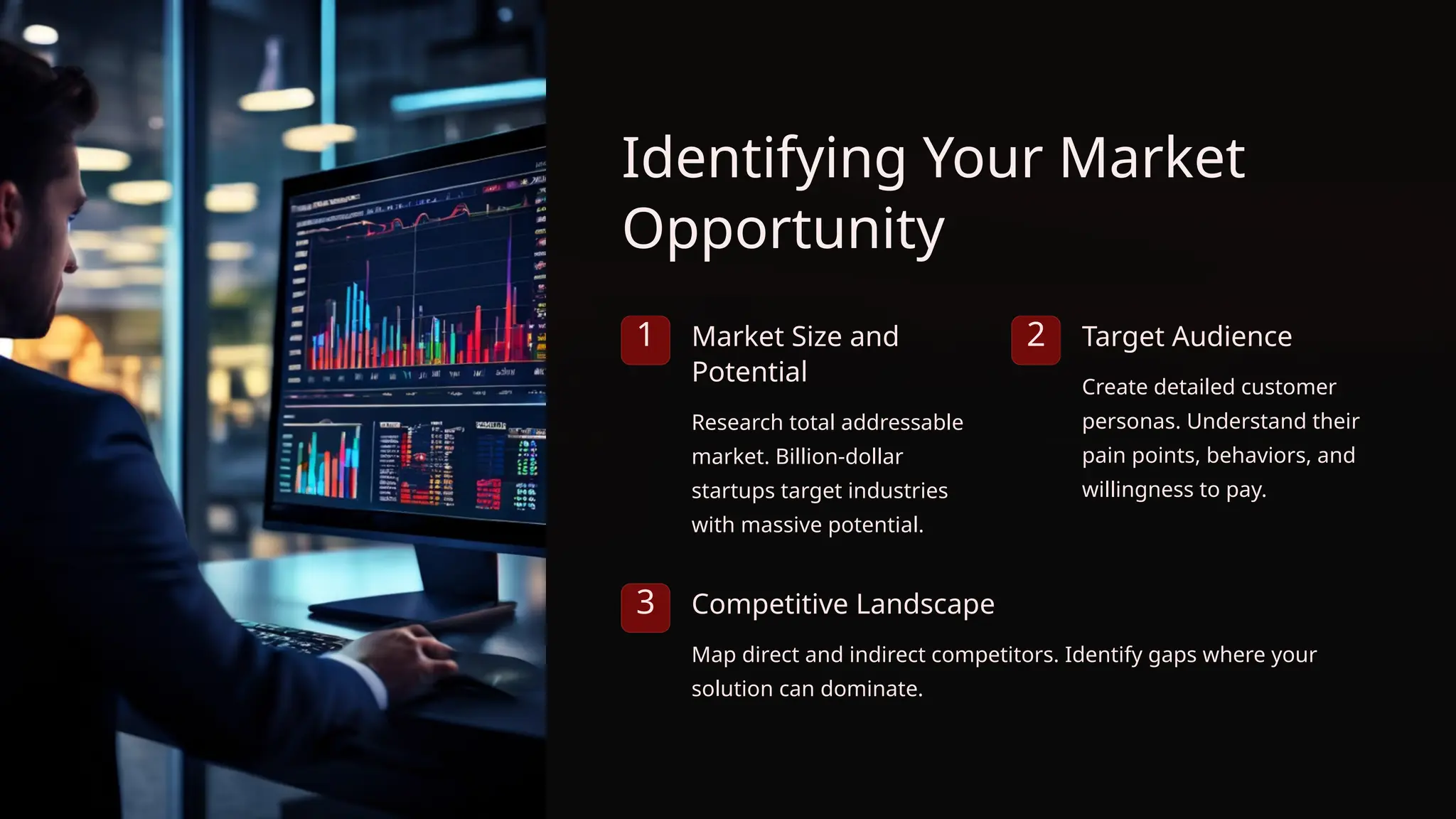
Identifying Your Market
Opportunity
1 Market Size and
Potential
Research total addressable
market. Billion-dollar
startups target industries
with massive potential.
2 Target Audience
Create detailed customer
personas. Understand their
pain points, behaviors, and
willingness to pay.
3 Competitive Landscape
Map direct and indirect competitors. Identify gaps where your
solution can dominate.
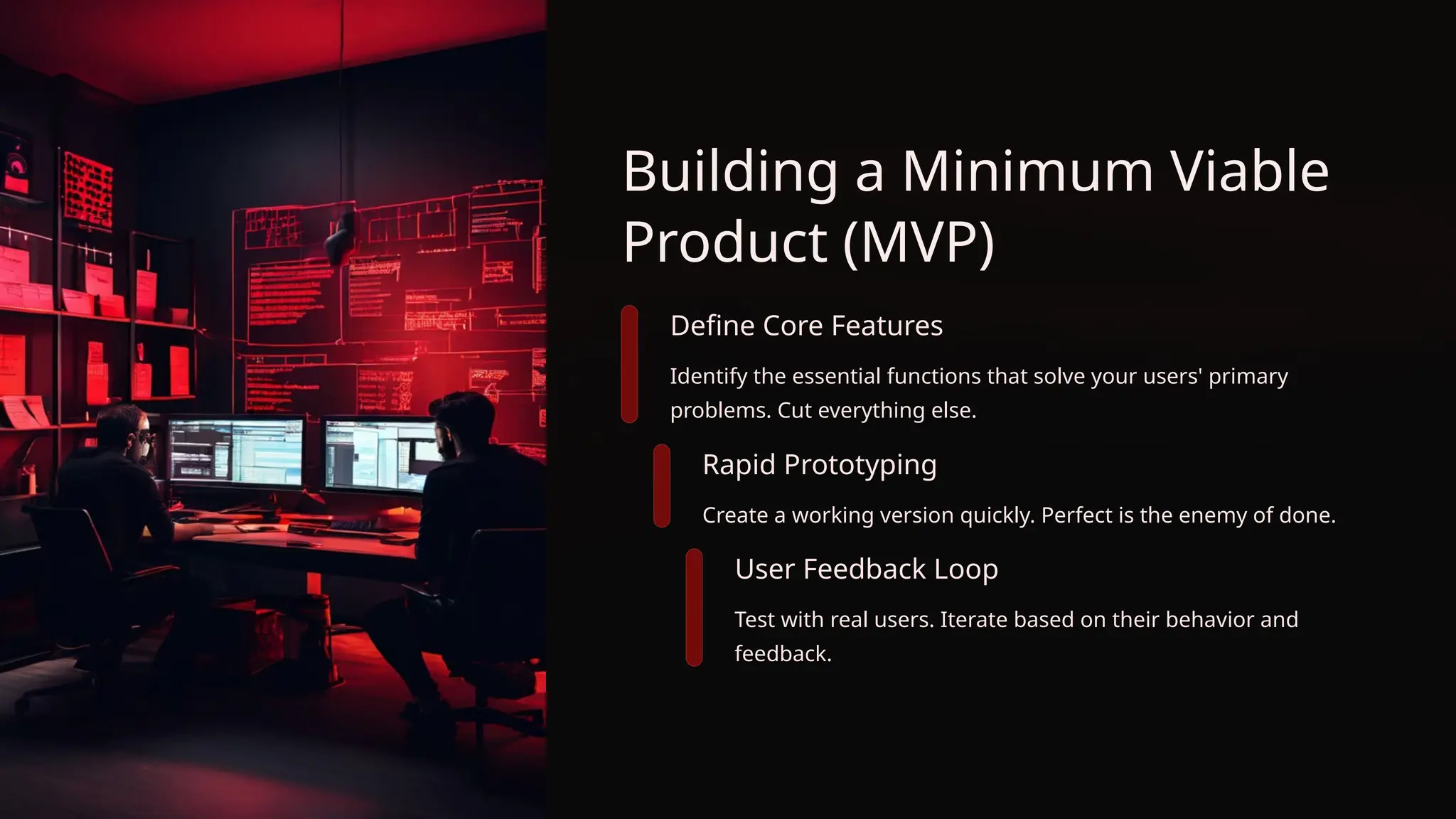
Building a Minimum Viable
Product (MVP)
Define Core Features
Identify the essential functions that solve your users' primary
problems. Cut everything else.
Rapid Prototyping
Create a working version quickly. Perfect is the enemy of done.
User Feedback Loop
Test with real users. Iterate based on their behavior and
feedback.
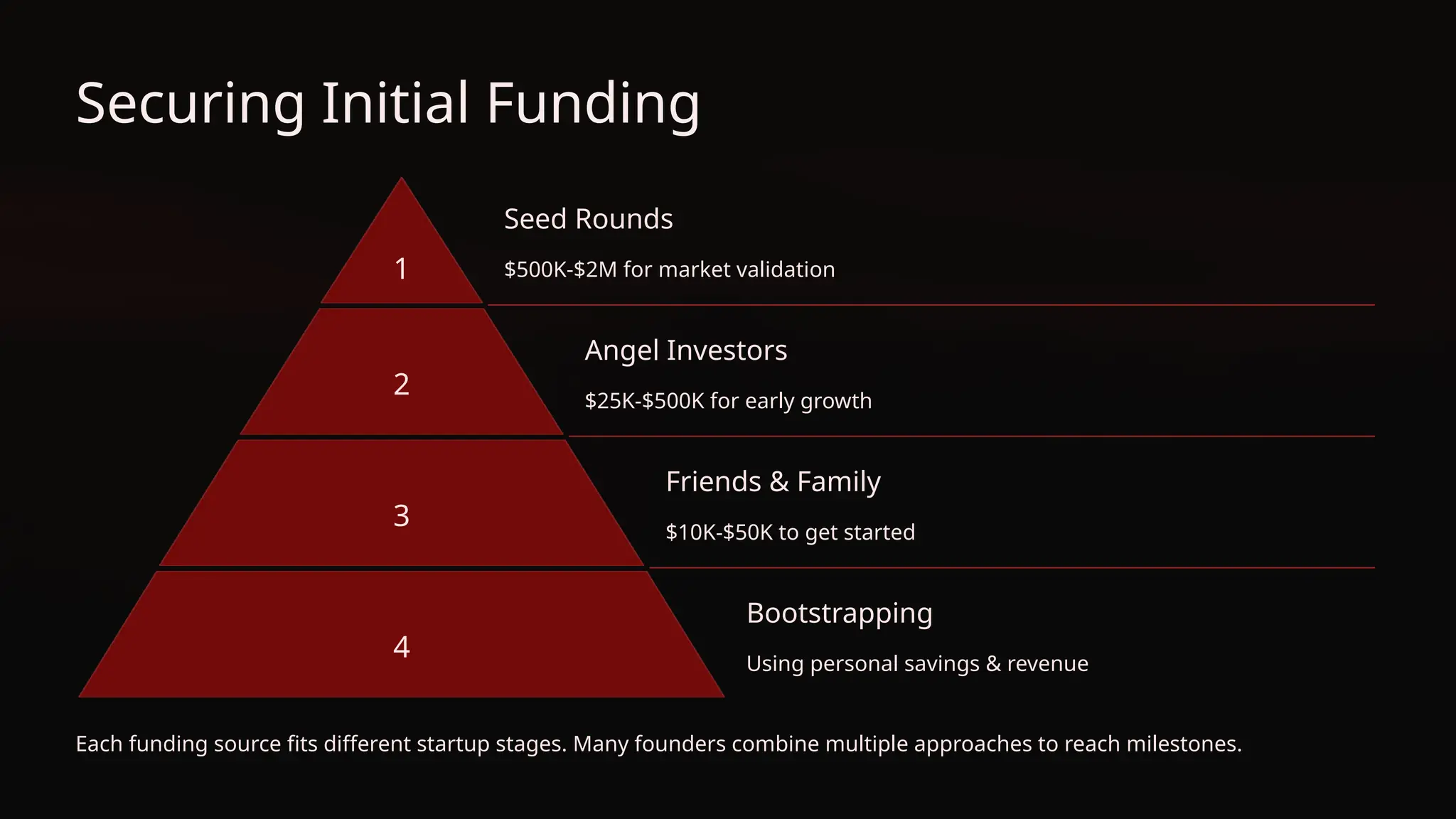
Securing Initial Funding
1
Seed Rounds
$500K-$2M for market validation
2
Angel Investors
$25K-$500K for early growth
3
Friends & Family
$10K-$50K to get started
4
Bootstrapping
Using personal savings & revenue
Each funding source fits different startup stages. Many founders combine multiple approaches to reach milestones.
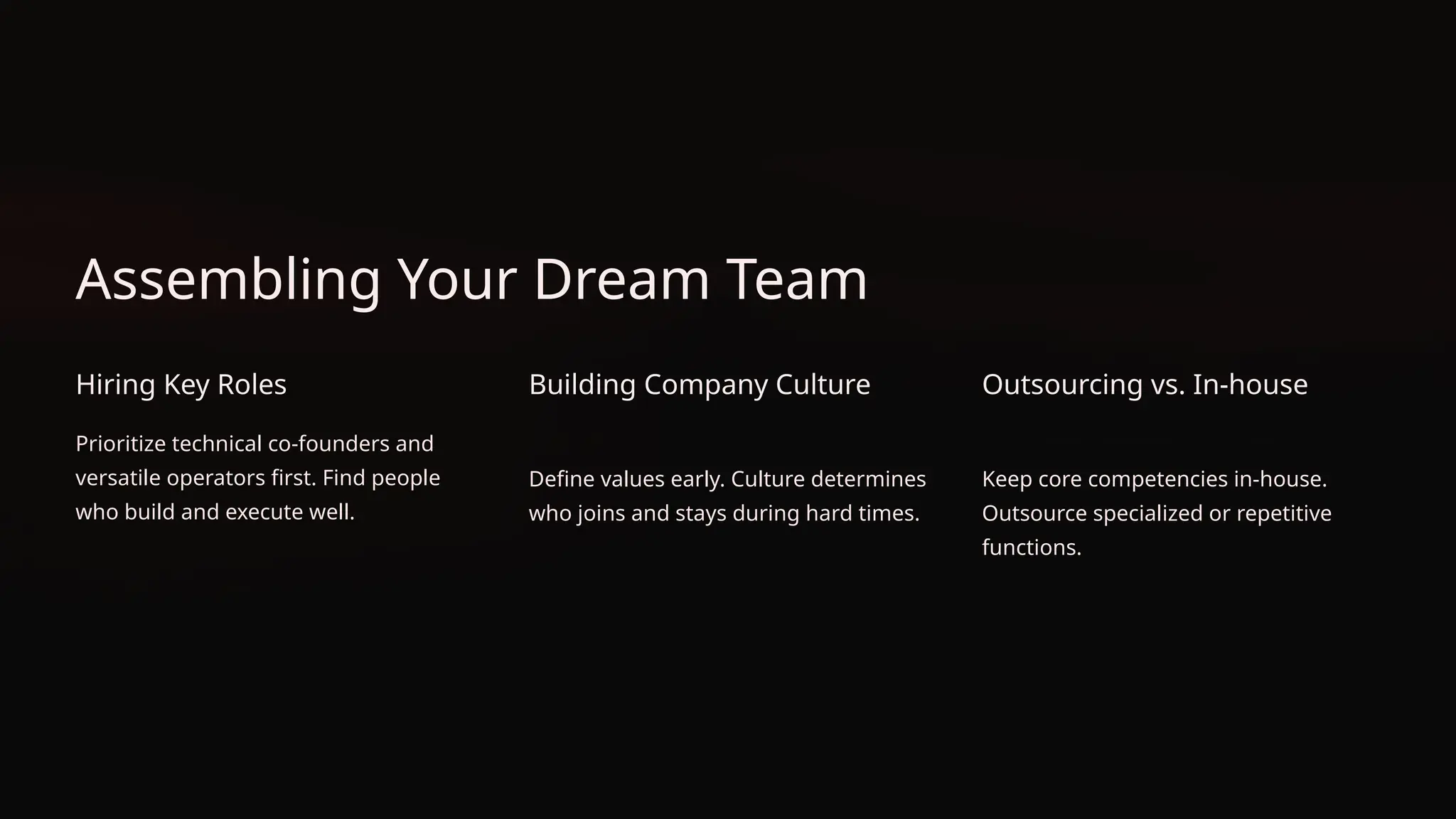
Assembling Your Dream Team
Hiring Key Roles
Prioritize technical co-founders and
versatile operators first. Find people
who build and execute well.
Building Company Culture
Define values early. Culture determines
who joins and stays during hard times.
Outsourcing vs. In-house
Keep core competencies in-house.
Outsource specialized or repetitive
functions.
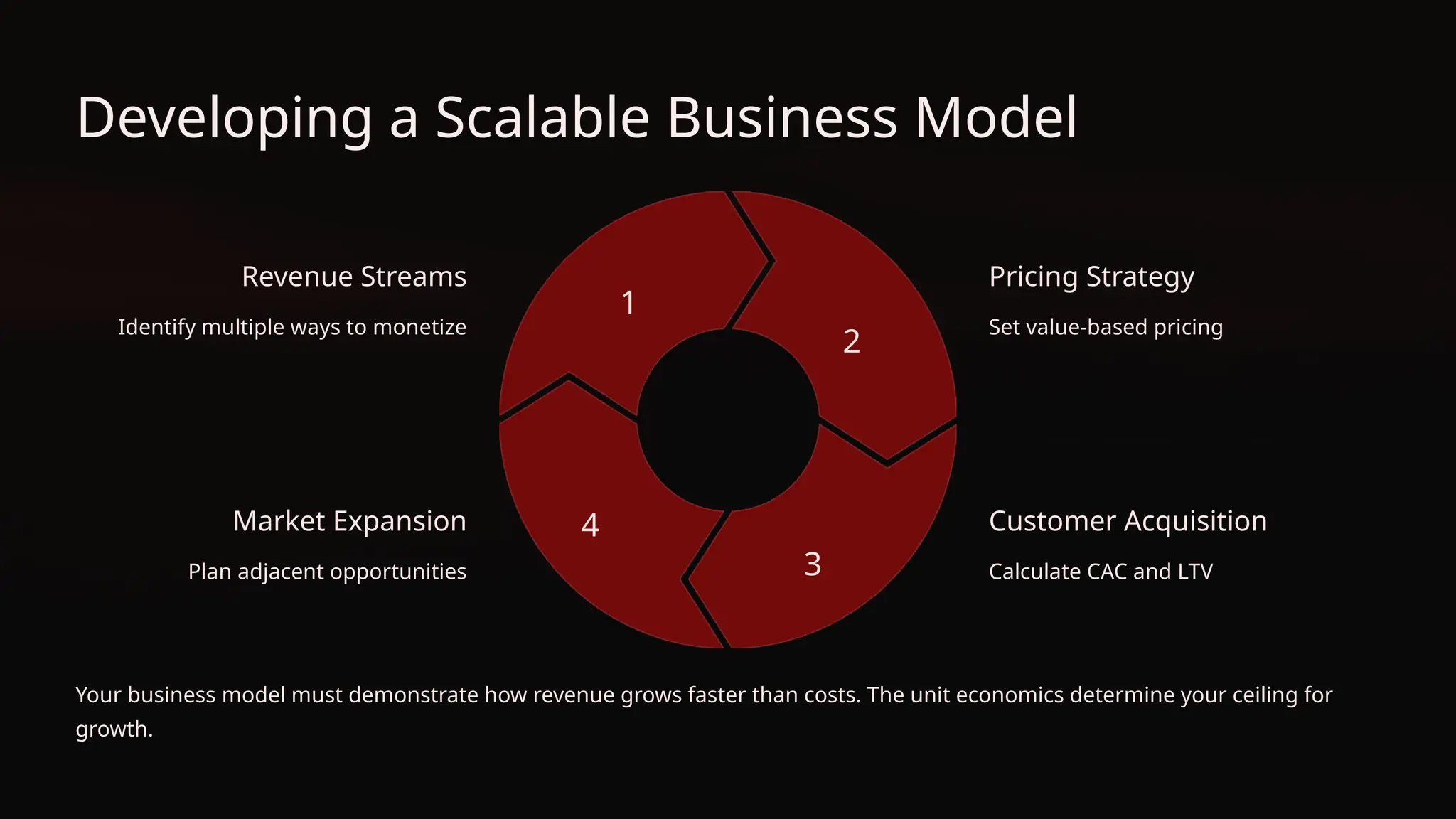
Developing a Scalable Business Model
Revenue Streams
Identify multiple ways to monetize
1
Pricing Strategy
Set value-based pricing
2
Customer Acquisition
Calculate CAC and LTV
3
Market Expansion
Plan adjacent opportunities
4
Your business model must demonstrate how revenue grows faster than costs. The unit economics determine your ceiling for
growth.
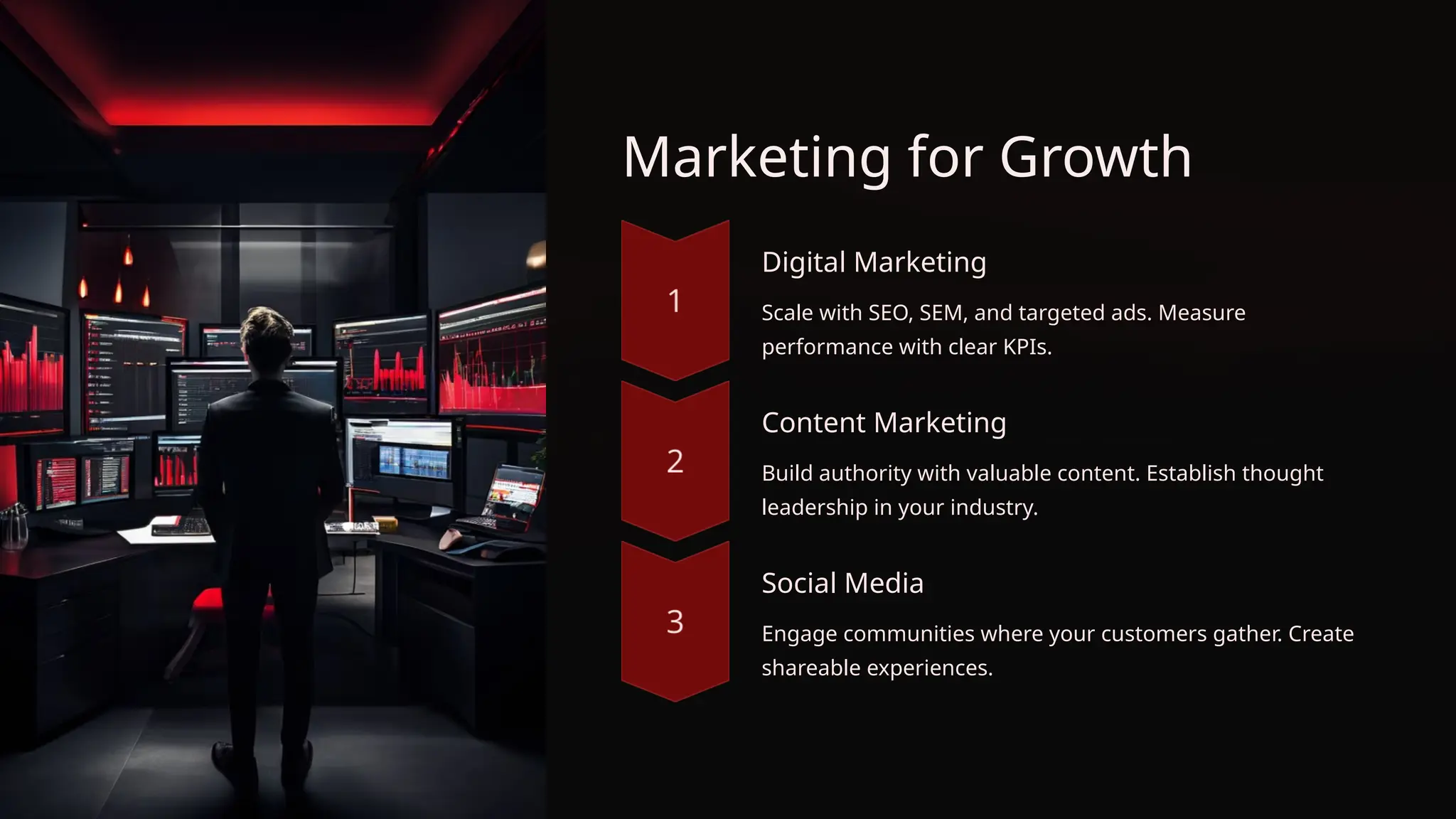
Marketing for Growth
Digital Marketing
Scale with SEO, SEM, and targeted ads. Measure
performance with clear KPIs.
Content Marketing
Build authority with valuable content. Establish thought
leadership in your industry.
Social Media
Engage communities where your customers gather. Create
shareable experiences.
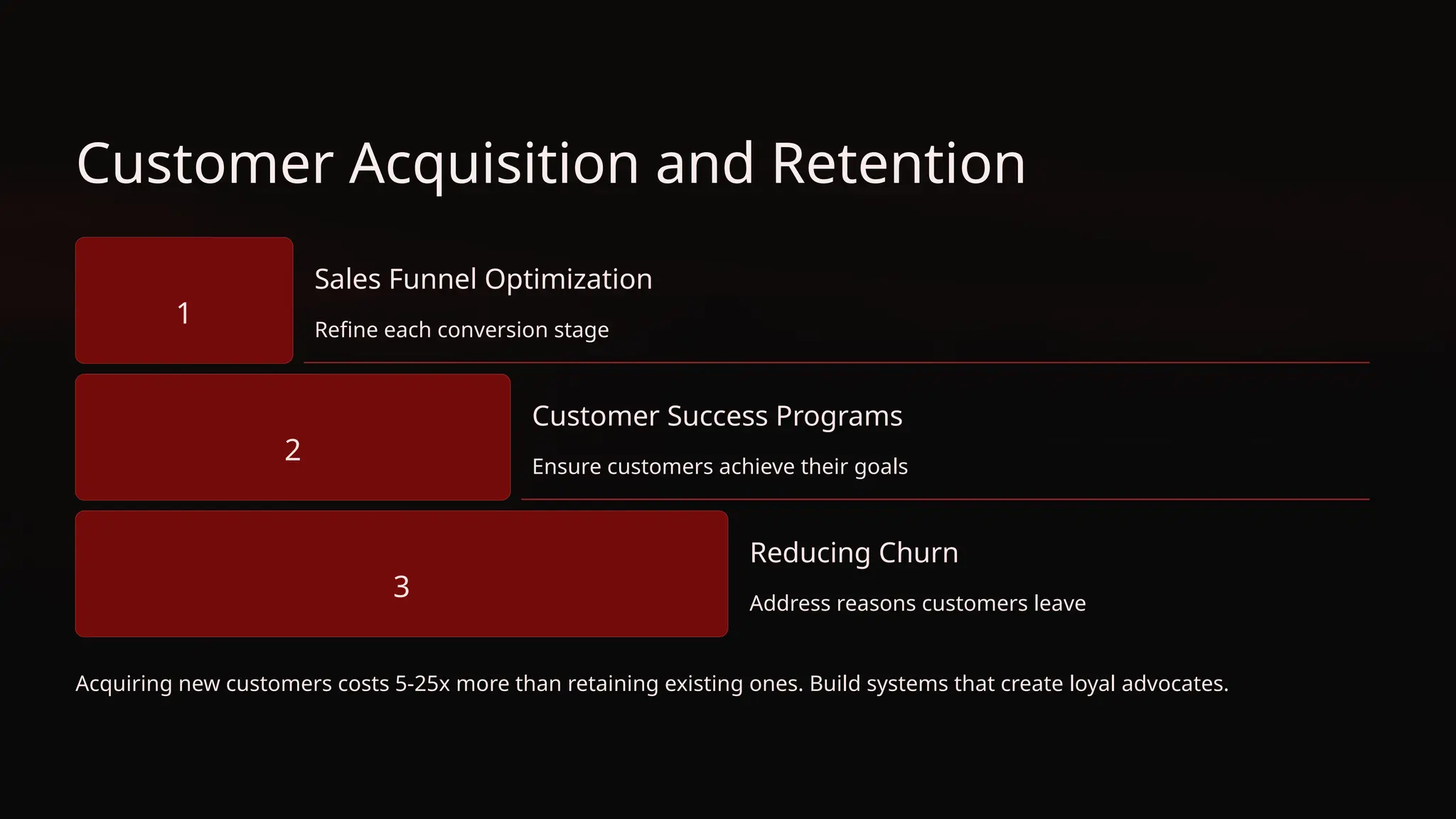
Customer Acquisition and Retention
1
Sales Funnel Optimization
Refine each conversion stage
2
Customer Success Programs
Ensure customers achieve their goals
3
Reducing Churn
Address reasons customers leave
Acquiring new customers costs 5-25x more than retaining existing ones. Build systems that create loyal advocates.
Leveraging Technology for Scale
Cloud Infrastructure
Deploy flexible resources that grow with
demand. Avoid over-investing in fixed
capacity.
Automation Tools
Eliminate repetitive tasks. Focus human
talent on high-value activities.
Data Analytics
Make decisions based on customer
behavior. Identify opportunities hidden
in your data.
Financial Management for
Growth
Cash Flow Management
Monitor runway constantly.
Know your burn rate and create
early warning systems for cash
crunches.
Fundraising Strategies
Raise money before you need
it. Target investors who
specialize in your stage and
industry.
Investor Relations
Send regular updates to investors. Build allies who will support you in
future rounds.
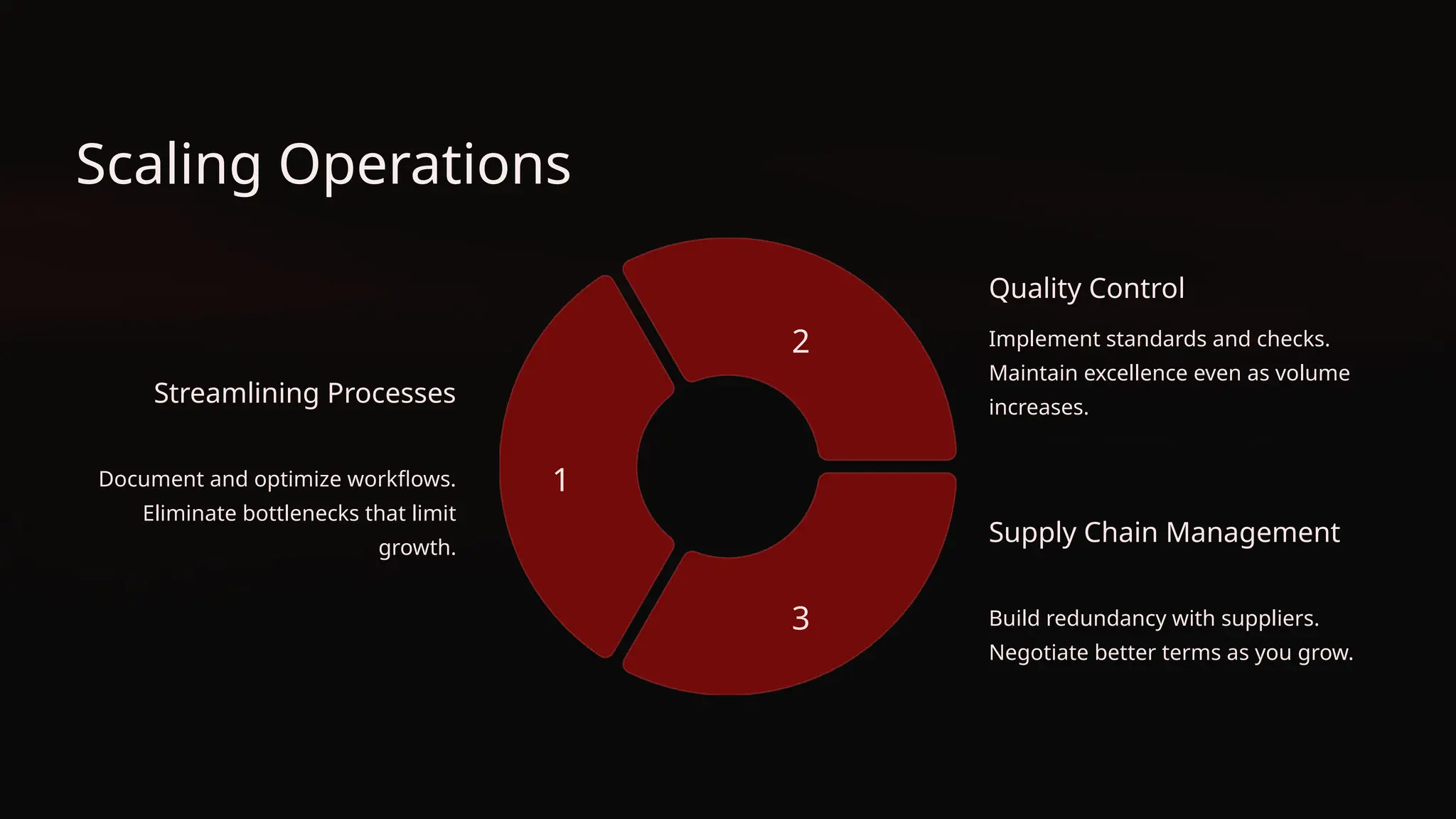
Scaling Operations
Streamlining Processes
Document and optimize workflows.
Eliminate bottlenecks that limit
growth.
1
Quality Control
Implement standards and checks.
Maintain excellence even as volume
increases.
2
Supply Chain Management
Build redundancy with suppliers.
Negotiate better terms as you grow.
3
Expanding Your Product Line
Expand thoughtfully based on customer needs. Research thoroughly, invest strategically in R&D, and maintain a clear product
roadmap.
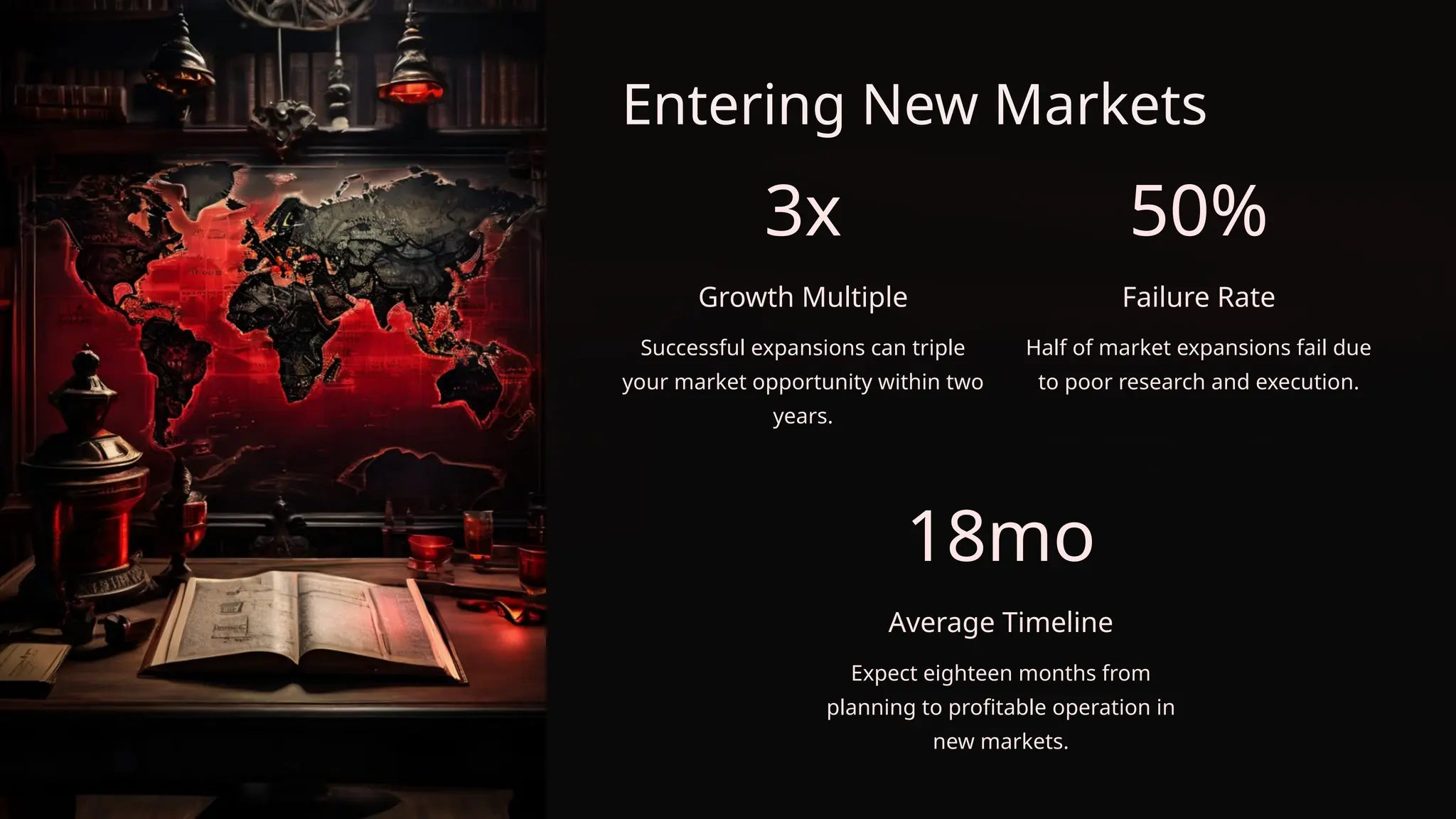
Entering New Markets
3x
Growth Multiple
Successful expansions can triple
your market opportunity within two
years.
50%
Failure Rate
Half of market expansions fail due
to poor research and execution.
18mo
Average Timeline
Expect eighteen months from
planning to profitable operation in
new markets.
Building a Strong Brand
1 Brand Identity
Create distinctive visual elements and messaging. Stand out
in a crowded market.
2 Thought Leadership
Share valuable insights publicly. Establish authority in your
industry.
3 PR and Media Relations
Build connections with journalists. Generate positive
coverage to build credibility.
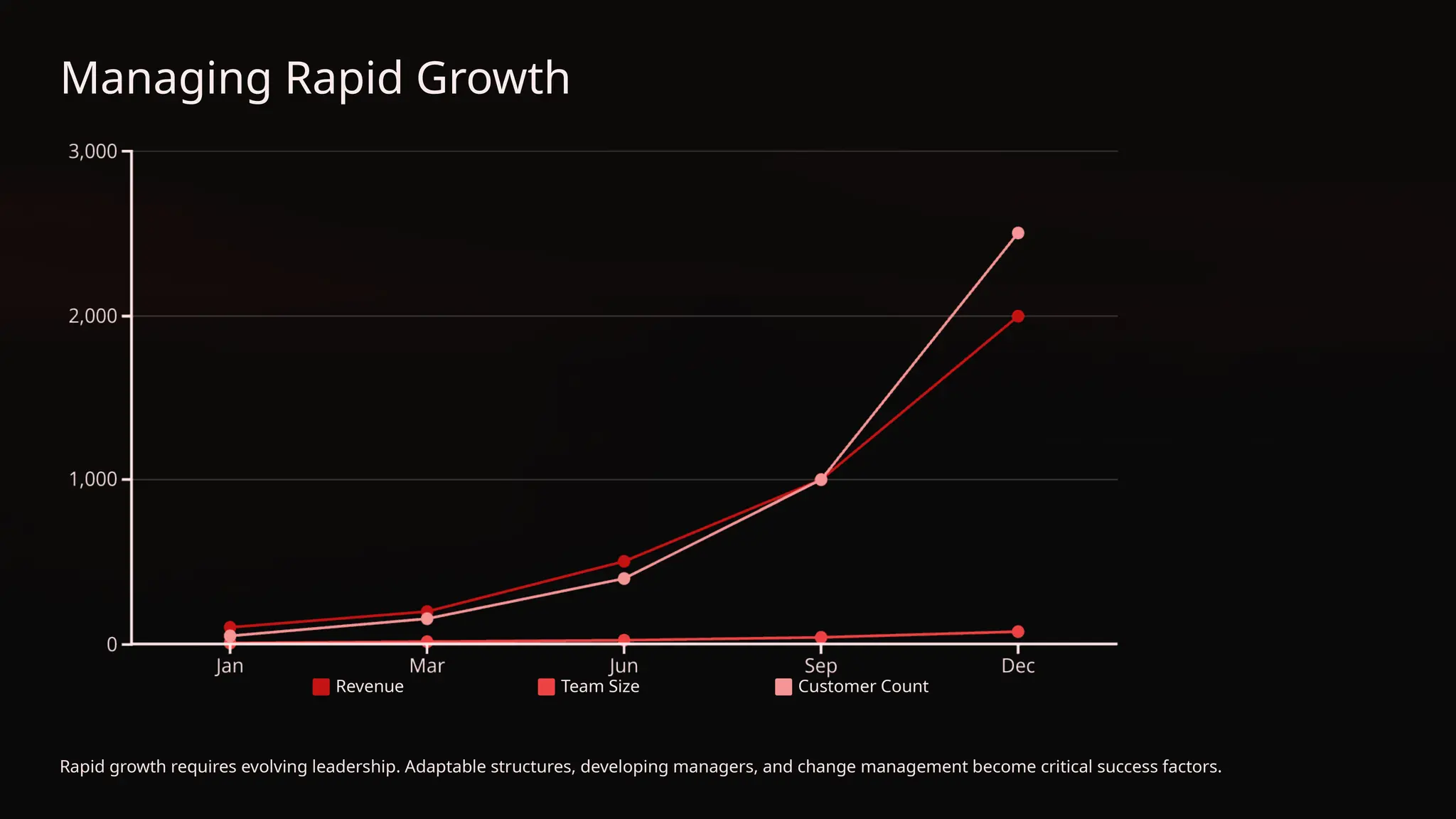
Managing Rapid Growth
Revenue Team Size Customer Count
Rapid growth requires evolving leadership. Adaptable structures, developing managers, and change management become critical success factors.
Overcoming Scaling Challenges
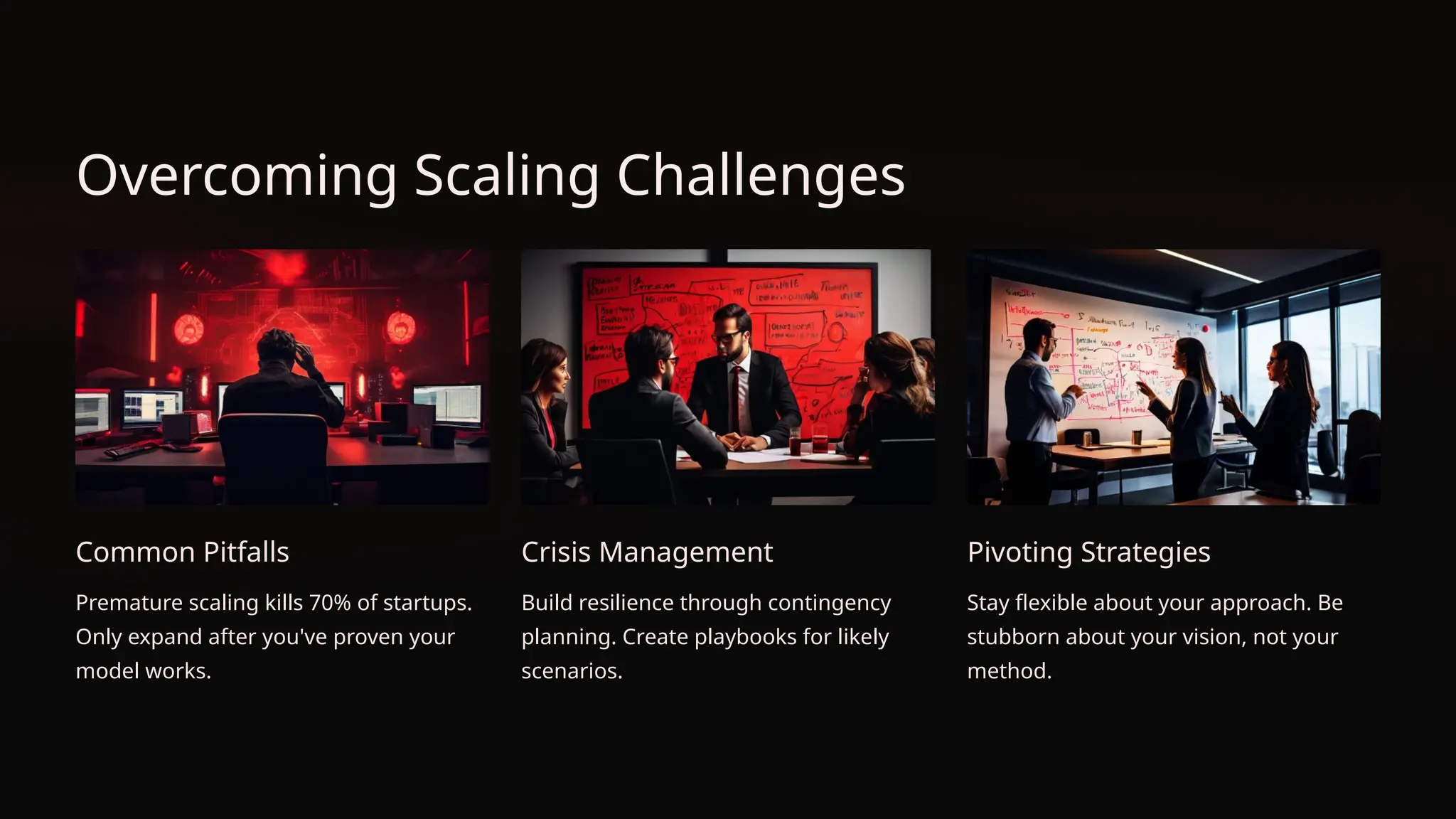
Common Pitfalls
Premature scaling kills 70% of startups.
Only expand after you've proven your
model works.
Crisis Management
Build resilience through contingency
planning. Create playbooks for likely
scenarios.
Pivoting Strategies
Stay flexible about your approach. Be
stubborn about your vision, not your
method.
Metrics for Success
Monthly Recurring Revenue Target growth of 15-20% monthly
Customer Acquisition Cost Should be 1/3 of customer
lifetime value
Net Promoter Score Aim for 40+ to indicate strong
loyalty
Burn Rate Maintain 12+ months of runway
Revenue Per Employee $200K+ indicates operational
efficiency
Valuation Multiple 5-10x annual revenue for SaaS
Case Studies: Successful Startup Scaling Stories
Airbnb
Started with air mattresses in the
founders' apartment. Solved inventory
problem by activating existing spaces.
Now worth $75+ billion.
Shopify
Began as a snowboard shop. Their own
e-commerce solution became the
product. Now powers 1M+ businesses
globally.
Slack
Pivoted from failed gaming company.
Internal communication tool became
their billion-dollar product. Sold for
$27.7B.
Project Management: The Key
to Successful Scaling
1 Documentation Is Your
Foundation
Proper documentation prevents
chaos during growth. Capture
processes before they scale.
2 Project Management
Tools Save Time
The right systems cut onboarding
time by 60%. They create
consistency as you grow.
3 Templates Accelerate Your Growth
Don't reinvent processes for each project. Start with proven frameworks that
work.
Ready to scale faster? Get our high-converting Project Management Documents
here!

Scaling-a-Startup-From-Idea-to-Million-Dollar-Business

  • 1.
    Scaling a Startup:From Idea to Million-Dollar Business Transform your startup vision into a million-dollar reality. This guide walks you through every critical stage of building a scalable business that thrives. by Ozías Rondón
  • 2.
    The Startup Journey 1 IdeaConception Every startup begins with a problem to solve. Your unique solution sets the foundation. 2 Validation Test your concept with real users. Their feedback reveals if you're on the right track. 3 Launch Introduce your solution to the world. The first customers shape your future. 4 Growth Expand your user base strategically. Build systems that support increasing demand. 5 Scale Multiply your impact without equivalent resource increases. This is where millions happen.
  • 3.
    Identifying Your Market Opportunity 1Market Size and Potential Research total addressable market. Billion-dollar startups target industries with massive potential. 2 Target Audience Create detailed customer personas. Understand their pain points, behaviors, and willingness to pay. 3 Competitive Landscape Map direct and indirect competitors. Identify gaps where your solution can dominate.
  • 4.
    Building a MinimumViable Product (MVP) Define Core Features Identify the essential functions that solve your users' primary problems. Cut everything else. Rapid Prototyping Create a working version quickly. Perfect is the enemy of done. User Feedback Loop Test with real users. Iterate based on their behavior and feedback.
  • 5.
    Securing Initial Funding 1 SeedRounds $500K-$2M for market validation 2 Angel Investors $25K-$500K for early growth 3 Friends & Family $10K-$50K to get started 4 Bootstrapping Using personal savings & revenue Each funding source fits different startup stages. Many founders combine multiple approaches to reach milestones.
  • 6.
    Assembling Your DreamTeam Hiring Key Roles Prioritize technical co-founders and versatile operators first. Find people who build and execute well. Building Company Culture Define values early. Culture determines who joins and stays during hard times. Outsourcing vs. In-house Keep core competencies in-house. Outsource specialized or repetitive functions.
  • 7.
    Developing a ScalableBusiness Model Revenue Streams Identify multiple ways to monetize 1 Pricing Strategy Set value-based pricing 2 Customer Acquisition Calculate CAC and LTV 3 Market Expansion Plan adjacent opportunities 4 Your business model must demonstrate how revenue grows faster than costs. The unit economics determine your ceiling for growth.
  • 8.
    Marketing for Growth DigitalMarketing Scale with SEO, SEM, and targeted ads. Measure performance with clear KPIs. Content Marketing Build authority with valuable content. Establish thought leadership in your industry. Social Media Engage communities where your customers gather. Create shareable experiences.
  • 9.
    Customer Acquisition andRetention 1 Sales Funnel Optimization Refine each conversion stage 2 Customer Success Programs Ensure customers achieve their goals 3 Reducing Churn Address reasons customers leave Acquiring new customers costs 5-25x more than retaining existing ones. Build systems that create loyal advocates.
  • 10.
    Leveraging Technology forScale Cloud Infrastructure Deploy flexible resources that grow with demand. Avoid over-investing in fixed capacity. Automation Tools Eliminate repetitive tasks. Focus human talent on high-value activities. Data Analytics Make decisions based on customer behavior. Identify opportunities hidden in your data.
  • 11.
    Financial Management for Growth CashFlow Management Monitor runway constantly. Know your burn rate and create early warning systems for cash crunches. Fundraising Strategies Raise money before you need it. Target investors who specialize in your stage and industry. Investor Relations Send regular updates to investors. Build allies who will support you in future rounds.
  • 12.
    Scaling Operations Streamlining Processes Documentand optimize workflows. Eliminate bottlenecks that limit growth. 1 Quality Control Implement standards and checks. Maintain excellence even as volume increases. 2 Supply Chain Management Build redundancy with suppliers. Negotiate better terms as you grow. 3
  • 13.
    Expanding Your ProductLine Expand thoughtfully based on customer needs. Research thoroughly, invest strategically in R&D, and maintain a clear product roadmap.
  • 14.
    Entering New Markets 3x GrowthMultiple Successful expansions can triple your market opportunity within two years. 50% Failure Rate Half of market expansions fail due to poor research and execution. 18mo Average Timeline Expect eighteen months from planning to profitable operation in new markets.
  • 15.
    Building a StrongBrand 1 Brand Identity Create distinctive visual elements and messaging. Stand out in a crowded market. 2 Thought Leadership Share valuable insights publicly. Establish authority in your industry. 3 PR and Media Relations Build connections with journalists. Generate positive coverage to build credibility.
  • 16.
    Managing Rapid Growth RevenueTeam Size Customer Count Rapid growth requires evolving leadership. Adaptable structures, developing managers, and change management become critical success factors.
  • 17.
    Overcoming Scaling Challenges CommonPitfalls Premature scaling kills 70% of startups. Only expand after you've proven your model works. Crisis Management Build resilience through contingency planning. Create playbooks for likely scenarios. Pivoting Strategies Stay flexible about your approach. Be stubborn about your vision, not your method.
  • 18.
    Metrics for Success MonthlyRecurring Revenue Target growth of 15-20% monthly Customer Acquisition Cost Should be 1/3 of customer lifetime value Net Promoter Score Aim for 40+ to indicate strong loyalty Burn Rate Maintain 12+ months of runway Revenue Per Employee $200K+ indicates operational efficiency Valuation Multiple 5-10x annual revenue for SaaS
  • 19.
    Case Studies: SuccessfulStartup Scaling Stories Airbnb Started with air mattresses in the founders' apartment. Solved inventory problem by activating existing spaces. Now worth $75+ billion. Shopify Began as a snowboard shop. Their own e-commerce solution became the product. Now powers 1M+ businesses globally. Slack Pivoted from failed gaming company. Internal communication tool became their billion-dollar product. Sold for $27.7B.
  • 20.
    Project Management: TheKey to Successful Scaling 1 Documentation Is Your Foundation Proper documentation prevents chaos during growth. Capture processes before they scale. 2 Project Management Tools Save Time The right systems cut onboarding time by 60%. They create consistency as you grow. 3 Templates Accelerate Your Growth Don't reinvent processes for each project. Start with proven frameworks that work. Ready to scale faster? Get our high-converting Project Management Documents here!