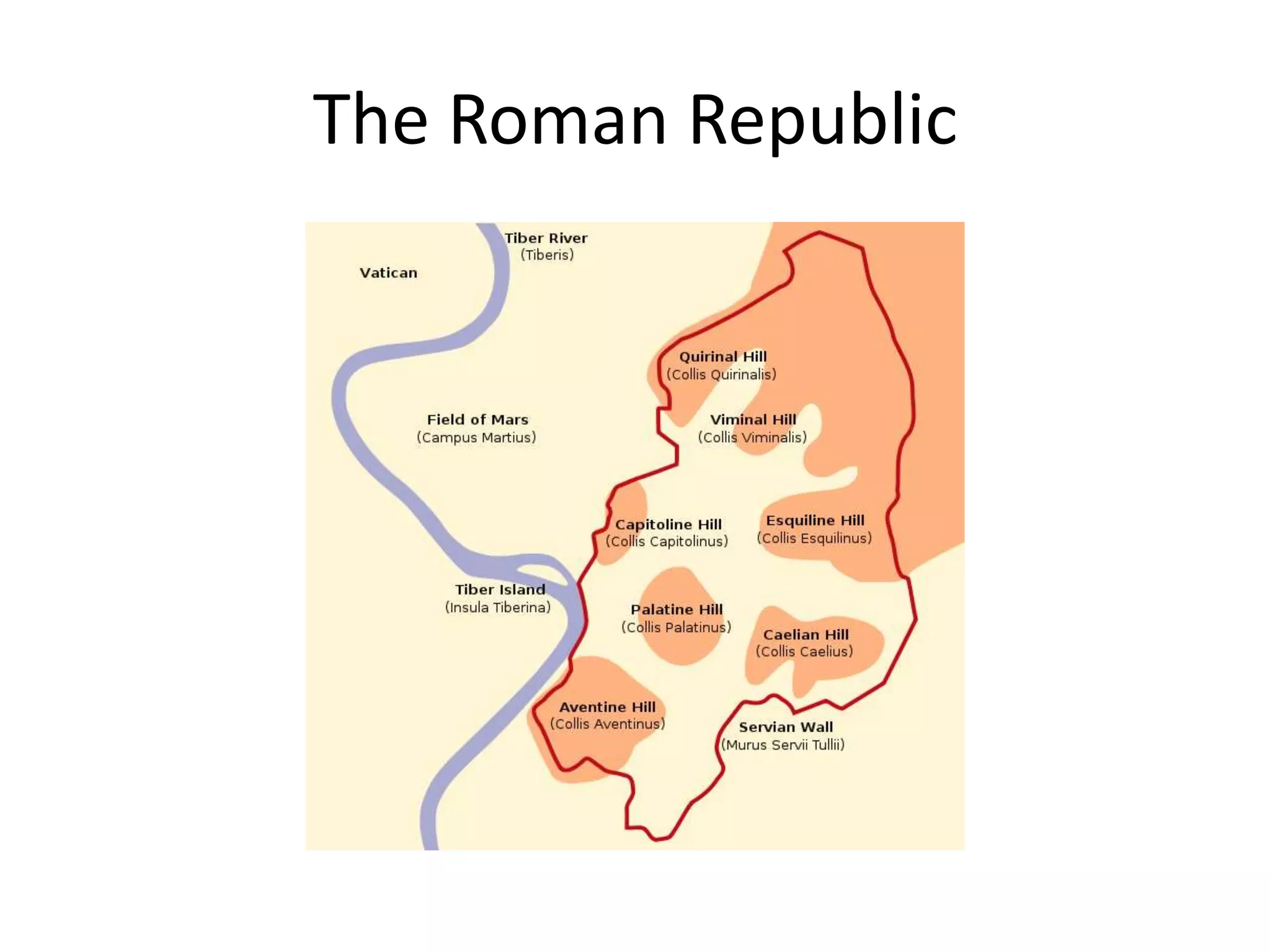
The Roman Republic
The Origins of Rome
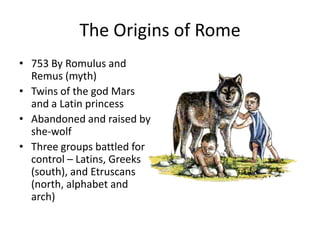
• 753 By Romulus and
Remus (myth)
• Twins of the god Mars
and a Latin princess
• Abandoned and raised by
she-wolf
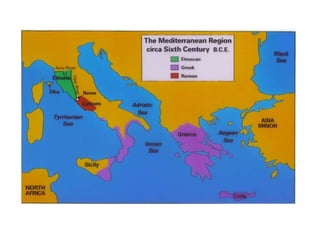
• Three groups battled for
control – Latins, Greeks
(south), and Etruscans
(north, alphabet and
arch)
The Early Republic
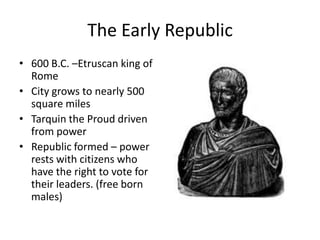
• 600 B.C. –Etruscan king of
Rome
• City grows to nearly 500
square miles
• Tarquin the Proud driven
from power
• Republic formed – power
rests with citizens who
have the right to vote for
their leaders. (free born
males)
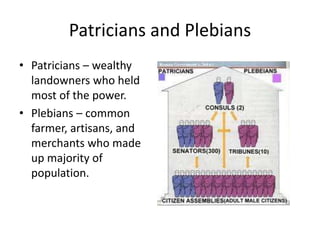
Patricians and Plebians
• Patricians – wealthy
landowners who held
most of the power.
• Plebians – common
farmer, artisans, and
merchants who made
up majority of
population.
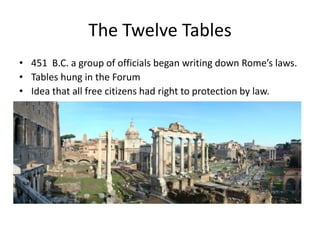
The Twelve Tables
• 451 B.C. a group of officials began writing down Rome’s laws.
• Tables hung in the Forum
• Idea that all free citizens had right to protection by law.
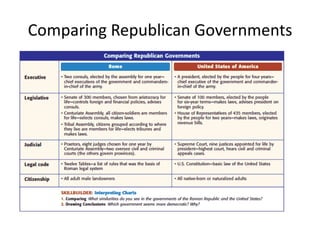
Comparing Republican Governments
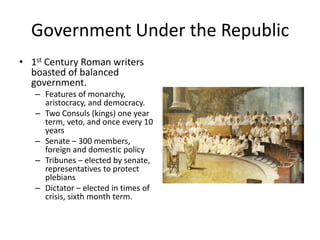
Government Under the Republic
• 1st Century Roman writers
boasted of balanced
government.
– Features of monarchy,
aristocracy, and democracy.
– Two Consuls (kings) one year
term, veto, and once every 10
years
– Senate – 300 members,
foreign and domestic policy
– Tribunes – elected by senate,
representatives to protect
plebians
– Dictator – elected in times of
crisis, sixth month term.
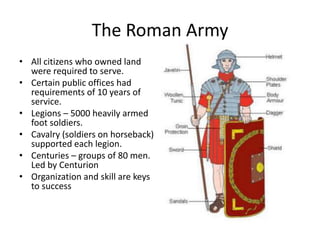
The Roman Army
• All citizens who owned land
were required to serve.
• Certain public offices had
requirements of 10 years of
service.
• Legions – 5000 heavily armed
foot soldiers.
• Cavalry (soldiers on horseback)
supported each legion.
• Centuries – groups of 80 men.
Led by Centurion
• Organization and skill are keys
to success
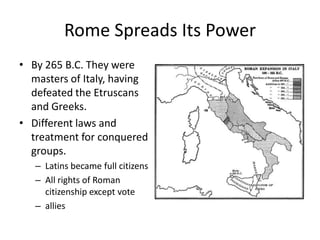
Rome Spreads Its Power
• By 265 B.C. They were
masters of Italy, having
defeated the Etruscans
and Greeks.
• Different laws and
treatment for conquered
groups.
– Latins became full citizens
– All rights of Roman
citizenship except vote
– allies
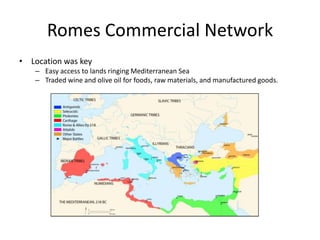
Romes Commercial Network
• Location was key
– Easy access to lands ringing Mediterranean Sea
– Traded wine and olive oil for foods, raw materials, and manufactured goods.
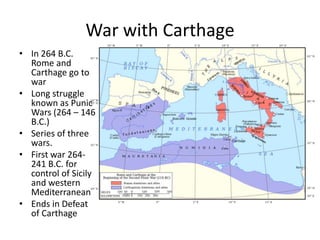
War with Carthage
• In 264 B.C.
Rome and
Carthage go to
war
• Long struggle
known as Punic
Wars (264 – 146
B.C.)
• Series of three
wars.
• First war 264241 B.C. for
control of Sicily
and western
Mediterranean
• Ends in Defeat
of Carthage
Second Punic War
•
•

•

•
•

•
•

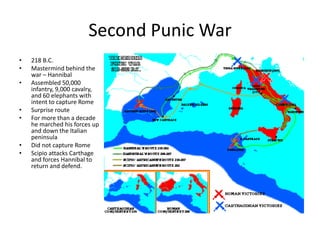
218 B.C.
Mastermind behind the
war – Hannibal
Assembled 50,000
infantry, 9,000 cavalry,
and 60 elephants with
intent to capture Rome
Surprise route
For more than a decade
he marched his forces up
and down the Italian
peninsula
Did not capture Rome
Scipio attacks Carthage
and forces Hannibal to
return and defend.
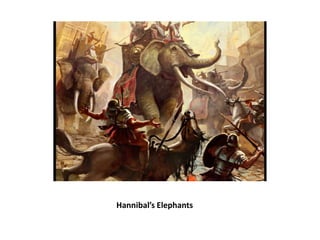
Hannibal’s Elephants
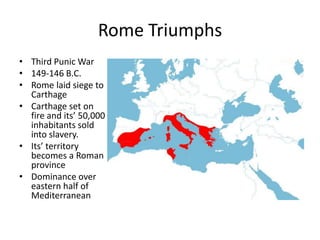
Rome Triumphs
• Third Punic War
• 149-146 B.C.
• Rome laid siege to
Carthage
• Carthage set on
fire and its’ 50,000
inhabitants sold
into slavery.
• Its’ territory
becomes a Roman
province
• Dominance over
eastern half of
Mediterranean
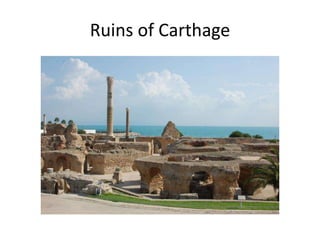
Ruins of Carthage

The roman republic

  • 1.
  • 2.
    The Origins ofRome • 753 By Romulus and Remus (myth) • Twins of the god Mars and a Latin princess • Abandoned and raised by she-wolf • Three groups battled for control – Latins, Greeks (south), and Etruscans (north, alphabet and arch)
  • 4.
    The Early Republic •600 B.C. –Etruscan king of Rome • City grows to nearly 500 square miles • Tarquin the Proud driven from power • Republic formed – power rests with citizens who have the right to vote for their leaders. (free born males)
  • 5.
    Patricians and Plebians •Patricians – wealthy landowners who held most of the power. • Plebians – common farmer, artisans, and merchants who made up majority of population.
  • 6.
    The Twelve Tables •451 B.C. a group of officials began writing down Rome’s laws. • Tables hung in the Forum • Idea that all free citizens had right to protection by law.
  • 7.
  • 8.
    Government Under theRepublic • 1st Century Roman writers boasted of balanced government. – Features of monarchy, aristocracy, and democracy. – Two Consuls (kings) one year term, veto, and once every 10 years – Senate – 300 members, foreign and domestic policy – Tribunes – elected by senate, representatives to protect plebians – Dictator – elected in times of crisis, sixth month term.
  • 9.
    The Roman Army •All citizens who owned land were required to serve. • Certain public offices had requirements of 10 years of service. • Legions – 5000 heavily armed foot soldiers. • Cavalry (soldiers on horseback) supported each legion. • Centuries – groups of 80 men. Led by Centurion • Organization and skill are keys to success
  • 10.
    Rome Spreads ItsPower • By 265 B.C. They were masters of Italy, having defeated the Etruscans and Greeks. • Different laws and treatment for conquered groups. – Latins became full citizens – All rights of Roman citizenship except vote – allies
  • 11.
    Romes Commercial Network •Location was key – Easy access to lands ringing Mediterranean Sea – Traded wine and olive oil for foods, raw materials, and manufactured goods.
  • 12.
    War with Carthage •In 264 B.C. Rome and Carthage go to war • Long struggle known as Punic Wars (264 – 146 B.C.) • Series of three wars. • First war 264241 B.C. for control of Sicily and western Mediterranean • Ends in Defeat of Carthage
  • 13.
    Second Punic War • • • • • • • 218B.C. Mastermind behind the war – Hannibal Assembled 50,000 infantry, 9,000 cavalry, and 60 elephants with intent to capture Rome Surprise route For more than a decade he marched his forces up and down the Italian peninsula Did not capture Rome Scipio attacks Carthage and forces Hannibal to return and defend.
  • 14.
  • 15.
    Rome Triumphs • ThirdPunic War • 149-146 B.C. • Rome laid siege to Carthage • Carthage set on fire and its’ 50,000 inhabitants sold into slavery. • Its’ territory becomes a Roman province • Dominance over eastern half of Mediterranean
  • 16.