The revolution will be webalised. The bottom-up approach to the internet, and what organisations can learn from that. Sander Spek
Outline The participatory internet The Web 2.0 Folksonomies Blogs Wikis Ownership The Web 2.0 within the organisation Take-home messages
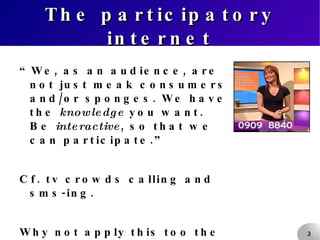
The participatory internet “ We, as an audience, are not just meak consumers and/or sponges. We have the  knowledge  you want. Be  interactive , so that we can participate.”  Cf. tv crowds calling and sms-ing. Why not apply this too the internet too?
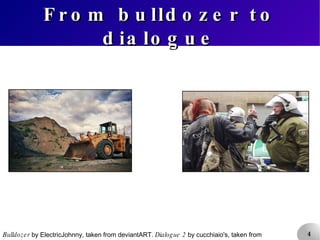
From bulldozer to dialogue Bulldozer  by ElectricJohnny, taken from deviantART.  Dialogue 2  by cucchiaio's, taken from Flickr.
What do we offer? (Money.) Opinions. Tags. Pictures. Art. Stories. Funny remarks. Knowledge. Videos. A demograhical data point. Music. Real-life events.
Why do we offer? Community feeling (humans are social creatures). Status. Charity. Grace. Ethical considerations ('voor wat hoort wat'). ...
The new generation The Web 2.0:  “a supposed second-generation of Internet-based  services  — such as social networking sites, wikis, communication tools, and folksonomies —  that let people  collaborate and share information online in previously unavailable ways. O'Reilly Media, in collaboration with MediaLive International, used the phrase as a title for a series of conferences and since then it has become a popular (though ill-defined and often criticized)  buzzword  amongst certain technical and marketing communities.” (Wikipedia.)
So what was the first generation? The old internet companies that saw us merely as meak consumers of information and products, the dot-coms. That bubble bursted.
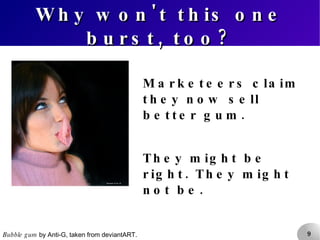
Why won't this one burst, too? Marketeers claim they now sell better gum. They might be right. They might not be. Bubble gum  by Anti-G, taken from deviantART.
The revolution comes in many faces. Folksonomies.   del.icio.us. Flickr. Last.fm. Weblogs.   LiveJournal. MySpace. Web-log.nl.  Media sharing.  MySpace. deviantART. Flickr. YouTube. Wikis.  Wikipedia. Wikicities. WikiMaas. Last.fm. Social networking.  MySpace. Orkut. Hyves. LinkedIn.
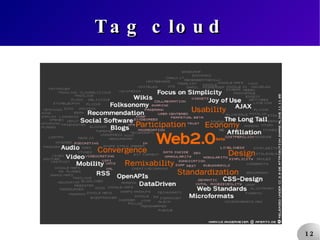
Folksonomy A taxonomy created by the people. People like to tag. From web sites (del.icio.us) to music (last.fm). Combined with other functions, e.g. photo sharing (Flickr).
Tag cloud
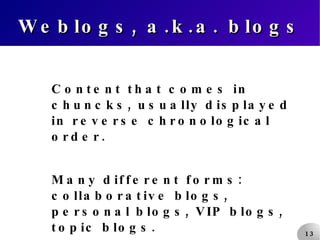
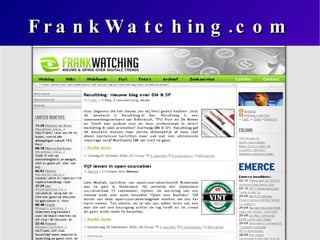
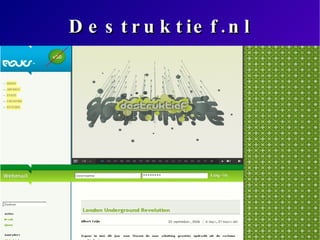
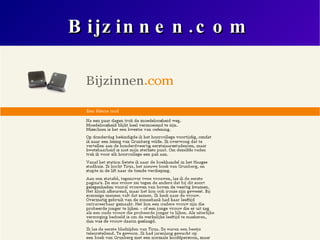
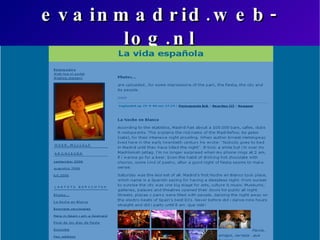
Weblogs, a.k.a. blogs Content that comes in chuncks, usually displayed in reverse chronological order. Many different forms: collaborative blogs, personal blogs, VIP blogs, topic blogs.
FrankWatching.com
Destruktief.nl
Bijzinnen.com
evainmadrid.web-log.nl
The 'blogosphere' The network of blogs, that all link to eachother. Integration via RSS feeds and RSS aggregators. Important factor in real-world opinion making. Competition for journalists?
Wikis Collaborative writing: “ a collection of hypertext documents that can directly be edited by anyone” - Jakob Voss People can work on the same document at the same time. Changes are reflected immediately. People can self-organise roles and expertises.
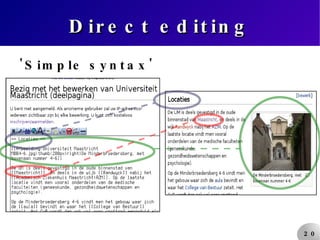
Direct editing 'Simple syntax'
Mantra Open source: “Given enough eyeballs, all bugs are shallow.” Wikis claim the same for errors. (But, are there enough experts?) Old versions are kept, and can be put back. Restoring is quicker than vandalising.
And, does it work? There's quanitity: June 2006: 1,3 million English articles, with 2100 new ones per day. 217.000 Dutch articles.  (http://stats.wikimedia.org) There's quality: German version better than Brockhaus and Encarta (c't Magazin). English version almost as good as Brittanica (Nature). But: bias towards 'geeky' topics.
Wikipedia as a reference Don't! At least, not untill there's Wikipedia Stable. But, it's a nice starting point for literature research.
WikiMaas City wiki for Maastricht. Not neutral. Run by dictators. But pages on many issues, like bars, coffee shops, lunch stores, German students, hitch hiking, squats, and university stuff. And an event calendar.
Many more wikis... Wiktionary, WikiBooks, WikiTravel, EmacsWiki, FirefoxWiki, UbuntuWiki, ... And wikiishness in other websites, like last.fm.
Ownership We are giving away our stuff for free. Free as in freedom, or as in free beer? Beer: Yes. But we get fancy web applications for it. Freedom: Sometimes. And that's cool.
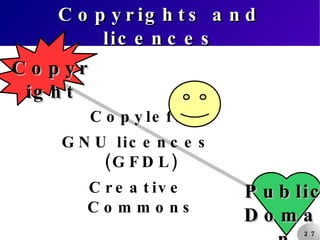
Copyrights and licences Copyleft GNU licences (GFDL) Creative Commons Copyright Public Domain
Copyright Creative products are protected, and cannot be copied freely. Berne convention (1886), first establishment of copyright over many nations. Rome Convention for the Protection of Performers, Producers of Phonograms and Broadcasting Organisations (1980).
Copyleft Opposing copyright. Movement to free works by using copyright law to remove the copyrights on the work. Examples: GNU licences, Creative Commons
GNU licences General Public License (GNU-GPL), for computer programs. Free Documentation License (GNU-FDL), for documentation. Misused for other stuff, like Wikipedia. In short: mention source, mention others, release derivatives under the same license (viral).
Creative Commons BY – attribution SA – share alike (viral) NC – non-commercial ND – no derivatives Can be combined. E.g., CC-BY-SA. For any media. Worked for Adam Curry.
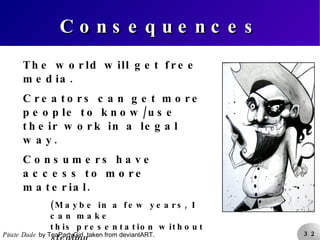
Consequences The world will get free media. Creators can get more people to know/use their work in a legal way. Consumers have access to more material. (Maybe in a few years, I can make this presentation without  stealing images from the internet.) Removes barriers for knowledge sharing. Pirate Dude  by TeaPartyGirl, taken from deviantART.
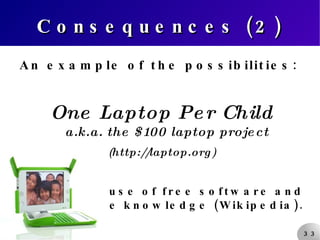
Consequences (2) An example of the possibilities: One Laptop Per Child a.k.a. the $100 laptop project (http://laptop.org) with the use of free software and free knowledge (Wikipedia).
Web 2.0 within the organisation Organisations are applying wikis for project management, corporate dictionaries, who-is-who's, etc. Special wiki engines are available. Organisations are applying blogs for top-down communication from top-managers to the staff. What else can be done?
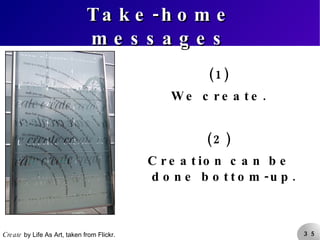
Take-home messages (1) We create. (2) Creation can be done bottom-up. Create  by Life As Art, taken from Flickr.
Take-home messages (3) Creation can be done without authority. (4) We can create without desire for (financial) profits.
Take-home messages (5) ............................................................................. (Insert your own message here.)

The revolution will be webalised.

  • 1.
    The revolution willbe webalised. The bottom-up approach to the internet, and what organisations can learn from that. Sander Spek
  • 2.
    Outline The participatoryinternet The Web 2.0 Folksonomies Blogs Wikis Ownership The Web 2.0 within the organisation Take-home messages
  • 3.
    The participatory internet“ We, as an audience, are not just meak consumers and/or sponges. We have the knowledge you want. Be interactive , so that we can participate.” Cf. tv crowds calling and sms-ing. Why not apply this too the internet too?
  • 4.
    From bulldozer todialogue Bulldozer by ElectricJohnny, taken from deviantART. Dialogue 2 by cucchiaio's, taken from Flickr.
  • 5.
    What do weoffer? (Money.) Opinions. Tags. Pictures. Art. Stories. Funny remarks. Knowledge. Videos. A demograhical data point. Music. Real-life events.
  • 6.
    Why do weoffer? Community feeling (humans are social creatures). Status. Charity. Grace. Ethical considerations ('voor wat hoort wat'). ...
  • 7.
    The new generationThe Web 2.0: “a supposed second-generation of Internet-based services — such as social networking sites, wikis, communication tools, and folksonomies — that let people collaborate and share information online in previously unavailable ways. O'Reilly Media, in collaboration with MediaLive International, used the phrase as a title for a series of conferences and since then it has become a popular (though ill-defined and often criticized) buzzword amongst certain technical and marketing communities.” (Wikipedia.)
  • 8.
    So what wasthe first generation? The old internet companies that saw us merely as meak consumers of information and products, the dot-coms. That bubble bursted.
  • 9.
    Why won't thisone burst, too? Marketeers claim they now sell better gum. They might be right. They might not be. Bubble gum by Anti-G, taken from deviantART.
  • 10.
    The revolution comesin many faces. Folksonomies. del.icio.us. Flickr. Last.fm. Weblogs. LiveJournal. MySpace. Web-log.nl. Media sharing. MySpace. deviantART. Flickr. YouTube. Wikis. Wikipedia. Wikicities. WikiMaas. Last.fm. Social networking. MySpace. Orkut. Hyves. LinkedIn.
  • 11.
    Folksonomy A taxonomycreated by the people. People like to tag. From web sites (del.icio.us) to music (last.fm). Combined with other functions, e.g. photo sharing (Flickr).
  • 12.
  • 13.
    Weblogs, a.k.a. blogsContent that comes in chuncks, usually displayed in reverse chronological order. Many different forms: collaborative blogs, personal blogs, VIP blogs, topic blogs.
  • 14.
  • 15.
  • 16.
  • 17.
  • 18.
    The 'blogosphere' Thenetwork of blogs, that all link to eachother. Integration via RSS feeds and RSS aggregators. Important factor in real-world opinion making. Competition for journalists?
  • 19.
    Wikis Collaborative writing:“ a collection of hypertext documents that can directly be edited by anyone” - Jakob Voss People can work on the same document at the same time. Changes are reflected immediately. People can self-organise roles and expertises.
  • 20.
  • 21.
    Mantra Open source:“Given enough eyeballs, all bugs are shallow.” Wikis claim the same for errors. (But, are there enough experts?) Old versions are kept, and can be put back. Restoring is quicker than vandalising.
  • 22.
    And, does itwork? There's quanitity: June 2006: 1,3 million English articles, with 2100 new ones per day. 217.000 Dutch articles. (http://stats.wikimedia.org) There's quality: German version better than Brockhaus and Encarta (c't Magazin). English version almost as good as Brittanica (Nature). But: bias towards 'geeky' topics.
  • 23.
    Wikipedia as areference Don't! At least, not untill there's Wikipedia Stable. But, it's a nice starting point for literature research.
  • 24.
    WikiMaas City wikifor Maastricht. Not neutral. Run by dictators. But pages on many issues, like bars, coffee shops, lunch stores, German students, hitch hiking, squats, and university stuff. And an event calendar.
  • 25.
    Many more wikis...Wiktionary, WikiBooks, WikiTravel, EmacsWiki, FirefoxWiki, UbuntuWiki, ... And wikiishness in other websites, like last.fm.
  • 26.
    Ownership We aregiving away our stuff for free. Free as in freedom, or as in free beer? Beer: Yes. But we get fancy web applications for it. Freedom: Sometimes. And that's cool.
  • 27.
    Copyrights and licencesCopyleft GNU licences (GFDL) Creative Commons Copyright Public Domain
  • 28.
    Copyright Creative productsare protected, and cannot be copied freely. Berne convention (1886), first establishment of copyright over many nations. Rome Convention for the Protection of Performers, Producers of Phonograms and Broadcasting Organisations (1980).
  • 29.
    Copyleft Opposing copyright.Movement to free works by using copyright law to remove the copyrights on the work. Examples: GNU licences, Creative Commons
  • 30.
    GNU licences GeneralPublic License (GNU-GPL), for computer programs. Free Documentation License (GNU-FDL), for documentation. Misused for other stuff, like Wikipedia. In short: mention source, mention others, release derivatives under the same license (viral).
  • 31.
    Creative Commons BY– attribution SA – share alike (viral) NC – non-commercial ND – no derivatives Can be combined. E.g., CC-BY-SA. For any media. Worked for Adam Curry.
  • 32.
    Consequences The worldwill get free media. Creators can get more people to know/use their work in a legal way. Consumers have access to more material. (Maybe in a few years, I can make this presentation without stealing images from the internet.) Removes barriers for knowledge sharing. Pirate Dude by TeaPartyGirl, taken from deviantART.
  • 33.
    Consequences (2) Anexample of the possibilities: One Laptop Per Child a.k.a. the $100 laptop project (http://laptop.org) with the use of free software and free knowledge (Wikipedia).
  • 34.
    Web 2.0 withinthe organisation Organisations are applying wikis for project management, corporate dictionaries, who-is-who's, etc. Special wiki engines are available. Organisations are applying blogs for top-down communication from top-managers to the staff. What else can be done?
  • 35.
    Take-home messages (1)We create. (2) Creation can be done bottom-up. Create by Life As Art, taken from Flickr.
  • 36.
    Take-home messages (3)Creation can be done without authority. (4) We can create without desire for (financial) profits.
  • 37.
    Take-home messages (5)............................................................................. (Insert your own message here.)