State Standards 7.3, 7.6, and 7.9
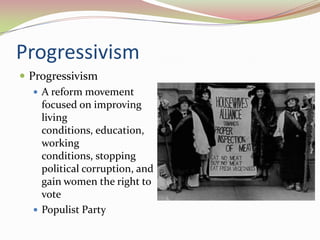
Progressivism
ď‚— Progressivism
   ď‚— A reform movement
     focused on improving
     living
     conditions, education,
     working
     conditions, stopping
     political corruption, and
     gain women the right to
     vote
   ď‚— Populist Party
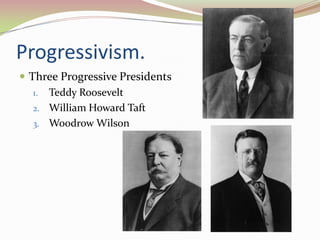
Progressivism.
ď‚— Three Progressive Presidents
   1. Teddy Roosevelt
   2. William Howard Taft
   3. Woodrow Wilson
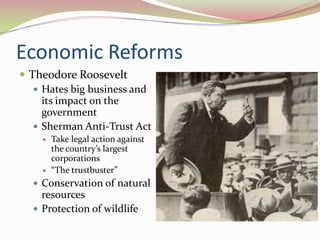
Economic Reforms
ď‚— Theodore Roosevelt
   ď‚— Hates big business and
     its impact on the
     government
   ď‚— Sherman Anti-Trust Act
    ď‚—   Take legal action against
        the country’s largest
        corporations
       “The trustbuster”
  ď‚— Conservation of natural
    resources
  ď‚— Protection of wildlife
Economic Reforms.
ď‚— William Howard Taft
  ď‚— Sixteenth Amendment
    ď‚—   Allowed Congress to levy
        income taxes
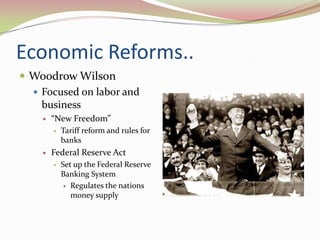
Economic Reforms..
ď‚— Woodrow Wilson
  ď‚— Focused on labor and
    business
       “New Freedom”
        ď‚—   Tariff reform and rules for
            banks
    ď‚—   Federal Reserve Act
        ď‚—   Set up the Federal Reserve
            Banking System
             ď‚— Regulates the nations
               money supply
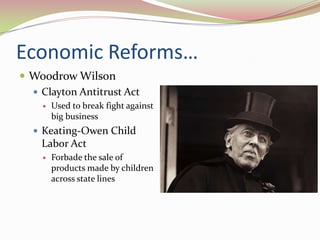
Economic Reforms…
ď‚— Woodrow Wilson
  ď‚— Clayton Antitrust Act
    ď‚—   Used to break fight against
        big business
  ď‚— Keating-Owen Child
    Labor Act
    ď‚—   Forbade the sale of
        products made by children
        across state lines
Muckrakers
ď‚— Muckrakers
  ď‚— Writers who attempted
    to expose abuses in
    business and corruption
    in politics by using their
    writing
  ď‚— Very important to the
    Progressive Movement
  ď‚— Their work helped
    educate the public
    about changes needed
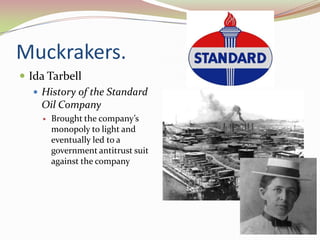
Muckrakers.
ď‚— Ida Tarbell
   ď‚— History of the Standard
     Oil Company
        Brought the company’s
         monopoly to light and
         eventually led to a
         government antitrust suit
         against the company
Muckrakers..
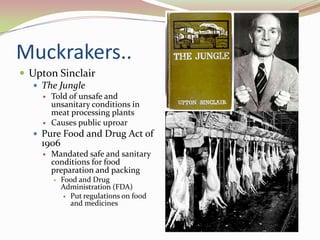
ď‚— Upton Sinclair
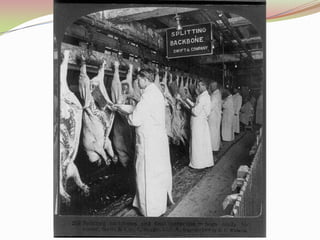
   ď‚— The Jungle
    ď‚—   Told of unsafe and
        unsanitary conditions in
        meat processing plants
    ď‚—   Causes public uproar
  ď‚— Pure Food and Drug Act of
    1906
    ď‚—   Mandated safe and sanitary
        conditions for food
        preparation and packing
        ď‚—   Food and Drug
            Administration (FDA)
             ď‚— Put regulations on food
               and medicines
Political Reform
 “Wisconsin Idea”
   ď‚— Proposed to use University
     professors to study problems
     and recommend solutions
ď‚— Leads to the 17th Amendment
   ď‚— Allowed for the direct
     election by the people of
     senators on a national level
ď‚— Oregon System
   ď‚— Leads to the direct election
     of senators and a process
     with which to recall them
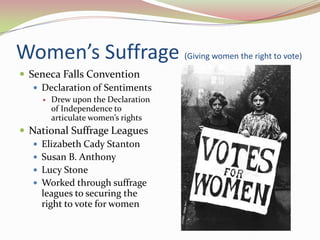
Women’s Suffrage (Giving women the right to vote)
ď‚— Seneca Falls Convention
   ď‚— Declaration of Sentiments
     ď‚—   Drew upon the Declaration
         of Independence to
         articulate women’s rights
ď‚— National Suffrage Leagues
   ď‚— Elizabeth Cady Stanton
   ď‚— Susan B. Anthony
   ď‚— Lucy Stone
   ď‚— Worked through suffrage
     leagues to securing the
     right to vote for women
Women’s Suffrage.
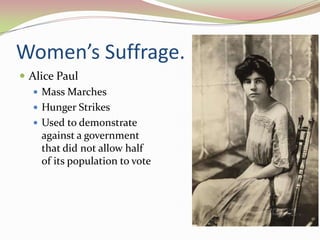
ď‚— Alice Paul
   ď‚— Mass Marches
   ď‚— Hunger Strikes
   ď‚— Used to demonstrate
     against a government
     that did not allow half
     of its population to vote
Women’s Suffrage..
ď‚— Tennessee
    “The Perfect 36”
   ď‚— Nineteenth Amendment
    ď‚—   35 states had ratified this
        amendment to give women
        the right to vote
    ď‚—   Tennessee was not one of
        them
        ď‚—   If Tennessee ratified the
            amendment it would
            become the perfect 36th state
    ď‚—   Governor Albert H. Roberts
        ď‚—   Holds an assembly to vote
            on the amendment
Women’s Suffrage...
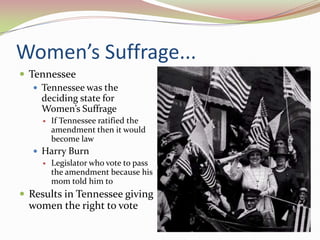
ď‚— Tennessee
   ď‚— Tennessee was the
     deciding state for
     Women’s Suffrage
     ď‚—   If Tennessee ratified the
         amendment then it would
         become law
   ď‚— Harry Burn
     ď‚— Legislator who vote to pass
       the amendment because his
       mom told him to
ď‚— Results in Tennessee giving
  women the right to vote
Women’s Suffrage….
ď‚— Female Leaders in
 Progressive Era
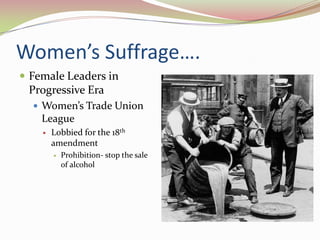
   Women’s Trade Union
    League
    ď‚—   Lobbied for the 18th
        amendment
        ď‚—   Prohibition- stop the sale
            of alcohol
Settlement Houses
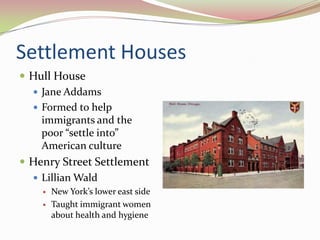
ď‚— Hull House
  ď‚— Jane Addams
  ď‚— Formed to help
    immigrants and the
    poor “settle into”
    American culture
ď‚— Henry Street Settlement
  ď‚— Lillian Wald
       New York’s lower east side
    ď‚—   Taught immigrant women
        about health and hygiene
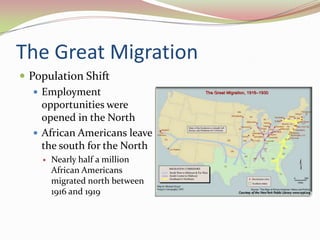
The Great Migration
ď‚— Population Shift
   ď‚— Employment
     opportunities were
     opened in the North
   ď‚— African Americans leave
     the south for the North
    ď‚—   Nearly half a million
        African Americans
        migrated north between
        1916 and 1919
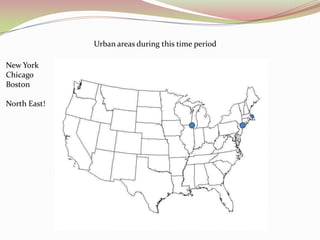
Urban areas during this time period

New York
Chicago
Boston

North East!
African American Cultural Figures
ď‚— W.E.B. Du Bois
  ď‚— Founder of the National Association for the Advancement of
    Colored People (NAACP)
  ď‚— Black Nationalist Policy
     ď‚—   Believed African Americans should stay independent of white
         Americans
ď‚— Booker T. Washington
   ď‚— Assimilation of blacks into white culture
     ď‚—   Believed African Americans should be worked into white American
         culture
           “Cast Down Your Bucket Where You Are Speech”

ď‚— Marcus Garvey
  ď‚— Segregationist policies and revolutionary tactics

The progressive era

  • 1.
  • 2.
    Progressivism ď‚— Progressivism ď‚— A reform movement focused on improving living conditions, education, working conditions, stopping political corruption, and gain women the right to vote ď‚— Populist Party
  • 3.
    Progressivism. ď‚— Three ProgressivePresidents 1. Teddy Roosevelt 2. William Howard Taft 3. Woodrow Wilson
  • 4.
    Economic Reforms  TheodoreRoosevelt  Hates big business and its impact on the government  Sherman Anti-Trust Act  Take legal action against the country’s largest corporations  “The trustbuster”  Conservation of natural resources  Protection of wildlife
  • 5.
    Economic Reforms. ď‚— WilliamHoward Taft ď‚— Sixteenth Amendment ď‚— Allowed Congress to levy income taxes
  • 6.
    Economic Reforms..  WoodrowWilson  Focused on labor and business  “New Freedom”  Tariff reform and rules for banks  Federal Reserve Act  Set up the Federal Reserve Banking System  Regulates the nations money supply
  • 7.
    Economic Reforms…  WoodrowWilson  Clayton Antitrust Act  Used to break fight against big business  Keating-Owen Child Labor Act  Forbade the sale of products made by children across state lines
  • 8.
    Muckrakers ď‚— Muckrakers ď‚— Writers who attempted to expose abuses in business and corruption in politics by using their writing ď‚— Very important to the Progressive Movement ď‚— Their work helped educate the public about changes needed
  • 9.
    Muckrakers.  Ida Tarbell  History of the Standard Oil Company  Brought the company’s monopoly to light and eventually led to a government antitrust suit against the company
  • 10.
    Muckrakers.. ď‚— Upton Sinclair ď‚— The Jungle ď‚— Told of unsafe and unsanitary conditions in meat processing plants ď‚— Causes public uproar ď‚— Pure Food and Drug Act of 1906 ď‚— Mandated safe and sanitary conditions for food preparation and packing ď‚— Food and Drug Administration (FDA) ď‚— Put regulations on food and medicines
  • 12.
    Political Reform  “WisconsinIdea”  Proposed to use University professors to study problems and recommend solutions  Leads to the 17th Amendment  Allowed for the direct election by the people of senators on a national level  Oregon System  Leads to the direct election of senators and a process with which to recall them
  • 13.
    Women’s Suffrage (Givingwomen the right to vote)  Seneca Falls Convention  Declaration of Sentiments  Drew upon the Declaration of Independence to articulate women’s rights  National Suffrage Leagues  Elizabeth Cady Stanton  Susan B. Anthony  Lucy Stone  Worked through suffrage leagues to securing the right to vote for women
  • 14.
    Women’s Suffrage.  AlicePaul  Mass Marches  Hunger Strikes  Used to demonstrate against a government that did not allow half of its population to vote
  • 15.
    Women’s Suffrage..  Tennessee  “The Perfect 36”  Nineteenth Amendment  35 states had ratified this amendment to give women the right to vote  Tennessee was not one of them  If Tennessee ratified the amendment it would become the perfect 36th state  Governor Albert H. Roberts  Holds an assembly to vote on the amendment
  • 16.
    Women’s Suffrage...  Tennessee  Tennessee was the deciding state for Women’s Suffrage  If Tennessee ratified the amendment then it would become law  Harry Burn  Legislator who vote to pass the amendment because his mom told him to  Results in Tennessee giving women the right to vote
  • 17.
    Women’s Suffrage….  FemaleLeaders in Progressive Era  Women’s Trade Union League  Lobbied for the 18th amendment  Prohibition- stop the sale of alcohol
  • 18.
    Settlement Houses  HullHouse  Jane Addams  Formed to help immigrants and the poor “settle into” American culture  Henry Street Settlement  Lillian Wald  New York’s lower east side  Taught immigrant women about health and hygiene
  • 19.
    The Great Migration ď‚—Population Shift ď‚— Employment opportunities were opened in the North ď‚— African Americans leave the south for the North ď‚— Nearly half a million African Americans migrated north between 1916 and 1919
  • 20.
    Urban areas duringthis time period New York Chicago Boston North East!
  • 21.
    African American CulturalFigures  W.E.B. Du Bois  Founder of the National Association for the Advancement of Colored People (NAACP)  Black Nationalist Policy  Believed African Americans should stay independent of white Americans  Booker T. Washington  Assimilation of blacks into white culture  Believed African Americans should be worked into white American culture  “Cast Down Your Bucket Where You Are Speech”  Marcus Garvey  Segregationist policies and revolutionary tactics