



Summary: The Power of
Impossible Thinking
Alejandro Fernández
Partner Sales Executive
luisfer@microsoft.com
Transform the Business of your Life and the Life of your
Business
by Yoram (Jerry) Wind and Colin Crook with Robert
Gunther
Wharton School Publishing © 2005
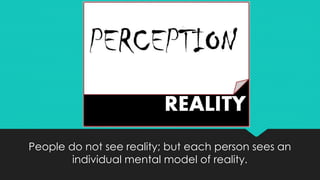
People do not see reality; but each person sees an
individual mental model of reality.
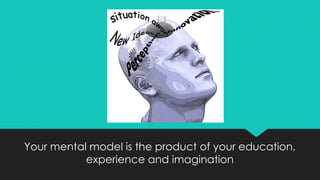
Your mental model is the product of your education,
experience and imagination
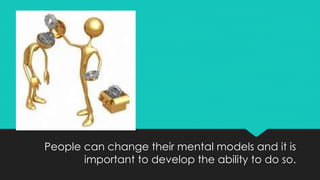
People can change their mental models and it is
important to develop the ability to do so.
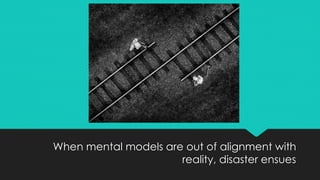
When mental models are out of alignment with
reality, disaster ensues
Because the world is changing, it is easy for individual
mental models to fall out of alignment with reality
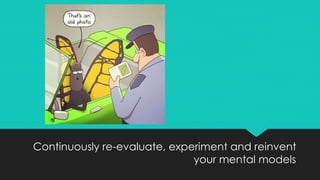
Continuously re-evaluate, experiment and reinvent
your mental models
Do not discard or embrace a mental model
prematurely
Value extremists and radicals. Learn to see the world
through their eyes if only as an experiment, to try a
different mental model.
Key Questions
 How much are you trusting in what seems to be?
 How your mental models are shaping your sales performance?
 Which mental models would you challenge in order to achieve
better results?
 What kind of experiment can you make to test the limits of your
mental models at work?
The power of impossible thinking

The power of impossible thinking

  • 1.
    Summary: The Powerof Impossible Thinking Alejandro Fernández Partner Sales Executive luisfer@microsoft.com Transform the Business of your Life and the Life of your Business by Yoram (Jerry) Wind and Colin Crook with Robert Gunther Wharton School Publishing © 2005
  • 2.
    People do notsee reality; but each person sees an individual mental model of reality.
  • 3.
    Your mental modelis the product of your education, experience and imagination
  • 4.
    People can changetheir mental models and it is important to develop the ability to do so.
  • 5.
    When mental modelsare out of alignment with reality, disaster ensues
  • 6.
    Because the worldis changing, it is easy for individual mental models to fall out of alignment with reality
  • 7.
    Continuously re-evaluate, experimentand reinvent your mental models
  • 8.
    Do not discardor embrace a mental model prematurely
  • 9.
    Value extremists andradicals. Learn to see the world through their eyes if only as an experiment, to try a different mental model.
  • 10.
    Key Questions  Howmuch are you trusting in what seems to be?  How your mental models are shaping your sales performance?  Which mental models would you challenge in order to achieve better results?  What kind of experiment can you make to test the limits of your mental models at work?

Editor's Notes

  • #3 Are you putting too much trust in what seems to be? What we see is, in fact, not reality but rather mental models that we ourselves construct. When we understand this, we begin to see why it is important to test our mental models continuously, and so to change them
  • #4 Neuroscience teaches that people do not see reality. Certainly, the real world exists, but it is not what people see. Human brains interpret stimuli and create models based on individual memories and expectations. Instead of seeing reality, people see their own mental models and call them reality. Instead of seeing a projection of reality, individuals see a set of images and impressions that their own minds produce in response to stimuli. Individuals see a world of their own making – a world created on the basis of their mental models.
  • #5 Reality may be objective, but its individual interpretation is quite subjective. Your mental models are your reality. Because you create your mental model, you can change it; by changing it, you can change your reality. Because your mental models powerfully shape your ability to perform. Constantly test your mental models for accuracy. The environment changes; those who do not change their mental models with it may face a serious disadvantage. The case of the four-minute mile shows the power of mental models. Until British runner Roger Bannister ran the four-minute mile in 1954, everyone believed it was physically impossible. This belief, this mental model, had enormous power. As long as competitive runners believed that the four-minute mile was impossible, they could not do it. When Bannister broke the running record, he built a new mental model, a new reality Within months after he proved that the four-minute mile was possible, another runner broke his record. Within three years, 16 runners had done what – before Bannister – had been “physically impossible.”
  • #6 So people see what is not there, and remember what has not happened. But that does not exhaust the power of the mind. Human beings also can fail to see what is present. In a well-known experiment, psychological researchers showed subjects a fi lm of a basketball game and asked them to count how many times the players on one team passed the ball. In the middle of the game, something truly remarkable took place. A gorilla walked to the center of the court, beat on his chest and walked off. This was amazing, but few research subjects said anything about it. Most were so intent on watching the players pass the ball that they did not even notice the gorilla. Their brains simply screened it out.
  • #8 However, breaking routines is always a good idea if only to force yourself to see the world differently. The break can be as simple as buying a new coffee, driving a new route to work or structuring your day somewhat differently.
  • #10 They often see the world in such a starkly different way that they seem thoroughly out of touch. Yet, precisely because they are so out of the mainstream, they reveal the possibility of a new mental model. Organizations should treasure them, harness their energy and seize the opportunity to see the world through different eyes.
  • #12 Reality is not simple or objective. The world is changing rapidly, so you must be flexible and willing to change the way you see it. Think of the impossible, and recognize that it is only impossible in the context of a given mental model. For decades, the four-minute mile was impossible. Then someone did it. Apply that lesson in business and in life.