The Nervous
System
Prepared by Mickelder Kercy, MD - Instructor
Central Nervous System(CNS) : Brain and Spinal Cord
Peripheral Nervous System(PNS) : Autonomic Nervous
System (Sympathetic and Parasympathetic Nervous
System) and the Somatic Nervous System
(The PNS is made up of Nerves connecting the CNS to
the rest of the body)
Structure of the Nervous System
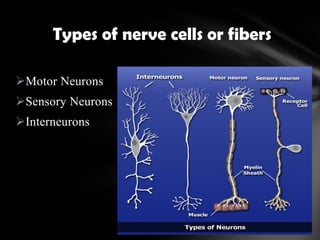
Motor Neurons
Sensory Neurons
Interneurons
Types of nerve cells or fibers
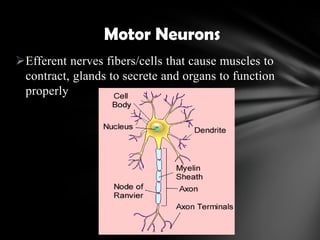
Efferent nerves fibers/cells that cause muscles to
contract, glands to secrete and organs to function
properly
Motor Neurons
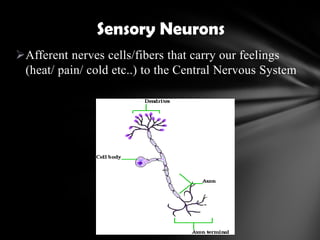
Afferent nerves cells/fibers that carry our feelings
(heat/ pain/ cold etc..) to the Central Nervous System
Sensory Neurons
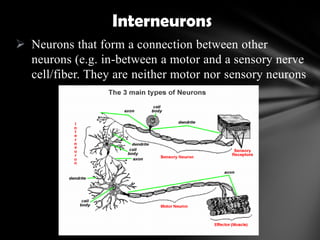
 Neurons that form a connection between other
neurons (e.g. in-between a motor and a sensory nerve
cell/fiber. They are neither motor nor sensory neurons
Interneurons
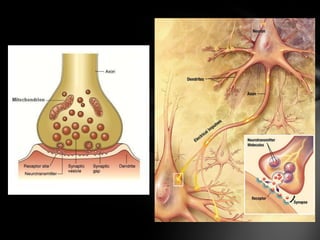
 Junction where neurons pass neurotransmitters (chemical
signals) or electrical signals to other neurons, muscle
cells, or gland cells. Composed of:
- A presynaptic ending that contains mitochondria, other
cell organelles and neurotransmitters that are released
in the synaptic space
- A synaptic space or cleft between the presynaptic and
postsynaptic endings
- A postsynaptic ending on the target cell (other neuron/
muscle cells/gland cells) that contains receptor sites for
the neurotransmitters that crossed the synaptic space
Synapse
 Several small molecules function as neurotransmitters.
- Glycine and glutamate (amino acids)
- Dopamine (DA), Norepinephrine (NE) & Dopamine
(DA) (cathecholamines derived from amino acids)
- Acetylcholine (ACh) & Serotonin (derived from
amino acids)
- Prostaglandins, Histamine and Y- Aminobutyric
acid (GABA) are other neurotransmitters
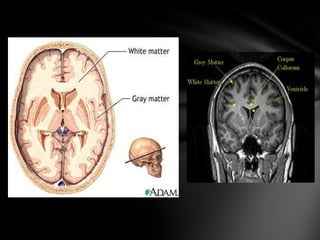
Brain : The outside is covered with gray matter and
the inside is filled with white matter
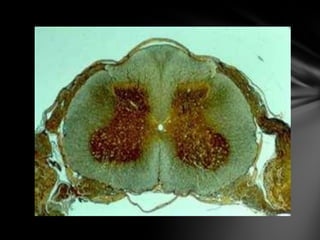
 Spinal Cord : Gray matter forms an H shape in the
inside and white matter surrounds the gray matter
Central Nervous System
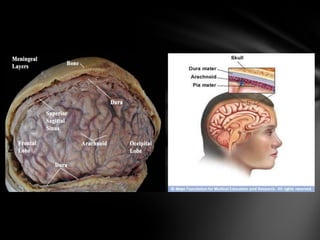
 Protected by- Cranium/Skull
Meninges (Pia Mater, Arachnoid and
Dura Mater)
Cerebrospinal fluid (water, glucose,
protein, sodium, chloride and nutrients such as oxygen)
Blood brain barrier (glial astrocytes and
capillary cells)
 Divided into the Cerebrum, the Diencephalon, the
Brainstem and the Cerebellum
Brain
 Divided into the right and left Cerebral Hemispheres
 Contains convolutions/ gyri, sulcus and fissures
 Controls all sensory and motor activity
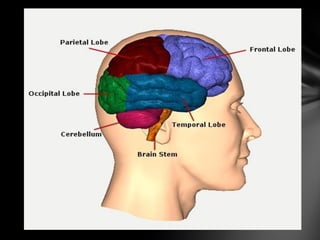
 Cortex is divided into the Frontal lobe, R & L
Parietal lobes, R & L Temporal lobes and the
Occipital lobe covered each by bones bearing the
same name
Cerebrum
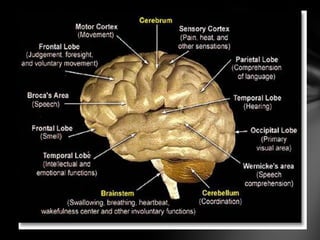
Frontal Lobe : Executive function (speaking, learning,
reasoning, problem solving, judging, planning),
Voluntary motor activity, Emotion and Behavior
Parietal Lobe : Pain, Pressure, T°, Touch and Speech /
Language comprehension
Temporal Lobe : Memory, Hearing, Taste, Speech
Reading, Writing and Arithmetic
Occipital Lobe : Vision
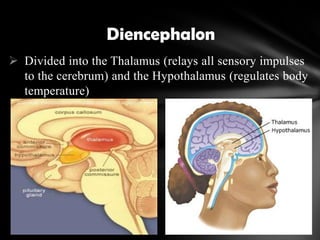
 Divided into the Thalamus (relays all sensory impulses
to the cerebrum) and the Hypothalamus (regulates body
temperature)
Diencephalon
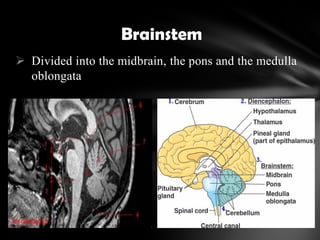
 Divided into the midbrain, the pons and the medulla
oblongata
Brainstem
 Midbrain : Relays information for vision and hearing
 Pons : Regulates the change from inspiration to
expiration
 Medulla Oblongata : Regulates several functions of the
autonomic nervous system
- Respiration (chemoreceptors)
- Cardiac center (sympathetic, parasympathetic system)
- Vasomotor center (baroreceptors)
- Reflex centers of vomiting, coughing, sneezing, and
swallowing
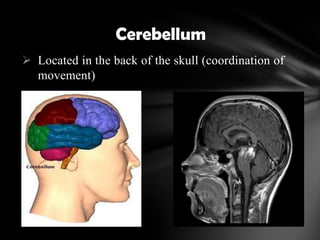
 Located in the back of the skull (coordination of
movement)
Cerebellum
Links the Brain with the rest of the body
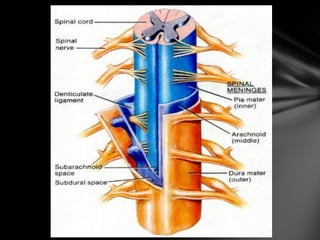
Protected by – Vertebrae
Meninges (Pia mater, Arachnoid,
Dura mater)
Cerebrospinal fluid (water, glucose,
sodium, chloride and nutrients such as oxygen)
Blood-brain barrier (glial astrocytes
and capillary cells)
Spinal Cord
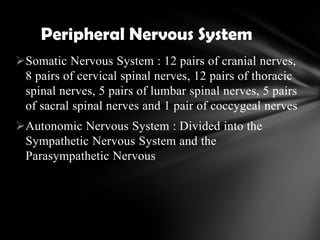
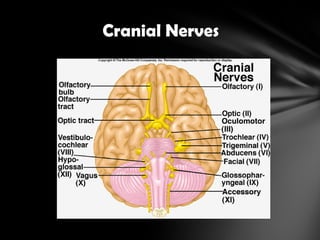
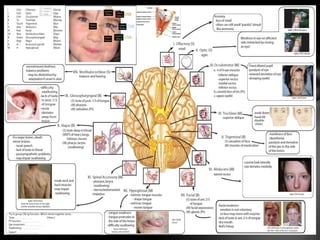
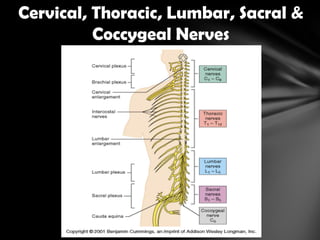
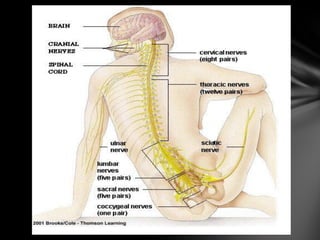
Somatic Nervous System : 12 pairs of cranial nerves,
8 pairs of cervical spinal nerves, 12 pairs of thoracic
spinal nerves, 5 pairs of lumbar spinal nerves, 5 pairs
of sacral spinal nerves and 1 pair of coccygeal nerves
Autonomic Nervous System : Divided into the
Sympathetic Nervous System and the
Parasympathetic Nervous
Peripheral Nervous System
Cranial Nerves
Cervical, Thoracic, Lumbar, Sacral &
Coccygeal Nerves
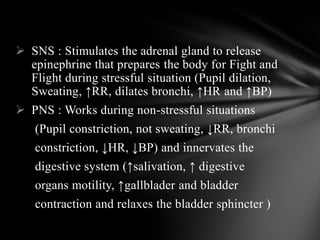
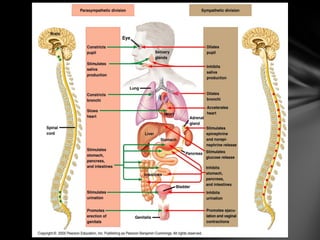
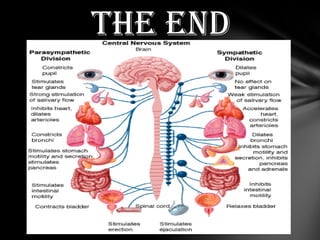
 SNS : Stimulates the adrenal gland to release
epinephrine that prepares the body for Fight and
Flight during stressful situation (Pupil dilation,
Sweating, ↑RR, dilates bronchi, ↑HR and ↑BP)
 PNS : Works during non-stressful situations
(Pupil constriction, not sweating, ↓RR, bronchi
constriction, ↓HR, ↓BP) and innervates the
digestive system (↑salivation, ↑ digestive
organs motility, ↑gallblader and bladder
contraction and relaxes the bladder sphincter )
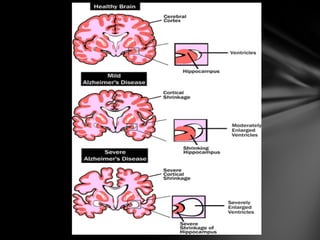
 Alzheimer’s Disease : Destruction of nerve cells in
the brain causing loss of recent memory
 Amyotrophic Lateral Sclerosis : Destruction of the
motor nerves in the brain causing movement
impairment. Also called Lou Gehrig’s disease
Common Disorders associated with the
Nervous System
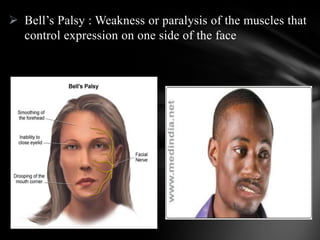
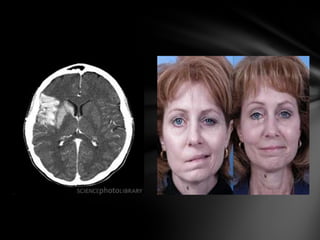
 Bell’s Palsy : Weakness or paralysis of the muscles that
control expression on one side of the face
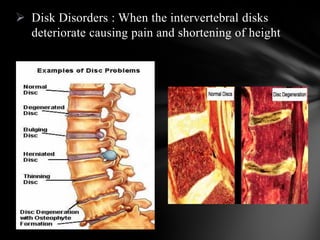
 Disk Disorders : When the intervertebral disks
deteriorate causing pain and shortening of height
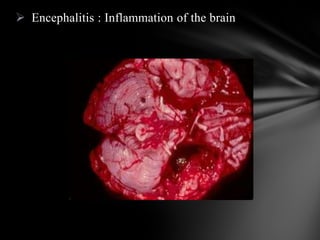
 Encephalitis : Inflammation of the brain
 Epilepsy and seizures : Interference of electrical
impulses within the brain causing uncontrollable
movement of the limbs and body
 Migraine Headache : flashes of light, blind spots,
tingling in your arm/leg or sensitivity to light/noise
often precedes the headache
 Tension Headache : Due to stress
 Cluster Headache : Felt behind the eyes or temples.
May last for weeks to months than stops (cycle)
 Post-Traumatic Headache : Post trauma
 Huntington’s Chorea : Hereditary disease affecting
the cerebral and basal ganglia causing imbalance,
lack of coordination, difficulty swallowing and
rigidity
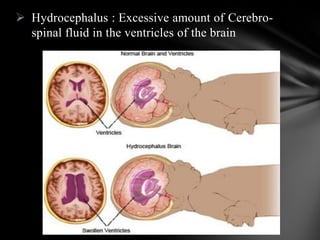
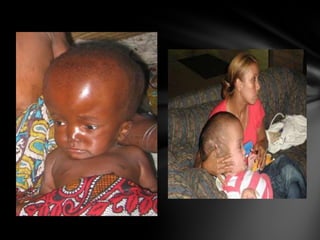
 Hydrocephalus : Excessive amount of Cerebro-
spinal fluid in the ventricles of the brain
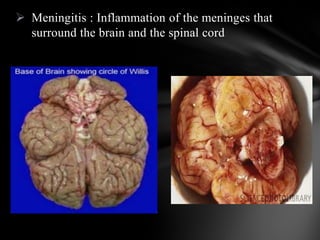
 Meningitis : Inflammation of the meninges that
surround the brain and the spinal cord
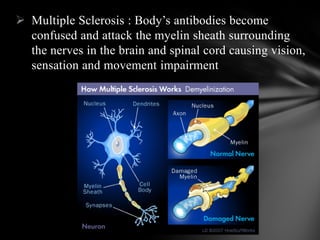
 Multiple Sclerosis : Body’s antibodies become
confused and attack the myelin sheath surrounding
the nerves in the brain and spinal cord causing vision,
sensation and movement impairment
 Neuralgia : Nerve pain
 Parkinson’s Disease : Degeneration of nerves in the
basal ganglia causing a loss of dopamine resulting in
the lack of movement control
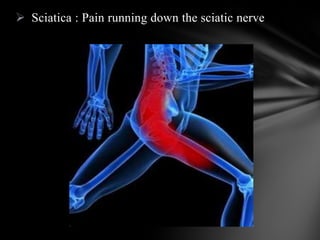
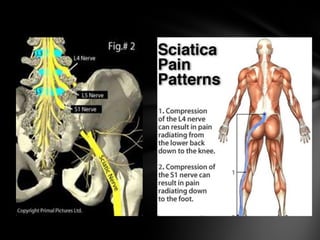
 Sciatica : Pain running down the sciatic nerve
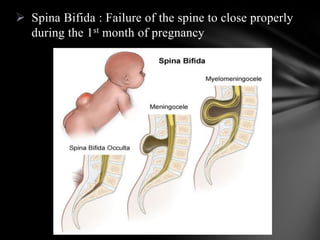
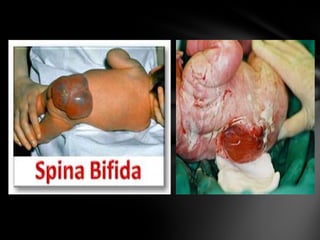
 Spina Bifida : Failure of the spine to close properly
during the 1st month of pregnancy
 Spinal cord Injuries : Quadriplegia, Paraplegia and
Hemiplegia
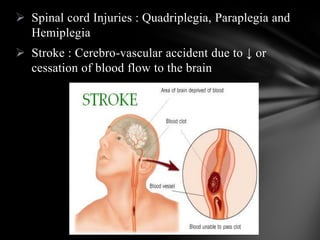
 Stroke : Cerebro-vascular accident due to ↓ or
cessation of blood flow to the brain
 Transient Ischemic attack : Mini-strokes lasting a few
minutes
 Concussion : Injury caused by a blow to the head.
May lead to a loos of consciousness
 Contusion : Bruising of the brain
The End

The nervous system

  • 1.
    The Nervous System Prepared byMickelder Kercy, MD - Instructor
  • 2.
    Central Nervous System(CNS): Brain and Spinal Cord Peripheral Nervous System(PNS) : Autonomic Nervous System (Sympathetic and Parasympathetic Nervous System) and the Somatic Nervous System (The PNS is made up of Nerves connecting the CNS to the rest of the body) Structure of the Nervous System
  • 3.
  • 4.
    Efferent nerves fibers/cellsthat cause muscles to contract, glands to secrete and organs to function properly Motor Neurons
  • 5.
    Afferent nerves cells/fibersthat carry our feelings (heat/ pain/ cold etc..) to the Central Nervous System Sensory Neurons
  • 6.
     Neurons thatform a connection between other neurons (e.g. in-between a motor and a sensory nerve cell/fiber. They are neither motor nor sensory neurons Interneurons
  • 7.
     Junction whereneurons pass neurotransmitters (chemical signals) or electrical signals to other neurons, muscle cells, or gland cells. Composed of: - A presynaptic ending that contains mitochondria, other cell organelles and neurotransmitters that are released in the synaptic space - A synaptic space or cleft between the presynaptic and postsynaptic endings - A postsynaptic ending on the target cell (other neuron/ muscle cells/gland cells) that contains receptor sites for the neurotransmitters that crossed the synaptic space Synapse
  • 8.
     Several smallmolecules function as neurotransmitters. - Glycine and glutamate (amino acids) - Dopamine (DA), Norepinephrine (NE) & Dopamine (DA) (cathecholamines derived from amino acids) - Acetylcholine (ACh) & Serotonin (derived from amino acids) - Prostaglandins, Histamine and Y- Aminobutyric acid (GABA) are other neurotransmitters
  • 10.
    Brain : Theoutside is covered with gray matter and the inside is filled with white matter  Spinal Cord : Gray matter forms an H shape in the inside and white matter surrounds the gray matter Central Nervous System
  • 13.
     Protected by-Cranium/Skull Meninges (Pia Mater, Arachnoid and Dura Mater) Cerebrospinal fluid (water, glucose, protein, sodium, chloride and nutrients such as oxygen) Blood brain barrier (glial astrocytes and capillary cells)  Divided into the Cerebrum, the Diencephalon, the Brainstem and the Cerebellum Brain
  • 15.
     Divided intothe right and left Cerebral Hemispheres  Contains convolutions/ gyri, sulcus and fissures  Controls all sensory and motor activity  Cortex is divided into the Frontal lobe, R & L Parietal lobes, R & L Temporal lobes and the Occipital lobe covered each by bones bearing the same name Cerebrum
  • 17.
    Frontal Lobe :Executive function (speaking, learning, reasoning, problem solving, judging, planning), Voluntary motor activity, Emotion and Behavior Parietal Lobe : Pain, Pressure, T°, Touch and Speech / Language comprehension Temporal Lobe : Memory, Hearing, Taste, Speech Reading, Writing and Arithmetic Occipital Lobe : Vision
  • 19.
     Divided intothe Thalamus (relays all sensory impulses to the cerebrum) and the Hypothalamus (regulates body temperature) Diencephalon
  • 20.
     Divided intothe midbrain, the pons and the medulla oblongata Brainstem
  • 21.
     Midbrain :Relays information for vision and hearing  Pons : Regulates the change from inspiration to expiration  Medulla Oblongata : Regulates several functions of the autonomic nervous system - Respiration (chemoreceptors) - Cardiac center (sympathetic, parasympathetic system) - Vasomotor center (baroreceptors) - Reflex centers of vomiting, coughing, sneezing, and swallowing
  • 22.
     Located inthe back of the skull (coordination of movement) Cerebellum
  • 23.
    Links the Brainwith the rest of the body Protected by – Vertebrae Meninges (Pia mater, Arachnoid, Dura mater) Cerebrospinal fluid (water, glucose, sodium, chloride and nutrients such as oxygen) Blood-brain barrier (glial astrocytes and capillary cells) Spinal Cord
  • 25.
    Somatic Nervous System: 12 pairs of cranial nerves, 8 pairs of cervical spinal nerves, 12 pairs of thoracic spinal nerves, 5 pairs of lumbar spinal nerves, 5 pairs of sacral spinal nerves and 1 pair of coccygeal nerves Autonomic Nervous System : Divided into the Sympathetic Nervous System and the Parasympathetic Nervous Peripheral Nervous System
  • 26.
  • 28.
    Cervical, Thoracic, Lumbar,Sacral & Coccygeal Nerves
  • 29.
     SNS :Stimulates the adrenal gland to release epinephrine that prepares the body for Fight and Flight during stressful situation (Pupil dilation, Sweating, ↑RR, dilates bronchi, ↑HR and ↑BP)  PNS : Works during non-stressful situations (Pupil constriction, not sweating, ↓RR, bronchi constriction, ↓HR, ↓BP) and innervates the digestive system (↑salivation, ↑ digestive organs motility, ↑gallblader and bladder contraction and relaxes the bladder sphincter )
  • 32.
     Alzheimer’s Disease: Destruction of nerve cells in the brain causing loss of recent memory  Amyotrophic Lateral Sclerosis : Destruction of the motor nerves in the brain causing movement impairment. Also called Lou Gehrig’s disease Common Disorders associated with the Nervous System
  • 34.
     Bell’s Palsy: Weakness or paralysis of the muscles that control expression on one side of the face
  • 35.
     Disk Disorders: When the intervertebral disks deteriorate causing pain and shortening of height
  • 36.
     Encephalitis :Inflammation of the brain
  • 37.
     Epilepsy andseizures : Interference of electrical impulses within the brain causing uncontrollable movement of the limbs and body
  • 38.
     Migraine Headache: flashes of light, blind spots, tingling in your arm/leg or sensitivity to light/noise often precedes the headache  Tension Headache : Due to stress  Cluster Headache : Felt behind the eyes or temples. May last for weeks to months than stops (cycle)  Post-Traumatic Headache : Post trauma
  • 39.
     Huntington’s Chorea: Hereditary disease affecting the cerebral and basal ganglia causing imbalance, lack of coordination, difficulty swallowing and rigidity
  • 40.
     Hydrocephalus :Excessive amount of Cerebro- spinal fluid in the ventricles of the brain
  • 42.
     Meningitis :Inflammation of the meninges that surround the brain and the spinal cord
  • 43.
     Multiple Sclerosis: Body’s antibodies become confused and attack the myelin sheath surrounding the nerves in the brain and spinal cord causing vision, sensation and movement impairment
  • 44.
     Neuralgia :Nerve pain  Parkinson’s Disease : Degeneration of nerves in the basal ganglia causing a loss of dopamine resulting in the lack of movement control
  • 45.
     Sciatica :Pain running down the sciatic nerve
  • 47.
     Spina Bifida: Failure of the spine to close properly during the 1st month of pregnancy
  • 49.
     Spinal cordInjuries : Quadriplegia, Paraplegia and Hemiplegia  Stroke : Cerebro-vascular accident due to ↓ or cessation of blood flow to the brain
  • 51.
     Transient Ischemicattack : Mini-strokes lasting a few minutes  Concussion : Injury caused by a blow to the head. May lead to a loos of consciousness  Contusion : Bruising of the brain
  • 52.